Monday 24 Jul 2017 12:33 pm
Adapted from an article at http://metro.co.uk/2017/07/24/ex-teacher-is-rowing-across-the-atlantic-solo-to-raise-money-for-hospital-who-cured-her-brain-tumour-6773756/
You’d imagine if you’d never set foot in a rowing boat before, apart from, say, an abortive attempt in a boating lake age 9, that you would set yourself a fairly tame goal for your first challenge when you did finally take up the sport.
Not so Kiko Matthews. The science teacher-turned-paddle board instructor and adventurer, this time last year a total beginner in a rowing boat, set herself the challenge of rowing solo across the Atlantic – before she’d actually picked up an oar.
Not only does she plan to raise £100,000 for King’s College Hospital with the row – after they saved her life when she was struck with a rare disease – but she plans to break the female world record for a solo Atlantic crossing while she’s doing it.
The previous record for a woman rowing solo across the Atlantic is 56 days, the male record is 35.
Kiko plans to do it in 45, taking 11 days off the current female record.
Her determination and dedication indicate that she’ll do it too.
She has been training daily for 7 months since she made the vow (she hadn’t even been drinking when she made it, she tells me) in order to smash the record for the 3,000-mile trip.
On the way she will encounter storms, freezing nights, scorching hot days, sharks – and a whole lot of solitude. ‘I have to be skipper, medic, my own best friend – and, sometimes, no doubt, my own worst enemy,’ she says.
She’ll have an emergency button in case of crisis — and not much else, besides her equipment and her ego.
A rigorous regime of on-land and on-water rowing, circuits, weights and cross-training with cycling and running is preparing her for the 16 hours a day of rowing she’ll have to put in to make the record crossing.
The months of 4am wake-up calls are, as you’ll see from her Facebook and Instagram posts, made somewhat easier by incredible sunrises, sunsets and glass-like oceans, but they are nonetheless gruelling.
However, they will have set her up for what will be six sleep-deprived weeks where she will try to shoehorn what sleep she can – a four-hour chunk and a few cat naps throughout the day – into the eight hours she has to eat and rest when she is not rowing.
No matter how much work she is putting in, the challenge is ambitious — but her chances are improved immeasurably not only by her tenacity (you have to meet her to believe it) but the fact that the boat she is using for the crossing is the same one that was used by the current male solo Atlantic World Record holder, Charlie Pitcher.
He set the new record for solo male crossing in 2013, taking 35 days to row the 3,000 miles in the carbon-hulled, 6.5m ocean rowing boat Soma of Essex.
His boat was the first of its kind to have the rower facing backwards into the waves rather than rowing forward, which made the boat far more aerodynamic and helped him to shave 5 days off the previous 40-day record.
And, as Kiko says, ‘when you’re in the middle of the Atlantic with nothing for miles either side, you don’t really need to see where you’re going anyway.’
Now, Pitcher has not only lent Kiko his record-breaking boat, but he’s helping to train her too. And, having been exposed to the whirlwind that is Kiko Matthews, he is confident she can achieve her goal.
‘I met Kiko at a charity function we were both involved with and we just hit it off immediately, like we had known each other for years,’ he says. ‘I wanted to lend her the boat because I believe she has what it takes to smash this, and not many others do,’ he says.
‘To break a tough world record like this, you need all the right tools in your bag. Kiko has the full house.’
The mammoth physical undertaking is all the more impressive when you understand how far Kiko has come health wise.
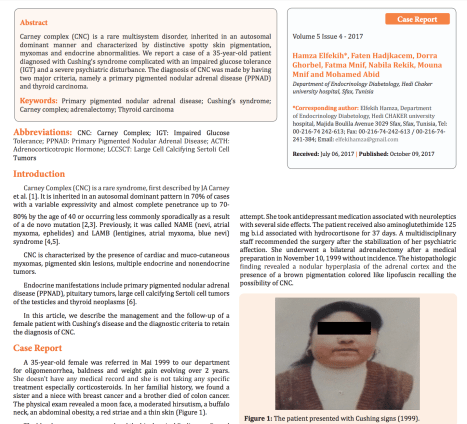
The once fit young woman was so rapidly debilitated by this mystery disease she had to drag herself upstairs on her hands and knees, yet doctors could not find out what was wrong.
Unlike most people with Cushing’s, who experience the condition worsening over a long period, sometimes years, the size of Kiko’s tumour meant the symptoms were aggressive and dramatic.
As she deteriorated, she was quickly referred to King’s College Hospital where she lay for a month believing she would die before doctors were able to diagnose Cushing’s.
Even then, her potassium levels were too low for her to survive surgery so she was taken to intensive care unit until she was strong enough for doctors to operate and remove the tumour.
Kiko says now that those were her darkest times. ‘I couldn’t see, I couldn’t speak properly or think. I was too weak to move,’ she says.
Ultimately, the disease could have proved fatal. But with the tumour finally removed, the levels of cortisol in her blood reduced from 3,000 mcg/dL to 30 mcg/dL in three days.
Within five, the brain fluid stopped dripping from her nose, the swelling in her body had gone down, her memory returned and diabetes and other symptoms vanished.
Soon after her recovery, Kiko left her role as a science teacher to set up SupKiko, a company teaching paddle boarding, and a charity, The Big Stand, that gives opportunities to young people and those with mental health problems.
While she still leads paddle boarding groups, most of her time is now spent training for the Atlantic crossing, which sets off from the Canary Islands in January.
….
Ironically, both the challenge and fundraising attempt for KCH has added poignancy now.
A few months into her training, Kiko began to feel ‘strange’ symptoms and, as they developed, she began to suspect the return of Cushing’s.
An MRI detected a 3mm tumour on her pituitary gland, confirming her fears, and she found herself back at King’s where Kiko says that the doctors, who remembered her aggressive and rare case 8 years ago, have been ‘fantastic’.
She is booked for surgery on 1 August when surgeons will go in through her nose to remove the tumour quickly so that she can continue her training.
‘With the help of an amazing team of nurses and doctors, I’ll be 100% fine for my row in January. I’ll make sure I am,’ she says.
‘The tumour returning has only made me even more determined to break the record and raise the money,’ she says.
‘The doctors will have saved my life not once, but twice.’
Read the entire article at http://metro.co.uk/2017/07/24/ex-teacher-is-rowing-across-the-atlantic-solo-to-raise-money-for-hospital-who-cured-her-brain-tumour-6773756/
Filed under: Cushing's, Inspiration, pituitary, Rare Diseases | Tagged: cortisol, Cushing's, King’s College Hospital, pituitary, recurrence, surgery | Leave a comment »


#3– DO NOT MAKE IT “PRETTY” OR “NOT SO OBVIOUS”. I can not stress this enough. Ladies I know that you want the cute ones that look like normal bracelets, and have pretty charms, etc on them… THE ENTIRE point of a medical alert bracelet is that someone needs to see it and know that they should look at it. If it looks like a regular bracelet or regular necklace and it isn’t obvious within the first 3 seconds once we get to you and look in the obvious places (neck/wrist). it will NOT get seen. I promise you, we are too busy trying to play the guessing game of why you are not responding, than to take a look at every single piece of regular jewelry and see if it might have a really small inscribing of what is wrong with you. Once again. Make it noticeable. We will see that we need to look at it. Once we do. The guessing game is more than likely OVER. and we can begin to treat you appropriately.
#5– If you have an emergency injection that you carry with you all the time, on your person, or somewhere close. PUT ON THERE THAT YOU HAVE IT! MOST ems agencies have standing protocol that they can assist with emergency medication
s (Don’t jump in here if you are one of those states that doesn’t allow it.. I said most) That way if we find you down, and look at your bracelet, AND see that you have emergency meds with you… guess what now, not only is the guessing game over, You’re ALSO getting the RIGHT EMERGENCY MEDS, instead of us having to either give you what we carry, or you having to wait until you get to the ER and the ER doc has to go through your file and figure out that you need the medication that’s been in your pocketbook the ENTIRE TIME.If you are unsure if your state allows this, or if you Local EMS agency can do this. Contact their local medical control and ask. If they do, Please offer to give a small talk on what the disease is and how to use the emergency kit. Most will know once they see the acto-vial, but if they do not, Please educate them. Explain to them that it can be the only thing that could save your life.