Cushing’s Awareness Blogging Challenge 2013

Do you blog? Want to get started?

Since April 8 is Cushing’s Awareness Day, several people got their heads together to create the Second Annual Cushing’s Awareness Blogging Challenge.

All you have to do is blog about something Cushing’s related for the 30 days of April.

Robin designed this year’s version of our “official logo” to put on your blogs.

Cushing's Awareness Challenge 2013

challenge-2013nb

If your blog wants you to upload an image from your desktop, right-click on the image above and choose “save-as”. Remember where you saved it to!

To link to the image with the yellow border, use this URL: http://www.cushings-help.com/images/challenge-2013b.jpg

To link to the image without a border, use this URL: http://www.cushings-help.com/images/challenge-2013nb.jpg

In all cases, the URL for the site is http://www.cushings-help.com

Please let me know the URL to your blog in the comments area of this post or and I will list it on CushieBloggers ( http://cushie-blogger.blogspot.com/ ) The more people who participate, the more the word will get out about Cushing’s.

Suggested topics – or add your own!
In what ways have Cushing’s made you a better person?
What have you learned about the medical community since you have become sick?
If you had one chance to speak to an endocrinologist association meeting, what would you tell them about Cushing’s patients?
What would you tell the friends and family of another Cushing’s patient in order to garner more emotional support for your friend?Challenges with Cushing’s? How have you overcome challenges? Stuff like that.
I have Cushing’s Disease….(personal synopsis)
How I found out I have Cushing’s
What is Cushing’s Disease/Syndrome? (Personal variation, i.e. adrenal or pituitary or ectopic, etc.)
My challenges with Cushing’s
Overcoming challenges with Cushing’s (could include any challenges)
If I could speak to an endocrinologist organization, I would tell them….
What would I tell others trying to be diagnosed? What would I tell families of those who are sick with Cushing’s?
Treatments I’ve gone through to try to be cured/treatments I may have to go through to be cured.
What will happen if I’m not cured?
I write about my health because…
10 Things I Couldn’t Live Without.
My Dream Day.
What I learned the hard way
Miracle Cure. (Write a news-style article on a miracle cure. What’s the cure? How do you get the cure? Be sure to include a disclaimer)
Health Madlib Poem. Go to http://languageisavirus.com/cgi-bin/madlibs.pl and fill in the parts of speech and the site will generate a poem for you.
The Things We Forget. Visit http://thingsweforget.blogspot.com/ and make your own version of a short memo reminder. Where would you post it?
Give yourself, your condition, or your health focus a mascot. Is it a real person? Fictional? Mythical being? Describe them. Bonus points if you provide a visual!
5 Challenges & 5 Small Victories.
The First Time I…
Make a word cloud or tree with a list of words that come to mind when you think about your blog, health, or interests. Use a thesaurus to make it branch more.
How much money have you spent on Cushing’s, or, How did Cushing’s impact your life financially?
Why do you think Cushing’s may not be as rare as doctors believe?
What is your theory about what causes Cushing’s?
How has Cushing’s altered the trajectory of your life? What would you have done? Who would you have been?
What three things has Cushing’s stolen from you? What do you miss the most? What can you do in your Cushing’s life to still achieve any of those goals? What new goals did Cushing’s bring to you?
How do you cope?
What do you do to improve your quality of life as you fight Cushing’s?
Your thoughts…?

Cushing’s Syndrome, Prostate Cancer and Adrenocortical Carcinoma

Orphagen has identified and characterized small molecule antagonists to steroidogenic factor-1 (SF-1). SF-1 binds to and regulates DNA promoter elements in the major transporters and enzymes required for adrenal steroid synthesis. It is also required for development of the adrenal gland. SF-1 antagonists inhibit cortisol secretion in adrenal cells and have potential application in two orphan indications, Cushing’s syndrome and adrenocortical carcinoma. In addition, SF-1 appears to have an important role in the progression of advanced prostate cancer.


cushings-adrenocortical-crop


Cushing’s syndrome:
An estimated 20,000 people in the US have Cushing’s, with more than 3,000 new cases diagnosed each year. The incidence is similar in Europe. Cushing’s syndrome disproportionately affects females, who make up about 75% of the diagnosed cases. Symptoms of Cushing’s syndrome can include obesity, diabetes, psychiatric disorders, osteoporosis and immune suppression. Cushing’s syndrome is caused by elevated secretion of cortisol from the adrenal gland, in association with pituitary, adrenal or other cancers.

Orphagen has identified small molecule antagonists to SF-1 that have the potential to suppress cortisol levels in all Cushing’s patients without serious side effects.

Adrenocortical carcinoma (ACC):
ACC is a rare malignancy with an extremely poor prognosis (5-year overall survival: 37-47%). Complete surgical resection offers hope for long-term survival but surgery is not an option in up to two-thirds of patients because metastasis has usually occurred by the time of diagnosis.

SF-1 is recognized as a potential mechanism-based therapeutic target for control of ACC and an SF-1 antagonist could be used in the treatment of ACC.

Pediatric ACC:
Pediatric ACC is a very rare but aggressive cancer with a long-term survival rate of about 50%. Approximately 60% of children with adrenocortical tumors are diagnosed before the age of four. The SF-1 gene is amplified and SF-1 protein is overexpressed in the vast majority of childhood adrenocortical tumors strongly implicating SF-1 in pediatric adrenocortical tumorigenesis.

Castration resistant prostate cancer (CRPC):
CRPC is the most common cancer in males. Surgery is not an option if the cancer has spread beyond the prostate gland, at which point patients typically receive hormonal therapy, essentially chemical castration. This course of therapy usually fails within two years, resulting in castration resistant prostate cancer (CRPC). Most patients eventually succumb to CRPC, which is the second leading cause of cancer deaths in men.
SF-1 antagonists may: (1) block the adrenal androgens that circumvent chemical castration, and are a primary cause of CRPC; and (2) inhibit synthesis of androgens within the prostate tumor itself, where SF-1 may control induction of enzymes for de novo androgen synthesis in treatment-resistant cancers.

From http://www.orphagen.com/research_cushings.html

Adrenal Insufficiency – Female Patient found Unconscious with Syringe Nearby

Crew’s misdiagnosis of drug overdose could have cost patient her life

Kimberly Doran | From the October 2012 Issue |


A call comes in to 9-1-1 dispatch. “Help” is all that’s spoken before the operator hears the phone hit the floor. The 9-1-1 dispatcher calls back only to get a busy signal. Police and EMS are dispatched for a well-being call.

On arrival, the front door is found to be slightly ajar. The crew knocks, but there’s no reply. They find a young woman  lying on the floor, naked, and in a pool of vomit. A syringe with an unknown substance is on the ground nearby. Suspecting a drug overdose, the EMS crew begins treating the patient for this condition. The patient is unconscious with emesis around her head and face. Her vital signs are blood pressure 60/45, heart rate of 130 bpm and respiratory rate of 10.

The patient shows no signs of waking. The crew clears the airway and administers oxygen. An IV is established, and the patient is readied for transport. As the crew leaves the scene, one of the medics turns to shut the door and sees a vial under a chair. He retrieves it and notes that the label says Solu-Cortef (a glucocorticoid). He bags it for the emergency department (ED). Following his instinct, he looks around the area for medications and finds two bottles. One is labeled dexamethosone and the other is labeled fludrocortisone. He takes his findings and rushes out the door into the awaiting ambulance. During transport, the patient continues to deteriorate.

The medic administers 0.5 mg of narcan and a 500mL bolus of normal saline with no response. He radios ahead to let the hospital know that they’re en route. Now questioning the original diagnosis of drug overdose, he reports the medications he found on the scene in hopes it will help the receiving physician determine the cause of the patient’s condition.

Arrival at the ED
On arrival to the ED, the medic hands over the loaded syringe containing 2mL of unidentified solution, as well as the empty vial of Solu-Cortef and the bottles of dexamethosone and fludrocortisones.

As the crew arrives at the hospital, the ED physician meets the crew and informs them that he’s familiar with the medications. He says they’re all used for people who have various forms of adrenal insufficiency (AI). The symptoms seen in this patient coincide with life-threatening adrenal crisis. The physician administers 100 mg of Solu-Cortef via IV and within minutes, the patient rouses. In 30 minutes, she can explain what happened in the desperate moments before her crisis.

Adrenal Insufficiency
Adrenal Insufficiency (AI) is a life-threatening in which the body is unable to produce enough cortisol to sustain life. In other words, their adrenal cortex is “asleep.” People suffering from AI take daily cortisol/glucocorticoid steroid replacement because whatever adrenal function is depleted. These patients are glucocorticoid dependent. In times of injury, dehydration, illness or surgery, they require an injection of Solu-Cortef. Solu-Cortef contains both glucocorticoid and mineralocorticoid properties, helping the body to compensate during a stress event.

The adrenal medulla (inside of the adrenal gland) secretes epinephrine and norepinephrine. The adrenal cortex (outer layer of the adrenal gland) secretes cortisol and aldosterone. Cortisol, a glucocorticoid, is often called the “stress” hormone. One of cortisol’s functions is elevating blood glucose levels in times of stress. It also functions as a mediator for several inflammatory pathways.

Absence of cortisol can result in hypotension, hypoglycemia and death. Aldosterone, a mineralocorticoid, is responsible for the regulation of sodium and water. Absence of aldosterone can result in hypotension and electrolyte imbalance. AI in the prehospital setting may be difficult to recognize in the absence of a good history, including medications, to point providers in the cause of the problem. Two life-threatening conditions associated with AI include hypotension and hypoglycemia.

If not managed, these two conditions are life threatening. Prehospital treatment should include management of the patient’s airway, vascular access and fluid resuscitation. If blood glucose levels are low, the patient should receive dextrose per local protocol. It’s important to complete a thorough physical assessment and obtain a complete patient history before treating patients with this condition. Providers may confuse patients having an adrenal crisis with drug overdose patients because of their similar symptoms. Although AI is rare, it should still be considered as a potential diagnosis.

Authors’ noteParts of the above case are taken from a true story. However, the difference is that there was no syringe on the floor, no vial under the chair and no one found the medications. The patient was treated with charcoal and diagnosed as a drug-overdose patient. She likely would have died, but her mother charged into the ED and expressed the need for Solu-Cortef. Security was called, but luckily someone listened, researched and called the patient’s treating physician. The patient was treated and released. 

From Journal of Emergency Medical Services


Adrenal cavernous hemangioma with subclinical Cushing’s syndrome: report of a case

Masaharu Oishi, Shugo Ueda, Sachiko Honjo, Hiroyuki Koshiyama, Yoshiaki Yuba and Arimichi Takabayashi


Cavernous hemangioma of the adrenal gland is a rare tumor, which does not usually have endocrinological function. We report to our knowledge, the third documented case of a functioning adrenal hemangioma.

Interestingly, this tumor indicated glucocorticoid hypersecretion, whereas the two previous cases showed mineralocorticoid hypersecretion. The tumor was 5 cm in diameter with typical computed tomography and magnetic resonance imaging findings.

Subclinical Cushing’s syndrome was diagnosed preoperatively, as there was insufficient suppression of cortisol by low-dose dexamethasone, a low adrenocorticotropic hormone (ACTH) concentration, and diminished ACTH and cortisol circadian rhythms without the typical clinical manifestation and symptoms of hypercortisolism.

Intraoperative hypotension occurred immediately after tumor removal and following postoperative adrenal insufficiency, which support that the tumor was hyperfunctioning. The postoperative adrenal insufficiency had recovered completely by 12 months after the operation.

Image of the first page of the fulltext document

Read more at http://www.springerlink.com/content/5mv23480j870462m/


Day Nineteen, Cushing’s Awareness Challenge

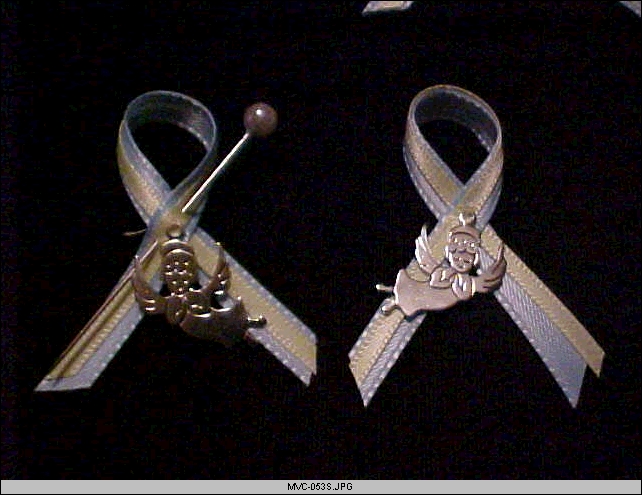
In Day 10 on April 10, 2012, I wrote about how we got the Cushing’s colors of blue and yellow.  This post is going to be about the first Cushing’s ribbons.


I was on vacation  in September, 2001 when SuziQ called me to let me know that we had had our first Cushie casualty (that we knew about).

On the message boards, Lorrie wrote: Our dear friend, Janice died this past Tuesday, September 4, 2001. I received an IM from her best friend Janine, tonight. Janine had been reading the boards, as Janice had told her about this site, and she came upon my name and decided to IM me. I am grateful that she did. She said that she knew that Janice would want all of us to know that she didn’t just stop posting.

For all of the newcomers to the board that did not know Janice, she was a very caring individual. She always had something positive to say. Janice was 36 years old, was married and had no children. She had a miscarriage in December and began to have symptoms of Cushing’s during that pregnancy. After the pregnancy, she continued to have symptoms. When discussing this with her doctor, she was told that her symptoms were just related to her D&C. She did not buy this and continued until she received the accurate diagnosis of Cushing’s Syndrome (adrenal) in March of 2001. Tragically, Janice’s tumor was cancerous, a very rare form of Cushing’s.

Janice then had her tumor and adrenal gland removed by open adrenalectomy, a few months ago. She then began chemotherapy. She was very brave through this even though she experienced severe side effects, including weakness and dizziness. She continued to post on this board at times and even though she was going through so much, she continued with a positive attitude. She even gave me a referral to a doctor a few weeks ago. She was my inspiration. Whenever I thought I had it bad, I thought of what she was dealing with, and I gained more perspective.

Janice was having difficulty with low potassium levels and difficulty breathing. She was admitted to the hospital, a CT scan was done and showed tumor metastasis to the lungs. She then was begun on a more aggressive regimen of chemo. She was discharged and apparently seemed to be doing well.

The potassium then began to drop again, she spiked a temp and she was again admitted to the hospital. She improved and was set to be discharged and then she threw a blood clot into her lungs. She was required to be put on a ventilator. She apparently was at high risk for a heart attack. Her husband did not want her to suffer anymore and did not want her to suffer the pain of a heart attack and so chose for the doctors to discontinue the ventilator on Tuesday. She died shortly thereafter.

Janice was our friend. She was a Cushie sister. I will always remember her. Janine asked me to let her know when we get the Cushing’s ribbons made as she and the rest of Janice’s family would like to wear them in her memory. She said that Janice would want to do anything she could to make others more aware of Cushing’s.

The image at the top of the page shows the first blue and yellow ribbon which were worn at Janice’s funeral.  When we had our “official ribbons” made, we sent several to Janice’s family.

Janice was the first of us to die but there have been more, way too many more, over the years.  I’ll write a bit more about that on Day 21.