Eyelid Edema Due to Cushing’s Syndrome

Abstract

Cushing’s syndrome (CS) shows diverse signs such as centripetal obesity, moon face, and buffalo hump, which can complicate the diagnosis. Facial features including eyelid edema, as an underrecognized sign, can be diagnostic clues for an excess of corticoids in a CS patient.

A 49-year-old woman presented with amenorrhea and weight gain that had continued for 2 years. Her medical history was dyslipidemia, hypertension, and osteoporosis. Physical examination revealed eyelid edemas (Figure 1A), moon face, buffalo hump, abdominal purple striae, and centripetal obesity (body mass index (BMI), 30.8 kg/m2). Basal plasma adrenocorticotropin was undetectable and serum cortisol level was high (16.9 μg/dl) without circadian rhythms. Free cortisol level in a 24-h urine collection was elevated (158.7 μg/day). Overnight administration of dexamethasone (1 mg) did not reduce serum cortisol level (17.4 μg/dl). Magnetic resonance imaging suggested bilateral adenomas. We made a diagnosis of adrenal Cushing’s syndrome (CS). Since 131l-adosterol scintigraphy showed specific uptake in the left adrenal gland, left adrenalectomy was laparoscopically performed. Histopathology of the tumor was compatible with adrenocortical adenoma. Three months after surgery, her BMI decreased to 25.0 kg/m2 and eyelid edemas were ameliorated (Figure 1B).

Details are in the caption following the image

(A) Bilateral eyelid edemas due to Cushing’s syndrome are shown. (B) These findings were improved three months after surgery for left adrenal adenomas

Eyelid edema, in addition to centripetal obesity, moon face, and buffalo hump, is also a significant sign of CS; however, it has scarcely been reported in countries other than Japan.12 Increased capillary permeability, insufficient venous return due to muscle atrophy, and sodium retention due to mineralocorticoid actions conceivably cause edema in CS.

AUTHORS’ CONTRIBUTIONS

KY wrote the first draft and managed all the submission processes. KO and KH contributed to the clinical management of the patient. FO organized the writing the manuscript.

ACKNOWLEDGMENT

None.

CONFLICT OF INTEREST

The authors declare no conflicts of interest.

ETHICAL APPROVAL

Written informed consent was obtained from the patient to publish this case report.

  • 1Lacroix A, Feelders RA, Stratakis CA, Nieman LK. Cushing’s syndrome. Lancet. 2015; 386: 913- 927.
  • 2Komiya I, Takasu N, Ohara N, et al. Forty-one cases of Cushing’s syndrome: a comparison between Cushing’s syndrome (adrenal adenoma) and Cushing’s disease (adrenal hyperplasia). Nihon Naibunpi Gakkai Zasshi. 1992; 68: 607- 622.

https://doi.org/10.1002/ccr3.5940

From https://onlinelibrary.wiley.com/doi/10.1002/ccr3.5940

Concurrent Mutations of Germline GPR101 and Somatic USP8 in a Pediatric Giant Pituitary ACTH Adenoma

Abstract

Background

Cushing’s disease (CD) is rare in pediatric patients. It is characterized by elevated plasma adrenocorticotropic hormone (ACTH) from pituitary adenomas, with damage to multiple systems and development. In recent years, genetic studies have shed light on the etiology and several mutations have been identified in patients with CD.

Case presentation

A girl presented at the age of 10 years and 9 months with facial plethora, hirsutism and acne. Her vision and eye movements were impaired. A quick weight gain and slow growth were also observed. Physical examination revealed central obesity, moon face, buffalo hump, supra-clavicular fat pads and bruising. Her plasma ACTH level ranged between 118 and 151 pg/ml, and sella enhanced MRI showed a giant pituitary tumor of 51.8 × 29.3 × 14.0 mm. Transsphenoidal pituitary debulk adenomectomy was performed and immunohistochemical staining confirmed an ACTH-secreting adenoma. Genetic analysis identified a novel germline GPR101 (p.G169R) and a somatic USP8 (p. S719del) mutation. They were hypothesized to impact tumor growth and function, respectively.

Conclusions

We reported a rare case of pediatric giant pituitary ACTH adenoma and pointed out that unusual concurrent mutations might contribute to its early onset and large volume.

Peer Review reports

Background

Cushing’s disease (CD) is caused by the overproduction of adrenocorticotropic hormone (ATCH) by pituitary adenomas (PAs). It is rare in children and accounts for approximately 75% of pediatric Cushing’s syndrome from 7 to 17 years of age [1]. Weight gain and facial changes are more common in children than in adults [2]. Growth retardation is also a characteristic of children with hypercortisolemia [3]. Genetic alterations such as somatic USP8RASD1TP53 mutations, and germline AIPMEN1, and CABLES1 mutations have been identified in CD patients [4]. Here we report a case of pediatric invasive pituitary ACTH macroadenoma associated with a novel germline GPR101 (p. G169R) and a somatic USP8 (p. S719del) mutation.

Case presentation

The girl was born at full term with a length of 48 cm and a weight of 2900 g. Her neuromotor and cognitive development was comparable to those of children of the same age. At the age of 9 years and 4 months she developed plethora, hirsutism, facial acne, rapid weight gain, and increased abdominal circumference. Her skin darkened, and purple striae appeared on thighs and in the armpits. She became dull and less talkative, as indicated by her parents. At 10 years and 3 months, the patient complained of pain around the left orbit with an intensity of 4–5 points on a numerical rating scale (NRS). Five months later bilateral blepharoptosis appeared, with significantly impaired vision of the left eye. Soon both eyes failed to rotate in all directions.

On admission the patient was 10 years and 9 months, with a height of 144 cm (90–97th percentile) and a weight of 48 kg (25–50th percentile). Her weight gain was 20 kg, while the height increased by only 2–3 cm in 18 months. Her blood pressure was 115/76mmHg, and her heart rate was 80 bpm. Apart from the signs mentioned above, physical examination revealed central obesity (BMI 23.1 kg/m2), moon face, buffalo hump, supra-clavicular fat pads and bruising at the left fossa cubitalis. Her pupils were 7 mm in diameter and barely reacted to light. There was a fan-shaped visual field defect in the left eye. Her breasts were Tanner stage III and pubic hair was Tanner stage II, although menarche had not yet occurred. The parents and her younger brother at 6 years of age did not have symptoms related to Cushing syndrome, acromegaly or gigantism. There was no family history of pituitary tumor or other endocrine tumors.

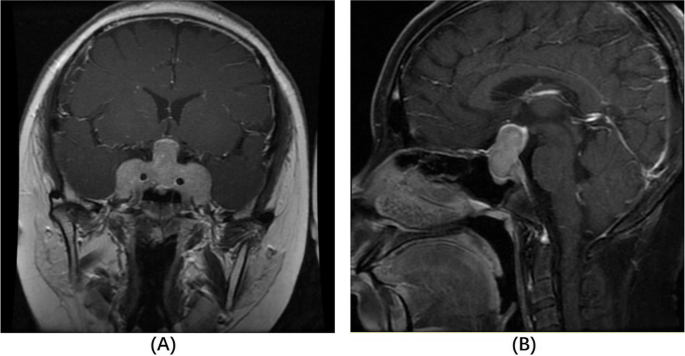
She had increased midnight serum cortisol (24.35 µg/dL, normal range < 1.8 µg/mL) and 24-hour urine free cortisol (24hUFC) (308.0 µg, normal range 12.3–103.5). The plasma ACTH level ranged from 118 to 151 pg/mL (< 46pg/mL). The 24hUFC was not suppressed (79.2 µg) after 48 h low-dose dexamethasone suppression test (LDDST), but suppressed to 32.8 µg (suppression rate 89.4%) after 48 h high-dose dexamethasone. Sella enhanced MRI showed a giant pituitary tumor measured 51.8 × 29.3 × 14.0 mm with heterogeneous density (Fig. 1). The mass compressed the optic chiasma and surrounded the bilateral cavernous sinus (Knosp 4). Therefore, an invasive giant pituitary ACTH adenoma was clinically diagnosed. The morning growth hormone (GH) was 1.0ng/ml (< 2 ng/ml) and insulin-like growth factor 1 416 ng/ml (88–452 ng/ml). The prolactin (PRL), luteinizing hormone (LH), follicle-stimulating hormone (FSH) and thyroid stimulating hormone (TSH) were all in normal ranges, as well as serum sodium, potassium, blood glucose and urine osmolality. Abdominal ultrasonography revealed a fatty liver. Tests concerning type 1 multiple endocrine neoplasia included serum calcium, phosphate, parathyroid hormone, gastrin and glucagon, which were all unremarkable (Table 1).

Fig. 1

figure 1

Contrast-enhanced coronal (A) and sagittal (B) T1-weighted MRI on admission. The sellar mass measured 51.8 × 29.3 × 14.0 cm (TD × VD × APD) with a heterogeneous density in the enhanced scan. The diaphragma sellea was dramatically elevated, with optic chiasm compressed. The sellar floor was sunken and bilateral cavernous sinus was surrounded (Knosp 4)

Table 1 Laboratory data on admission

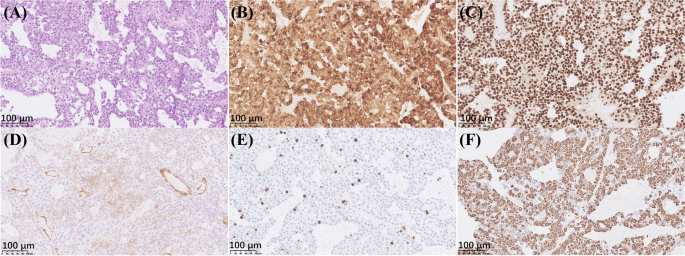
Transsphenoidal pituitary debulk adenomectomy was performed immediately due to multiple cranial nerve involvement and the negative results of Sandostatin loading test. A decompression resection was done. The plasma ACTH level declined to 77 pg/ml and serum cortisol 30.2 µg/dl three days after the operation. Vision, pupil dilation, eye movements and blepharoptosis also partially improved. Histopathology and immunohistochemical staining confirmed a densely–granulated corticotroph adenoma (Fig. 2, NanoZoomer S360 digital slide scanner and NDP.view 2.9.25 software, Hamamatsu, Japan). Neither necrosis nor mitotic activity was observed. The immunostaining for somatostatin receptor SSTR2A was positive with a cytoplasmic pattern, while GH, PRL, TSH, FSH, LH and PIT were all negative. The Ki 67 index was found to be 10%. One month after the operation the ACTH level increased to 132 pg/mL again, and the parents agreed to refer their child for radiotherapy to control the residual tumor.

Fig. 2

figure 2

Histopathology and immunohistochemistry staining results of the pituitary tumor. By light microscopy, the tumor cells were mostly basophilic and arranged in papillary architecture. Neither necrosis nor mitotic activity was observed (A hematoxylin-eosin, ×200). Immunohistochemistry staining was positive for ACTH (B immunoperoxidase, ×200) and transcription factor T-PIT (C immunoperoxidase, ×200). Cytoplasmic staining of SSTR2A was observed in around 1/3 tumor cells besides the strong staining of endothelial cells (D immunoperoxidase, ×200). The Ki-67 index was 10% (E immunoperoxidase, ×200). Cytokeratin CAM5.2 was diffusely positive in the cytoplasm (F immunoperoxidase, ×200). The positive control for ACTH and T-PIT was the human anterior pituitary gland, and for SSRT2, Ki-67 and CAM5.2 were cerebral cortex, tonsil and colonic mucosa, respectively

The early onset and invasive behavior of this tumor led to the consideration of whether there was a genetic defect. Genetic studies were recommended for the families and they all agreed and signed the written informed consent forms. Whole exome sequencing (WES) was performed on the patient’s blood sample using an Illumina HiSeq sequencer to an average read depth of at least 90 times per individual. Raw sequence files were mapped to the GRCH37 human reference genome and analyzed using the Sentieon software. The results revealed a germline heterozygous GPR101 gene mutation c.505G > C (p.Gly169Arg), which was subsequently confirmed to be of maternal origin by Sanger sequencing. Meanwhile WES of the tumor tissue identified an additional somatic heterozygous c.2155_2157delTCC (p.S719del) mutation of the USP8 gene .

Discussion and conclusions

In this report, we described an extremely giant and invasive pituitary ACTH adenoma in a 10-year-old girl. According to Trouillas et al., invasive and proliferative pituitary tumors have a poor prognosis [5]. CD is rare among children, and the fast-growing and invasive nature of the tumor in this case led to the investigation of genetic causes. The somatic USP8 gene mutation has been recently reported to be associated with the pathogenesis of CD [67]. This gene encodes ubiquitin-specific protease 8 (USP8). S718, S719 and P720 are hotspots in different studies [6,7,8,9,10,11,12,13,14]. They are located at the 14-3-3 binding motif, and the mutations disrupt the binding between USP8 and 14-3-3 protein, which leads to increased deubiquitination and EGFR signaling. High levels of EGFR consequently trigger proopiomelanocortin (POMC) transcription and ACTH secretion [67]. The p.S719del mutation has been previously reported and its pathogenicity has been confirmed [7]. Thus, we speculate the p.S719del mutation plays a role in this patient with CD.

It is noteworthy that in our case, the pituitary corticotrophin adenoma was extremely giant and bilaterally invasive. USP8 mutations have been found in 31% of pediatric CD patients [10]. It is well known that microadenomas are most common in adult and pediatric CD patients. Previously, the Chinese and Japanese cohorts observed smaller sizes of USP8-mutated PAs than wild-type PAs [79]. The Chinese cohort also reported a lower rate of invasive adenomas in USP8-mutated PAs [7]. This may be explained by the finding that UPS8 mutations did not significantly promote cell proliferation more than the wild-type ones [6]. Other cohorts suggested no difference in tumor size or invasiveness between USP8-mutated and wild-type PAs [81012,13,14], which may be partially explained by the differences in sample sizes and ethnic backgrounds. Owing to the lack of evidence of USP8 mutations significantly contributing to tumor growth and invasiveness, additional pathogenesis should be investigated in this case.

The p.Gly169Arg mutation of the GPR101 gene has not been reported in patients with pituitary tumors. In silico predictions were performed using Polyphen-2, Mutation Taster and PROVEAN, and all of the programs reported it to be pathogenic. The GPR101 gene encodes an orphan G protein-coupled receptor (GPCR) and microduplication encompassing the gene has been proven to be the cause of X-linked acrogigantism (XLAG) [15]. XLAG is characterized by the early onset of pituitary GH-secreting macroadenomas. Point mutations of GPR101 have been found in patients with PAs that are mostly GH-secreting [15,16,17]. Although their prevalence is very low, an in vitro study supported the pathogenic role of p.E308D, the most common mutation of GPR101. This led to increased cell proliferation and GH production in rat pituitary GH3 cells [15]. Rare cases of PRL, ACTH or TSH-secreting PAs with GPR101 variants were also documented [1618]. To date, there have been five cases of ACTH-secreting PAs with four different germline GPR101 mutations: two cases of p.E308D, p.I122T, p.T293I and p.G31S, although in silico predictions and in vitro evaluations using AtT-20 cells have respectively determined the latter two mutations to be non-pathogenic [1618]. These patients were mainly children and young adults. Unlike pituitary GH-secreting tumors, the role of GPR101 mutations in the pathophysiology of CD is still questionable. Trivellin et al. demonstrated no statistically significant difference in GPR101 expression between corticotropinomas and normal human pituitaries. No significant correlation between GPR101 and POMC expression levels was found neither [18].

Given the evidences above, we hypothesize that the somatic USP8 mutation is responsible for the overexpression of ACTH in this CD girl while the germline GPR101 mutation contributes to the early onset and fast-growing nature of the tumor. Similarly, a 27-year-old woman with Nelson’s syndrome originally considered to be associated with a germline AIP variant (p.Arg304Gln) was recently reported to have a somatic USP8 mutation. The patient progressed rapidly and underwent multiple transsphenoidal surgeries [19]. Since germline AIP mutations are more commonly seen in GH-secreting PAs [20], the authors proposed that the USP8 mutation might have shifted the tumor towards ACTH-secreting [19]. Further investigations into the pathogenicity of GPR101 p.Gly169Arg and AIP p.Arg304Gln mutations are required to support the hypothesis.

In summary, we report a novel germline GPR101 and somatic USP8 mutation in a girl with an extremely giant pituitary ACTH adenoma. The concurrent mutations may lead to the growth and function of the tumor, respectively. Further investigations should be carried out to verify the role of the concurrent mutations in the pathogenesis of pediatric CD.

Availability of data and materials

The WES data of the blood sample of the patient is available in the NGDC repository (https://ngdc.cncb.ac.cn/gsa-human/) and the accession number is HRA002396. Any additional information is available from the authors upon reasonable request.

Abbreviations

CD:
Cushing’s disease
ACTH:
adrenocorticotropic hormone
PA:
pituitary adenoma
NRS:
numerical rating scale
24hUFC:
24-hour urine free cortisol
LDDST:
low-dose dexamethasone suppression test
USP8:
ubiquitin-specific protease 8
POMC:
proopiomelanocortin
GPCR:
G protein-coupled receptor
XLAG:
X-linked acrogigantism

References

  1. Weber A, Trainer PJ, Grossman AB, Afshar F, Medbak S, Perry LA, et al. Investigation, management and therapeutic outcome in 12 cases of childhood and adolescent Cushing’s syndrome. Clin Endocrinol (Oxf). 1995;43(1):19–28.

    CAS Article Google Scholar

  2. Storr HL, Alexandraki KI, Martin L, Isidori AM, Kaltsas GA, Monson JP, et al. Comparisons in the epidemiology, diagnostic features and cure rate by transsphenoidal surgery between paediatric and adult-onset Cushing’s disease. Eur J Endocrinol. 2011;164(5):667–74.

    CAS Article Google Scholar

  3. Magiakou MA, Mastorakos G, Oldfield EH, Gomez MT, Doppman JL, Cutler GB Jr, et al. Cushing’s syndrome in children and adolescents. Presentation, diagnosis, and therapy. N Engl J Med. 1994;331(10):629–36.

    CAS Article Google Scholar

  4. Hernández-Ramírez LC, Stratakis CA. Genetics of Cushing’s Syndrome. Endocrinol Metab Clin North Am. 2018;47(2):275–97.

    Article Google Scholar

  5. Trouillas J, Roy P, Sturm N, Dantony E, Cortet-Rudelli C, Viennet G, et al. A new prognostic clinicopathological classification of pituitary adenomas: a multicentric case-control study of 410 patients with 8 years post-operative follow-up. Acta Neuropathol. 2013;126(1):123–35.

    Article Google Scholar

  6. Reincke M, Sbiera S, Hayakawa A, Theodoropoulou M, Osswald A, Beuschlein F, et al. Mutations in the deubiquitinase gene USP8 cause Cushing’s disease. Nat Genet. 2015;47(1):31–8.

    CAS Article Google Scholar

  7. Ma Z-Y, Song Z-J, Chen J-H, Wang Y-F, Li S-Q, Zhou L-F, et al. Recurrent gain-of-function USP8 mutations in Cushing’s disease. Cell Res. 2015;25(3):306–17.

    CAS Article Google Scholar

  8. Perez-Rivas LG, Theodoropoulou M, Ferrau F, Nusser C, Kawaguchi K, Stratakis CA, et al. The Gene of the Ubiquitin-Specific Protease 8 Is Frequently Mutated in Adenomas Causing Cushing’s Disease. J Clin Endocrinol Metab. 2015;100(7):E997–1004.

    CAS Article Google Scholar

  9. Hayashi K, Inoshita N, Kawaguchi K, Ibrahim Ardisasmita A, Suzuki H, Fukuhara N, et al. The USP8 mutational status may predict drug susceptibility in corticotroph adenomas of Cushing’s disease. Eur J Endocrinol. 2016;174(2):213–26.

    CAS Article Google Scholar

  10. Faucz FR, Tirosh A, Tatsi C, Berthon A, Hernandez-Ramirez LC, Settas N, et al. Somatic USP8 Gene Mutations Are a Common Cause of Pediatric Cushing Disease. J Clin Endocrinol Metab. 2017;102(8):2836–43.

    Article Google Scholar

  11. Albani A, Perez-Rivas LG, Dimopoulou C, Zopp S, Colon-Bolea P, Roeber S, et al. The USP8 mutational status may predict long-term remission in patients with Cushing’s disease. Clin Endocrinol (Oxf). 2018;89:454–8.

    CAS Article Google Scholar

  12. Ballmann C, Thiel A, Korah HE, Reis AC, Saeger W, Stepanow S, et al. USP8 Mutations in Pituitary Cushing Adenomas-Targeted Analysis by Next-Generation Sequencing. J Endocr Soc. 2018;2(3):266–78.

    CAS Article Google Scholar

  13. Losa M, Mortini P, Pagnano A, Detomas M, Cassarino MF, Pecori Giraldi F. Clinical characteristics and surgical outcome in USP8-mutated human adrenocorticotropic hormone-secreting pituitary adenomas. Endocrine. 2019;63(2):240–6.

    CAS Article Google Scholar

  14. Weigand I, Knobloch L, Flitsch J, Saeger W, Monoranu CM, Hofner K, et al. Impact of USP8 Gene Mutations on Protein Deregulation in Cushing Disease. J Clin Endocrinol Metab. 2019;104(7):2535–46.

    Article Google Scholar

  15. Trivellin G, Daly AF, Faucz FR, Yuan B, Rostomyan L, Larco DO, et al. Gigantism and acromegaly due to Xq26 microduplications and GPR101 mutation. N Engl J Med. 2014;371(25):2363–74.

    CAS Article Google Scholar

  16. Lecoq AL, Bouligand J, Hage M, Cazabat L, Salenave S, Linglart A, et al. Very low frequency of germline GPR101 genetic variation and no biallelic defects with AIP in a large cohort of patients with sporadic pituitary adenomas. Eur J Endocrinol. 2016;174(4):523–30.

    CAS Article Google Scholar

  17. Iacovazzo D, Caswell R, Bunce B, Jose S, Yuan B, Hernández-Ramírez LC, et al. Germline or somatic GPR101 duplication leads to X-linked acrogigantism: a clinico-pathological and genetic study. Acta Neuropathol Commun. 2016;4(1):56.

    Article Google Scholar

  18. Trivellin G, Correa RR, Batsis M, Faucz FR, Chittiboina P, Bjelobaba I, et al. Screening for GPR101 defects in pediatric pituitary corticotropinomas. Endocr Relat Cancer. 2016;23(5):357–65.

    CAS Article Google Scholar

  19. Perez-Rivas LG, Theodoropoulou M, Puar TH, Fazel J, Stieg MR, Ferrau F, et al. Somatic USP8 mutations are frequent events in corticotroph tumor progression causing Nelson’s tumor. Eur J Endocrinol. 2018;178(1):57–63.

    CAS Article Google Scholar

  20. Tatsi C, Stratakis CA. The Genetics of Pituitary Adenomas. J Clin Med. 2019;9(1).

Download references

Acknowledgements

We thanked Dr. Xiaohua Shi and Dr. Yu Xiao from the Department of Pathology, Peking Union Medical College Hospital for their expertise in pituitary pathology and critical help in accomplishment of our manuscript.

Funding

This research was supported by “The National Key Research and Development Program of China” (No. 2016YFC0901501), “CAMS Innovation Fund for Medical Science” (CAMS-2017-I2M–1–011). They mainly covered the fees for genetic analysis and publications.

Author information

Authors and Affiliations

  1. Department of Pediatrics, Peking Union Medical College Hospital, Chinese Academy of Medical Science and Peking Union Medical College, Beijing, 100730, China

    Xu-dong Bao

  2. Department of Endocrinology, Key Laboratory of Endocrinology of National Health Commission, Peking Union Medical College Hospital, Chinese Academy of Medical Science and Peking Union Medical College, Beijing, 100730, China

    Lin Lu, Hui-juan Zhu, Xiao Zhai, Yong Fu, Feng-ying Gong & Zhao-lin Lu

  3. Department of Neurosurgery, Peking Union Medical College Hospital, Chinese Academy of Medical Science and Peking Union Medical College, Beijing, 100730, China

    Yong Yao, Ming Feng & Ren-zhi Wang

Contributions

XB and LL contributed to the study design and manuscript writing. HZ and FG performed genetic analysis. XZ and YF collected the clinical data. YY, MF and RW provided the tumor tissue and histopathology data. ZL revised the manuscript. All authors have read and approved the final manuscript.

Corresponding author

Correspondence to Lin Lu.

Ethics declarations

Ethics approval and consent to participate

This study was approved by the Ethics Committee of Peking Union Medical College Hospital. The parents of the patient provided written informed consent for research participation.

Consent for publication

The parents of the patient provided written informed consent for the publication of indirectly identifiable data in this research.

Competing interests

The authors declare that they have no competing interests.

Additional information

Publisher’s note

Springer Nature remains neutral with regard to jurisdictional claims in published maps and institutional affiliations.

Osilodrostat Improves Physical Manifestations of Hypercortisolism for Most Adults

Osilodrostat is associated with improvements in physical manifestations of hypercortisolism and reductions in mean body weight and BMI in adults with Cushing’s syndrome, according to a speaker.

As Healio previously reported, in findings from the LINC 4 phase 3 trial, osilodrostat (Isturisa, Recordati) normalized mean urinary free cortisol level at 12 weeks in more than 75% of adults with Cushing’s disease. In new findings presented at the AACE Annual Scientific and Clinical Conference, most adults with Cushing’s syndrome participating in the LINC 3 phase 3 trial had improvements in physical manifestations of hypercortisolism 72 weeks after initiating osilodrostat, with more than 50% having no dorsal fat pad, supraclavicular fat pad, facial rubor, proximal muscle atrophy, striae, ecchymoses and hirsutism for women at 72 weeks.

Adrenal transparent _Adobe
Source: Adobe Stock

“Many patients with Cushing’s syndrome suffer from clinical manifestations related to hypercortisolism,” Albert M. Pedroncelli, MD, PhD, head of clinical development and medical affairs for Recordati AG in Basel, Switzerland, told Healio. “The treatment with osilodrostat induced a rapid normalization of cortisol secretion, and improvements in physical manifestations associated with hypercortisolism were observed soon after initiation of osilodrostat and were sustained throughout the study.”

Albert M. Pedroncelli

Pedroncelli and colleagues analyzed changes in the physical manifestations of hypercortisolism in 137 adults with Cushing’s syndrome (median age, 40 years; 77.4% women) assigned osilodrostat. Dose titration took place from baseline to 12 weeks, and therapeutic doses were administered from 12 to 48 weeks, with some participants randomly assigned to withdrawal between 26 and 34 weeks. An extension phase of the trial took place from 48 to 72 weeks. Investigators subjectively rated physical manifestations of hypercortisolism in participants as none, mild, moderate or severe. Participants were evaluated at baseline and 12, 24, 34, 48 and 72 weeks.

At baseline, the majority of the study cohort had mild, moderate or severe physical manifestations of hypercortisolism in most individual categories, including dorsal fat pad, central obesity, supraclavicular fat pad, facial rubor, hirsutism in women and striae. Central obesity was the most frequent physical manifestation rated as severe.

The percentage of participants with improvements in physical manifestations of hypercortisolism increased from week 12 on for all individual manifestations evaluated in the study, and improvements were maintained through week 72. At 72 weeks, the percentage of participants who had no individual physical manifestations was higher than 50% for each category except central obesity, where 30.6% of participants had no physical manifestations.

In addition to improvement in physical manifestations, the study cohort had decreases in body weight, BMI and waist circumference at weeks 48 and 72 compared with baseline.

“The main goal of treating patients with Cushing’s syndrome is to normalize cortisol secretion,” Pedroncelli said. “The rapid reduction and normalization of cortisol levels is accompanied by improvement in the associated clinical manifestations. This represents an important objective for patients.”

From https://www.healio.com/news/endocrinology/20220512/osilodrostat-improves-physical-manifestations-of-hypercortisolism-for-most-adults

Crinetics Pharmaceuticals (CRNX) Reports Positive Top-line Results Including Strong Adrenal Suppression from CRN04894 Phase 1 Study

Crinetics Pharmaceuticals, Inc. (Nasdaq: CRNX) today announced positive results from the multiple-ascending dose (MAD) portion of a first-in-human Phase 1 clinical study of CRN04894, the company’s first-in-class, investigational, oral, nonpeptide adrenocorticotropic hormone (ACTH) antagonist that is being developed for the treatment of Cushing’s disease, congenital adrenal hyperplasia (CAH) and other conditions of excess ACTH. Following administration of CRN04894, results showed serum cortisol below normal levels and a marked reduction in 24-hour urine free cortisol excretion in the presence of sustained, disease-like ACTH concentrations.

“The design of our Phase 1 healthy volunteer study allowed us to demonstrate CRN04894’s potent pharmacologic activity in the presence of ACTH levels that were in similar range to those seen in CAH and Cushing’s disease patients,” said Alan Krasner, M.D., Crinetics’ chief medical officer. “The observation of dose-dependent reductions in serum cortisol levels to below the normal range even in the presence of high ACTH indicates that CRN04894 was effective in blocking the key receptor responsible for regulating cortisol secretion. We believe this is an important finding that may be predictive of CRN04894’s efficacy in patients.”

ACTH is the key regulator of the hypothalamic-pituitary adrenal (HPA) axis controlling adrenal activation. It is regulated by cortisol via a negative feedback loop that acts to inhibit ACTH secretion. This feedback loop is dysregulated in diseases of excess ACTH. In Cushing’s disease, a benign pituitary tumor drives excess ACTH secretion even in the presence of excess cortisol. While in CAH, an enzyme deficiency results in excess androgen synthesis without normal cortisol synthesis, allowing unchecked ACTH production and requiring lifelong glucocorticoid use. In both diseases, excess ACTH drives over-stimulation of the adrenal gland and leads to a host of symptoms including infertility, adrenal rest tumors, and metabolic complications in CAH and, in Cushing’s disease, symptoms include hypertension, central obesity, neuropsychiatric disorders and metabolic complications. To our knowledge, no other ACTH antagonists are currently in clinical development for diseases of ACTH excess such as Cushing’s disease or CAH.

The 49 healthy adults evaluated in the multiple ascending dose portion of the Phase 1 study were administered 40, 60 or 80 mg doses of CRN04894, or placebo, daily for 10 days. After 10 days of dosing was complete, evaluable participants were administered an ACTH challenge to stimulate adrenal activation to disease relevant levels. Safety and pharmacokinetic data were consistent with expectations from the single-ascending dose cohorts in the Phase 1 study. There were no discontinuations due to treatment-related adverse events and no serious adverse events reported. Glucocorticoid deficiency was the most common treatment-related adverse event in the MAD cohorts. This was an expected extension of pharmacology given the mechanism of action of CRN04894. CRN04894 showed consistent oral bioavailability in the MAD cohorts with a half-life of approximately 24 hours, which is anticipated to support once-daily dosing.

Participants in the MAD cohorts who were administered once nightly CRN04894 experienced a dose-dependent suppression of adrenal function as measured by suppression of serum cortisol production of 17%, 29% and 37% on average from baseline over 24 hours for the 40, 60 or 80 mg dosing groups respectively, (despite requirement for glucocorticoid supplementation in some of these subjects to prevent clinical adrenal insufficiency), compared to an average 2% increase in serum cortisol for individuals receiving placebo. The strong, dose-dependent suppression of serum and urine free cortisol was achieved despite ACTH levels in subjects in the 60 and 80 mg cohorts similar to those typically seen in patients with CAH and Cushing’s disease. Even when an additional exogenous ACTH challenge was administered on top of the already increased ACTH levels, cortisol levels remained below the normal range in subjects receiving CRN04894, indicating clinically significant suppression of adrenal activity.

“Due to its central position in HPA axis, ACTH is the obvious target for inhibiting excessive stimulation of the adrenal in diseases of ACTH excess. Even though the field of endocrinology has known about its clinical significance for more than 100 years, we are not aware of any other ACTH antagonist that has entered clinical development. This is an important milestone for endocrinology and for our company.” said Scott Struthers, Ph.D., founder and chief executive officer of Crinetics. “We are very excited to initiate patient studies in Cushing’s disease and CAH with CRN04894, which will be our third home-grown NCE to demonstrate pharmacologic proof-of-concept and enter patient trials.”

Crinetics plans to present additional details of safety, efficacy, and biomarker results from the CRN04894 Phase 1 study at an endocrinology-focused medical meeting in 2022.

Data Review Conference Call Crinetics will hold a conference call and live audio webcast today, May 25, 2022, at 8:00 a.m. Eastern Time to discuss results from the MAD cohorts of the Phase 1 study of CRN04894. To participate, please dial 1-877-407-0789 (domestic) or 1-201-689-8562 (international) and refer to conference ID 13730000. To access the webcast, click here. Following the live event, a replay will be available on the Events page of the Company’s website.

About the CRN04894 Phase 1 Study Crinetics has completed enrollment of the 88 healthy volunteers in this double-blind, randomized, placebo-controlled Phase 1 study. Participants were divided into multiple cohorts in the single ascending dose (n=39) and multiple ascending dose (n=49) portions of the study. In both the SAD and MAD portions of the study, safety and pharmacokinetics were assessed. In addition, pharmacodynamic responses were evaluated before and after challenges with injected synthetic ACTH to assess pharmacologic effects resulting from exposure to CRN04894.

From https://www.streetinsider.com/Corporate+News/Crinetics+Pharmaceuticals+(CRNX)+Reports+Positive+Top-line+Results+Including+Strong+Adrenal+Suppression+from+CRN04894+Phase+1+Study/20126484.html

Recurrent Metatarsal Fractures in a Patient With Cushing Disease

Published: May 15, 2022 (see history)

DOI: 10.7759/cureus.25015

Cite this article as: Iturregui J, Shi G (May 15, 2022) Recurrent Metatarsal Fractures in a Patient With Cushing Disease: A Case Report. Cureus 14(5): e25015. doi:10.7759/cureus.25015

Abstract

Cushing syndrome (CS) can result from excess exposure to exogenous or endogenous glucocorticoids. The most common endogenous cause of CS is an adrenocorticotropic hormone (ACTH)-secreting pituitary adenoma, known as Cushing disease (CD). Patients typically present with characteristics including truncal obesity, moon facies, facial plethora, proximal muscle weakness, easy bruising, and striae. Insufficiency fractures of the metatarsals are a rare presentation for CS. A 39-year-old premenopausal woman presented to the orthopedic outpatient clinic with recurrent metatarsal fractures and no history of trauma. A metabolic bone disease was suspected, and after further evaluation by endocrinology services, the CD was diagnosed. Surgical resection was performed, and pathology confirmed the presence of a pituitary adenoma. Multiple, recurrent, non-traumatic metatarsal fractures can be the initial presentation of CD in a premenopausal woman.

Introduction

Cushing syndrome (CS) is a rare clinical and metabolic disorder caused by excessive exposure to glucocorticoids. In the United States, an estimated 10 to 15 people per million population are affected by CS each year, while studies in Europe report an incidence of 0.7 to 2.4 per million people affected annually [1,2]. Furthermore, CS more commonly affects women [2]. Common characteristics of CS include truncal obesity, moon facies, proximal muscle weakness, fatigue, facial plethora, supraclavicular fullness, peripheral edema, weight gain, striae, easy bruising, acne, hirsutism, amenorrhea, dorsocervical “buffalo” hump, depression, hypertension, impaired glucose tolerance, and osteoporosis [1,3,4].

The most common cause of CS is exogenous glucocorticoid therapy. Meanwhile, endogenous cortisol hypersecretion commonly results from either an adrenocorticotropic hormone (ACTH)-secreting pituitary adenoma or a cortisol-secreting adrenal tumor. When CS is caused by a pituitary adenoma, this is referred to as Cushing disease (CD). CD is the most common endogenous cause of CS, accounting for 80-85% of cases [1,5].

Whether a patient’s CS is caused by exogenous or endogenous sources, excessive exposure to steroids can have deleterious effects on the bones, resulting in secondary osteoporosis. The decrease in bone mass and microarchitectural changes increase the risk of fragility fractures, with reported rates as high as 30-67% [6]. The most commonly reported fracture site in CS patients is the vertebrae; however, other reported fracture sites include the ribs, sternum, wrist, elbow, shoulder, pelvis, hip, femoral condyles, tibia, fibula, calcaneus, metatarsals, and phalanges [4,6-16]. There are reports of metatarsal fractures occurring in patients diagnosed with endogenous CS [3,6,7,16-19]. However, to the best of our knowledge, there are no reports of multiple, recurrent, bilateral metatarsal fractures as the initial presentation in a pre-menopausal woman with CD. Here, we present a case of a premenopausal woman with recurrent metatarsal stress fractures who was diagnosed with CD after further evaluation.

Case Presentation

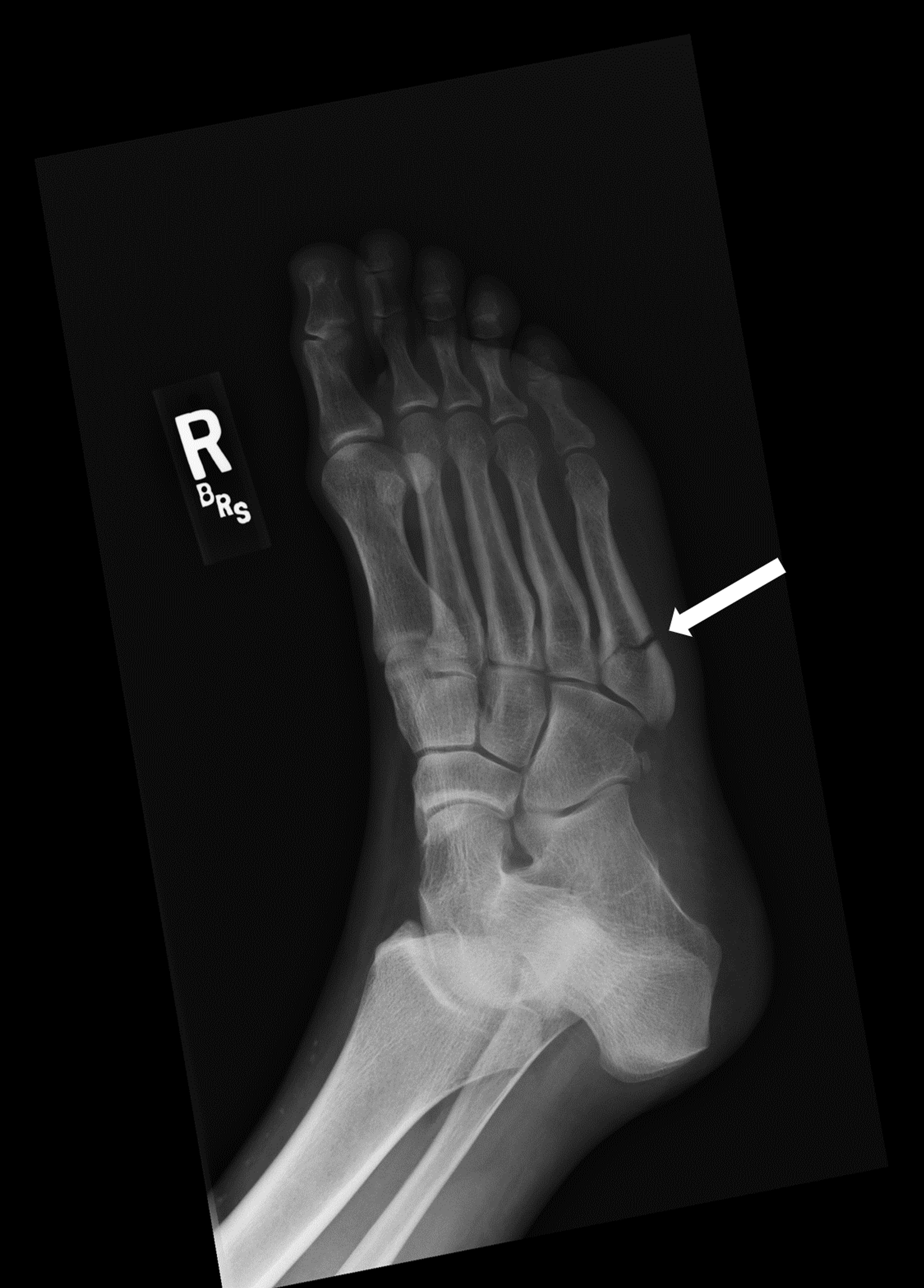
A 39-year-old premenopausal woman was evaluated by her primary care physician due to right foot pain after feeling a pop while walking. She reported swelling and some bruising along the lateral aspect of her foot. Her exercise regimen consisted of walking twice a week for 30 minutes at each session. She did not report any traumatic injuries to her foot. Imaging revealed a fifth metatarsal fracture (Figure 1). The patient was placed in a cast walker boot and referred to orthopedics for further evaluation. Orthopedic management included no weight bearing on her right foot and continuing using the cast walker boot or a postop shoe, with reevaluation in four weeks.

Oblique-radiograph-of-the-right-foot-demonstrating-a-mildly-displaced-transverse-fracture-of-the-proximal-fifth-metatarsal-(arrow).
Figure 1: Oblique radiograph of the right foot demonstrating a mildly displaced transverse fracture of the proximal fifth metatarsal (arrow).

At the time of evaluation, the patient was 161.5 cm tall, weighed 101 kg, and had a BMI of 38.86 kg/m2. Her medical history included hypertension, hyperglycemia, hyperlipidemia, hypothyroidism, obesity, anxiety, obstructive sleep apnea, and colon polyps. The patient reported a history of metatarsal fractures in her left foot in 2008, which healed slowly and without surgical intervention. She also underwent bunion and bunionette surgery on her left foot. Her medications included alprazolam, levothyroxine, lisinopril, bimatoprost, ergocalciferol, meloxicam, and ondansetron. She was a former smoker (2007-2010), a daily wine drinker, and had an active job working as a nurse. Her family history included lung cancer and alcohol abuse in her father; hypertension, hypothyroidism, and alcohol abuse in her mother; and osteoporosis and end-stage renal disease secondary to polycystic kidney disease in her sister.

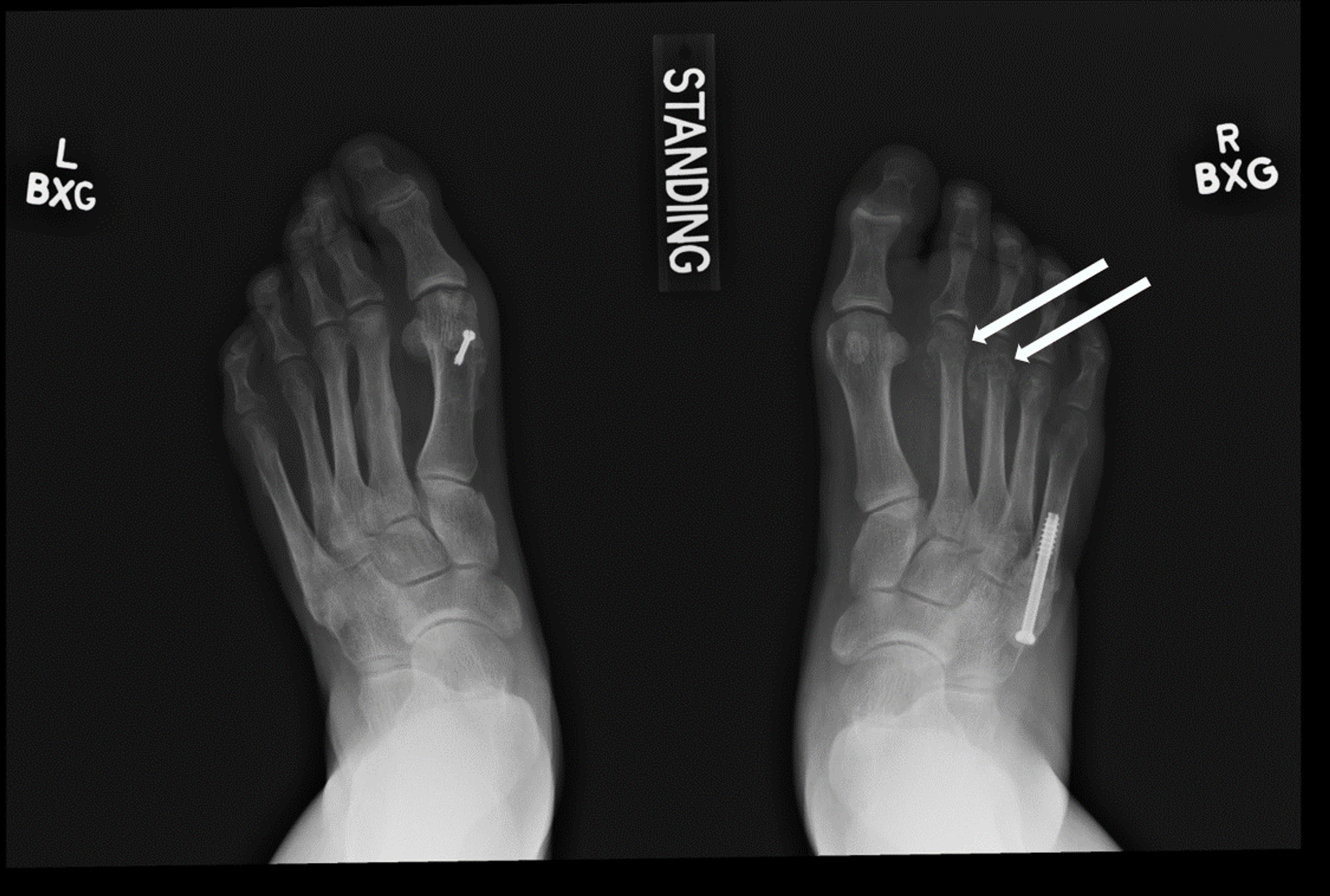
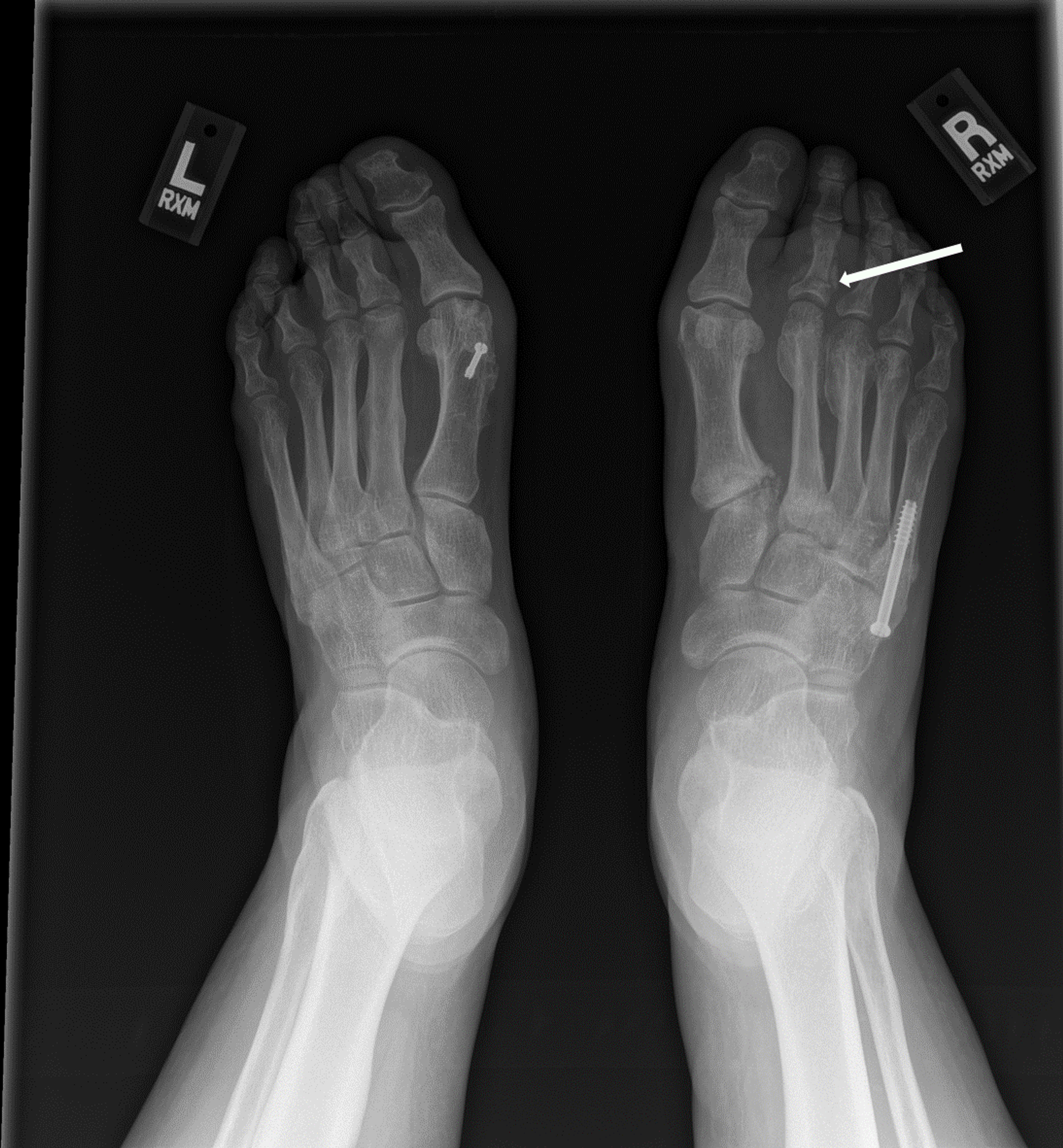
At the three-month follow-up visit, the fracture line remained clearly visible, and minimal callus had formed at the fracture site. Surgical fixation was recommended and performed four months after the fracture occurred. Six months after her right foot’s fifth metatarsal fracture, she developed new-onset swelling and tenderness over the middle metatarsals dorsally in her right foot with no history of trauma. Radiographs demonstrated new second and third metatarsal neck fractures (Figure 2). Conservative management with a postop shoe for six weeks and re-evaluation was recommended. In the interim between her initial right foot fifth metatarsal fracture and the new right foot second and third metatarsal fractures, the patient was diagnosed with diabetes mellitus type II, treated with a plant-based diet, hospitalized for urolithiasis, and diagnosed with depression. She was started on bupropion.

Anteroposterior-radiograph-of-bilateral-feet-demonstrating-second-and-third-metatarsal-neck-fractures-of-the-right-foot-(arrows).
Figure 2: Anteroposterior radiograph of bilateral feet demonstrating second and third metatarsal neck fractures of the right foot (arrows).

Due to the recurrent metatarsal stress fractures with no associated trauma, the patient was referred to endocrinology for workup of metabolic bone disease. Her physical exam revealed no abnormalities, and her overall workup was negative. Bone mineral density results demonstrated osteopenia in the lumbar spine (T-score: -1.8) and left femoral neck (T-score: -1.0), and normal bone density in the left total hip (T-score: -0.80).

Six months following her right foot’s second and third metatarsal fractures, the patient developed right great toe and second toe swelling and bruising. Two months later, after trying supportive tennis shoes and reducing weightbearing on her right foot, she did not notice any improvement and sought orthopedic care. Radiographs revealed a new subacute fracture of the right second proximal phalanx (Figure 3). A magnetic resonance imaging (MRI) scan was ordered, which revealed a first metatarsal shaft stress fracture as well (Figure 4). She underwent conservative management with a Cam walker boot and was referred to endocrinology for re-evaluation for suspected endocrinopathy.

AP-radiograph-of-bilateral-feet-demonstrating-a-subacute-fracture-of-the-second-proximal-phalanx-of-the-right-foot-(arrow).
Figure 3: AP radiograph of bilateral feet demonstrating a subacute fracture of the second proximal phalanx of the right foot (arrow).
T1-weighted-sagittal-MRI-of-the-right-foot-demonstrating-a-first-metatarsal-shaft-stress-fracture-(arrow).
Figure 4: T1-weighted sagittal MRI of the right foot demonstrating a first metatarsal shaft stress fracture (arrow).

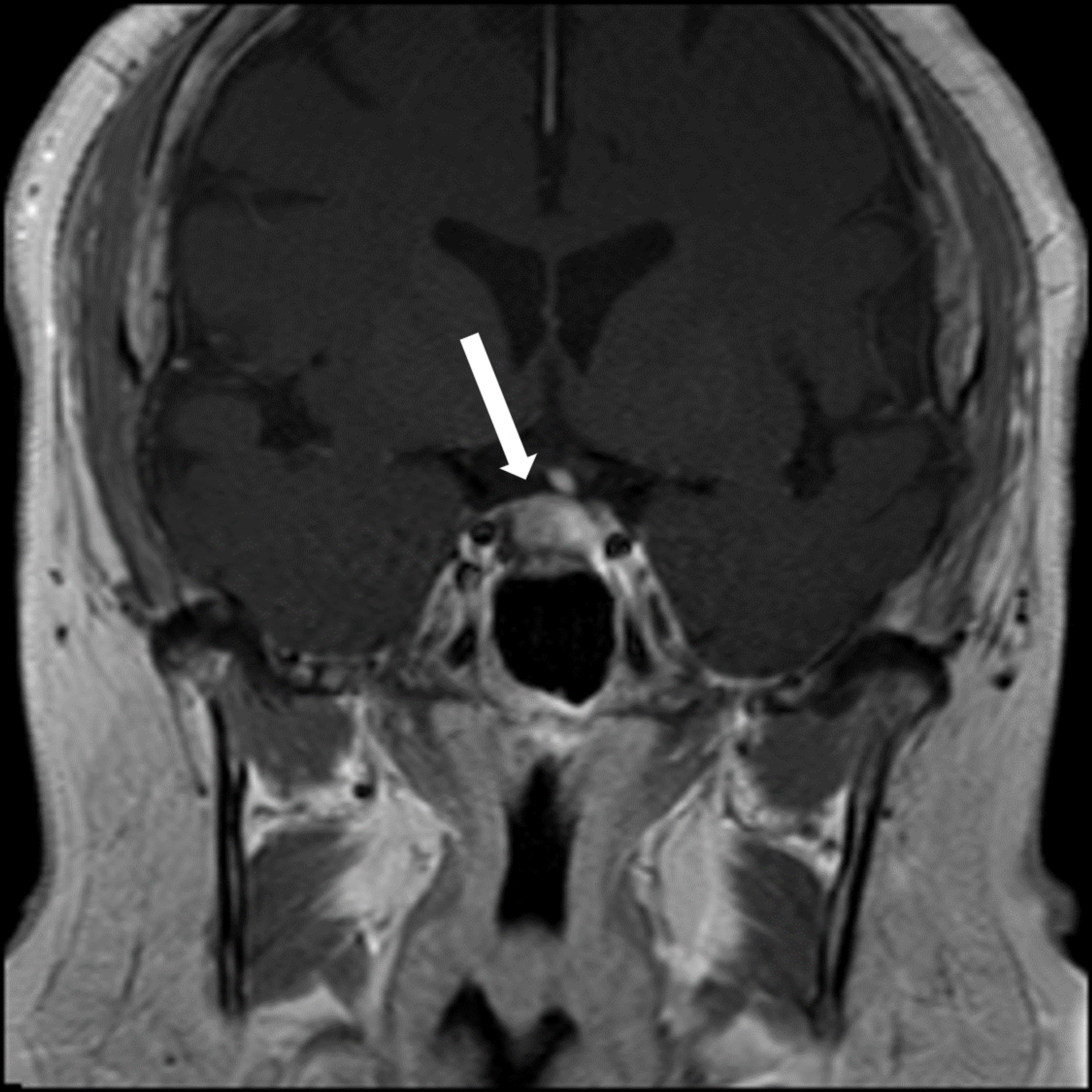
At her endocrinology visit, a physical exam revealed some facial hair, frontal hair loss, and a significant dorsocervical and anterior cervical fat pad. A Cushingoid face shape, facial redness, acne, oligomenorrhea, incremental weight gain over the last decade, centripetal adiposity, easy bruising, and lower leg swelling were also reported. Bone mineral density results reported spine and hip Z-scores within the expected range for age, indicating no osteoporosis. Since she had features of hypercortisolism, labs to evaluate for Cushing syndrome were ordered. The 11:00 pm salivary cortisol levels were elevated to 173 ng/dL and 168 ng/dL in two samples. The 1 mg dexamethasone suppression test failed to suppress her cortisol levels, with an elevated cortisol value of 29 mcg/dL. The 24-hour urine-free cortisol level was elevated at 135 mcg/24 hours. These lab results confirmed a diagnosis of Cushing syndrome. Her ACTH was elevated at 86 pg/mL, which indicated an ACTH-dependent CS. Pituitary MRI demonstrated a 1.1 cm × 1.5 cm × 1.1 cm pituitary lesion, representing a pituitary macroadenoma (Figure 5). The patient underwent endoscopic endonasal transsphenoidal pituitary tumor resection with the goal of treating her Cushing disease and preventing further fragility fractures. Pathology evaluation confirmed a pituitary adenoma.

T1-weighted-coronal-MRI-of-the-pituitary-demonstrating-a-1.1-cm-×-1.5-cm-×-1.1-cm-cystic-sellar-mass-which-represents-a-pituitary-macroadenoma-(arrow).
Figure 5: T1-weighted coronal MRI of the pituitary demonstrating a 1.1 cm × 1.5 cm × 1.1 cm cystic sellar mass which represents a pituitary macroadenoma (arrow).

Discussion

This is a case of a 39-year-old woman who presented with recurrent metatarsal fractures with no history of trauma, raising suspicion of a metabolic bone disease. The patient also developed centripetal weight gain, glucose intolerance, kidney stones, depression/anxiety, and Cushingoid features. A laboratory workup performed by endocrinology services confirmed a diagnosis of ACTH-dependent CS. An MRI revealed a pituitary lesion which represented a pituitary macroadenoma, for which surgical resection was performed. Pathology confirmed a pituitary adenoma. The association of multiple, non-traumatic metatarsal fractures occurring in premenopausal women with endogenous CS has been reported in the literature [3,7,19]. However, to the best of our knowledge, this is the first report presenting a premenopausal woman with multiple, recurrent metatarsal fractures as the initial manifestation of CD.

Several mechanisms play a role in glucocorticoid-induced bone loss, which is more prominent in trabecular bone compared to cortical bone [3,4,6,8]. Normally, trabecular bone has a greater bone turnover rate than cortical bone. In the presence of excess glucocorticoids, trabecular bone has greater sensitivity to glucocorticoids and undergoes slower bone turnover. The most significant effects of excess glucocorticoids on bones are decreased osteoblast function and quantity, which explain the reduced trabecular bone turnover rate [4,10]. The proposed mechanisms for this are glucocorticoid-induced inhibition of osteoblast proliferation and genesis, as well as induction of osteoblast and osteocyte apoptosis [4,10,11]. Furthermore, glucocorticoids decrease bone protein synthesis (e.g., osteocalcin), type I collagen formation, and alkaline phosphatase activity [4]. Additional effects include greater bone resorption, inhibition of intestinal calcium absorption, inhibition of renal calcium reabsorption, and decreased secretion of gonadal steroids and growth hormones [8]. Glucocorticoids also induce protein catabolism, which can result in muscle weakness, decreased bone stimulation from weakened muscle contraction, and further bone loss and debility [4].

Multiple fragility fractures in the foot with no history of trauma or overuse are uncommon. When evaluating a patient with this presentation, secondary causes for these fractures need to be investigated. Differential diagnoses include osteoporosis, Charcot foot, multiple myeloma, celiac disease, avascular necrosis, and endocrine disorders such as hyperthyroidism, primary hyperparathyroidism, or CS, among others [3,6,7].

There is a high rate of fragility fractures due to secondary osteoporosis in CS patients, with the vertebrae being most commonly affected [6]. LiYeung and Lui [7] and Albon et al. [19] each reported a case of a pre-menopausal woman who initially presented with multiple metatarsal fractures secondary to an adrenal adenoma causing CS. In each case, the patient’s densitometry indicated osteoporosis. However, in our case and the case reported by Molnar et al. [3] of a pre-menopausal woman with multiple fractures due to CD (recurrent fractures were not reported), the bone densitometries performed did not indicate osteoporosis.

The patients reported by LiYeung and Lui [7], Albon et al. [19], and Molnar et al. [3] did not demonstrate marked clinical characteristics of CS. In comparison to our patient, she did have multiple Cushingoid features upon her second evaluation by endocrinology. Furthermore, in all our cases, the patients were first evaluated for metatarsal fractures as the initial presentation, which resulted in a diagnosis of endogenous CS after further evaluation.

Finally, early recognition and treatment of CS are important, as there is an increased risk of morbidity and mortality as the condition progresses [20]. In addition, the treatment of CS can reverse the bone loss that occurs with excess glucocorticoid exposure [4,10]. This case also highlights the importance of collaboration between physicians in the different branches of medicine.

Conclusions

Excess glucocorticoid exposure can have deleterious effects on the bones, increasing the risk for secondary osteoporosis and fragility fractures. There needs to be an index of suspicion for metabolic bone disease, including endogenous CS caused by CD, as the underlying etiology of multiple, recurrent, atraumatic metatarsal fractures in pre-menopausal women. Early diagnosis and management of CD can lower the risk of morbidity and mortality as well as reverse bone loss.


References

  1. Guaraldi F, Salvatori R: Cushing syndrome: maybe not so uncommon of an endocrine disease. J Am Board Fam Med. 2012, 25:199-208. 10.3122/jabfm.2012.02.110227
  2. Valassi E, Santos A, Yaneva M, et al.: The European Registry on Cushing’s syndrome: 2-year experience. Baseline demographic and clinical characteristics. Eur J Endocrinol. 2011, 165:383-92. 10.1530/EJE-11-0272
  3. Molnar V, Zekan P, Dušek T, Ivković A: Multiple metatarsal fractures: the first manifestation of Cushing’s disease—a case report. J Am Podiatr Med Assoc. 2021, 111:10.7547/19-024
  4. Han JY, Lee J, Kim GE, et al.: A case of cushing syndrome diagnosed by recurrent pathologic fractures in a young woman. J Bone Metab. 2012, 19:153-8. 10.11005/jbm.2012.19.2.153
  5. Barahona MJ, Sucunza N, Resmini E, et al.: Deleterious effects of glucocorticoid replacement on bone in women after long-term remission of Cushing’s syndrome. J Bone Miner Res. 2009, 24:1841-6. 10.1359/jbmr.090505
  6. Papadakis G, Uebelhart B, Goumaz M, Zawadynski S, Rizzoli R: An unusual case of hypercortisolism with multiple weight-bearing bone fractures. Clin Cases Miner Bone Metab. 2014, 10:213-7.
  7. LiYeung LL, Lui TH: Bilateral adrenal adenoma presented as multiple metatarsal and phalangeal fractures. J Orthop Case Rep. 2015, 5:77-8. 10.13107/jocr.2250-0685.353
  8. Trementino L, Appolloni G, Ceccoli L, Marcelli G, Concettoni C, Boscaro M, Arnaldi G: Bone complications in patients with Cushing’s syndrome: looking for clinical, biochemical, and genetic determinants. Osteoporos Int. 2014, 25:913-21. 10.1007/s00198-013-2520-5
  9. Abdel-Kader N, Cardiel MH, Navarro Compan V, Piedra Priego J, González A: Cushing’s disease as a cause of severe osteoporosis: a clinical challenge. Reumatol Clin. 2012, 8:278-9. 10.1016/j.reuma.2011.11.004
  10. Lee HJ, Je JH, Seo JH, Na YJ, Yoo HJ: Multiple spontaneous rib fractures in patient with Cushing’s syndrome. J Bone Metab. 2014, 21:277-82. 10.11005/jbm.2014.21.4.277
  11. Poonuru S, Findling JW, Shaker JL: Lower extremity insufficiency fractures: an underappreciated manifestation of endogenous Cushing’s syndrome. Osteoporos Int. 2016, 27:3645-9. 10.1007/s00198-016-3712-6
  12. Belaya ZE, Hans D, Rozhinskaya LY, et al.: The risk factors for fractures and trabecular bone-score value in patients with endogenous Cushing’s syndrome. Arch Osteoporos. 2015, 10:44. 10.1007/s11657-015-0244-1
  13. Tajika T, Shinozaki T, Watanabe H, Yangawa T, Takagishi K: Case report of a Cushing’s syndrome patient with multiple pathologic fractures during pregnancy. J Orthop Sci. 2002, 7:498-500. 10.1007/s007760200087
  14. Baron E, Sheinfeld M, Migdal EA, Hardoff R: Multiple pathologic fractures mimicking bone metastases in a patient with Cushing’s syndrome. Clin Nucl Med. 1996, 21:506-8. 10.1097/00003072-199606000-00027
  15. Bosch S, Bogaerts S: Pituitary adenoma presenting with bilateral calcaneal stress fracture: a case report. JOSPT Cases. 2021, 1:109-111.
  16. Kostoglou-Athanassiou I, Spiliotis G, Athanassiou L, Myriokefalitakis I: Cushing’s syndrome in a patient with systemic lupus erythematosus. Endocrine Abstracts. 2018, 56:106. 10.1530/endoabs.56.P106
  17. Kaur K, Findling JW: Cushing’s disease. A Case-Based Guide to Clinical Endocrinology. Davies TF (ed): Humana Press, Totowa; 2008. 27-33. 10.1007/978-1-60327-103-5_3
  18. Ontell FK, Shelton DK: Multiple stress fractures. An unusual presentation of Cushing’s disease. West J Med. 1995, 162:364-6.
  19. Albon L, Rippin J, Franklyn J: “My feet are killing me!” An unusual presentation of Cushing’s syndrome. Endocrine Abstracts. 2003, 5:26.
  20. Nieman LK: Recent updates on the diagnosis and management of Cushing’s syndrome. Endocrinol Metab (Seoul). 2018, 33:139-46. 10.3803/EnM.2018.33.2.139

From https://www.cureus.com/articles/91295-recurrent-metatarsal-fractures-in-a-patient-with-cushing-disease-a-case-report