Theme: Living with a Rare Disease – Slogan: Day-by-day, hand-in-hand
2015 marks eight consecutive, successful years of Rare Disease Day. Continuing the momentum, Rare Disease Day 2015 puts the focus on the daily lives of patients, families and caregivers who are Living with a Rare Disease.
Over 6000 different rare diseases have been identified to date, directly affecting the daily life of more than 30 million people in Europe alone. The complex nature of rare diseases, coupled with limited access to treatment and services, means that family members are often the primary source of solidarity, support and care for their loved ones. The Rare Disease Day 2015 theme Living with a Rare Disease pays tribute to the millions and millions of parents, siblings, grandparents, spouses, aunts, uncles, cousins, and friends whose daily lives are impacted and who are living day-by-day, hand-in-hand with rare disease patients.
Typically chronic and debilitating, rare diseases have enormous repercussions for the whole family. Living with a rare disease becomes a daily learning experience for patients and families. Though they have different names and different symptoms, rare diseases impact the daily lives of patients and families in similar ways.
How to find a diagnosis?
How to access treatments?
How to find appropriate expertise?
How to work with a team of caregivers, such as doctors or physical therapists, and other healthcare professionals and coordinate care between them?
How to operate special equipment?
How to administer treatments?
How to identify and access social services?
How to manage the economic burden of living with a rare disease?
How to ensure the well-being of the entire family and balance priorities?
Patient organisations become a crucial source of information, experience and resources. Day-by-day, hand-in-hand, together we present a united voice to advocate for the treatments, care, resources and services we all need. Patients, families and organisations are pivotal to the momentum of creating solutions for the daily challenges of living with a rare disease in solidarity with all stakeholders – caregivers, healthcare professionals, specialised social services, researchers, pharmaceutical companies, policy makers, and regulatory bodies.
Internationally, it is essential to send a strong message of solidarity to the countless rare disease patients and families throughout the entire world. Together, we can transform the individual experience of patients and relatives around the world into collective actions, support, advocacy and community building.
via Rare Disease Day ® 2015 – Theme of the Year: Care.
Tip #3: If at first you see a monkey, get a second opinion. If you see a monkey on the second try, get a third opinion. To limit the number of monkeys you see, talk to other patients that are having the same problems as you. If they managed to see a good doctor, try and see their doctor.
Why is it good to listen to other patients? Because patients aren’t monkeys. They have been in your shoes and have already done a lot of the hard work for you. I learned this when I had Cushing’s. After seeing a large number of monkeys, it was other patients that finally sent me to a really good doctor. And he listened to me and did tests and took all the evidence into account when trying to get me better. And he succeeded.
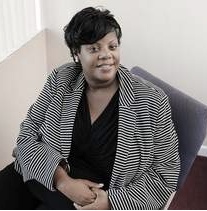
Lanham resident Stacey L. Hardy, a survivor of Cushing’s disease, will speak about her experience with the pituitary disorder at an upcoming event at Johns Hopkins Hospital.
Stacy L. Hardy of Lanham described herself as athletic, which is why she became concerned when in 1996 she mysteriously gained 240 pounds that took five doctors 14 years to determine she had a potentially fatal disease.
Now Hardy said she wants to raise awareness among others who may unknowingly have Cushing’s disease, but are unaware of the symptoms and treatment.
It wasn’t until 2010 that Hardy, now 43, was diagnosed with the disease, a rare disorder that causes the body to release too much cortisol, the body’s stress or “fight or flight” hormone, said Gary Wand, a pituitary gland specialist at The Johns Hopkins Hospital in Baltimore.
Excess cortisol causes weight gain, especially in the stomach, extreme fatigue, muscle aches, anxiety and depression, he said.
“I didn’t even know what Cushing’s was. I was ready to just live with [the symptoms],” Hardy said, adding that by the time she was diagnosed she felt so tired she could barely move.
At 5 feet, 4 inches tall, Hardy said she reached 365 pounds during her struggle with the disease.
“We knew something for a while wasn’t right, but I never thought it would be something like that,” said Hardy’s daughter, Paij Hardy, 21, a student at Baltimore City Community College.
Just three out of every one million people are diagnosed with Cushing’s each year, said Wand, who estimates he sees 30 patients per year worldwide.
In 2011, Hardy underwent 16 hours of surgery at Sinai Hospital in Baltimore to remove four tumors from her pituitary gland, located at the base of the brain that controls the release of cortisol.
Today, she is 100 pounds lighter, with the weight still rapidly coming off, and said she is determined to serve as a lifelong support and education source for her fellow “cushies” — others with Cushing’s disease.
Hardy will speak Saturday at the Johns Hopkins Pituitary Gland Center’s fifth annual Patient Education Day, an event to raise awareness about the disease, Wand said.
Since the pituitary gland is the size of a kidney bean, Hardy underwent several brain scans before doctors, who previously suggested she might have leukemia or needed to diet and exercise more, could tell there were tumors on her gland, she said.
Hardy’s experience with delayed diagnosis and misdiagnosis is not unique, Wand said.
Cushing’s is a “subtle” disease, which is difficult to diagnose, and not everyone exhibits the same symptoms, he said.
If left untreated for more than a decade, the disease is fatal, but removing the pituitary gland tumors has proved extremely successful, Wand said.
“I’m evidence that there’s help out there,” Hardy said. “I can move. I can almost run. I can bend over and pick up a box. Oh my goodness, I can dance.”
Jordy is a British man who has been dealing with Cushing’s and many surgeries.
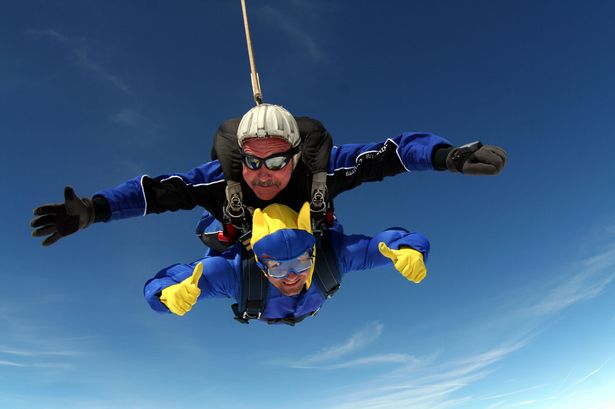
He finds rollercoasters boring, barely broke a sweat zip-wiring off the Tyne bridge and even a parachute jump did not raise his heart rate.
Just a few years ago even the thought of daredevil exploits would have terrified him, but now Jordy Cernik is frightened of nothing.
While that might sound an ideal scenario, the 38-year-old’s new-found bravery is actually the unexpected side-effect of surgery for a rare condition.
Cushing’s Syndrome resulted in the dad-of-two having an operation to remove the gland which produces adrenalin, the hormone which makes us feel scared.
He says: “I would never have had the guts to do any of this, but now nothing fazes me. I’m up for anything – I’m even thinking about doing a wing-walk on a plane too.
“I nearly did a bungee jump a few years ago, but I just couldn’t do it.
“Now I just take whatever is thrown at me and if a challenge helps me raise money for charity, the more daring the better.”
Over the past four months he has completed the parachute jump and zip-wired from the top of Newcastle’s Tyne Bridge and now he is getting ready to complete the last of a trio of challenges – next month’s Bupa Great North Run.
“The doctors didn’t tell me this could be one of the side-effects of the operation,” says Jordy. “But then the condition is so rare I don’t think they know everything about Cushing’s yet.
“Doing the skydive was the ultimate test. I thought that if I was ever going to get scared again then that would be the moment.
“But as we took off in the plane I felt nothing, and when I edged towards the door to jump I felt nothing, and even when I leapt out and pulled my parachute, I didn’t feel scared at all.
“It can be quite frustrating as well though.
“The first time I realised I had changed was when I went on the rides at a theme park with my kids and I just didn’t feel a thing. I just sat there, bored.”
However, the last of his hat-trick of challenges, the Run, will require him to push through the ever-present pain which he has endured for years as a result of Cushing’s.
Britain’s biggest mass participation event, for which The Daily Mirror is a media partner, takes place over a 13.1 mile course from Newcastle to South Shields.
But the syndrome has left Jordy, from Jarrow, near Newcastle, with arthritis, back problems and brittle bones. Worse still, the absence of adrenalin means he now lacks one of the body’s natural painkillers.
“I’m always in pain,” he says. “I’ve just had to learn to zone it out day-to-day and I’m going to have to do that even more when I’m on the run.”
Cushing’s affects around one in 50,000 people in Britain.
It causes a malfunction of the adrenal and pituitary glands which means increased amounts of corticosteroids are produced – often leading to massive, irregular weight gain.
In just three years 5ft 8in Jordy ballooned from 11st 5lb to almost 17st.
While his limbs remained slim, the former Territorial Army recruit saw the pounds pile around the major organs in his torso and head.
“I went through years of hell and I can only describe it as living in someone else’s body,” says the part-time radio presenter and events host.
“I developed this big round moon face and really quite large man boobs, which was so embarrassing.
“But there was absolutely nothing I could do about it. I could go to the gym six days a week and still couldn’t lose any of the weight.
“One of the worst things was that people would stare.
“Sometimes they’d take the mickey – often to try and make me feel better, by making light of things – but it would almost always hurt my feelings.
“And my career as a presenter suffered. I tried to play up to the character of being a big, jolly chap but I always felt I was too fat for TV, which is what I would have liked to do a lot more of.”
But it was the effect on his home life with wife Tracy, 43, and daughters Aimee, seven, and four-year-old Eive that for him was far worse.
“I had other really difficult symptoms which included profuse sweating which meant I couldn’t even hold my kids without wrapping them in towels first,” he says.
“Anyone who has children knows how hard that is, not to be able to do normal things. I often used to be in tears.
“Another symptom was extreme grumpiness, so I would find myself suddenly getting really angry and just exploding at them, plus I was always too exhausted to play with them. It was terrible.”
Jordy believes he can trace his symptoms back 15 years although his Cushing’s was only diagnosed in 2005.
He had visited his local surgery with a string of complaints, but by chance saw a different doctor one day and the syndrome was diagnosed.
“I don’t have any ill-feeling about that,” he says, “because the syndrome can be tricky to spot, partly because it is so rare.”
He went on to have both his pituitary and adrenal glands removed but needed a total of seven operations between 2005 and 2010 and not all went smoothly.
During one to remove his pituitary gland, which is inside the skull, the lining of his brain burst due to the stress of repeated surgery.
And while removing a rib to access the adrenal gland in his torso, his lung was punctured.
That wasn’t the end of the complications. He later developed severe meningitis and ended up on a life-support machine.
“But I still consider myself lucky,” he says. “The doctors told me, ‘You died twice really, you shouldn’t even be here’.”
Things have begun to look up in the past few years, however. The Cushing’s is in remission and Jordy has lost four stone.
His life hasn’t returned to normal entirely – he still has to take 30 pills a day, a cocktail of painkillers and hormones, plus drugs to slow the corrosion of his bones.
He has also been diagnosed with another rare condition, sarcoidosis, which creates nodules of irregular cells in the body and can cause serious complications. He’s convinced he has always had it but it has lain dormant until his body was at its most vulnerable.
At present the nodules can only be found on his skin and he’s being monitored to ensure that it doesn’t spread to his internal organs.
Thanks to the surgery, his life has improved enormously since 2010.
In July he had a breast reduction op which not only improved his appearance but also removed the dangerous accumulation of fat around his heart.
Part of this new chapter involves taking part in the Great North Run and raising money for the Cash for Kids appeal run by his local radio station Metro Radio.
The appeal aims to help children and young people in the North East who are disabled or have special needs, or those who suffer from abuse or neglect.
Jordy’s fundraising goal is a relatively modest £1,000, but for him joining the half marathon’s 56,000 participants on September 15 will be as rewarding as hitting his target.
“I really don’t know if I’ll be able to complete the course.” he says. “But I’m looking forward to it and I’m going to give it my best shot.
“Not feeling fear may feel like the power of a superhero, but what I really need for the Great North Run is superhero strength.”
The Bupa Great North Run is Britain’s biggest mass participation event and is organised by Nova International.
It will include world class athletes Mo Farah, Haile Gebrselassie and Kenenisa Bekele – plus 56,000 other runners.
The event is live on BBC One on Sunday 15th September between 9.30am to 13.30
I carry a print out of this everywhere I go because I find it very soothing. This print out is in a plastic page saver. On the other side there is a Psalm 116, part of the post from Day Fifteen.
Today, when I awoke, I suddenly realized that this is the best day of my life, ever! There were times when I wondered if I would make it to today; but I did! And because I did I’m going to celebrate!
Today, I’m going to celebrate what an unbelievable life I have had so far: the accomplishments, the many blessings, and, yes, even the hardships because they have served to make me stronger.
I will go through this day with my head held high, and a happy heart. I will marvel at God’s seemingly simple gifts: the morning dew, the sun, the clouds, the trees, the flowers, the birds. Today, none of these miraculous creations will escape my notice.
Today, I will share my excitement for life with other people. I’ll make someone smile. I’ll go out of my way to perform an unexpected act of kindness for someone I don’t even know.
Today, I’ll give a sincere compliment to someone who seems down. I’ll tell a child how special he is, and I’ll tell someone I love just how deeply I care for her and how much she means to me.
Today is the day I quit worrying about what I don’t have and start being grateful for all the wonderful things God has already given me.
I’ll remember that to worry is just a waste of time because my faith in God and his Divine Plan ensures everything will be just fine.
And tonight, before I go to bed, I’ll go outside and raise my eyes to the heavens. I will stand in awe at the beauty of the stars and the moon, and I will praise God for these magnificent treasures.
As the day ends and I lay my head down on my pillow, I will thank the Almighty for the best day of my life. And I will sleep the sleep of a contented child, excited with expectation because know tomorrow is going to be the best day of my life, ever!
When I’m feeling down, depressed or low, reading my 2 special pages can help me more than anything else.





 CushieBlog