Meet Dr. Theodore Friedman in Denver

Theodore C. Friedman, M.D., Ph.D.

Dr.  Theodore Friedman will be back in Denver, Colorado and will host a free patient support group on Sunday November 10, 2013 at 10 am at his sister’s house.

152 S Trenton

Denver CO 80230

It’s in Lowry

Please bring your questions.

Feel free to mention this to other Colorado patients.

Prince George’s woman works to raise awareness about rare disease

Lanham resident to speak at Patient Education Day event about Cushing’s disease

By Sophie Petit Staff Writer
stacy

Greg Dohler/The Gazette

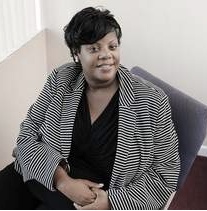
Lanham resident Stacey L. Hardy, a survivor of Cushing’s disease, will speak about her experience with the pituitary disorder at an upcoming event at Johns Hopkins Hospital.

Stacy L. Hardy of Lanham described herself as athletic, which is why she became concerned when in 1996 she mysteriously gained 240 pounds that took five doctors 14 years to determine she had a potentially fatal disease.

Now Hardy said she wants to raise awareness among others who may unknowingly have Cushing’s disease, but are unaware of the symptoms and treatment.

It wasn’t until 2010 that Hardy, now 43, was diagnosed with the disease, a rare disorder that causes the body to release too much cortisol, the body’s stress or “fight or flight” hormone, said Gary Wand, a pituitary gland specialist at The Johns Hopkins Hospital in Baltimore.

Excess cortisol causes weight gain, especially in the stomach, extreme fatigue, muscle aches, anxiety and depression, he said.

“I didn’t even know what Cushing’s was. I was ready to just live with [the symptoms],” Hardy said, adding that by the time she was diagnosed she felt so tired she could barely move.

At 5 feet, 4 inches tall, Hardy said she reached 365 pounds during her struggle with the disease.

“We knew something for a while wasn’t right, but I never thought it would be something like that,” said Hardy’s daughter, Paij Hardy, 21, a student at Baltimore City Community College.

Just three out of every one million people are diagnosed with Cushing’s each year, said Wand, who estimates he sees 30 patients per year worldwide.

In 2011, Hardy underwent 16 hours of surgery at Sinai Hospital in Baltimore to remove four tumors from her pituitary gland, located at the base of the brain that controls the release of cortisol.

Today, she is 100 pounds lighter, with the weight still rapidly coming off, and said she is determined to serve as a lifelong support and education source for her fellow “cushies” — others with Cushing’s disease.

Hardy will speak Saturday at the Johns Hopkins Pituitary Gland Center’s fifth annual Patient Education Day, an event to raise awareness about the disease, Wand said.

Since the pituitary gland is the size of a kidney bean, Hardy underwent several brain scans before doctors, who previously suggested she might have leukemia or needed to diet and exercise more, could tell there were tumors on her gland, she said.

Hardy’s experience with delayed diagnosis and misdiagnosis is not unique, Wand said.

Cushing’s is a “subtle” disease, which is difficult to diagnose, and not everyone exhibits the same symptoms, he said.

If left untreated for more than a decade, the disease is fatal, but removing the pituitary gland tumors has proved extremely successful, Wand said.

“I’m evidence that there’s help out there,” Hardy said. “I can move. I can almost run. I can bend over and pick up a box. Oh my goodness, I can dance.”

From http://www.gazette.net/article/20130926/NEWS/130929354/1077/prince-george-x2019-s-woman-works-to-raise-awareness-about-rare&template=gazette

2nd Annual Patient Advocacy Summit

RARE

Come join us for our 2nd Annual “RARE Patient Advocacy Summit
to be held on Friday, September 20, 2013
at The Balboa Bay Club & Resort in Newport Beach, CA.

Register today!

Seating is limited for in-person participation.

Webcast registration available for those unable to attend in person.

divider

From Symptom to Cure:  The Journey of a Rare Disease Advocate ~ Equipping Patients to Make a Difference

Join Global Genes | RARE Project for a unique and interactive educational experience at our 2nd Annual Patient Advocacy Summit on Friday, September 20, 2013.   There is no charge to participate in this event.

A rare diagnosis changes everything. It crashes plans and dreams, knocks you off your feet, and requires a continual investment of time and money as you try to determine what should be your next step.  The purpose of the RARE Patient Advocacy Summit is to help patient ADVOCATES become successful ACTIVISTS and to provide the discussion, insights and tools to move down this advocacy path, equipped and prepared.

The summit will offer practical advice, case studies and networking opportunities as we learn from one another.  The goal is to have patient advocates walk away with a better understanding of the challenges they will face and where they can be most effective in helping advocate for their disease/disorder.

Attendees will:
  • Learn how to get started: obtain 501c3 status, write grants, leverage PR effectively and utilize social media to spread your message.

  • Collaboration: Understand how to successfully work with other rare disease stakeholders, patient advocates, the FDA and other government entities.

  • Learn the importance of patient registries, the different types of registries and how advocates can support them.

  • Explore the role of foundations and advocates related to scientific discovery and drug development.

  • Gain a broad understanding of the scientific process, including diagnostic and research methodologies and collaborations with academia and industry.

At the end of this day-long event, each participant will gain perspective on the complexities and questions that need to be considered in order to become effective advocates for the rare disease patients and help advance therapies in the rare diseases we represent.

Who Should Attend:
  • Rare disease patients, caregivers, family members and friends
  • Patient advocates

Whether you are new to this rare disease journey or an experienced traveler, an individual advocate or part of an existing rare disease organization, you will gain value from this event.

Register today!

divider

Hotel and Travel Information

divider

Sponsor Information

To become a sponsor or for more information, please contact Nicole Boice.  We look forward to seeing you at this year’s summit.

 View videos from our 2012 event.

Seminar: Putting Patients First

putting-patients


September 30, 2013 | 9:30 am – 2:30 pm
W Hotel, 515 15th Street, NW, Washington, DC

How do patients, providers, and payers know whether health information is credible, accurate, useful or appropriate?

Comparative effectiveness research (CER) has the potential to improve health outcomes by helping people make better-informed decisions. But how do we know that CER will generate information that is useful?

You can help us find the answers by joining us on September 30 for a conversation and symposium featuring a broad range of health care stakeholders—patients, providers, policymakers, payers, researchers, and those who fund research. We’ll focus on an effort led by the National Health Council to create a framework to guide the development of CER, evaluate its results, and assist in communicating the findings to the right audiences.

Be a part of the conversation—register today and add your voice to our efforts to make CER useful. Tweet about it using #useCER.

Prolactin Measure Didn’t Help Localize Pituitary Adenoma

By: SHERRY BOSCHERT, Clinical Endocrinology News Digital Network

SAN FRANCISCO – Measurements of prolactin levels during inferior petrosal sinus sampling did not help localize pituitary adenomas in patients with Cushing’s disease in a study of 28 patients, contradicting findings from a previous study of 28 patients.

The value of prolactin measurements in tumor localization using inferior petrosal sinus sampling (IPSS) remains unclear and needs further study in a larger, prospective study, Dr. Susmeeta T. Sharma said at the Endocrine Society’s Annual Meeting. The current and previous studies were retrospective analyses.

Although IPSS has been considered the standard test in patients with ACTH-dependent Cushing’s syndrome to differentiate between ectopic ACTH secretion and Cushing’s disease, there has been controversy about its value in localizing adenomas within the pituitary gland once a biochemical diagnosis of Cushing’s disease has been made. Various studies that used an intersinus ACTH ratio of 1.4 or greater before or after corticotropin-releasing hormone (CRH) stimulation have reported success rates as low as 50% and as high as 100% for tumor location.

A previous retrospective study of 28 patients with Cushing’s disease reported that adjusting the ACTH intersinus gradient by levels of prolactin before or after CRH stimulation, and combining the prolactin-adjusted ACTH intersinus ratio, improved pituitary adenoma localization. Magnetic resonance imaging (MRI) alone correctly localized the pituitary adenoma in 17 patients (61%), a prolactin-adjusted ACTH intersinus ratio of at least 1.4 improved the localization rate to 21 patients (75%), and combining MRI and the prolactin-adjusted ACTH intersinus ratio improved localization further to 23 patients, or 82% (Clin. Endocrinol. 2012;77:268-74).

The findings inspired the current retrospective study. The investigators looked at prolactin levels measured in stored petrosal and peripheral venous samples at baseline and at the time of peak ACTH levels after CRH stimulation for 28 patients with Cushing’s disease and ACTH-positive pituitary adenomas who underwent IPSS in 2007-2013. The investigators calculated prolactin-adjusted values by dividing each ACTH value by the concomitant ipsilateral prolactin value. They used an intersinus ACTH ratio of 1.4 or greater to predict tumor location.

At surgery, 26 patients had a single lateral tumor (meaning its epicenter was not in the midline), 1 patient had a central microadenoma, and 1 patient had a macroadenoma, reported Dr. Sharma of the National Institute of Child Health and Human Development, Bethesda, Md.

MRI findings accurately identified the location of 21 of the 26 lateral tumors (81%), compared with accurate localization in 18 patients using either the unadjusted ACTH intersinus ratio or the prolactin-adjusted ACTH intersinus ratio (69% for each), she said.

Incorrect tumor localization occurred with one patient using MRI alone and seven patients using either ratio. In four patients whose tumors could not be localized by MRI, the uncorrected and prolactin-adjusted ratios localized one tumor correctly and three tumors incorrectly. Only MRI correctly localized the one central microadenoma.

“We did not find any difference in localization rates by measurement of prolactin during IPSS,” she said. The small size of the study and its retrospective design invite further research in a more robust study.

Dr. Sharma reported having no financial disclosures.

From Clinical Endocrinology News