Rare Disease Week, 2014

rare-disease-2014

You are invited to join RDLA and 200 rare disease advocates in Washington, DC for Rare Disease Day (Week), February 25 – 28, 2013.  Below is an overview of the events, registration will be coming soon.

Tuesday, February 25th:
8:15 am – 4:30 pm Legislative Conference 
National Press Club, 529 14th Street NW, Washington, DC

5:30 pm – 9:30 pm 4th Annual Rare Disease Day Documentary Screening & Cocktail Reception
Carnegie Institution of Science, 1530 P Street Northwest, Washington DC

Wednesday, February 26th:
7:00am -8:30 am Lobby Training Breakfast
Top of the Hill, Reserve Officers Association, One Constitution Avenue, NE, Washington DC

9:00 am – 5 pm Capitol Hill Meetings with Members of Congress & Congressional Staff

Thursday, February 27th
9:00 am – 5 pm State Delegation Hill Meetings (Optional) Advocates drop by Congressional Offices and attend meetings on behalf of advocates who are too sick or unable to come to DC

TBD, Rare Disease Congressional Caucus Briefing

Friday, February 28th:
RDD@NIH Rare Disease Day at the National Institutes of Health – 2014 event information & registration coming soon

All events are free and open to the public, registration coming soon.

Hotel Room Block: Dupont Circle, on the Red Metro line:
Embassy Row Hotel2015 Massachusetts Ave, NW, Washington DC
$149/night single $169/night double + 14% DC Tax    Click Here to book your hotel ! or Call (202) 939-4208 & ask for the EveryLife Foundation Room Block
Complimentary internet in guest rooms, Complimentary breakfast
There are a limited number of rooms available at the discounted rate.  Discounted rates expire on Monday, February 3rd.

Click Here to watch the video presentations from last year’s Legislative Conference 

If you can’t join us in DC, please stay tuned for ways to share your personal story with Congress. 

Rare Disease Week

The House & Senate Congressional Calendars came out this week!

Congress is in session during Rare Disease Week – SaveTheDate!

Feb. 25th – Feb. 28th, 2013

4 Days of Rare Disease Events in Washington DC!

More info coming soon.

Pituitary ACTH Hypersecretion (Cushing’s Disease) – Pipeline Review, H2 2013

DUBLIN — Research and Markets  (http://www.researchandmarkets.com/research/h78zrm/pituitary_acth) has announced the addition of the “Pituitary ACTH Hypersecretion (Cushing’s Disease) – Pipeline Review, H2 2013” report to their offering.

‘Pituitary ACTH Hypersecretion (Cushing’s Disease) – Pipeline Review, H2 2013’ provides an overview of the indication’s therapeutic pipeline. This report provides information on the therapeutic development for Pituitary ACTH Hypersecretion (Cushing’s Disease), complete with latest updates, and special features on late-stage and discontinued projects. It also reviews key players involved in the therapeutic development for Pituitary ACTH Hypersecretion (Cushing’s Disease).

Scope

– A snapshot of the global therapeutic scenario for Pituitary ACTH Hypersecretion (Cushing’s Disease).

– A review of the Pituitary ACTH Hypersecretion (Cushing’s Disease) products under development by companies and universities/research institutes based on information derived from company and industry-specific sources.

– Coverage of products based on various stages of development ranging from discovery till registration stages.

– A feature on pipeline projects on the basis of monotherapy and combined therapeutics.

– Coverage of the Pituitary ACTH Hypersecretion (Cushing’s Disease) pipeline on the basis of route of administration and molecule type.

– Key discontinued pipeline projects.

– Latest news and deals relating to the products.

Reasons to buy

– Identify and understand important and diverse types of therapeutics under development for Pituitary ACTH Hypersecretion (Cushing’s Disease).

– Identify emerging players with potentially strong product portfolio and design effective counter-strategies to gain competitive advantage.

– Plan mergers and acquisitions effectively by identifying players of the most promising pipeline.

– Devise corrective measures for pipeline projects by understanding Pituitary ACTH Hypersecretion (Cushing’s Disease) pipeline depth and focus of Indication therapeutics.

– Develop and design in-licensing and out-licensing strategies by identifying prospective partners with the most attractive projects to enhance and expand business potential and scope.

– Modify the therapeutic portfolio by identifying discontinued projects and understanding the factors that drove them from pipeline.

Companies Mentioned

Isis Pharmaceuticals, Inc.

Ipsen S.A.

Novartis AG

Corcept Therapeutics Incorporated

HRA Pharma, SA

Cortendo Invest AB

Orphagen Pharmaceuticals, Inc.

For more information visit http://www.researchandmarkets.com/research/h78zrm/pituitary_acth

About Research and Markets

Research and Markets is the world’s leading source for international market research reports and market data. We provide you with the latest data on international and regional markets, key industries, the top companies, new products and the latest trends.

November 15 Webinar: “Pituitary Disorders and the Family”

Webinar: “Pituitary Disorders and the Family”
Presented by Jamie L. Banker, Ph.D., Director of Counseling Psychology California Lutheran University
Date: Friday, November 15, 2013
Time: 12:00-1:00 PM PDT 

Seating is limited, register today!
https://www4.gotomeeting.com/register/127537863?utm_source=newsletter_45&utm_medium=email&utm_campaign=webinar-announcement-pituitary-disorders-and-the-family

After registering you will receive a confirmation email containing information about joining the Webinar.
Webinar Information
Chronic illness systemically affects individuals and families, in that the illness impacts the whole system, rather than just the individual with the diagnosis. Health problems can create or exacerbate conflict within a family or support system (Ruddy, Borresen, & Gunn, 2008). This is also the case within families with a family member with an endocrine disorder.

Historically, research on medical illness focused mainly on the identified medical patient, but recent literature shows an ever-growing interest in understanding the physical and mental toll those managing and caring for close relatives with a serious illness or disability (Feigin, Barnetz, & Davidson-Arad, 2008). Family systems theories have influenced this turn, as it becomes clear that focusing on a problem with one family member acknowledges only one part of the affected system.

In this presentation Dr. Banker will talk about what is meant by the “family system,” what is meant by “collaborative’ and “integrated” care, Dr. Banker will identify ways pituitary disorders impact the family system, She will discuss ways family members can positively impact healing and learn what can be the role of a “family therapist” in helping families affected by a pituitary tumor or other endocrine disorder.

Dr. Banker will also talk about her most recent research connecting the early childhood trauma and pituitary disorders.

Learning Objectives
▪ Learn about the primary effects of chronic and/or serious illness on the family
▪ Learn what is meant by the “family system”
▪ Learn what is meant by “collaborative’ and “integrated” care
▪ Identify ways pituitary disorders impact the family system
▪ Learn ways family members can positively impact healing
▪ Learn what can be the role of a “family therapist” in helping families affected by a pituitary tumor or other endocrine disorder

Presenter Bio
Jamie Banker is the Director of Counseling Psychology Masters program and Assistant Professor of Psychology at California Lutheran University in Thousand Oaks California. She is a Licensed Marriage and Family Therapist and has a special interest in integrated behavioral healthcare. She completed a clinical master’s degree at University of San Diego and completed her doctoral degree at Virginia Tech. Dr. Banker was a doctoral intern at Dartmouth College Family Medicine Residency. Dr. Banker has worked in three integrated primary care practices as a therapist and a lecturer. She has published scholarly articles and a few book chapter on integrated healthcare. Now her focus is on training Marriage and Family Therapy students to work in integrated behavioral healthcare sites. She is an AAMFT approved clinical supervisor. Dr. Banker’s research agenda centers on women’s and family’s health. It encompasses topics that are both underserved and burgeoning in the fields of psychology, marriage and family therapy, behavioral medicine, and public health. Dr. Banker’s primary research interests are collaboration between family therapists and medical professionals, family health and training integrated care professionals. These interests all fall under the larger umbrella of improving individuals’ overall healthcare. Her research agenda is focused on decreasing the gap between medical and mental health assessment and treatment. Dr. Banker’s current research is on understanding postpartum depression and disorders of the endocrine system from a biopsychosocial model.

Prince George’s woman works to raise awareness about rare disease

Lanham resident to speak at Patient Education Day event about Cushing’s disease

By Sophie Petit Staff Writer
stacy

Greg Dohler/The Gazette

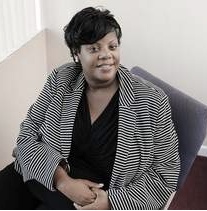
Lanham resident Stacey L. Hardy, a survivor of Cushing’s disease, will speak about her experience with the pituitary disorder at an upcoming event at Johns Hopkins Hospital.

Stacy L. Hardy of Lanham described herself as athletic, which is why she became concerned when in 1996 she mysteriously gained 240 pounds that took five doctors 14 years to determine she had a potentially fatal disease.

Now Hardy said she wants to raise awareness among others who may unknowingly have Cushing’s disease, but are unaware of the symptoms and treatment.

It wasn’t until 2010 that Hardy, now 43, was diagnosed with the disease, a rare disorder that causes the body to release too much cortisol, the body’s stress or “fight or flight” hormone, said Gary Wand, a pituitary gland specialist at The Johns Hopkins Hospital in Baltimore.

Excess cortisol causes weight gain, especially in the stomach, extreme fatigue, muscle aches, anxiety and depression, he said.

“I didn’t even know what Cushing’s was. I was ready to just live with [the symptoms],” Hardy said, adding that by the time she was diagnosed she felt so tired she could barely move.

At 5 feet, 4 inches tall, Hardy said she reached 365 pounds during her struggle with the disease.

“We knew something for a while wasn’t right, but I never thought it would be something like that,” said Hardy’s daughter, Paij Hardy, 21, a student at Baltimore City Community College.

Just three out of every one million people are diagnosed with Cushing’s each year, said Wand, who estimates he sees 30 patients per year worldwide.

In 2011, Hardy underwent 16 hours of surgery at Sinai Hospital in Baltimore to remove four tumors from her pituitary gland, located at the base of the brain that controls the release of cortisol.

Today, she is 100 pounds lighter, with the weight still rapidly coming off, and said she is determined to serve as a lifelong support and education source for her fellow “cushies” — others with Cushing’s disease.

Hardy will speak Saturday at the Johns Hopkins Pituitary Gland Center’s fifth annual Patient Education Day, an event to raise awareness about the disease, Wand said.

Since the pituitary gland is the size of a kidney bean, Hardy underwent several brain scans before doctors, who previously suggested she might have leukemia or needed to diet and exercise more, could tell there were tumors on her gland, she said.

Hardy’s experience with delayed diagnosis and misdiagnosis is not unique, Wand said.

Cushing’s is a “subtle” disease, which is difficult to diagnose, and not everyone exhibits the same symptoms, he said.

If left untreated for more than a decade, the disease is fatal, but removing the pituitary gland tumors has proved extremely successful, Wand said.

“I’m evidence that there’s help out there,” Hardy said. “I can move. I can almost run. I can bend over and pick up a box. Oh my goodness, I can dance.”

From http://www.gazette.net/article/20130926/NEWS/130929354/1077/prince-george-x2019-s-woman-works-to-raise-awareness-about-rare&template=gazette