Time to Recovery of Adrenal Function After Curative Surgery for Cushing’s Syndrome Depends on Etiology

Address all correspondence and requests for reprints to: Martin Reincke, MD, Medizinische Klinik und Poliklinik IV, Klinikum der Universität München, Ziemssenstr. 1, D-80336 Munich, Germany. E-mail: .

Successful tumor resection in endogenous Cushing’s syndrome (CS) results in tertiary adrenal insufficiency requiring hydrocortisone replacement therapy.

The aim was to analyze the postsurgical duration of adrenal insufficiency of patients with Cushing’s disease (CD), adrenal CS, and ectopic CS.

We performed a retrospective analysis based on the case records of 230 patients with CS in our tertiary referral center treated from 1983–2014. The mean follow-up time was 8 years.

We included 91 patients of the three subtypes of CS undergoing curative intended surgery and documented followup after excluding cases with persistent disease, pituitary radiation, concurrent adrenostatic or somatostatin analog treatment, and malignant adrenal disease.

The probability of recovering adrenal function within a 5 years followup differed significantly between subtypes (P = .001). It was 82% in ectopic CS, 58% in CD and 38% in adrenal CS. In the total cohort with restored adrenal function (n = 52) the median time to recovery differed between subtypes: 0.6 years (interquartile range [IQR], 0.03–1.1 y) in ectopic CS, 1.4 years (IQR, 0.9–3.4 y) in CD, and 2.5 years (IQR, 1.6–5.4 y) in adrenal CS (P = .002). In CD the Cox proportional-hazards model showed that the probability of recovery was associated with younger age (hazard ratio, 0.896; 95% confidence interval, 0.822–0.976; P = .012), independently of sex, body mass index, duration of symptoms, and basal ACTH and cortisol levels. There was no correlation with length and extend of hypercortisolism or postoperative glucocorticoid replacement doses.

Time to recovery of adrenal function is dependent on the underlying etiology of CS.

Day Nine, Cushing’s Awareness Challenge 2015

Blue and Yellow – we have those colors on ribbons, websites, T-shirts, Cushing’s Awareness Challenge logos and even cars.

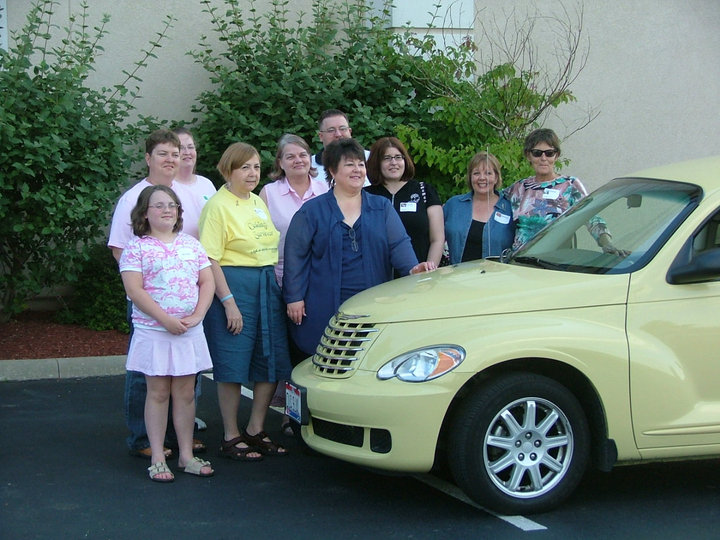
This is the yellow PT cruiser I had rented for the Columbus, OH meeting in 2007.  I didn’t ask for yellow.  That’s just what the rental company gave me.  Somehow, they knew.

This meeting is the one when we all met at Hoggy’s for dinner although some of us travelers stayed at this hotel.

I’m the one in yellow and blue.


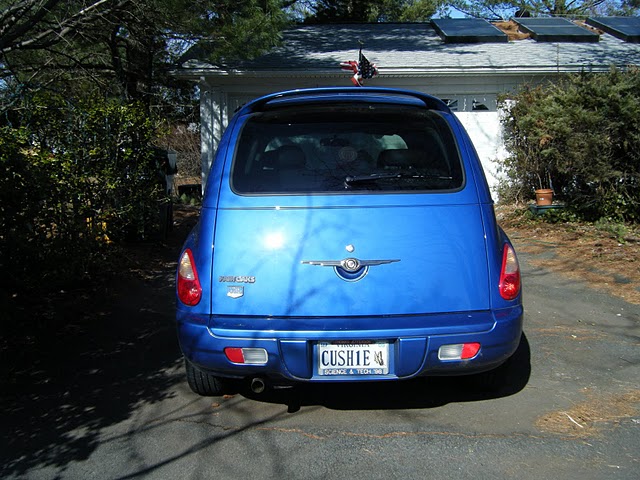
Later in 2007, I bought my own truly Cushie Car.  I even managed to get a butterfly on the tags.

So, where did all this blue and yellow come from, anyway?  The answer is so easy and without any thought that it will amaze you!

In July of 2000, I was talking with my dear friend Alice, who ran a wonderful menopause site, Power Surge.  We wondering why there weren’t many support groups online (OR off!) for Cushing’s and I wondered if I could start one myself and we decided that maybe I could.

This website (http://www.cushings-help.com) first went “live” July 21, 2000.  It was a one-page bit of information about Cushing’s.  Nothing fancy.  No message boards, no blogs, no wiki, no image galleries…  Certainly no Cushing’s Awareness Challenges.

I didn’t know much about HTML (yet!) but I knew a little from what Alice had taught me and I used on my music studio site.  I didn’t want to put as much work <COUGH!> into the Cushing’s site as I had on the music studio site so I used a WYSIWYG web editor called Microsoft FrontPage.

One of their standard templates was – you guessed it! – blue and yellow.

TaDa!  Instant Cushie color scheme forever.  Turns out that the HTML that this software churned out was really awful and had to be entirely redone as the site grew.  But the colors stuck.

Now, in this day of mobile web browsers and people going online on their cellphones, the website is being redone yet again.  But the colors are still, and always, blue and yellow.


Cushing’s Awareness Day – Things I Learned from Cushing’s

attot's avatara tale of two tumors

Screen Shot 2015-04-08 at 4.42.21 PM

Today is Cushing’s Awareness Day – the birthday of Dr. Harvey Williams Cushing.  I am going to use this famous quote by Dr. Cushing as the inspiration for my post today and talk about what I learned from the experience of getting Cushing’s, in random order.

1.  Patients are smarter, more educated, and might play a bigger role in your survival than you can imagine is possible.

3.  Rare endocrine diseases, like Cushing’s, are hard to figure out.  The tumors can be hard to see and hard to catch in action.  The symptoms are vague and strange.  Diagnosis is only quick and easy for the very lucky and for the very unlucky who suffered for years before finding help.  If you are reading these kind of blogs, you probably don’t fall into the former group.

4.  Because rare endocrine diseases are hard to figure out, if YOU suspect you have Cushing’s it is…

View original post 181 more words

The Voices of Cushing’s Disease, Part III: Finding Strength in Numbers

Part III of The Voices of Cushing’s Disease video series discusses the importance of support for people living with Cushing’s disease.


Day Eight, Cushing’s Awareness Challenge 2015

It’s Here!


Dr. Cushing was born in Cleveland Ohio. The fourth generation in his family to become a physician, he showed great promise at Harvard Medical School and in his residency at Johns Hopkins Hospital (1896 to 1900), where he learned cerebral surgery under William S. Halsted

After studying a year in Europe, he introduced the blood pressure sphygmomanometer to the U.S.A. He began a surgical practice in Baltimore while teaching at Johns Hopkins Hospital (1901 to 1911), and gained a national reputation for operations such as the removal of brain tumors. From 1912 until 1932 he was a professor of surgery at Harvard Medical School and surgeon in chief at Peter Bent Brigham Hospital in Boston, with time off during World War I to perform surgery for the U.S. forces in France; out of this experience came his major paper on wartime brain injuries (1918). In addition to his pioneering work in performing and teaching brain surgery, he was the reigning expert on the pituitary gland since his 1912 publication on the subject; later he discovered the condition of the pituitary now known as “Cushing’s disease“.

Read more about Dr. Cushing

Today, April 8th, is Cushing’s Awareness Day. Please wear your Cushing’s ribbons, t-shirts, awareness bracelets or Cushing’s colors (blue and yellow) and hand out Robin’s wonderful Awareness Cards to get a discussion going with anyone who will listen.

And don’t just raise awareness on April 8.  Any day is a good day to raise awareness.


MaryO