Adrenal Insufficiency – Female Patient found Unconscious with Syringe Nearby

Crew’s misdiagnosis of drug overdose could have cost patient her life

Kimberly Doran | From the October 2012 Issue |


A call comes in to 9-1-1 dispatch. “Help” is all that’s spoken before the operator hears the phone hit the floor. The 9-1-1 dispatcher calls back only to get a busy signal. Police and EMS are dispatched for a well-being call.

On arrival, the front door is found to be slightly ajar. The crew knocks, but there’s no reply. They find a young woman  lying on the floor, naked, and in a pool of vomit. A syringe with an unknown substance is on the ground nearby. Suspecting a drug overdose, the EMS crew begins treating the patient for this condition. The patient is unconscious with emesis around her head and face. Her vital signs are blood pressure 60/45, heart rate of 130 bpm and respiratory rate of 10.

The patient shows no signs of waking. The crew clears the airway and administers oxygen. An IV is established, and the patient is readied for transport. As the crew leaves the scene, one of the medics turns to shut the door and sees a vial under a chair. He retrieves it and notes that the label says Solu-Cortef (a glucocorticoid). He bags it for the emergency department (ED). Following his instinct, he looks around the area for medications and finds two bottles. One is labeled dexamethosone and the other is labeled fludrocortisone. He takes his findings and rushes out the door into the awaiting ambulance. During transport, the patient continues to deteriorate.

The medic administers 0.5 mg of narcan and a 500mL bolus of normal saline with no response. He radios ahead to let the hospital know that they’re en route. Now questioning the original diagnosis of drug overdose, he reports the medications he found on the scene in hopes it will help the receiving physician determine the cause of the patient’s condition.

Arrival at the ED
On arrival to the ED, the medic hands over the loaded syringe containing 2mL of unidentified solution, as well as the empty vial of Solu-Cortef and the bottles of dexamethosone and fludrocortisones.

As the crew arrives at the hospital, the ED physician meets the crew and informs them that he’s familiar with the medications. He says they’re all used for people who have various forms of adrenal insufficiency (AI). The symptoms seen in this patient coincide with life-threatening adrenal crisis. The physician administers 100 mg of Solu-Cortef via IV and within minutes, the patient rouses. In 30 minutes, she can explain what happened in the desperate moments before her crisis.

Adrenal Insufficiency
Adrenal Insufficiency (AI) is a life-threatening in which the body is unable to produce enough cortisol to sustain life. In other words, their adrenal cortex is “asleep.” People suffering from AI take daily cortisol/glucocorticoid steroid replacement because whatever adrenal function is depleted. These patients are glucocorticoid dependent. In times of injury, dehydration, illness or surgery, they require an injection of Solu-Cortef. Solu-Cortef contains both glucocorticoid and mineralocorticoid properties, helping the body to compensate during a stress event.

The adrenal medulla (inside of the adrenal gland) secretes epinephrine and norepinephrine. The adrenal cortex (outer layer of the adrenal gland) secretes cortisol and aldosterone. Cortisol, a glucocorticoid, is often called the “stress” hormone. One of cortisol’s functions is elevating blood glucose levels in times of stress. It also functions as a mediator for several inflammatory pathways.

Absence of cortisol can result in hypotension, hypoglycemia and death. Aldosterone, a mineralocorticoid, is responsible for the regulation of sodium and water. Absence of aldosterone can result in hypotension and electrolyte imbalance. AI in the prehospital setting may be difficult to recognize in the absence of a good history, including medications, to point providers in the cause of the problem. Two life-threatening conditions associated with AI include hypotension and hypoglycemia.

If not managed, these two conditions are life threatening. Prehospital treatment should include management of the patient’s airway, vascular access and fluid resuscitation. If blood glucose levels are low, the patient should receive dextrose per local protocol. It’s important to complete a thorough physical assessment and obtain a complete patient history before treating patients with this condition. Providers may confuse patients having an adrenal crisis with drug overdose patients because of their similar symptoms. Although AI is rare, it should still be considered as a potential diagnosis.

Authors’ noteParts of the above case are taken from a true story. However, the difference is that there was no syringe on the floor, no vial under the chair and no one found the medications. The patient was treated with charcoal and diagnosed as a drug-overdose patient. She likely would have died, but her mother charged into the ED and expressed the need for Solu-Cortef. Security was called, but luckily someone listened, researched and called the patient’s treating physician. The patient was treated and released. 

From Journal of Emergency Medical Services


Day Nineteen, Cushing’s Awareness Challenge

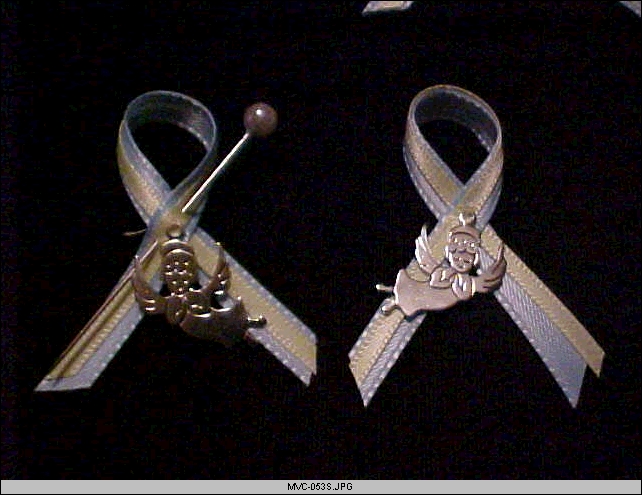
In Day 10 on April 10, 2012, I wrote about how we got the Cushing’s colors of blue and yellow.  This post is going to be about the first Cushing’s ribbons.


I was on vacation  in September, 2001 when SuziQ called me to let me know that we had had our first Cushie casualty (that we knew about).

On the message boards, Lorrie wrote: Our dear friend, Janice died this past Tuesday, September 4, 2001. I received an IM from her best friend Janine, tonight. Janine had been reading the boards, as Janice had told her about this site, and she came upon my name and decided to IM me. I am grateful that she did. She said that she knew that Janice would want all of us to know that she didn’t just stop posting.

For all of the newcomers to the board that did not know Janice, she was a very caring individual. She always had something positive to say. Janice was 36 years old, was married and had no children. She had a miscarriage in December and began to have symptoms of Cushing’s during that pregnancy. After the pregnancy, she continued to have symptoms. When discussing this with her doctor, she was told that her symptoms were just related to her D&C. She did not buy this and continued until she received the accurate diagnosis of Cushing’s Syndrome (adrenal) in March of 2001. Tragically, Janice’s tumor was cancerous, a very rare form of Cushing’s.

Janice then had her tumor and adrenal gland removed by open adrenalectomy, a few months ago. She then began chemotherapy. She was very brave through this even though she experienced severe side effects, including weakness and dizziness. She continued to post on this board at times and even though she was going through so much, she continued with a positive attitude. She even gave me a referral to a doctor a few weeks ago. She was my inspiration. Whenever I thought I had it bad, I thought of what she was dealing with, and I gained more perspective.

Janice was having difficulty with low potassium levels and difficulty breathing. She was admitted to the hospital, a CT scan was done and showed tumor metastasis to the lungs. She then was begun on a more aggressive regimen of chemo. She was discharged and apparently seemed to be doing well.

The potassium then began to drop again, she spiked a temp and she was again admitted to the hospital. She improved and was set to be discharged and then she threw a blood clot into her lungs. She was required to be put on a ventilator. She apparently was at high risk for a heart attack. Her husband did not want her to suffer anymore and did not want her to suffer the pain of a heart attack and so chose for the doctors to discontinue the ventilator on Tuesday. She died shortly thereafter.

Janice was our friend. She was a Cushie sister. I will always remember her. Janine asked me to let her know when we get the Cushing’s ribbons made as she and the rest of Janice’s family would like to wear them in her memory. She said that Janice would want to do anything she could to make others more aware of Cushing’s.

The image at the top of the page shows the first blue and yellow ribbon which were worn at Janice’s funeral.  When we had our “official ribbons” made, we sent several to Janice’s family.

Janice was the first of us to die but there have been more, way too many more, over the years.  I’ll write a bit more about that on Day 21.


Day Twelve, Cushing’s Awareness Challenge

Today’s Cushing’s Awareness Challenge post is about kidney cancer (renal cell carcinoma). You might wonder how in the world this is related to Cushing’s. I think it is, either directly or indirectly.

I alluded to this in Day Nine when I said:

I finally started the Growth Hormone December 7, 2004.
Was the hassle and 3 year wait worth it?
Stay tuned for Day 12, April 12, 2012 when all will be revealed.

So, as I said, I started Growth Hormone for my panhypopituitarism on December 7, 2004.  I took it for a while but never really felt any better, no more energy, no weight loss.  Sigh.

April 14 2006 I went back to the endo and found out that the argenine test that was done in 2004 was done incorrectly. The directions were written unclearly and the test run incorrectly, not just for me but for everyone who had this test done there for a couple years. My endo discovered this when he was writing up a research paper and went to the lab to check on something.

So, I went off GH again for 2 weeks, then was retested. The “good news” was that the argenine test is only 90 minutes now instead of 3 hours.

Wow, what a nightmare my argenine retest started! I went back for that Thursday, April 27, 2006. Although the test was shorter, I got back to my hotel and just slept and slept. I was so glad that I hadn’t decided to go home after the test.

Friday I felt fine and drove back home, no problem. I picked up my husband for a biopsy and took him to an outpatient surgical center. While I was there waiting for the biopsy to be completed, I started noticing blood in my urine and major abdominal cramps. I left messages for several of my doctors on what I should do. I finally decided to see my PCP after I got my husband home.

When Tom was done with his testing, his doctor took one look at me and asked if I wanted an ambulance. I said no, that I thought I could make it to the emergency room ok – Tom couldn’t drive because of the anaesthetic they had given him. I barely made it to the ER and left the car with Tom to park. Tom’s doctor followed us to the ER and became my new doctor.

They took me in pretty fast since I was in so much pain, and had the blood in my urine. They thought it was a kidney stone. After a CT scan, my new doctor said that, yes, I had a kidney stone but it wasn’t the worst of my problems, that I had kidney cancer. Wow, what a surprise that was! I was admitted to that hospital, had more CT scans, MRIs, bone scans, they looked everywhere.

My open radical nephrectomy was May 9, 2006 in another hospital from the one where the initial diagnosis was made. My surgeon felt that he needed a specialist from that hospital because he believed preop that my tumor had invaded into the vena cava because of its appearance on the various scans. Luckily, that was not the case.

My entire left kidney and the encapsulated cancer (10 pounds worth!) were removed, along with my left adrenal gland and some lymph nodes. Although the cancer (renal cell carcinoma AKA RCC) was very close to hemorrhaging, the surgeon believes he got it all. He said I was so lucky. If the surgery had been delayed any longer, the outcome would have been much different. I will be repeating the CT scans every 3 months, just to be sure that there is no cancer hiding anywhere. As it turns out, I can never say I’m cured, just NED (no evidence of disease). This thing can recur at any time, anywhere in my body.

I credit the argenine re-test with somehow aggravating my kidneys and revealing this cancer. Before the test, I had no clue that there was any problem. The argenine test showed that my IGF is still low but due to the kidney cancer I couldn’t take my growth hormone for another 5 years – so the test was useless anyway, except to hasten this newest diagnosis.

So… either Growth Hormone helped my cancer grow or testing for it revealed a cancer I might not have learned about until later.

My five years are up now.  My kidney surgeon *thinks* it would be ok to try the growth hormone again.  I’m still a little leery about this, especially where I didn’t notice that much improvement.

What to do?


Stand Up and Be Counted!

For all Cushies, diagnosed or not, friends and family – add your name  and whatever info you want to share to this map.  The directions are similar to those for AI, below.

Cushing’s MemberMap


If you have Adrenal Insufficiency, a friend of mine from Adrenal Insufficiency United has a similar map.  Please add your info to her map, as well.

Adrenal Insufficiency Map

Directions for the AI map:

LET’S FIND EACH OTHER! (please read the instructions)

Use ONE MARKER PER PERSON WITH AI (to ensure an accurate representation do not add yourself as a parent or family member) However, If you have lost a loved one to AI, feel free to add them just indicate it in the description box.

After navigating to the map

CLICK “ADD” on top right of map

ENTRY NAME: Initials, first name, City…any of these are fine..or just leave it blank and it will say anonymous

LOCATION: if you don’t want your address known just “click on a map location”

I put my daughter in a park near our home :o) zoom in or out to find your location.

DESCRIPTION: Age of affected, or any other description you’d like

PHOTO: not required

MARKER Addison’s is the default so make sure you look at the whole list. If you have more than one condition which causes your or your childs’ AI, just pick the one you feel is the most relevant and then feel free to add the others in the Description box.

Please do not use ADRENAL INSUFFICIENCY UNITED’S marker. Right now it’s for our main office, but we’ll add more locations/contacts in the future.

CLICK SUBMIT

After you submit, write down the url link for future edits. Then click your marker, and then again click the BLUE initials, city, or anonymous…this will open up a more detailed window to add DOB and Diagnosis info plus anything else you like. Just remember if you put any personal email it will be able to be viewed by anyone.

If you mess up don’t fret, just contact me, as the admin of the map I can fix your entry.


Single-Incision Transperitoneal Laparoscopic Left Adrenalectomy

Óscar Vidal, Emiliano Astudillo, Mauro Valentini, Cesar Ginestà, Juan C. García-Valdecasas and Laureano Fernandez-Cruz


Abstract

Background  

Laparoscopic adrenalectomy via three or four trocars is a well-established procedure. This report describes the initial experience with single-incision laparoscopic surgery (SILS) using the transperitoneal approach for left adrenalectomy.

Methods

Between April 2010 and August 2011, all consecutive patients with adrenal masses, including Conn’s syndrome, Cushing’s adenoma, and nonfunctional adrenal tumors, who agreed to undergo SILS adrenalectomy were included in a prospective study. The left 2.5-cm subcostal incision was the sole point of entry. Data of patients who underwent SILS adrenalectomy were compared with those from an uncontrolled group of patients who underwent conventional laparoscopic adrenalectomy during the same study period.

Results

There were 20 patients in each study group (20 men, 20 women; mean age [SD] = 50 [6.5] years). SILS was successfully performed and none of the patients required conversion to an open procedure. In one case of SILS procedure, an additional lateral 5-mm port was needed for retraction of the kidney. The mean (SD) duration of the operation was 95 (20) min in the SILS group and 80 (8) min in the conventional laparoscopic adrenalectomy group (p = 0.052). There were no intraoperative or postoperative complications. There were no differences between the two study groups with respect to postoperative pain, number of patients who resumed oral intake within the first 24 h, final pathologic diagnosis, and length of hospital stay.

Conclusion  

SILS left adrenalectomy is a technically feasible and safe procedure in carefully selected patients. The definitive clinical, aesthetic and functional advantages of this technique require further analysis.


Fulltext Preview

Image of the first page of the fulltext document


From http://www.springerlink.com/content/h60075322750m0x0/