Navigating the Surgical Landscape: A Comprehensive Analysis of Endoscopic vs. Microscopic Transsphenoidal Pituitary Surgery Outcomes

Abstract

Pituitary surgery, a critical intervention for various pituitary disorders, has sparked ongoing debates regarding the preference between endoscopic and microscopic transsphenoidal approaches. This systematic review delves into the outcomes associated with these techniques, taking into account the recent advancements in neurosurgery. The minimally invasive nature of endoscopy, providing improved visualization and reduced morbidity, stands in contrast to the well-established track record of the conventional microscopic method. Examining outcomes for disorders such as Cushing’s disease and acromegaly, the review synthesizes evidence from Denmark, Bulgaria, and China. Noteworthy advantages of endoscopy encompass higher resection rates, shorter surgery durations, and fewer complications, endorsing its effectiveness in pituitary surgery. While emphasizing the necessity for prospective trials, the review concludes that endoscopic approaches consistently showcase favorable outcomes, influencing the ongoing discourse on the optimal surgical strategies for pituitary disorders.

Introduction & Background

Pituitary surgery is a critical intervention for various pituitary disorders, and the choice between endoscopic and microscopic transsphenoidal approaches has been a subject of ongoing debate within the medical community. This systematic review aims to explore and analyze the outcomes associated with endoscopic and microscopic transsphenoidal pituitary surgery. As advancements in surgical techniques continue to shape the field of neurosurgery, understanding the comparative effectiveness of these two approaches becomes imperative. The endoscopic approach, characterized by its minimally invasive nature, has gained popularity for pituitary surgery in recent years [1]. Proponents argue that it provides enhanced visualization, improved maneuverability, and reduced patient morbidity. On the other hand, traditional microscopic transsphenoidal surgery has been the conventional method for decades, known for its familiarity among surgeons and established track record [2].

Several studies have investigated the outcomes of these approaches in treating pituitary disorders, including but not limited to Cushing’s disease, pituitary adenomas, and other tumors. For instance, a systematic review and meta-analysis by Chen et al. compared endoscopic and microscopic transsphenoidal surgery specifically for Cushing’s disease, shedding light on the effectiveness of these approaches in managing this specific condition [3]. Moreover, Møller et al. reported promising results for endoscopic pituitary surgery based on the experiences of experienced microscopic pituitary surgeons, indicating a potential shift towards the adoption of the endoscopic technique [1]. Guo et al. conducted a meta-analysis comparing the effectiveness of microscopic and endoscopic surgery for treating pituitary disorders, contributing valuable insights into the overall efficacy of these approaches [4].

This review aims to contribute to the ongoing discourse on pituitary surgery by providing a comprehensive analysis of the outcomes associated with endoscopic versus microscopic transsphenoidal approaches. By synthesizing the existing evidence, we strive to offer valuable insights that can guide both clinicians and researchers in making informed decisions regarding the optimal surgical approach for pituitary disorders.

Review

Materials and methods

This systematic review strictly adheres to the established Preferred Reporting Items for Systematic Reviews and Meta-Analyses (PRISMA) guidelines, employing a comprehensive approach to investigate the outcomes of endoscopic versus microscopic transsphenoidal pituitary surgery. The subsequent sections delineate the criteria for study inclusion, the search strategy utilized, and the methodology employed for data synthesis.

Search Strategy

We conducted a meticulous search across prominent electronic databases, including PubMed, Embase, and the Cochrane Library, to identify pertinent articles. Our search strategy comprised a combination of Medical Subject Headings (MeSH) terms and keywords related to pituitary surgery, encompassing both endoscopic and microscopic approaches. Boolean operators (AND, OR) were strategically employed to refine the search and identify studies meeting our predetermined inclusion criteria. The search string used for PubMed was (“Outcomes” OR “Treatment Outcome” OR “Surgical Outcome”) AND (“Endoscopic Transsphenoidal Pituitary Surgery” OR “Endoscopic Pituitary Surgery” OR “Endoscopic Hypophysectomy”) AND (“Microscopic Transsphenoidal Pituitary Surgery” OR “Microscopic Pituitary Surgery” OR “Microscopic Hypophysectomy” OR “Endoscopy”[Mesh] OR “Endoscopy, Surgical”[Mesh] OR “Transsphenoidal Hypophysectomy”[Mesh] OR “Microsurgery”[Mesh] OR “Microscopic Hypophysectomy”[Mesh]).

Eligibility Criteria

Stringent inclusion criteria were predefined to ensure the selection of high-quality and relevant studies. The included studies focused on investigating the outcomes of endoscopic versus microscopic transsphenoidal pituitary surgery. Only articles published in peer-reviewed journals within the timeframe from the inception of relevant databases until October 2023 were considered. Exclusion criteria encompassed studies on other interventions, those lacking sufficient data on surgical outcomes, and studies solely involving animal cells. Additionally, only studies in the English language with full-text availability were included, and gray literature was not considered eligible.

Data Extraction and Synthesis

Two independent reviewers meticulously screened titles and abstracts to identify potentially eligible studies. Subsequently, full-text articles were retrieved and evaluated for adherence to inclusion criteria. Discrepancies between reviewers were resolved through discussion and consultation with a third reviewer. Relevant data, including study design, patient characteristics, interventions, and surgical outcomes, were systematically extracted using a predefined data extraction form.

Data Analysis

A narrative synthesis approach was employed to summarize findings from included studies due to anticipated heterogeneity in study designs and outcome measures. Key themes and patterns related to the outcomes of endoscopic versus microscopic transsphenoidal pituitary surgery were identified and presented.

Results

Study Selection Process

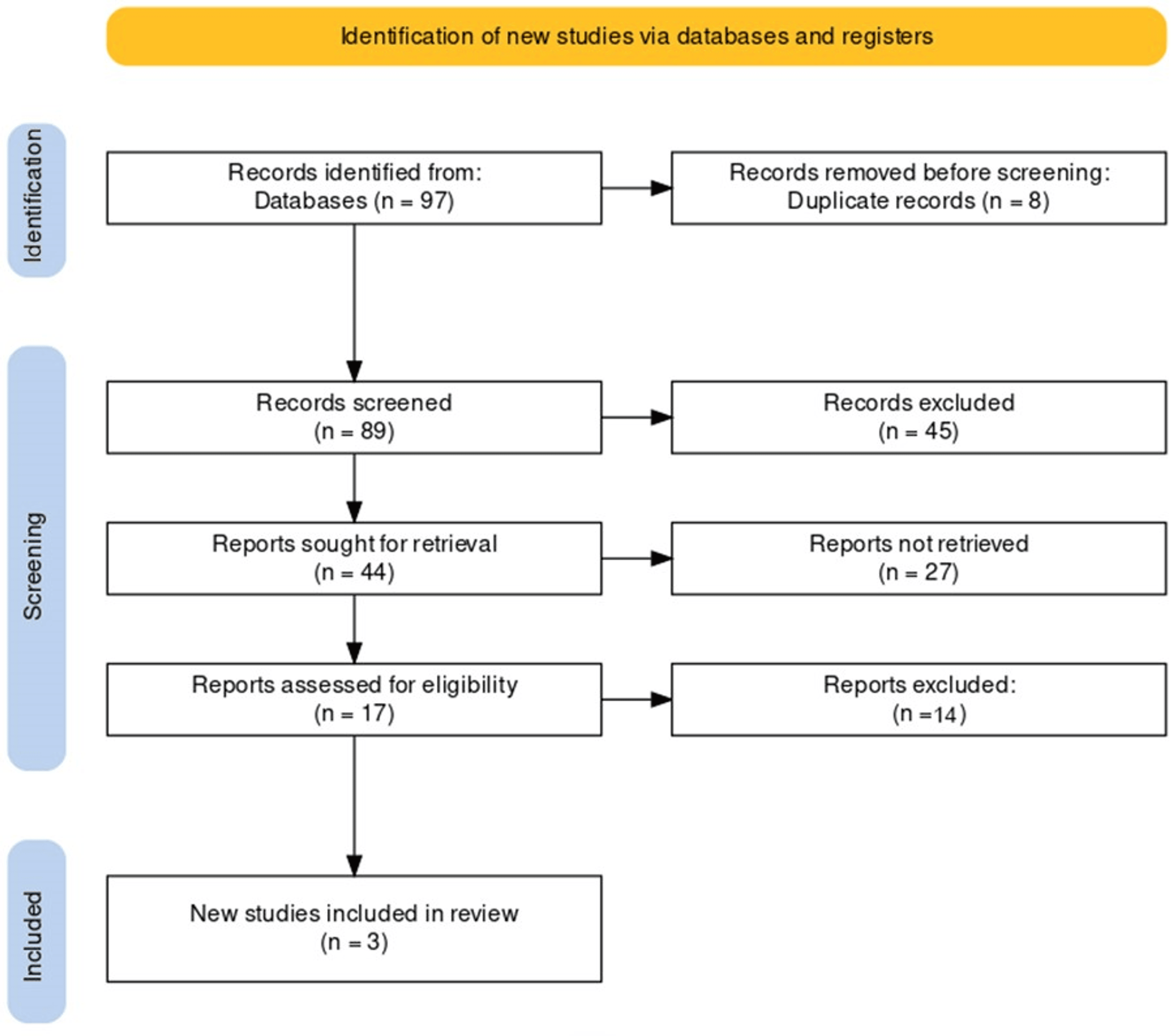
Following four database searches, 97 articles were initially identified. After eliminating eight duplicates, the titles and abstracts of the remaining 89 publications were evaluated. Subsequently, 17 potential studies underwent eligibility verification through a thorough examination of their full texts. Ultimately, three articles satisfied the inclusion criteria. No additional studies meeting the eligibility criteria were found during the examination of references in the selected articles. The entire process is visually depicted in the PRISMA flowchart (Figure 1).

PRISMA-flow-diagram-of-the-selection-of-studies-for-inclusion-in-the-systematic-review.
Figure 1: PRISMA flow diagram of the selection of studies for inclusion in the systematic review.

PRISMA: Preferred Reporting Items for Systematic Reviews and Meta-Analyses

Characteristics of Selected Studies

Overall, three papers met the inclusion criteria. Two studies were randomized controlled trials (RCTs), one each from Bulgaria and China. One study was an observational study from Denmark. The main findings and characteristics of the included studies are mentioned in the following tables (Table 1 and Table 2).

Author Year Country Study type Sample size No. of participants in the endoscopic group No. of participants in the microscopic group Main findings
Møller et al. [1] 2020 Denmark Observational study 240 45 195 The study comparing endoscopic and microscopic transsphenoidal pituitary surgery revealed that the endoscopic technique exhibited advantages, achieving a higher rate of gross total resection (39% vs. 22%) and shorter surgery duration (86 minutes vs. 106 minutes). Complications within 30 days were lower with the endoscope (17% vs. 27%), and grade II complications or higher were significantly reduced (4% vs. 20%) compared to the microscopic approach. Pituitary function outcomes favored the endoscope, with fewer new deficiencies in the HPA axis (3% vs. 34%) and TSH-dependent deficiencies (15% vs. 38%). The HPG axis also showed better normalization in the endoscopic group (32% vs. 19%). Visual field impairment and postoperative improvement did not significantly differ between the two techniques. Overall, the findings suggest that endoscopic transsphenoidal pituitary surgery may offer superior outcomes compared to the microscopic approach, particularly in terms of resection rates and complication profiles.
Vassilyeva et al. [5] 2023 Bulgaria RCT 83 43 40 The study compared endoscopic and microscopic transsphenoidal pituitary surgery in acromegaly patients, revealing comparable demographic profiles between the groups. Endoscopic surgery demonstrated advantages with shorter anesthesia and surgery times, as well as a reduced postoperative hospital stay. Complete tumor removal was more frequent with endoscopic adenomectomy, while microscopic surgery showed a higher rate of sub-total removal. Both techniques led to a tendency for somatic improvement, with more pronounced visual function improvement in the endoscopic group. Complications, such as liquorrhea and endocrine disorders, were generally low, with endoscopic surgery showing mainly mild complications. Disease remission rates were similar between the groups at various follow-up intervals. In conclusion, while both techniques proved effective in achieving remission, endoscopic surgery exhibited favorable outcomes in terms of efficiency and some aspects of complication profiles.
Zhang et al. [6] 2021 China RCT 46 23 23 Endoscopic transsphenoidal pituitary surgery for the treatment of Cushing’s disease showed comparable efficacy to microscopic transseptal pituitary surgery but with the added benefits of shorter operative time, reduced estimated blood loss, shorter hospital stays, and fewer complications.
Table 1: Summary of the studies included in this systematic review.

RCT: randomized controlled trial; HPA: hypothalamic-pituitary-adrenal; TSH: thyroid-stimulating hormone; HPG: hypothalamic-pituitary-gonadal

Technique Møller et al. [1] Vassilyeva et al. [5] Zhang et al. [6]
Male-to-female ratio (endoscopic) 25:20 17:26 13:10
Male-to-female ratio (microscopic) 107:88 16:24 12:11
Mean age in years (endoscopic) 61 43.26 55.6
Mean age in years (microscopic) 58 44.12 53.2
Functional tumors (endoscopic) 15 All functional All functional
Non-functional tumors (endoscopic) 29
Functional tumors (microscopic) 69 All functional All functional
Non-functional tumors (microscopic) 115
Microadenoma size (mm) (endoscopic) 4 19
Macroadenoma size (mm) (endoscopic) 39 4
Microadenoma size (mm) (microscopic) 3 18
Macroadenoma size (mm) (microscopic) 37 5
Mean operative time (min) (endoscopic) 86 142 108
Mean operative time (min) (microscopic) 106 176 174
Mean hospital stay (days) (endoscopic) 5 2.8
Mean hospital stay (days) (microscopic) 7 5.1
Postoperative complications (endoscopic) 2 15 3
Postoperative complications (microscopic) 39 10 8
Table 2: Summary of demographics, tumor characteristics, and postoperative outcomes of the studies included in this systematic review.

The quality assessment of the selected studies was done using the Newcastle-Ottawa Quality Assessment Scale. All three studies included in this study turned out to be of high quality with a rating of 9/9 stars (Table 3).

Author Selection Comparability Outcome Total stars
Møller et al. [1] ★★★★ ★★ ★★★ ★★★★★★★★★
Vassilyeva et al. [5] ★★★★ ★★ ★★★ ★★★★★★★★★
Zhang et al. [6] ★★★★ ★★ ★★★ ★★★★★★★★★
Table 3: Quality assessment of the included studies using the Newcastle-Ottawa Quality Assessment Scale.

Discussion

This systematic review thoroughly assesses the effectiveness and results of endoscopic transsphenoidal pituitary surgery in comparison to microscopic transsphenoidal surgery, with a specific focus on pituitary adenomas, including Cushing’s disease and acromegaly. The results contribute significant insights into the evolving landscape of pituitary surgery, highlighting the benefits and limitations of both surgical techniques.

The selected studies offer valuable insights into the comparative outcomes. Møller et al.’s observational study in Denmark suggests that endoscopic surgery exhibits superior outcomes with higher gross total resection rates, shorter surgery duration, and fewer complications [1]. Vassilyeva et al.’s RCT in Bulgaria, focusing on acromegaly patients, indicates endoscopic advantages such as shorter anesthesia and surgery times, reduced postoperative stay, and comparable remission rates [5]. Zhang et al.’s RCT in China, specifically for Cushing’s disease, suggests comparable efficacy with added benefits favoring endoscopy [6].

The endoscopic approach has been advocated for its panoramic visualization and superior mobility, which are crucial in resecting tumors while preserving normal structures [7,8]. Studies have shown a higher remission rate in endoscopic procedures for endocrine-active tumors, like growth hormone or adrenocorticotropic hormone (ACTH)-secreting adenomas, compared to the microscopic approach [9,10]. Patient comfort and recovery play a significant role in evaluating surgical methods. The endoscopic technique, by avoiding submucosal excision of nasal tissues, typically results in less postoperative pain and rhinological dysfunction. Studies, including ours, have reported shorter operative times and hospital stays with endoscopic surgery, attributed to fewer intraoperative and postoperative complications and a reduced need for wound management [11-13].

Safety is paramount to any surgical intervention. The endoscopic method has shown a decrease in common complications such as cerebrospinal fluid (CSF) leak, pituitary hormone dysfunction, and diabetes insipidus. Additionally, the endoscopic procedure exhibited fewer complications, which could be attributed to the enhanced visualization allowing for more precise tumor excision and preservation of vital structures [14-16].

In the context of acromegaly patients, the endoscopic technique has demonstrated increased radicality in tumor removal. Our review aligns with these findings, showing a higher rate of total tumor resection in endoscopic patients compared to those undergoing microscopic surgery. This improved outcome is likely due to better illumination and a wider angle of vision provided by endoscopic operations [5,17].

The endoscopic technique has shown a statistically significant improvement in visual function post surgery compared to the microscopic method. However, the frequency of certain postoperative complications, such as intraoperative liquorrhea, was higher in microscopic surgery. These differences underline the importance of the surgical technique in influencing the outcomes and complications of pituitary surgery [5,18].

Despite these findings, it is important to recognize the limitations inherent in these studies. Factors such as tumor size, density, and localization significantly influence surgical outcomes and procedure times. Additionally, the retrospective nature of many studies introduces potential biases, underscoring the need for more prospective, randomized trials for a comprehensive understanding of the long-term outcomes of these techniques.

Conclusions

This systematic review comparing endoscopic and microscopic transsphenoidal pituitary surgery outcomes indicates consistent evidence favoring the endoscopic approach. Notable studies from Denmark, Bulgaria, and China reveal superior results with endoscopic surgery, demonstrating higher resection rates, shorter surgery duration, and fewer complications. Endoscopy’s benefits extend to patient comfort, as evidenced by shorter operative times and hospital stays. Safety considerations also support endoscopy, showing a decrease in common complications such as CSF leaks and hormonal dysfunction. Despite these strengths, the review underscores the need for prospective, randomized trials to address limitations and provide a comprehensive understanding of long-term outcomes.

References

  1. Møller MW, Andersen MS, Glintborg D, Pedersen CB, Halle B, Kristensen BW, Poulsen FR: Endoscopic vs. microscopic transsphenoidal pituitary surgery: a single centre study. Sci Rep. 2020, 10:21942. 10.1038/s41598-020-78823-z
  2. Gao Y, Zhong C, Wang Y, et al.: Endoscopic versus microscopic transsphenoidal pituitary adenoma surgery: a meta-analysis. World J Surg Oncol. 2014, 12:94. 10.1186/1477-7819-12-94
  3. Chen J, Liu H, Man S, et al.: Endoscopic vs. microscopic transsphenoidal surgery for the treatment of pituitary adenoma: a meta-analysis. Front Surg. 2022, 8:806855. 10.3389/fsurg.2021.806855
  4. Guo S, Wang Z, Kang X, Xin W, Li X: A meta-analysis of endoscopic vs. microscopic transsphenoidal surgery for non-functioning and functioning pituitary adenomas: comparisons of efficacy and safety. Front Neurol. 2021, 12:614382. 10.3389/fneur.2021.614382
  5. Vassilyeva N, Mena N, Kirov K, Diatlova E: Comparative effectiveness of endoscopic and microscopic adenoma removal in acromegaly. Front Endocrinol (Lausanne). 2023, 14:1128345. 10.3389/fendo.2023.1128345
  6. Zhang T, Zhang B, Yuan L, Song Y, Wang F: Superiority of endoscopic transsphenoidal pituitary surgery to microscopic transseptal pituitary surgery for treatment of Cushing’s disease. Rev Assoc Med Bras (1992). 2021, 67:1687-91. 10.1590/1806-9282.20210732
  7. Yadav Y, Sachdev S, Parihar V, Namdev H, Bhatele P: Endoscopic endonasal trans-sphenoid surgery of pituitary adenoma. J Neurosci Rural Pract. 2012, 3:328-37. 10.4103/0976-3147.102615
  8. Louis RG, Eisenberg A, Barkhoudarian G, Griffiths C, Kelly DF: Evolution of minimally invasive approaches to the sella and parasellar region. Int Arch Otorhinolaryngol. 2014, 18:S136-48. 10.1055/s-0034-1395265
  9. Broersen LH, Biermasz NR, van Furth WR, de Vries F, Verstegen MJ, Dekkers OM, Pereira AM: Endoscopic vs. microscopic transsphenoidal surgery for Cushing’s disease: a systematic review and meta-analysis. Pituitary. 2018, 21:524-34. 10.1007/s11102-018-0893-3
  10. Torales J, Halperin I, Hanzu F, et al.: Endoscopic endonasal surgery for pituitary tumors. Results in a series of 121 patients operated at the same center and by the same neurosurgeon. Endocrinol Nutr. 2014, 61:410-6. 10.1016/j.endoen.2014.07.002
  11. Zubair A, M Das J: Transsphenoidal hypophysectomy. StatPearls [Internet]. StatPearls Publishing, Treasure Island (FL); 2023.
  12. Pan X, Ma Y, Fang M, Jiang J, Shen J, Zhan R: Improvement in the quality of early postoperative course after endoscopic transsphenoidal pituitary surgery: description of surgical technique and outcome. Front Neurol. 2020, 11:527323. 10.3389/fneur.2020.527323
  13. Aiyer RG, Upreti G: Endoscopic endo-nasal trans-sphenoidal approach for pituitary adenomas: a prospective study. Indian J Otolaryngol Head Neck Surg. 2020, 72:36-43. 10.1007/s12070-019-01725-8
  14. Oertel J, Gaab MR, Linsler S: The endoscopic endonasal transsphenoidal approach to sellar lesions allows a high radicality: the benefit of angled optics. Clin Neurol Neurosurg. 2016, 146:29-34. 10.1016/j.clineuro.2016.04.016
  15. Hanson M, Li H, Geer E, Karimi S, Tabar V, Cohen MA: Perioperative management of endoscopic transsphenoidal pituitary surgery. World J Otorhinolaryngol Head Neck Surg. 2020, 6:84-93. 10.1016/j.wjorl.2020.01.005
  16. Qiao N: Endocrine outcomes of endoscopic versus transcranial resection of craniopharyngiomas: a system review and meta-analysis. Clin Neurol Neurosurg. 2018, 169:107-15. 10.1016/j.clineuro.2018.04.009
  17. Nie D, Fang Q, Wong W, Gui S, Zhao P, Li C, Zhang Y: The effect of endoscopic transsphenoidal somatotroph tumors resection on pituitary hormones: systematic review and meta-analysis. World J Surg Oncol. 2023, 21:71. 10.1186/s12957-023-02958-2
  18. Butenschoen VM, Schwendinger N, von Werder A, Bette S, Wienke M, Meyer B, Gempt J: Visual acuity and its postoperative outcome after transsphenoidal adenoma resection. Neurosurg Rev. 2021, 44:2245-51. 10.1007/s10143-020-01408-x

From https://www.cureus.com/articles/213241-navigating-the-surgical-landscape-a-comprehensive-analysis-of-endoscopic-vs-microscopic-transsphenoidal-pituitary-surgery-outcomes#!/

Long-term Outcomes and Complications from Endoscopic Versus Microscopic Transsphenoidal Surgery for Cushing’s Disease – a 15-year Single-center Study

Abstract

Background

Endoscopic endonasal surgery is the main transsphenoidal approach for pituitary surgery in many centers, however few studies compare the endoscopic and microscopic surgical approach with regard to long-term follow-up. This single-center study aimed to compare the two techniques over 15 years.

Methods

Medical records and magnetic resonance images from 40 patients with primary transsphenoidal surgery for Cushing’s disease at Sahlgrenska University Hospital between 2003 and 2018 were reviewed. Fourteen patients who underwent microscopic surgery and 26 patients who underwent endoscopic surgery were included in this study.

Results

In the microscopic group, 12 of 14 patients achieved endocrine remission, compared to 19 of 26 patients in the endoscopic group (n. s.). Three patients in each group developed a late recurrence. Complications were seen in 5 patients in the microscopic group and in 8 patients in the endoscopic group (n. s.). No serious complications, such as carotid artery damage, cerebrovascular fluid leakage, epistaxis, or meningitis, occurred in any group. The postoperative hospital stay was shorter in the endoscopic than the microscopic group.

Conclusion

Endoscopic endonasal surgery for Cushing’s disease showed no difference in remission, recurrence, and complication rates compared to the microscopic approach. The endoscopic group had a shorter postoperative hospital stay than the microscopic group, which in part may be due to the minimal invasiveness of the endoscopic approach.

References (0)

Cited by (0)

Conflicts of interest

The authors have no conflicts of interest.

Author statements

Conceptualization: D. Farahmand, E. Backlund, O. Ragnarsson and P. Trimpou

Data curation: Dan Farahmand, Erica Backlund, J. Carlqvist, T. Skoglund, T. Hallén, O. Ragnarsson, P. Trimpou.

Formal Analysis: D. Farahmand, E. Backlund

Funding acquisition: D. Farahmand

Investigation: D. Farahmand, E. Backlund, O. Ragnarsson and P. Trimpou

Methodology: D. Farahmand, E. Backlund, O. Ragnarsson and P. Trimpou

Project administration: D. Farahmand, E. Backlund, O. Ragnarsson and P. Trimpou

Supervision: D. Farahmand

Writing – original draft: Penelope Trimpou

Writing – review & editing: E. Backlund, O. Ragnarsson, T. Skoglund, T. Hallén, G. Gudnadottir, J. Carlqvist and D. Farahmand.

View full text

From https://www.sciencedirect.com/science/article/abs/pii/S1878875022009640

Endoscopic vs. Microscopic Transsphenoidal Surgery for the Treatment of Pituitary Adenoma

This article was originally published here

Front Surg. 2022 Feb 2;8:806855. doi: 10.3389/fsurg.2021.806855. eCollection 2021.

ABSTRACT

PURPOSE: Currently, endoscopic transsphenoidal surgery (ETS) and microscopic transsphenoidal surgery (MTS) are commonly applied treatments for patients with pituitary adenomas. This meta-analysis was conducted to evaluate the efficacy and safety of ETS and MTS for these patients.

METHODS: A computer search of Pubmed, Embase, Cochrane library, Web of Science, and Google Scholar databases was conducted for studies investigating ETS and MTS for patients with pituitary adenomas. The deadline is March 01, 2021. RevMan5.1 software was used to complete this meta-analysis after literature screening, data extraction, and literature quality evaluation.

RESULTS: A total of 37 studies including 5,591 patients were included. There was no significant difference in gross tumor removal (GTR) and hormone-excess secretion remission (HES remission) between two groups [RR = 1.10, 95% CI (0.99-1.22), P = 0.07; RR = 1.09, 95% CI (1.00-1.20), P = 0.05]. ETS was associated with lower incidence of diabetes insipidus (DI) [RR = 0.71, 95% CI (0.58-0.87), P = 0.0008], hypothyroidism [RR = 0.64, 95% CI (0.47-0.89), P = 0.007], and septal perforation [RR = 0.32, 95% CI (0.13-0.79), P = 0.01] than those with MTS.

CONCLUSION: This meta-analysis indicated that ETS cannot significantly improve GTR and HES remission. However, ETS could reduce the incidence of DI, hypothyroidism, and septal perforation without increasing the rate of other complications.

SYSTEMATIC REVIEW REGISTRATION: https://www.crd.york.ac.uk/prospero/#myprospero, identifier: CRD42021241217.

PMID:35187049 | PMC:PMC8847202 | DOI:10.3389/fsurg.2021.806855

3D-Printing Technology Improves Outcomes In Pituitary Adenoma Surgery

Huang X, et al. Pituitary. 2019;doi:10.1007/s11102-018-0927-x.

March 3, 2019

The use of 3D-printed models could lead to less operation time and blood loss and fewer postoperative complications in adults who undergo endoscopic endonasal transsphenoidal surgery for pituitary adenomas and other conditions, according to findings published in Pituitary.

“Several factors influence the outcome of endoscopic endonasal surgery, including the tumor volume, patient age, lesion location and sphenoid pneumatolysis,” Xiaobing Jiang, of the department of neurosurgery at Union Hospital of Tongji Medical College of Huazhong University of Science and Technology in Wuhan, Hubei, China, and colleagues wrote. “An accurate model of the target tumor structure is a major prerequisite for a successful [pituitary adenoma] resection, especially for macroadenomas, as this may avoid disastrous complications due to suboptimal treatment.”

Jiang and colleagues conducted a retrospective analysis of 20 adults who underwent endoscopic endonasal transsphenoidal surgery at Union Hospital in Wuhan. Participants were included based on similar tumor sizes, the presence of no other diseases and nonintuitive tumor identification. All surgeries in the cohort occurred between January and August 2017, with 10 participants (mean age, 44.4 years; 50% women) receiving CT and MRI before surgery; the remaining 10 also received an operation with 3D printing (mean age, 41.2 years; 50% women).

To create the 3D models, images from CT and MRIs were combined. The 3D printer then used this information to create the model, which took between 2 hours, 10 minutes, and 4 hours, 32 minutes, to design and 10 hours, 12 minutes, and 22 hours, 34 minutes, to print.

After surgery, the researchers found that mean operation time was lower in participants who had 3D models compared with participants who did not (127 minutes vs. 143.4 minutes; P = .007). In addition, there was less blood loss in participants with 3D printing compared with participants without (159.9 mL vs. 170 mL; P = .009). The researchers noted that there were postoperative complications in 20% of the 3D-printing group and 40% of the CT and MRI alone group.

“As it is highly precise and allows personalization, 3D-printing technology has started to be applied in medicine in recent years. In neurosurgery, 3D-printing technology can provide models for the patients’ disease characteristics, such as skull defects, brain tumors, intracranial aneurysms and intracranial vascular malformations,” the researchers wrote. “We believe that with its continuous development, 3D-printing technology will be applied in clinical practice in the near future.” – by Phil Neuffer

DisclosuresThe authors report no relevant financial disclosures.

From https://www.healio.com/endocrinology/neuroendocrinology/news/online/%7B582c6512-708a-4900-ad20-f0adb5a79390%7D/3d-printing-technology-improves-outcomes-in-pituitary-adenoma-surgery

Endoscopic Surgery Should Be Standard for Cushing’s Patients with Large Tumors

Cushing’s disease patients with macroadenomas — pituitary tumors larger than 10 mm — should undergo transsphenoidal pituitary surgery using the endoscopic technique, according to a new systematic review.

The study, “Endoscopic vs. microscopic transsphenoidal surgery for Cushing’s disease: a systematic review and meta-analysis,” was published in the journal Pituitary.

Cushing’s disease develops due to an adrenocorticotropic hormone (ACTH)-secreting pituitary adenoma. The first-choice treatment for Cushing’s disease is transsphenoidal pituitary surgery, which is performed through the nose to remove pituitary tumors.

There are two main methods to conduct this kind of surgery: microscopic, which is done using a magnifying tool, and endoscopic surgery, which uses a thin, lighted tube with a tiny camera. The microscopic technique was the established method for transsphenoidal surgery, until physicians started doing endoscopic pituitary surgery in 1992.

Most surgical centers choose to perform either the microscopic or endoscopic technique but do not offer both. As a result, only a few small studies have compared the outcomes of microscopic and endoscopic surgical techniques in Cushing’s disease performed at the same center. These studies showed no clear differences in remission rates or surgical morbidity.

To date, no systematic review comparing the microscopic and the endoscopic surgical techniques in Cushing’s disease has been conducted and, therefore, convincing evidence to support either technique is lacking.

To address this, researchers set out to conduct a systematic review and meta-analysis that compares the endoscopic and microscopic transsphenoidal surgery techniques for Cushing’s disease with regards to surgical outcomes and complication rates.

Researchers searched through nine electronic databases to identify potentially relevant articles. In total, 97 cohort studies with 6,695 patients were included in the study. Among the total patient population, 5,711 received microscopical surgery and 984 were endoscopically operated.

Overall remission was achieved in 80 percent of patients, with no clear differences between the techniques. The recurrence rate was around 10 percent, and short-term mortality was less than 0.5 percent.

Cerebrospinal fluid leak (due to a hole or a tear) occurred more often in patients who underwent endoscopic surgery. On the other hand, transient diabetes insipidus — short-term diabetes — occurred more often in patients who received endoscopic surgery.

When classifying patients by tumor size, however, researchers found that patients with macroadenomas — tumors larger than 10 mm — had higher rates of remission and lower recurrence rates after endoscopic surgery. Patients with microadenomas (tumors smaller than 10 mm) had comparable outcomes with either technique.

“Endoscopic surgery for patients with Cushing’s disease reaches comparable results for microadenomas, and probably better results for macroadenomas than microscopic surgery,” the investigators wrote.

Taking these results into account, the researchers suggest that endoscopic surgery may be considered the current standard of care, though microscopic surgery can be used based on the neurosurgeon’s preference.

They also emphasize that centers that solely perform the microscopic technique should consider at least referring Cushing’s disease patients with macroadenomas to a center that performs the endoscopic technique.

From https://cushingsdiseasenews.com/2018/05/24/endoscopic-surgery-more-effective-macroadenomas-cushings-study/