A Case of Adrenocorticotropin-dependent Cushing Syndrome with Osilodrostat Exposure in Early Pregnancy

Abstract

Osilodrostat is a novel treatment for adrenocorticotropin-dependent Cushing syndrome; however, its safety during pregnancy has not been reported. This case involves a patient with Cushing disease who became pregnant while on osilodrostat. She was diagnosed at 31 years of age and underwent pituitary tumor removal. After a relapse at 35 years of age, she was initially treated with metyrapone but switched to osilodrostat and hydrocortisone because of nausea, achieving reasonable cortisol control. At 37 years of age, she unknowingly became pregnant despite irregular periods, and the pregnancy was detected at 16 weeks because of ongoing nausea. Osilodrostat was stopped, and she was started on pasireotide and metyrapone. The pregnancy proceeded normally despite elevated urinary free cortisol levels, although she contracted COVID-19 at 25 weeks. At 26 weeks and 1 day, preterm rupture of membranes and breech presentation led to an emergency cesarean section. The newborn had no adrenal insufficiency and developed normally. This case prompts consideration of whether osilodrostat can be used during pregnancy if risks are justified. Pasireotide is rarely used in pregnancy and may have limited effectiveness, but when given, can cause hyperglycemia because of insulin and incretin suppression and should be monitored carefully.

Introduction

Active Cushing syndrome decreases fertility, which explains its rarity in pregnancy. Fewer than 250 cases have been documented [1]. Whether it is ACTH-dependent or ACTH-independent, this disease poses significant risks to both mother and fetus. Its maternal complications include hypertension, preeclampsia, and diabetes [2], whereas the fetal risks include miscarriage, intrauterine growth restriction, and prematurity [3]. Given its rarity, there is no established standard of care for Cushing disease during pregnancy. Surgery offers a potential cure, but it can cause hypopituitarism and may not be feasible in the absence of a visible tumor [4]. Meanwhile, there are also risks associated with radiotherapy and pharmacological treatments [14]. The use of pasireotide, a somatostatin analog, for the treatment of a GH-secreting pituitary macroadenoma without complications has been reported in only 1 case during pregnancy [5]. To the best of our knowledge, this drug has not been used for Cushing disease before. Osilodrostat, like metyrapone, is a newer steroidogenesis inhibitor that blocks 11β-hydroxylase in the adrenal glands. It is effective for both ACTH-dependent and ACTH-independent Cushing syndrome [6]. However, it is contraindicated in pregnancy because of its proven teratogenic effects in animal studies [7]. As a result, data on its use in human pregnancy are lacking. Understanding the normal physiology of the hypothalamic-pituitary-adrenal (HPA) axis in pregnancy is essential. In normal pregnancy, the maternal levels of corticotropin-releasing hormone, ACTH, and cortisol rise both in the serum and urine because of placental production [89]. Although cortisol levels rise, only about 10% crosses the placenta because of 11β-hydroxysteroid dehydrogenase activity [10]. Fetal cortisol production remains minimal until late gestation, as 3β-hydroxysteroid dehydrogenase activity stays low until then [10]. Thus, most fetal cortisol originates from maternal sources [11]. In late pregnancy, fetal adrenal 3β-hydroxysteroid dehydrogenase activity increases, thereby enhancing fetal cortisol synthesis and promoting maturation of the HPA axis [10]. This case report discusses a female patient with recurrent Cushing disease who conceived while taking osilodrostat, which she took until early pregnancy; she was later treated successfully with pasireotide and metyrapone.

Case Presentation

A 30-year-old woman developed moon facies, central obesity, muscle weakness, and amenorrhea. Elevated levels of ACTH and cortisol, along with a roughly 6-mm pituitary adenoma, confirmed a diagnosis of Cushing disease. At 31 years of age, she successfully underwent transsphenoidal surgery, but 4 years later, biochemical relapse occurred with no identifiable residual tumor on imaging (Fig. 1). The patient was initially treated with metyrapone, but because of nausea, this was switched to osilodrostat. A block-and-replace approach was taken with osilodrostat 3 mg/day and hydrocortisone 10 mg/day, after which her cortisol levels normalized, but the menstrual irregularities persisted (Fig. 1).


Changes in urinary free cortisol (UFC) and pituitary magnetic resonance imaging (MRI) findings over time. The MRI scans at diagnosis, after surgery, at recurrence, and before pregnancy are shown alongside ACTH, cortisol, and UFC levels. The blood tests indicated recurrence, but no tumor was seen on MRI. Cortisol levels improved after osilodrostat treatment.

Figure 1.

Changes in urinary free cortisol (UFC) and pituitary magnetic resonance imaging (MRI) findings over time. The MRI scans at diagnosis, after surgery, at recurrence, and before pregnancy are shown alongside ACTH, cortisol, and UFC levels. The blood tests indicated recurrence, but no tumor was seen on MRI. Cortisol levels improved after osilodrostat treatment.

Diagnostic Assessment

At 38 years of age, the patient presented with nausea. The patient was followed up with an upper gastrointestinal endoscopy revealing no abnormalities. After a prolonged period of nausea, a pregnancy test revealed that she was 16 weeks pregnant.

Treatment

At this point, she had been on osilodrostat, which was immediately stopped and replaced with pasireotide 10 mg every 4 weeks because of pregnancy. Later, 24-hour urinary free cortisol (UFC) levels increased, leading to an early increase in pasireotide dose to 20 mg after 3 weeks before the recommended 4-week period elapsed; the same dose was administered every 4 weeks thereafter. And the same time, the initiation of up to 1000 mg metyrapone daily (Fig. 2). The patient also had hyperglycemia, which prompted insulin initiation, and subcutaneous heparin was also added because of the risk of thrombosis. At 25 weeks of pregnancy, she developed pharyngeal pain and a cough, which quickly resolved. At 26 weeks and 1 day, she experienced preterm premature rupture of membranes with the fetus in breech position, necessitating an emergency cesarean section. During this time, she tested positive for severe acute respiratory syndrome coronavirus 2 via polymerase chain reaction; however, she remained asymptomatic. Hydrocortisone was given before delivery as a steroid cover. Postpartum, osilodrostat was resumed, and pasireotide/metyrapone was discontinued. Two months after delivery, her disease remained stable, with UFC at 62.0 μg/day (171 nmol/day), within the normal reference range of 26.0 to 187.0 μg/day (72-516 nmol/day).


Urinary free cortisol (UFC) levels and medications during pregnancy. The UFC levels during pregnancy are shown. The UFC levels increased after stopping osilodrostat, and these remained high even after starting pasireotide. Adding metyrapone led to a decrease in the UFC.

Figure 2.

Urinary free cortisol (UFC) levels and medications during pregnancy. The UFC levels during pregnancy are shown. The UFC levels increased after stopping osilodrostat, and these remained high even after starting pasireotide. Adding metyrapone led to a decrease in the UFC.

Outcome and Follow-up

A live baby girl was born with extremely low birth weight, weighing 871 g. She was admitted to the neonatal intensive care unit with Apgar scores of 2 and 10 at 1 and 5 minutes, respectively, and was temporarily placed on a ventilator because of respiratory distress syndrome. During her stay, no signs of adrenal insufficiency appeared, and blood samples taken at noon showed ACTH levels of 23.3 pg/mL (5.1 pmol/L) and cortisol levels of 2.7 µg/dL (74.5 nmol/L). The normal reference ranges in adults are 7.2 to 63.3 pg/mL (1.6-13.9 pmol/L) for ACTH and 4.5 to 21.1 µg/dL (124.2-582.1 pmol/L) for cortisol. She was discharged at 40 weeks’ corrected gestational age, with subsequent normal growth and development.

Discussion

It remains challenging to manage Cushing disease during pregnancy because of limited treatment options and fetal safety concerns. An important aspect of managing hypercortisolemia in pregnancy is understanding the physiological regulation of the maternal-fetal HPA axis. In infants with very low birth weight, cortisol levels measured within an hour after birth typically range from 3.6 to 10.8 µg/dL (99-298 nmol/L) [12]. Although the neonate in this case had lower cortisol levels (2.7 µg/dL, 74.5 nmol/L), the blood sample was taken around noon, a time when levels are usually lower. Nevertheless, no signs of adrenal insufficiency were observed. Because newborns develop a stable cortisol rhythm within the first month [13], these findings suggest adequate adrenal function. Better obstetric outcomes can be expected when maternal hypercortisolism is successfully managed, such as reduced rates of prematurity and low birth weight [14]. A previous case report noted successful delivery after treatment with metyrapone, targeting UFC levels below 150 µg/day (414 nmol/day) [15]. Metyrapone was necessary in this patient because the cortisol levels were rising despite pasireotide monotherapy. This was gradually titrated to control UFC levels, which achieved some success. We introduced pasireotide during pregnancy based on previous reports of its use in acromegaly without adverse fetal outcomes [5]. However, pasireotide carries significant risk of hyperglycemia because of its inhibitory effects on insulin and incretin secretion [16]; this was seen in our patient, who required insulin therapy. Although rarely used in pregnancy—with only 1 reported case to our knowledge—it may be considered a viable option if other treatments are unsuccessful or unsuitable. Osilodrostat is contraindicated during pregnancy because it has shown teratogenic effects in animal studies, leading to limited human data [6]. In this case, the patient was unknowingly exposed during early pregnancy. However, no fetal malformations were observed, and this could be attributed to the underdeveloped fetal adrenal cortex during early gestation, which mainly relies on maternal hormone supply [10]. Osilodrostat was resumed after delivery, achieving effective disease control and clinical stability. It is also essential to consider that the preterm birth in this case may have resulted from suboptimal cortisol control, maternal COVID-19 infection, and the use of osilodrostat and pasireotide—drugs with minimal clinical data for use during pregnancy. These factors cannot be excluded entirely. However, based on our expertise, the contraindication of osilodrostat in pregnancy may warrant reevaluation.

Learning Points

  • Osilodrostat should not be used during pregnancy. Although preterm birth in this case may have resulted from various factors—including limited clinical data on osilodrostat and pasireotide—that the neonate showed no congenital abnormalities or adrenal problems indicates that the current caution against using osilodrostat in pregnancy might need to be reconsidered.
  • In early pregnancy, the fetal adrenal glands are immature and dependent on maternal hormones, so the effects of drugs that inhibit adrenal steroid synthesis may be relatively minor.
  • Pasireotide is rarely used during pregnancy. If administered, close monitoring is necessary, as insulin and incretin suppression may induce hyperglycemia.

From https://academic.oup.com/jcemcr/article/3/12/luaf269/8327956?login=false


Real-World Osilodrostat Effectiveness and Safety in Non-Pituitary Cushing Syndrome

Abstract

Context

Osilodrostat’s clinical development program mostly enrolled Cushing disease patients. Data in non-pituitary Cushing syndrome (CS) are limited.

Objective

Evaluate osilodrostat effectiveness and safety in non-pituitary CS in real-world practice in France.

Design

Retrospective, observational study (LINC 7; NCT05633953). Data for patients who initiated osilodrostat under the French Autorisation Temporaire d’Utilisation scheme or, once approved, in routine clinical practice were extracted retrospectively for ≤36 months (2019–2022).

Setting

Multicenter institutional practice.

Patients or Other Participants

103 adult non-pituitary CS patients: ectopic adrenocorticotropic hormone secretion (EAS), n=53; adrenocortical carcinoma (ACC), n=19; adrenal adenoma (AA), n=17; bilateral adrenal nodular disease (BND), n=14. 43 remained on osilodrostat throughout the observation period.

Intervention

Median (min–max) osilodrostat exposure and baseline dose: 177 days (1–1178), 5.0 mg/day (1–60).

Main Outcome Measure

Proportion with mean urinary free cortisol (mUFC) ≤ upper limit of normal (ULN) at week (W) 12 (modified intention-to-treat [mITT] population: all enrolled patients with ≥12W follow-up, excluding patients without W12 mUFC for non-safety reasons).

Results

Osilodrostat was initiated and titrated based on investigator judgment. Cortisol decreased by W4, remaining stable thereafter. 23/52 patients (mITT; 44.2%, 95% CI 30.5–58.7) had mUFC ≤ULN at W12 (missing values input as non-responders). 45/52 had W12 mUFC available; proportion with mUFC ≤ULN by etiology: EAS, n=12/29 (41%); ACC, n=4/6; AA, n=1/3; BND, n=6/7. Most common (≥15%) TEAEs: adrenal insufficiency (28%) and hypokalemia (18%). 29 patients (EAS, n=24; ACC, n=5) died from AEs (n=1 assessed as osilodrostat related by investigator), mostly neoplasm progression (n=11).

Conclusions

Osilodrostat is a suitable treatment for endogenous Cushing syndrome of various non-pituitary etiologies.

InformationAccepted manuscripts
Accepted manuscripts are PDF versions of the author’s final manuscript, as accepted for publication by the journal but prior to copyediting or typesetting. They can be cited using the author(s), article title, journal title, year of online publication, and DOI. They will be replaced by the final typeset articles, which may therefore contain changes. The DOI will remain the same throughout.
Delirium Induced by Rapid Titration of Osilodrostat in a Patient With Cushing’s Disease

Abstract

Cushing’s disease frequently presents with psychiatric symptoms such as depression, anxiety, and cognitive impairment. Osilodrostat, an 11β-hydroxylase inhibitor, is used for persistent or recurrent cases, but rapid titration may precipitate adrenal insufficiency and psychiatric complications.

We report a woman in her early 40s with a history of major depressive disorder treated with clomipramine. After transsphenoidal surgery for Cushing’s disease, she remained hypercortisolemic, and hydrocortisone replacement was continued postoperatively for safety due to unstable cortisol secretion. Cortisol secretion was unstable, with day-to-day fluctuations. Osilodrostat was initiated at 2 mg/day. Shortly thereafter, urinary free cortisol (UFC) increased, and between days 3 and 5, she developed depressive symptoms, depersonalization, and suicidal ideation. These were judged to be related to cortisol elevation, and osilodrostat was rapidly titrated, reaching 40 mg/day by day 9. Depressive symptoms improved as UFC decreased. However, from day 9, she developed delirium with fluctuating consciousness, disorientation, purposeless hyperactivity, and stereotyped speech, peaking on days 10-12. During this period, blood pressure decreased, accompanied by tachycardia and fever. Infection and metabolic abnormalities were clinically excluded. Symptoms resolved spontaneously by day 14, with amnesia for the episode, and she was discharged on day 20 without recurrence.

This case illustrates a rare clinical course where depressive symptoms during cortisol elevation and delirium during cortisol reduction occurred sequentially in the same patient following rapid osilodrostat titration. The episode suggests that abrupt cortisol fluctuations may induce psychiatric symptoms even under hydrocortisone supplementation. Clinicians should avoid rapid titration and ensure close collaboration between endocrinology and psychiatry when psychiatric symptoms arise during treatment.

Introduction

Cushing’s disease is caused by an adrenocorticotropic hormone (ACTH) secreting pituitary adenoma, leading to chronic hypercortisolism. In addition to physical features such as central obesity, moon face, and hypertension, psychiatric symptoms including depression, anxiety, and cognitive impairment are frequently observed [1-3]. Depression occurs in 40-60% of patients and is associated with increased suicide risk. Anxiety and cognitive impairment are also common, and psychiatric symptoms may even precede the physical manifestations. Thus, psychiatrists may encounter such patients at an early stage, and it is clinically important to consider underlying endocrine disorders [1,3]. The first-line treatment is transsphenoidal surgery, but remission is not always achieved [4].

Osilodrostat, an oral 11β-hydroxylase inhibitor, is primarily used for the treatment of persistent or recurrent Cushing’s disease. By inhibiting cortisol synthesis, it effectively lowers circulating cortisol levels, thereby improving the clinical manifestations of hypercortisolism. The phase III LINC 3 trial demonstrated its efficacy [5], but adverse events such as adrenal insufficiency and psychiatric symptoms have been reported [6-8]. Acute adrenal insufficiency can present with hypotension, tachycardia, fever, and gastrointestinal symptoms, and in severe cases with impaired consciousness or delirium [9]. To minimize these risks, gradual titration in 2-mg increments at intervals of at least two weeks is recommended [6].

For monitoring treatment efficacy, urinary free cortisol (UFC) is widely used as a reliable marker reflecting total cortisol secretion over 24 hours and serves as a standard index of disease activity and treatment response [1,2].

Case Presentation

The patient was a 43-year-old woman with a history of major depressive disorder since her early twenties, treated mainly with clomipramine. Although she experienced recurrent episodes, she was able to continue working as a clinical psychologist, with occasional sick leave. Her past history included papillary thyroid carcinoma treated surgically, followed by hypothyroidism managed with levothyroxine 75 µg/day.

In her thirties, she developed treatment-resistant hypertension. In March 2024, inferior petrosal sinus sampling confirmed Cushing’s disease. In April 2024, she underwent transsphenoidal surgery and started hydrocortisone replacement at 30 mg/day. However, hypercortisolism and elevated ACTH persisted. Cortisol levels showed marked day-to-day fluctuations rather than being consistently elevated, and replacement therapy was continued for safety.

In June 2024, she was admitted to our endocrinology department because of persistent disease activity. Psychiatry was consulted due to her psychiatric history. At admission, she was alert, cooperative, and exhibited neither depressive nor psychotic symptoms. Clomipramine was continued. Physical examination revealed a BMI of 27.5, central obesity, moon face, and violaceous striae. Blood pressure was 155/105 mmHg. Routine chemistry and thyroid function were within normal limits. Endocrinological work-up confirmed persistent hypercortisolism: the 24-hour UFC was markedly elevated (409.2 µg/day; normal < 50 µg/day), midnight serum cortisol was inappropriately high (14.3 µg/dL; normally suppressed at night), and dexamethasone suppression testing failed to suppress morning cortisol (9.7 µg/dL after 0.5 mg dexamethasone). Corticotropin-releasing hormone stimulation testing demonstrated an exaggerated ACTH response (63.6 → 105.0 pg/mL), consistent with pituitary-dependent Cushing’s disease. Postoperative brain MRI showed only expected surgical changes without new lesions.

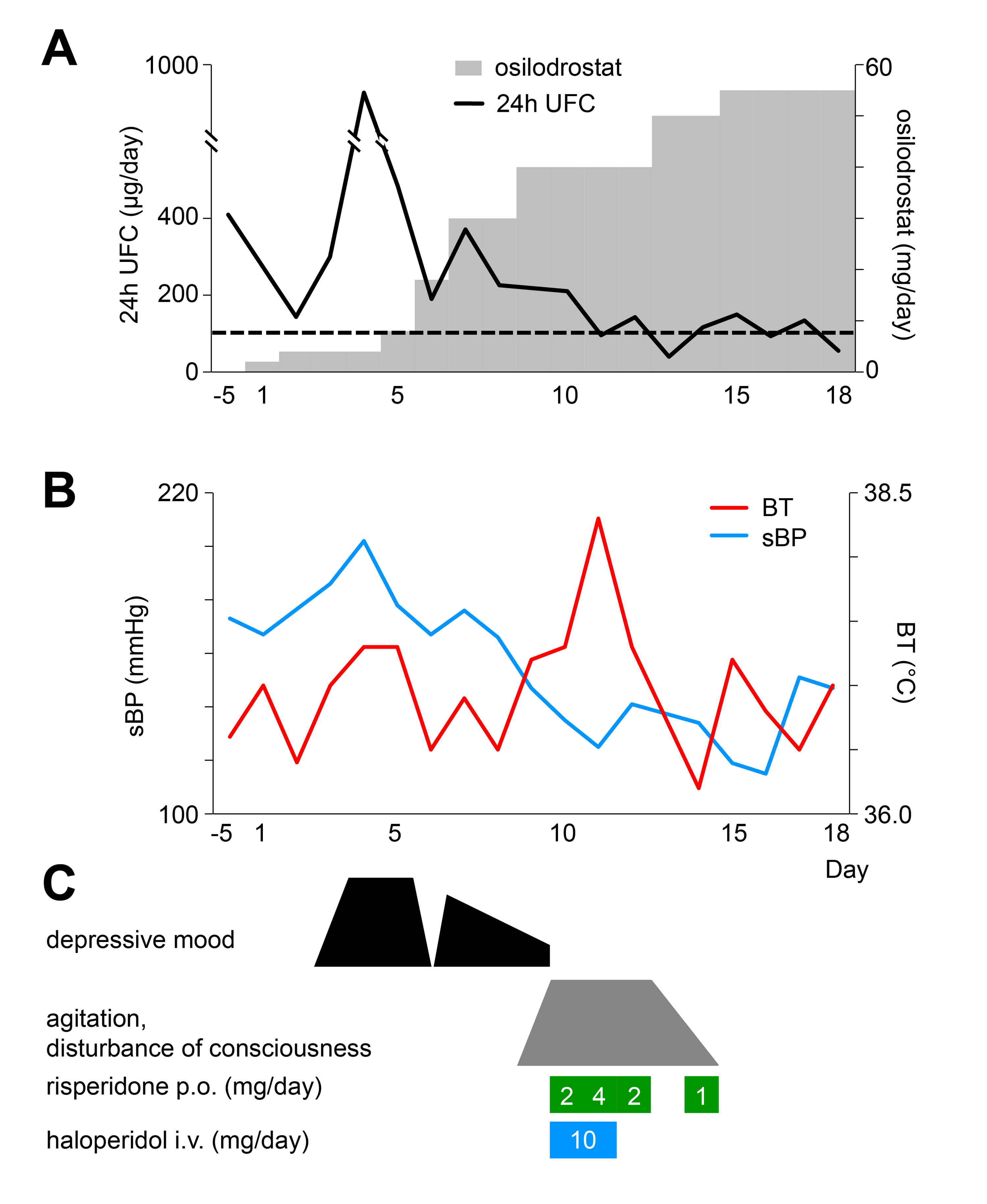
Figure 1 illustrates the clinical course in this case. Osilodrostat was initiated at 2 mg/day on day 1. UFC unexpectedly rose thereafter, and between days 3 and 5, she developed depressed mood, depersonalization, and suicidal ideation. These psychiatric symptoms were judged to be associated with increased cortisol secretion. Antidepressant adjustment was not attempted. Instead, priority was given to endocrine control, and osilodrostat was rapidly up-titrated. Although the risk of adrenal insufficiency was considered, treatment was deemed safe under hydrocortisone supplementation. By day 9, the dose of osilodrostat reached 40 mg/day, UFC decreased, and depressive symptoms improved.

Timeline-of-clinical-events-and-interventions-in-the-present-case.
Figure 1: Timeline of clinical events and interventions in the present case.

Panel (A) shows the osilodrostat dosage and 24-hour urinary free cortisol (UFC) levels; panel (B) depicts vital signs (sBP, systolic blood pressure; BT, body temperature); and panel (C) illustrates psychiatric symptoms and the dosages of antipsychotic medications, all plotted against treatment days.

However, from day 9 onward, delirium and psychomotor agitation emerged, peaking on days 10-12. She displayed fluctuating consciousness, global disorientation, impaired attention, purposeless hyperactivity, stereotyped behaviors, and repetitive utterances of meaningless numbers. She wandered barefoot and occasionally shouted fragmented phrases such as “Say you love me.” Anxiety and insomnia were prominent, but hallucinations and self-disturbances were absent.

At that time, her vital signs showed a decline in blood pressure from 155/105 mmHg to 125/59 mmHg, a pulse rate of 110/min, and a temperature of 38.3°C. Electrolytes and glucose were normal, and no inflammatory response or other signs of infection were detected. Because of marked psychomotor agitation, imaging and EEG were not performed. Risperidone and haloperidol were given but were ineffective.

At onset, the delirium was interpreted as a manifestation of hypercortisolism, partly because it occurred during a holiday when comprehensive evaluation was not feasible. Osilodrostat was therefore not reduced. As her symptoms improved spontaneously and she remained stable under hydrocortisone supplementation, the dose was maintained. Since the delirium resolved completely and did not recur, additional imaging or EEG was not performed.

By day 14, delirium had resolved, and the patient reported amnesia for the episode. No recurrence occurred, and she was discharged on day 20 at her and her family’s request. Outpatient follow-up confirmed stable status without recurrence of delirium.

Discussion

This case illustrates an unusual clinical course in which qualitatively distinct psychiatric symptoms appeared sequentially during rapid titration of osilodrostat. The initial depressive phase coincided with a transient rise in UFC and may have been related to unstable cortisol secretion that had already been observed prior to admission. Although not sufficient for a formal diagnosis, such variability is reminiscent of cyclical Cushing’s disease [10], which has also been associated with mood fluctuations [1,3]. Previous studies have demonstrated the link between hypercortisolism and depression [1,3], and our case is consistent with these findings during the early phase of treatment.

In contrast, the subsequent delirium phase was accompanied by hypotension, tachycardia, and fever, resembling adrenal insufficiency. Similar neuropsychiatric manifestations, including delirium and psychosis, have been described in previous reports of adrenal insufficiency [8,9]. However, unlike those cases, where symptoms typically emerged after drug withdrawal, delirium in our patient developed rapidly following dose escalation. This temporal pattern suggests that even transient cortisol reductions may precipitate acute neuropsychiatric symptoms.

Taken together, these observations both align with and extend prior findings linking cortisol dysregulation to psychiatric manifestations. Our case supports previous evidence that hypercortisolism is associated with depressive symptoms [1,3], whereas hypocortisolism predisposes to delirium or psychosis [8,9]. Importantly, it also highlights a dynamic aspect of this relationship: abrupt cortisol fluctuations themselves, regardless of direction, may transiently disrupt neuroendocrine homeostasis and trigger psychiatric symptoms. This interpretation is consistent with reports of cyclical Cushing’s disease showing alternating mood states [10], but it differs in that the fluctuation here was iatrogenic and temporally linked to rapid pharmacologic titration.

Pharmacological factors may have further amplified these effects. Clomipramine and antipsychotics such as haloperidol and risperidone are known to cause confusion or agitation, particularly under hormonal stress. It is therefore plausible that psychotropic drug interactions and cortisol fluctuations acted synergistically to produce the observed neuropsychiatric manifestations.

This report has several limitations. The onset of delirium occurred during a holiday, and severe agitation precluded blood sampling for serum cortisol, ACTH testing, or therapeutic steroid administration. Thus, strict diagnostic criteria for adrenal insufficiency could not be fulfilled. Nonetheless, the clinical presentation, with hypotension, tachycardia, fever, and altered consciousness, was consistent with an adrenal insufficiency-like state. Electrolytes, glucose, and inflammatory markers remained within normal limits, making infection or metabolic causes unlikely. However, structural or neurological contributors could not be completely excluded because imaging and EEG were not performed. Although the clinical picture resembled adrenal insufficiency, true adrenal crisis was unlikely given the normal electrolyte levels, spontaneous recovery, and maintained oral intake. Therefore, this episode may be better characterized as a state of functional adrenal dysregulation rather than frank adrenal insufficiency.

Conclusions

This case highlights a rare course in which depressive symptoms during cortisol elevation and delirium during cortisol reduction occurred sequentially in the same patient following rapid titration of osilodrostat. The episode suggests that even under hydrocortisone supplementation, abrupt cortisol fluctuations can induce psychiatric symptoms. However, because some observations were paradoxical and certain assessments could not be performed during the acute phase, these interpretations should be made with caution. The episode may represent a state of functional adrenal dysregulation rather than distinct phases of hyper- or hypocortisolism.

This case offers two clinical lessons. First, osilodrostat should be titrated gradually according to established guidelines. Second, if psychiatric symptoms arise during treatment, they are best managed through close collaboration between endocrinology and psychiatry.

References

  1. Pivonello R, Simeoli C, De Martino MC, et al.: Neuropsychiatric disorders in Cushing’s syndrome. Front Neurosci. 2015, 9:129. 10.3389/fnins.2015.00129
  2. Sharma ST, Nieman LK, Feelders RA: Cushing’s syndrome: epidemiology and developments in disease management. Clin Epidemiol. 2015, 7:281-93. 10.2147/CLEP.S44336
  3. Sonino N, Fava GA, Raffi AR, Boscaro M, Fallo F: Clinical correlates of major depression in Cushing’s disease. Psychopathology. 1998, 31:302-6. 10.1159/000029054
  4. Fleseriu M, Auchus R, Bancos I, et al.: Consensus on diagnosis and management of Cushing’s disease: a guideline update. Lancet Diabetes Endocrinol. 2021, 9:847-75. 10.1016/S2213-8587(21)00235-7
  5. Pivonello R, Fleseriy M, Newell-Price J, et al.: Efficacy and safety of osilodrostat in patients with Cushing’s disease (LINC 3): a multicentre phase 3 study with a double-blind, randomised withdrawal phase. Lancet Diabetes Endocrinol. 2020, 8:748-61. 10.1016/S2213-8587(20)30240-0
  6. U.S. Food and Drug Administration. Osilodrostat prescribing information. (2020). Accessed: October 18, 2025: https://www.accessdata.fda.gov/drugsatfda_docs/label/2020/212801s000lbl.pdf.
  7. Gadelha M, Bex M, Feelders RA, et al.: Randomized trial of osilodrostat for the treatment of Cushing disease. J Clin Endocrinol Metab. 2022, 107:e2882-95. 10.1210/clinem/dgac178
  8. Ekladios C, Khoury J, Mehr S, Feghali K: Osilodrostat-induced adrenal insufficiency in a patient with Cushing’s disease. Clin Case Rep. 2022, 10:e6607. 10.1002/ccr3.6607
  9. Arlt W: Society for Endocrinology endocrine emergency guidance: Emergency management of acute adrenal insufficiency (adrenal crisis) in adult patients. Endocr Connect. 2016, 5:G1-3. 10.1530/EC-16-0054
  10. Meinardi JR, Wolffenbuttel BH, Dullaart RP: Cyclic Cushing’s syndrome: a clinical challenge. Eur J Endocrinol. 2007, 157:245-54. 10.1530/EJE-07-0262

Endogenous Cushing’s Syndrome Market Insights Highlight Expanding Outlook Till 2032

DelveInsight’s “Endogenous Cushing’s Syndrome Market Insights, Epidemiology, and Market Forecast-2032′′ report offers an in-depth understanding of the Endogenous Cushing’s Syndrome, historical and forecasted epidemiology as well as the Endogenous Cushing’s Syndrome market trends in the United States, EU4 (Germany, Spain, Italy, France) the United Kingdom and Japan.

The latest healthcare forecast report provides an in-depth analysis of Endogenous Cushing’s Syndrome, offering comprehensive insights into the Endogenous Cushing’s Syndrome revenue trends, prevalence, and treatment landscape. The report delves into key Endogenous Cushing’s Syndrome statistics, highlighting the current and projected market size, while examining the efficacy and development of emerging Endogenous Cushing’s Syndrome therapies. Additionally, we cover the landscape of Endogenous Cushing’s Syndrome clinical trials, providing an overview of ongoing and upcoming studies that are poised to shape the future of Endogenous Cushing’s Syndrome treatment. This report is an essential resource for understanding the market dynamics and the evolving therapeutic options within the Endogenous Cushing’s Syndrome space.

To Know in detail about the Endogenous Cushing’s Syndrome market outlook, drug uptake, treatment scenario and epidemiology trends, Click here; Endogenous Cushing’s Syndrome Market Forecast
https://www.delveinsight.com/sample-request/endogenous-cushings-syndrome-market?utm_source=openpr&utm_medium=pressrelease&utm_campaign=gpr

Some of the key facts of the Endogenous Cushing’s Syndrome Market Report:
• The Endogenous Cushing’s Syndrome market size is anticipated to grow with a significant CAGR during the study period (2019-2032)
• In December 2024, Corcept Therapeutics, a US-based biotechnology company, has announced positive long-term results from its Phase III trial evaluating relacorilant as a treatment for individuals with endogenous hypercortisolism (Cushing’s syndrome).
• In October 2024, Sparrow Pharmaceuticals, a clinical-stage biopharmaceutical company focused on developing targeted therapies for unmet needs in endocrinology and immunology, announced the completion of its Phase 2 RESCUE trial evaluating clofutriben, a selective HSD-1 inhibitor, for endogenous Cushing’s syndrome. All eligible participants who completed the trial opted to continue treatment in an open-label extension (OLE) protocol. Encouraging results from the trial have accelerated plans for the next phase of development, set to begin next year. Additionally, the FDA has granted Orphan Drug Designation to clofutriben for the treatment of endogenous Cushing’s syndrome.
• Key Endogenous Cushing’s Syndrome Companies: Cortendo AB, RECORDATI GROUP, HRA Pharma, Corcept Therapeutics, and others
• Key Endogenous Cushing’s Syndrome Therapies: Levoketconazole, osilodrostat, metyrapone, CORT125134, and others
• The Endogenous Cushing’s Syndrome market is expected to surge due to the disease’s increasing prevalence and awareness during the forecast period. Furthermore, launching various multiple-stage Endogenous Cushing’s Syndrome pipeline products will significantly revolutionize the Endogenous Cushing’s Syndrome market dynamics.
• Research by Scaroni et al. (2023) indicates that Cushing syndrome occurs at an incidence rate of 1.5 per 1,000,000 individuals annually and has a prevalence of around 60 per 1,000,000 individuals in Europe. In about 80% of cases, Cushing syndrome is caused by adrenocorticotrophic hormone (ACTH) hypersecretion, resulting in ACTH-dependent Cushing syndrome.
• Cushing’s syndrome can be caused by either ACTH-dependent (80% of cases) or ACTH-independent (20% of cases) factors. The latter is primarily attributed to benign adrenal tumors (60%) or malignant tumors (40%). ACTH overproduction can either originate from the pituitary (85% of cases) or result from ectopic tumor secretion (15% of cases). The term “Cushing’s disease” is specifically used to refer to ACTH-secreting pituitary tumors.

Endogenous Cushing’s Syndrome Overview
Endogenous Cushing’s Syndrome is a rare hormonal disorder caused by the body’s overproduction of cortisol, a hormone produced by the adrenal glands. This overproduction can result from tumors or abnormalities in the pituitary gland (Cushing’s disease), adrenal glands, or other parts of the body that cause excessive cortisol secretion. It contrasts with exogenous Cushing’s syndrome, which results from external sources like long-term use of corticosteroid medications.

Get a Free sample for the Endogenous Cushing’s Syndrome Market Forecast, Size & Share Analysis Report:
https://www.delveinsight.com/report-store/endogenous-cushings-syndrome-market?utm_source=openpr&utm_medium=pressrelease&utm_campaign=gpr

Endogenous Cushing’s Syndrome Epidemiology
The epidemiology section provides insights into the historical, current, and forecasted epidemiology trends in the seven major countries (7MM) from 2019 to 2032. It helps to recognize the causes of current and forecasted trends by exploring numerous studies and views of key opinion leaders. The epidemiology section also provides a detailed analysis of the diagnosed patient pool and future trends.

Endogenous Cushing’s Syndrome Epidemiology Segmentation:
The Endogenous Cushing’s Syndrome market report proffers epidemiological analysis for the study period 2019-2032 in the 7MM segmented into:
• Total Prevalence of Endogenous Cushing’s Syndrome
• Prevalent Cases of Endogenous Cushing’s Syndrome by severity
• Gender-specific Prevalence of Endogenous Cushing’s Syndrome
• Diagnosed Cases of Episodic and Chronic Endogenous Cushing’s Syndrome

Download the report to understand which factors are driving Endogenous Cushing’s Syndrome epidemiology trends @ Endogenous Cushing’s Syndrome Epidemiology Forecast
https://www.delveinsight.com/sample-request/endogenous-cushings-syndrome-market?utm_source=openpr&utm_medium=pressrelease&utm_campaign=gpr

Endogenous Cushing’s Syndrome Drugs Uptake and Pipeline Development Activities
The drugs uptake section focuses on the rate of uptake of the potential drugs recently launched in the Endogenous Cushing’s Syndrome market or expected to get launched during the study period. The analysis covers Endogenous Cushing’s Syndrome market uptake by drugs, patient uptake by therapies, and sales of each drug.
Moreover, the therapeutics assessment section helps understand the drugs with the most rapid uptake and the reasons behind the maximal use of the drugs. Additionally, it compares the drugs based on market share.
The report also covers the Endogenous Cushing’s Syndrome Pipeline Development Activities. It provides valuable insights about different therapeutic candidates in various stages and the key companies involved in developing targeted therapeutics. It also analyzes recent developments such as collaborations, acquisitions, mergers, licensing patent details, and other information for emerging therapies.

Endogenous Cushing’s Syndrome Therapies and Key Companies
• Levoketconazole: Cortendo AB
• osilodrostat: RECORDATI GROUP
• metyrapone: HRA Pharma
• CORT125134: Corcept Therapeutics

Discover more about therapies set to grab major Endogenous Cushing’s Syndrome market share @ Endogenous Cushing’s Syndrome Treatment Landscape
https://www.delveinsight.com/sample-request/endogenous-cushings-syndrome-market?utm_source=openpr&utm_medium=pressrelease&utm_campaign=gpr

Endogenous Cushing’s Syndrome Market Drivers
• Growing Prevalence of Endogenous Cushing’s Syndrome
• Advancements in Diagnostic Techniques
• Emerging Targeted Therapies
• Increasing Investment in Rare Disease Research
• Growing Awareness and Early Diagnosis
• Increased Focus on Orphan Drug Development

Endogenous Cushing’s Syndrome Market Barriers
• High Treatment Costs
• Limited Treatment Options
• Complexity in Diagnosis
• Side Effects of Current Treatments
• Small Patient Population
• Regulatory Challenges

Scope of the Endogenous Cushing’s Syndrome Market Report
• Study Period: 2019-2032
• Coverage: 7MM [The United States, EU5 (Germany, France, Italy, Spain, and the United Kingdom), and Japan]
• Key Endogenous Cushing’s Syndrome Companies: Cortendo AB, RECORDATI GROUP, HRA Pharma, Corcept Therapeutics, and others
• Key Endogenous Cushing’s Syndrome Therapies: Levoketconazole, osilodrostat, metyrapone, CORT125134, and others
• Endogenous Cushing’s Syndrome Therapeutic Assessment: Endogenous Cushing’s Syndrome current marketed and Endogenous Cushing’s Syndrome emerging therapies
• Endogenous Cushing’s Syndrome Market Dynamics: Endogenous Cushing’s Syndrome market drivers and Endogenous Cushing’s Syndrome market barriers
• Competitive Intelligence Analysis: SWOT analysis, PESTLE analysis, Porter’s five forces, BCG Matrix, Market entry strategies
• Endogenous Cushing’s Syndrome Unmet Needs, KOL’s views, Analyst’s views, Endogenous Cushing’s Syndrome Market Access and Reimbursement

Media Contact
Company Name: DelveInsight Business Research LLP
Contact Person: Gaurav Bora
Email: info@delveinsight.com
Contact No.: +14699457679
City: 304 S. Jones Blvd #2432, Las Vegas
State: Nevada (89107)
Country: United States
Website: https://www.delveinsight.com/consulting

About DelveInsight
DelveInsight is a leading Healthcare Business Consultant, and Market Research firm focused exclusively on life sciences. It supports Pharma companies by providing comprehensive end-to-end solutions to improve their performance.
It also offers Healthcare Consulting Services, which benefits in market analysis to accelerate the business growth and overcome challenges with a practical approach.

This release was published on openPR.

https://www.openpr.com/news/4261663/endogenous-cushing-s-syndrome-market-insights-highlight

Enhanced Radiological Detection of a Corticotroph Adenoma Following Treatment With Osilodrostat

Abstract

In approximately 30% of patients with Cushing disease, pituitary magnetic resonance imaging (MRI) does not reliably identify a corticotroph adenoma. Importantly, surgical remission rates are >2.5 fold higher for microadenomas that are radiologically visible on preoperative imaging when compared with “MRI-negative” cases. We describe a 42-year-old woman with Cushing disease, in whom MRI findings at presentation were equivocal with no clear adenoma visualized. She was initially treated with metyrapone, which resulted in partial biochemical control of hypercortisolism. After switching to osilodrostat, there was a marked improvement in her symptoms and rapid normalization of cortisol levels. Following 3 months of eucortisolemia, [11C]methionine positron emission tomography (MET-PET) coregistered with volumetric MRI (MET-PET/MRCR) localized the site of the corticotroph tumor and the patient underwent successful transsphenoidal resection. She remains in full clinical and biochemical remission at >2 years postsurgery. This case suggests that a period of eucortisolemia induced by osilodrostat may facilitate localization of corticotroph microadenomas using functional (PET) imaging.

Introduction

Cushing disease, caused by an ACTH-secreting pituitary adenoma, accounts for approximately 80% of endogenous Cushing syndrome [1]. Although transsphenoidal surgery remains the preferred treatment for the majority of patients, even in expert centers recurrence rates as high as 27% have been reported [23]. Surgery is preferred over medical therapy because it offers the potential for definitive cure by directly removing the pituitary adenoma. In contrast, medical therapy is typically reserved for patients in whom surgery is contraindicated, incomplete, or has failed to achieve remission. Linked to this, magnetic resonance imaging (MRI) fails to detect an adenoma in approximately one third of cases [4]. In a recent systematic review, postsurgical remission rates were 2.63-fold higher (95% CI, 2.06-3.35) for MRI-detected corticotroph adenomas when compared with “MRI-negative” cases [5]. Several alternative magnetic resonance sequences have therefore been proposed to aid tumor localization (including dynamic and volumetric [eg, gradient recalled echo MRI]), but these still fail to detect a significant proportion of microcorticotropinomas [67]. Accordingly, molecular (functional) imaging with positron emission tomography (PET) radiotracers that target key properties of corticotroph adenomas (eg, [11C]methionine [MET-PET], [18F]fluoroethyltyrosine, or [68Ga]DOTA-corticotropin-releasing hormone PET) has been proposed as an additional tool for localizing corticotroph tumors that evade detection on conventional MRI [6-10].

Medical therapy is often required for patients in whom surgery is not an immediate option or when there is persistent hypercortisolism postoperatively [11]. Cortisol-lowering treatment may also be considered before surgery to reduce morbidity and perioperative complications [11]. An important recent addition to the armory of medications used to treat Cushing syndrome is osilodrostat, a potent oral inhibitor of the key adrenal steroidogenic enzyme 11β-hydroxylase [1213].

Here, we describe how preoperative medical therapy with osilodrostat yielded dual benefits in a patient with inconclusive primary imaging: (1) rapid and effective control of hypercortisolism and (2) facilitation of the localization of a previously occult microcorticotroph adenoma using MET-PET coregistered with volumetric MRI (MET-PET/MRCR).

Case Presentation

A 42-year-old woman presented with a 7-year history of progressive central weight gain, facial plethora, acne, worsening hypertension, depression, and proximal myopathy. Her symptoms had become more pronounced during the COVID-19 pandemic, leading to profound emotional distress and functional decline. She described feeling persistently tearful and fatigued, with markedly reduced energy levels that rendered her unable to work or care for her young child, and severely affecting her quality of life. She had no significant medical history and was taking amlodipine and the progesterone-only pill. On examination, her body mass index was 29.6 kg/m² and blood pressure was markedly elevated at 197/111 mm Hg. Clinical features consistent with hypercortisolism included easy bruising, centripetal adiposity, and proximal muscle wasting. Initial laboratory evaluation was unremarkable; however, her hemoglobin A1c was at the upper end of normal (41 mmol/mol or 5.9%).

Diagnostic Assessment

Biochemical testing confirmed ACTH-dependent Cushing syndrome (Table 1). Cortisol levels following overnight and 48-hour dexamethasone suppression were elevated at 8 µg/dL (SI: 219 nmol/L) and 16 µg/dL (SI: 434 nmol/L), respectively (reference range: < 1.8 µg/dL [SI: < 50 nmol/L]). Plasma ACTH concentrations ranged from 36 to 55 ng/L (SI: 7.9-12.1 pmol/L) (reference range: 10-30 ng/L [SI: 2.2-6.6 pmol/L]), consistent with an ACTH-driven process. Urinary free cortisol (UFC) was markedly elevated at 690.95 µg/24 hours (SI: 1907 nmol/24 hours) (reference range: 18-98 µg/24 hours [SI: 50-270 nmol/24 hours]). Late-night salivary cortisol and cortisone levels were also elevated at 0.95 µg/dL (SI: 26.2 nmol/L) (reference range: < 0.09 µg/dL [SI: < 2.6 nmol/L]) and 2.7 µg/dL (SI: 74.5 nmol/L) (reference range: < 0.7 µg/dL [SI: < 18 nmol/L]) respectively. Inferior petrosal sinus sampling excluded an ectopic source of ACTH production (central-to-peripheral ACTH ratio: baseline 18.60, 0 minutes 18.4, peak at 2 minutes 94.9, 5 minutes 42.4, 10 minutes 22.3) (Table 2). However, pituitary MRI findings were inconclusive, with no definite adenoma identified. In addition, the left intracavernous carotid artery encroached medially, creating a narrow intercarotid window with distortion of normal pituitary anatomy (Fig. 1). Given these findings, the decision was made to initiate cortisol-lowering therapy and to reassess imaging appearances after a period of biochemical normalization.

Pituitary MRI at initial presentation. No discrete adenoma is visible on T1-weighted coronal precontrast (A) and postcontrast (B), T2-weighted coronal (C), and T1-weighted sagittal postcontrast (D) sequences. The sellar anatomy appears asymmetric, consistent with a medially positioned left internal carotid artery.

Figure 1.

Pituitary MRI at initial presentation. No discrete adenoma is visible on T1-weighted coronal precontrast (A) and postcontrast (B), T2-weighted coronal (C), and T1-weighted sagittal postcontrast (D) sequences. The sellar anatomy appears asymmetric, consistent with a medially positioned left internal carotid artery.

Table 1.

Biochemical investigations at diagnosis confirming ACTH-dependent Cushing syndrome

Tests Results Reference Range
Overnight dexamethasone suppression test (ONDST) Cortisol: 8 µg/dL (SI: 219 nmol/L) <1.8 µg/dL (SI: < 50 nmol/L)
48-hour dexamethasone suppression test (DST) Cortisol: 16 µg/dL (SI: 434 nmol/L) <1.8 µg/dL (SI: < 50 nmol/L)
ACTH 36-55 ng/L (SI: 7.9-12.1 pmol/L) 10-30 ng/L (SI: 2.2-6.6 pmol/L)
24-hour urinary free cortisol (UFC) 690.95 μg/24 h (SI: 1907 nmol/24 h) 18-98 µg/24 h (SI: 50-270 nmol/24 hours)
Late-night salivary cortisol
late-night salivary cortisone
0.95 µg/dL (SI: 26.2 nmol/L)
2.7 µg/dL (SI: 74.5 nmol/L)
<0.09 µg/dL (SI: <2.6 nmol/L) <0.7 µg/dL (SI: <18 nmol/L)

Results are reported in both conventional and SI units with reference ranges shown in parentheses.

Table 2.

Results of inferior petrosal sinus sampling (IPSS)

Time Plasma ACTH
(min) Left petrosal sinus Right petrosal sinus Peripheral vein
−5 1159 ng/L (255 pmol/L) 144 ng/L (32 pmol/L) 62.3 ng/L (14 pmol/L)
0 1147 ng/L (253 pmol/L) 222 ng/L (49 pmol/L) 62.3 ng/L (14 pmol/L)
2 5257 ng/L (1157 pmol/L) 2159 ng/L (475 pmol/L) 55.4 ng/L (12.2 pmol/L)
5 3677 ng/L (810 pmol/L) 2976 ng/L (655 pmol/L) 86.8 ng/L (19 pmol/L)
10 2251 ng/L (496 pmol/L) 545 ng/L (120 pmol/L) 101 ng/L (22 pmol/L)

Time Plasma cortisol
(min) Left petrosal sinus Right petrosal sinus Peripheral vein
−5 24.94 μg/dL (668 nmol/L) 25.30 μg/dL (698 nmol/L) 23.56 μg/dL (650 nmol/L)
0 25.08 μg/dL (692 nmol/L) 24.07 μg/dL (664 nmol/L) 23.34 μg/dL (644 nmol/L)
2 23.31 μg/dL (643 nmol/L) 24.32 μg/dL (671 nmol/L) 23.78 μg/dL (656 nmol/L)
5 21.97 μg/dL (606 nmol/L) 23.67 μg/dL (653 nmol/L) 23.23 μg/dL (641 nmol/L)
10 27.62 μg/dL (762 nmol/L) 26.17 μg/dL (722 nmol/L) 25.26 μg/dL (697 nmol/L)

Time Plasma prolactin
(min) Left petrosal sinus Right petrosal sinus Peripheral vein
−5 1835 mU/L (86 μg/L) 356 mU/L (17 μg/L) 251 mU/L (11 μg/L)
0 1725 mU/L (81 μg/L) 498 mU/L (23 μg/L) 248 mU/L (12 μg/L)
2 2151 mU/L (101 μg/L) 409 mU/L (19 μg/L) 240 mU/L (11 μg/L)
5 2239 mU/L (105 μg/L) 711 mU/L (33 μg/L) 246 mU/L (12 μg/L)
10 1883 mU/L (89 μg/L) 410 mU/L (19 μg/L) 244 mU/L (11 μg/L)

Central-to-peripheral ACTH gradients before and after corticotropin-releasing hormone (CRH) stimulation support a pituitary source of ACTH secretion. Reference cutoffs: basal ACTH gradient ≥2 and/or CRH-stimulated ACTH gradient ≥3 indicate central ACTH secretion.

Treatment

The patient was started on metyrapone, but despite dose escalation up to 4000 mg daily, which was associated with significant nausea and malaise, she did not achieve eucortisolemia (Fig. 2C). She was therefore transitioned to osilodrostat, which rapidly normalized cortisol levels within 5 weeks at a maintenance dose of 6 mg twice daily (Fig. 2B and 2C). In contrast to metyrapone, osilodrostat was well-tolerated with no reported side effects. Serum cortisol and clinical status were closely monitored throughout, with no biochemical or clinical evidence of adrenal insufficiency.

Bar charts illustrating changes in urinary, salivary, and serum cortisol, as well as serum ACTH, during medical treatment. (A) A 24-hour UFC (black bars, left y-axis) normalized during osilodrostat treatment, whereas serum ACTH (gray bars, right y-axis) increased. Dotted lines represent the upper limit of normal: 59.4 µg/24 hours (SI: 164 nmol/24 hours) for UFC and 30 ng/L (SI: 6.6 pmol/L) for ACTH. X-axis labels indicate treatment week and total daily osilodrostat dose. (B) Salivary free cortisol levels, collected alongside serum cortisol during a cortisol day curve (at 09:00, 12:00, 15:00, and 18:00), fully normalized with osilodrostat therapy. Bar shading from black to light gray denotes sampling time. The dotted line indicates upper limit of normal: 9.4 ng/dL (SI: 2.6 nmol/L). (C) Serum free cortisol levels during day curves showed inadequate control on escalating doses of metyrapone, with normalization achieved following initiation of osilodrostat.

Figure 2.

Bar charts illustrating changes in urinary, salivary, and serum cortisol, as well as serum ACTH, during medical treatment. (A) A 24-hour UFC (black bars, left y-axis) normalized during osilodrostat treatment, whereas serum ACTH (gray bars, right y-axis) increased. Dotted lines represent the upper limit of normal: 59.4 µg/24 hours (SI: 164 nmol/24 hours) for UFC and 30 ng/L (SI: 6.6 pmol/L) for ACTH. X-axis labels indicate treatment week and total daily osilodrostat dose. (B) Salivary free cortisol levels, collected alongside serum cortisol during a cortisol day curve (at 09:00, 12:00, 15:00, and 18:00), fully normalized with osilodrostat therapy. Bar shading from black to light gray denotes sampling time. The dotted line indicates upper limit of normal: 9.4 ng/dL (SI: 2.6 nmol/L). (C) Serum free cortisol levels during day curves showed inadequate control on escalating doses of metyrapone, with normalization achieved following initiation of osilodrostat.

ACTH levels progressively increased as the dose of osilodrostat was escalated (Fig. 2A). After 3 months of biochemical eucortisolism, she underwent Met-PET/MRCR, which revealed a distinct methionine-avid lesion in the right posterolateral aspect of the sella (Fig. 3). Imaging was performed as previously reported [7814]. Conventional MRI findings remained stable, with no new abnormalities. As she remained clinically and biochemically eucortisolemic on osilodrostat, glucocorticoid supplementation was not required pre- or perioperatively.

11C-Methionine PET/CT coregistered with volumetric MRI (MET-PET/MRCR) following treatment with osilodrostat. A subtle area of reduced gadolinium enhancement can now be appreciated on the right posterosuperior aspect of the gland (A-C). MET-PET/MRCR confirms focal tracer uptake at this site (yellow arrows) and also within normal gland anteriorly (white arrow) (D-F). Three-dimensional reconstruction using CT, MRI, and PET datasets demonstrating the location of the corticotroph microadenoma which was confirmed at subsequent surgery (G-H).

Figure 3.

11C-Methionine PET/CT coregistered with volumetric MRI (MET-PET/MRCR) following treatment with osilodrostat. A subtle area of reduced gadolinium enhancement can now be appreciated on the right posterosuperior aspect of the gland (A-C). MET-PET/MRCR confirms focal tracer uptake at this site (yellow arrows) and also within normal gland anteriorly (white arrow) (D-F). Three-dimensional reconstruction using CT, MRI, and PET datasets demonstrating the location of the corticotroph microadenoma which was confirmed at subsequent surgery (G-H).

Outcome and Follow-up

At transsphenoidal surgery, abnormal tissue was resected from the site identified on MET-PET/MRCR. Histological examination revealed normal anterior pituitary tissue (adenohypophysis) with no evidence of a pituitary adenoma. Occasional cells showed possible Crooke’s hyaline change. The Ki-67 proliferation index was very low (<1%). Despite the absence of histological confirmation of a corticotroph adenoma, the patient entered complete biochemical and clinical remission. Early postoperative cortisol was 3 µg/dL (SI: 82.8 nmol/L), prompting initiation of glucocorticoid replacement with prednisolone. Prednisolone was chosen for its longer half-life, enabling convenient once-daily dosing. We routinely monitor prednisolone levels to guide adjustment of replacement dosing. Prednisolone was successfully tapered over a period of 6 months, with biochemical confirmation of adrenal recovery. At 2 years postsurgery, the patient had no clinical features of hypercortisolism with sustained weight loss of >20 kg. Morning 09:00 cortisol and ACTH were consistent with ongoing eucortisolism. Serial late-night salivary cortisol and cortisone levels were normal, and cortisol was undetectable following a 1-mg overnight dexamethasone suppression test, confirming durable remission of Cushing disease.

Discussion

Early transsphenoidal surgery remains the treatment of choice for most patients with Cushing disease, with the highest chance of cure achieved following a successful first operation [11]. However, even in expert centers, persistent or recurrent disease is diagnosed during follow-up, and is more likely when initial MRI has failed to identify a clear surgical target [5]. Reoperation carries increased technical difficulty and a higher risk of iatrogenic hypopituitarism, underscoring the importance of accurate preoperative localization of corticotroph adenomas. Our case illustrates a potential novel added benefit of a trial of primary medical therapy in a patient with Cushing disease and equivocal or negative MRI findings at initial presentation. Specifically, we have shown how osilodrostat, a potent inhibitor of 11β-hydroxylase, can achieve rapid normalization of cortisol levels, consistent with the findings of the LINC (LCI699 [osilodrostat] in Cushing disease) series of studies [15-17], and at the same time help reveal the location of the occult microcorticotropinoma. An important consequence of achieving effective adrenal blockade in our patient was the more than threefold accompanying rise in plasma ACTH levels (Fig. 2). We hypothesized that such an increase in tumoral activity might facilitate its detection using molecular (functional) imaging. MET-PET has been shown in several studies to facilitate localization of de novo and recurrent corticotroph adenomas [81819] in a significant proportion of patients with equivocal or negative MRI findings. We have now shown that such an approach could potentially be enhanced by pretreatment with the potent 11β-hydroxylase inhibitor osilodrostat.

We also considered whether the rise in ACTH during osilodrostat therapy reflected increased tumor activity alone or was associated with a change in tumor size. In our case, ACTH rose significantly, likely reflecting enhanced secretory activity, whereas repeat conventional MRI remained stable, with no new abnormalities or interval changes. In the LINC 4 study, tumor volume data were available for 35 patients at both baseline and week 48. Among these, 40.0% had a ≥20% increase, 28.6% had a ≥20% decrease, and 31.4% had <20% change in tumor volume. These outcomes were observed in both microadenomas and macroadenomas, with no clear correlation to treatment duration or osilodrostat dose [20]. This variability suggests that osilodrostat does not exert a consistent effect on tumor volume.

Interestingly, although histopathological analysis did not confirm a corticotroph adenoma, this is a well-recognized finding and has been reported in a significant proportion of patients undergoing surgery for Cushing disease [2122]. Nonetheless, we consider the diagnosis of pituitary-dependent Cushing syndrome was clearly established by the clinical features, results of initial laboratory testing and findings at inferior petrosal sinus sampling (which demonstrated a clear central-to-peripheral ACTH gradient). In addition, abnormal tissue was identified intraoperatively at the site visualized on MET-PET and fully resected, and no other abnormal foci of tissue were seen. The patient has subsequently achieved complete and sustained clinical and biochemical remission, consistent with successful removal of an ACTH-secreting adenoma.

Recent case reports have raised concerns about prolonged adrenal insufficiency following extended osilodrostat use—an unexpected finding given the drug’s short half-life [23-25]. Although adrenal insufficiency requiring temporary glucocorticoid replacement had been reported in clinical trials (most commonly in patients undergoing rapid dose escalation [121516]), prolonged hypothalamopituitary-adrenal axis suppression resulting from supraphysiologic glucocorticoid replacement could also be contributory. For now, the exact mechanism of this observed phenomenon remains unclear. Our patient managed to wean glucocorticoid replacement postoperatively and did not demonstrate prolonged adrenal suppression; at the same time, clinical and biochemical testing confirmed full remission from Cushing disease.

This case supports the hypothesis that preoperative cortisol suppression may enhance the diagnostic accuracy of molecular (functional) imaging in Cushing disease, particularly in cases with inconclusive MRI findings. If validated in prospective studies, this approach could refine surgical planning and potentially lead to better surgical success and durable clinical outcomes.

Learning Points

  • Approximately 30% of corticotroph adenomas causing Cushing disease are not readily localized on conventional pituitary MRI.

  • Functional imaging modalities such as MET-PET/MRCR can improve detection of previously occult pituitary adenomas in Cushing disease.

  • A period of medical pretreatment with osilodrostat, with consequent reduction in negative feedback by glucocorticoid at the hypothalamic-pituitary level, may augment tumor localization by molecular imaging.

Acknowledgments

The authors acknowledge Debbie Papadopoulou and Niamh Martin for their contributions to clinical management. Nigel Mendoza performed the transsphenoidal surgery.

Contributors

All authors made individual contributions to authorship. Z.H., L.Y., J.M., M.G., and F.W. were involved in the diagnosis and management of this patient and manuscript submission. J.M., D.G., and M.G. performed and analyzed the patient’s functional imaging. All authors reviewed and approved the final draft.

Funding

No public or commercial funding

Disclosures

None declared.

Informed Patient Consent for Publication

Signed informed consent obtained directly from the patient.

Data Availability Statement

Original data generated and analyzed during this study are included in this published article.

This is an Open Access article distributed under the terms of the Creative Commons Attribution License (https://creativecommons.org/licenses/by/4.0/), which permits unrestricted reuse, distribution, and reproduction in any medium, provided the original work is properly cited. See the journal About page for additional terms.