Severe Psychosis Due to Cushing Syndrome

Cushing syndrome (CS) is a rare clinical condition resulting in excess cortisol production. Neuropsychiatric disturbances are prevalent, in addition to the well-known metabolic effects. Depression and anxiety are the most common manifestations, while mania and psychosis are rare.1,2 We report the case of a patient who presented with severe psychosis due to adrenocorticotropic hormone (ACTH)–dependent CS due to a pituitary adenoma (PA).

Case Report

A 47-year-old woman was brought to the hospital after she was found wandering on someone’s property 2 days after her parents had filed a missing person report. She was disoriented, had difficulty recalling events, and reported intrusive thoughts. She had a history of hypertension, hyperlipidemia, prediabetes, and schizoaffective disorder diagnosed 10 years ago when she had an episode of acute psychosis. She was noncompliant with her medications.

On presentation, her blood pressure was 160/111 mm Hg, pulse rate was 111 bpm, and body mass index was 24.14 kg/m2. The psychiatric examination revealed disorientation, thought disorganization, subdued mood, blunted affect, and impaired memory and attention. She had central adiposity and coarse terminal hair growth on her chin; the rest of the physical examination was unremarkable. She was started on olanzapine but developed catatonia after 10 days. Olanzapine was discontinued after 4 weeks as her catatonia worsened. Due to the worsening of hypertension, her random cortisol level was checked and found to be elevated at 51.8 μg/dL (2.9–19.4 μg/dL). Further workup was deferred due to testing difficulty in the setting of acute psychosis. A trial of aripiprazole was initiated but was discontinued after 10 days due to the persistence of catatonia. She then received electroconvulsive therapy on alternate days for 11 sessions, with improvement in her symptoms.

The workup of CS was initiated due to the difficulty in managing her symptoms, weight gain, worsening of hypertension, and pedal edema. Laboratory investigations showed potassium of 2.7 mEq/dL (3.5–5.5 mEq/dL), elevated serum cortisol of 39.3 μg/dL (2.9–19.4 μg/dL), and ACTH of 100.2 pg/dL (7.2–63.3 pg/dL). Her 24-hour urinary free cortisol level was 2,340 and 1,180 (≤45 μg/dL) on 2 separate occasions, thyroid-stimulating hormone was 0.02 (0.4–4.0 mIU/L), and free thyroxine was 0.6 (0.7–1.9 ng/dL). The dexamethasone suppression test was also abnormal. Given that her ACTH level was elevated, there was a high concern for a PA. A magnetic resonance imaging scan revealed a 9.3 x9.6–mm nonenhancing focus on the posterior aspect of the pituitary, which confirmed the diagnosis of ACTH-dependent CS. Central hypothyroidism was attributed to the mass effect of the PA. Transsphenoidal PA resection was performed with subsequent improvement in her symptoms.

Discussion

Acute psychosis may be the initial manifestation of CS. This can easily be overlooked, especially in patients with preexisting psychiatric conditions. CS can be indolent, with clinical and neuropsychiatric features often beginning years before diagnosis. In this case, the initial presentation a decade ago could also be attributed to CS. Many antipsychotic drugs can result in metabolic syndrome, which can be hard to differentiate from manifestations of CS.3 Individuals with neuropsychiatric disorders can have elevation in their cortisol levels due to activation of the hypothalamic-pituitary axis, especially in the evening, without the presence of any pituitary or adrenal adenomas (these result in pathological hypercortisolism).4 This is known as pseudo-CS or physiological hypercortisolism.5 Based on clinical features alone, physiological and pathological hypercortisolism can be hard to distinguish. A high index of clinical suspicion is needed, with repeat testing often required, as there are no specific cutoffs to distinguish between these conditions.6,7

In patients with severe neuropsychiatric illness and features of metabolic syndrome, a diagnosis of CS should be strongly considered, especially in those not responding to conventional treatment strategies. Early recognition and treatment can lead to improved outcomes, though complete recovery of psychiatric symptoms may not be seen in some patients.8,9

AnchorArticle Information

Published Online: August 21, 2025. https://doi.org/10.4088/PCC.25cr03957
© 2025 Physicians Postgraduate Press, Inc.
Prim Care Companion CNS Disord 2025;27(4):25cr03957
Submitted: March 6, 2025; accepted April 30, 2025.
To Cite: Dhaliwal G, MD; Kaur JK, Batra J, et al. Severe psychosis due to Cushing syndrome. Prim Care Companion CNS Disord 2025;27(4):25cr03957.
Author Affiliations: Department of Endocrinology, Diabetes and Metabolism, HealthPartners Institute, Minneapolis, Minnesota (Dhaliwal, JK Kaur, J Kaur); Department of Endocrinology, University of Nebraska, Omaha, Nebraska (Batra).
Corresponding Author: Jasleen Kaur, MD, Department of Endocrinology, Diabetes and Metabolism, HealthPartners Institute, 401 Phalen Blvd, St Paul, MN 55130 (jasleen.x.kaur@healthpartners.com).
Relevant Financial Relationships: None.
Funding/Support: None.
Patient Consent: Consent was received from the patient to publish the case report, and information has been de-identified to protect patient anonymity.
ORCID: Jasleen Kaur: https://orcid.org/0000-0002-0584-4638

From https://www.psychiatrist.com/pcc/severe-psychosis-due-cushing-syndrome/

First-Episode Psychosis and Cushing Syndrome

Cushing syndrome, a state of hypercortisolism, has multiple etiologies, including ectopic adrenocorticotropic hormone (ACTH) syndrome (EAS). EAS is a frequently severe emergency related to the degree of hypercortisolism. Neuropsychiatric symptoms of Cushing syndrome are well documented, including irritability, anxiety, depressed mood, and cognitive impairment.1 A few prior case reports have described first episode psychosis associated with Cushing syndrome,2 sometimes leading to delayed or misdiagnosis of Cushing syndrome.

Here, we report a case of a 72-year old man diagnosed with EAS caused by excessive ACTH secretion by a metastatic neuroendocrine tumor. Our report aims to add to the body of evidence indicating that Cushing associated psychosis can cause acutely severe paranoia and delusions that significantly impact management.

Case Report

Mr A, a 72-year-old retired physician with no prior psychiatric history, was diagnosed with new-onset psychosis in the setting of hypercortisolism. He initially presented with weakness secondary to hypokalemia and was found to have Cushing syndrome. On psychiatric evaluation, he demonstrated paranoia and delusions as well as illogical, concrete, and limited thought content. Laboratory workup, neurocognitive examination, and collateral history ruled out delirium or dementias. His morning cortisol levels were up to 162 μg/dL, and ACTH levels were greater than 2,000 pg/mL.

Mr A’s cortisol levels were not suppressed with a high-dose dexamethasone test, supporting ectopic ACTH production. He was found to have a metastatic ACTH secreting large cell neuroendocrine tumor, responsible for his hypercortisolism. Magnetic resonance imaging of his brain demonstrated a pituitary mass, and a bilateral adrenalectomy revealed a small focus of neuroendocrine carcinoma on his left adrenal gland.

Mr A was treated with haloperidol for hallucinations, delusional features, and paranoia; ramelteon for delirium prophylaxis; and suvorexant for sleep initiation. His endocrinology team ultimately started him on osilodrostat (decreases cortisol synthesis via 11 β-hydroxylase inhibition), which led to improvements in his cortisol levels, and his psychotic features subsequently diminished and resolved by the fourth day. All medications for psychiatric symptoms were successfully discontinued without symptom recurrence.

Discussion

Hypothalamic-pituitary-adrenal axis abnormalities, including hypercortisolism, have been well documented in first-episode psychosis cases.3 This includes increased morning cortisol levels in the blood in individuals with first-episode psychosis and increased baseline cortisol levels in the saliva for individuals at a clinical high risk of psychosis.4 There are multiple proposed mechanisms for how excess exposure to cortisol leads to psychosis. Theories include structural and chemical changes such as abnormal regulation of neurotransmitters, impaired neurogenesis, decreased brain volume in the hippocampus, abnormal loss of synapses, and dendritic atrophy. However, these changes are typically in the setting of prolonged exposure to high levels of cortisol.

There are a limited number of case reports regarding Cushing syndrome and acute psychosis.2 Past case reports that have described Cushing syndrome and acute onset of psychosis endorse severely high levels of cortisol, which may be a driving factor, and patients presented with less profound delusional and paranoid content.2 In this case, the patient presented with severe paranoia and delusions in the setting of excess cortisol and metastatic malignancy. Similar cases have been reported and focus on reducing cortisol levels to help manage the psychiatric symptoms.2,5,6 Psychotropic management can assist with symptoms; however, the ultimate treatment remains to address the endocrinologic abnormality. While most cases have reported improvement of neuropsychiatric symptoms with resolution of hypercortisolism, others have described persisting or even exacerbation of psychiatric symptoms even after resolution of the high cortisol levels.5–7 Most importantly, we must recognize Cushing syndrome and its hormonal derangements as a possible underlying etiology of psychosis to guide effective diagnostics and therapeutic management.

Article Information

Published Online: March 25, 2025. https://doi.org/10.4088/PCC.24cr03886
© 2025 Physicians Postgraduate Press, Inc.
Prim Care Companion CNS Disord 2025;27(2):24cr03886
Submitted: November 4, 2024; accepted January 3, 2025.
To Cite: Gunther M, Jiang S. First-episode psychosis and Cushing syndrome. Prim Care Companion CNS Disord 2025;27(2):24cr03886.
Author Affiliations: Department of Psychiatry and Behavioral Sciences, Stanford University School of Medicine, Palo Alto, California (Gunther); Department of Psychiatry, University of Florida, Gainesville, Florida (Jiang).
Corresponding Author: Matthew Gunther, MD, MA, Department of Psychiatry and Behavioral Sciences, Stanford University School of Medicine, 401 Quarry Rd, Palo Alto, CA 94304 (guntherm@stanford.edu).
Relevant Financial Relationships: None.
Funding/Support: None.
Patient Consent: Consent was received from the patient to publish the case report, and information has been de-identified to protect anonymity.

References:

  1. Santos A, Resmini E, Pascual JC, et al. Psychiatric symptoms in patients with Cushing’s syndrome: prevalence, diagnosis and management. Drugs. 2017;77(8):829–842. CrossRef
  2. Okumura T, Takayama S, Nishio S, et al. ACTH producing thymic neuroendocrine tumor initially presenting as psychosis: a case report and literature review. Thorac Cancer. 2019;10(7):1648–1653. CrossRef
  3. Misiak B, Pruessner M, Samochowiec J, et al. A meta-analysis of blood and salivary cortisol levels in first-episode psychosis and high-risk individuals. Front Neuroendocrinol. 2021;62:100930. CrossRef
  4. Chaumette B, Kebir O, Mam-Lam-Fook C, et al. Salivary cortisol in early psychosis: new findings and meta-analysis. Psychoneuroendocrinology. 2016;63:262–270. CrossRef
  5. Al-Harbi SD, Mashi AH, AlJohani NJ. A case of Cushing’s disease presenting with isolated suicidal attempt. Clin Med Insights Case Rep. 2021;14:11795476211027668.
  6. Mokta J, Sharma R, Mokta K, et al. Cushing’s disease presenting as suicidal depression. J Assoc Physicians India. 2016;64(11):82–83.
  7. Pivonello R, Simeoli C, De Martino MC, et al. Neuropsychiatric disorders in Cushing’s syndrome. Front Neurosci. 2015;9:129.

From https://www.psychiatrist.com/pcc/first-episode-psychosis-cushing-syndrome/

A Case Report of Cushing’s Disease Presenting With Psychosis and Muscle Weakness Postpartum

Abstract

Cushing’s syndrome is a condition leading to overproducing of cortisol by the adrenal glands. If the pituitary gland overproduces cortisol, it is called Cushing’s disease. Cushing’s syndrome and even Cushing’s disease during and after pregnancy are rare events. There is not enough literature and guidance for managing and treating these patients. The diagnosis of Cushing’s syndrome in pregnancy is often delayed because the symptoms overlap. We presented a thin 31-year-old woman, admitted 2 months after a normal-term delivery, with an atypical presentation of Cushing’s disease, unusual clinical features, and a challenging clinical course. She had no clinical discriminatory features of Cushing’s syndrome. Given that the patient only presented with psychosis and proximal myopathy and had an uncomplicated pregnancy, our case was considered unusual. The patients also had hyperpigmentation and severe muscle weakness which are among the less common presentations of Cushing’s syndrome. Our findings suggest that an early diagnosis of Cushing’s disease is important in pregnancy period for its prevalent fetal and maternal complications, and it should be treated early to optimize fetal and maternal outcomes as there is an increasing trend toward live births in treated participants.

Introduction

Cushing’s syndrome is a condition that originates from excessive production of glucocorticoids. The condition is most common in women of childbearing age and is characterized by altered distribution of the adipose tissue to the central and upper regions of the trunk (central obesity and buffalo hump), face (moon face), capillary wall integrity (easy bruising), hyperglycemia, hypertension, mental status changes and psychiatric symptoms, muscle weakness, signs associated with hyperandrogenism (acne and hirsutism), and violaceous striae among other signs. Hypercortisolism and hyperandrogenism suppress the production of the pituitary gonadotropins, which in turn leads to menstrual irregularities and infertility.13 Moreover, the main common cause of developing Cushing’s syndrome is the use of exogenic steroid.3
Cushing’s disease is a form of Cushing’s syndrome with overproduction of adrenocorticotropic hormone (ACTH) due to pituitary adenoma. The diagnosis is made using clinical features and paraclinical tests including urinary free cortisol (UFC), serum ACTH, dexamethasone suppression tests (DSTs), pituitary magnetic resonance imaging (MRI), and sometimes by inferior petrosal sinus sampling (IPSS).4 Although women with Cushing’s disease are less likely to become pregnant, timely diagnosis and appropriate management are especially important during possible pregnancy, preventing neonatal and maternal complications and death. The diagnosis is challenging due to the overlap of the disease symptoms with the changes associated with a normal pregnancy. Moreover, the hormonal milieu during pregnancy has recently been proposed as a potential trigger for Cushing’s disease in some cases; hence, the term “pregnancy-associated Cushing’s disease” has been used for the disease in the recent literature. In this study, we presented a thin 31-year-old woman who was referred to our clinic 2 months after a normal delivery, with an atypical presentation of Cushing’s disease, unusual clinical features, and a challenging clinical course.

Case Presentation

Our patient was a 31-year-old woman who presented 2 months after the delivery of her second child. She had a history of type 2 diabetes mellitus and hypertension in the past 2 years prior to her presentation. She had been admitted to another center following an episode of falling and muscle weakness. Two weeks later, she was admitted to our center with an impression of pulmonary thromboembolism due to tachypnea, tachycardia, and dyspnea. During follow-up, she was found to have leukocytosis, hyperglycemia (random blood sugar: 415 mg/d; normal level: up to 180 mg/dL) and hypokalemic metabolic alkalosis (PH: 7.5, HCO3 [bicarbonate]: 44.7 mEq/L, paO2 [partial pressure of oxygen]: 73 mm Hg, pCO2: 51.7 mm Hg, potassium: 2.7 mEq/L [normal range: 3.5-5.1 mEq/L]), which was refractory to the treatment; therefore, an endocrinology consultation was first requested. On physical examination, the patient was agitated, confused, and psychotic. Her vital signs were: blood pressure 155/100 mm Hg, heart rate: 130 bpm, and respiratory rate: 22 bpm, temperature: 39°C. As it has shown in Figure 1A, her face is not typical for moon face of Cushing’s syndrome, but facial hirsutism (Figure 1A) and generalized hyperpigmentation is obvious (Figure 1A-C). She was a thin lady and had a normal weight and distribution of adiposity (Body Mass Index [BMI] = 16.4 kg/m2; weight: 40 kg, and height: 156 cm). Aside from thinness of skin, she did not have the cutaneous features of Cushing’s syndrome (e.g. purpura, acne, and violaceous striae) and did not have supraclavicular and dorsocervical fat pad (buffalo hump), or plethora. In other words, she had no clinical discriminatory features of Cushing’s syndrome despite the high levels of cortisol, as confirmed by severely elevated UFC (5000 μg/24 h and 8000 μg/24 h; normal level: 4-40 μg/24 h). In addition, as will be mentioned later, the patient had axonal neuropathy which is a very rare finding in Cushing’s syndrome.
Figure 1. Clinical finding of our case with Cushing’s disease. (A) Hirsutism, (B) muscle atrophy seen in proximal portion of lower limbs, and (C) hyperpigmentation specially on the skin of the abdominal region.

OPEN IN VIEWER

She had a markedly diminished proximal muscle force of 1 out of 5 across all extremities; the rest of the physical examinations revealed no significant abnormalities (Figure 1B). On the contrary, based on her muscle weakness, hirsutism, psychosis and hyperpigmentation and refractory hypokalemic alkalosis, hyperglycemia, and hypertension, Cushing’s syndrome was suspected; therefore, 24-hour UFC level was checked that the results showed a severely elevated urinary cortisol (5000 μg/24 h and 8000 μg/24 h; normal level: 4-40 μg/24 h). Serum ACTH level was also inappropriately elevated (45 pg/mL; normal range: 10-60 pg/mL). High-dose dexamethasone failed to suppress plasma cortisol level and 24-hour urine cortisol level. A subsequent pituitary MRI showed an 8-mm pituitary mass, making a diagnosis of Cushing’s disease more probable. Meanwhile, the patient was suffering from severe muscle weakness that did not improve after the correction of hypokalemia. Then, a neurology consultation was requested. The neurology team evaluated laboratory data as well as EMG (Electromyography) and NCV (Nerve Conduction Velocity) of the patient, and based on their findings, “axonal neuropathy” was diagnosed for her weakness; so they ruled out the other neuromuscular diseases. A 5-day course of intravenous immunoglobulin (IVIG) was started for her neuropathy; however, the treatment did not improve her symptoms and the patient developed fungal sepsis and septic shock. Therefore, she was processed with broad-spectrum antibiotics and antifungal agents and recovered from the infection.
Mitotane was started for the patient before definitive surgical treatment to suppress hormonal production due to her poor general condition. Despite the 8-mm size of the pituitary mass which is likely to be a source of ACTH, our patient was underweight and showed the atypical clinical presentation of Cushing’s disease, making us suspect an ectopic source for the ACTH. Therefore, a Gallium dotatate scan was performed to find any probable ectopic sources; however, the results were unremarkable. The patient underwent Trans-Sphenoidal Surgery (TSS) to resect the pituitary adenoma because it was not possible to perform IPSS in our center. Finally, the patient’s condition including electrolyte imbalance, muscle weakness, blood pressure, and hyperglycemia started to improve significantly. The pathologist confirmed the diagnosis of a corticotropic adenoma. Nevertheless, the patient suddenly died while having her meal a week after her surgery; most likely due to a thromboembolic event causing a cardiac accident.

Discussion

Our patient was significantly different from other patients with Cushing’s disease because of her atypical phenotype. She was unexpectedly thin and had psychosis, hyperpigmentation, proximal myopathy, axonal neuropathy and no clinical discriminatory features of Cushing’s syndrome such as central adiposity, dorsocervical or supraclavicular fat pad, plethora or striae. She had also a history of type 2 diabetes and hypertension 2 years before her admission. The patient was diagnosed with Cushing’s later. From what was presented, the patient did not know she had Cushing’s until after her delivery and despite the highly elevated UFC, and she completed a normal-term delivery. Given that she only presented with psychosis and proximal myopathy, her pregnancy was considered unusual. Her clinical features such as hyperpigmentation and severe muscle weakness are among less common presentations.5
11β-hydroxysteroid dehydrogenase type 1 (11-βHSD1) is an enzyme responsible for converting cortisone (inactive glucocorticoid) into cortisol (active). It is speculated that this enzyme has a role in obesity (Figure 2).6,7
Figure 2. The enzymatic actions of 11β-hydroxysteroid dehydrogenase on its substrate interconverting inactive and active glucocorticoid.

OPEN IN VIEWER

In a case reported by Tomlinson, a 20-year-old female was diagnosed with Cushing’s disease despite not having the classical features of the disease. It has been suggested that the mechanism is a partial defect in 11β-HSD1 activity and concomitant increase in cortisol clearance rate. Thus, the patient did not have a classic phenotype; the defect in the conversion of cortisone to cortisol rises cortisol clearance and protects the patient from the effects of cortisol excess. This observation may help explain individual susceptibility to the side effects of glucocorticoids.6
Further studies of Tomlinson et al showed that a deficit in the function of (and not a mutation related to) 11β-HSD2 might have been responsible for the absence of typical Cushing’s symptoms. 11-HSD2 keeps safe the mineralocorticoid receptor from excess cortisol. Mutation in the HSD11B2 gene explains an inherited form of hypertension, apparent mineralocorticoid excess syndrome, in which Cushing’s disease results in cortisol-mediated mineralocorticoid excess affecting the kidney and leads to both hypokalemia and hypertension.8
It is frequent in Cushing’s syndrome that the patients usually have no mineralocorticoid hypertension; however, it is still proposed that a defect in 11β-HSD1 can be responsible for the presence of mineralocorticoid hypertension in a subgroup of patients. In fact, 11β-HSD1 is expressed in several tissues like the liver, kidneys, placenta, fatty tissues and gonads,9 meaning that this enzyme may potentially affect the results of cortisol excess in Cushing’s syndrome/disease. Abnormality in the function of this enzyme could explain the absence of the symptoms like central obesity, easy bruising, and typical striae during Cushing’s disease. Several factors affect the action of glucocorticoids. In this regard, the impact of the different types and levels of impairment in glucocorticoid receptors have been highlighted in some studies, as it can lead to different levels of response to glucocorticoids10 as well as a variety in the symptoms observed in Cushing’s disease.
The predominant reaction of the NADP(H)-dependent enzyme 11-Tukey’s honestly significant difference (HSD)1 happens through the catalysis of the conversion of inactive cortisol into receptor-active cortisol. The reverse reaction is mediated through the unidirectional NAD-dependent 11-HSD type 2 (Figure 2).11
In another case reported by Ved V. Gossein, a 41-year-old female was evaluated for hirsutism and irregular menstrual cycles. Her BMI was 22.6 kg/m2. The patient had no signs or symptoms of overnight recurrent Cushing’s syndrome, the 48-hour DST failed to suppress cortisol levels, and 24-hour urinary cortisol levels were persistently elevated on multiple occasions. Adrenocorticotropic hormone levels were unreasonably normal, suggesting ACTH-dependent hypercortisolism. Despite these disorders, she had 2 children. Magnetic resonance imaging (MRI) of the pituitary did not show any abnormalities. Moreover, abdominal MRI did not show adrenal mass or enlargement. Genetic testing to determine glucocorticoid resistance syndrome showed no mutation.12
Primary generalized glucocorticoid resistance is a rare genetic disorder characterized by generalized or partial insensitivity of target tissues to glucocorticoids.1317 There is a compensatory increase in hypothalamic-pituitary activity due to decreased sensitivity of peripheral tissues to glucocorticoids systems.1317 Excessive ACTH secretion leads to high secretion of cortisol and mineralocorticoids and/or androgens. However, the clinical features of Cushing’s syndrome do not develop after resistance to the effects of cortisol. Generalized glucocorticoid resistance is a rare condition characterized by high cortisol levels but no scarring of Cushing’s syndrome.18
An important aspect of our case was her pregnancy. Our patient had a history of hypertension and diabetes type 2, 2 years before her presentation to our center that could be because of an undiagnosed Cushing’s disease. The patient’s pregnancy terminated 2 months prior the admission and she had a normal vaginal delivery. So, we suspect that she become pregnant while involved with the disease. Aside from focusing on how this can happen in a patient with such high levels of glucocorticoids, more attention should be paid to occurring pregnancy in the background of Cushing’s disease. In fact, up to 250 patients were reported, of which less than 100 were actively treated.1922
Cushing’s disease is associated with serious complications in up to 70% of the cases coinciding with pregnancy.21 The most frequent maternal complications reported in the literature are hypertension and impaired glucose tolerance, followed by preeclampsia, osteoporosis, severe psychiatric complications, and maternal death (in about 2% of the cases). Prematurity and intrauterine growth retardation account for the most prevalent fetal complications. Stillbirth, intrauterine deaths, intrauterine hemorrhage, and hypoadrenalism have also been reported.23 Early diagnosis is especially challenging during pregnancy because of many clinical and biochemical shared features of the 2 conditions.23,24 These features include an increase in ACTH production, corticosteroid-binding globulin (CBG) 1 level, level of cortisol (urinary, plasma and free), hyperglycemia, weight gain, and an increased chance for occurrence of bruising, hypertension (mistaken with preeclampsia), gestational diabetes mellitus, weight gain, and mood swings.3 There are some suggestions proposed in the studies that help in screening and differentiation of Cushing’s from the normal and abnormal effects of pregnancy and Cushing’s disease from Cushing’s syndrome in suspected pregnant patients. Contrary to Cushing’s syndrome, the nocturnal minimum level of cortisol is preserved in pregnancy.23,25 There is not yet a diagnostic cut-off determined on mentioned level; however, a few studies elucidate the evaluation of hypercortisolemia in a pregnant patient.2628
Urinary free cortisol, a measure that reflects the amount of free cortisol in circulation, normally increases during pregnancy, and it can increase up to 8 times the normal level with Cushing’s disease during the second and the third trimesters,23,29 which is a useful tool to evaluate cortisol levels in a suspected pregnant woman. Because the suppression of both UFC and plasma cortisol is decreased in pregnancy,23,30 a low-dose DST is not very helpful for screening Cushing’s disease in pregnant patients. However, a high-dose DST with a <80% cortisol suppression might only indicate Cushing’s disease.3,31 Thus, it helps differentiating between ectopic ACTH syndrome and Cushing’s disease.32 The use of high-dose DST can distinguish between adrenal and pituitary sources of CS in pregnancy. Owing to the limited evidence available and the lack of data on normal pregnancies, the use of corticotropin-releasing hormone (CRH), desmopressin, and high-dose DST in pregnancy is not recommended yet.33 More timely diagnosis as well as timely intervention may have saved the life of our patient.
To differentiate between ectopic ACTH syndrome and Cushing’s disease, adrenal imaging should be considered. For higher plasma levels, combined employment of CRH stimulation test and an 8-mg DST can be helpful.3 Bilateral inferior petrosal sinus sampling (B-IPSS) might be needed when the findings are not in accordance with other results, but it is recommended to perform B-IPSS only if the noninvasive studies are inconclusive and only if there is enough expertise, experience, and technique for its performance.3
Although axonal neuropathy has been reported as a rare syndrome associated with paraneoplastic ectopic Cushing’s syndrome and exogenous Cushing’s syndrome, its association with Cushing’s disease has not been reported.5,32 Our patient had severe muscle weakness that we initially attributed it to myopathy and hypokalemia associated with Cushing’s syndrome. In our study, the diagnosis of axonal neuropathy was made based on electrophysiological studies by a neurology consultant and then IVIG was administered; however, the patient’s weakness did not improve after this treatment. The co-occurrence of Guillain-Barré syndrome which may also be classified as axonal neuropathy has also been reported in a pregnant woman with ectopic Cushing’s syndrome.34,35 Whether this finding is coincidental or the result of complex immune reactions driven by Cushing’s disease, or the direct effect of steroids, these results cannot be deduced from current data.36 Some data suggest that the fluctuations and inferior petrosal sinus sampling may trigger the flare of autoimmune processes, specifically when the cortisol levels start to decline during the course of Cushing’s syndrome.35,8 Also, due to COVID-19 pandemic affecting vital organs like kidney, paying attention to COVID-19 is suggested.3740

Conclusions

We presented a thin young female with psychosis, proximal myopathy, and axonal neuropathy with Cushing’s disease who had a recent pregnancy that was terminated without any fetal or maternal complications despite the repeated elevated serum cortisol and 24-hour UFC; therefore, we suggest that she might have glucocorticoid resistance. Glucocorticoid resistance is a rare disease in which the majority, but not all, of patients have a genetic mutation in the hGR-NR3C1 gene. As we did not perform genetic testing for our patient, the data are lacking.
Another clue to the absence of the classic Cushing’s disease phenotype in our case is the role of isoenzymes of 11-HSD1 and 11-HSD2. Other mechanisms, such as the defect somewhere in the glucocorticoid pathway of action such as a decreased number of receptors, a reduction in ligand affinity, or a postreceptor defect, play an important role in nonclassical clinical manifestations of Cushing’s syndrome.

Acknowledgments

The authors thank the patient for allowing us to publish this case report. The authors show their gratitude to the of the staff of the Rasool Akram Medical Complex Clinical Research Development Center (RCRDC) specially Mrs. Farahnaz Nikkhah for its technical and editorial assists.

Ethics Approval

Our institution does not require ethical approval for reporting individual cases or case series.

Informed Consent

Written informed consent was obtained from the patient and for her anonymized information to be published in this article.

Declaration of Conflicting Interests

The author(s) declared no potential conflicts of interest with respect to the research, authorship, and/or publication of this article.

Funding

The author(s) received no financial support for the research, authorship, and/or publication of this article.

References

1. Guilhaume B, Sanson ML, Billaud L, Bertagna X, Laudat MH, Luton JP. Cushing’s syndrome and pregnancy: aetiologies and prognosis in twenty-two patients. Eur J Med. 1992; 1(2):83-89.
2. Lin W, Huang HB, Wen JP, et al. Approach to Cushing’s syndrome in pregnancy: two cases of Cushing’s syndrome in pregnancy and a review of the literature. Ann Transl Med. 2019; 7(18):490.
3. Vilar L, Freitas MdC, Lima LHC, Lyra R, Kater CE. Cushing’s syndrome in pregnancy: an overview. Arq Bras Endocrinol Metabol. 2007;51(8):1293-1302.
4. Pecori Giraldi F, Cavallo LM, P, et al. The role of inferior petrosal sinus sampling in ACTH-dependent Cushing’s syndrome: review and joint opinion statement by members of the Italian Society for Endocrinology, Italian Society for Neurosurgery, and Italian Society for Neuroradiology. Neurosurg Focus. 2015;38(2):E5.
5. Molina Garrido MJ, Guillén Ponce C, Maciá Escalante S, Pons Sanz V, Carrato Mena A. Cushing’s paraneoplastic syndrome as first manifestation of an adenocarcinoma of unknown origin. Clin Transl Oncol. 2006;8(8):621-623.
6. Tomlinson JW, Draper N, Mackie J, et al. Absence of Cushingoid phenotype in a patient with Cushing’s disease due to defective cortisone to cortisol conversion. J Clin Endocrinol Metab. 2002;87(1):57-62.
7. Kobayashi T, Matsumoto T, Kamata K. IGF-I-induced enhancement of contractile response in organ-cultured aortae from diabetic rats is mediated by sustained thromboxane A2 release from endothelial cells. J Endocrinol. 2005;186(2): 367-376.
8. Stewart PM. Tissue-specific Cushing’s syndrome, 11β-hydroxysteroid dehydrogenases and the redefinition of corticosteroid hormone action. Eur J Endocrinol. 2003;149:163-168.
9. Ricketts ML, Verhaeg JM, Bujalska I, et al. Immunohistochemical localization of type 1 11β-hydroxysteroid dehydrogenase in human tissues. J Clinl Endocrinol Metabol. 1998;83:1325-1335.
10. Huizenga NA, Koper JW, De Lange P, et al. A polymorphism in the glucocorticoid receptor gene may be associated with and increased sensitivity to glucocorticoids in vivo. J Clin Endocrinol Metab. 1998;83(1):144-151.
11. Hintzpeter J, Stapelfeld C, Loerz C, Martin HJ, Maser E. Green tea and one of its constituents, Epigallocatechine-3-gallate, are potent inhibitors of human 11β-hydroxysteroid dehydrogenase type 1. PLoS ONE. 2014;9(1):e84468.
12. Gossain VV, El-Rifai M, Krishnan P, Bhavsar B. Cushing’s syndrome with no clinical stigmata—a variant of glucocorticoid resistance syndrome. Clin Diabetes Endocrinol. 2018;4:23-25.
13. Charmandari E, Kino T, Ichijo T, Chrousos GP. Generalized glucocorticoid resistance: clinical aspects, molecular mechanisms, and implications of a rare genetic disorder. J Clin Endocrinol Metab. 2008;93(5):1563-1572.
14. Cidlowski JA, Malchoff CD, Malchoff DM. Glucocorticoid receptors, their mechanism of action, and glucocorticoid resistance. In: Jameson JL, De Groot LJ, eds. Endocrinology: Adult and Pediatric. Saunders; 2016:1717-1726.
15. Charmandari E, Kino T. Chrousos syndrome: a seminal report, a phylogenetic enigma and the clinical implications of glucocorticoid signaling changes. Eur J Clin Investig. 2010;40: 932-942.
16. Nicolaides NC, Charmandari E. Chrousos syndrome: from molecular pathogenesis to therapeutic management. Eur J Clin Invest. 2015;45(5):504-514.
17. Nicolaides N, Lamprokostopoulou A, Sertedaki A, Charmandari E. Recent advances in the molecular mechanisms causing primary generalized glucocorticoid resistance. Hormones. 2016;15(1): 23-34.
18. Huizenga NATM De Lange P, Koper JW, et al. Five patients with biochemical and/or clinical generalized glucocorticoid resistance without alterations in the glucocorticoid receptor gene. J Clin Endocrinol Metab. 2000;85:2076-2081.
19. Luger A, Broersen LHA, Biermasz NR, et al. ESE clinical practice guideline on functioning and nonfunctioning pituitary adenomas in pregnancy. Eur J Endocrinol. 2021;185: G1-G33.
20. Sridharan K, Sahoo J, Palui R, et al. Diagnosis and treatment outcomes of Cushing’s disease during pregnancy. Pituitary. 2021;24(5):670-680.
21. Caimari F, Valassi E, Garbayo P, et al. Cushing’s syndrome and pregnancy outcomes: a systematic review of published cases. Endocrine. 2017;55(2):555-563.
22. Lindsay JR, Jonklaas J, Oldfield EH, Nieman LK. Cushing’s syndrome during pregnancy: personal experience and review of the literature. J Clin Endocrinol Metab. 2005;90(5):3077-3083.
23. Lindsay JR, Nieman LK. The hypothalamic-pituitary-adrenal axis in pregnancy: challenges in disease detection and treatment. Endocr Rev. 2005;26(6):775-799.
24. Buescher MA, McClamrock HD, Adashi EY. Cushing syndrome in pregnancy. Obstetr Gynecol. 1992;79:130-137.
25. Carr BR, Parker CR Jr, Madden JD, et al. Maternal plasma adrenocorticotropin and cortisol relationships throughout human pregnancy. Am J Obstetr Gynecol. 1981;139:416-422.
26. Mellor A, Harvey RD, Pobereskin LH, Sneyd JR. Cushing’s disease treated by trans-sphenoidal selective adenomectomy in mid-pregnancy. Br J Anaesth. 1998;80(6):850-852.
27. Doshi S, Bhat A, Lim K. Cushing’s syndrome in pregnancy. J Obstetr Gynaecol. 2003;23:568-569.
28. Wood PJ, Barth JH, Freedman DB, Perry L, Sheridan B. Evidence for the low dose dexamethasone suppression test to screen for Cushing’s syndrome—recommendations for a protocol for biochemistry laboratories. Ann Clin Biochem. 1997;34(pt 3):222-229.
29. Lindsay JR, Jonklaas J, Oldfield EH, Nieman LK. Cushing’s syndrome during pregnancy: personal experience and review of the literature. J Clin Endocrinol Metab. 2005;90(5): 3077-3083.
30. Wallace C, Toth EL, Lewanczuk RZ, Siminoski K. Pregnancy-induced Cushing’s syndrome in multiple pregnancies. J Clin Endocrinol Metab. 1996;81(1):15-21.
31. Invitti C, Pecori Giraldi F, de Martin M, Cavagnini F. Diagnosis and management of Cushing’s syndrome: results of an Italian multicentre study. Study Group of the Italian Society of Endocrinology on the Pathophysiology of the Hypothalamic-Pituitary-Adrenal Axis. J Clin Endocrinol Metab. 1999;84(2):440-448.
32. Vilar L, Naves LA, Freitas MdC, et al. Endogenous Cushing’s syndrome: clinical and laboratorial features in 73 cases. Arq Bras Endocrinol Metabol. 2007;51(4):566-574.
33. Hamblin R, Coulden A, Fountas A, Karavitaki N. The diagnosis and management of Cushing’s syndrome in pregnancy. J Neuroendocrinol. 2022;34(8):e13118.
34. Bressler R, Johnson CT. Cushing’s syndrome and the Guillain-Barré syndrome. Ann Intern Med. 1959;50:1298-1303.
35. Moeindarbary S, Abbasi dalooei M, Ghahremani S, et al. Guillain-Barré syndrome following Cushing’s syndrome in a pregnant woman: a case report. Int J Pediatr. 2019;7:10651-10657.
36. Hasenmajer V, Sbardella E, Sciarra F, Minnetti M, Isidori AM, Venneri MA. The immune system in Cushing’s syndrome. Trends Endocrinol Metab. 2020;31(9):655-669.
37. Besharat S, Alamda NM, Dadashzadeh N, et al. Clinical and demographic characteristics of patients with COVID-19 who died in Modarres Hospital. Open Access Maced J Med Sci. 2020;8:144-149.
38. Lotfi B, Farshid S, Dadashzadeh N, Valizadeh R, Rahimi MM. Is Coronavirus Disease 2019 (COVID-19) associated with renal involvement? A review of century infection. Jundishapur J Microbiol. 2020;13:e102899.
39. Dadashzadeh N, Farshid S, Valizadeh R, Nanbakhsh M, Rahimi MM. Acute respiratory distress syndrome in COVId-19 disease. Immunopathol Persa. 2020;6:e16.
40. Petramala L, Olmati F, Conforti MG, et al. Autoimmune diseases in patients with Cushing’s syndrome after resolution of hypercortisolism: case reports and literature review. Int J Endocrinol. 2018;2018:1464967.


Treatment-Resistant Depression with Acute Psychosis in an Adolescent Girl with Cushing’s Syndrome

Cushing’s syndrome (CS) is a rare disease with multiple somatic signs and a high prevalence of co-occurring depression. However, the characteristics of depression secondary to CS and the differences from major depression have not been described in detail. In this case, we report a 17-year-old girl with treatment-resistant depression with a series of atypical features and acute psychotic episodes, which is a rare condition secondary to CS. This case showed a more detailed profile of depression secondary to CS and highlighted the differences with major depression in clinical features, and it will improve insight into the differential diagnosis especially when the symptoms are not typical.

Introduction

Depression is a chronic medical problem with typical features, including sadness, decreased interest and cognitive impairments. In clinical practice, depression can occur in other medical conditions, especially endocrinopathies, making it a more complex problem and exhibiting a challenge in diagnosis, especially in first-contact patients or when the clinical presentations are atypical. It is generally accepted that patients who failed to respond to two or more adequate trials of first-line antidepressants for treatment of major depressive episode are considered to have treatment-resistant depression (TRD) (1). For patients with TRD, a throughout evaluation should be performed to investigate the underlying organic causes.

Cushing’s syndrome is a rare but serious endocrine disease due to chronic exposure to excess circulating glucocorticoids with multisystem effects (2). The etiology of CS can be divided into adrenocorticotropic hormone (ACTH)-dependent and ACTH-independent. It is characterized by a series of clinical features suggesting hypercortisolism, for example, metabolic abnormalities, hypertension and bone damages (3). A variety of neuropsychiatric symptoms, such as mood disturbance, cognitive impairment and psychosis, also occur in more than 70% CS patients (4). CS is life-threating if not timely diagnosed and treated, however, correct diagnosis can be delayed due to the wide range of phenotypes, especially when they are not classical (5).

Previous studies suggested that major depression was the most common co-morbid complication in CS patients, with a prevalence of 50–81% (6). Haskett’s study confirmed that 80% of subjects meet the criteria for major depression with melancholic features (7). As reported in most recent investigations, depression in CS was not qualitatively different from non-endocrine major depression and the similarity was even striking (38). However, some studies showed different conclusions and suggested a high prevalence of atypical depressive features other than melancholic features in CS (9). TRD and anxious depression has also been reported in CS patients (1011). All of the above conclusions suggest the complexity of depression with CS, and no distinct features have been found pertaining to hypercortisolism (1213). Although the intensity of depression secondary to CS is severe, suicidal depression is still an unusual condition (14).

Psychosis is a rare manifestation of CS, and the literature is limited. Only a few cases have been reported so far, especially combined with depression episode. In this case report, we presented a girl with CS, who experienced suicidal depression with a series of atypical features and acute psychotic symptoms, which was rarely reported in previous studies.

Case description

A 17-year-old girl with major depression for 3 years was involuntarily admitted for severe depressed mood with suicide attempts (neck cutting; tranquilizer overdose) and paranoid state in the last 2 weeks without any precipitating factors.

She experienced depressed and irritable mood in the last 3 years, and her condition had not improved although several adequate trials of antidepressants were used with satisfactory compliance (sertraline 200 mg/d; escitalopram oxalate 20 mg/d). Over the 2 weeks prior to admission, her depression continued to worsen with increasing irritability, she committed several suicide attempts, and once stated that she was unsafe at home. On admission, her heart rate was 116 bpm with blood pressure 139/81 mmHg and normal temperature; physical examination showed a cushingoid and virilising appearance (central obesity, swollen and hirsute face with acne, purple striae on the abdomen and bruises on the arms). No other abnormal signs were noted. She seemed drowsy but arousable, and she walked slowly, with bent shoulders and an inclined head. Mental state examination was hard to continue because she was passive and reluctant to answer our questions. Venlafaxine 150 mg/d has been used for more than 3 months with poor effects at that time.

Besides, weight gain (25 kg), irregular menstrual cycles and numbness of the hands and feet in the last half year were reported by her parents. Otherwise, No episodes of elevated mood and hyperactivity were found during the history taking. She does not have remarkable family history of serious physical or psychiatric illness; she was healthy, had an extroverted personality and had never used substances. Her premorbid social function and academic performance were good.

Several clinical characteristics found during the following mental state examinations were listed as follows:

• Prominent cognitive impairment without clouding of consciousness: Forgetfulness was frequently noted; she easily forgot important personal information such as her school and grade; she could not recall the suicide attempt committed recently and perfunctorily ascribed it to a casual event; and it was hard for her to recall her medical history (as it is for other depressive patients). The serial seven subtraction task could not be finished, and the interpretation of the proverb was superficial. Difficulty was found in attention maintenance; an effective conversation was hard to perform because she was mind-wandering (we needed to call her name to get her immediate attention) and often interrupted our conversations by introducing irrelevant topics or leaving without apparent reasons.

• Decreased language function that did not match her educational background: The patient could not find the proper words to articulate her feelings; instead, many simple, obscure and contradictory words were used, which made her response seem perfunctory. For example, she responded with “I do not know,” “I forgot,” or kept silent in response to our questions, which made the conversations hard to perform.

• Psychotic outbursts: Once she left the psychological therapy group, ranted about being persecuted and shook in fearfulness, stated “call the police” repeatedly, negative of explanations and comforts from others, but she cannot give any explanation about her behavior when calmed down. Sometimes she worried about being killed by the doctors but the worries were transient and fleeting.

• Depressed mood and negative thoughts (self-blame, worthlessness, and hopelessness) that were not persistent and profound: During most of her hospitalization, the patient seemed confused and apathetic, with intermittent anxiety, but she could not clearly express what made her anxious. Her crying and sadness happened suddenly, without obvious reasons, and she even denied low mood sometimes and said she had come to the hospital for cardiac disease treatment (she did not have any cardiac disease). Her description of her depressed mood was uncertain when specifically questioned, and she rarely reported her depressed feeling spontaneously as other depressed patients would. She did not even have the desire to get rid of her “depression”. Her suicidal ideation was transient and impulsive, and she could not provide a comprehensive explanation for her suicide attempts, such as emptiness, worthlessness or guilt. She was impatient and restless when interacting with others or when a more in-depth conversation was performed. She seemed apathetic, gave little response to emotional support from others and did not care about relevant important issues, such as hospital discharge or future plans. Elevated mood and motor activity were not found during the admission period.

• Social withdrawal and inappropriate behaviors: The patient often walked or stayed alone for long periods of time before speaking to other patients suddenly, which seemed improper or even odd in normal social interactions. During most hospitalization periods, lethargy and withdrawal were obvious.

Diagnostic assessment and therapeutic interventions

Basic laboratory tests reported abnormal results (Table 1), and the circulating cortisol level was far beyond the upper limit of normal, with a loss of circadian rhythm (Table 2); 24-h urinary free cortisol : >2897 nmol/24 h↑(69–345 nmol/24 h); serum ACTH (8 AM, 4 PM, 12 PM): 1.2 pg/ml, 1.3 pg/ml, <1 pg/ml (normal range: 1–46 pg/ml); low-dose dexamethasone suppression test (1 mg) (cortisol value): 1010.1 nmol/l (not suppressed; normal range: <50 nmol/L); high dose dexamethasone inhibition test (cortisol value): 879.0 nmol/l (not suppressed); OGTT and glycosylated hemoglobin; both normal. Other results used to rule out hyperaldosteronism and pheochromocytoma, such as the aldosterone/renin rate (ARR) and the vanillylmandelic acid, dopamine, norepinephrine and epinephrine levels, were reported to be within normal limits; ECG suggested sinus tachycardia; dual-energy X-ray bone density screening values were lower than the normal range; B-mode ultrasound showed a right adrenal tumor and fatty liver. The abdominal CT scan showed a tumor in her right adrenal gland. Brain MRI showed no abnormalities. Psychometric tests including HAMD (Hamilton depression scale), MADRS (Montgomery-Asberg Depression Rating Scale), WAIS (Wechsler Intelligence Scale) and MMSE (Mini-mental State Examination) were hard to perform due to her poor attention and non-cooperation presentation.

Table 1
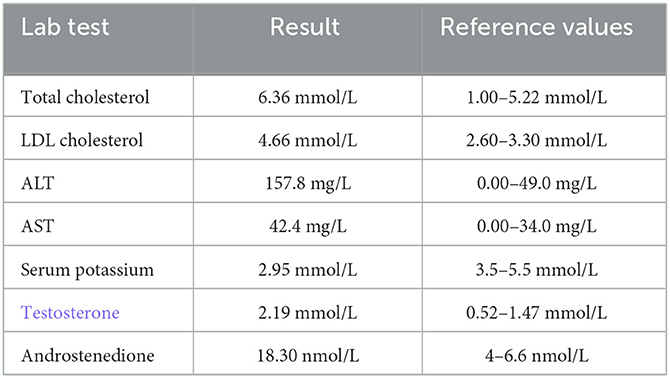
www.frontiersin.orgTable 1. Abnormal lab results for the patient.

Table 2
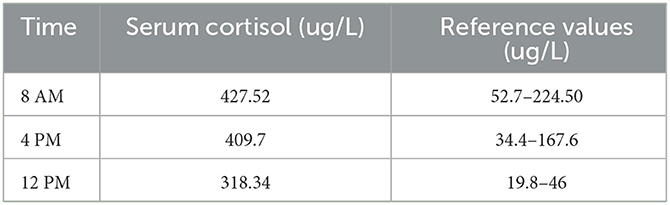
www.frontiersin.orgTable 2. Circulating cortisol level.

The patient had little response to adequate antidepressants in our hospital, including fluoxetine 20–60 mg/d and aripiprazole 5–30 mg/d combined with 3 sessions of MECT (modified electroconvulsive therapy), which was stopped because of her poor cognitive function and poor response.

Her last diagnosis was right adrenal adenoma and non-ACTH-dependent Cushing’s syndrome. The adrenal adenoma was excised through laparoscopic resection in a general hospital. Hydrocortisone, amlodipine besylate, potassium chloride, metoprolol and escitalopram were used for treatment. Escitalopram 10 mg/d has been used until 2 weeks after her discharge. At the follow-up visit about 1 month after the surgery, her depressive mood had significantly improved, with no self-injury behaviors or psychiatric symptoms found. The patient was calm but still reacted slowly, and cognitive impairment was still found at the last visit.

Discussion

Previous studies have reported a close association between CS and depression (15). However, suicidal depression with atypical features and acute psychosis have rarely been reported, and the characteristics of depression secondary to CS and the differences from major depression have not been described in detail.

This case did not show a full-blown presentation of major depression according to the DSM-5. She presented with a series of features that were not typical as major depression, however, it should be emphasized that the atypical features were not identical to those noted in DSM5, especially regarding increased appetite and hypersomnia. The features suggesting difference from major depression were listed as follows: (a) depressed mood is not constant, it does not exist in most of the day; it is episodic without regular cyclicity, can happen or exacerbate suddenly; (b) the ability to describe anhedonia is poor, she can’t report her feeling voluntarily like other patients with major depression, which might be partially related with the decreased language function; (c) depressive thoughts such as self-accusation and feelings of guilt, the classical symptoms of major depression, were rarely found; (d) more exaggerated cognitive impairment and decrease language function; € partial or little useful effect of SSRIs (selective serotonin reuptake inhibitors). The above characteristics were similar to those reported in Starkman’s research (131617), in which increasing irritability was also regarded as one of the important features for depression in CS.

The literature about depression combined with psychosis episode in CS is rare. This patient showed acute episodes of persecutory delusion with disturbed behaviors; her psychotic symptoms occurred suddenly and were fragmentary, with poor sensitivity to antipsychotics; the content was not constant (she never referred to and even denied the unsafe feeling at home before admission), it changed with the environment and was not consistent with the mood state. However, we cannot reach an effective conclusion because the evidence was small; thus, these findings should be evaluated in combination with other clinical presentations.

Conclusion

Most reviews have concluded that mood disturbances in CS indicate “major depression”, but the detailed description of clinical features are lack, making clinicians uncertain about the presentation and confused about the diagnosis, especially when the somatic signs are indiscriminate. The clinical presentation in this case highlighted the fact that there is a wide range of phenotypes of depression in CS, for some CS patients, the depressive features are not highly consistent with the criteria of major depression regardless of the melancholic or atypical features in the DSM-5. Thus, a thorough and periodic evaluation is necessary to detect the underlying organic and psychosocial causes if the clinical symptoms are not typical (10).

Data availability statement

The original contributions presented in the study are included in the article/supplementary material, further inquiries can be directed to the corresponding author.

Ethics statement

Written informed consent was obtained from the individual(s), and minor(s)’ legal guardian/next of kin, for the publication of any potentially identifiable images or data included in this article.

Author contributions

XY, SC, XJ, and XH were responsible for clinical care. XY did literature search and drafted the manuscript. XH revised the manuscript. All authors contributed to the article and have approved the final manuscript.

Acknowledgments

We want to thank Juping Fu, Ying Zhang, and all other medical staff who gave careful nursing to the patient.

Conflict of interest

The authors declare that the research was conducted in the absence of any commercial or financial relationships that could be construed as a potential conflict of interest.

Publisher’s note

All claims expressed in this article are solely those of the authors and do not necessarily represent those of their affiliated organizations, or those of the publisher, the editors and the reviewers. Any product that may be evaluated in this article, or claim that may be made by its manufacturer, is not guaranteed or endorsed by the publisher.

References

1. Kverno KS, Mangano E. Treatment-resistant depression: approaches to treatment. J Psychosoc Nurs Ment Health Serv. (2021) 59:7–11. doi: 10.3928/02793695-20210816-01

PubMed Abstract | CrossRef Full Text | Google Scholar

2. Mokta J, Sharma R, Mokta K, Ranjan A, Panda P, Joshi I. Cushing’s disease presenting as suicidal depression. J Assoc Physicians India. (2016) 64:82–3.

PubMed Abstract | Google Scholar

3. Sonino N, Fava G. A Psychiatric disorders associated with Cushing’s syndrome epidemiology, pathophysiology and treatment. CNS Drugs. (2001) 15:361–73. doi: 10.2165/00023210-200115050-00003

PubMed Abstract | CrossRef Full Text | Google Scholar

4. Pivonello R, Simeoli C, De Martino MC, Cozzolino A, De Leo M, Iacuaniello D, et al. Neuropsychiatric disorders in Cushing’s syndrome. Front Neurosci. (2015) 9: 129. doi: 10.3389/fnins.2015.00129

PubMed Abstract | CrossRef Full Text | Google Scholar

5. Barbot M, Zilio M, Scaroni C. Cushing’s syndrome: Overview of clinical presentation, diagnostic tools and complications. Best Pract Res Clin Endocrinol Metab. (2020) 34:101380. doi: 10.1016/j.beem.2020.101380

PubMed Abstract | CrossRef Full Text | Google Scholar

6. Sonino N, Fava GA, Raffi AR, Boscaro, Fallo F. Clinical correlates of major depression in Cushing’s disease. Psychopathology. (1998) 31:302–6. doi: 10.1159/000029054

PubMed Abstract | CrossRef Full Text | Google Scholar

7. Haskett RF. Diagnostic categorization of psychiatric disturbance in Cushing’s syndrome. Am J Psychiatry. (1985) 142:911–6. doi: 10.1176/ajp.142.8.911

PubMed Abstract | CrossRef Full Text | Google Scholar

8. Fava GA. Affective disorders and endocrine disease. New insights from psychosomatic studies. Psychosomatics. (1994) 35:341–53. doi: 10.1016/S0033-3182(94)71755-2

PubMed Abstract | CrossRef Full Text | Google Scholar

9. Dorn LD, Burgess ES, Dubbert B, Simpson SE, Friedman T, Kling M, et al. Psychopathology in patients with endogenous Cushing’s syndrome: ‘atypical’ or melancholic features. Clin Endocrinol. (1995) 43:433–42. doi: 10.1111/j.1365-2265.1995.tb02614.x

PubMed Abstract | CrossRef Full Text | Google Scholar

10. Anil Kumar BN, Grover S. Cushing’s syndrome masquerading as treatment resistant depression indian. J Psychol Med. (2016) 38:246–8. doi: 10.4103/0253-7176.183095

PubMed Abstract | CrossRef Full Text | Google Scholar

11. Loosen PT, Chambliss B, DeBold CR, Shelton R, Orth D. Psychiatric phenomenology in Cushing’s disease. Pharmacopsychiatry. (1992) 25:192–8. doi: 10.1055/s-2007-1014405

PubMed Abstract | CrossRef Full Text | Google Scholar

12. Sonino N, Fava GA, Belluardo P, Girelli ME, Boscaro, M. Course of depression in Cushing’s syndrome: response to treatment and comparison with Graves’ disease. Horm Res. (1993) 39:202–6. doi: 10.1159/000182736

PubMed Abstract | CrossRef Full Text | Google Scholar

13. Starkman MN, Schteingart DE, Schork M. A depressed mood and other psychiatric manifestations of Cushing’s syndrome: relationship to hormone levels. Psychosom Med. (1981) 43:3–18. doi: 10.1097/00006842-198102000-00002

PubMed Abstract | CrossRef Full Text | Google Scholar

14. Al-Harbi SD, Mashi AH, Al Johani N. A case of Cushing’s disease presenting with isolated suicidal attempt clin med insights. Case Rep. (2021) 14:11795476211027668. doi: 10.1177/11795476211027668

PubMed Abstract | CrossRef Full Text | Google Scholar

15. Fujii Y, Mizoguchi Y, Masuoka J, Matsuda Y, Abe T, Anzai K, et al. Cushing’s syndrome and psychosis: a case report and literature review. prim care companion. CNS Disord. (2018) 20:279. doi: 10.4088/PCC.18br02279

PubMed Abstract | CrossRef Full Text | Google Scholar

16. Starkman MN, Giordani B, Berent S, Schork MA, Schteingart D. Elevated cortisol levels in Cushing’s disease are associated with cognitive decrements. Psychosom Med. (2001) 63:985–93. doi: 10.1097/00006842-200111000-00018

PubMed Abstract | CrossRef Full Text | Google Scholar

17. Starkman MN. Neuropsychiatric findings in Cushing syndrome and exogenous glucocorticoid administration. Endocrinol Metab Clin North Am. (2013) 42:477–88. doi: 10.1016/j.ecl.2013.05.010

PubMed Abstract | CrossRef Full Text | Google Scholar

Keywords: Cushing’s syndrome (CS), treatment-resistant depression, acute psychosis, adrenal adenoma (AA), adolescent girl

Citation: Yin X, Chen S, Ju X and Hu X (2023) Case report: Treatment-resistant depression with acute psychosis in an adolescent girl with Cushing’s syndrome. Front. Psychiatry 14:1170890. doi: 10.3389/fpsyt.2023.1170890

From https://www.frontiersin.org/articles/10.3389/fpsyt.2023.1170890/full

Severe psychosis due to Cushing’s syndrome in a patient with a carcinoid tumour in the lung

Severe psychosis in patients with Cushing’s syndrome is a rare occurrence and can be extremely resistant to medical therapy. We describe a case of a 51-year-old Afro-Caribbean female patient, with refractory severe hypertension (initially resistant to polypharmacy) and gradual development of severe psychosis secondary to ectopic Cushing’s syndrome, who was subsequently diagnosed to have a carcinoid tumour in her lung.

Her psychotic episodes – secondary to hypercortisolism and initially refractory to the medical therapy – subsided only after the resection of the carcinoid tumour in her right lower pulmonary lobe. Early localization and appropriate surgical resection of the ectopic ACTH-secreting tumour can be of immense value to the successful alleviation of the psychotic episodes of the patients with ectopic Cushing’s syndrome.

Author: Mohamad BabaDebamalya Ray
Credits/Source: World Journal of Surgical Oncology 2015, 13:165

From http://7thspace.com/headlines/507616/severe_psychosis_due_to_cushings_syndrome_in_a_patient_with_a_carcinoid_tumour_in_the_lung_a_case_report_and_review_of_the_current_management.html