Impact of Remission Status in Endogenous Cushing’s Syndrome on Cancer Incidence

Abstract

Objective
Endogenous Cushing’s syndrome (CS) has been linked with an increased risk of cancer. We aimed to evaluate the association between cancer risk and disease remission post-surgery in adrenal CS and Cushing’s disease (CD).
Design
A nationwide retrospective matched-cohort study of patients with CS diagnosed between 2000-2023 in Israel, using Clalit Health Services’ database. Methods Patients with CS were matched 1:5 with controls by age, sex, socioeconomic status, and BMI. Remission status post-surgery was assessed within two years after the diagnosis of CS. The outcome measured was time to first diagnosis of malignancy, at least three years post-CS diagnosis, excluding those who died or developed cancer earlier. Malignancy risk, stratified by remission status, was evaluated using Cox proportional hazards with death as a competing event.
Results
The cohort comprised 388 cases and 1,862 controls [mean age at diagnosis, 47.4±16.8 years; 1,534 (68.2%) women]. Among patients with CD, those who did not achieve remission within 2 years post diagnosis (n=69) had a higher risk of malignancy compared to those who achieved remission (n=99) (HR 3.89, 95% CI 1.41-10.75). Cancer risk in patients with CD who achieved remission was similar to that of the controls (HR 0.58, 95% CI 0.23-1.47). In patients with adrenal CS, the risk of cancer was comparable between those who did not achieve early remission (n=39) and those who did (n=113) (HR 1.68, 95% CI 0.83-3.40).
Conclusion
Though cancer risk is higher in both CD and adrenal CS, we have shown that achieving surgical remission within 2 years may attenuate cancer risk in patients with CD, but not in those with adrenal CS.

Spontaneous Cushing’s Disease Remission Induced by Pituitary Apoplexy

Abstract

Spontaneous remission of Cushing’s disease (CD) is uncommon and often attributed to pituitary tumor apoplexy. We present a case involving a 14-year-old female who exhibited clinical features of Cushing’s syndrome. Initial diagnostic tests indicated CD: elevated 24h urinary cortisol (235 µg/24h, n < 90 µg/24h), abnormal 1 mg dexamethasone overnight test (cortisol after 1 mg dex 3.4 µg/dL, n < 1.8 µg/dL), and elevated adrenocorticotropic hormone concentrations (83.5 pg/mL, n 10-60 pg/mL). A pituitary adenoma was suspected, so a nuclear MRI was performed, with findings suggestive of a pituitary microadenoma. The patient was referred for a transsphenoidal resection of the microadenoma. While waiting for surgery, the patient presented to the emergency department with a headache and clinical signs of meningism. A computed axial tomography of the central nervous system was performed, and no structural alterations were found. The symptoms subsided with analgesia. One month later, she presented again to the emergency department with clinical findings of acute adrenal insufficiency (cortisol level of 4.06 µg/dL), and she was noted to have spontaneous biochemical remission associated with the resolution of her symptoms of hypercortisolism. For that reason, spontaneous CD remission induced by pituitary apoplexy (PA) was diagnosed. The patient has been managed conservatively since the diagnosis and remains in clinical and biochemical remission until the present time, after 10 months of follow-up. There are three unique aspects of our case: the early age of onset of symptoms, the spontaneous remission of CD due to PA, which has been rarely reported in the medical literature, and the fact that the patient presented a microadenoma because there are fewer than 10 clinical case reports of PA associated with microadenoma.

Introduction

Cushing’s disease (CD) is characterized by excessive production of adrenocorticotropic hormone by a pituitary adenoma and represents the most common cause of endogenous Cushing’s syndrome (CS) [1]. CD was first reported in 1912 by Harvey Williams Cushing, and he described 12 cases at the Peter Bent Brigham Hospital in Baltimore [2]. This disease has a global incidence of approximately 2.2 cases per 1,000,000 people and occurs more frequently in women from 20 to 50 years of age [3]. Pituitary apoplexy (PA) is a rare condition that occurs in 2-12% of cases, and it has a high morbidity and mortality rate [4]. We report an interesting case of a woman diagnosed with CD who achieved spontaneous remission of her disease after a PA.

Case Presentation

A 14-year-old female presented with a two-year history of weight gain (32 kg), depression, elevated blood pressure, type 2 diabetes mellitus, and growth failure (height less than the third percentile). Her height was 140 cm, and her BMI was 28.1 (97th percentile). At presentation, she had not yet reached menarche. Physical examination revealed Tanner 2 breast development, acne, hirsutism, moon facies, dorsocervical fat pad, central obesity, and stretch marks. Initial laboratory tests showed hemoglobin A1C of 13%, low-density lipoprotein of 167 mg/dL, triglycerides of 344 mg/dL, high-density lipoprotein of 26 mg/dL, creatinine of 0.4 mg/dL, and elevated liver enzymes. Abdominal ultrasound indicated moderate hepatic steatosis changes.

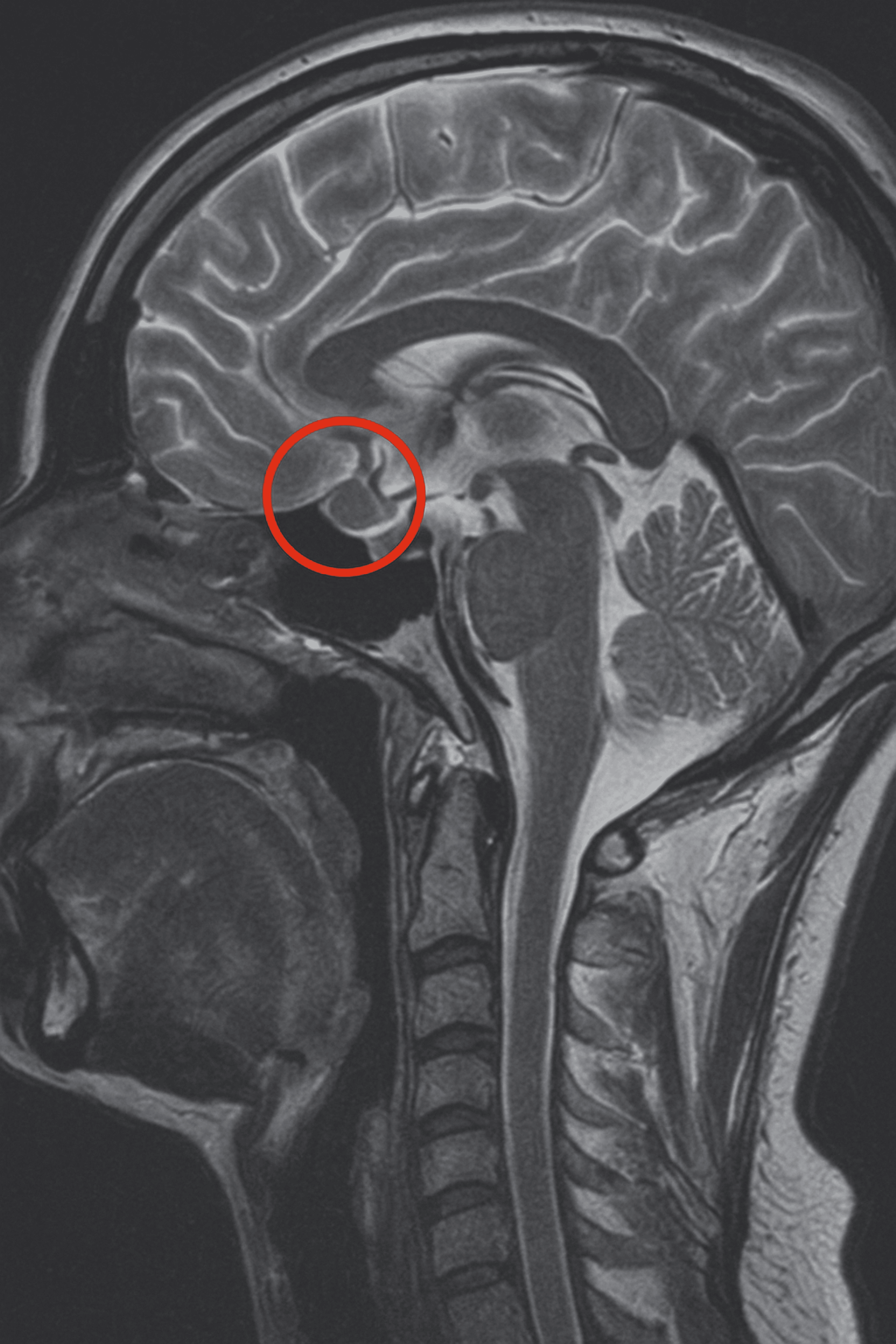
Given the high suspicion of CS, a hormonal profile was conducted (Table 1), confirming CS and subsequently diagnosing CD. A nuclear MRI revealed a 2.6 × 1.8 mm pituitary lesion (Figure 1), prompting referral for transsphenoidal resection of the pituitary microadenoma.

Laboratories Reference range Initial One month Three months Six months
TSH (mUI/L) 0.35-4.94 2.17 2.01
AM cortisol (µg/dL) 6.02-18.4 17.3 4.06 <0.5 4.7
1 mg DST (µg/dL) <1.8 3.4
8 mg DST (µg/dL) <50% suppression 1.9 (78% suppression)
Urine-free cortisol (µg/24h) <90 235
ACTH (pg/mL) 10-60 83.5 19.2 9.7
IGF-1 (ng/mL) 36-300 293
Table 1: Pertinent laboratory investigation at baseline and follow-up with our patient

ACTH, adrenocorticotropic hormone; DST, dexamethasone suppression test; IGF-1, insulin growth factor-1; TSH, thyroid-stimulating hormone

Axial-view-of-a-T1-MRI-with-contrast-showing-a-sellar-lesion
Figure 1: Axial view of a T1 MRI with contrast showing a sellar lesion

The red arrow shows a microadenoma in relation to the normal pituitary gland.

Approximately one month after the suppression tests and while awaiting surgery, the patient presented to the emergency department with a sudden, severe, holocranial headache accompanied by projectile vomiting and diplopia, suggestive of meningism. A computed axial tomography of the central nervous system was conducted, revealing no structural abnormalities. Symptoms resolved with intravenous analgesia within approximately four to six hours. Subsequently, the patient experienced a significant decrease in insulin requirements, ultimately leading to the suspension of insulin therapy due to persistent hypoglycemia.

Weeks after the headache episode, the patient was reevaluated in the emergency department with a three-day history of diffuse abdominal pain, vomiting, asthenia, myalgia, hypotension, tachycardia, orthostatism, and recurrent hypoglycemia despite insulin suspension. Acute adrenal insufficiency was suspected and confirmed by a cortisol level of 4.06 µg/dL. Treatment with intravenous hydrocortisone 50 mg every six hours was initiated, leading to complete resolution of symptoms within 72 hours. The patient was discharged on maintenance therapy with oral hydrocortisone (20 mg in the morning and 10 mg at night). Subsequent follow-ups showed undetectable cortisol levels. Currently, the patient has been followed up for 10 months post-event, showing persistent clinical and hormonal remission of her disease.

Discussion

CD represents approximately 80% of cases of endogenous hypercortisolism, and pituitary microadenomas are the most common cause of CD in all age groups [5]. CD prevalence is 0.3-6.2 cases per 100,000 people [3], which represents 4.4% of all pituitary adenomas [6], and it is up to five times more likely to occur in women than men. Spontaneous remission of CD is rare, and it is mainly due to the apoplexy of a pituitary tumor [7].

PA is a potentially fatal condition resulting from hemorrhage or necrosis of a pituitary adenoma that produces compression of the surrounding structures with symptoms that can be critical and even fatal [8]. PA affects between 2% and 12% of patients with pituitary adenomas, mainly in nonfunctional macroadenomas [9]. Although the main mechanism of PA is hemorrhage, it can also be due to a hemorrhagic infarction or an infarction without hemorrhage; this last scenario is clinically less aggressive [10]. Among the most important precipitating factors are craniocerebral trauma, pregnancy, thrombocytopenia, coagulopathies, pituitary stimulation tests, drugs such as anticoagulants and estrogens, surgeries that are complicated by hypotension, and radiotherapy [4,11,12].

There are three unique aspects of our case. First, the age of onset is 14 years old. This characteristic has been reported in less than 6% of cases of CD, with a mean age of onset between 12.3 and 14.1 years and a slightly higher incidence in men (63%) [13]. In this population, CD is the most common cause of hypercortisolism, accounting for 75-80% of all cases [14]. Furthermore, our patient presented a significant weight gain, severe compromise in her height, hypertension, depression, and diabetes mellitus, which is compatible with the classic profile described for CD in pediatric ages. It is important to clarify that although type 2 diabetes mellitus is common in adults, it is unusual in the pediatric population [13].

Second, spontaneous remission in CD due to apoplexy has been rarely reported in the past; hence, our case is an important addition to the scant literature on this unusual phenomenon. Although there are characteristics suggestive of PA, such as hyperdense lesions within the pituitary gland and the reinforcing ring, a CT scan has a low sensitivity for detecting pituitary hemorrhage (21-46%); therefore, a negative CT scan does not rule out PA in cases where there is infarction without hemorrhage, a situation that could correspond to our case [15].

The third unique feature of our case is that the stroke occurred in the context of a microadenoma, a situation reported in less than 10 cases in the literature. Despite being a microadenoma, the symptoms of PA were severe, with symptoms of meningism, an intense headache, vomiting, and the development of adrenal insufficiency. Taylor et al. [16] reported a similar case of a 41-year-old female with microadenoma whose PA was associated with severe headache and vomiting.

The main differential diagnosis in our case is cyclical CS (CCS), a disorder that occurs in 15% of CS cases, especially in CD [17]. The diagnosis of CCS is classically established with three peaks and two valleys in cortisol secretion, spontaneous fluctuations, and clinical features of CS [7]. The possibility of CCS was ruled out due to the typical presentation of the PA event and the persistence of hypocortisolism.

Finally, several cases of recurrence of their disease have been described after remission of CS due to AP. Those recurrences usually develop in follow-ups of up to seven years [18]. At the time of the last evaluation (10 months post-PA), the patient remained in remission, but long-term follow-up is required to detect both reactivation and hypopituitarism [19].

Conclusions

CD is a rare entity in the pediatric population, usually associated with a pituitary microadenoma. Spontaneous remission of this disease is very uncommon, but when it occurs, it is mainly due to PA. We describe a case with three unique aspects: CD with an early age of onset of symptoms, spontaneous remission of CD due to PA, which has been rarely reported in the medical literature, and the fact that there are less than 10 clinical case reports of PA associated with microadenoma. It is imperative for clinicians to be aware of this possible outcome in patients with CD.

References

  1. Fleseriu M, Auchus R, Bancos I, et al.: Consensus on diagnosis and management of Cushing’s disease: a guideline update. Lancet Diabetes Endocrinol. 2021, 9:847-75. 10.1016/S2213-8587(21)00235-7
  2. Bray DP, Rindler RS, Dawoud RA, Boucher AB, Oyesiku NM: Cushing disease: medical and surgical considerations. Otolaryngol Clin North Am. 2022, 55:315-29. 10.1016/j.otc.2021.12.006
  3. Giuffrida G, Crisafulli S, Ferraù F, et al.: Global Cushing’s disease epidemiology: a systematic review and meta-analysis of observational studies. J Endocrinol Invest. 2022, 45:1235-46. 10.1007/s40618-022-01754-1
  4. Briet C, Salenave S, Bonneville JF, Laws ER, Chanson P: Pituitary apoplexy. Endocr Rev. 2015, 36:622-45. 10.1210/er.2015-1042
  5. Newell-Price J, Bertagna X, Grossman A, Nieman L: Cushing’s syndrome. Lancet. 2006, 367:1605-17. 10.1016/S0140-6736(06)68699-6
  6. Daly AF, Beckers A: The epidemiology of pituitary adenomas. Endocrinol Metab Clin North Am. 2020, 49:347-55. 10.1016/j.ecl.2020.04.002
  7. Popa Ilie IR, Herdean AM, Herdean AI, Georgescu CE: Spontaneous remission of Cushing’s disease: a systematic review. Ann Endocrinol (Paris). 2021, 82:613-21. 10.1016/j.ando.2021.10.002
  8. Siwakoti K, Omay SB, Inzucchi SE: Spontaneous resolution of primary hypercortisolism of Cushing disease after pituitary hemorrhage. AACE Clin Case Rep. 2020, 6:e23-9. 10.4158/ACCR-2019-0292
  9. Dubuisson AS, Beckers A, Stevenaert A: Classical pituitary tumour apoplexy: clinical features, management and outcomes in a series of 24 patients. Clin Neurol Neurosurg. 2007, 109:63-70. 10.1016/j.clineuro.2006.01.006
  10. Semple PL, De Villiers JC, Bowen RM, Lopes MB, Laws ER Jr: Pituitary apoplexy: do histological features influence the clinical presentation and outcome?. J Neurosurg. 2006, 104:931-7. 10.3171/jns.2006.104.6.931
  11. Turgut M, Ozsunar Y, Başak S, Güney E, Kir E, Meteoğlu I: Pituitary apoplexy: an overview of 186 cases published during the last century. Acta Neurochir (Wien). 2010, 152:749-61. 10.1007/s00701-009-0595-8
  12. Wildemberg LE, Glezer A, Bronstein MD, Gadelha MR: Apoplexy in nonfunctioning pituitary adenomas. Pituitary. 2018, 21:138-44. 10.1007/s11102-018-0870-x
  13. Concepción-Zavaleta MJ, Armas CD, Quiroz-Aldave JE, et al.: Cushing disease in pediatrics: an update. Ann Pediatr Endocrinol Metab. 2023, 28:87-97. 10.6065/apem.2346074.037
  14. Ferrigno R, Hasenmajer V, Caiulo S, et al.: Paediatric Cushing’s disease: epidemiology, pathogenesis, clinical management and outcome. Rev Endocr Metab Disord. 2021, 22:817-35. 10.1007/s11154-021-09626-4
  15. Banerjee AK: Diagnostic imaging: Brain. 2nd edition. Br J Radiol. 2010, 83:450-1.
  16. Taylor HC, McLean S, Monheim K: Resolution of Cushing’s disease followed by secondary adrenal insufficiency after anticoagulant-associated pituitary hemorrhage: report of a case and review of the literature. Endocr Pract. 2003, 9:147-51. 10.4158/EP.9.2.147
  17. Alexandraki KI, Kaltsas GA, Isidori AM, et al.: The prevalence and characteristic features of cyclicity and variability in Cushing’s disease. Eur J Endocrinol. 2009, 160:1011-8. 10.1530/EJE-09-0046
  18. Kamiya Y, Jin-No Y, Tomita K, et al.: Recurrence of Cushing’s disease after long-term remission due to pituitary apoplexy. Endocr J. 2000, 47:793-7. 10.1507/endocrj.47.793
  19. Machado MC, Gadelha PS, Bronstein MD, Fragoso MC: Spontaneous remission of hypercortisolism presumed due to asymptomatic tumor apoplexy in ACTH-producing pituitary macroadenoma. Arq Bras Endocrinol Metabol. 2013, 57:486-9. 10.1590/s0004-27302013000600012

Day 19, Cushing’s Awareness Challenge

In case you haven’t guessed it, my cause seems to be Cushing’s Awareness.  I never really decided to devote a good portion of my life to Cushing’s, it just fell into my lap, so to speak – or my laptop.

I had been going along, raising my son, keeping the home-fires burning,  trying to forget all about Cushing’s.  My surgery had been a success, I was in remission, some of the symptoms were still with me but they were more of an annoyance than anything.

I started being a little active online, especially on AOL.  At this time, I started going through real-menopause, not the fake one I had gone through with Cushing’s.  Surprisingly, AOL had a group for Cushing’s people but it wasn’t very active.

What was active, though, was a group called Power Surge (as in I’m not having a hot flash, I’m having a Power Surge).  I became more and more active in that group, helping out where I could, posting a few links here and there.

Around this time I decided to go back to college to get a degree in computer programming but I also wanted a basic website for my piano studio.  I filled out a form on Power Surge to request a quote for building one.  I was very surprised when Power Surge founder/webmaster Alice (AKA Dearest) called me.  I was so nervous.  I’m not a good phone person under the best of circumstances and here she was, calling me!

I had to go to my computer class but I said I’d call when I got back.  Alice showed me how to do some basic web stuff and I was off.  As these things go, the O’Connor Music Studio page grew and grew…  And so did the friendship between Alice and me.  Alice turned out to be the sister I never had, most likely better than any sister I could have had.

In July of 2000, Alice and I were wondering why there weren’t many support groups online (OR off!) for Cushing’s. This thought percolated through my mind for a few hours and I realized that maybe this was my calling. Maybe I should be the one to start a network of support for other “Cushies” to help them empower themselves.

I wanted to educate others about the awful disease that took doctors years of my life to diagnose and treat – even after I gave them the information to diagnose me. I didn’t want anyone else to suffer for years like I did. I wanted doctors to pay more attention to Cushing’s disease.

The first website (http://www.cushings-help.com) went “live” July 21, 2000. It was just a single page of information. The message boards began September 30, 2000 with a simple message board which then led to a larger one, and a larger. Today, in 2012, we have over 8 thousand members. Some “rare disease”!

This was on the intro page of Cushing’s Help until 2013…

I would like to give abundant thanks Alice Lotto Stamm, founder of Power Surge, premier site for midlife women, for giving me the idea to start this site, encouraging me to learn HTML and web design, giving us the use of our first spiffy chatroom, as well as giving me the confidence that I could do this. Alice has helped so many women with Power Surge. I hope that I can emulate her to a smaller degree with this site.

Thanks so much for all your help and support, Alice!

In August 2013 my friend died.  In typical fashion, I started another website

I look around the house and see things that remind me of Alice.  Gifts, print outs, silly stuff, memories, the entire AOL message boards on floppy disks…

Alice, I love you and will miss you always…

MaryOOneRose

Medium and Long-Term Data from a Series of 96 Endoscopic Transsphenoidal Surgeries for Cushing Disease

Objective

Postoperative data on Cushing’s disease (CD) are equivocal in the literature. These discrepancies may be attributed to different series with different criteria for remission and variable follow-up durations. Additional data from experienced centers may address these discrepancies. In this study, we present the results obtained from 96 endoscopic transsphenoidal surgeries (ETSSs) for CD conducted in a well-experienced center.

Methods

Pre- and postoperative data of 96 ETSS in 87 patients with CD were included. All cases were handled by the same neurosurgical team between 2014 and 2022. We obtained data on remission status 3−6 months postoperatively (medium-term) and during the latest follow-up (long-term). Additionally, magnetic resonance imaging (MRI) and pathology results were obtained for each case.

Results

The mean follow-up duration was 39.5±3.2 months. Medium and long-term remission rates were 77% and 82%, respectively. When only first-time operations were considered, the medium- and long-term remission rates were 78% and 82%, respectively. The recurrence rate in this series was 2.5%. Patients who showed remission between 3−6 months had higher longterm remission rates than did those without initial remission. Tumors >2 cm and extended tumor invasion of the cavernous sinus (Knosp 4) were associated with lower postoperative remission rates.

Conclusion

Adenoma size and the presence/absence of cavernous sinus invasion on preopera-tive MRI may predict long-term postoperative remission. A tumor size of 2 cm may be a supporting criterion for predicting remission in Knosp 4 tumors. Further studies with larger patient populations are necessary to support this finding.

Key WordsComplete remission · Neuroendoscopy · Pituitary-dependant Cushing syndrome · Treatment outcome.

Go to : Goto

INTRODUCTION

Cushing’s disease (CD) is characterized by excessive secretion of adrenocorticotropic hormone (ACTH) by a corticotropic adenoma in the pituitary gland. In patients with CD whose hypercortisolism is inadequately corrected, morbidity and mortality can increase by up to 4.8 times due to Cushingrelated complications such as osteoporosis, hypertension, dyslipidemia, insulin resistance, and hypercoagulability [11,18].
Endoscopic transsphenoidal surgery (ETSS), the first-line treatment for CD [7], is performed to decrease complications while achieving remission and long-term disease control. Previous studies on CD have reported varying remission rates between 45% and 95% and recurrence rates ranging from 3−66% [2,4,9,16,21,30]. This wide range of differences can be primarily attributed to differences in surgical experience among centers: centers with higher surgical experience have fewer postoperative complications and higher remission rates [4,6]. However, despite initial remission, patients with CD may eventually experience recurrence. The mean recurrence rate at the 5-10-year follow-up is 23% for microadenomas and 33% for macroadenomas [19,23,30].
Since the postoperative rates in the literature are variable, additional data from experienced centers may be necessary to resolve these discrepancies. In this study, we present the medium- and long-term follow-up data from 96 operations for CD that were conducted in a center with a high level of experience for ETSS.
Go to : Goto

MATERIALS AND METHODS

The study was conducted in accordance with the Declaration of Helsinki (as revised in 2013). The study was approved by the Ethics Committee of Basaksehir Cam and Sakura City Hospital (No. 2022185). Informed consent was obtained from all patients. The authors are accountable for all aspects of the work in ensuring that questions related to the accuracy or integrity of any part of the work are appropriately investigated and resolved.
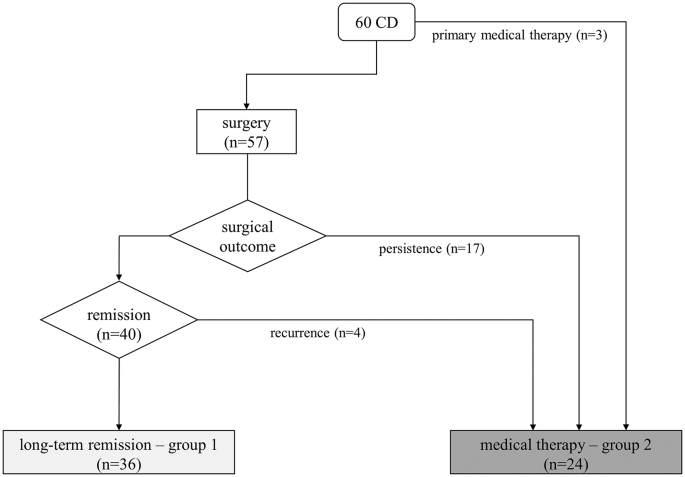
This retrospective study included pre and postoperative data of 96 ETSS performed in 87 patients with CD (Fig. 1). CD was diagnosed based on unsuppressed cortisol levels (>1.8 µg/dL) following the 1-mg dexamethasone suppression test, high levels of urinary free cortisol, or late night salivary cortisol and plasma ACTH levels >20 pg/mL [28]. Between 2014 and 2022, all surgeries were conducted by the experienced neurosurgical team (Ö.G., O.T., B.E., E.A.) responsible for endoscopic transsphenoidal procedures at the Pituitary Research Center. The surgeries were performed under perioperative glucocorticoid coverage.

jkns-2023-0100f1.jpg
Fig. 1.
Number of operations and patients included in the study.

Download Figure

Size, cavernous sinus invasion, sellar and suprasellar infiltration of adenoma on preoperative magnetic resonance imaging (MRI) scans, residual tumor on postoperative MRI scans, postoperative complications, pathology results, remission and recurrence status, and additional postoperative management were evaluated in addition to patients’ demographic data. For follow-up assessments, data obtained 3−6 months postoperatively and during the latest follow-up were included. Three different classifications obtained during radiologic evaluation using MRI were used for pituitary adenomas : 1) maximum size of tumor (MST) : 0−5 mm (group 1), 6−10 mm (group 2), 11−20 mm (group 3), and >20 mm (group 4); 2) Knosp classification : for evaluation of cavernous sinus invasion [22]; and 3) modified Hardy classification : for evaluation of sellar and suprasellar infiltrations [20,39].
In cases of CD without a lesion or with a lesion <6 mm on MRI, confirmation of the central origin and lateralization was provided by inferior petrosal sinus sampling (IPSS) with corticotropin-releasing hormone stimulation [25,26,29]. Under neuronavigation guidance, pure ETSS surgical interventions were performed for all patients by a single surgical team using the Medtronic StealthStation S7 and S8 systems (Medtronic, Minneapolis, MN, USA) together with 4-mm 0°, 30°, and 45° rigid optical instruments and an endoscope. A nasal decongestant spray was administered 1 hour before the operation. The sphenoid ostium was detected from both nostrils, and a bi-nostril approach was used by resecting the posterior nasal septum. After sphenoidectomy, the standard sellar approach was used for lesions in the sellar region. The details of these surgical procedures are described in previous study [14]. Selective adenectomy with ETSS was performed for preoperatively localized and visible tumors, whereas hemihypophysectomy was performed for non-lesional cases. In cases with cavernous sinus-invading tumors, particularly Knops 3-4, the defect which was created by the tumor on the medial wall of anterior cavernous sinus was identified and, it was expanded for resection of the tumor tissue within the cavernous sinus. If a defect was not visible, blunt-ended hook-shaped dissectors were used to create a defect on the medial wall, allowing access for the tumor to enter the cavernous sinus. Hematoxylin and Eosin (H&E) and immunohistochemistry staining were performed for the specimens obtained during ETSS. Adenomas showing positive immunohistological staining for ACTH were diagnosed histologically as corticotropinomas.
CD was considered to be in remission when the cases showed basal cortisol levels <5 µg/dL or suppressed cortisol levels (≤1.8 µg/dL) following the 1-mg dexamethasone suppression test, 3-6 months postoperation, and during the latest follow-up. The study protocol was approved by the ethics committee of our institution.
Data were statistically analyzed using the SPSS 15.0 package (IBM Corp., Armonk, NY, USA). The chi-square test was used for categorical variables. Sample distribution was evaluated with the Kolmogorov-Smirnov test. Continuous independent variables with a normal distribution were compared using the Student’s t-test. Continuous variables with non-normal distributions were compared using the Mann-Whitney U test. p<0.05 was considered statistically significant. A Kaplan-Meier survival analysis was conducted to determine probability and time to recurrence in cases with initial remission.
Go to : Goto

RESULTS

Demographic data

A total of 96 ETSS were performed for 87 patients with CD. Of the 87 patients, 68 (79%) were female, and 19 (21%) were male. The mean patient age was 42.2±12.9 years, and the mean duration of follow-up was 39.5±3.2 months. Of the 96 surgeries, 79 (82%) were performed for the first time, six (6%) were performed for residual tumors, and 11 (12%) were performed following a recurrence of the disease. Eight of the 17 patients who underwent reoperations had undergone their first operation at another center.

Preoperative imaging

Table 1 shows the maximum tumor size on preoperative pituitary MRI before each surgical procedure. Preoperative IPSS for lateralization was performed in 42 operations (44%), all of which were first-time cases. Knosp classification based on preoperative pituitary MRI and the modified Hardy classification is presented in Table 1.

Table 1.

Preoperative pituitary magnetic resonance imaging scans

Number of tumors (n=96)
Maximum tumor size
 Group 1, 0−5 mm 41 (42.7)
 Group 2, 6−10 mm 24 (25.0)
 Group 3, 11−20 mm 20 (20.8)
 Group 4, >20 mm 11 (11.5)
Knosp classification
 Grade 0 52 (54.2)
 Grade 1 22 (22.9)
 Grade 2 6 (6.3)
 Grade 3 8 (8.3)
 Grade 4 8 (8.3)
Modified Hardy classification
 0
  A 41 (42.8)
  B
  C
  D
  E
 1
  A 14 (14.6)
  B
  C
  D
  E 4 (4.2)
 2
  A 5 (5.2)
  B
  C
  D
  E 5 (5.2)
 3
  A 1 (1.0)
  B 2 (2.1)
  C
  D
  E 1 (1.0)
 4
  A 1 (1.0)
  B
  C
  D 1 (1.0)
  E 3 (3.1)
 NA 18 (18.8)

Values are presented as number (%). Invasion : 0, sella normal; 1, sella focally expanded and tumor ≤10 mm; 2, sella enlarged and tumor ≥10 mm; 3, localized perforation of the sellar floor; 4, diffuse destruction of the sellar floor. Suprasellar extension : A, no suprasellar extension; B, anterior recesses of the third ventricle obliterated; C, floor of the third ventricle grossly displaced with parasellar extension; D, intracranial (intradural) : anterior, middle or middle fossa; E, into/beneath the cavernous sinus (extradural).

NA : not available

Download Table

Postoperative results

Remission was achieved between the 3rd and 6th months in 74 (77%) of the 96 operations, and long-term remission in 79 operations (82%). Among all 96 operations, eight (8%) concluded with a residual tumor. Regarding only first-time operations, five (6%) of the 79 concluded with a postoperative residual tumor. Of the 79 first-time operations, there were 62 cases (78%) of remission between 3 and 6 months. Two (2.5%) of these 79 operations involved recurrence during follow-up, while 60 (97%) showed sustained remission. Those with sustained remission had a median disease-free survival time of 31 months (interquartile range, 14-64) during long-term followup, two cases with recurrence had their recurrence 49 and 54 months after their operation. Survival analysis of cases with remisson and recurrence is presented in Fig. 2. CD persisted after 17 (21.5%) of the 79 first operations.

jkns-2023-0100f2.jpg
Fig. 2.
Survival analysis after the first operation in cases with remission at 3-6 months. Dashed line represents cases with recurrence and, straight line represents cases with sustained remission during long-term follow-up.

Download Figure

Ten (13%) of the 79 cases underwent reoperation; two were due to recurrence, and eight due to disease persistence. In five cases (29%), the patients were initially unresponsive but showed remission later during the long-term follow-up. Remission was achieved with stereotactic radiosurgery (STRS) and medical treatment in one of these cases, with only STRS in two and only medical treatment in two cases. At the latest follow-up visit, the total number of cases showing remission after the first operation was 65 (82%). Additional details regarding the results of the first operations are provided in Fig. 3.

jkns-2023-0100f3.jpg
Fig. 3.
Results of the cases who had operation for the first time.

Download Figure

Of the 18 reoperations, the results for one case were excluded since the patient was operated at another center. After the reoperation (n=17), the medium and long-term remission rates were 71% (n=12) and 77% (n=13), respectively. The 3-6-month remission rate did not differ significantly between first-time and reoperations (p=0.5). Residual tumors were present in three cases (18%) after reoperation. Of the early non-responders, one case showed remission after STRS, and none of the responders showed recurrence during long-term follow-up. Additional details regarding the results of reoperations are provided in Fig. 4.

jkns-2023-0100f4.jpg
Fig. 4.
Results of the reoperations in our center.

Download Figure

Remission rates based on tumor size are presented in Table 2. The initial remission rates of the tumors in MST group 4 were significantly lower than those in the other MST groups (MST 1 vs. 4, p=0.01; MST 2 vs. 4, p=0.001; and MST 3 vs. 4, p=0.006). Comparisons of the other MST groups showed no significant differences. When adenomas were stratified using the 10-mm cut-off, the remission rates did not differ significantly (remission rate, 81% for adenomas <10 mm and 68% for adenomas ≥10 mm; p=0.2). Postoperative residual tumors were observed in five of the 11 tumors (46%) >2 cm (MST group 4) and in one tumor in each of MST groups 1-3 (2%, 4%, and 5%, respectively, p<0.001). Reoperation rate was 17% (n=7) for adenomas ≤5 mm, 18% (n=10) for adenomas ≥6 mm (p=0.9), and 27% (n=3) for adenomas >20 mm (among all grades, p=0.3).

Table 2.

Comparison of remission rates in preoperative pituitary magnetic resonance imaging scans

3−6-month remission Long-term remission
Maximum tumor size
 Group 1, 0−5 mm (n=41) 31 (75.6) 33 (80.5)
 Group 2, 6−10 mm (n=24) 22 (91.7) 22 (91.7)
 Group 3, 10−20 mm (n=20) 17 (85.0) 17 (85.0)
 Group 4, >20 mm (n=11) 4 (36.4) 7 (63.6)
p-value 0.003* 0.200
Knops classification
 0 (n=52) 41 (78.8) 44 (84.6)
 1 (n=22) 21 (95.5) 21 (95.5)
 2 (n=6) 4 (66.7) 3 (50.0)
 3 (n=8) 7 (87.5) 7 (87.5)
 4 (n=8) 1 (12.5) 4 (50.0)
p-value <0.001* 0.010*
Modified Hardy classification
 0
  A (n=41) 32 (78.0) 34 (82.9)
 1
  A (n=14) 12 (85.7) 12 (85.7)
 2
  E (n=4) 3 (75.0) 3 (75.0)
  A (n=5) 5 (100.0) 5 (100.0)
 3
  E (n=5) 2 (40.0) 2 (40.0)
  A (n=1) 1 (100.0) 1 (100.0)
  B (n=2) 2 (100.0) 2 (100.0)
 4
  E (n=1) 0 (0.0) 0 (0.0)
  A (n=1) 1 (100.0) 1 (100.0)
  D (n=1) 0 (0.0) 0 (0.0)
  E (n=3) 1 (33.3) 3 (100.0)
p-value 0.10 0.06
Pathology result
 Corticotropinoma (+) (n=71) 58 (81.7) 60 (84.5)
 Corticotropinoma (-) (n=25) 16 (64.0) 19 (76.0)
p-value 0.07 0.30

Values are presented as number (%). Invasion : 0, sella normal; 1, sella focally expanded and tumor ≤10 mm; 2, sella enlarged and tumor ≥10 mm; 3, localized perforation of the sellar floor; 4, diffuse destruction of the sellar floor. Suprasellar extension : A, no suprasellar extension; B, anterior recesses of the third ventricle obliterated; D, intracranial (intradural) with anterior, middle, or middle fossa; E, into/beneath the cavernous sinus (extradural).

* Statistically significant p-value

Download Table

Remission rates based on Knosp and Hardy classifications are presented in Table 2, respectively. The medium-term remission rates in Knosp group 4 were significantly lower than the rates in the other groups (Knosp 0 vs. 4, p<0.001; Knosp 1 vs. 4, p<0.001; Knosp 2 vs. 4, p=0.04; and Knosp 3 vs. 4, p=0.003). Additionally, the medium-term remission rate of tumors in Knosp group 2 was lower than that in Knosp group 1 (p=0.04). However, remission rates did not differ significantly among the other groups. Comparing invasive (Knosp 3 and 4) and noninvasive (Knosp 0, 1, and 2) tumors, remission rates within 3-6 months were 50% and 83% in the invasive and noninvasive groups, respectively. We further stratified cases with tumor size ≥20 mm (n=11) using Knosp classification; one case (9%) was Knosp 0, one case (9%) was Knosp 1, two cases (18%) were Knosp 3, and seven cases (64%) were Knosp 4 tumors. For ≥20 mm, all cases with Knosp 0, 1, and 3 tumors achieved remission within 3-6 months postoperatively, while none of the cases with Knosp 4 tumors had remission (p=0.01). All the cases with Knosp 0, 1, and 3 tumors sustained remission, and three cases with Knosp 4 tumor later achieved long-term remission (p=0.3). Of the cases that achieved long-term remission, two underwent STRS, and one had medical therapy with additional STRS.
Of the 96 tissue specimens obtained during ETSS, 71 (74%) stained positive for ACTH and were histologically identified as corticotropic adenomas, while 25 (26%) were negative. Remission rates based on the pathology results are compared in Table 2. Of the lesions with conclusive findings on MRI (≥6 mm lesions), 89% (n=49) were pathologically confirmed as corticotropinomas, whereas 54% (n=22) of those with inconclusive MRI f indings were pathologically conf irmed (p<0.001). Among the lesions that showed negative results for both conclusive MRI findings (≤5 mm) and pathologic confirmation (negative for a corticotropinoma) (n=19), 12 (63%) showed remission at 3-6 months and 14 (74%) showed remission during long-term follow-up.
During the exploration of the cavernous sinus in one patient (1%), postoperative lateral gaze paralysis of the eye developed due to right abducens nerve palsy. The patient was treated with anti-inflammatory doses of steroids, and the symptom completely resolved within 1 month. In three other patients (3%), severe epistaxis was observed in the postoperative period, 1 to 3 weeks after surgery. Nasal packing was applied for 3 days. Additionally, three patients (3%) experienced postoperative rhinorrhea. To address this issue, a reconstruction of the skull base was performed using fat tissue harvested from the leg, fascia lata graft, and tissue adhesive material. These patients were monitored with a lumbar drain for 1 week. Among the patients who developed rhinorrhea, one patient also developed meningitis and received intravenous antibiotic therapy for about 3 weeks and, the situation compeletly resolved during follow-up. The postoperative complications are summarized in Table 3. Comparison of various characteristics of the cases with and without medium and long-term remission are presented in Table 3, respectively.

Table 3.

Comparison of cases with and without remission, postoperative complications

3−6-month remission


Long-term remission


Number of cases (n=96)
Remission (+) (n=74) Remission (-) (n=22) p-value Remission (+) (n=79) Remission (-) (n=17) p-value
Operation 0.500 0.08
 First time 62 (83.8) 17 (77.3) 66 (83.5) 13 (76.5)
 Re-operation 12 (16.2) 5 (22.7) 13 (16.5) 4 (23.5)
Tumor characteristics 0.003* 0.20
 MST
  Grade 1 31 (42.0) 10 (45.0) 33 (41.8) 8 (47.1)
  Grade 2 22 (30.0) 2 (9.0) 22 (27.8) 2 (11.8)
  Grade 3 17 (23.0) 3 (14.0) 17 (21.5) 3 (17.6)
  Grade 4 4 (5.0) 7 (32.0) 7 (8.9) 4 (23.5)
 Knosp classification <0.001* 0.01*
  0 41 (56.0) 11 (50.0) 44 (55.5) 9 (53.0)
  1 21 (28.0) 1 (4.5) 21 (26.5) 2 (12.0)
  2 4 (5.0) 2 (9.0) 3 (4.0) 1 (6.0)
  3 7 (10.0) 1 (4.5) 7 (9.0) 1 (6.0)
  4 1 (1.0) 7 (32.0) 4 (5.0) 4 (23.0)
 Hardy classification 0.09 0.06
  0A 32 (43.2) 9 (41.0) 34 (43.0) 7 (41.0)
  1A 12 (16.2) 2 (9.0) 12 (15.0) 2 (12.0)
  1E 3 (4.0) 1 (4.5) 3 (4.0) 1 (6.0)
  2A 5 (6.7) 0 (0.0) 5 (6.0) 0 (0.0)
  2E 2 (2.7) 3 (14.0) 2 (3.0) 3 (17.0)
  3A 1 (1.4) 0 (0.0) 1 (1.0) 0 (0.0)
  3B 2 (2.7) 0 (0.0) 2 (3.0) 0 (0.0)
  3E 0 (0.0) 1 (4.5) 0 (0.0) 1 (6.0)
  4A 1 (1.4) 0 (0.0) 1 (1.0) 0 (0.0)
  4D 0 (0.0) 1 (4.5) 0 (0.0) 1 (6.0)
  4E 1 (1.4) 2 (9.0) 3 (4.0) 0 (0.0)
  NA 15 (20.3) 3 (13.5) 16 (20.0) 2 (12.0)
Postoperative
 Complication 0.900 0.30
  (+) 10 (13.5) 3 (13.6) 12 (15.2) 1 (5.9)
  (-) 64 (86.5) 19 (86.4) 67 (84.8) 16 (94.1)
 Pathologic diagnosis 0.070 0.30
  Corticotropinoma 58 (78.4) 13 (59.1) 60 (75.9) 11 (64.7)
  Negative 16 (21.6) 9 (40.9) 19 (24.1) 6 (35.3)
 Remission during long-term F/U <0.001*
  (+) 72 (97.3) 7 (31.8)
  (-) 2 (2.7) 15 (68.2)
 Residual tumor 0.001*
  (+) 3 (3.8) 5 (29.4)
  (-) 76 (96.2) 12 (70.6)
 Remission during long-term F/U <0.001*
  (+) 72 (91.1) 2 (11.8)
  (-) 7 (8.9) 15 (88.2)
Postoperative complication
 DI-temporary 4 (4.2)
 DI-permanent 4 (4.2)
 Meningitis 1 (1.0)
 CSF leak 3 (3.1)
 Epistaxis 3 (3.1)
 Cranial nerve palsy, transient 1 (1.0)
Hypopituitarism 4 (4.2)
 Hypocortisolism 2 (2.1)
 Hypothyroidisim 2 (2.1)

Values are presented as number (%). *Statistically significant p-values. MST : maximum size of tumor, NA : not available, F/U : follow up, DI : diabetes insipidus, CSF : cerebrospinal fluid

Download Table

Go to : Goto

DISCUSSION

This study reported an overall postoperative 3-6 month remission rate of 77% and a long-term remission rate of 82% after 3 years of follow-up. The initial and long-term remission rates after first operations were 78% and 82%, respectively, with a recurrence rate of 2.5% over a follow-up period of 3-3.5 years. Additionally, our findings revealed that tumor size >2 cm and extended tumor invasion of the cavernous sinus (Knosp 4) might be associated with lower postoperative remission rates. Patients who showed remission within 3-6 months showed higher rates of long-term remission than those in patients without initial remission.
Pituitary surgery is the first-line treatment modality for CD. ETSS is a safe and less invasive method for treating pituitary adenomas; therefore, it has been increasingly preferred in CD [5,15]. However, the postsurgical outcomes in patients with CD have shown variable remission and recurrence rates [2,4,9,16,17,21,30]. These discrepancies may be attributable to differences in population and number of cases involved in the studies, tumor characteristics, criteria for remission and recurrence used by the centers, laboratory parameters, time of evaluation and followup durations, surgical and imaging techniques used by different centers, and neurosurgical expertise.
In this study, we present the medium- and long-term postoperative results of 96 ETSS procedures performed in 87 patients. The medium-term results (obtained 3-6 months postoperation) were preferred to immediate results since a subset of cases may show delayed remission, and immediate postoperative results could be misleading in almost 6% of cases [37]. The overall medium-term remission rate was 77%, consistent with the results published by Serban et al. [34], who reported an overall remission rate of 77% 2 months postoperation. A larger series of 1106 cases reported an immediate remission rate of 72.5% within 7 days postoperation; however, this rate decreased to 67% after delayed remission rates and recurrences 56 months postoperation were considered [12]. The long-term remission rate obtained over a median period of 3 years was 82% in our series. The increased long-term remission rate was attributed to reoperations, additional medical therapies, and the use of STRS in those who did not show remission initially.
Of the 96 procedures, 79 were performed for the first time. The medium-term remission rate after first operations was 78%. Recent studies have reported remission rates of 74-82% after first operations [12,34]. The recurrence rates reported previously varied between 3% and 66% [5,12,34]. However, the duration of follow-up differed among the studies. Dai et al. [12] and Brady et al. [5] reported recurrence rates of 12% and 3%, respectively, after a follow-up period of 2 years. In contrast, Serban et al. [34] reported a recurrence rate of 17% after a longer followup duration of 6 years. In this series, after a median follow-up period of 3 years, the overall recurrence rate was 2.5%. Residual tumors were observed in five cases (6%), and the reoperation rate after the first operation was 13%. Including the eight patients admitted for reoperation after having undergone their first surgery in another center, 17 cases involved reoperations in our center. Of these cases, 71% (n=12) showed remission between 3-6 months postoperation, while none showed recurrence; thus, the long-term remission rate was 77%. Residual tumors were detected in three cases (18%), and the disease persisted in four (24%) of these 17 reoperated cases. Previous studies have reported remission rates of 22-75% after repeated surgery in CD [5,12,34,38]. Although the success rates after reoperations were lower than those in first-time operations in some studies [38], the remission rates after the first and reoperations did not differ significantly in our study.
Tumor size has been reported to contribute to the success of transsphenoidal surgery [12,34], with microadenomas showing a higher success rate after surgery [5,12,34]. Our remission rates for micro- and macroadenomas were similar to those reported by Dai et al. [12] : 81% for adenomas <10 mm and 68% for adenomas ≥10 mm. However, the statistical significance of our study differed from that in the series presented by Dai et al. [12] (p=0.2 vs. p=0.002). This may be due to the large difference in the number of cases included in the two studies and the differences in size scales for tumors ≥10 mm. In our series, when the tumors were stratified further by the tumor size, the medium-term remission rate further decreased to 36% for tumors ≥20 mm in size, although the remission rates for other groups <20 mm were all above 75% (p=0.003). Sharifi et al. [35] classified pituitary MRI scans in CD showing a tumor size <6 mm as “inconclusive” because incidentalomas are frequent among tumors in this size range, and this size is not indicative of CD. Previously published series reported that the rate of inconclusive MRI scans in CD was 36-64%, and the remission rates varied between 50% and 71% for those with an inconclusive MRI scan [10,24,27,32,33]. In our series, 54% of the preoperative MRI scans were inconclusive. In the series presented by Sharifi et al. [35] and some other series [8,12,32,36], no significant difference was observed between the remission rates of CD cases with and without a conclusive MRI.This finding is controversial since other studies showed decreased remission rates with preoperative inconclusive MRIs [13,40]. Similar to the results reported by Sharifi et al. [35], we did not find a statistically significant difference between the remission rates of tumors <6 mm and those between 6-20 mm. However, a significant difference was observed between tumors <6 mm and those ≥20 mm. Residual tumors were more frequent after operating tumors >20 mm compared to those <20 mm, but the number of reoperations did not differ among the groups. Additionally, tumors >20 mm were primarily Knosp 4 (64%), probably contributing to lower remission rates in this group. Interestingly, two Knosp 3 cases had postoperative remission within 3-6 months without additional intervention. In these two cases, the surgical team explored the cavernous sinus and could resect the tumor. However, complete excision was not feasible with Knosp 4 tumors, where there is a complete encasement of the intracavernous internal carotid artery. Thus, a tumor size of 20 mm may be supportive data in predicting non-remission in the presence of complete cavernous sinus infiltration.
Cavernous sinus invasion, determined by the Knosp classification, and sellar invasion and/or suprasellar extension, determined by the Hardy-Wilson classification, indicate the radiologic status of local invasion in cases of pituitary tumors [20,22,39]. Invasion to surrounding structures and tissues may be a limiting factor for postoperative remission of pituitary tumors. In the series presented by Dai et al. [12], remission rates of corticotropinomas with Knosp grade 4 (definitive cavernous sinus invasion) dropped to 53% from a remission rate of 77% for corticotropinomas with less likely or no cavernous sinus invasion (p<0.001). Similarly, our results showed that both medium- and long-term remission rates for Knosp grade 4 tumors decreased to 13% and 50%, respectively, and were lower than the remission rates in other grades (p<0.001 and p=0.01, respectively). While remission rates in Knosp group 3 were not inferior to noninvasive tumors, remission rates in Knosp group 4 were lower than all the other groups. In this regard, the extent of invasion may be more determinative. In contrast, in our series, the modified Hardy classification did not show a significant effect on postoperative remission rates in medium- and long-term follow-up assessments. Araujo-Castro et al. [3] had previously shown that for pituitary adenomas, the Hardy-Wilson classification lacked utility in predicting postoperative remission compared to the Knosp classification. The difference in the utility of these classifications for predicting postoperative remission may be due to differences in accessing tissues during surgery.
In the present series, 74% (n=71) of tissues were histologically proven to be corticotropinomas, while 26% (n=25) did not show histologic confirmation. Medium- and long-term remission rates did not differ between histologically proven and unproven CD cases (medium-term remission rates, 82% vs. 64%, p=0.07; long-term remission rates, 85% vs. 76%, p=0.3). A conclusive finding of an adenoma on MRI increased the rate of histologic proof of corticotropinoma in our series, implying that adenomas showing a ≥6-mm lesion on MRI more frequently stained positive for ACTH. In previous studies 12-53% of CD did not have postoperative pathologic identification and the rate increased in those with a preoperative inconclusive MRI [25,31,38]. However, this did not have a significant influence on our remission rates. The remission rates did not decrease even for CD cases that were not conclusively detected on MRI and could not be histologically proven. On the other hand, in previous studies, ACTH positivity was higher, and the lack of proof for a corticotropinoma decreased the remission rates [1,12,31,32,34]. The higher remission rates despite reduced localization with MRI and/or lower rates of histologic confirmation in our series may be explained by the successful preoperative IPSS lateralization, surgical exploration, and hemi-hypophysectomy procedure. Furthermore, tumor tissues might have been aspirated along with blood and other materials through the suction tube, potentially resulting in less histological confirmation despite postoperative remission of CD.
Additionally, tumor tissues might have been aspirated along with blood and other materials through the suction tube, potentially resulting in less histological confirmation despite postoperative remission of CD.
The total rate of complications in this series was 20%, and the most frequent complication was diabetes insipidus (DI; 8%, both permanent and temporary). The incidence of hypopituitarism was relatively lower (4%), mainly involving hypocortisolism and hypothyroidism. Recent studies have shown postoperative DI rates of 25-66% and hypothyroidism rates of 11-23% [5,34]. Although our neurosurgical team was experienced in conducting pituitary surgeries, other factors may have resulted in these differences. Since not all the cases were postoperatively followed in our center, with some patients lost to follow-up, there may be missing data.
Comparing cases with and without remission in the medium term, cases of remission frequently involved adenomas >20 mm and less cavernous sinus invasion. Additionally, cases that achieved medium-term remission showed long-term remission more frequently. In the long term, those showing remission had less cavernous sinus invasion and residual tumors compared to those without remission. Therefore, we may conclude that a tumor size of 20 mm may predict medium-term remission, while the absence of/less cavernous sinus invasion, early remission, and absence of residual tumor may predict long-term remission.
This study had limitations. First, the retrospective nature of the study and the limited number of cases, which was inevitable due to the low incidence of CD, may have distorted our results. Although the same neurosurgical team operated on all patients, they were followed up pre and postoperatively at different endocrinology centers, causing difficulty in obtaining the full postoperative data of certain cases. Lastly, some patients recently underwent ETSS; thus, they had a shorter follow-up period. However, we intend to present the longer-term outcomes of all patients in a separate study.
Although ETSS is the first-line treatment for CD, previous studies on the use of ETSS for CD have reported a wide range of remission and recurrence rates, which can be primarily attributed to differences in the surgical experience levels among centers. This trend highlights the need for additional data from experienced centers to resolve the discrepancies in the existing data. Therefore, we present medium- and long-term follow-up data from 96 operations for CD conducted in a center with a high level of experience for ETSS. We believe our study makes a significant contribution to the literature because the findings reconfirm the usefulness of ETSS for the treatment of CD and highlight the importance of the size of the adenoma and presence/absence of cavernous sinus invasion on preoperative MRI in predicting long-term remission postoperatively.
Go to : Goto

CONCLUSION

ETSS is a safe and effective method for the treatment of CD. Some characteristics of adenomas, such as size, cavernous sinus invasion, and postoperative residue, may predict long-term remission. A tumor size of 2 cm may be a supporting criterion for predicting remission status in the presence of complete cavernous sinus infiltration. Further studies with larger patient populations are necessary to support this finding.
Go to : Goto

Notes

Conflicts of interest

No potential conflicts of interest relevant to this study exist.

Informed consent

Informed consent was obtained from all individual participants included in this study.

Author contributions

Conceptualization : BE, MB, EH; Data curation : EA, OH, DT, MM; Formal analysis : LŞP, DAB, DT, İÇ; Funding acquisition : OT, ÖG, DAB; Methodology : LŞP, İÇ, MM, ÖG; Project administration : BE, SÇ, EH; Visualization : EA, OT, OH; Writing – original draft : BE, MB, SÇ; Writing – review & editing : BE, EH

Data sharing

None

Preprint

None

Go to : Goto

Acknowledgements

This manuscript was edited by a certified English Proofreading Service (Editage).
Go to : Goto

References

1. Acebes JJ, Martino J, Masuet C, Montanya E, Soler J : Early post-operative ACTH and cortisol as predictors of remission in Cushing’s disease. Acta Neurochir (Wien) 149 : 471-477; discussion 477-479, 2007
crossref pmid pdf
2. Aranda G, Enseñat J, Mora M, Puig-Domingo M, Martínez de Osaba MJ, Casals G, et al : Long-term remission and recurrence rate in a cohort of Cushing’s disease: the need for long-term follow-up. Pituitary 18 : 142-149, 2015
crossref pmid pdf
3. Araujo-Castro M, Acitores Cancela A, Vior C, Pascual-Corrales E, Rodríguez Berrocal V : Radiological Knosp, revised-Knosp, and Hardy-Wilson classifications for the prediction of surgical outcomes in the endoscopic endonasal surgery of pituitary adenomas: study of 228 cases. Front Oncol 11 : 807040, 2022
crossref pmid pmc
4. Biller BM, Grossman AB, Stewart PM, Melmed S, Bertagna X, Bertherat J, et al : Treatment of adrenocorticotropin-dependent Cushing’s syndrome: a consensus statement. J Clin Endocrinol Metab 93 : 2454-2462, 2008
crossref pmid pmc pdf
5. Brady Z, Garrahy A, Carthy C, O’Reilly MW, Thompson CJ, Sherlock M, et al : Outcomes of endoscopic transsphenoidal surgery for Cushing’s disease. BMC Endocr Disord 21 : 36, 2021
crossref pmid pmc pdf
6. Brichard C, Costa E, Fomekong E, Maiter D, Raftopoulos C : Outcome of transsphenoidal surgery for cushing disease: a single-center experience over 20 years. World Neurosurg 119 : e106-e117, 2018
crossref pmid
7. Broersen LHA, Biermasz NR, van Furth WR, de Vries F, Verstegen MJT, Dekkers OM, et al : Endoscopic vs. microscopic transsphenoidal surgery for Cushing’s disease: a systematic review and meta-analysis. Pituitary 21 : 524-534, 2018
crossref pmid pmc pdf
8. Cebula H, Baussart B, Villa C, Assié G, Boulin A, Foubert L, et al : Efficacy of endoscopic endonasal transsphenoidal surgery for Cushing’s disease in 230 patients with positive and negative MRI. Acta Neurochir (Wien) 159 : 1227-1236, 2017
crossref pmid pdf
9. Chandler WF, Barkan AL, Hollon T, Sakharova A, Sack J, Brahma B, et al : Outcome of transsphenoidal surgery for cushing disease: a singlecenter experience over 32 years. Neurosurgery 78 : 216-223, 2016
pmid
10. Ciric I, Zhao JC, Du H, Findling JW, Molitch ME, Weiss RE, et al : Transsphenoidal surgery for Cushing disease: experience with 136 patients. Neurosurgery 70 : 70-80; discussion 80-81, 2012
pmid
11. Clayton RN, Raskauskiene D, Reulen RC, Jones PW : Mortality and morbidity in Cushing’s disease over 50 years in Stoke-on-Trent, UK: audit and meta-analysis of literature. J Clin Endocrinol Metab 96 : 632-642, 2011
crossref pmid pdf
12. Dai C, Feng M, Sun B, Bao X, Yao Y, Deng K, et al : Surgical outcome of transsphenoidal surgery in Cushing’s disease: a case series of 1106 patients from a single center over 30 years. Endocrine 75 : 219-227, 2022
crossref pmid pdf
13. Doglietto F, Maira G : Cushing disease and negative magnetic resonance imaging finding: a diagnostic and therapeutic challenge. World Neurosurg 77 : 445-447, 2012
crossref pmid
14. Erkan B, Barut O, Akbas A, Akpinar E, Akdeniz YS, Tanriverdi O, et al : Results of endoscopic surgery in patients with pituitary adenomas : association of tumor classification grades with resection, remission, and complication rates. J Korean Neurosurg Soc 64 : 608-618, 2021
crossref pmid pmc pdf
15. Fang J, Xie S, Li N, Jiang Z : Postoperative complications of endoscopic versus microscopic transsphenoidal pituitary surgery: a meta-analysis. J Coll Physicians Surg Pak 28 : 554-559, 2018
crossref pmid
16. Feng M, Liu Z, Liu X, Bao X, Yao Y, Deng K, et al : Diagnosis and outcomes of 341 patients with Cushing’s disease following transsphenoid surgery: a single-center experience. World Neurosurg 109 : e75-e80, 2018
crossref pmid
17. Fleseriu M, Hamrahian AH, Hoffman AR, Kelly DF, Katznelson L; AACE Neuroendocrine, Pituitary Scientific Committee : American Association of Clinical Endocrinologists and American College of Endocrinology Disease state clinical review: diagnosis of recurrence in Cushing disease. Endocr Pract 22 : 1436-1448, 2016
crossref pmid
18. Hakami OA, Ahmed S, Karavitaki N : Epidemiology and mortality of Cushing’s syndrome. Best Pract Res Clin Endocrinol Metab 35 : 101521, 2021
crossref pmid
19. Hameed N, Yedinak CG, Brzana J, Gultekin SH, Coppa ND, Dogan A, et al : Remission rate after transsphenoidal surgery in patients with pathologically confirmed Cushing’s disease, the role of cortisol, ACTH assessment and immediate reoperation: a large single center experience. Pituitary 16 : 452-458, 2013
crossref pmid pdf
20. Hardy J, Vezina JL : Transsphenoidal neurosurgery of intracranial neoplasm. Adv Neurol 15 : 261-273, 1976
pmid
21. Juszczak A, Ertorer ME, Grossman A : The therapy of Cushing’s disease in adults and children: an update. Horm Metab Res 45 : 109-117, 2013
crossref pmid
22. Knosp E, Steiner E, Kitz K, Matula C : Pituitary adenomas with invasion of the cavernous sinus space: a magnetic resonance imaging classification compared with surgical findings. Neurosurgery 33 : 610-617; discussion 617-618, 1993
crossref pmid
23. Lambert JK, Goldberg L, Fayngold S, Kostadinov J, Post KD, Geer EB : Predictors of mortality and long-term outcomes in treated Cushing’s disease: a study of 346 patients. J Clin Endocrinol Metab 98 : 1022-1030, 2013
crossref pmid pmc
24. Lüdecke DK, Flitsch J, Knappe UJ, Saeger W : Cushing’s disease: a surgical view. J Neurooncol 54 : 151-166, 2001
pmid
25. Mamelak AN, Dowd CF, Tyrrell JB, McDonald JF, Wilson CB : Venous angiography is needed to interpret inferior petrosal sinus and cavernous sinus sampling data for lateralizing adrenocorticotropin-secreting adenomas. J Clin Endocrinol Metab 81 : 475-481, 1996
crossref pmid
26. McCance DR, McIlrath E, McNeill A, Gordon DS, Hadden DR, Kennedy L, et al : Bilateral inferior petrosal sinus sampling as a routine procedure in ACTH-dependent Cushing’s syndrome. Clin Endocrinol (Oxf) 30 : 157-166, 1989
crossref pmid
27. Netea-Maier RT, van Lindert EJ, den Heijer M, van der Eerden A, Pieters GF, Sweep CG, et al : Transsphenoidal pituitary surgery via the endoscopic technique: results in 35 consecutive patients with Cushing’s disease. Eur J Endocrinol 154 : 675-684, 2006
crossref pmid
28. Nieman LK, Biller BM, Findling JW, Newell-Price J, Savage MO, Stewart PM, et al : The diagnosis of Cushing’s syndrome: an Endocrine Society clinical practice guideline. J Clin Endocrinol Metab 93 : 1526-1540, 2008
crossref pmid pmc
29. Oldfield EH, Doppman JL, Nieman LK, Chrousos GP, Miller DL, Katz DA, et al : Petrosal sinus sampling with and without corticotropin-releasing hormone for the differential diagnosis of Cushing’s syndrome. N Engl J Med 325 : 897-905, 1991
crossref pmid
30. Petersenn S, Beckers A, Ferone D, van der Lely A, Bollerslev J, Boscaro M, et al : Therapy of endocrine disease: outcomes in patients with Cushing’s disease undergoing transsphenoidal surgery: systematic review assessing criteria used to define remission and recurrence. Eur J Endocrinol 172 : R227-R239, 2015
crossref pmid
31. Prevedello DM, Pouratian N, Sherman J, Jane JA Jr, Vance ML, Lopes MB, et al : Management of Cushing’s disease: outcome in patients with microadenoma detected on pituitary magnetic resonance imaging. J Neurosurg 109 : 751-759, 2008
crossref pmid
32. Salenave S, Gatta B, Pecheur S, San-Galli F, Visot A, Lasjaunias P, et al : Pituitary magnetic resonance imaging findings do not influence surgical outcome in adrenocorticotropin-secreting microadenomas. J Clin Endocrinol Metab 89 : 3371-3376, 2004
crossref pmid
33. Semple PL, Laws ER Jr : Complications in a contemporary series of patients who underwent transsphenoidal surgery for Cushing’s disease. J Neurosurg 91 : 175-179, 1999
crossref
34. Serban AL, Del Sindaco G, Sala E, Carosi G, Indirli R, Rodari G, et al : Determinants of outcome of transsphenoidal surgery for Cushing disease in a single-centre series. J Endocrinol Invest 43 : 631-639, 2020
crossref pmid pdf
35. Sharifi G, Amin AA, Sabahi M, Echeverry NB, Dilmaghani NA, Mousavinejad SA, et al : MRI-negative Cushing’s disease: management strategy and outcomes in 15 cases utilizing a pure endoscopic endonasal approach. BMC Endocr Disord 22 : 154, 2022
crossref pmid pmc pdf
36. Sun Y, Sun Q, Fan C, Shen J, Zhao W, Guo Y, et al : Diagnosis and therapy for Cushing’s disease with negative dynamic MRI finding: a singlecentre experience. Clin Endocrinol (Oxf) 76 : 868-876, 2012
crossref pmid
37. Valassi E, Biller BM, Swearingen B, Pecori Giraldi F, Losa M, Mortini P, et al : Delayed remission after transsphenoidal surgery in patients with Cushing’s disease. J Clin Endocrinol Metab 95 : 601-610, 2010
crossref pmid pmc pdf
38. Valderrábano P, Aller J, García-Valdecasas L, García-Uría J, Martín L, Palacios N, et al : Results of repeated transsphenoidal surgery in Cushing’s disease. Long-term follow-up. Endocrinol Nutr 61 : 176-183, 2014
crossref pmid
39. Wilson CB : A decade of pituitary microsurgery. The Herbert Olivecrona lecture. J Neurosurg 61 : 814-833, 1984
pmid
40. Yamada S, Fukuhara N, Nishioka H, Takeshita A, Inoshita N, Ito J, et al : Surgical management and outcomes in patients with Cushing disease with negative pituitary magnetic resonance imaging. World Neurosurg 77 : 525-532, 2012
crossref pmid

Restoration of Intra-patient Variability and Diurnal Range of ACTH with Remission in Cushing’s Disease

The following is a summary of “Diurnal Range and Intra-patient Variability of ACTH Is Restored With Remission in Cushing’s Disease,” published in the November 2023 issue of Endocrinology by Alvarez, et al.


Distinguishing Cushing’s disease (CD) remission from other conditions using single adrenocorticotropic hormone (ACTH) measurements poses challenges. For a study, researchers sought to analyze changes in ACTH levels before and after transsphenoidal surgery (TSS) to identify trends confirming remission and establish ACTH cutoffs for targeted clinical trials.

A retrospective analysis involved 253 CD patients undergoing TSS at a referral center from 2005 to 2019. Remission outcomes were assessed based on postoperative ACTH levels.

Among 253 patients, 223 achieved remission post-TSS. The remission group exhibited higher ACTH variability at morning (AM) (P = .02) and evening (PM) (< .001) time points compared to the nonremission group. Nonremission cases had a significantly narrower diurnal ACTH range (P < .0001). A ≥50% decrease in plasma ACTH from mean preoperative levels, especially in PM values, predicted remission. Absolute plasma ACTH concentration and the ratio of preoperative to postoperative values were associated with nonremission (adj P < .001 and .001, respectively).

ACTH variability suppression was observed in CD, with remission linked to restored variability. A ≥50% decrease in plasma ACTH may predict CD remission post-TSS. The insights can guide clinicians in developing rational outcome measures for interventions targeting CD adenomas.

Source: academic.oup.com/jcem/article-abstract/108/11/2812/7187942?redirectedFrom=fulltext