Adrenal Insufficiency Patients Require More Education on Adrenal Crisis

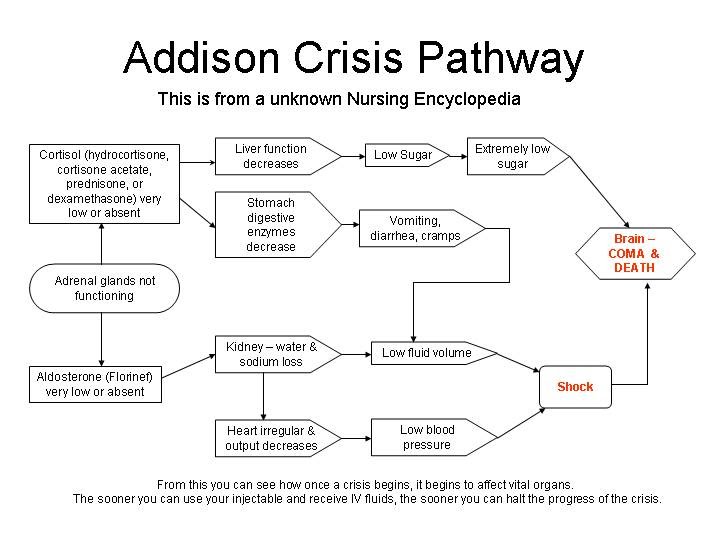
adrenalcrisispathway

Greater efforts to educate patients with adrenal insufficiency and their families about prevention of adrenal crisis may be necessary, according to data presented at the American Association of Clinical Endocrinologists (AACE) 24th Annual Scientific & Clinical Congress.

Additionally, the researchers, who looked at patients treated for adrenal insufficiency, found that many are not being adequately trained or equipped to deal with an adrenal crisis.

“These patients can crash and we are not doing enough to help prevent problems,” study investigator Nitika Malhotra, MD, endocrinologist in Lansing, Michigan, said. “We did this study because we think this is a big problem.”

Malhotra, who presented the study findings at the meeting, explained that patients with adrenal insufficiency are at risk for developing adrenal crisis, and it is now estimated that 8% of patients with adrenal insufficiency are hospitalized for adrenal crisis each year.

The problem, according to Malhotra, is that far too many patients are failing to receive crises prevention education. Moreover, they are not receiving emergency glucocorticoid kits.

“All of the families need to be taught and that is not happening,” Malhotra said in an interview with Endocrinology Advisor. “It will reduce the morbidity and mortality and the hospitalization, and it may improve the quality of life of patients too.”

For their study, Malhotra and her colleagues collected data from patients with adrenal insufficiency who were seen at a single institution between March 2009 and March 2014.

The investigators conducted a retrospective chart review and examined age, gender, causes of adrenal insufficiency, glucocorticoid dose, and monitoring for hyponatremia and hyperkalemia. They also looked at postural blood pressure, crises prevention education for glucocorticoid dose adjustments during stress, and whether patients had a Medic Alert ID or a parenteral glucocorticoid kit.

The researchers identified 85 patients (29 males and 56 females) with adrenal insufficiency. Of these patients, 33 patients had primary adrenal insufficiency (38.8%) and 52 had secondary adrenal insufficiency (61.2%). The mean age of the patients was 55.8 years.

Among the 85 patients, 23 (27%) had postural blood pressures checked — five of whom were positive (21.7%). Seventy-seven patients (90.6%) were monitored for electrolytes, and 41 patients (48.2%) were on steroid doses above 20 mg per day.

However, the researchers found that only 57 patients (67.1%) had received steroid dose adjustment instructions. In addition, only 29 patients (34.1%) had a Medic Alert ID, and only 17 patients (20%) were setup with emergency parenteral glucocorticoid kits.

Even though this study has many inherent limitations, Malhotra said, it appears that the preventive strategies for adrenal crisis in patients with adrenal insufficiency are not being consistently followed.

Patient education is paramount for achieving a successful prevention strategy for adrenal crisis, and endocrinologists have a responsibility to make sure that all patients with adrenal insufficiency have a Medic Alert ID and access to emergency glucocorticoid kits, according to Malhotra.

Furthermore, she said families should receive adequate education about parenteral steroid administration and steroid dose adjustments in stressful situations.

At her institution, Malhotra said, endocrinologists are introducing an automated electronic alert in their electronic medical records to determine if this electronic prompt will improve adherence.

Reference

  1. Malhotra N et al. Abstract #102. Presented at: American Association of Clinical Endocrinologists (AACE) 24th Annual Scientific & Clinical Congress; May 13-17, 2015; Nashville, Tenn.


From http://www.endocrinologyadvisor.com/aace-2015/adrenal-crisis-in-adrenal-insufficiency/article/415123/

Hydrocortisone Replacement Patient Information

steroids
Patient Information

What is Hydrocortisone?
Hydrocortisone is a steriod hormone produced by the adrenal gland.  It regulates many of the bodies functions and is essential for life.
Hydrocortisone is taken as a replacement for the natural hormone where this is deficient, either because of pituitary deficieny of ACTH (the hormone that stimulates the production of hydrocortisone by the adrenal gland) or failure of hydrocortisone production by the adrenal gland.

How do I take it?
A common dose is 15-20mg orally split over two or three times daily, and depending on your individual Endocrinologist’s recommendations, e.g., 10mg before rising, 5mg at mid-day and 5mg at 4 p.m.

When would I need to take more hydrocortisone?

If you become ill then the body would naturally increase the output of steroid from your adrenals.  Therefore if you are taking replacement steroid (hydrocortisone) it is essential to mimic the natural response by increasing your dose appropriately.

How can I let others know I take replacement hydrocortisone?
When you are prescribed your medication you will be given a ‘blue steroid card’ from the hospital to carry.  You should also purchase and wear a medical necklace or bracelet, such as MedicAlert, to show your Cortisol replacement therapy.

Emergency Injections – should I have these at home?
It is advisable for all patients on hydrocortisone replacement to have a 100mg injection pack at home and for them or their partners to be taught how to administer it.  If you don’t have one of these already, you can ask your GP or endocrinologist if they will prescribe this for you.  Please check regularly that these preparations are not expired.  Some endocrine clinics will help to show you how to inject in an emergency.

When do I know that I would need an emergency injection?

If you cannot absorb your tablets, or your usual replacement wasn’t sufficient for an acute shock or illness, then gradually or perhaps quite quickly you would feel weak, sickly and light-headed.

Recommendations for changes in oral dose ‘The Sick Rules’
If you become unwell you should take additional hydrocortisone. The amount depends on how unwell you are and the type of illness. The pituitary foundation provides some sensible examples:

If a patient is unwell they should take additional hydrocortisone. The amount depends on how unwell they are and the type of illness. Some examples:

Situtation  Increase in dose Duration  Emergency?
Cold without fever   none
Fever, flu, infection         double dose duration of illness see GP after 48 hours
Vomiting > once, diarrhoea and severe illness Emergency 100mg injection if extra dose of 10-20mg cannot be kept down restart usual dose once stable Phone GP or go to A&E. Administer injection prior to this if emergency pack available (but still seek help)
Minor surgical procedure e.g. tooth extraction     20mg hydrocortisone before procedure resume on usual dose immediately afterward
Minor operation e.g. hernia repair  100mg im every 6 hours for 24 hours  resume on usual dose immediately afterward
Major operation e.g. abdomen or chest 100mg im injection every 6 hours for 24 -72 hours and eating and drinking reduce rapidly to usual dose tell the surgeon and anaesthetist before the operation
Endoscopy Double the dose the day before during bowel prep. For colonoscopy 100mg im before procedure take usual dose on the morning of the procedure drink lots of water to prevent dehydration. Inform your doctor.
Cystoscopy Double dose on the day of procedure. resume as normal inform your doctor.
Severe shock e.g. bereavment or road traffic accident 20mg as tablet or 100mg intramuscular injection See GP or hospital for further advice Sudden and severe shock may be classed as an emergency – seek advice
Long haul flight > 12 hours double dose on the day of the flight extra dose every 6-8 hours when the day is legnthened. Usual regimen in timing with sleep / wake cycle when day is shortened. Speak to your consultant before travel.
General stress, exams etc  not usually required ask GP if concerned

How do I cope if I’m travelling away from home?

You should travel with a 100mg injection kit  in case of emergency.  This injection should be placed in a small cool bag, labelled with your name and kept with you at all times during your journey. You should ask your GP or endocrinologist for a letter about your injection kit, medication and your doses prescribed.  This letter is essential to travel through security checks and will be helpful should you become unwell and have to see a doctor. It is wise to take an extra two weeks supply of hydrocortisone tablets with you in case you need to increase your usual dose whilst away.  All medication should be kept in your hand luggage.

Printable patient information

From http://www.imperialendo.com/for-doctors/hydrocortisone-replacement/hydrocortisone-replacement-patient-information

“My feet are killing me!” An unusual presentation of Cushing’s syndrome

Adverse effects of steroid excess on bone metabolism are well established but presentation of Cushing’s syndrome with metabolic bone disease is reported to be uncommon. We describe a case of Cushing’s syndrome presenting with pathological fractures probably present for 8 years before diagnosis.

A 33 year old nurse first sustained spontaneous stress fractures of her metatarsals in 1994, with repeated fractures occurring up to 2002. In 2001 she developed hypertension, acute lumbar back pain and gained weight.

In 2002 she was admitted to hospital with chest/back pain. Lumbar spine X-ray showed new fracture of L3,old fractures of L4/5,with fractured ribs on CXR. Isotope bone scan revealed multiple hot spots. MRI showed collapse of T8 with features consistent with malignant disease. The primary malignancy was sought and a left-sided 1.5 centimetre thyroid nodule detected.

Suspicious cytology prompted thyroid lobectomy revealing follicular variant of papillary carcinoma. T8 biopsy revealed chronic infection with Propionobacteria rather than metastatic carcinoma. Despite antibiotic therapy further spontaneous vertebral fractures developed. Bone densitometry revealed Z scores of minus 2.4 at L2-4, minus 2.5 and 2.9 at the hips.

Referral to our centre prompted investigations for Cushing’s syndrome. Serum potassium was 4.1 millimols per litre, androgens, calcitonin and urinary catecholamines all normal. TSH was suppressed by T4 therapy. Urinary free cortisol values were raised,(563-959 nanomols per 24hours) with loss of diurnal rhythm in cortisol secretion (9am 429-586,midnight 397-431 nanomols per litre)and no suppression on low or high dose dexamethasone. Abdominal CT showed a 3.5 centimetre adrenal mass. These findings were consistent with adrenal dependent Cushing’s syndrome. Risedronate and metyrapone were commenced before adrenalectomy, completion thyroidectomy and ablative radioiodine.
Comment: Cushing’s syndrome may present with spontaneous fractures in both axial and appendicular skeleton in the absence of marked clinical features. This case demonstrates the importance of thorough investigation of unexplained fractures.

LM Albon, JD Rippin & JA Franklyn

From http://www.endocrine-abstracts.org/ea/0005/ea0005p26.htm

Enzyme that triggers muscle wasting could be key to REVERSING signs of ageing | Daily Mail Online

Drawing on expertise from both the University of Birmingham and Queen Elizabeth Hospitals Birmingham, they applied their knowledge of Cushing’s syndrome to the new problem (sarcopenia).

Cushing’s is hormonal disorder caused by high levels of cortisol. Patients suffer from the syndrome see marked changes in their body composition.

The effects can be devastating for patients who can develop features such as muscle wasting and weakness, weight gain, thinning of the bones, diabetes, high blood pressure and heart disease.

Dr Hassan-Smith said: ‘Looking at this particular enzyme seemed like an intriguing way forward.

‘We knew how it works in relation to Cushing’s Syndrome, which is characterised by similar symptoms, and thought it would be worthwhile applying what we knew to the ageing population.’

Currently there are no treatments for sarcopenia, the team explained.

But pharmaceutical companies are developing and testing ways to block or switch off the enzyme, with a focus on treatments for conditions including diabetes.

The team is excited about taking the results of their study forward into future research, with one eye on adapting the inhibitors already in development to combat muscle ageing.

Dr Hassan Smith added: ‘The next stage is a “proof of concept” study to look at the effects of these inhibitive pharmaceuticals on muscle function, before opening it up into a clinical trial.

‘It’s an as yet unexplored area that could yield beneficial results for a problem that is becoming more prevalent as our lifespans increase.’

The study was published in the journal of Clinical Endocrinology and Metabolism.


via Enzyme that triggers muscle wasting could be key to REVERSING signs of ageing | Daily Mail Online.

Myth: YOU are the problem and the reason for your cortisol levels…

Myth: YOU are the problem and the reason for your cortisol levels. Having issues with too much or too little cortisol, the stress hormone, means that YOU are stressing too much or are too anxious. “YOU could control your levels if you would JUST calm down!”
myth-busted
Fact: YOU are NOT the problem! The dysfunction in your body is the problem. It is true that cortisol is your stress hormone or fight or flight hormone. This hormone helps your body compensate for and deal with trauma or stress, both physical and emotional. So, yes, your body does have a reaction to stress.
However, for people with Cushing’s, that hormone goes haywire. Too much cortisol leads to Cushing’s symptoms and having too little cortisol leads to Adrenal Insufficiency. Normally, our bodies’ response to stress is to pump out 10X the amount of your baseline cortisol to cope. If it is not able to do this, it will go into shock and can lead to death unless the emergency protocol is followed with an emergency injection of steroid. No amount of coping skills can “control” one’s physiological response to stress.