Cushing’s FAQ

A FAQ (Frequently Asked Questions).  Directions are in each category for adding your own question.

IMPORTANT: The information and material posted on this Web site is intended as general reference information only. Specific facts and circumstances may alter the concepts and applications of materials and information described herein. The information provided is not a substitute for professional advice and should not be relied upon in the absence of such professional advice specific to whatever facts and circumstances are presented in any given situation.

Please note that there are several questions waiting to be answered at this time. Your question will be answered as soon as possible.

This is a different website than the message boards and requires a different log-in, although you may use the same log-in name and password.


Adrenal Insufficiency

Adrenal insufficiency is a life threatening chronic illness. An active and vigorous lifestyle with normal life expectancy is possible as long as the prescribed medications are taken regularly and adjusted when indicated. As with most chronic diseases, adrenal insufficiency demands that the patients take responsibility and develop self-management skills and techniques.

Read an article on Adrenal insufficiency

Cushing’s Types

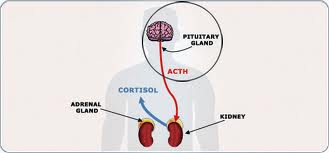
Cushing’s Disease/ Cushing’s Syndrome: Cushing’s is a hormonal disorder caused by prolonged exposure of the body’s tissues to high levels of the hormone cortisol. Your adrenal glands, which are right above your kidneys, release cortisol when they receive a chemical message from your pituitary gland. The message comes in the form of adrenocorticotrophic hormone (ACTH), which travels through the bloodstream.

Cushing’s Disease Is the result of a pituitary tumor which causesthe emergence of secondary male characteristics (like hair growth, acne, etc.), and ovarian failure. Other symptoms usually include high blood pressure and water retention.

Cushing’s Syndrome: Causes the same symptoms, but is a disorder marked by overproduction of adrenal hormones, which can cause a drop in LH and FSH.

An estimated 10 to 15 of every million people are affected each year. Cushing’s is an increased concentration of glucocorticoid hormone (ACTH) in the bloodstream that is being produced by an adrenal gland tumor (adenoma). Ectopic Cushing syndrome refers to the production of ACTH in a location other than the pituitary gland or adrenalgland. Examples of ectopic sites include thymoma, medullary carcinoma of the thyroid, pheochromocytoma, islet cell tumors of the pancreas, and oat cell carcinoma of the lung.Symptoms include weight gain, central obesity, moon face, weakness, fatigue, backache, headache, increased thirst, increased urination, impotence, mental status changes, and muscle atrophy.

Treatment varies with cause. If an ACTH secreting tumor is involved then it must be removed surgically.

More about Cushing’s.

Talk about Cushing’s with people who understand.

Subcategories:

Growth Hormone

Human Growth Hormone (hGH) is produced in the pituitary gland of humans, and the hormone is secreted throughout a person’s lifetime. It promotes growth in children and plays an important role in adult metabolism.

More about HgH

Where Can I Find…?

40 Days of Thankfulness: Day Twenty

Today is a very special day for me.  I am thankful to so many, named and unnamed.  This is the 23rd anniversary of my pituitary surgery at the NIH in Bethesda, Maryland.

I couldn’t have gotten to surgery without a myriad of books from the public library, my parents who watched my son while I was at NIH for 6 weeks pre-op, an oncologist, the endo who got me there… So many, and so many years of sickness just trying to get diagnosed.

I won’t bore anyone with my “story” but if anyone is interested, it’s available here.

The short version is that I knew I was sick starting about 2003.  No doctors would offer any help.  A chance description of Cushing’s convinced me that this was what I had.  Even when I presented Xerox copies of medical texts to doctors, they would all say that I couldn’t have it.  It was “too rare”.  I was fat.  I cheated on my diet.  I was depressed.  Go away.  Take drugs.

I finally got to an endo who got me into NIH in 2006.  During six weeks away from home as an in-patient, they diagnosed me with pituitary Cushing’s.

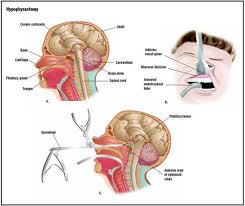
For those who don’t know, here’s where the pituitary gland is:

I had a 7 year old son and I was sure I was going to die during surgery, if not before. I wrote letters “just in case”.  I was terrified of what could happen and also what would happen if I never had surgery.  I knew I couldn’t live with the Cushing’s.

A college contempory of mine wasn’t so lucky.  Luckily, I didn’t read this in the Alumni magazine until after my surgery. She had the same operation. She came from my home town. We  had the same major at the same college, we were the same age. We had the same surgical and medical team. I recovered. The other woman died during surgery.

So, today, on my 23rd anniverary, I am thankful that I saw my son grow up, that my husband stuck with me, that I’m still alive, that I’m able to help others beat Cushing’s…

Thanks to Dr Edward Oldfield, NIH, nurses, doctors, Fairfax County Public Library and how it all worked out in the end.

40 Days of Thankfulness: Day Fifteen

I hope I’m not jinxing myself but today I am thankful that I haven’t had any migraines for a long time.

It’s not “just” not having migraines, but the fact that, should I get one, there’s nothing I can do about them anymore.

I used to get migraines quite often, a hormone thing probably.  I spent lots of hours in a completely dark room, blocking out sound, trying to keep my head from pounding.

There was a long period of time that I had a migraine 6 days out of the week for several weeks.  By accident, a friend asked me on a Monday if I had one that day and that started me thinking – why do I have them every day except Mondays?  I figured out that it wasn’t a migraine at all but an allergy headache – I was allergic to the bath oil I was using Monday-Saturday.  I gave that to my Mom and those headaches went away.

I still often get allergy headaches.  Since my Cushing’s transsphenoidal pituitary surgery, I can’t smell things very well and I often don’t know if there’s a scent that is going to trigger an allergic reaction.  In church and elsewhere, my Mom will be my “Royal Sniffer” and if someone is wearing perfume or something scented, she’ll let me know and we’ll move to a new location.

There’s a double whammy here – since my kidney cancer surgery my doctor won’t let me take NSAIDs, asperin, Tylenol, any of the meds that might help a headache go away.  My only hope would be that coffee from Day Fourteen. And that’s definitely not usually enough to get rid of one of these monsters.

So, I am very thankful that, for the moment, I am headache/migraine free!

Ten Years of Cushing’s Help and Support!

Ten years ago yesterday I was talking with my dear friend Alice, who runs a wonderful menopause site, Power Surge, wondering why there weren’t many support groups online (OR off!) for Cushing’s and I wondered if I could start one myself.  We decided that I could.

This website (http://www.cushings-help.com ) first went “live” July 21, 2000 and the message boards September 30, 2000. Hopefully, with this site, I’ve made  some helpful differences in someone else’s life.

Who could have known how this site – now sites – could have grown and grown.

It started as a one-page bit of information about Cushing’s  In people, not dogs, horses, ferrets…

Then, it started growing and growing, taking on a life of its own.  To truly emulate Alice, I added message boards in September.  They were really low-quality, a type put together by an old HTML editor but we had members and actually had discussions.

Not too long after, a real board was opened up and things really started happening.  Then we outgrew that board and ended up in our current home.

The message boards are still very active and we have weekly online text chats, live interviews, local meetings, email newsletters, a clothing exchange, a Cushing’s Awareness Day Forum, podcasts, phone support and much more.

Whenever one of the members of the boards gets into NIH, I try to go to visit them there. Other board members participate in the “Cushie Helper” program where they support others with one-on-one support, doctor/hospital visits, transportation issues and more.

Things have changed over the years, though.  The original Cushings-Help site is still updated with new bios, new Helpful Doctor listings, meetings and more but all new articles have moved to a new site – http://www.cushie.info/ – which is much easier to maintain than the older strictly-HTML site.

Also new are a CushieWiki, several blogs (of which this is one), three Facebook entities (Cushing’s Help Cause; Cushing’s Help and Support Group; and the Cushings Help Organization, Inc.); a Twitter stream and much more.

New recently:

NEW! Daily News Summary at Cushing’s Daily News

NEW! cushie.info is now optimized for viewing on PDAs and mobile phones

NEW!  Medical Centers. These are centers which specialize in Cushing’s, pituitary or adrenal patients.  If you, as a patient, have one that you’d like to have added, please send any info you may have to Mary O’Connor (MaryO).  Thank you!

Occasional Newsletters are Back: Members of cushie.info will automatically receive these occasional newsletters. Of course, you may opt-out at any time. Thank you for your interest.  Non-members may subscribe through the Newsletter Subscription module on the left side of this page.

Cushie Toolbar: Be the first to know! The Cushie Toolbar features a Google search box, the 911 Adrenal Crisis! page, the Cushie Reads book recommendations page, Cushie Calendar, all the bios, arranged by diagnosis type or date, add (or update) your bio, our locations around the world, the message boards and chatroom, Helpful Doctors list, add (or update) your Helpful Doctor, support page, scrolling message area for Cushing’s news, Cushing’s blogs, NIH Clinical trials for Cushing’s, pituitary and adrenal, the Cushings Help Organization cause on Facebook, Staticnrg and Cushings on Twitter, new CushieWiki and listen to the Cushing’s podcasts right from this toolbar.

CushieWiki: Please feel free to contribute! The CushieWiki is an ever-changing, ever-growing body of Cushing’s knowledge provided by *YOU* and other patients.

Members of the cushie.info site have additional features:

We’ve grown out of control from that simple one-page info sheet to way more than I could have ever imagined in that phone conversation with my friend.  I would never have thought that I could do any of this, provide these services and touch the lives of so many others.

I also never thought that I would spend hours a day updating, adding, improving, helping, emailing, phoning, paperwork, writing…

But it’s all worth it if the lives of other Cushies are made better.

Here’s to another 10 years…

Medical treatment of Cushing’s disease: Overview and recent findings

Published Date October 2009

Journal: International Journal of General Medicine

Stephanie Smooke Praw1, Anthony P Heaney1,2

1Department of Medicine, 2Department of Neurosurgery, David Geffen School of Medicine at UCLA, Los Angeles, CA, USA

Abstract: Cushing’s disease, due to pituitary adrenocorticotropic hormone (ACTH) hypersecretion, is the most common etiology of spontaneous excess cortisol production. The majority of pituitary tumors causing Cushing’s disease measure <1 cm and the excess morbidity associated with these tumors is mostly due to the effects of elevated, nonsuppressible, ACTH levels leading to adrenal steroid hypersecretion. Elevated circulating cortisol levels lead to abnormal fat deposition, hypertension, diabetes, coronary artery disease, osteoporosis, muscle weakness and psychological disturbances. At experienced centers, initial surgical remission rate via transnasal, transphenoidal resection approaches 80% for tumors less than 1 cm, but may be as low as 30% for larger lesions and long-term recurrence in all groups approaches 25%. Residual disease may be managed with more radical surgery, pituitary-directed radiation, bilateral adrenalectomy, or medical therapy. This paper addresses current and novel therapies in various stages of development for Cushing’s disease.

Keywords: Cushing’s disease, treatment, pasireotide, PPAR-γ, 11 β-hydroxysteroid dehydrogenase inhibitors, dopamine agonists

Download article (Free!): http://dovepress.com/getfile.php?fileID=5388