Today in Lab History

Jokichi Takamine was a Japanese-American biochemist and industrialist, born Nov. 3, 1854, who isolated the hormone produced in the adrenal gland that causes the body to respond to emergencies. This chemical was adrenalin — now called epinephrine — from the suprarenal gland. It was the first pure hormone to be isolated from natural sources.

He applied for and received a U.S. patent on the substance, and went on to make a fortune with his marketing of Adrenalin. In fact, the product that he marketed was not pure epinephrine, but a mixture of the hormone and its sibling compound, norepinephrine, or noradrenaline. It is now made synthetically. He also found takadastase, and played a key role in the introduction of phosphate fertilizer along with various other manufacturing and chemical industries to Japan.

~~~~~
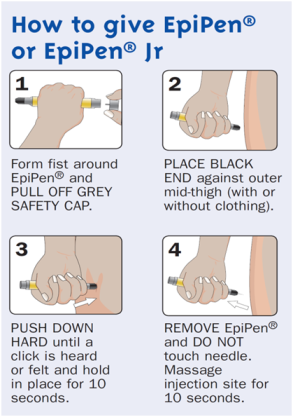
How_to_give_EpiPen

Epinephrine, an EpiPen or Auvi-Q/Allerject injection, should be given in the mid-anterior lateral thigh (not the outer thigh). We call this the EpiCenter of the thigh, and this video segment from the EpiCenter Medical (http://www.epicentermedical.com) online anaphylaxis first aid course has a thigh location graphic to help you pinpoint the most effective location for the injection.

Safety of DR-HC for adrenal insufficiency

Conventional treatment of adrenal insufficiency involves cortisol replacement therapy with twice- or thrice-daily oral hydrocortisone. Recently dual-release hydrocortisone (DR-HC) administered once daily to provide high levels of cortisol during the morning, followed by a gradual decrease throughout the day is being used. This results in considerably lower cortisol exposure during the afternoon and evening compared with immediate-release thrice-daily hydrocortisone, thereby mimicking normal cortisol secretion more closely than conventional therapy.

Nilsson et al. conducted a study to evaluate the long-term safety of DR-HC and whether the difference in the incidence of adverse events persisted over time and if it was related to different levels of exposure to cortisol. They conducted a randomised, open-label, crossover trial of DR-HC or thrice-daily hydrocortisone for 3 months each (stage 1) followed by two consecutive, prospective, open-label studies of DR-HC for 6 months (stage 2) and 18 months (stage 3) at five university clinics in Sweden. The results of the study of the newly developed DR-HC showed that long-term maintenance treatment and rescue therapy was well tolerated up to 27 months of continuous treatment.

Read full article titled ‘Prospective evaluation of long-term safety of dual-release hydrocortisone replacement administered once daily in patients with adrenal insufficiency’ by Nilsson et al., European Journal of Endocrinology 171 pp 369 – 377, DOI: 10.1530/EJE-14-0327

Long-term remission and recurrence rate in a cohort of Cushing’s disease: the need for long-term follow-up

Pituitary. 2014 Apr 19. [Epub ahead of print]

Author information

 Abstract

OBJECTIVE:

Transsphenoidal surgery is the procedure of choice in Cushing disease (CD), with immediate post-operative remission rates ranging between 59 and 94 % and recurrence rates between 3 and 46 %, both depending upon the definition criteria and the duration of the follow-up. Our aim was to assess the rate of remission, recurrence and persistence of the disease after the first treatment and to identify predictors of remission in the CD population of our center.

METHODS:

Retrospective cohort study of the patients diagnosed of CD and with follow-up in our center between 1974 and 2011. We analyzed 41 patients (35 women and 6 men) with a mean age at diagnosis of 34 ± 13 years. The mean follow-up was 14 ± 10 years (range 1-37 years) and the median of follow-up period was 6.68 years.

RESULTS:

Thirty-five (85.4 %) patients underwent transsphenoidal surgery as first treatment option. Histopathological evidence of a pituitary adenoma was registered in 17 (48.5 %) patients. Thirty-two (78 %) patients achieved disease remission after the first treatment, 21 (65.6 %) of them presented disease recurrence. Persistent disease was observed in 9 (22 %) patients. Twelve (29.3 %) subjects developed post-surgical adrenal insufficiency, 7 of which (70 %) achieved stable remission. Two parameters were found to be significant predictors of remission after the first treatment: age at disease diagnosis and the development of adrenal insufficiency (cortisol ❤ μg/dl) in the immediate post-operative state.

CONCLUSIONS:

We report a high recurrence rate, at least partially attributable to the long follow-up time. Early post-surgery adrenal insufficiency predicts remission. Hypopituitarism was also very prevalent, and strongly associated with radiotherapy. These results lead us to the conclusion that CD needs a life-long strict follow-up.

PMID:


24748528


[PubMed – as supplied by publisher]

Botch-up Costs Doctor an Adrenal Gland

Chennai, India: The state consumer forum has asked a Coimbatore hospital to pay 15 lakh to a doctor whose adrenal gland was surgically removed after a botched-up diagnosis.

In May 2006, A Indumathi, an ophthalmologist, started showing symptoms like rapid weight gain, hypertension, joint pain, puffiness of face and fatigue. She approached Kovai Medical Centre & Hospital in Coimbatore, where the consultant endocrinologist conducted various tests. Her condition was diagnosed as Cushing’s syndrome, a hormonal disorder, and she was advised to undergo surgery for removal of the left adrenal gland.

On September 18, she was operated on. However, the symptoms persisted and the doctor told her it would take some more time to get relief. She waited three more months, but when her condition worsened, she approached the doctor again. He asked her to undergo another surgery for removing her right adrenal gland.

Not willing to take a chance, Indumathi approached Christian Medical College, Vellore, in December, where doctors told her she was suffering from Cushing’s disease, not syndrome. After a month of treatment, she recovered.

She then approached the state commission saying she was misdiagnosed and because of the wrong surgery, she has to regularly go for blood tests for the rest of her life and could develop life-threatening complications. She said she also incurred medical expense of around 5 lakh and had to leave her medical practice for six months.

Denying the charges, the hospital said tests conducted on her showed she was suffering from Cushing’s syndrome. She, being a doctor, was aware of the test reports and gave consent for surgery, it said.

The state consumer disputes redressal commission bench comprising its president Justice(rtd )RRegupati and judicial member J Jayaram, in a recent order, said after a wrong diagnosis and surgery, the hospital should have been more diligent in reassessment but instead suggested removing the right adrenal gland. The bench said the hospital wrongly diagnosed her and removed “a precious, healthy adrenal gland.”

Stating it was a case of “gross negligence and deficiency in service,” the bench asked the hospital and two doctors to pay Indumathi 4 lakh towards medical and travelling expense, 1 lakh for loss of professional income and 10 lakh for “lifelong mental agony.”

From http://timesofindia.indiatimes.com/city/chennai/Botch-up-costs-doctor-a-gland-hospital-fined-Rs-15-lakh/articleshow/29925290.cms

Perspectives on the management of adrenal insufficiency

Source

Oxford Centre for Diabetes, Endocrinology and Metabolism, Churchill Hospital, University of Oxford, Headington, Oxford OX3 7EJ, UK.

Abstract

BACKGROUND:

Conventional glucocorticoid (GC) replacement for patients with adrenal insufficiency (AI) is inadequate. Patients with AI continue to have increased mortality and morbidity and compromised quality of life despite treatment and monitoring.

OBJECTIVES:

i) To review current management of AI and the unmet medical need based on literature and treatment experience and ii) to offer practical advice for managing AI in specific clinical situations.

METHODS:

The review considers the most urgent questions endocrinologists face in managing AI and presents generalised patient cases with suggested strategies for treatment.

RESULTS:

Optimisation and individualisation of GC replacement remain a challenge because available therapies do not mimic physiological cortisol patterns. While increased mortality and morbidity appear related to inadequate GC replacement, there are no objective measures to guide dose selection and optimisation. Physicians must rely on experience to recognise the clinical signs, which are not unique to AI, of inadequate treatment. The increased demand for corticosteroids during periods of stress can result in a life-threatening adrenal crisis (AC) in a patient with AI. Education is paramount for patients and their caregivers to anticipate, recognise and provide proper early treatment to prevent or reduce the occurrence of ACs.

CONCLUSIONS:

This review highlights and offers suggestions to address the challenges endocrinologists encounter in treating patients with AI. New preparations are being developed to better mimic normal physiological cortisol levels with convenient, once-daily dosing which may improve treatment outcomes.

PMID:
24031090
[PubMed – in process] 
PMCID:
PMC3805018
 [Available on 2013/12/1]

From http://www.mdlinx.com/endocrinology/newsl-article.cfm/4829245/ZZ4747461521296427210947/?news_id=2364&newsdt=110713&subspec_id=1509&utm_source=Focus-On&utm_medium=newsletter&utm_content=Top-New-Article&utm_campaign=article-section