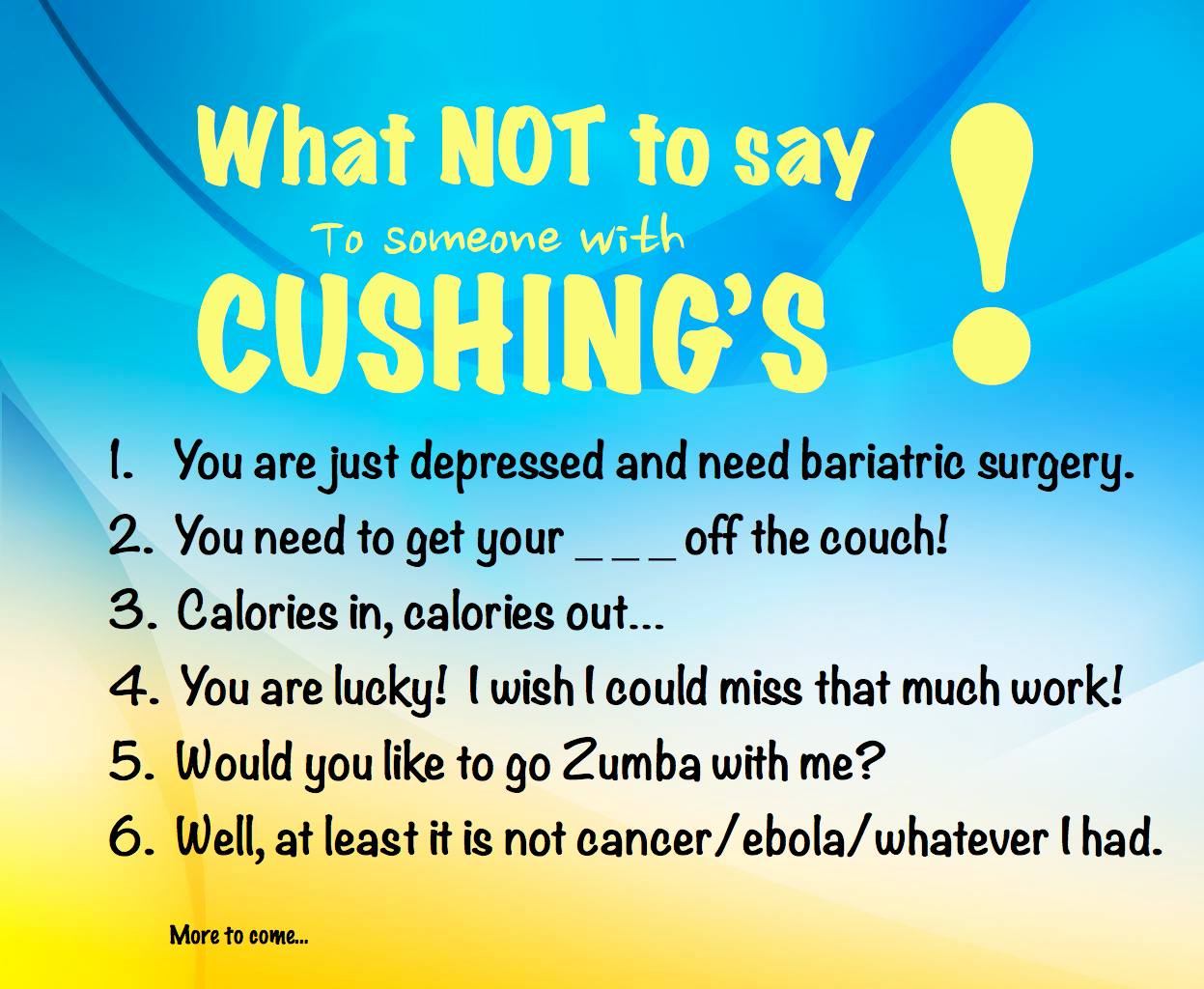
Many of the people who post on the message boards suffer from other diseases, as well as Cushing’s. These links help to provide some information about these diseases.
~A ~
Acanthosis nigricans
 This Topic on the Message Boards.
Acromegaly
This Topic on the Message Boards.
Addison’s Disease
This Topic on the Message Boards.
Adrenoleukodystrophy
This Topic on the Message Boards.

~B ~
~C ~
Carney Complex
This Topic on the Message Boards.
New Support Group for Carney Complex.
Central Serous Retinopathy
This Topic on the Message Boards.
Congenital Adrenal Hyperplasia (CAH)
This Topic on the Message Boards.
Conn’s Syndrome
This Topic on the Message Boards.
Craniopharyngioma
This Topic on the Message Boards.
~D ~
Diabetes insipidus
This Topic on the Message Boards.
~E ~
Ectopic ACTH Syndrome
This Topic on the Message Boards.
Empty Sella
This Topic on the Message Boards.
~F ~
Fibromyalgia
This Topic on the Message Boards.
~G ~
Gigantism
This Topic on the Message Boards.
~H ~
Hirsuitism
This Topic on the Message Boards.
Hyperprolactinemia
This Topic on the Message Boards.
Hyperthyroidism
This Topic on the Message Boards.
Hypoalderostonism
This Topic on the Message Boards.
Hypocalcemia
This Topic on the Message Boards
Hypopituitarism
This Topic on the Message Boards.
Hypothyroidism
This Topic on the Message Boards.
~I ~
Insulin Resistance
This Topic on the Message Boards.
~K ~
Kidney Disease
This Topic on the Message Boards.
~L ~
Lyme Disease
This Topic on the Message Boards.
~M ~
Madelung’s Disease
This Topic on the Message Boards.
Menopause
This Topic on the Message Boards.
MEN Type 1
This Topic on the Message Boards.
Myasthenia Gravis
This Topic on the Message Boards.
~N ~
Nelson’s Syndrome
This Topic on the Message Boards.
~O ~
Osteopenia
This Topic on the Message Boards.
Osteoporosis
This Topic on the Message Boards.
~P ~
Panhypopituitarism
This Topic on the Message Boards.
PCOS
This Topic on the Message Boards.
- PCOS: Polycystic Ovary Syndrome
- From Health Talk: Polycystic Ovarian Syndrome
- High Prolactin Levels in PCOS Women
- Low Carbohydrate PCOS Diets: Hype, Hoax or Cure?
- PCOS: Antagon, A New Infertility Drug
- PCOS: Clomid and Infertility
- PCOS Study in Virginia
- PCOS Symptoms
Perimenopause
This Topic on the Message Boards.
Pheochromocytoma
This Topic on the Message Boards.
Pituitary dwarfism
This Topic on the Message Boards.
Premature menopause
This Topic on the Message Boards.
Primary pigmented nodular adrenocortical disease (PPNAD)
This topic on the Message Boards
Prolactinoma
This Topic on the Message Boards.
Pseudo Cushing’s
This Topic on the Message Boards
~R ~
Rathke’s cleft cyst
This Topic on the Message Boards.
ROHHAD (Rapid-Onset Obesity With Hypothalamic Dysfunction, Hypoventilation, and Autonomic Dysregulation Presenting in Childhood)
This Topic on the Message Boards
~S ~
Sheehan’s Syndrome
This Topic on the Message Boards.
Stein-Leventhal Syndrome
This Topic on the Message Boards.
~T ~
Thymoma
This Topic on the Message Boards.
Thyroid Gland Disorders
This Topic on the Message Boards.
Turner’s Syndrome
This Topic on the Message Boards.
~V ~
Von Hippel-Lindau disease
This Topic on the Message Boards.
~Z ~
Filed under: adrenal, adrenal crisis, Cancer, Cushing, Cushing's, growth hormone, pituitary, Rare Diseases | Tagged: acanthosis nigricans, acro, ACTH, Addison's disease, CAH, Carney Complex, Congenital adrenal hyperplasia, Conn's, craniopharyngioma, diabetes, empty sella, hirsuitism, Insulin resistance, menopause, message boards, Nelson's syndrome, osteoporosis, PCOS, pheochromocytoma, Rathke’s cleft cyst, thyroid, Turner syndrome, Von Hippel-Lindau disease | Leave a comment »