Why It’s Safer Than Ever To Remove Pituitary Tumors

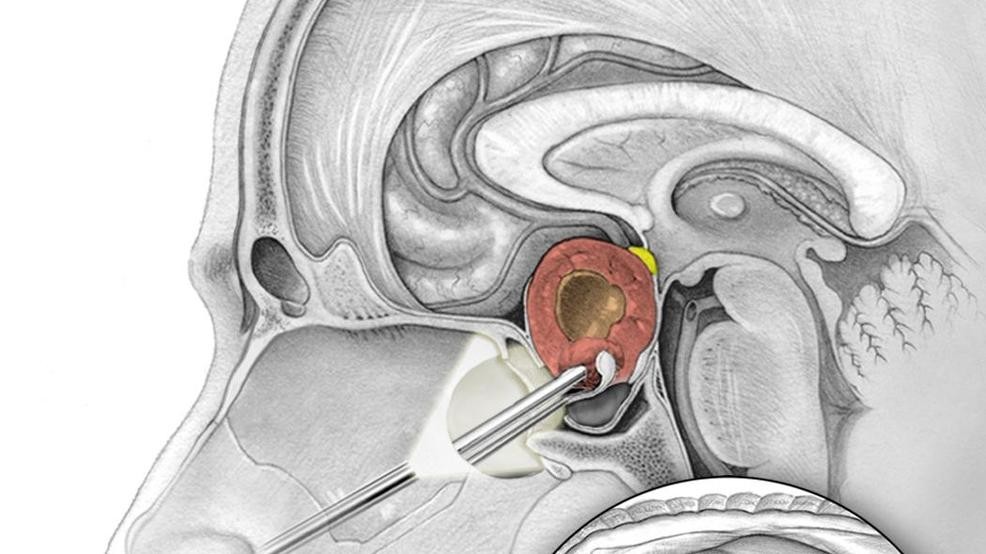
Removing a pituitary tumor by surgery can be tricky. The gland is surrounded by carotid arteries, optic nerves, and lots of important brain matter. Nor is it easy to access or visualize. But with the help of revolutionary technology and modern expertise, surgeons are now able to remove pituitary tumors in a safe and minimally invasive way. / Image courtesy of Mayfield Brain & Spine

There are three basic things you should know about your pituitary gland: it’s buried away at the base of your brain; it’s very important; and, alas, it has a habit of growing tumors.

Did your pulse quicken a tiny bit at mention of “tumors?” If so, it’s because your thyroid told it to, on instructions from your pituitary gland. But now it’s normal again, right? For that you can thank cortisol, which your pituitary gland told your adrenal glands to make in response to stress.

That’s just the tip of the iceberg, according to Yair Gozal, MD, neurosurgeon at Mayfield Brain & Spine.

“The pituitary gland is also known as the master gland,” he explains. “It regulates the release of hormones from other glands, controlling blood pressure, urine output, body temperature, growth, metabolism, lactation, ovulation, testosterone, stress response, and more.”

That of course means when something is wrong with your pituitary gland—say, a tumor—the symptoms can vary. Perhaps the tumor grows from the part of the pituitary gland that produces prolactin, which regulates sexual function. In that case, a prolactinoma will result in halted menstruation or erectile disfunction (among other things.) Alternatively, suppose the tumor grows from the part of the pituitary gland that produces growth hormone. These tumors cause gigantism in children and acromegaly in adults (again, among other things.)

So it follows, the part of the pituitary gland where the tumor grows will determine its symptoms. But these only account for “functioning” tumors—that is, tumors that secrete too much or too little of a particular hormone. Other tumors, termed “non-functioning,” do not secrete hormones at all. These buggers just take up space until they begin pressing on adjacent parts of the brain that would rather not be pressed on. Symptoms include headache, vision loss, nausea, vomiting, or fatigue. Non-functioning tumors can also pinch the pituitary gland itself, resulting in a broad-based loss of pituitary function.

Pituitary tumors are unusually common. Fifteen percent of adults have one. Most do not cause symptoms or require treatment. If you have one that does, your treatment may involve medication, radiation, and surgery.

Removing a pituitary tumor by surgery can be tricky. The gland is surrounded by carotid arteries, optic nerves, and lots of important brain matter. Nor is it easy to access or visualize. But with the help of revolutionary technology and modern expertise, surgeons are now able to remove pituitary tumors in a safe and minimally invasive way.

For the vast majority of cases, surgeons opt for a transsphenoidal approach. Here, the surgeon inserts an endoscope through the nostril to reach the pituitary gland. The endoscope’s camera relays video to a monitor, which allows the surgeon to visualize the tumor and be precise while removing it. Nowadays the surgeon is further aided by computer image guidance. The computer system gives the surgeon a real-time, three-dimensional model of his or her instruments in the operating space, adding extra degrees of precision—and safety—to the procedure.

“Technology has really moved ahead in this field,” says Gozal. “You get such good visualization. It’s made the operation relatively straightforward.”

Straightforward, that is, for a multidisciplinary team of neurosurgeons, ENT surgeons, and endocrinologists equipped with all that technology and all their training.

“I wouldn’t go anywhere that didn’t have a team for this,” says Gozal. “It’s all about developing expertise. That’s the key. It’s the expertise that has made this safer to do.”

– –

Internationally recognized as a leader in neurological surgery, Mayfield has forged a rich and lasting heritage through technical innovation, research, and a commitment to patient care. Mayfield physicians are continuously recognized among the Best Doctors in America and Top Doctors in Greater Cincinnati.

Mayfield Brain & Spine has four convenient locations in Greater Cincinnati: Rookwood Exchange (3825 Edwards Road, Suite 300, Cincinnati, 45209); Green Township (6130 Harrison Ave., 45247); West Chester (9075 Centre Point Drive, 45069); and Northern Kentucky (350 Thomas More Parkway, Suite 160, Crestview Hills, 41017).


From https://local12.com/sponsored/why-its-safer-than-ever-to-remove-pituitary-tumors

Post-traumatic Stress Symptoms Common in Cushing’s Patients Before Surgery

Patients with Cushing’s disease may develop post-traumatic stress symptoms, which are generally resolved once they undergo surgery to remove the tumor, but can persist in some cases, a study shows.

The study, “Posttraumatic stress symptoms (PTSS) in patients with Cushing’s disease before and after surgery: A prospective study,” was published in the Journal of Clinical Neuroscience.

Cushing’s disease is an endocrine disorder characterized by excess secretion of the adrenocorticotropic hormone (ACTH) by a pituitary adenoma (tumor of the pituitary gland). This leads to high levels of cortisol, a condition known as hypercortisolism.

Chronic hypercortisolism is associated with symptoms such as central obesity, buffalo hump, body bruising, muscle weakness, high blood pressure, high blood sugar, and weak bones.

Additionally, patients can develop psychiatric disorders including depression, anxiety, and cognitive dysfunction, all of which contribute considerably to a lower health-related quality of life.

Depression and anxiety rates are particularly high in Cushing’s disease patients, with 54% of them experiencing major depression and 79% having anxiety.

Due to the significant impact of psychological factors in these patients, they may be susceptible to post-traumatic stress symptoms (PTSS). But more information on this phenomenon in these patients is still needed.

To address this lack of data, a group of Chinese researchers conducted a prospective study to investigate the occurrence, correlated factors, and prognosis of PTSS in patients with Cushing’s disease.

A total of 49 patients newly diagnosed with Cushing’s disease who underwent transsphenoidal removal of the tumor as their first-line treatment were asked to participate in this study. Another group of 49 age- and sex-matched healthy individuals were included as controls.

PTSS was measured using the Impact of Event Scale-Revised (IES-R), depression/anxiety were measured using the Hospital Anxiety and Depression scale (HADS), and quality of life was measured using the 36-item short-form (SF-36). These parameters were measured before surgery, and then at six and 12 months after the procedure.

Before surgery, 15 patients (30.6%) had PTSS. These patients also had higher cortisol levels, worse levels of depression/anxiety, and worse quality of life scores than those without PTSS.

While most of the patients recovered after the operation, there were five (33.3%) for whom PTSS persisted for more than a year.

Additionally, one patient who had a recurrence of Cushing’s disease developed PTSS between six and 12 months after the first surgery.

PTSS severity showed consistent improvement after surgery, which was correlated with better depression/anxiety scores and psychological aspects of the SF-36. However, Cushing’s disease patients in remission still performed worse than healthy individuals concerning their physical and mental health.

Therefore, “patients with [Cushing’s disease] can develop PTSS, and they may persist for over a year even after successful surgery. Combined psychological intervention is advised for these patients,” the researchers concluded.

From https://cushingsdiseasenews.com/2019/06/25/cushings-patients-often-have-post-traumatic-stress-symptoms

Temozolomide Effective Against Cushing’s Caused by Aggressive Tumors

The oral chemotherapy temozolomide might be an effective treatment for Cushing’s disease caused by aggressive tumors in the pituitary gland that continue to grow after surgery and taking other medications, a case report suggests.

The study, “Successful reduction of ACTH secretion in a case of intractable Cushing’s disease with pituitary Crooke’s cell adenoma by combined modality therapy including temozolomide,” was published in the journal J-Stage.

Cushing’s disease is often caused by a tumor in the pituitary gland that secretes high levels of adrenocorticotropic hormone (ACTH), leading to high levels of cortisol and other symptoms.

Macroadenomas are aggressive, fast-growing tumors that reach sizes larger than 10 millimeters. Crooke’s cell adenoma is a type of macroadenoma that does not respond to conventional therapies, but has deficient mechanisms of DNA repair. That is why chemotherapeutic agents that damage the DNA, such as temozolomide, might be potential treatments.

Researchers in Japan reported the case of a 56-year-old woman with Cushing’s disease caused by a Crooke’s cell adenoma in the pituitary gland who responded positively to temozolomide.

The patient was diagnosed with Cushing’s disease at age 39 when she went to the hospital complaining of continuous weight gain. She also had excessive production of urine and a loss of vision in the right eye.

The lab tests showed high levels of cortisol and ACTH, and the MRI detected a tumor of 4.5 centimeters in the pituitary gland. The doctors removed a part of the tumor surgically, which initially reduced the levels of ACTH and cortisol.

However, the hormone levels and the size of the residual tumor started to increase gradually after the surgery, despite treatment with several medications.

By the time the patient was 56 years old, she went to the hospital complaining of general fatigue, leg edema (swelling from fluid), high blood pressure, and central obesity (belly fat).

Further examination showed a 5.7 cm tumor, identified as a Crooke’s cell macroadenoma. The patient underwent a second surgery to remove as much tumor as possible, but the levels of ACTH remained high. She took temozolomide for nine months, which normalized the levels of ACTH and cortisol. After the treatment, the patient no longer had high blood pressure or leg edema.

The tumor shrunk considerably in the year following temozolomide treatment. The patient started radiation therapy to control tumor growth. The levels of cortisol and ACHT remained normal, and the tumor did not grow in the seven years following temozolomide treatment.

“These clinical findings suggest that [temozolomide] treatment to patients with Crooke’s cell adenoma accompanied with elevated ACTH may be a good indication to induce lowering ACTH levels and tumor shrinkage,” researchers wrote.

Other cases of Cushing’s disease caused by aggressive macroadenomas showed positive results, such as reduction of tumor size and decrease in plasma ACTH, after temozolomide treatment. However, more studies are needed to establish the ideal course of chemotherapy to treat these tumors, the researchers noted.

From https://cushingsdiseasenews.com/2019/06/18/temozolomide-effective-cushings-disease-aggressive-tumors-case-report/

Surgical Removal of Pituitary Adenomas Through the Nose Remains an Effective Treatment for Pediatric Patients

Removal of pituitary adenomas by inserting surgical instruments through the nose (transsphenoidal resection) remains the best treatment option for pediatric patients, despite its inherent technical difficulties, a new study shows.

The study, “Transsphenoidal surgery for pituitary adenomas in pediatric patients: a multicentric retrospective study,” was published in the journal Child’s Nervous System.

Pituitary adenomas are rare, benign tumors that slowly grow in the pituitary gland. The incidence of such tumors in the pediatric population is reported to be between 1% and 10% of all childhood brain tumors and between 3% and 6% of all surgically treated adenomas.

Characteristics of patients that develop these pituitary adenomas vary significantly in different studies with regards to their age, gender, size of adenoma, hormonal activity, and recurrence rates.

As the pituitary gland is responsible for hormonal balance, alterations in hormone function due to a pituitary adenoma can significantly affect the quality of life of a child. In most cases, pituitary adenomas can be removed surgically. A common removal method is with a transsphenoidal resection, the goal of which is to completely remove the growing mass and cause the least harm to the surrounding structures.

In this study, the researchers report the surgical treatment of pediatric pituitary adenomas at three institutions. They collected data from 27 children who were operated for pituitary adenoma using one of two types of transsphenoidal surgeries — endoscopic endonasal transsphenoidal surgery (EETS) and transsphenoidal microsurgery (TMS) — at the University Cerrahpasa Medical Faculty in Istanbul, Turkey, at San Matteo Hospital in Pavia, and at the University of Insubria-Varese in Varese, Italy.

The study included 11 males (40.7%) and 16 females (59.3%), with a mean age of 15.3 (ranging between 4 and 18). Medical records indicated that 32 surgical procedures were performed in the 27 patients, as six children required a second operation. Among the patients, 13 had Cushing’s disease, while the rest had growth-hormone-secreting adenomas, prolactinomas, or non-functional adenomas.

The researchers found that most patients underwent remission following their surgery. Among the 27 patients, 22 patients (81.4%) underwent remission while five patients (18.5%) did not. Four patients underwent remission after a second operation.

Based on these findings, the team believes that the transsphenoidal surgical approach adequately removes pituitary tumors and restores normal hormonal balance in the majority of pediatric patients with pituitary adenomas.

“Satisfactory results are reported with both EETS and TMS in the literature,” they wrote. “Despite the technical difficulties in pediatric age, transsphenoidal resection of adenoma is still the mainstay treatment that provides cure in pediatric patients.”

From https://cushingsdiseasenews.com/2019/05/30/transsphenoidal-surgery-effective-remove-pituitaty-adenomas-children-study/

Transsphenoidal Surgery Recommended for Cushing Disease With Inconclusive or Normal MRI

In patients with a diagnosis of Cushing disease in whom magnetic resonance imaging (MRI) shows either no abnormalities or nonspecific abnormalities, surgery is preferable to medical treatment, according to study results published in The Journal of Clinical Endocrinology & Metabolism.

There is a consensus that the first line of treatment for Cushing disease is transsphenoidal surgery to remove the pituitary adenoma causing the disease, with an 80% remission rate following the intervention. However, in the absence of clear evidence of a pituitary adenoma on imaging, there is some controversy regarding the best treatment.

The goal of this retrospective single-center study was to assess the outcomes of surgery in patients with Cushing disease with clear evidence of a pituitary adenoma on MRI compared with outcomes in patients with inconclusive or normal MRI.

The cohort included 195 patients treated with transsphenoidal surgery between 1992 and 2018 (156 women; mean age at surgery, 41 years) classified into 4 MRI groups: 89 patients were found to have microadenoma, 18 had macroadenoma, 44 had nonspecific/inconclusive abnormalities on MRI results, and 44 had normal imaging results.

The researchers reported that MRI performance in their neuroradiology department improved with time; the proportion of inconclusive or normal MRI results decreased from 60% in 1992 to 1996 to 27% in 2012 to 2018 (P =.037).

In analyzing the influence of MRI findings on remission rates, the researchers found no significant difference among the 4 groups: remission rate was 85% for microadenomas, 94% for macroadenomas, 73% for inconclusive MRI, and 75% for negative MRI (P =.11). This finding indicates the overall percentage of patients in remission after transsphenoidal surgery is only slightly lower in those with normal or inconclusive MRI results compared with patients with clear evidence of microadenoma or macroadenoma.

There was no difference in remission rate after a microscopic vs endoscopic surgical approach (P =.16). The researchers found that endoscopic-assisted surgery allowed a higher visualization rate than microscopic-assisted surgery. Although the neurosurgeon had a better visualization rate than MRI (100% vs 72%, respectively), there were some false-positive findings; thus, positive predictive value was similar (84% vs 78%, respectively).

The study had several limitations including the retrospective design. In addition, in light of the long study duration, the researchers noted that changes in MRI technology and surgical procedures occurred over time.

The researchers proposed that after exclusion of nonneoplastic hypercortisolism, patients with Cushing disease, an inconclusive or normal MRI, and a pituitary adrenocorticotropic hormone gradient at bilateral inferior petrosal sampling be directed to an expert neurosurgeon for transsphenoidal surgery rather than treated medically.


Reference

Cristante J, Lefournier V, Sturm N, et al. Why we should still treat by neurosurgery patients with Cushing’s disease and a normal or inconclusive pituitary MRI [published online May 14, 2019]. J Clin Endocrinol Metab. doi:10.1210/jc.2019-00333

From https://www.endocrinologyadvisor.com/home/topics/adrenal/transsphenoidal-surgery-recommended-for-cushing-disease-with-inconclusive-or-normal-mri/