Growth Hormone: Improving Patients’ Lives and Boosting Mature Product Portfolios

Jul 07, 2017
Volume 37, Issue 7

easypod—an automated drug delivery device manufactured by Merck KGaA, Darmstadt, Germany for its recombinant human growth hormone, Saizen—is the only electronic, fully automated injection device for growth hormone therapy. Its features include automated dose delivery and prescription tracking, which records injection history and any missed injections, and allows patients to know when to change their cartridge by displaying how much medicine is left in the device.

Speaking to Pharm Exec, Merck KGaA’s Chief Operating Officer of Biopharma, Simon Sturge, outlines the device’s development and highlights its position in the context of a changing treatment-adherence landscape that could bring benefits both to patients and mature product portfolios.

PE: Are digital interventions in patient adherence becoming more of a focus at your company?

STURGE: Absolutely. We are a major player in the area of diabetes, for example, and as we all know, lifestyle has a huge impact on the outcome of diabetes. How much we as a company should be able to offer a whole package that helps to support the lifestyle changes needed is a very important element of us preventing or delaying the onset of diabetes. In other areas, many people who are sick have a degree of depression. There are excellent apps that are reimbursed in some countries to help treat depression, and those sorts of things should be offered as part of a solution. We believe it is an essential part of our business to look holistically at the patient and bring to that patient as many practical things as possible to help them overcome their disease.

However, innovative drugs are also at the core of what we do. A few years ago, we established a clear strategy of driving innovation in the area of specialty products. This has taken quite some time from an R&D perspective, but it is now coming to fruition, with a focus on the areas of oncology, immuno-oncology, and immunology. We have a number of exciting innovative products coming to market, and what we’re also seeing is substantial growth on the portfolio of our established products, one of which is our growth hormone, Saizen.

PE: How much did you incorporate patients’ adherence behaviors in developing easypod?

STURGE: Quite a few of our products are biotech products that need to be given via injection. Understanding the patient need around that product, how they inject, what the issues are, particularly for children, has helped drive our e-health and digital platform. We have a number of different applications around our growth hormone product, but the most sophisticated is easypod. The device sends administration data such as time and dose to the cloud via a mobile device or home network, and then shares that data with the treating physician or carer, to be able to understand the usage of that product.

There are digital ways that you can track people and their activities, of course, but what we’ve found is that you can’t beat having somebody almost living with a patient. In some circumstances we do that. We use an external group, and they send an observer to stay with a family for several days to really understand the practical issues that surround the use of the product. It’s those kinds of insights that really help to provide solutions that are practical and that address genuine issues that the patient wants to overcome.

Adherence in using an injectable product in a chronic environment can be very low, as low as 25%, but we’ve seen in controlled studies that with easypod that we can take that up to close to 90%.

[Ramy Sourial, growth hormone franchise director at Merck KGaA, Darmstadt, Germany, adds: We worked with patient organizations and healthcare providers at different stages of planning the device, and we used focus groups and market researchers to identify the needs. During development, we conduct regular tests to check that we are on the right track. And when the product is on the market, we continue to improve the device, even small things like designing covers and designing smaller needles.]

PE: Can this higher adherence be sustained in a real-world setting?

STURGE: We’re moving to very elegant devices, more universal devices; physicians and caregivers are becoming a lot more comfortable using the data that is generated. Where the big transition needs to take place is still with the payers. The NHS (National Health Service) is one of the most sophisticated providers in terms of understanding usage of products on a more holistic basis and has a willingness to work with the pharma industry on pricing and payment mechanisms that ultimately link efficacy with payment. As governments, payers, and the industry work more closely together, this will be of benefit to all parties and especially patients.

Our responsibility as a pharma company is broader than just supplying the drug. We have worked with the NHS on schemes where they only pay if the drug is used. If adherence levels are low, they don’t pay. In some of the pilot schemes with the NHS in a real-world setting, we were getting those adherence rates of close to 90%; we think that is quite achievable in everyday use. But there’s always things you can add, adding digital gains into these things to encourage children to use these devices on a daily basis; it’s a dynamic process and our aim is to try and maintain these increased adherence rates.

PE: What would you say are the remaining challenges in patient adherence?

STURGE: One of the biggest challenges we face is data privacy, the different data privacy laws country by country. If you end up having to develop software that has to be different in every country, it becomes less meaningful. Respecting and understanding data privacy but having a broader global alignment on data privacy laws in our industry will help everybody.

It will remain a sticking point for quite some time; it’s a highly complex and politically emotive subject, for very good reasons. But our concern isn’t around data privacy, per se—it’s consistency of the regulations thereof.


Julian Upton is Pharm Exec’s European and Online Editor. He can be reached at julian.upton@ubm.com

From http://www.pharmexec.com/improving-patients-lives-and-boosting-mature-product-portfolios

For Pituitary Tumors, Gamma Knife™ Radiosurgery Offers Better Tumor Control

For many patients with pituitary tumors, initial surgical intervention is followed quickly by Gamma Knife™ radiosurgery. The benefits of using this radiosurgical intervention are many, and can offer better tumor control and a more positive long-term prognosis compared to surgery alone.

San Diego, CA (PRWEB) July 03, 2017

Worldwide, up to 20% of all brain tumors—those confined within the skull—are identified as pituitary adenomas.(1) Each year, almost 10,000 new pituitary tumors are diagnosed in the United States alone, with the vast majority of these tumors being pituitary adenomas. As efforts to improve treatment for patients with pituitary tumors continue, researchers are discovering just how powerful treatment with Gamma Knife™ radiosurgery can be, at facilities like the San Diego Gamma Knife Center® (SDGKC).

Recent studies have shown compelling results for patients who received treatment with Gamma Knife™ radiosurgery following traditional surgery for pituitary tumor removal. Overall, tumor control was achieved with Gamma Knife™ treatment in up to 94% of patients studied.(1) For up to 85% of these patients, tumor control was still achieved 10 years after treatment with the Gamma Knife™.(6)

Pituitary adenomas are typically benign, but they can still cause significant problems for patients due to their location in the brain.(3) Many of these tumors also secrete certain hormones, which can ultimately change the way patients’ bodies function.(3) In most cases, the first line of defense in dealing with pituitary tumors involves surgical removal of as much of the tumor as possible; however, residual tumor tissue can exist in the brain after this process.(4)

Even though many physicians choose surgery as an initial treatment, Gamma Knife™ radiosurgery can be either a primary or secondary choice for the management of pituitary tumors. Most often, Gamma Knife is used as a secondary treatment following surgery.(5) A growing number of studies show that treating patients with the Gamma Knife™ after surgical removal of pituitary tumors is extremely beneficial for patients and can dramatically improve their long-term tumor control results.

Dr. Kenneth Ott, neurosurgeon of SDGKC®, said, “The extreme accuracy of Gamma Knife radiosurgery allows effective treatment of residual pituitary tumors following surgery to remove much of the tumor volume. In my practice, residual tumors which I have operated on are treated with Gamma Knife radiosurgery which almost always stops further growth.”

Dr. Ott continued to explain that Gamma Knife radiosurgery is more effective than prior external beam methods of radiation and avoids complications to near-by sensitive structures. Tumors within a few millimeters of the optic nerves can be safely treated because of the frame-based fixation and software advantages of Gamma Knife. Tumors which are slowly growing can also be effectively treated without the need for surgery, as long as there is no visual loss from tumor compression of the optic nerves.

Patient outcomes can also be influenced by how soon after brain surgery they receive treatment with the Gamma Knife™. In many cases, patients benefit the most from early intervention with radiosurgery; some studies have suggested that patients who receive Gamma Knife treatment more than six months after their initial surgery are at a significantly greater risk of pituitary tumor progression nearly six years post-surgery.(7)

“Pituitary tumors, in general should be treated before the tumor compresses the overlying optic nerves,” said Dr. Ott. “The earlier the treatment begins, the better. The final decision regarding Gamma Knife should be made on a case-by-case basis by a surgeon who is experienced in surgery and radiosurgery.”
About San Diego Gamma Knife Center:
Since its opening, the San Diego Gamma Knife Center® has treated over 4,000 patients with various brain disorders from around the world. The facility is equipped to provide advanced radiosurgical treatment for a variety of conditions, including metastatic brain tumors, primary brain tumors, arteriovenous malformations, and functional disorders such as trigeminal neuralgia and cluster headaches.

On the campus of Scripps Memorial Hospital, the Center offers the use of its facilities to some of the top neurosurgeons and radiation oncologists in Southern California. It’s also a proud partner of the Neurosciences Department of Scripps Memorial Hospital La Jolla, helping to provide accurate diagnoses, treatment and support for a range of neurological conditions and disorders. To learn more about the San Diego Gamma Knife Center®, please visit http://www.sdgkc.com.

Sources:
1.    Sheehan J, et al. Gamma Knife radiosurgery for the management of nonfunctioning pituitary adenomas: A multicenter study. Journal of Neurosurgery. 2013;119:446. http://thejns.org/doi/full/10.3171/2013.3.JNS12766. Accessed June 20, 2017.
2.    What Are the Key Statistics About Pituitary Tumors? American Cancer Society. https://www.cancer.org/cancer/pituitary-tumors/about/key-statistics.html. Accessed June 20, 2017.
3.    What Are Pituitary Tumors? American Cancer Society. https://www.cancer.org/cancer/pituitary-tumors/about/what-is-pituitary-tumor.html. Accessed June 20, 2017.
4.    Radiation—Gamma Knife Radiosurgery for Pituitary Adenomas. Pituitary Network Association. https://pituitary.org/medical-resources/pavilions/diagnostics-scanning-and-radiological-pavilion/diagnostics-scanning-and-radiological-archive/radiation-gamma-knife-radiosurgery-for-pituitary-adenomas. Accessed June 20, 2017.
5.    Gamma Knife Radiation Therapy for Pituitary Tumors—Candidates for Gamma Knife Treatment. The Pituitary Society. http://pituitarysociety.org/patient-education/pituitary-disorders/gammaradiation/candidates. Accessed June 20, 2017.
6.    Lee C, et al. Initial Gamma Knife radiosurgery for nonfunctioning pituitary adenomas. Journal of Neurosurgery. 2014;120:647. http://thejns.org/doi/full/10.3171/2013.11.JNS131757. Accessed June 20, 2017.
7.    Gamma Knife Radiosurgery Safe in Early Pituitary Tumor. Medscape. http://www.medscape.com/viewarticle/879250. Accessed June 20, 2017.

For the original version on PRWeb visit: http://www.prweb.com/releases/2017/07/prweb14478413.htm

Drug trial begins for Cushing’s syndrome therapy

Participant enrollment has concluded for a phase 3 trial investigating the safety and efficacy of levoketoconazole, a cortisol synthesis inhibitor, for the treatment of endogenous Cushing’s syndrome, according to a press release from Strongbridge Biopharma, the drug’s developer.

The single-arm, open-label SONICS study will include the 90 enrolled participants and may allow a small number of other patients to enroll also, according to the release.

After titration to a therapeutic dose of levoketoconazole (Recorlev), participants will maintain treatment for 6 months, the primary efficacy endpoint. Longer-term evaluation for safety will extend to 1 year. A planned 6-month double blind, placebo-controlled, randomized withdrawal extension, dubbed LOGICS, will include approximately half of the participants from SONICS.

“The need for a safe and effective, next-generation cortisol synthesis inhibitor, such as Recorlev, in the treatment of Cushing’s syndrome is substantial. Through achieving target enrollment in the SONICS study, we are one step closer to better understanding the clinical value of Recorlev and potentially bringing a new therapeutic treatment option to this community,” said Matthew Pauls, president and chief executive officer of Strongbridge Biopharma.

The company expects to announce results of SONICS in the second quarter of 2018 and of LOGICS in the third quarter, according to the release.

For more information:

Clinicaltrials.gov/ct2/show/NCT01838551

From https://www.healio.com/endocrinology/adrenal/news/online/%7Bdddb8b5b-e4c8-412f-b4b8-82acde8f21a2%7D/drug-trial-begins-for-cushings-syndrome-therapy

Phase 3 SONICS Study Evaluating RECORLEV™ (levoketoconazole) in Endogenous Cushing’s Syndrome

DUBLIN, Ireland and TREVOSE, Pa., June 27, 2017 (GLOBE NEWSWIRE) — Strongbridge Biopharma plc, (Nasdaq:SBBP), a global commercial-stage biopharmaceutical company focused on the development and commercialization of therapies for rare diseases with significant unmet needs, today announced that it has met its enrollment target of 90 patients in the Phase 3 SONICS study evaluating the safety and efficacy of RECORLEV(levoketoconazole), a next-generation cortisol synthesis inhibitor, for the treatment of endogenous Cushing’s syndrome. Based upon strong interest in the SONICS study at the end of screening, a small number of additional potential study participants remain in screening and will be allowed to enroll, if qualified.

“We would like to sincerely thank our investigators, their clinical teams, and, most importantly, all of the patients from many countries around the globe for their continued dedication and participation in the SONICS study,” said Fredric Cohen, M.D., chief medical officer of Strongbridge Biopharma. “We currently still have patients in screening for SONICS due to the high level of interest and demand in the study.  Although we have reached target enrollment, we are pleased to extend the study for a brief period to accommodate those in screening who qualify. This will enable us to report top-line results in the second quarter of 2018,” Dr. Cohen added.

“The need for a safe and effective, next-generation cortisol synthesis inhibitor, such as RECORLEV, in the treatment of Cushing’s syndrome is substantial. Through achieving target enrollment in the SONICS study, we are one step closer to better understanding the clinical value of RECORLEV and potentially bringing a new therapeutic treatment option to this community,” said Matthew Pauls, president and chief executive officer of Strongbridge Biopharma. “Because we strongly believe in the potential of RECORLEV to become a best-in-class therapy, and as previously announced, we have strengthened our Phase 3 development plan to include LOGICS, a nine-week, placebo-controlled study, which will complement the long-term SONICS study. We anticipate availability of top-line data from the LOGICS study in the third quarter of 2018,” Pauls added.

SONICS and LOGICS are multinational Phase 3 studies designed to evaluate the safety and efficacy of RECORLEV when used to treat endogenous Cushing’s syndrome. SONICS is a single-arm, open-label study conducted in three treatment phases. Patients titrate to a therapeutic dose in the first phase and are maintained at the therapeutic dose for six months in the second phase, the end of which marks the primary efficacy time point. A six-month extended evaluation is included for long-term safety evaluations. LOGICS uses a placebo-controlled, double-blind, randomized-withdrawal design. Approximately 35 patients with Cushing’s syndrome will be randomized in LOGICS, of which approximately one-half will have previously completed SONICS. Together, the SONICS and LOGICS studies will include the participation of approximately 100 clinical research sites in over 20 countries in North America, Europe and the Middle East.

For more information on the SONICS study, please visit ClinicalTrials.gov and reference identifier: NCT01838551.

About Endogenous Cushing’s Syndrome
Endogenous Cushing’s syndrome (CS) is a rare but serious and potentially lethal endocrine disease caused by chronic elevated cortisol exposure. Most people with CS have a variety of signs and symptoms – many of which, when they occur by themselves, are common and do not necessarily point to an underlying disease; this makes recognition of CS difficult. Common presenting symptoms include weight gain or obesity, fatigue, muscle weakness, headaches, mood or sleep disturbances, facial rounding or redness, excess body hair growth in women or baldness in men, thinned skin with stretch marks, easy bruising and other skin changes including acne, mood or sleep disturbances and irregular periods or loss of libido.  Patients are often found by their doctors to have new-onset or worsening of high blood pressure, abnormal levels of blood lipids, such as cholesterol, polycystic ovaries and abnormal blood glucose or diabetes. People with uncontrolled disease are seriously ill and have a 2- to 4-fold higher mortality rate than age- and gender-matched controls, mainly due to metabolic and cardiovascular complications. Treatment options for CS include surgery, radiation therapy, and medical treatment. Cushing’s syndrome most commonly affects adults ages 20-50 and is more prevalent in females, accounting for about 70 percent of all cases.

About Strongbridge Biopharma
Strongbridge Biopharma is a global commercial-stage biopharmaceutical company focused on the development and commercialization of therapies for rare diseases with significant unmet needs. Strongbridge’s first commercial product is KEVEYIS® (dichlorphenamide), the first and only FDA-approved treatment for hyperkalemic, hypokalemic, and related variants of Primary Periodic Paralysis. KEVEYIS has orphan drug exclusivity status in the U.S. through August 7, 2022. In addition to establishing this neuromuscular disease franchise, the Company has a clinical-stage pipeline of therapies for rare endocrine diseases. Strongbridge’s lead compounds include RECORLEV (levoketoconazole), a cortisol synthesis inhibitor currently being studied for the treatment of endogenous Cushing’s syndrome, and veldoreotide, a next-generation somatostatin analog being investigated for the treatment of acromegaly, with potential additional applications in Cushing’s syndrome and neuroendocrine tumors. Both RECORLEV and veldoreotide have received orphan designation from the U.S. Food and Drug Administration and the European Medicines Agency. For more information, visit www.strongbridgebio.com.

Forward-Looking Statements
This press release contains forward-looking statements that involve substantial risks and uncertainties.  All statements, other than statements of historical facts, contained in this press release, are forward-looking statements. These statements relate to future events and involve known and unknown risks, including, without limitation, uncertainties regarding Strongbridge’s strategy, plans, anticipated investment, status and results of clinical trials and objectives of management for future operations. The words “anticipate,” “estimate,” “expect,” “intend,” “may,” “plan,” “potential,” “project,” “target,” “will,” “would,” or the negative of these terms or other similar expressions are intended to identify forward-looking statements, although not all forward-looking statements contain these identifying words. These forward-looking statements are based on current expectations, estimates, forecasts and projections and are not guarantees of future performance or development and involve known and unknown risks, uncertainties and other factors. The forward-looking statements contained in this press release are made as of the date of this press release, and Strongbridge Biopharma does not assume any obligation to update any forward-looking statements except as required by applicable law.

Contacts:

Corporate and Media Relations
Elixir Health Public Relations
Lindsay Rocco
+1 862-596-1304
lrocco@elixirhealthpr.com

Investor Relations
U.S.:
The Trout Group
Marcy Nanus
+1 646-378-2927
mnanus@troutgroup.com

Europe:
First House
Mitra Hagen Negård
+47 21 04 62 19
strongbridgebio@firsthouse.no

USA
900 Northbrook Drive
Suite 200
Trevose, PA 19053
Tel. +1 610-254-9200
Fax. +1 215-355-7389

From http://www.globenewswire.com/news-release/2017/06/27/1029452/0/en/Strongbridge-Biopharma-plc-Completes-Target-Enrollment-of-90-Patients-in-the-Phase-3-SONICS-Study-Evaluating-RECORLEV-levoketoconazole-in-Endogenous-Cushing-s-Syndrome.html

Sloan Kettering (New York City) Clinical Trials & Research


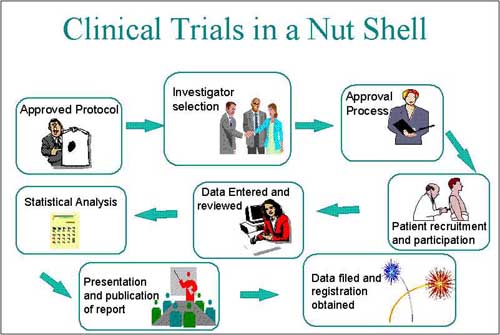
Clinical trials are research studies that test new treatments to see how well they work. Our Pituitary and Skull Base Tumor Center is leading clinical trials investigating new medical therapies for patients with Cushing’s disease and acromegaly. They are also involved in quality-of-life studies aimed at improving long-term follow-up care for patients who need it.

Our experts can help determine which clinical trials are right for you. The following clinical trials for pituitary tumors are currently enrolling new patients.

To learn more about a particular study, choose from the list below. For more information about our research and clinical trials, call us at 212-639-3935, or talk with your doctor.