TP53 Mutations in Functional Corticotroph Tumors Are Linked to Invasion and Worse Clinical Outcome

Abstract

Corticotroph macroadenomas are rare but difficult to manage intracranial neoplasms. Mutations in the two Cushing’s disease mutational hotspots USP8 and USP48 are less frequent in corticotroph macroadenomas and invasive tumors. There is evidence that TP53 mutations are not as rare as previously thought in these tumors. The aim of this study was to determine the prevalence of TP53 mutations in corticotroph tumors, with emphasis on macroadenomas, and their possible association with clinical and tumor characteristics. To this end, the entire TP53 coding region was sequenced in 86 functional corticotroph tumors (61 USP8 wild type; 66 macroadenomas) and the clinical characteristics of patients with TP53 mutant tumors were compared with TP53/USP8 wild type and USP8 mutant tumors. We found pathogenic TP53 variants in 9 corticotroph tumors (all macroadenomas and USP8 wild type). TP53 mutant tumors represented 14% of all functional corticotroph macroadenomas and 24% of all invasive tumors, were significantly larger and invasive, and had higher Ki67 indices and Knosp grades compared to wild type tumors. Patients with TP53 mutant tumors had undergone more therapeutic interventions, including radiation and bilateral adrenalectomy. In conclusion, pathogenic TP53 variants are more frequent than expected, representing a relevant amount of functional corticotroph macroadenomas and invasive tumors. TP53 mutations associated with more aggressive tumor features and difficult to manage disease.

Introduction

Pituitary neuroendocrine tumors are the second most common intracranial neoplasm [1]. They are usually benign, but when aggressive they may be particularly difficult to manage, accompanied by high comorbidity and increased mortality [2]. Corticotroph tumors constitute 6–10% of all pituitary tumors, but they represent up to 45% of aggressive pituitary tumors and pituitary carcinomas [2]. Functional corticotroph tumors cause Cushing’s disease (CD), a debilitating condition accompanied by increased morbidity and mortality due to glucocorticoid excess [3]. Pituitary surgery is the first line treatment, but recurrence is observed in 15–20% of cases of whom most are macroadenomas (with a size of ≥ 10 mm) [4]. Treatment options include repeated pituitary surgery, radiation therapy, medical treatment and bilateral adrenalectomy (BADX) [3]. With respect to the latter, corticotroph tumor progression after bilateral adrenalectomy/Nelson’s syndrome (CTP-BADX/NS) is a frequent severe complication and may present with aggressive tumor behavior [5,6,7].

Corticotroph tumors (including CTP-BADX/NS) carry recurrent somatic mutations in the USP8 gene in ~ 40–60% of cases [8,9,10,11,12,13]. These USP8 mutant tumors are usually found in female patients and are generally less invasive [8,9,10,11]. Additional genetic studies identified a second mutational hotspot in the USP48 gene, but no other driver mutations [14,15,16,17,18]. Focusing on USP8 wild type corticotroph tumors, we recently discovered TP53 mutations in 6 out of 18 cases (33%) [17]. Subsequent reports documented TP53 mutations in small series of mainly aggressive corticotroph tumors and carcinomas [1920].

TP53 is the most commonly mutated gene in malignant neoplasms [2122], including brain and neuroendocrine tumors [2324]. Until our previous report [17], TP53 mutations were only described in isolated cases of aggressive pituitary tumors and carcinomas, and were therefore considered very rare events [81625,26,27,28]. A link between TP53 mutations and an aggressive corticotroph tumor phenotype has been hypothesized, but the heterogeneity and small size of the studies reported did not support significant clinical associations [1719].

To address this, we determined the prevalence of TP53 variants in a cohort of 86 patients with functional corticotroph tumors, including 61 with USP8 wild type tumors, and studied the associations between TP53 mutational status and clinical features.

Methods

Patients and samples

We analyzed tumor samples of 86 adult patients: 61 USP8 wild type and 25 USP8 mutant. Sixty-six patients (46 females, 20 males) were diagnosed with CD between 1994 and 2020 in Germany (Hamburg, Munich, Erlangen, and Tübingen) and Luxembourg. Twenty additional patients (16 females, 4 males) were diagnosed with CTP-BADX/NS, operated and followed up in 7 different international centers (Nijmegen, Munich, Erlangen, Hamburg, Paris, Rio de Janeiro, and Würzburg). Twenty-three out of 86 samples were collected prospectively between 2018 and 2021, and 63 were retrospective cases (of which 42 were investigated in the context of USP8 and USP48 screenings and published elsewhere) [9121317]. Seventy-one tumors were fresh frozen and 15 were formalin fixed paraffin embedded. Paired blood was available for 12 cases. The median follow-up time after initial diagnosis was 44 months (range 2–384 months).

Endogenous Cushing’s syndrome was diagnosed according to typical clinical signs and symptoms and established biochemical procedures suggesting glucocorticoid excess. Clinical features included central obesity, moon face, buffalo hump, muscle weakness, easy bruising, striae, acne, low-impact bone fractures, mood changes, irregular menstruation, infertility and impotency. Biochemical diagnosis was based on increased 24 h urinary free cortisol (UFC) and late-night salivary cortisol levels, and lack of serum cortisol suppression after low-dose dexamethasone test. A pituitary ACTH source was confirmed by > 2.2 pmol/l (10 pg/ml) basal plasma ACTH, > 50% suppression of serum cortisol during an 8 mg dexamethasone test, and ACTH and cortisol response to corticotrophin releasing hormone stimulation.

The clinical and pathological features of our study cohort are summarized in Additional file 1: Supplementary Table 1. All patients underwent pituitary surgery. The presence of an ACTH-producing pituitary tumor was confirmed histologically after surgical resection. Biochemical remission after surgery was defined as postoperative 24 h-UFC levels below or within the normal range, or serum cortisol levels < 5 µg/dl after low-dose (1 or 2 mg) dexamethasone suppression test. Tumor control was achieved when there was no evidence of regrowth or disease recurrence. Tumor invasion was defined as radiological or intraoperative evidence of tumor within the sphenoid and/or cavernous sinuses [29]. CTP-BADX/NS was defined as an expanding pituitary tumor after bilateral adrenalectomy (BADX) following expert consensus recommendations [5].

DNA extraction, TP53 amplification and sequencing

Genomic DNA was extracted using the Maxwell Tissue DNA Kit (Promega), Maxwell Blood DNA kit (Promega) or the FFPE DNA mini kit (Qiagen), depending on the type of sample, as described previously [912]. The entire coding sequence of TP53 (including exons 9β and 9γ) as well as noncoding regions adjacent to each exon were amplified using the GoTaq DNA polymerase (Promega) and specific primers (Additional file 1: Supplementary Table 2). Amplification of USP8 hotspot region and Sanger sequencing were performed as described previously [912]. Chromatograms were analyzed using the Mutation Surveyor v4.0.9 (Soft Genetics). Samples were examined for TP53 coding and splicing variants. Variant position and pathogenicity was investigated in ENSEMBL (www.ensembl.org), the UCSC Genome Browser (http://genome-euro.ucsc.edu), the IARC TP53 database (https://p53.iarc.fr/TP53GeneVariations.aspx), the Catalogue Of Somatic Mutations in Cancer (COSMIC; https://cancer.sanger.ac.uk/cosmic), ClinVar (https://www.ncbi.nlm.nih.gov/clinvar/), PHANTM (http://mutantp53.broadinstitute.org/), the Human Splicing Finder (HSF; http://www.umd.be/HSF3/) and VarSEAK splicing predictor (https://varseak.bio/). Variant frequencies on the general population were obtained from the Allele Frequency Aggregator (ALFA) project [30], the Genome Aggregation Database (gnomAD) [31] and the International Genome Sample Resource 1000Genome project [32]. Throughout the text, variants refer to NC_000017.11 (genomic DNA), ENST00000269305.9 (coding DNA) and ENSP00000269305.4 (protein), following the Human Genome Variation Society (HGVS) standard nomenclature system.

Statistical analysis

Statistical analysis was performed with the software package SPSS v24 (IBM). We used t-test or one-way ANOVA to analyze the association of TP53 variants with age, body mass index; Mann–Whitney U and Kruskal–Wallis to test non-parametric variables, such as tumor size, hormone levels, Ki67 index and p53 score. We corrected the analysis for multiple comparisons with the Bonferroni test. Categorical variables were analyzed using a chi-square test or Fisher exact test when needed. Survival analysis was performed using Kaplan–Meier curves with log-rank tests, and multivariate Cox regression. An exact, two-tailed significance level of P < 0.05 was considered to be statistically significant.

Results

Analysis of TP53 nucleotide variants

We analyzed all TP53 coding exons (including exons 9β and 9γ) and adjacent intronic noncoding sequences in 61 USP8 wild type tumors (49 CD and 12 CTP-BADX/NS). Of these, 13 were microadenomas (< 10 mm) and 48 macroadenomas (≥ 10 mm) at the time of the current operation. A separate group of 25 USP8 mutant tumors (17 CD and 8 CTP-BADX/NS) that were mainly macroadenomas (n = 19) was used for multiple comparison.

We found 59 variants in our cohort: 30 exclusively in USP8 wild type, 21 in USP8 mutant, and 8 in wild type and mutant tumors regardless of USP8 mutational status. No indels in the coding region of TP53 were detected. In addition, we did not find any genetic variant affecting TP53 splicing.

Nine out of 30 variants found in USP8 wild type tumors were either reported in the COSMIC database as pathogenic or absent from the common variant databases (1000Genomes, gnomAD, ALPHA) or had allele frequency < 0.0001. They were all described in cancer series: 5 as pathogenic or likely pathogenic in ClinVar, 2 as variants of uncertain significance (VUS) and 2 were not described in ClinVar (Table 1). All variants are reported to alter protein function and show clear loss of transactivation activity in a yeast based assay (Table 1) [33].

Table 1 Functionally relevant TP53 variants found in 9/86 corticotroph tumors

Seven variants target amino acids within the DNA-binding domain, essential for p53 activity, disrupting S2’ and S7 β-sheets or the L3 loop spatial conformation. The other two [c.1009C > G (p.Arg337Gly) and c.1031 T > C (p.Leu344Pro)] locate in the tetramerization domain and keep p53 protein as monomer impairing its transactivation activity [34]. From the 9 variants, 8 affect highly conserved p53 residues, while in c.1031 T > C (p.Met133Lys) the methionine alternates with leucine or valine among species. This variant alters protein folding, probably reducing DNA affinity [35], while the substitution of a methionine that acts as an alternative start codon abolishes the transcription of isoforms ∆133p53α, ∆133p53β and ∆133p53γ. The 9 variants were detected in nine cases (henceforth referred to as TP53 mutant; Table 1). Two tumors from unrelated patients (#6 and #7) carried the same variant c.818G > A (p.Arg273His), while one tumor (#4) carried two variants (c.718A > G and c.773A > C). Seven variants were found in heterozygosis, while the other two (from patients #1 and #2) in homozygosis. From these two, we only had paired blood/tumor samples from patient #1 and detected the variant only on the tumor sample, indicative of loss of heterozygosity (Additional file 1: Supplementary Fig. 1A). Similarly, we could demonstrate the somatic origin of the TP53 variants in four other patients with paired tumor/blood samples (#3, #5, #6 and #9).

The remaining 21/30 variants found in USP8 wild type and all 21 variants found in the USP8 mutant tumors were described as benign, likely benign or VUS with no evidence of affecting protein function. All tumors with these variants were considered TP53 wild type. From the 21 variants found in the USP8 wild type tumors (henceforth referred to as TP53/USP8 wild type group), 7 were non-synonymous variants, 8 synonymous variants and 6 non-coding variants without splicing effect. From the 21 variants found in the 25 USP8 mutant tumors, nine were synonymous, four non-synonymous and eight non-coding without splicing effect. In addition, eight variants were found in tumors regardless of USP8 mutational status that were not categorized as TP53 mutations. The intronic variant c.782 + 62G > A was found in heterozygosis in 6/70 samples. It was not reported in any database and is not predicted to have any splicing effect. The remaining seven are common variants classified as benign or likely benign in ClinVar and their allele frequencies were similar to those reported for the general population (ALFA, gnomAD and 1000Genome project) (Additional file 1: Supplementary Table 3).

Summarizing, all TP53 mutations were found in the USP8 wild type tumors, leading to a prevalence of 15% in this subgroup.

Clinical presentation of patients with TP53 mutant tumors

Patients with TP53 mutant tumors (n = 9) tended to be diagnosed at older age compared to TP53/USP8 wild type tumors (n = 52) (t-test P = 0.069; Table 2). This was significant after including the USP8 mutant group (n = 25) in the multiple comparison analysis (ANOVA P = 0.024, Table 2) and when TP53/USP8 wild type and USP8 mutant tumors were combined to a single group (TP53 wild type, n = 77; Additional file 1: Supplementary Table 4. We did not observe any sex specific predominance of TP53 mutations in contrast to USP8 mutants that are predominantly found in female patients. Furthermore, we did not find any statistically significant differences in ACTH and cortisol levels (Table2; Additional file 1: Supplementary Table 4).

Table 2 Clinical features of TP53 mutant versus TP53/USP8 wild type and USP8 mutant groups

Patients with TP53 mutant tumors underwent more surgeries and tumor resection was more frequently incomplete compared to TP53/USP8 wild type (Table 2). These patients also underwent a higher number of additional therapeutic procedures (radiation, n = 7; BADX, n = 4; temozolomide, n = 3; pasireotide, n = 2). Only one patient (#4) with TP53 mutant tumor, a 77 year-old man, had a single surgery without any other treatment, but his follow-up was short (< 6 months).

We observed TP53 mutations more frequently in CTP-BADX/NS (4/12, 33%) compared to CD (5/49, 10%), trending towards statistically significant difference (Fischer exact test P = 0.065 for TP53 mutant vs. TP53/USP8 wild type, P = 0.060 for comparison among the 3 groups; Table 2).

The TP53 mutant group associated with higher disease-specific mortality and shorter survival than USP8 mutant or TP53/USP8 wild type groups (log rank test, P = 0.023, Fig. 1). Three patients with TP53 mutant tumors (all CTP-BADX/NS) died of disease-related deaths: two from severe cerebral hemorrhage after surgery and stereotactic radiation and one from uncontrolled disease after five failed operations, radiotherapy (gamma knife, fractionated radiation) and chemotherapy (temozolomide, bevacizumab) at the ages of 75, 80 and 37, respectively. Ten-year survival was 27% for patients with TP53 mutant tumors, 100% for TP53/USP8 wild type and 86% for USP8 mutant. In our cohort, survival did not differ after adjusting for age (HR 7.7, 95%CI 0.6–107.7, P = 0.127).
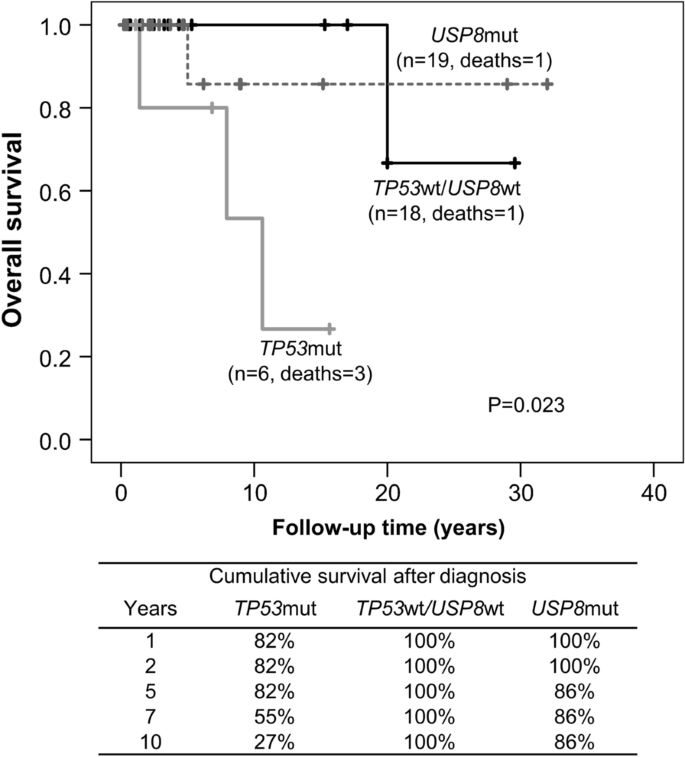
Fig. 1

figure 1

Kaplan–Meier curve showing overall survival in patients with TP53 mutant/USP8 wild type, USP8 mutant/TP53 wild type, and TP53 wild type/USP8 wild type corticotroph tumors. The table underneath the graph shows the 10-year cumulative survival after diagnosis

Tumor samples from prior surgeries were available from one TP53 mutant case (#8, Table 1). This male patient had his first pituitary surgery for CD when he was 30 years old and was treated with γ-knife one year later. He then underwent two more pituitary surgeries and BADX until the age of 35. He developed CTP-BADX/NS with para- and retrosellar tumor extension along with panhypopituitarism and underwent two more pituitary surgeries before dying at the age of 38 due to complications of the disease. We detected the TP53 variant c.1009C > G (p.Arg337Gly) in all available tumor specimens, including his first and latest surgeries (Additional file 1: Supplementary Fig. 1B).

No statistical association was found between clinical data and any of the 8 common variants.

Characteristics of TP53 mutant corticotroph tumors

All TP53 mutations were found in macroadenomas (9/66; Table 3). TP53 mutant tumors were larger that TP53/USP8 wild type (mm median [IQR] 20.0 [14.0] vs. 15.0 [14.3]), but this did not reach statistical significance (Table 3). Multiple comparison analysis showed that the difference in tumor size is significant only comparing TP53 mutant with USP8 mutant (median [IQR] 23.3 [14.0] vs. 14 [7.3] mm; Kruskal–Wallis P = 0.019; Bonferroni corrected P = 0.018).

Table 3 Tumor features of TP53 mutant versus TP53/USP8 wild type and USP8 mutant groups

Parasellar invasion was reported in 34 out of 64 cases, for which this information was available, and it was more common in TP53 mutant tumors (100% vs. 53% and 55% for TP53/USP8 wild type and USP8 mutant, respectively; Fischer exact test P = 0.006). TP53 mutant tumors had higher Knosp grade (Kruskal–Wallis P = 0.011) with the majority being Knosp 4 (Table 3, Additional file 1: Supplementary Table 4).

Ki67 proliferation index was available for 36 cases (6 TP53 mutant). Five out of six TP53 mutant tumors had Ki67 ≥ 3% and the overall Ki67 was higher than in the wild type tumors (Kruskal–Wallis P = 0.01; Bonferroni corrected P = 0.008 for TP53/USP8 wild type) (Table 3). Ki67 ≥ 10% was reported in 6 tumors, from which 5 were TP53 mutant (Fischer exact test P < 0.0001; the remaining case was TP53/USP8 wild type).

We had information on p53 immunostaining from 9 cases (all macroadenomas), four of which TP53 mutant: 3 tumors (from patients #5, 6 and 9) showed high p53 immunoreactivity, while the one (from patient #3) carrying a nonsense variant leading to a truncated protein was p53 negative. The five TP53 wild type cases showed isolated nuclear staining in < 1–3% of cells.

Summarizing, TP53 mutations were significantly associated with features related to a more aggressive tumor behavior, such as incomplete tumor resection, more frequent parasellar invasion, higher Knosp grade, and higher Ki67 proliferation index (Table 3; Additional file 1: Supplementary Table 4).

Discussion

Herein, we investigated the prevalence of TP53 mutations by screening a large cohort of 61 functional corticotroph tumors with USP8 wild type status, and found variants altering protein function in 15% of cases. We did not detect TP53 mutations in a separate group of 25 USP8 mutant tumors, which is in concordance with previously published small next-generation sequencing series [81819].

Since we focused on USP8 wild type tumors, macroadenomas were overrepresented in our cohort. Consequently, it should be noted that the prevalence of TP53 mutations is expected to be lower in the general CD population. In fact, ~ 50% of corticotroph tumors carry USP8 mutations, which others and we have shown to be mutually exclusive. Corticotroph tumors with USP8 mutations are associated with female predominance, younger age at presentation, and less invasiveness (despite shorter time to relapse) [911131836]. In contrast, TP53 mutant tumors were diagnosed mostly at older age, did not show sex predominance and were larger and more invasive, with lower complete resection rate. None of the 19 microadenomas included in our study carried TP53 mutations. Still, we need to acknowledge that since no sample was microdissected we may have lost microadenoma cases with TP53 mutations. Instead, we found TP53 mutations in 9/66 macroadenomas (14%) and 8/34 (24%) invasive tumors, supporting the findings from smaller series [1719].

Tumor size at presentation or invasiveness do not reliably predict aggressiveness. Instead, the European Society of Endocrinology Clinical Practice Guidelines for the management of aggressive pituitary tumors and carcinomas proposed a definition of pituitary tumor aggressiveness based on rapid or clinically relevant tumor growth despite optimal therapeutic options, along with bone invasion [37]. A recent study in a series of 9 aggressive pituitary tumors and carcinomas carrying ATRX mutations reported a high frequency of missense TP53 variants (5/9, 55.6%), further suggesting a link between TP53 mutational status and unfavorable outcome [20]. We do not have exact information on changes of tumor growth for the majority of our cases, but the higher number of surgical and radiation interventions, the higher Knosp grades, and the increased mortality rate indicate that patients with TP53 mutant tumors obviously follow a more aggressive disease course.

Ki67 proliferation index together with p53 immunostaining and mitotic count have been suggested as histological markers of pituitary tumor aggressiveness [2938]. In our series, Ki67 was significantly higher in TP53 mutant tumors, reinforcing our prior observation of a higher proportion of TP53 mutant tumors in the Ki67 ≥ 3 group [17]. We had limited information on p53 immunohistochemistry, since this measure is not routinely performed in our collaborative centers. Nevertheless, in the few tumors with known p53 immunopositivity, it was higher in the TP53 mutant group, which is in concordance with a previous study reporting high p53 immunoreactivity in all TP53 mutant tumors [19].

A mutagenic action of radiation on TP53 has been hypothesized by small series on radiation-induced tumors. For instance, TP53 mutations were reported in 58% of radiation-induced sarcomas [39], while a meta-analysis reported TP53 mutations in 14/30 radiation-induced gliomas [40]. A previous study reported a case with frameshift TP53 mutation in the CTP-BADX/NS tumor, but not in the initial CD surgeries, and the mutation was therefore suspected to be induced by radiotherapy [41]. In our series, however, 4 out of 7 TP53 mutant tumors were obtained before radiation.

In their case report, Pinto et al. suggested that TP53 mutations are acquired during tumorigenesis and condition tumor evolution [41]. In contrast, Casar-Borota et al. and Uzilov et al. reported high allele fraction of TP53 mutations, indicating that they are not a late event in corticotroph tumorigenesis [1920]. In addition, Uzilov et al. reported TP53 mutations in all tumor specimens from their two TP53 mutant cases with multiple surgeries [19]. Similarly, in our series we had tissue from multiple pituitary surgeries from one patient and found the TP53 variant in all samples (CD and CTP-BADX/NS), including specimens obtained before radiotherapy. Taken together, these observations suggest that in most cases, TP53 mutations may appear early during tumor development.

A limitation of our study is the short follow-up of patients who were prospectively included. Moreover, material from repeated surgeries was lacking from most patients with TP53 mutant tumors, hampering the examination of tumor evolution in these patients. Similarly, we had limited access to blood samples, so we could not demonstrate the somatic origin for all variants. Nevertheless, the older age at initial diagnosis of CD in patients with TP53 mutant tumors (53 ± 19.5 years old, with the youngest patient diagnosed at the age of 30) and the absence of additional neoplasias during follow-up also support a somatic instead of a germline origin. Furthermore, conditions related to germline TP53 mutations, such as Li-Fraumeni syndrome, very rarely present with pituitary tumor [42]. To our knowledge, the only published case so far was a pediatric patient with an aggressive lactotroph tumor [43].

In addition to the TP53 mutations, we detected several common variants. Variants rs59758982 and rs1042522 have been associated with increased cancer susceptibility [4445]. In some cancer types, the very frequent rs1042522 c.215G > C (p.Pro72Arg) alternative variant correlated to more efficient induction of apoptosis by DNA-damaging chemotherapeutic drugs, growth suppression and higher metastatic potential [46,47,48]. In nonfunctioning pituitary tumors, alternative allele C (leading to p.Arg72) was related to early age at presentation and reduced p21 expression [49]. Very recently, an overrepresentation of the rs1042522 alternative allele C (p.Arg72) was reported in 9 out of 10 corticotroph neoplasias including 5 functional tumors (allele frequency 0.900, vs 0.714 in Latino/admixed American in gnomAD [31]) without any association with clinical features [50]. In our cohort, we did not detect different allele frequencies in any of the investigated common variants (including rs1042522) compared with public databases, nor statistical association with any clinical variable, rendering their contribution to corticotroph pathophysiology unlikely.

Conclusion

Screening a large corticotroph tumor series revealed that TP53 mutations are more frequent than previously considered. Furthermore, we show that patients with TP53 mutant tumors had higher number of surgeries, more invasive tumors, and worse disease outcome. Our study provides evidence that patients with pathogenic or function altering variants may require more intense treatment and extended follow-up, and suggests screening for TP53 variants in macroadenomas with wild type USP8 status. Further work is needed to determine the potential use of TP53 status as a predictor of disease outcome.

Availability of data and materials

The authors declare that the relevant data supporting the conclusions of this article are included within the article and its supplementary information file. Additional clinical data are available from the corresponding authors MT and LGPR upon reasonable request.

Abbreviations

CD:
Cushing’s disease
BADX:
Bilateral adrenalectomy
CTP-BADX/NS:
Corticotroph tumor progression after bilateral adrenalectomy/Nelson’s syndrome
ACTH:
Adrenocorticotropic hormone
SD:
Standard deviation
IQR:
Interquartile range
HR:
Hazard ratio

References

  1. Ostrom QT, Gittleman H, Truitt G, Boscia A, Kruchko C, Barnholtz-Sloan JS (2018) CBTRUS statistical report: primary brain and other central nervous system tumors diagnosed in the United States in 2011–2015. Neuro Oncol 20:iv1-86

    PubMed PubMed Central Article Google Scholar

  2. McCormack A, Dekkers OM, Petersenn S, Popovic V, Trouillas J, Raverot G et al (2018) Treatment of aggressive pituitary tumours and carcinomas: results of a European society of endocrinology (ESE) survey 2016. Eur J Endocrinol 178:265–276

    CAS PubMed Article Google Scholar

  3. Fleseriu M, Auchus R, Bancos I, Ben-Shlomo A, Bertherat J, Biermasz NR et al (2021) Consensus on diagnosis and management of Cushing’s disease: a guideline update. Lancet Diabetes Endocrinol 9:847–875

    PubMed Article Google Scholar

  4. Dimopoulou C, Schopohl J, Rachinger W, Buchfelder M, Honegger J, Reincke M et al (2013) Long-term remission and recurrence rates after first and second transsphenoidal surgery for Cushing’s disease: care reality in the Munich metropolitan region. Eur J Endocrinol 170:283–292

    PubMed Article CAS Google Scholar

  5. Reincke M, Albani A, Assie G, Bancos I, Brue T, Buchfelder M et al (2021) Corticotroph tumor progression after bilateral adrenalectomy (Nelson’s syndrome): systematic review and expert consensus recommendations. Eur J Endocrinol 184:P1-16

    CAS PubMed PubMed Central Article Google Scholar

  6. Fountas A, Lim ES, Drake WM, Powlson AS, Gurnell M, Martin NM et al (2020) Outcomes of patients with Nelson’s syndrome after primary treatment: a multicenter study from 13 UK pituitary centers. J Clin Endocrinol Metab 105:1527–1537

    Article Google Scholar

  7. Kemink SA, Wesseling P, Pieters GF, Verhofstad AA, Hermus AR, Smals AG (1999) Progression of a Nelson’s adenoma to pituitary carcinoma; a case report and review of the literature. J Endocrinol Invest 22:70–75

    CAS PubMed Article Google Scholar

  8. Reincke M, Sbiera S, Hayakawa A, Theodoropoulou M, Osswald A, Beuschlein F et al (2015) Mutations in the deubiquitinase gene USP8 cause Cushing’s disease. Nat Genet 47:31–38

    CAS PubMed Article Google Scholar

  9. Pérez-Rivas LG, Theodoropoulou M, Ferraù F, Nusser C, Kawaguchi K, Stratakis CA et al (2015) The Gene of the ubiquitin-specific protease 8 is frequently mutated in adenomas causing Cushing’s disease. J Clin Endocrinol Metab 100:E997-1004

    PubMed PubMed Central Article Google Scholar

  10. Ma Z-Y, Song Z-J, Chen J-H, Wang Y-F, Li S-Q, Zhou L-F et al (2015) Recurrent gain-of-function USP8 mutations in Cushing’s disease. Cell Res 25:306–317

    CAS PubMed PubMed Central Article Google Scholar

  11. Hayashi K, Inoshita N, Kawaguchi K, Ardisasmita AI, Suzuki H, Fukuhara N et al (2016) The USP8 mutational status may predict drug susceptibility in corticotroph adenomas of Cushing’s disease. Eur J Endocrinol 174:213–226

    CAS PubMed Article Google Scholar

  12. Pérez-Rivas LG, Theodoropoulou M, Puar TH, Fazel J, Stieg MR, Ferraù F et al (2018) Somatic USP8 mutations are frequent events in corticotroph tumor progression causing Nelson’s tumor. Eur J Endocrinol 178:59–65

    Article Google Scholar

  13. Albani A, Pérez-Rivas LG, Dimopoulou C, Zopp S, Colón-Bolea P, Roeber S et al (2018) The USP8 mutational status may predict long-term remission in patients with Cushing’s disease. Clin Endocrinol (Oxf) 89:454–458

    CAS Article Google Scholar

  14. Bi WL, Horowitz P, Greenwald NF, Abedalthagafi M, Agarwalla PK, Gibson WJ et al (2017) Landscape of genomic alterations in pituitary adenomas. Clin Cancer Res 23:1841–1851

    CAS PubMed Article Google Scholar

  15. Song Z-J, Reitman ZJ, Ma Z-Y, Chen J-H, Zhang Q-L, Shou X-F et al (2016) The genome-wide mutational landscape of pituitary adenomas. Cell Res 26:1255–1259

    CAS PubMed PubMed Central Article Google Scholar

  16. Chen J, Jian X, Deng S, Ma Z, Shou X, Shen Y et al (2018) Identification of recurrent USP48 and BRAF mutations in Cushing’s disease. Nat Commun 9:3171

    PubMed PubMed Central Article CAS Google Scholar

  17. Sbiera S, Perez-Rivas LG, Taranets L, Weigand I, Flitsch J, Graf E et al (2019) Driver mutations in USP8 wild-type Cushing’s disease. Neuro Oncol 21:1273–1283

    CAS PubMed PubMed Central Article Google Scholar

  18. Neou M, Villa C, Armignacco R, Jouinot A, Raffin-Sanson ML, Septier A et al (2020) Pangenomic classification of pituitary neuroendocrine tumors. Cancer Cell 37:123-134.e5

    CAS PubMed Article Google Scholar

  19. Uzilov AV, Taik P, Cheesman KC, Javanmard P, Ying K, Roehnelt A et al (2021) USP8 and TP53 drivers are associated with CNV in a corticotroph adenoma cohort enriched for aggressive tumors. J Clin Endocrinol Metab 106:826–842

    PubMed Article Google Scholar

  20. Casar-Borota O, Boldt HB, Engström BE, Andersen MS, Baussart B, Bengtsson D et al (2021) Corticotroph aggressive pituitary tumors and carcinomas frequently harbor ATRX mutations. J Clin Endocrinol Metab 106:1183–1194

    PubMed Article Google Scholar

  21. Campbell PJ, Getz G, Korbel JO, Stuart JM, Jennings JL, Stein LD et al (2020) Pan-cancer analysis of whole genomes. Nature 578:82–93

    Article CAS Google Scholar

  22. Bouaoun L, Sonkin D, Ardin M, Hollstein M, Byrnes G, Zavadil J et al (2016) TP53 variations in human cancers: new lessons from the IARC TP53 database and genomics data. Hum Mutat 37:865–876

    CAS PubMed Article Google Scholar

  23. Horbinski C, Ligon KL, Brastianos P, Huse JT, Venere M, Chang S et al (2019) The medical necessity of advanced molecular testing in the diagnosis and treatment of brain tumor patients. Neuro Oncol 21:1498–1508

    CAS PubMed PubMed Central Article Google Scholar

  24. van Riet J, van de Werken HJG, Cuppen E, Eskens FALM, Tesselaar M, van Veenendaal LM et al (2021) The genomic landscape of 85 advanced neuroendocrine neoplasms reveals subtype-heterogeneity and potential therapeutic targets. Nat Commun 12:4612

    PubMed PubMed Central Article CAS Google Scholar

  25. Herman V, Drazin NZ, Gonsky R, Melmed S (1993) Molecular screening of pituitary adenomas for gene mutations and rearrangements. J Clin Endocrinol Metab 77:50–55

    CAS PubMed Google Scholar

  26. Levy A, Hall L, Yeudall WA, Lightman SL (1994) p53 gene mutations in pituitary adenomas: rare events. Clin Endocrinol (Oxf) 41:809–814

    CAS Article Google Scholar

  27. Tanizaki Y, Jin L, Scheithauer BW, Kovacs K, Roncaroli F, Lloyd RV (2007) P53 gene mutations in pituitary carcinomas. Endocr Pathol 18:217–222

    CAS PubMed Article Google Scholar

  28. Kawashima ST, Usui T, Sano T, Iogawa H, Hagiwara H, Tamanaha T et al (2009) P53 gene mutation in an atypical corticotroph adenoma with Cushing’s disease. Clin Endocrinol (Oxf) 2009:656–657

    Article Google Scholar

  29. Trouillas J, Roy P, Sturm N, Dantony E, Cortet-Rudelli C, Viennet G et al (2013) A new prognostic clinicopathological classification of pituitary adenomas: a multicentric case-control study of 410 patients with 8 years post-operative follow-up. Acta Neuropathol 126:123–135

    PubMed Article Google Scholar

  30. Phan J, Jin Y, Zhang H, Qiang W, Shekhtman E, Shao D et al (2020) ALFA: allele frequency aggregator: national center for biotechnology information, U.S. National Library of Medicine. Available from www.ncbi.nlm.nih.gov/snp/docs/gsr/alfa/

  31. Karczewski KJ, Francioli LC, Tiao G, Cummings BB, Alföldi J, Wang Q et al (2020) The mutational constraint spectrum quantified from variation in 141,456 humans. Nature 581:434–443

    CAS PubMed PubMed Central Article Google Scholar

  32. Fairley S, Lowy-Gallego E, Perry E, Flicek P (2020) The International genome sample resource (IGSR) collection of open human genomic variation resources. Nucleic Acids Res 48:D941–D947

    CAS PubMed Article Google Scholar

  33. Kato S, Han S-Y, Liu W, Otsuka K, Shibata H, Kanamaru R et al (2003) Understanding the function–structure and function–mutation relationships of p53 tumor suppressor protein by high-resolution missense mutation analysis. Proc Natl Acad Sci 100:8424–8429

    CAS PubMed PubMed Central Article Google Scholar

  34. Kawaguchi T, Kato S, Otsuka K, Watanabe G, Kumabe T, Tominaga T et al (2005) The relationship among p53 oligomer formation, structure and transcriptional activity using a comprehensive missense mutation library. Oncogene 24:6976–6981

    CAS PubMed Article Google Scholar

  35. Greenblatt MS, Chappuis PO, Bond JP, Hamel N, Foulkes WD (2001) TP53 mutations in breast cancer associated with BRCA1 or BRCA2 germ-line mutations: distinctive spectrum and structural distribution. Cancer Res 61:4092–4097

    CAS PubMed Google Scholar

  36. Sesta A, Cassarino MF, Terreni M, Ambrogio AG, Libera L, Bardelli D et al (2020) Ubiquitin-Specific Protease 8 mutant corticotrope adenomas present unique secretory and molecular features and shed light on the role of ubiquitylation on ACTH processing. Neuroendocrinology 110:119–129

    CAS PubMed Article Google Scholar

  37. Raverot G, Burman P, McCormack A, Heaney A, Petersenn S, Popovic V et al (2018) European society of endocrinology clinical practice guidelines for the management of aggressive pituitary tumours and carcinomas. Eur J Endocrinol 178:G1-24

    CAS PubMed Article Google Scholar

  38. Thapar K, Scheithauer BW, Kovacs K, Pernicone PJ, Laws ER (1996) p53 expression in pituitary adenomas and carcinomas: correlation with invasiveness and tumor growth fractions. Neurosurgery 38:765–70

    CAS PubMed Article Google Scholar

  39. Gonin-Laurent N, Gibaud A, Huygue M, Lefèvre SH, Le Bras M, Chauveinc L et al (2006) Specific TP53 mutation pattern in radiation-induced sarcomas. Carcinogenesis 27:1266–1272

    CAS PubMed Article Google Scholar

  40. Whitehouse JP, Howlett M, Federico A, Kool M, Endersby R, Gottardo NG (2021) Defining the molecular features of radiation-induced glioma: a systematic review and meta-analysis. Neuro-Oncol Adv 3:1–16

    Google Scholar

  41. Pinto EM, Siqueira SACC, Cukier P, Fragoso MCBVCBV, Lin CJ, De Mendonca BB et al (2011) Possible role of a radiation-induced p53 mutation in a Nelson’s syndrome patient with a fatal outcome. Pituitary 14:400–404

    PubMed Article Google Scholar

  42. Orr BA, Clay MR, Pinto EM, Kesserwan C (2020) An update on the central nervous system manifestations of Li–Fraumeni syndrome. Acta Neuropathol 139:669–87

    CAS PubMed Article Google Scholar

  43. Birk H, Kandregula S, Cuevas-Ocampo A, Wang CJ, Kosty J, Notarianni C (2022) Pediatric pituitary adenoma and medulloblastoma in the setting of p53 mutation: case report and review of the literature. Childs Nerv Syst. https://doi.org/10.1007/s00381-022-05478-8

    Article Google Scholar

  44. Granja F, Morari J, Morari EC, Correa LAC, Assumpção LVM, Ward LS (2004) Proline homozygosity in codon 72 of p53 is a factor of susceptibility for thyroid cancer. Cancer Lett 210:151–157

    CAS PubMed Article Google Scholar

  45. Sagne C, Marcel V, Amadou A, Hainaut P, Olivier M, Hall J (2013) A meta-analysis of cancer risk associated with the TP53 intron 3 duplication polymorphism (rs17878362): geographic and tumor-specific effects. Cell Death Dis 4:e492

    CAS PubMed PubMed Central Article Google Scholar

  46. Katkoori VR, Jia X, Shanmugam C, Wan W, Meleth S, Bumpers H et al (2009) Prognostic significance of p53 Codon 72 polymorphism differs with race in colorectal adenocarcinoma. Clin Cancer Res 15:2406–2416

    CAS PubMed PubMed Central Article Google Scholar

  47. Dumont P, Leu JIJ, Della Pietra AC, George DL, Murphy M (2003) The codon 72 polymorphic variants of p53 have markedly different apoptotic potential. Nat Genet 33:357–365

    CAS PubMed Article Google Scholar

  48. Basu S, Gnanapradeepan K, Barnoud T, Kung CP, Tavecchio M, Scott J et al (2018) Mutant p53 controls tumor metabolism and metastasis by regulating PGC-1α. Genes Dev 32:230–243

    CAS PubMed PubMed Central Article Google Scholar

  49. Yagnik G, Jahangiri A, Chen R, Wagner JR, Aghi MK (2017) Role of a p53 polymorphism in the development of nonfunctional pituitary adenomas. Mol Cell Endocrinol 446:81–90

    CAS PubMed PubMed Central Article Google Scholar

  50. Andonegui-Elguera S, Silva-Román G, Peña-Martínez E, Taniguchi-Ponciano K, Vela-Patiño S, Remba-Shapiro I et al (2022) The genomic landscape of corticotroph tumors: from silent adenomas to ACTH-secreting carcinomas. Int J Mol Sci. 23:4861

    CAS PubMed PubMed Central Article Google Scholar

Download references

Funding

Open Access funding enabled and organized by Projekt DEAL. The study was supported by the Deutsche Forschungsgemeinschaft (DFG) (Project number: 314061271-TRR 205 to MF, MR and MT; FA 466/5-1 to MF; DE 2657/1-1 to TD), Metiphys program of the LMU Medical Faculty (to AA), Else Kröner-Fresenius Stiftung (Project number: 2012_A103 and 2015_A228 to MR) and Fundação de Amparo à Pesquisa do Estado do Rio de Janeiro (FAPERJ; Project number: E-26/211.294/2021 to MRG).

Author information

Authors and Affiliations

  1. Medizinische Klinik und Poliklinik IV, Klinikum der Universität München, Ludwig-Maximilians-Universität München, Munich, GermanyLuis Gustavo Perez-Rivas, Julia Simon, Adriana Albani, Sicheng Tang, Günter K. Stalla, Martin Reincke & Marily Theodoropoulou
  2. Center for Neuropathology and Prion Research, Ludwig-Maximilians-Universität München, Munich, GermanySigrun Roeber & Jochen Herms
  3. Department of Endocrinology, Center for Rare Adrenal Diseases, Assistance Publique-Hôpitaux de Paris, Hôpital Cochin, Paris, FranceGuillaume Assié
  4. Université de Paris, Institut Cochin, Inserm U1016, CNRS UMR8104, F-75014, Paris, FranceGuillaume Assié
  5. Division of Endocrinology and Diabetes, Department of Internal Medicine I, University Hospital, University of Würzburg, Würzburg, GermanyTimo Deutschbein & Martin Fassnacht
  6. Medicover Oldenburg MVZ, Oldenburg, GermanyTimo Deutschbein
  7. Division of Endocrinology, Hospital Universitário Clementino Fraga Filho, Rio de Janeiro, BrazilMonica R. Gadelha
  8. Division of Endocrinology, Department of Internal Medicine, Radboud University Medical Centre, Nijmegen, The NetherlandsAd R. Hermus
  9. Medicover Neuroendocrinology, Munich, GermanyGünter K. Stalla
  10. Service d’Endocrinologie, Centre Hospitalier du Nord, Ettelbruck, LuxembourgMaria A. Tichomirowa
  11. Department of Neurosurgery, Universitätskrankenhaus Hamburg-Eppendorf, Hamburg, GermanyRoman Rotermund & Jörg Flitsch
  12. Department of Neurosurgery, University of Erlangen-Nürnberg, Erlangen, GermanyMichael Buchfelder
  13. Department of Neurosurgery, University of Tübingen, Tübingen, GermanyIsabella Nasi-Kordhishti & Jürgen Honegger
  14. Neurochirurgische Klinik und Poliklinik, Klinikum der Universität München, Ludwig-Maximilians-Universität München, Munich, GermanyJun Thorsteinsdottir
  15. Institute of Neuropathology, University Medical Center Hamburg-Eppendorf, Hamburg, GermanyWolfgang Saeger

Contributions

LPGR and MT designed the study. LPGR, JS, AA and ST implemented the study. LGPR did the data analysis. SR, GA, TD, MF, MRG, ARH, GKS, MAT, RR, JF, MB, INK, JH, JT, WS, JH and MR provided patient materials and data. LGPR and MT interpreted the data and composed the main draft of the manuscript. All authors have seen, corrected and approved the final draft.

Corresponding authors

Correspondence to Luis Gustavo Perez-Rivas or Marily Theodoropoulou.

Ethics declarations

Ethics approval and consent to participate

The study was performed in accordance with the Declaration of Helsinki and was approved by the ethics committee of the LMU Munich (Nr. 643-16). All patients provided written informed consent.

Competing interests

The authors declare that they have no competing interests.

Additional information

Publisher’s Note

Springer Nature remains neutral with regard to jurisdictional claims in published maps and institutional affiliations.

Supplementary Information

Additional file 1 of TP53 mutations in functional corticotroph tumors are linked to invasion and worse clinical outcome

Skip to file navigationSkip to generic navigation
1
Supplementary Table 1
. Description of study cohort.
Variable
mean/median
SD/IQR
Total n
Age at diagnosis (years), mean ±SD, [total n]
42
±15.2
86
Sex (female), n (%), [total n]
62
(72%)
86
BMI (kg/m2), mean ±SD, [total n]
28.9
±6.3
74
Disease presentation, n (%), [total n]
86
Cushing
66
(77%)
Nelson
20
(23%)
Number of prior pituitary surgeries, n (%), [total n]
80
0
50
(63%)
1
23
(29%)
≥2
7
(9%)
Total
number of pituitary surgeries, n (%), [total n]
82
1
46
(56%)
2
23
(28%)
≥3
13
(16%)
Complete tumor resection, n (%), [total n]
32
(60%)
53
Postoperative remission, n (%), [total n]
46
(59%)
78
Postoperative tumor control, n (%), [total
n]
34
(60%)
57
Radiation therapy, n (%), [total n]
24
(34%)
70
Radiation therapy before sample collection, n (%), [total n]
7
(13%)
53
Bilateral adrenalectomy, n (%), [total n]
23
(27%)
86
Pharmacological treatments
a
,
n (%), [total n]
18
(42%)
43
Preoperative hormone levels
Plasma ACTH (pg/mL), median (IQR)
98
(570.4)
75
Serum cortisol (
μ
g/dl), median (range)
29.1
(168.6)
50
24h
urinary free cortisol (
μ
g/24h), median (range)
432.5
(598.3)
30
Serum cortisol after low
dose DST (
μ
g/dl),
median (IQR)
20
(20.7)
46
Postoperative hormone levels
Plasma ACTH (pg/mL), median (IQR)
20
(107.6)
57
Serum cortisol nadir (
μ
g/dl), median (range)
8.8
(19.4)
58
Tumo
r size (mm), median (IQR), [total n]
15
(13.0)
85
Microadenoma
19
(22%)
Macroadenoma
66
(78%)
Granulation, n (%), [total n]
30
Sparsely
9
(30%)
Densely
21
(70%)
Ki67 index, median (IQR), [total n]
2.0
(3.8)
36
Ki67 index ≥3%, n (%)
14
(39%)
36
p53 positivity, median (IQR), [total n]
1
(26.5)
9
Invasion, n (%),
[total n]
34
(53%)
64
Hardy grade, n (%), [total n]
61
1
13
(21%)
2
22
(36%)
3
18
(30%)
4
8
(13%)
Knosp grade, n (%), [total n]
35
0
5
(14%)
1
12
(34%)
2
3
(9%)
3
7
(20%)
4
8
(7%)
Disease
specific death, n (%), [total
n]
5
(9%)
58
a
Pharmacological treatments: pasireotide (n=6), ketoconazole (n=5), mitotane (n=5), temozolamide
(n=4) metyrapone (n=5), cabergoline (n=3), bevazizumab (n=1). Five patients received >1
pharmacological agent.
2
Supplementary Table 2
. Primers used for
TP53
amplification and Sanger sequencing.
Primer
Sequence
DNA source
TP53
1
5′
TCTCATGCTGGATCCCCACT
3′
FF, FFPE
TP53
1rv
5′
GACCAGGTCCTCAGCC
3′
FFPE
TP53
2fw
5′
GGGGGCTGAGGACCTGGT
3′
FFPE
TP53
2rv
5′
ATACGGCCAGGCATTGAAGT
3′
FFPE
TP53
2
5′
AGAGGAATCCCAAAGTTCCA
3′
FF
TP53
3
5′
GTGCCCTGACTTTCAACTC
3′
FF, FFPE
TP53
3rv
5′
GGCAACCAGCCCTGTC
3′
FFPE
TP53
4fw
5′
GCCTCTGATTCCTCACTGAT
3′
FFPE
TP53
4
5′
CAGGAGAAAGCCCCCCTACT
3′
FF, FFPE
TP53
5
5′
CTTGCCACAGGTCTCCCCAA
3′
FF, FFPE
TP53
6
5′
AGGGGTCAGAGGCAAGCAGA
3′
FF, FFPE
TP53
7
5′
TAGGACCTGATTTCCTTA
3′
FF, FFPE
TP53
7rv
5′
AGTGAATCTGAGGCATAAC
3′
FFPE
TP53
7Bfw
5′
TGGAGGAGACCAAGGGTG
3′
FFPE
TP53
7Brv
5′
CGGCATTTTGAGTGTTAGAC
3′
FFPE
TP53
8
5′
TAAGCTATGATGTTCCTTAG
3′
FF, FFPE
TP53
8rv
5′
GACTGTTTTACCTGCAATTG
3′
FFPE
TP53
9
5′
CAATTGTAACTTGAACCATC
3′
FF, FFPE
TP53
10
5′
GGATGAGAATGGAATCCTAT
3′
FF, FFPE
TP53
11
5′
TCTCACTCATGTGATGTCATC
3′
FF, FFPE
TP53
12
5′
CACACCTATTGCAAGCAAGG
3′
FF, FFPE
FF, fresh frozen; FFPE, formalin
fixed
paraffin embedded.

Additional file 1

Supplementary Table 1: Description of study cohort. Supplementary Table 2: Primers used for TP53 amplification and Sanger sequencing. Supplementary Table 3: Common TP53 variants in the study cohort. Supplementary Table 4: Comparison of TP53 mutant versus TP53 wild type group. Supplementary Figure 1. Chromatograms showing the TP53 variants found in the corticotroph tumor of patient #1 and #8 (Table 1). A. The variant c.398T>A was present in homozygocity in the tumor and absent in the blood. B. The variant c.1009C>G is detected in all available surgical specimens in this patient. First and 2nd surgeries were Cushing’s disease tumors and 4th and 5th CTP-BADX/NS.


Persistent vs Recurrent Cushing’s Disease Diagnosed Four Weeks Postpartum

Abstract

Background. Cushing’s disease (CD) recurrence in pregnancy is thought to be associated with estradiol fluctuations during gestation. CD recurrence in the immediate postpartum period in a patient with a documented dormant disease during pregnancy has never been reported. Case Report. A 30-year-old woman with CD had improvement of her symptoms after transsphenoidal resection (TSA) of her pituitary lesion. She conceived unexpectedly 3 months postsurgery and had no symptoms or biochemical evidence of recurrence during pregnancy. After delivering a healthy boy, she developed CD 4 weeks postpartum and underwent a repeat TSA. Despite repeat TSA, she continued to have elevated cortisol levels that were not well controlled with medical management. She eventually had a bilateral adrenalectomy. Discussion. CD recurrence may be higher in the peripartum period, but the link between pregnancy and CD recurrence and/or persistence is not well studied. Potential mechanisms of CD recurrence in the postpartum period are discussed below. Conclusion. We describe the first report of recurrent CD that was quiescent during pregnancy and diagnosed in the immediate postpartum period. Understanding the risk and mechanisms of CD recurrence in pregnancy allows us to counsel these otherwise healthy, reproductive-age women in the context of additional family planning.

1. Introduction

Despite a relatively high prevalence of Cushing’s syndrome (CS) in women of reproductive age, it is rare for pregnancy to occur in patients with active disease [1]. Hypercortisolism leads to infertility through impairment of the hypothalamic gonadal axis. Additionally, while Cushing’s disease (CD) is the leading etiology of CS in nonpregnant adults, it is less common in pregnancy, accounting for only 30–40% of the CS cases in pregnant women [2]. It has been suggested that in CD there is hypersecretion of both cortisol and androgens, impairing fertility to a greater extent, while in CS of an adrenal origin, hypersecretion is almost exclusively of cortisol with minimal androgen production [3]. Regardless of the cause, active CS in pregnancy is associated with a higher maternal and fetal morbidity, hence, prompt diagnosis and treatment are essential.

Pregnancy is considered a physiological state of hypercortisolism, and the peripartum period is a common time for women to develop CD [34]. A recent study reported that 27% of reproductive-age women with CD had onset associated with pregnancy [4]. The high rate of pregnancy-associated CD suggests that the stress of pregnancy and peripartum pituitary corticotroph hyperstimulation may promote or accelerate pituitary tumorigenesis [46]. During pregnancy, the circulating levels of corticotropin-releasing hormone (CRH) in the plasma increase exponentially as a result of CRH production by the placenta, decidua, and fetal membranes rather than by the hypothalamus. Unbound circulating placental CRH stimulates pituitary ACTH secretion and causes maternal plasma ACTH levels to rise [4]. A review of the literature reveals many studies of CD onset during the peripartum period, but CD recurrence in the peripartum period has only been reported a handful of times [710]. Of these, most cases recurred during pregnancy. CD recurrence in the immediate postpartum period has only been reported once [7]. Below, we report for the first time a case of CD recurrence that occurred 4 weeks postpartum, with a documented dormant disease throughout pregnancy.

2. Case Presentation

A 30-year-old woman initially presented with prediabetes, weight gain, dorsal hump, abdominal striae, depression, lower extremity weakness, and oligomenorrhea with a recent miscarriage 10 months ago. Diagnostic tests were consistent with CD. Results included the following: three elevated midnight salivary cortisols: 0.33, 1.38, and 1.10 μg/dL (<0.010–0.090); 1 mg dexamethasone suppression test (DST) with cortisol 14 μg/dL (<1.8); elevated 24 hr urine cortisol (UFC) measuring 825 μg/24 hr (6–42); ACTH 35 pg/mL (7.2–63.3). MRI of the pituitary gland revealed a left 4 mm focal lesion (Figure 1(a)). After transsphenoidal resection (TSA), day 1, 2, and 3 morning cortisol values were 18, 5, and 2 μg/dL, respectively. Pathology did not show a definitive pituitary neoplasm. She was rapidly titrated off hydrocortisone (HC) by six weeks postresection. Her symptoms steadily improved, including improved energy levels, improved mood, and resolution of striae. She resumed normal menses and conceived unexpectedly around 3 months post-TSA. Hormonal evaluation completed a few weeks prior to her pregnancy indicated no recurrence: morning ACTH level, 27.8 pg/mL; UFC, 5 μg/24 hr; midnight salivary cortisol, 0.085 and 0.014 μg/dL. Her postop MRI at that time did not show a definitive adenoma (Figure 1(b)). During pregnancy, she had a normal oral glucose tolerance test at 20 weeks and no other sequela of CD. Every 8 weeks, she had 24-hour urine cortisol measurements. Of these, the highest was 93 μg/24 hr at 17 weeks and none were in the range of CD (Table 1). Towards the end of her 2nd trimester, she started to complain of severe fatigue. Given her low 24 hr urine cortisol level of 15 μg/24 hr at 36 weeks gestation, she was started on HC. She underwent a cesarean section at 40 weeks gestation for oligohydramnios and she subsequently delivered a healthy baby boy weighing 7.6 pounds with APGAR scores at 1 and 5 minutes being 9 and 9. HC was discontinued immediately after delivery. Around four weeks postpartum she developed symptoms suggestive for CD. Diagnostic tests showed an elevated midnight salivary cortisol of 0.206 and 0.723 μg/dL, and 24-hour urine cortisol of 400 μg/24 hr. MRI pituitary illustrated a 3 mm adenoma in the left posterior region of the gland, which was thought to represent a recurrent tumor (Figure 1(c)). A discrete lesion was found and resected during repeat TSA. Pathology confirmed corticotroph adenoma with MIB-1 < 3%. On postoperative days 1, 2, and 3, the cortisol levels were 26, 10, and 2.8 μg/dL, respectively. She was tapered off HC within one month. Her symptoms improved only slightly and she continued to report weight gain, muscle weakness, and fatigue. Three months after repeat TSA, biochemical data showed 1 out of 2 midnight salivary cortisols elevated at 0.124 μg/dL and elevated urine cortisol of 76 μg/24 hr. MRI pituitary demonstrated a 3 × 5 mm left enhancement, concerning for residual or enlarged persistent tumor. Subsequent lab work continued to show a biochemical excess of cortisol, and the patient was started on metyrapone but reported no significant improvement of her symptoms and only mild improvement of excess cortisol. After a multidisciplinary discussion, the patient made the decision to pursue bilateral adrenalectomy, as she refused further medical management and opted against radiation given the risk of hypogonadism.

(a)
(a)
(b)
(b)
(c)
(c)
(a)
(a)(b)
(b)(c)
(c)
Figure 1 
(a) Initial: MRI pituitary with and without contrast showing a coronal T1 postcontrast image immediately prior to our patient’s pituitary surgery. The red arrow points to a 3 × 3 × 5 mm hypoenhancing focus representing a pituitary microadenoma. (b) Postsurgical: MRI pituitary with and without contrast showing a coronal T1 postcontrast image obtained three months after transsphenoidal pituitary surgery. The red arrow shows that a hypoenhancing focus is no longer seen and has been resected. (c) Postpartum: MRI pituitary with and without contrast showing a coronal T1 postcontrast image obtained four weeks postpartum. The red arrow points to a 3 mm relatively hypoenhancing lesion representing a recurrent pituitary adenoma.
Table 1 
24-hour urine-free cortisol measurements collected approximately every 8 weeks throughout our patient’s pregnancy.

3. Discussion

The symptoms and signs of Cushing’s syndrome overlap with those seen in normal pregnancy, making diagnosis of Cushing’s disease during pregnancy challenging [1]. Potential mechanisms of gestational hypercortisolemia include increased systemic cortisol resistance during pregnancy, decreased sensitivity of plasma ACTH to negative feedback causing an altered pituitary ACTH setpoint, and noncircadian secretion of placental CRH during pregnancy causing stimulation of the maternal HPA axis [5]. Consequently, both urinary excretion of cortisol and late-night salivary cortisol undergo a gradual increase during normal pregnancy, beginning at the 11th week of gestation [2]. Cushing’s disease is suggested by 24-hour urinary-free cortisol levels greater than 3-fold of the upper limit of normal [2]. It has also been suggested that nocturnal salivary cortisol be used to diagnose Cushing’s disease by using the following specific trimester thresholds: first trimester, 0.25 μg/dL; second trimester, 0.26 μg/dL; third trimester 0.33, μg/dL [11]. By these criteria, our patient had no signs or biochemical evidence of CD during pregnancy but developed CD 4 weeks postpartum.

A recent study by Tang et al. proposed that there may be a higher risk of developing CD in the peripartum period, but did not test for CD during pregnancy, and therefore was not able to definitively say exactly when CD onset occurred in relation to pregnancy [4]. Previous literature suggests that there may be a higher risk of ACTH-secreting pituitary adenomas following pregnancy as there is a significant surge of ACTH and cortisol hormones at the time of labor. This increased stimulation of the pituitary corticotrophs in the immediate postpartum period may promote tumorigenesis [6]. It has also been suggested that the hormonal milieu during pregnancy may cause accelerated growth of otherwise dormant or small slow-growing pituitary corticotroph adenomas [45]. However, the underlying mechanisms of CD development in the postpartum period have yet to be clarified. We highlight the need for more research to investigate not only the development, but also the risk of CD recurrence in the postpartum period. Such research would be helpful for family planning.

4. Conclusion

Hypothalamic-pituitary-adrenal axis activation during pregnancy and the immediate postpartum period may result in higher rates of CD recurrence in the postpartum period, as seen in our patient. In general, more testing for CS in all reproductive-age females with symptoms suggesting CS, especially during and after childbirth, is necessary. Such testing can also help us determine when CD occurred in relation to pregnancy, so that we can further understand the link between pregnancy and CD occurrence, recurrence, and/or persistence. Learning about the potential mechanisms of CD development and recurrence in pregnancy will help us to counsel these reproductive-age women who desire pregnancy.

Abbreviations

CD: Cushing’s disease
TSA: Transsphenoidal resection
DST: Dexamethasone suppression test
ACTH: Adrenocorticotropic hormone
MRI: Magnetic-resonance imaging
HC: Hydrocortisone
CTH: Corticotroph-releasing hormone
HPA: Hypothalamic-pituitary-adrenal.

Data Availability

The data used to support the findings of this study are included within the article.

Additional Points

Note. Peripartum refers to the period immediately before, during, or after pregnancy and postpartum refers to any period after pregnancy up until 1 year postdelivery.

Disclosure

This case report is a follow up to an abstract that was presented in ENDO 2020 Abstracts. https://doi.org/10.1210/jendso/bvaa046.2128.

Conflicts of Interest

The authors declare that they have no conflicts of interest.

Acknowledgments

The authors thank Dr. Puneet Pawha for his help in reviewing MRI images and his suggestions.

References

  1. J. R. Lindsay and L. K. Nieman, “The hypothalamic-pituitary-adrenal axis in pregnancy: challenges in disease detection and treatment,” Endocrine Reviews, vol. 26, no. 6, pp. 775–799, 2005.View at: Publisher Site | Google Scholar
  2. W. Huang, M. E. Molitch, and M. E. Molitch, “Pituitary tumors in pregnancy,” Endocrinology and Metabolism Clinics of North America, vol. 48, no. 3, pp. 569–581, 2019.View at: Publisher Site | Google Scholar
  3. M. C. Machado, M. C. B. V. Fragoso, M. D. Bronstein, and M. Delano, “Pregnancy in patients with cushing’s syndrome,” Endocrinology and Metabolism Clinics of North America, vol. 47, no. 2, pp. 441–449, 2018.View at: Publisher Site | Google Scholar
  4. K. Tang, L. Lu, M. Feng et al., “The incidence of pregnancy-associated Cushing’s disease and its relation to pregnancy: a retrospective study,” Frontiers in Endocrinology, vol. 11, p. 305, 2020.View at: Publisher Site | Google Scholar
  5. S. K. Palejwala, A. R. Conger, A. A. Eisenberg et al., “Pregnancy-associated Cushing’s disease? an exploratory retrospective study,” Pituitary, vol. 21, no. 6, pp. 584–592, 2018.View at: Publisher Site | Google Scholar
  6. G. Mastorakos and I. Ilias, “Maternal and fetal hypothalamic-pituitary-adrenal axes during pregnancy and postpartum,” Annals of the New York Academy of Sciences, vol. 997, no. 1, pp. 136–149, 2003.View at: Publisher Site | Google Scholar
  7. G. F. Yaylali, F. Akin, E. Yerlikaya, S. Topsakal, and D. Herek, “Cushing’s disease recurrence after pregnancy,” Endocrine Abstracts, vol. 32, 2013.View at: Publisher Site | Google Scholar
  8. C. V. L. Fellipe, R. Muniz, L. Stefanello, N. M. Massucati, and L. Warszawski, “Cushing’s disease recurrence during peripartum period: a case report,” Endocrine Abstracts, vol. 70, 2020.View at: Publisher Site | Google Scholar
  9. P. Recinos, M. Abbassy, V. Kshettry et al., “Surgical management of recurrent Cushing’s disease in pregnancy: a case report,” Surgical Neurology International, vol. 6, no. 26, pp. S640–S645, 2015.View at: Publisher Site | Google Scholar
  10. A. Nakhleh, L. Saiegh, M. Reut, M. S. Ahmad, I. W. Pearl, and C. Shechner, “Cabergoline treatment for recurrent Cushing’s disease during pregnancy,” Hormones, vol. 15, no. 3, pp. 453–458, 2016.View at: Publisher Site | Google Scholar
  11. L. M. L. Lopes, R. P. V. Francisco, M. A. K. Galletta, and M. D. Bronstein, “Determination of nighttime salivary cortisol during pregnancy: comparison with values in non-pregnancy and cushing’s disease,” Pituitary, vol. 19, no. 1, pp. 30–38, 2015.View at: Publisher Site | Google Scholar

Copyright © 2022 Leena Shah et al. This is an open access article distributed under the Creative Commons Attribution License, which permits unrestricted use, distribution, and reproduction in any medium, provided the original work is properly cited.

From https://www.hindawi.com/journals/crie/2022/9236711/

Ectopic Adrenocorticotropic Hormone-Secreting Pituitary Adenoma in the Clivus Region: A Case Report

Yan Zhang, Danrong Wu, Ruoqiu Wang, Min Luo, Dong Wang, Kaiyue Wang, Yi Ai, Li Zheng, Qiao Zhang, Lixin Shi

Department of Endocrinology and Metabolism, Guiqian International General Hospital, Guiyang, People’s Republic of China

Correspondence: Qiao Zhang; Lixin Shi, Department of Endocrinology and Metabolism, Guiqian International General Hospital, Guiyang, People’s Republic of China, Tel/Fax +86 851-86277666, Email endocrine_zq@126.com; slx1962@medmail.com.cn

Abstract: Ectopic pituitary adenoma (EPA) is a pituitary adenoma unrelated to the intrasellar component and is an extremely rare disease. EPA resembles typical pituitary adenomas in morphology, immunohistochemistry, and hormonal activity, and it may present with specific or non-specific endocrine manifestations. Here, we report a rare case of ectopic adrenocorticotropic hormone (ACTH)-secreting pituitary adenoma in the clival region. Only three patients with ACTH-secreting pituitary adenomas occurring in the clivus have been previously reported, and the present case was diagnosed as a clivus-ectopic ACTH-secreting pituitary macroadenoma. Thus, in addition to the more common organs, such as the lung, thymus, and pancreas, in the diagnosis of ectopic ACTH syndrome, special attention should be paid to the extremely rare ectopic ACTH-secreting pituitary adenoma of the clivus region.

Keywords: ectopic pituitary adenoma, Cushing’s syndrome, clivus, adrenocorticotropic hormone, endocrine

Introduction

The diagnosis of Cushing’s syndrome (CS), particularly its localization diagnosis, has always been a challenge in clinical practice.1,2 Endogenous CS can be divided into adrenocorticotropic hormone (ACTH)-dependent and non-ACTH dependent with the former accounting for 70% of CS cases. Ectopic ACTH syndrome accounts for 5–10% of CS cases, and its lesions are mainly located in the lungs, thymus, pancreas, and the thyroid gland.3 Finding such lesions in non-pituitary intracranial regions is extremely rare, and ectopic ACTH in the clivus region is even rarer. To date, less than 60 cases of ectopic ACTH-secreting pituitary adenomas have been reported,4 and determining their localization is a formidable challenge in CS diagnosis. It is difficult to make an accurate and prompt diagnosis of ectopic ACTH-secreting pituitary adenoma caused by hypercortisolism based on its clinical manifestation, routine laboratory tests, and radiologic examinations.1,4 Ectopic pituitary adenomas (EPAs) are mainly concentrated in the sphenoid sinus, suprasellar region, and cavernous sinus, and rare regions include the clivus, ethmoid sinus, and nasal cavity.5 A literature review showed that only three cases of primary EPA in the clivus region have been reported worldwide.6–8 Recently, we diagnosed a patient with ectopic ACTH-secreting pituitary macroadenoma in the clivus region that was confirmed by surgery and immunohistochemistry.

Case Presentation

A 53-year-old female patient sought medical attention at our hospital for hypertension, headache, and dizziness with a blood pressure as high as 180/100 mmHg. Her medical history showed that she had developed similar symptoms 2 years ago. At that time, she had hypertension (180/100 mmHg), headache, and dizziness, and she was treated with amlodipine (5 mg per day), benazepril hydrochloride (10 mg per day), and metoprolol tartrate (50 mg per day). The patient was not hospitalized for treatment and did not undergo systemic examination. Three months before admission, the patient had a thoracic vertebrae fracture caused by moving heavy objects. One month before admission, she had a bilateral rib fracture due to falling on flat ground. Her physical examination results were as follows: blood pressure, 160/85 mmHg; height, 147 cm; weight, 55.2 kg; and body mass index (BMI), 25.54 kg/m2. In the physical examination, moon facies, buffalo hump, concentric obesity, facial plethora, and large patches of ecchymosis at the blood sampling site were observed. Purple striae were absent below the axilla, abdomen, and limbs. Her hematological examination results were as follows: cortisol (COR) rhythm with 33.52 µg/dL (reference range: 4.26–24.85) at 8:00 AM, 34.3 µg/dL at 4:00 PM, and 33.14 µg/dL at 12:00 AM; 1 mg dexamethasone overnight suppression test indicated 22.21 µg/dL COR at 8:00 AM; 24 h urine COR was 962.16 µg/24 h (reference range: 50–437 µg/24 h); 8:00 AM ACTH at two different times was 74 pg/mL and 90.8 pg/mL (reference range: <46); high-dose dexamethasone suppression test (HDDST) was 21.44 µg/dL COR (serum COR level was not suppressed by more than 50%); serum potassium was 3.38 mmol/L (reference range: 3.5–5.5); insulin-like growth factor-1 (IGF-1) was 106.6 ng/mL (reference range: 84–236); serum luteinizing hormone (LH) was <0.07 IU/L (reference range: 1.9–12.5); serum follicle stimulating hormone (FSH) was 0.37 IU/L (reference range: 2.5–10.2); prolactin (PRL), testosterone, progesterone, and estradiol test results were normal; FT4 was 8.25 pmol/L (reference range: 10.44–24.38); TSH was 1.116 mIU/L (reference range: 0.55–4.78); oral glucose tolerance test (OGTT) indicated that fasting blood glucose was 6.3 mmol/L and 2-h blood glucose was 18.72 mmol/L; and glycated hemoglobin (HbA1c) was 7.1%. A bone mineral density test suggested osteoporosis (dual energy X-rays: L1-L4 T values were −3.4).

Magnetic resonance (MR) scans were performed using a SIGNA Pioneer 3.0T (GE Healthcare, Waukesha, WI, USA), and computed tomography (CT) scans were performed using a 256 slice CT scanner (Revolution CT; GE Healthcare, Waukesha, WI, USA). The enhanced MR scan of the sellar lesion showed a soft tissue mass with abnormal signals in the occipital bone clivus. T1WI showed an isointense signal, and T2WI showed an isointense/slightly hyperintense signal in a large area of approximately 30 mm × 46 mm. The lesion extended anteriorly to completely fill the entire sphenoidal sinus, and it was in a close proximity to the right internal carotid arteries. Significant invasion, liquefaction, and necrosis were not observed in the bilateral cavernous sinuses. Pituitary gland morphology was normal with a superoinferior diameter of 3.14 mm, and the pituitary gland was located in the center. An occipital bone clival space-occupying lesion was considered with a tendency of low malignancy and a possibility of chordoma (Figure 1A–C). Non-enhanced high-resolution CT scans of the nasal sinuses showed osteolytic destruction, and a soft tissue mass was observed in the occipital bone clivus. The mass had a large area of 20 mm × 30 mm × 46 mm (Figure 1D). Enhanced CT of the adrenals showed bilateral adrenal gland hyperplasia.

Figure 1 (A) MR T1+T2 scan (transverse view). MR T1 scan (left) shows the soft tissue mass of the occipital clivus (white arrow), and MR T2 scan (right) shows that the right internal carotid artery, cavernous sinus, and tumor are within close proximity to each other (white arrow). (B) MR T1 enhanced scan (sagittal view) shows clear demarcation between normal pituitary gland and mass (white arrow). (C) MR T2 scan (sagittal view) shows that the pituitary fossa is normally present (white arrow). (D) CT (sagittal view) shows bony destruction of dorsum sellae, clivus, and sphenoid sinus by mass (white arrow).

Bilateral inferior petrosal sinus sampling (IPSS) combined with a desmopressin stimulation test had the following results: baseline ACTH at left inferior petrosal sinus/periphery (IPS/P), 5.4; post-stimulation IPS/P, 3.42; stimulation corrected (ACTHPRL) IPS/P, 2.8; right baseline IPS/P, 1.64; post-stimulation IPS/P, 9.34; and stimulation corrected IPS/P, 6.92. The left inferior petrosal sinus was the dominant side (Table 1).

Table 1 Bilateral Inferior Petrosal Sinus Sampling Combined with Desmopressin Stimulation Test

The patient underwent endoscopic transsphenoidal clival lesion resection surgery, and the postoperative pathology test results showed EPA (Figure 2). The immunohistochemistry staining results were as follows: CK (+), SYN (+), CgA (+), ACTH (+), growth hormone (GH) (−), LH (−), TSH (−), PRL (−), FSH (−), and Ki-67 (<1% +). The COR level at 10 days after surgery was 15.87 µg/dL, and the ACTH level was 31.37 pg/mL (Table 2).

Table 2 Changes in COR and ACTH Levels During Course of Treatment
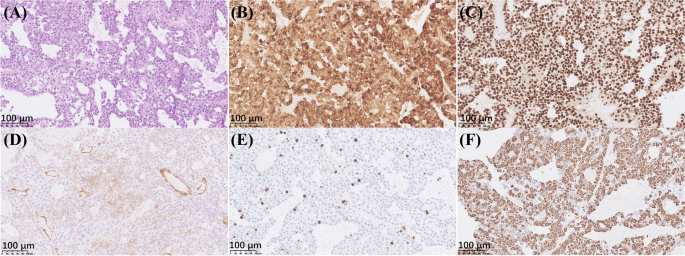
Figure 2 Pathological diagnosis of (clivus) ectopic pituitary adenoma. (A) Pituitary adenoma revealing a trabecular and nested structure revealing vascular invasion (hematoxylin and eosin (HE) stain, 200x) composed of two distinct types of cells. (B) ACTH expression in the EPA (200x, ACTH-antibody, Dako).

After admission, her blood and urine COR levels were significantly elevated, and a qualitative diagnosis of CS was obtained. Etiological examination found that ACTH was also significantly elevated, suggesting that the CS was ACTH dependent. The HDDST results showed that the serum COR level was not suppressed by more than 50% and was accompanied by hypokalemia, suggesting that the ACTH-dependent CS may be ectopic ACTH syndrome. Ectopic ACTH syndrome is relatively rare, and the lesions are caused by non-pituitary tumors. No lesions were identified in the lung, thymus, pancreas, and thyroid of our patient. Regarding the IPSS examination, the IPS/P ratio was greater than 2, which suggested that the ectopic ACTH was located intracranially and not at the periphery. Radiologic testing suggested that the pituitary structure was normal and that a space-occupying lesion in the clivus region was present. Therefore, ectopic ACTH-secreting adenoma in the clivus region was considered, and postoperative pathological biopsy was used to confirm the diagnosis.

Discussion

EPA is an extremely rare disease that occurs outside of the sella turcica, and it is not linked to the intrasellar pituitary. The morphology, immunohistochemistry, and hormone activity of EPAs are similar to typical pituitary adenomas. EPAs can manifest as specific or non-specific endocrine disorders, and they account for 0.48% of all pituitary adenomas.9 The pathogenesis of EPA is still currently unknown. It is generally considered that during the development of the anterior pituitary lobe, the incompletely degraded Rathke cleft cyst remnants of the Rathke pouch lead to the formation of EPAs in the nasopharynx, sphenoid, and clivus.10,11 EPA is rare in China. Zhu et al5 recorded 14,357 pituitary gland patients in the last 20 years; of these patients, only 14 were diagnosed with EPA (0.098% of all cases), but none of the lesions originated from the clivus region. Previous literature reviews4,5 revealed that non-functioning EPAs in the clivus region are the most common (50%); the most common hormone-secreting functional adenomas are PRL adenomas and GH adenomas, which account for 25.0% and 21.4% of EPAs, respectively, whereas ACTH-secreting EPAs are extremely rare and only account for 3.6% of cases.

The postoperative pathological and immunohistochemical results of the tumor tissue in the patient demonstrated that it was an ectopic ACTH-secreting pituitary macroadenoma in the clivus region. Most EPAs are microadenomas (diameter <1 cm), except those in the clivus region, which are macroadenomas.5 Adenoma size generally does not affect the patient’s clinical and biochemical characteristics, and it may be related to tumor location or extension.12 Encasement of the internal carotid artery is a characteristic feature of EPA invasion into surrounding tissues.5 Encasement of the right internal carotid artery by the tumor was also observed in our patient. Therefore, surgery cannot completely remove the tumor and may ultimately affect surgical outcomes, and radiotherapy may even be required in the future. The serum COR and ACTH levels of our patient were evaluated 10 days after surgery. Although the levels were significantly lower than those before the surgery, the COR level was still significantly higher than the cutoff value of 1 µg/dL,13,14 suggesting that the patient may not have complete remission due to the incomplete tumor resection in the area adjacent to the carotid artery during surgery. Another feature that was observed in our patient was bone invasion. Because the clivus is composed of abundant cancellous bone that is connected to surrounding bone structures, EPAs or other tumors may cause bone destruction and affect the sphenoidal sinus and cavernous sinus, which is also consistent with literature reports.15,16

Due to the low incidence of EPAs, most EPA cases are reported as case reports in the literature. We performed an English literature search using the PubMed and Web of Science Core Collection databases with the following predetermined terms: “Cushing’s syndrome”, “pituitary adenomas”, “clivus”, “ectopic pituitary adenoma”, and “adrenocorticotropic”. The literature was included if it met the following criteria: (i) the confirmed diagnosis of CS or ectopic ACTH syndrome was described in the literature; (ii) the diagnosis of EPA was confirmed by postoperative inspection; and (iii) EPA occurred in the clivus. After excluding cases of clival invasion from other sites, we found only three reports of ectopic ACTH-secreting adenoma in the clivus region,6–8 and they were all female patients. Ortiz-Suarez and Erickson6 employed transfrontal craniotomy to demonstrate that the ectopic ACTH-secreting adenoma was an extension of extrasellar lesion to the clivus. In a case report by Pluta et al,7 the patient was found to have cavernous sinus and clival ACTH-positive tumors through transphenoidal surgery. In a case report by Aftab et al,8 the patient only presented a space-occupying lesion with unilateral vision loss; the patient was initially diagnosed with clival chordoma, but the postoperative results supported the diagnosis of EPA. Based on preoperative imaging, the possibility of chordoma was also considered to be high in our patient. We combined the clinical manifestation and laboratory test results of the patient and considered the etiology of CS to conclude that the patient had clival ectopic ACTH-secreting adenoma instead of chordoma.

Hormone tests in our patient suggested secondary pituitary-gonadal axis and decreased pituitary-thyroid axis function. These changes in endocrine function may be due to pituitary suppression by hypercortisolism. After surgery, the corresponding markers recovered, indicating that the suppression was transient. The patient has a history of fracture and a bone mineral density suggestive of osteoporosis, which may also be associated with CS hypercortisolemia.

Treatment modalities for EPA include adenoma resection surgery, radiotherapy, and drugs. The first-line recommended treatment is surgical resection. Craniotomy is considered the surgical procedure of choice for EPA, and endoscopic transsphenoidal surgery (TSS) is considered a feasible method for preserving pituitary function while simultaneously treating EPA. However, due to limitations with the surgical operation space, there are still concerns whether sufficient exploration and effective tumor resection can be achieved.17 Because there are few case reports of such patients, the long-term outcomes of these two surgical procedures require further validation. Due to differences in EPA sites and functions, the efficacy of surgery also differs. Zhu et al5 reported that compared to the radical resection rate of sphenoidal sinus and cavernous sinus EPA (72.3% and 73.3%, respectively), the radical resection rate of clival EPA is only 45.0%, and this difference is statistically significant.

The three clival EPA patients described in the three relevant publications6–8 all showed significant improvements in postoperative signs, symptoms, and hormone levels after complete surgical removal of the lesions or combined with radiation therapy. In our patient, however, radical resection of the tumor could not be achieved due to the close proximity of the tumor mass to the right internal carotid artery, and surgery could not be used to achieve complete remission, which is similar to the case reported by Zhu et al.5 For such patients, radiotherapy can be considered as a second-line treatment for EPA. To control hormone levels, drugs and bilateral adrenalectomy are also treatment options.5,18,19

Conclusion

EPA is a rare disease, and clival EPA is even rarer. From the entire diagnosis and treatment course, this unique and rare EPA case was preliminarily diagnosed through a comprehensive hormone panel and IPSS, and it was confirmed by pathology and immunohistochemistry after surgery. In the diagnosis of ectopic ACTH syndrome, attention should also be paid to extremely rare pituitary ectopic sites, such as the sphenoid sinuses, parasellar region, and the clivus, in addition to common sites, such as the lungs, thymus, pancreas, and thyroid.

Data Sharing Statement

The raw data supporting the conclusions of this article will be made available by the authors without undue reservation.

Informed Consent Statement

Prior written permission was obtained from the patient for treatment as well as for the preparation of this manuscript and for publication. Our institution approved the publication of the case details.

Acknowledgments

We would like to thank the patient and her family.

Author Contributions

All authors made a significant contribution to the work reported, whether that is in the conception, study design, execution, acquisition of data, analysis and interpretation, or in all these areas; took part in drafting, revising or critically reviewing the article; gave final approval of the version to be published; have agreed on the journal to which the article has been submitted; and agree to be accountable for all aspects of the work.

Funding

There is no funding to report.

Disclosure

The authors report no conflicts of interest in this work.

References

1. Senanayake R, Gillett D, MacFarlane J, et al. New types of localization methods for adrenocorticotropic hormone-dependent Cushing’s syndrome. Best Pract Res Clin Endocrinol Metab. 2021;35:101513. doi:10.1016/j.beem.2021.101513

2. Young J, Haissaguerre M, Viera-Pinto O, et al. Management of Endocrine Disease: cushing’s syndrome due to ectopic ACTH secretion: an expert operational opinion. Eur J Endocrinol. 2020;182:R29–r58. doi:10.1530/EJE-19-0877

3. Hayes AR, Grossman AB. The ectopic adrenocorticotropic hormone syndrome: rarely easy, always challenging. Endocrinol Metab Clin North Am. 2018;47:409–425. doi:10.1016/j.ecl.2018.01.005

4. Zhu J, Lu L, Yao Y, et al. Long-term follow-up for ectopic ACTH-secreting pituitary adenoma in a single tertiary medical center and a literature review. Pituitary. 2020;23:149–159. doi:10.1007/s11102-019-01017-y

5. Zhu J, Wang Z, Zhang Y, et al. Ectopic pituitary adenomas: clinical features, diagnostic challenges and management. Pituitary. 2020;23:648–664. doi:10.1007/s11102-020-01071-x

6. Ortiz-Suarez H, Erickson DL. Pituitary adenomas of adolescents. J Neurosurg. 1975;43:437–439. doi:10.3171/jns.1975.43.4.0437

7. Pluta RM, Nieman L, Doppman JL, et al. Extrapituitary parasellar microadenoma in Cushing’s disease. J Clin Endocrinol Metab. 1999;84:2912–2923. doi:10.1210/jcem.84.8.5890

8. Aftab HB, Gunay C, Dermesropian R, et al. “An Unexpected Pit” – ectopic pituitary adenoma. J Endocr Soc. 2021;5:A557–A558. doi:10.1210/jendso/bvab048.1137

9. Li X, Zhao B, Hou B, et al. Case report and literature review: ectopic thyrotropin-secreting pituitary adenoma in the suprasellar region. Front Endocrinol. 2021;12:619161. doi:10.3389/fendo.2021.619161

10. Agely A, Okromelidze L, Vilanilam GK, et al. Ectopic pituitary adenomas: common presentations of a rare entity. Pituitary. 2019;22:339–343. doi:10.1007/s11102-019-00954-y

11. Tajudeen BA, Kuan EC, Adappa ND, et al. Ectopic pituitary adenomas presenting as sphenoid or clival lesions: case series and management recommendations. J Neurol Surg B Skull Base. 2017;78:120–124. doi:10.1055/s-0036-1592081

12. Akirov A, Shimon I, Fleseriu M, et al. Clinical study and systematic review of pituitary microadenomas vs. macroadenomas in cushing’s disease: does size matter? J Clin Med. 2022;11:1558. doi:10.3390/jcm11061558

13. Badiu C. Williams textbook of endocrinology. Acta Endocrinologica. 2019;15:416. doi:10.4183/aeb.2019.416

14. Rollin GA, Ferreira NP, Junges M, et al. Dynamics of serum cortisol levels after transsphenoidal surgery in a cohort of patients with Cushing’s disease. J Clin Endocrinol Metab. 2004;89:1131–1139. doi:10.1210/jc.2003-031170

15. Hu S, Cheng S, Wu Y, et al. A large cavernous sinus giant cell tumor invading clivus and sphenoid sinus masquerading as meningioma: a case report and literature review. Front Surg. 2022;9:861739. doi:10.3389/fsurg.2022.861739

16. Wu X, Ding H, Yang L, et al. Invasive corridor of clivus extension in pituitary adenoma: bony anatomic consideration, surgical outcome and technical nuances. Front Oncol. 2021;11:689943. doi:10.3389/fonc.2021.689943

17. Sun X, Lu L, Feng M, et al. Cushing syndrome caused by ectopic adrenocorticotropic hormone-secreting pituitary adenomas: case report and literature review. World Neurosurg. 2020;142:75–86. doi:10.1016/j.wneu.2020.06.138

18. Szabo Yamashita T, Sada A, Bancos I, et al. Differences in outcomes of bilateral adrenalectomy in patients with ectopic ACTH producing tumor of known and unknown origin. Am J Surg. 2021;221:460–464. doi:10.1016/j.amjsurg.2020.08.047

19. Szabo Yamashita T, Sada A, Bancos I, et al. Bilateral adrenalectomy: differences between cushing disease and Ectopic ACTH-producing tumors. Ann Surg Oncol. 2020;27:3851–3857. doi:10.1245/s10434-020-08451-4

Creative Commons License This work is published and licensed by Dove Medical Press Limited. The full terms of this license are available at https://www.dovepress.com/terms.php and incorporate the Creative Commons Attribution – Non Commercial (unported, v3.0) License. By accessing the work you hereby accept the Terms. Non-commercial uses of the work are permitted without any further permission from Dove Medical Press Limited, provided the work is properly attributed. For permission for commercial use of this work, please see paragraphs 4.2 and 5 of our Terms.
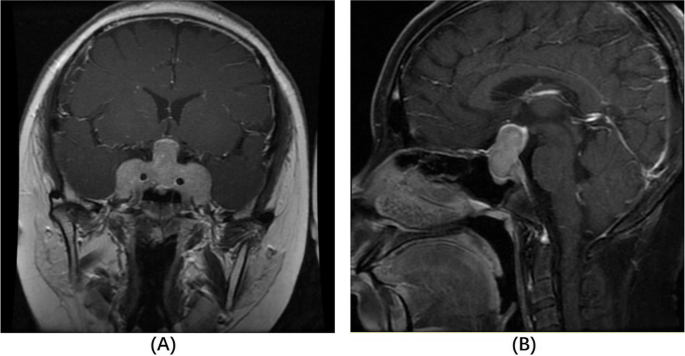
 

Successful Immunomodulatory Treatment of COVID-19 in a Patient With Severe ACTH-Dependent Cushing’s Syndrome

Introduction: Patients with Cushing’s syndrome (CS) represent a highly sensitive group during corona virus disease 2019 (COVID-19) pandemic. The effect of multiple comorbidities and immune system supression make the clinical picture complicated and treatment challenging.

Case report: A 70-year-old female was admitted to a covid hospital with a severe form of COVID-19 pneumonia that required oxygen supplementation. Prior to her admission to the hospital she was diagnosed with adrenocorticotropic hormone (ACTH)-dependent CS, and the treatment of hypercortisolism had not been started yet. Since the patient’s condition was quickly deteriorating, and with presumend immmune system supression due to CS, we decided on treatement with intraveonus immunoglobulins (IVIg) that enabled quick onset of immunomodulatory effect. All comorbidities were treated with standard of care. The patient’s condition quickly stabilized with no direct side effects of a given treatment.

Conclusion: Treatment of COVID-19 in patients with CS faces many challenges due to the complexity of comorbidity effects, immunosupression and potential interactions of available medications both for treatment of COVID-19 and CS. So far, there are no guidelines for treatment of COVID-19 in patients with active CS. It is our opinion that immunomodulating therapies like IVIg might be an effective and safe treatment modality in this particularly fragile group of patients.

Introduction

Dealing with corona virus disease 2019 (COVID-19) focused medical attention on several sensitive population groups. While the knowledge is still improving, some of the recognized risk factors for severe form of the disease are male sex, older age, obesity, hypertension, diabetes mellitus, and cardio-vascular disease (1). This constellation of morbidities is particularly intriguing from endocrine point of view, since they are all features of patients with Cushing’s syndrome (CS). Another relevant feature of CS is a propensity for infections due to profound immune suppression, with prevalence of 21-51%; even more so, infections are the second cause of death (31%) in CS after disease progression, and are the main cause of death (37%) in patients who died within 90 days of diagnosis (2).

Immune system alterations in CS lead to depression of both innate and adaptive immune responses, favoring not only commonly acquired but also opportunistic bacterial infections, fungal infections, and severe, disseminated viral infections (3). Susceptibility to infections directly positively correlates with cortisol level, and is more frequent in ectopic ACTH secretion (EAS). Hypercortisolism hampers the first-line response to external agents and consequent activation of the adaptive response (3). Consequently, there is a decrease in total number of T-cells and B-cells, as well as a reduction in T-helper cell activation, which might favor opportunistic and intracellular infections. On the other hand, an increase in pro-inflammatory cytokine secretion, including interleukine-6 (IL-6) and tumor necrosis factor-α (TNF-α) leads to persistent, low-grade inflammation. It is important to note that immune system changes are confirmed both during the active phase and while in remission of CS (3).

In view of the aforementioned data, a few topics emerge regarding patients with CS and COVID-19. Initial clinical presentation may be altered – low-grade chronic inflammation and poor immune reaction might limit febrile response in the early phase of infection, aggravating timely diagnosis (4). Increased cytokine levels may put patients with CS at increased risk of severe course and progression to acute respiratory distress syndrome (ARDS). On the other hand, the rise in cytokine levels associated with exposure to external agents is significantly hampered, probably because of persistently elevated pro-inflammatory cytokine secretion (45). Patients with CS have a possibility for prolonged duration of viral infections and risk for superinfections leading to sepsis and increased mortality risk; this is especially relevant for hospitalized patients and mandates empirical prophylaxis with broad-spectrum antibiotics (6). Both COVID-19 and CS individually represent disease states of increased thromboembolic (TE) risk, requiring additional care (6).

Due to very limited data, it is still not possible to address these topics with certainty and make recommendations for optimal management of these patients. Current clinical practice guidance for management of CS during COVID-19 commissioned by the European Society of Endocrinology (ESE) emphasizes prompt and optimal control of hypercortisolism and adequate treatment of all comorbidities (7). Although individual circumstances must always be considered, we need more direct clinical experience, especially regarding the actual treatment of COVID-19 in this sensitive group. So far, there are only five published case studies of patients with CS and COVID-19, with eight patients in total (812). In this study, we present a patient with newly diagnosed ACTH-dependent CS who was diagnosed with COVID-19 before the initiation of specific medical treatment.

Case Report

A 70-year-old female was admitted to our Covid hospital due to bilateral interstitial pneumonia caused by severe acute respiratory syndrome coronavirus 2 (SARS-CoV-2). Six days before she was discharged from endocrinology department of another hospital where she was hospitalized due to newly diagnosed diabetes mellitus. Her personal history was unremarkable, and she was vaccinated with two doses of inactivated COVID-19 vaccine Sinopharm BBIBP. During this hospitalization Cushingoid features were noted (moon face, centripetal obesity, thin extremities with multiple hematomas, bilateral peripheral edema), as well as diabetes mellitus (HbA1c 8.7%), arterial hypertension (BP 180/100 mmHg), hypokalemia (2.0 mmol/L), mild leukocytosis (WBC 12.9x10e9/L) with neutrophilia, and mildly elevated CRP (12.3 mg/L). Hormonal functional testing confirmed ACTH-dependent Cushing’s syndrome: morning ACTH 92.6 pg/mL (reference range 10-60 pg/mL), morning serum cortisol 1239 nmol/L (reference range 131-642 nmol/L), midnight serum cortisol 1241 nmol/L, lack of cortisol suppression in overnight dexamethasone suppression test (978 nmol/L). Pituitary MRI was unremarkable other than empty sella, and CT scan of thorax normal other than left adrenal hyperplasia. Diabetes mellitus was successfully controlled with metformin, hypertension with ACE-inhibitor, Ca-channel blocker and beta-blocker, and hypokalemia with potassium supplementation along with spironolactone. Steroidogenesis inhibitors were not available in this institution, but before referral to a tertiary care hospital she was tested for SARS-CoV-2, and the test came back positive (sample was obtained by nasopharyngeal swab). Since she was asymptomatic, with normal thoracic CT scan and stabile CRP level (9.1 mg/L), she was discharged with detailed recommendations for conduct in case of progression of COVID symptoms.

Next day she started feeling malaise with episodes of fever (up to 38.2°C). Symptomatic therapy was advised in an outpatient clinic (no antiviral therapy was recommended), but 5 days later respiratory symptoms ensued. During examination, the patient was weak, with dyspnea and tachypnea (RR 22/min), afebrile (36.9°C) and with oxygen saturation (SO2) of 85% measured by pulse oximeter. Chest X-ray confirmed bilateral interstitial pneumonia with parenchymal consolidation in the right lower lung lobe, so she was referred to the COVID hospital.

Laboratory analyses upon admission are presented in the Supplementary Table 1. In addition to her previous testing, elevated chromogranin A (CgA) level was verified (538.8 ng/mL, reference range 11-98.1). The patient was treated with supplemental oxygen with maximal flow of 13 l/min. For the reason of previously confirmed severe endogenous hypercortisolism, glucocorticoids were not administered. Due to limited therapeutic options and presumed further clinical deterioration, we decided to treat the patient with intravenous immunoglobulins (IVIg) 30 g iv for 5 days, starting from the 2nd day of hospitalization. We did not observe any side effects of a given treatment. In parallel, the patient received broad-spectrum antibiotics (ceftazidime and levofloxacin), proton pump inhibitor, LMWH in prophylactic dose, oral and parenteral potassium supplementation along with spironolactone. She continued with her previous antihypertensive therapy with good control of blood pressure. While the patient was on oxygen supplementation, glycaemia was controlled with short acting insulin before meals. Following given treatment, we observed clinical, biochemical (Supplementary Table 1.) and radiological improvement (Supplementary Figure 1). Oxygen supplementation was gradually discontinued. With regard to D-dimer levels and risk factors for TE events due to COVID-19 and CS, we performed color Doppler scan of lower extremities veins, and CT pulmonary angiography, but there were no signs of thrombosis. During hospital stay, there were no signs of secondary infection and cotrimoxazole was not added to the current treatment. The patient was discharged with advice to continue her prior medical therapy along with increased dose of spironolactone and initiation of rivaroxaban. She was referred to the tertiary institution for the initiation of steroidogenesis inhibitor and further diagnostics.

Discussion

Endogenous Cushing’s syndrome is a rare disease with an incidence of 0.7-2.4 million person-years in European population-based studies (13). Significant morbidity yields a standard mortality ratio of 3.7 (95%CI 2.3–5.3), with the highest mortality during the first year after initial presentation. COVID-19 pandemic imposes additional challenge to this fragile group of patients. Due to lack of solid experience, it is still difficult to define potential clinical course and outcome of patients with CS and COVID-19. In addition, currently there are no guidelines for management of SARS-CoV-2 infection in patients with active CS.

So far, only two small case series followed patients with Cushing’s disease (CD) in various disease stages (not all were active) during COVID-19 pandemic (912). Small number of SARS-CoV-2 positive cases (3/22 and 2/61) is clearly biased by shortness of analyzed period (one and a half, and three and a half months). Additionally, a small number of patients was actually tested by nasopharyngeal swab for SARS-CoV-2 even in the presence of indicative symptoms, albeit mild. Nevertheless, all these limitations included, it seems that the prevalence of COVID-19 might be greater in patients with CD than in general population (12). This is accordant with studies on patients on exogenous glucocorticoid (GC) treatment. Overall, there is a growing body of evidence that patients on chronic GC therapy are at higher risk for SARS-CoV-2 infection and a severe course of disese, regardless of age and comorbidities (14). In many studies patients on high-dose GC therapy were at particularly high risk for a severe course of disease, so it is reasonable to assume that there is a dose-dependent effect (14).

All patients except one with endogenous CS and COVID-19 presented in literature were hospitalized, with majority of them requiring oxygen supplementation, which classified them as serious cases of disease (812). Parameters of inflammation (namely CRP) were highly variable (from normal to elevated) and did not seem to reflect severity of COVID-19 consistently. Two patients had fatal outcome; one with postoperative hypocortisolism that required stress doses of hydrocortisone, and with terminal kidney failure as significant comorbidity; the other with suspected EAS who developed ARDS in contrast to normal CRP and absence of fever (912). Based on reported cortisol levels in these patients, it seems that the severity of COVID-19 pneumonia depended on severity of hypercortisolism (812). A patient with probable EAS even developed ARDS, which adds to ongoing controversy regarding the risk of ARDS due to SARS-CoV-2 in patients with CS (315). We ourselves have treated a severely obese female patient with active CD on pasireotide, who developed ARDS despite addition of high doses of methylprednisolone (unpublished data). Additional risk imposed by comorbidities cannot be underestimated (1516). This is particularly relevant for obesity, that not only hampers immune system (leading to increased levels of IL-1, IL-6, and TNF-α), but adipocytes represent a reservoir of SARS-CoV-2 thanks to ACE2 receptor, crucial for virus attachment (15).

Majority of depicted patients with active CS were already medically treated for hypercortisolism but with various compliance (sometimes very poor), and two young patients have just started steroidogenesis inhibitors (metyrapone/ketoconazole). Infection with SARS-CoV-2 was treated by national protocols that were mostly based on supportive care. These protocols changed over time, so a few patients received antiviral therapy (favipiravir), and one young patient with suspected EAS was treated with methylprednisolone along with high doses of ketoconazole (10). Treatment was complicated with adrenal insufficiency (AI) in three patients (81112).

We have presented a patient with CS and rapid development of serious case of COVID-19 pneumonia that required hospital admission and oxygen support. She was febrile and had positive laboratory parameters of inflammation. Her CS was active, with very high cortisol levels, no prior medical treatment and with clinical suspicion of EAS (ACTH-dependent disease of short duration, severe hypercortisolism, hypokalemia, very high CgA, no visible pituitary tumor). With this in mind, and with regard to rapid progression of COVID-19 pneumonia, it was our opinion that the patient required treatment with quick onset and presumable immune system modulation.

A logical approach to treatment of CS during COVID-19 pandemic includes meticulous therapy for comorbidities (namely antihypertensives, anti-diabetic drugs, low molecular weight heparin, etc.), and steroidogenesis inhibitors for treatment for hypercortisolemia (7). While some of these drugs demonstrate quick onset of action regarding normalization of cortisol level (and hence improve clinical comorbidities), rapid effects on immune system responses are not likely, which might be of great relevance in case of acute infection. Secondly, adrenolytic therapy increases a risk of AI, which can be even more perilous than CS in case of infection or other stress situations (8121516). A modified “block and replace” approach may be considered, where addition of hydrocortisone could diminish the risk of AI (7). Still, there are a few potential pitfalls with this regimen as well. Some people fail to respond to high doses of adrenal-blocking agents due to genetic differences in the steroidogenic enzymes, since therapeutic responses to metyrapone and ketoconazole in patients with CS are associated with the polymorphism in the CYP17A1 gene (17). Additionally, there are not enough data about possible interactions between adrenolytic drugs (majority of them being metabolized through the CYP450/CYP3A4 pathway) and medications used to treat COVID-19, most of which are only just emerging (18). Special concerns, amplified with similar potential effects of SARS-CoV-2 itself as well as specific therapies are liver dysfunction (metyrapone, ketoconazole), hypokalemia (metyrapone, ketoconazole), QT-interval prolongation (ketoconazole, osilodrostat), gastrointestinal distress (mitotane, osilodrostat, etomidate) (18). Metyrapone may cause accumulation of androgenic precursors secondary to the blockade of cortisol synthesis, that can virtually enhance expression of transmembrane protease serine 2 (TMPRSS2), found to be essential to activate the viral spikes, induce viral spread, and pathogenesis in the infected hosts (19). Another important issue concerns biochemical estimation of disease control (and hence risk for AI), since most commercially available assays can overestimate cortisol level in patients treated with metyrapone due to cross-reactivity with the precursor 11-deoxicortisol (715). Mass spectrometry is a method of choice to overcome this problem, but it is not available in many centers. Some centers advocate titration and/or temporary halting medical therapies in the treatment of patients with CS in the context of COVID-19 infection (20). Treatement was stopped in a few patients with severe COVID-19 symptoms who were then given high dose GC for a few days with no long-term complications, and with full recovery (20).

There are no data about the effect of anti-viral drugs in patients with CS and COVID-19. A special concern refers to adipose tissuse, as adipose tissue is difficult for antiviral drugs to reach. It cannot be excluded that the constant release of viral replicas from the adipose tissue reservoir may interfere with COVID-19 infection treatment, delaying its resolution and favoring a worse prognosis (15). If antiviral drugs are started, it is suggested that immunocompromised patients may require prolonged therapy (18). However, the timing is difficult in practice and candidates for antivirals are limited.

Since the clinical course of COVID-19 only initially depends on viral replication, immunomodulatory therapy emerged as a valuable treatment option to control the host immune response. This became apparent ever since RECOVERY trial proved efficacy of glucocortiods (21). But this therapeutic option is fairly inapplicable in patients with active CS, since glucocorticoid treatment in chronic hypercortisolism seems to enhance immune system alterations (22). In parallel with the development of new agents, it is prudent to study the efficacy of existing therapeutic options with acceptable safety profile (20). Beside glucocorticoids, inflammation blockers, intravenous immunoglobulin and convalescent plasma were used in various settings (23).

Intravenous immunoglobulin (IVIg) is a blood product prepared from the serum pooled from thousands of healthy donors, containing a mixture of polyclonal IgG antibodies, mostly IgG1 and IgG2 subclasses (2425). Initial rationale for its use was immunodefficiency due to hypoglobulinemia. Since then it has been shown that IVIg exerts pleiotropic immunomodulating action involving both innate and adaptive immunity and it has been used in a variety of diseases (26). In previous studies on MERS (Middle East Respiratory Syndrome) and SARS (Severe Acute Respiratory Syndrome) using IVIg showed beneficial clinical effects (25). Although pathogenesis of COVID-19 has not be fully elucidated, there is a consensus that immune-mediated inflammation plays an important role in the progression of this disease, just as it did in prior coronavirus infections (27). In this context, the actual role of IVIg in COVID-19 patients might be not to boost the immune system, but through its immunomodulatory effect to suppress a hyperactive immune response that is seen in some patients (28). So far, a limited number of studies, case series and meta-analyses demonstrate a promising potential of IVIg in patients with COVID-19. The effect was demonstrated in terms of mortality, improvement of clinical symptoms, laboratory examinations, imaging and length of hospital stay, especially in patients with moderate/severe form of the disease, and with emphasis on early administration (within 3 days of admission) (24252731). A recent double blind, placebo-controlled, phase 3, randomized trial tested hyperimmune intravenous immunoglobulin (hIVIg) to SARS-CoV-2 derived from recovered donors with no demonstrated effect compared with standard of care, but therapy was administered in patients symptomatic up to 12 days (32). Additional clinical trials are underway, hopefully with more guidance for proper selection of patients that might benefit from this type of treatment.

Conclusion

To our knowledge, this is the first case of IVIg treatment in a COVID-19 patient with CS. It is our opinion that immune-modulating properties of IVIg might present an attractive treatment option, especially in those CS patients that show rapid clinical progression and positive laboratory parameters of inflammation. While we await for new therapeutic modalities for COVID-19 and while some of the modalities remain not widely available, IVIg is more accessible, safe method, which could be rescuing in carefully selected patients. Of note, we consider our patient’s vaccinal status as an unquestionable positive contributor to the favorable outcome

Data Availability Statement

The raw data supporting the conclusions of this article will be made available by the authors, without undue reservation.

Ethics Statement

Ethical review and approval was not required for the study on human participants in accordance with the local legislation and institutional requirements. The patients/participants provided their written informed consent to participate in this study. Written informed consent was obtained from the individual(s) for the publication of any potentially identifiable images or data included in this article.

Author Contributions

BP, AS, JV, TG, MJ-L, JV, VS, ZG and TA-V analyzed and interpreted the patient data. BP, AP, DI, and DJ were major contributors in writing the manuscript. All authors contributed to the article and approved the submitted version.

Conflict of Interest

The authors declare that the research was conducted in the absence of any commercial or financial relationships that could be construed as a potential conflict of interest.

Publisher’s Note

All claims expressed in this article are solely those of the authors and do not necessarily represent those of their affiliated organizations, or those of the publisher, the editors and the reviewers. Any product that may be evaluated in this article, or claim that may be made by its manufacturer, is not guaranteed or endorsed by the publisher.

Supplementary Material

The Supplementary Material for this article can be found online at: https://www.frontiersin.org/articles/10.3389/fendo.2022.889928/full#supplementary-material

References

1. Hu J, Wang Y. The Clinical Characteristics and Risk Factors of Severe COVID-19. Gerontology (2021) 67(3):255–66. doi: 10.1159/000513400

PubMed Abstract | CrossRef Full Text | Google Scholar

2. Valassi E, Tabarin A, Brue T, Feelders RA, Reincke M, Netea-Maier R, et al. High Mortality Within 90 Days of Diagnosis in Patients With Cushing’s Syndrome: Results From the ERCUSYN Registry. Eur J Endocrinol (2019) 181(5):461–72. doi: 10.1530/EJE-19-0464

PubMed Abstract | CrossRef Full Text | Google Scholar

3. Hasenmajer V, Sbardella E, Sciarra F, Minnetti M, Isidori AM, Venneri MA. The Immune System in Cushing’s Syndrome. Trends Endocrinol Metab (2020) 31(9):655–69. doi: 10.1016/j.tem.2020.04.004

PubMed Abstract | CrossRef Full Text | Google Scholar

4. Pivonello R, Isidori AM, De Martino MC, Newell-Price J, Biller BM, Colao A. Complications of Cushing’s Syndrome: State of the Art. Lancet Diabetes Endocrinol (2016) 4(7):611–29. doi: 10.1016/S2213-8587(16)00086-3

PubMed Abstract | CrossRef Full Text | Google Scholar

5. Martins-Filho PR, Tavares CSS, Santos VS. Factors Associated With Mortality in Patients With COVID-19. A Quantitative Evidence Synthesis of Clinical and Laboratory Data. Eur J Intern Med (2020) 76:97–9. doi: 10.1016/j.ejim.2020.04.043

PubMed Abstract | CrossRef Full Text | Google Scholar

6. Pivonello R, Ferrigno R, Isidori AM, Biller BMK, Grossman AB, Colao A. COVID-19 and Cushing’s Syndrome: Recommendations for a Special Population With Endogenous Glucocorticoid Excess. Lancet Diabetes Endocrinol (2020) 8(8):654–6. doi: 10.1016/S2213-8587(20)30215-1

PubMed Abstract | CrossRef Full Text | Google Scholar

7. Newell-Price J, Nieman LK, Reincke M, Tabarin A. ENDOCRINOLOGY IN THE TIME OF COVID-19: Management of Cushing’s Syndrome. Eur J Endocrinol (2020) 183(1):G1–7. doi: 10.1530/EJE-20-0352

PubMed Abstract | CrossRef Full Text | Google Scholar

8. Beretta F, Dassie F, Parolin M, Boscari F, Barbot M, Busetto L, et al. Practical Considerations for the Management of Cushing’s Disease and COVID-19: A Case Report. Front Endocrinol (Lausanne) (2020) 11:554. doi: 10.3389/fendo.2020.00554

PubMed Abstract | CrossRef Full Text | Google Scholar

9. Belaya Z, Golounina O, Melnichenko G, Tarbaeva N, Pashkova E, Gorokhov M, et al. Clinical Course and Outcome of Patients With ACTH-Dependent Cushing’s Syndrome Infected With Novel Coronavirus Disease-19 (COVID-19): Case Presentations. Endocrine (2021) 72(1):12–9. doi: 10.1007/s12020-021-02674-5

PubMed Abstract | CrossRef Full Text | Google Scholar

10. Rehman T. Image of the Month: Diagnostic and Therapeutic Challenges in the Management of Ectopic ACTH Syndrome: A Perfect Storm of Hypercortisolism, Hyperglycaemia and COVID-19. Clin Med (Lond) (2021) 21(3):231–4. doi: 10.7861/clinmed.2021-0005

PubMed Abstract | CrossRef Full Text | Google Scholar

11. Yuno A, Kenmotsu Y, Takahashi Y, Nomoto H, Kameda H, Cho KY, et al. Successful Management of a Patient With Active Cushing’s Disease Complicated With Coronavirus Disease 2019 (COVID-19) Pneumonia. Endocr J (2021) 68(4):477–84. doi: 10.1507/endocrj.EJ20-0613

PubMed Abstract | CrossRef Full Text | Google Scholar

12. Serban AL, Ferrante E, Carosi G, Indirli R, Arosio M, Mantovani G. COVID-19 in Cushing Disease: Experience of a Single Tertiary Centre in Lombardy. J Endocrinol Invest (2021) 44(6):1335–6. doi: 10.1007/s40618-020-01419-x

PubMed Abstract | CrossRef Full Text | Google Scholar

13. Sharma ST, Nieman LK, Feelders RA. Cushing’s Syndrome: Epidemiology and Developments in Disease Management. Clin Epidemiol (2015) 7:281–93. doi: 10.2147/CLEP.S44336

PubMed Abstract | CrossRef Full Text | Google Scholar

14. Vogel F, Reincke M. Endocrine Risk Factors for COVID-19: Endogenous and Exogenous Glucocorticoid Excess. Rev Endocr Metab Disord (2021) 23(2):233–50. doi: 10.1007/s11154-021-09670-0

PubMed Abstract | CrossRef Full Text | Google Scholar

15. Guarnotta V, Ferrigno R, Martino M, Barbot M, Isidori AM, Scaroni C, et al. Glucocorticoid Excess and COVID-19 Disease. Rev Endocr Metab Disord (2021) 22(4):703–14. doi: 10.1007/s11154-020-09598-x

PubMed Abstract | CrossRef Full Text | Google Scholar

16. Chifu I, Detomas M, Dischinger U, Kimpel O, Megerle F, Hahner S, et al. Management of Patients With Glucocorticoid-Related Diseases and COVID-19. Front Endocrinol (Lausanne) (2021) 12:705214. doi: 10.3389/fendo.2021.705214

PubMed Abstract | CrossRef Full Text | Google Scholar

17. Valassi E, Aulinas A, Glad CA, Johannsson G, Ragnarsson O, Webb SM. A Polymorphism in the CYP17A1 Gene Influences the Therapeutic Response to Steroidogenesis Inhibitors in Cushing’s Syndrome. Clin Endocrinol (Oxf) (2017) 87(5):433–9. doi: 10.1111/cen.13414

PubMed Abstract | CrossRef Full Text | Google Scholar

18. Berlinska A, Swiatkowska-Stodulska R, Sworczak K. Old Problem, New Concerns: Hypercortisolemia in the Time of COVID-19. Front Endocrinol (Lausanne) (2021) 12:711612. doi: 10.3389/fendo.2021.711612

PubMed Abstract | CrossRef Full Text | Google Scholar

19. Barbot M, Ceccato F, Scaroni C. Consideration on TMPRSS2 and the Risk of COVID-19 Infection in Cushing’s Syndrome. Endocrine (2020) 69(2):235–6. doi: 10.1007/s12020-020-02390-6

PubMed Abstract | CrossRef Full Text | Google Scholar

20. Fleseriu M. Pituitary Disorders and COVID-19, Reimagining Care: The Pandemic A Year and Counting. Front Endocrinol (Lausanne) (2021) 12:656025. doi: 10.3389/fendo.2021.656025

PubMed Abstract | CrossRef Full Text | Google Scholar

21. Horby P, Lim WS, Emberson JR, Mafham M, Bell JL, Linsell L, et al. Dexamethasone in Hospitalized Patients With Covid-19. N Engl J Med (2021) 384(8):693–704. doi: 10.1056/NEJMoa2021436

PubMed Abstract | CrossRef Full Text | Google Scholar

22. Bergquist M, Lindholm C, Strinnholm M, Hedenstierna G, Rylander C. Impairment of Neutrophilic Glucocorticoid Receptor Function in Patients Treated With Steroids for Septic Shock. Intensive Care Med Exp (2015) 3(1):59. doi: 10.1186/s40635-015-0059-9

PubMed Abstract | CrossRef Full Text | Google Scholar

23. Cao W, Li T. COVID-19: Towards Understanding of Pathogenesis. Cell Res (2020) 30(5):367–9. doi: 10.1038/s41422-020-0327-4

PubMed Abstract | CrossRef Full Text | Google Scholar

24. Tzilas V, Manali E, Papiris S, Bouros D. Intravenous Immunoglobulin for the Treatment of COVID-19: A Promising Tool. Respiration (2020) 99(12):1087–9. doi: 10.1159/000512727

PubMed Abstract | CrossRef Full Text | Google Scholar

25. Mohtadi N, Ghaysouri A, Shirazi S, Sara A, Shafiee E, Bastani E, et al. Recovery of Severely Ill COVID-19 Patients by Intravenous Immunoglobulin (IVIG) Treatment: A Case Series. Virology (2020) 548:1–5. doi: 10.1016/j.virol.2020.05.006

PubMed Abstract | CrossRef Full Text | Google Scholar

26. Schwab I, Nimmerjahn F. Intravenous Immunoglobulin Therapy: How Does IgG Modulate the Immune System? Nat Rev Immunol (2013) 13(3):176–89. doi: 10.1038/nri3401

PubMed Abstract | CrossRef Full Text | Google Scholar

27. Cao W, Liu X, Hong K, Ma Z, Zhang Y, Lin L, et al. High-Dose Intravenous Immunoglobulin in Severe Coronavirus Disease 2019: A Multicenter Retrospective Study in China. Front Immunol (2021) 12:627844. doi: 10.3389/fimmu.2021.627844

PubMed Abstract | CrossRef Full Text | Google Scholar

28. Bongomin F, Asio LG, Ssebambulidde K, Baluku JB. Adjunctive Intravenous Immunoglobulins (IVIg) for Moderate-Severe COVID-19: Emerging Therapeutic Roles. Curr Med Res Opin (2021) 37(6):903–5. doi: 10.1080/03007995.2021.1903849

PubMed Abstract | CrossRef Full Text | Google Scholar

29. Gharebaghi N, Nejadrahim R, Mousavi SJ, Sadat-Ebrahimi SR, Hajizadeh R. The Use of Intravenous Immunoglobulin Gamma for the Treatment of Severe Coronavirus Disease 2019: A Randomized Placebo-Controlled Double-Blind Clinical Trial. BMC Infect Dis (2020) 20(1):786. doi: 10.1186/s12879-020-05507-4

PubMed Abstract | CrossRef Full Text | Google Scholar

30. Ali S, Uddin SM, Shalim E, Sayeed MA, Anjum F, Saleem F, et al. Hyperimmune Anti-COVID-19 IVIG (C-IVIG) Treatment in Severe and Critical COVID-19 Patients: A Phase I/II Randomized Control Trial. EClinicalMedicine (2021) 36:100926. doi: 10.1016/j.eclinm.2021.100926

PubMed Abstract | CrossRef Full Text | Google Scholar

31. Xiang HR, Cheng X, Li Y, Luo WW, Zhang QZ, Peng WX. Efficacy of IVIG (Intravenous Immunoglobulin) for Corona Virus Disease 2019 (COVID-19): A Meta-Analysis. Int Immunopharmacol (2021) 96:107732. doi: 10.1016/j.intimp.2021.107732

PubMed Abstract | CrossRef Full Text | Google Scholar

32. Polizzotto MN, Nordwall J, Babiker AG, Phillips A, Vock DM, Eriobu N, et al. Hyperimmune Immunoglobulin for Hospitalised Patients With COVID-19 (ITAC): A Double-Blind, Placebo-Controlled, Phase 3, Randomised Trial. Lancet (2022) 399(10324):530–40. doi: 10.1016/S0140-6736(22)00101-5

PubMed Abstract | CrossRef Full Text | Google Scholar

Keywords: Cushing’s syndrome, COVID-19, IVIg, hypercortisolism, immunomodulation, immunosuppression

Citation: Popovic B, Radovanovic Spurnic A, Velickovic J, Plavsic A, Jecmenica-Lukic M, Glisic T, Ilic D, Jeremic D, Vratonjic J, Samardzic V, Gluvic Z and Adzic-Vukicevic T (2022) Successful Immunomodulatory Treatment of COVID-19 in a Patient With Severe ACTH-Dependent Cushing’s Syndrome: A Case Report and Review of Literature. Front. Endocrinol. 13:889928. doi: 10.3389/fendo.2022.889928

Received: 04 March 2022; Accepted: 17 May 2022;
Published: 22 June 2022.

Edited by:

Giuseppe Reimondo, University of Turin, Italy

Reviewed by:

Nora Maria Elvira Albiger, Veneto Institute of Oncology (IRCCS), Italy
Miguel Debono, Royal Hallamshire Hospital, United Kingdom

Copyright © 2022 Popovic, Radovanovic Spurnic, Velickovic, Plavsic, Jecmenica-Lukic, Glisic, Ilic, Jeremic, Vratonjic, Samardzic, Gluvic and Adzic-Vukicevic. This is an open-access article distributed under the terms of the Creative Commons Attribution License (CC BY). The use, distribution or reproduction in other forums is permitted, provided the original author(s) and the copyright owner(s) are credited and that the original publication in this journal is cited, in accordance with accepted academic practice. No use, distribution or reproduction is permitted which does not comply with these terms.

*Correspondence: Bojana Popovic, popbojana@gmail.com

Disclaimer: All claims expressed in this article are solely those of the authors and do not necessarily represent those of their affiliated organizations, or those of the publisher, the editors and the reviewers. Any product that may be evaluated in this article or claim that may be made by its manufacturer is not guaranteed or endorsed by the publisher.

From https://www.frontiersin.org/articles/10.3389/fendo.2022.889928/full

Concurrent Mutations of Germline GPR101 and Somatic USP8 in a Pediatric Giant Pituitary ACTH Adenoma

Abstract

Background

Cushing’s disease (CD) is rare in pediatric patients. It is characterized by elevated plasma adrenocorticotropic hormone (ACTH) from pituitary adenomas, with damage to multiple systems and development. In recent years, genetic studies have shed light on the etiology and several mutations have been identified in patients with CD.

Case presentation

A girl presented at the age of 10 years and 9 months with facial plethora, hirsutism and acne. Her vision and eye movements were impaired. A quick weight gain and slow growth were also observed. Physical examination revealed central obesity, moon face, buffalo hump, supra-clavicular fat pads and bruising. Her plasma ACTH level ranged between 118 and 151 pg/ml, and sella enhanced MRI showed a giant pituitary tumor of 51.8 × 29.3 × 14.0 mm. Transsphenoidal pituitary debulk adenomectomy was performed and immunohistochemical staining confirmed an ACTH-secreting adenoma. Genetic analysis identified a novel germline GPR101 (p.G169R) and a somatic USP8 (p. S719del) mutation. They were hypothesized to impact tumor growth and function, respectively.

Conclusions

We reported a rare case of pediatric giant pituitary ACTH adenoma and pointed out that unusual concurrent mutations might contribute to its early onset and large volume.

Peer Review reports

Background

Cushing’s disease (CD) is caused by the overproduction of adrenocorticotropic hormone (ATCH) by pituitary adenomas (PAs). It is rare in children and accounts for approximately 75% of pediatric Cushing’s syndrome from 7 to 17 years of age [1]. Weight gain and facial changes are more common in children than in adults [2]. Growth retardation is also a characteristic of children with hypercortisolemia [3]. Genetic alterations such as somatic USP8RASD1TP53 mutations, and germline AIPMEN1, and CABLES1 mutations have been identified in CD patients [4]. Here we report a case of pediatric invasive pituitary ACTH macroadenoma associated with a novel germline GPR101 (p. G169R) and a somatic USP8 (p. S719del) mutation.

Case presentation

The girl was born at full term with a length of 48 cm and a weight of 2900 g. Her neuromotor and cognitive development was comparable to those of children of the same age. At the age of 9 years and 4 months she developed plethora, hirsutism, facial acne, rapid weight gain, and increased abdominal circumference. Her skin darkened, and purple striae appeared on thighs and in the armpits. She became dull and less talkative, as indicated by her parents. At 10 years and 3 months, the patient complained of pain around the left orbit with an intensity of 4–5 points on a numerical rating scale (NRS). Five months later bilateral blepharoptosis appeared, with significantly impaired vision of the left eye. Soon both eyes failed to rotate in all directions.

On admission the patient was 10 years and 9 months, with a height of 144 cm (90–97th percentile) and a weight of 48 kg (25–50th percentile). Her weight gain was 20 kg, while the height increased by only 2–3 cm in 18 months. Her blood pressure was 115/76mmHg, and her heart rate was 80 bpm. Apart from the signs mentioned above, physical examination revealed central obesity (BMI 23.1 kg/m2), moon face, buffalo hump, supra-clavicular fat pads and bruising at the left fossa cubitalis. Her pupils were 7 mm in diameter and barely reacted to light. There was a fan-shaped visual field defect in the left eye. Her breasts were Tanner stage III and pubic hair was Tanner stage II, although menarche had not yet occurred. The parents and her younger brother at 6 years of age did not have symptoms related to Cushing syndrome, acromegaly or gigantism. There was no family history of pituitary tumor or other endocrine tumors.

She had increased midnight serum cortisol (24.35 µg/dL, normal range < 1.8 µg/mL) and 24-hour urine free cortisol (24hUFC) (308.0 µg, normal range 12.3–103.5). The plasma ACTH level ranged from 118 to 151 pg/mL (< 46pg/mL). The 24hUFC was not suppressed (79.2 µg) after 48 h low-dose dexamethasone suppression test (LDDST), but suppressed to 32.8 µg (suppression rate 89.4%) after 48 h high-dose dexamethasone. Sella enhanced MRI showed a giant pituitary tumor measured 51.8 × 29.3 × 14.0 mm with heterogeneous density (Fig. 1). The mass compressed the optic chiasma and surrounded the bilateral cavernous sinus (Knosp 4). Therefore, an invasive giant pituitary ACTH adenoma was clinically diagnosed. The morning growth hormone (GH) was 1.0ng/ml (< 2 ng/ml) and insulin-like growth factor 1 416 ng/ml (88–452 ng/ml). The prolactin (PRL), luteinizing hormone (LH), follicle-stimulating hormone (FSH) and thyroid stimulating hormone (TSH) were all in normal ranges, as well as serum sodium, potassium, blood glucose and urine osmolality. Abdominal ultrasonography revealed a fatty liver. Tests concerning type 1 multiple endocrine neoplasia included serum calcium, phosphate, parathyroid hormone, gastrin and glucagon, which were all unremarkable (Table 1).

Fig. 1

figure 1

Contrast-enhanced coronal (A) and sagittal (B) T1-weighted MRI on admission. The sellar mass measured 51.8 × 29.3 × 14.0 cm (TD × VD × APD) with a heterogeneous density in the enhanced scan. The diaphragma sellea was dramatically elevated, with optic chiasm compressed. The sellar floor was sunken and bilateral cavernous sinus was surrounded (Knosp 4)

Table 1 Laboratory data on admission

Transsphenoidal pituitary debulk adenomectomy was performed immediately due to multiple cranial nerve involvement and the negative results of Sandostatin loading test. A decompression resection was done. The plasma ACTH level declined to 77 pg/ml and serum cortisol 30.2 µg/dl three days after the operation. Vision, pupil dilation, eye movements and blepharoptosis also partially improved. Histopathology and immunohistochemical staining confirmed a densely–granulated corticotroph adenoma (Fig. 2, NanoZoomer S360 digital slide scanner and NDP.view 2.9.25 software, Hamamatsu, Japan). Neither necrosis nor mitotic activity was observed. The immunostaining for somatostatin receptor SSTR2A was positive with a cytoplasmic pattern, while GH, PRL, TSH, FSH, LH and PIT were all negative. The Ki 67 index was found to be 10%. One month after the operation the ACTH level increased to 132 pg/mL again, and the parents agreed to refer their child for radiotherapy to control the residual tumor.

Fig. 2

figure 2

Histopathology and immunohistochemistry staining results of the pituitary tumor. By light microscopy, the tumor cells were mostly basophilic and arranged in papillary architecture. Neither necrosis nor mitotic activity was observed (A hematoxylin-eosin, ×200). Immunohistochemistry staining was positive for ACTH (B immunoperoxidase, ×200) and transcription factor T-PIT (C immunoperoxidase, ×200). Cytoplasmic staining of SSTR2A was observed in around 1/3 tumor cells besides the strong staining of endothelial cells (D immunoperoxidase, ×200). The Ki-67 index was 10% (E immunoperoxidase, ×200). Cytokeratin CAM5.2 was diffusely positive in the cytoplasm (F immunoperoxidase, ×200). The positive control for ACTH and T-PIT was the human anterior pituitary gland, and for SSRT2, Ki-67 and CAM5.2 were cerebral cortex, tonsil and colonic mucosa, respectively

The early onset and invasive behavior of this tumor led to the consideration of whether there was a genetic defect. Genetic studies were recommended for the families and they all agreed and signed the written informed consent forms. Whole exome sequencing (WES) was performed on the patient’s blood sample using an Illumina HiSeq sequencer to an average read depth of at least 90 times per individual. Raw sequence files were mapped to the GRCH37 human reference genome and analyzed using the Sentieon software. The results revealed a germline heterozygous GPR101 gene mutation c.505G > C (p.Gly169Arg), which was subsequently confirmed to be of maternal origin by Sanger sequencing. Meanwhile WES of the tumor tissue identified an additional somatic heterozygous c.2155_2157delTCC (p.S719del) mutation of the USP8 gene .

Discussion and conclusions

In this report, we described an extremely giant and invasive pituitary ACTH adenoma in a 10-year-old girl. According to Trouillas et al., invasive and proliferative pituitary tumors have a poor prognosis [5]. CD is rare among children, and the fast-growing and invasive nature of the tumor in this case led to the investigation of genetic causes. The somatic USP8 gene mutation has been recently reported to be associated with the pathogenesis of CD [67]. This gene encodes ubiquitin-specific protease 8 (USP8). S718, S719 and P720 are hotspots in different studies [6,7,8,9,10,11,12,13,14]. They are located at the 14-3-3 binding motif, and the mutations disrupt the binding between USP8 and 14-3-3 protein, which leads to increased deubiquitination and EGFR signaling. High levels of EGFR consequently trigger proopiomelanocortin (POMC) transcription and ACTH secretion [67]. The p.S719del mutation has been previously reported and its pathogenicity has been confirmed [7]. Thus, we speculate the p.S719del mutation plays a role in this patient with CD.

It is noteworthy that in our case, the pituitary corticotrophin adenoma was extremely giant and bilaterally invasive. USP8 mutations have been found in 31% of pediatric CD patients [10]. It is well known that microadenomas are most common in adult and pediatric CD patients. Previously, the Chinese and Japanese cohorts observed smaller sizes of USP8-mutated PAs than wild-type PAs [79]. The Chinese cohort also reported a lower rate of invasive adenomas in USP8-mutated PAs [7]. This may be explained by the finding that UPS8 mutations did not significantly promote cell proliferation more than the wild-type ones [6]. Other cohorts suggested no difference in tumor size or invasiveness between USP8-mutated and wild-type PAs [81012,13,14], which may be partially explained by the differences in sample sizes and ethnic backgrounds. Owing to the lack of evidence of USP8 mutations significantly contributing to tumor growth and invasiveness, additional pathogenesis should be investigated in this case.

The p.Gly169Arg mutation of the GPR101 gene has not been reported in patients with pituitary tumors. In silico predictions were performed using Polyphen-2, Mutation Taster and PROVEAN, and all of the programs reported it to be pathogenic. The GPR101 gene encodes an orphan G protein-coupled receptor (GPCR) and microduplication encompassing the gene has been proven to be the cause of X-linked acrogigantism (XLAG) [15]. XLAG is characterized by the early onset of pituitary GH-secreting macroadenomas. Point mutations of GPR101 have been found in patients with PAs that are mostly GH-secreting [15,16,17]. Although their prevalence is very low, an in vitro study supported the pathogenic role of p.E308D, the most common mutation of GPR101. This led to increased cell proliferation and GH production in rat pituitary GH3 cells [15]. Rare cases of PRL, ACTH or TSH-secreting PAs with GPR101 variants were also documented [1618]. To date, there have been five cases of ACTH-secreting PAs with four different germline GPR101 mutations: two cases of p.E308D, p.I122T, p.T293I and p.G31S, although in silico predictions and in vitro evaluations using AtT-20 cells have respectively determined the latter two mutations to be non-pathogenic [1618]. These patients were mainly children and young adults. Unlike pituitary GH-secreting tumors, the role of GPR101 mutations in the pathophysiology of CD is still questionable. Trivellin et al. demonstrated no statistically significant difference in GPR101 expression between corticotropinomas and normal human pituitaries. No significant correlation between GPR101 and POMC expression levels was found neither [18].

Given the evidences above, we hypothesize that the somatic USP8 mutation is responsible for the overexpression of ACTH in this CD girl while the germline GPR101 mutation contributes to the early onset and fast-growing nature of the tumor. Similarly, a 27-year-old woman with Nelson’s syndrome originally considered to be associated with a germline AIP variant (p.Arg304Gln) was recently reported to have a somatic USP8 mutation. The patient progressed rapidly and underwent multiple transsphenoidal surgeries [19]. Since germline AIP mutations are more commonly seen in GH-secreting PAs [20], the authors proposed that the USP8 mutation might have shifted the tumor towards ACTH-secreting [19]. Further investigations into the pathogenicity of GPR101 p.Gly169Arg and AIP p.Arg304Gln mutations are required to support the hypothesis.

In summary, we report a novel germline GPR101 and somatic USP8 mutation in a girl with an extremely giant pituitary ACTH adenoma. The concurrent mutations may lead to the growth and function of the tumor, respectively. Further investigations should be carried out to verify the role of the concurrent mutations in the pathogenesis of pediatric CD.

Availability of data and materials

The WES data of the blood sample of the patient is available in the NGDC repository (https://ngdc.cncb.ac.cn/gsa-human/) and the accession number is HRA002396. Any additional information is available from the authors upon reasonable request.

Abbreviations

CD:
Cushing’s disease
ACTH:
adrenocorticotropic hormone
PA:
pituitary adenoma
NRS:
numerical rating scale
24hUFC:
24-hour urine free cortisol
LDDST:
low-dose dexamethasone suppression test
USP8:
ubiquitin-specific protease 8
POMC:
proopiomelanocortin
GPCR:
G protein-coupled receptor
XLAG:
X-linked acrogigantism

References

  1. Weber A, Trainer PJ, Grossman AB, Afshar F, Medbak S, Perry LA, et al. Investigation, management and therapeutic outcome in 12 cases of childhood and adolescent Cushing’s syndrome. Clin Endocrinol (Oxf). 1995;43(1):19–28.

    CAS Article Google Scholar

  2. Storr HL, Alexandraki KI, Martin L, Isidori AM, Kaltsas GA, Monson JP, et al. Comparisons in the epidemiology, diagnostic features and cure rate by transsphenoidal surgery between paediatric and adult-onset Cushing’s disease. Eur J Endocrinol. 2011;164(5):667–74.

    CAS Article Google Scholar

  3. Magiakou MA, Mastorakos G, Oldfield EH, Gomez MT, Doppman JL, Cutler GB Jr, et al. Cushing’s syndrome in children and adolescents. Presentation, diagnosis, and therapy. N Engl J Med. 1994;331(10):629–36.

    CAS Article Google Scholar

  4. Hernández-Ramírez LC, Stratakis CA. Genetics of Cushing’s Syndrome. Endocrinol Metab Clin North Am. 2018;47(2):275–97.

    Article Google Scholar

  5. Trouillas J, Roy P, Sturm N, Dantony E, Cortet-Rudelli C, Viennet G, et al. A new prognostic clinicopathological classification of pituitary adenomas: a multicentric case-control study of 410 patients with 8 years post-operative follow-up. Acta Neuropathol. 2013;126(1):123–35.

    Article Google Scholar

  6. Reincke M, Sbiera S, Hayakawa A, Theodoropoulou M, Osswald A, Beuschlein F, et al. Mutations in the deubiquitinase gene USP8 cause Cushing’s disease. Nat Genet. 2015;47(1):31–8.

    CAS Article Google Scholar

  7. Ma Z-Y, Song Z-J, Chen J-H, Wang Y-F, Li S-Q, Zhou L-F, et al. Recurrent gain-of-function USP8 mutations in Cushing’s disease. Cell Res. 2015;25(3):306–17.

    CAS Article Google Scholar

  8. Perez-Rivas LG, Theodoropoulou M, Ferrau F, Nusser C, Kawaguchi K, Stratakis CA, et al. The Gene of the Ubiquitin-Specific Protease 8 Is Frequently Mutated in Adenomas Causing Cushing’s Disease. J Clin Endocrinol Metab. 2015;100(7):E997–1004.

    CAS Article Google Scholar

  9. Hayashi K, Inoshita N, Kawaguchi K, Ibrahim Ardisasmita A, Suzuki H, Fukuhara N, et al. The USP8 mutational status may predict drug susceptibility in corticotroph adenomas of Cushing’s disease. Eur J Endocrinol. 2016;174(2):213–26.

    CAS Article Google Scholar

  10. Faucz FR, Tirosh A, Tatsi C, Berthon A, Hernandez-Ramirez LC, Settas N, et al. Somatic USP8 Gene Mutations Are a Common Cause of Pediatric Cushing Disease. J Clin Endocrinol Metab. 2017;102(8):2836–43.

    Article Google Scholar

  11. Albani A, Perez-Rivas LG, Dimopoulou C, Zopp S, Colon-Bolea P, Roeber S, et al. The USP8 mutational status may predict long-term remission in patients with Cushing’s disease. Clin Endocrinol (Oxf). 2018;89:454–8.

    CAS Article Google Scholar

  12. Ballmann C, Thiel A, Korah HE, Reis AC, Saeger W, Stepanow S, et al. USP8 Mutations in Pituitary Cushing Adenomas-Targeted Analysis by Next-Generation Sequencing. J Endocr Soc. 2018;2(3):266–78.

    CAS Article Google Scholar

  13. Losa M, Mortini P, Pagnano A, Detomas M, Cassarino MF, Pecori Giraldi F. Clinical characteristics and surgical outcome in USP8-mutated human adrenocorticotropic hormone-secreting pituitary adenomas. Endocrine. 2019;63(2):240–6.

    CAS Article Google Scholar

  14. Weigand I, Knobloch L, Flitsch J, Saeger W, Monoranu CM, Hofner K, et al. Impact of USP8 Gene Mutations on Protein Deregulation in Cushing Disease. J Clin Endocrinol Metab. 2019;104(7):2535–46.

    Article Google Scholar

  15. Trivellin G, Daly AF, Faucz FR, Yuan B, Rostomyan L, Larco DO, et al. Gigantism and acromegaly due to Xq26 microduplications and GPR101 mutation. N Engl J Med. 2014;371(25):2363–74.

    CAS Article Google Scholar

  16. Lecoq AL, Bouligand J, Hage M, Cazabat L, Salenave S, Linglart A, et al. Very low frequency of germline GPR101 genetic variation and no biallelic defects with AIP in a large cohort of patients with sporadic pituitary adenomas. Eur J Endocrinol. 2016;174(4):523–30.

    CAS Article Google Scholar

  17. Iacovazzo D, Caswell R, Bunce B, Jose S, Yuan B, Hernández-Ramírez LC, et al. Germline or somatic GPR101 duplication leads to X-linked acrogigantism: a clinico-pathological and genetic study. Acta Neuropathol Commun. 2016;4(1):56.

    Article Google Scholar

  18. Trivellin G, Correa RR, Batsis M, Faucz FR, Chittiboina P, Bjelobaba I, et al. Screening for GPR101 defects in pediatric pituitary corticotropinomas. Endocr Relat Cancer. 2016;23(5):357–65.

    CAS Article Google Scholar

  19. Perez-Rivas LG, Theodoropoulou M, Puar TH, Fazel J, Stieg MR, Ferrau F, et al. Somatic USP8 mutations are frequent events in corticotroph tumor progression causing Nelson’s tumor. Eur J Endocrinol. 2018;178(1):57–63.

    CAS Article Google Scholar

  20. Tatsi C, Stratakis CA. The Genetics of Pituitary Adenomas. J Clin Med. 2019;9(1).

Download references

Acknowledgements

We thanked Dr. Xiaohua Shi and Dr. Yu Xiao from the Department of Pathology, Peking Union Medical College Hospital for their expertise in pituitary pathology and critical help in accomplishment of our manuscript.

Funding

This research was supported by “The National Key Research and Development Program of China” (No. 2016YFC0901501), “CAMS Innovation Fund for Medical Science” (CAMS-2017-I2M–1–011). They mainly covered the fees for genetic analysis and publications.

Author information

Authors and Affiliations

  1. Department of Pediatrics, Peking Union Medical College Hospital, Chinese Academy of Medical Science and Peking Union Medical College, Beijing, 100730, China

    Xu-dong Bao

  2. Department of Endocrinology, Key Laboratory of Endocrinology of National Health Commission, Peking Union Medical College Hospital, Chinese Academy of Medical Science and Peking Union Medical College, Beijing, 100730, China

    Lin Lu, Hui-juan Zhu, Xiao Zhai, Yong Fu, Feng-ying Gong & Zhao-lin Lu

  3. Department of Neurosurgery, Peking Union Medical College Hospital, Chinese Academy of Medical Science and Peking Union Medical College, Beijing, 100730, China

    Yong Yao, Ming Feng & Ren-zhi Wang

Contributions

XB and LL contributed to the study design and manuscript writing. HZ and FG performed genetic analysis. XZ and YF collected the clinical data. YY, MF and RW provided the tumor tissue and histopathology data. ZL revised the manuscript. All authors have read and approved the final manuscript.

Corresponding author

Correspondence to Lin Lu.

Ethics declarations

Ethics approval and consent to participate

This study was approved by the Ethics Committee of Peking Union Medical College Hospital. The parents of the patient provided written informed consent for research participation.

Consent for publication

The parents of the patient provided written informed consent for the publication of indirectly identifiable data in this research.

Competing interests

The authors declare that they have no competing interests.

Additional information

Publisher’s note

Springer Nature remains neutral with regard to jurisdictional claims in published maps and institutional affiliations.