Rare Disease Day, 2016!

rare-disease-day-robin

There are events all over the world today.  What are *You* doing to raise awareness for Cushing’s, Addison’s or other rare disease you have?

Many thanks to Robin for the great graphic!


The USA joined Rare Disease Day in 2009, making the campaign a truly international affair. Diverse events and campaigns have been organised since then, including educational programmes in schools and a collection of photographs entitled “Handprints across America” with the Rare Disease logo across the USA. In 2013 President Barack Obama sent a letter proclaiming his support of the day. In 2015, the day was a nation-wide affair, with events everywhere from California to New York to Texas. More than 35 states participated, holding conferences, artistic events, fundraising walks, and benefit dinners. In Chicago, a “Rock Rare Diseases” event created a playlist that was featured at many hospitals on the special day.

NORD, the National Organization for Rare Disorders, is committed to the identification, treatment, and cure of rare diseases through programmes of education, advocacy, research and patient services. They can be contacted directly to help you find a patient organisation locally which may have more information about a specific rare disease or disorder. Find their contact information on the bottom of this page.

You can also get involved! Do you know of any events not listed here? Email us at rarediseaseday@eurordis.org.

On Monday, February 29th, Rare Disease Week on Capitol Hill kicks off! Hundreds of advocates from around the country will be in Washington, D.C. for a full week of events. Space remains for the Caucus Briefing on Thursday March 3rd and the Rare Artist Reception. Can’t make it to Washington D.C.? NORD is helping coordinate State House Events across the U.S.

On Wednesday, March 2nd, the EveryLife Foundation for Rare Diseases is holding a Virtual Lobby Day for advocates who cannot attend the events in D.C. The event will ask advocates to contact Congress and ask that they co-sponsor the OPEN ACT, legislation to double the number of rare disease treatments. Please share widely on social media.

On Thursday, March 3rd, the first bicameral Congressional Rare Disease Caucus briefing will be held in the Auditorium of the U.S. Capitol Visitor Center at noon. Attendees will hear from the co-chairs of the Caucus and a panel discussion featuring key thought-leaders from the patient, regulatory, and industry communities who will discuss the Rare Disease Ecosystem.

On Wednesday, March 9th, the Senate Health, Education, Labor, and Pensions Committee (HELP) will hold its second hearing as part of its biomedical innovation initiative. To date, the Advancing Hope Act (Priority Review Voucher program at FDA) is scheduled for consideration. The final hearing is slated for April 6th, although no bills have been announced for consideration.

On Wednesday, March 16th, the EveryLife Foundation for Rare Diseases will hold a public webinar on newborn screening. The Foundation has just launched newborn screening legislation in California to expand and streamline screening for rare diseases.

On Wednesday, March 23rd, RDLA will hold its next monthly webinar. The agenda is OPEN! Please send suggestions for action items or policy issues to Vignesh Ganapathy at vganapathy@everylifefoundation.org.

Medic Alert Bracelets

This was posted today on Facebook from Jeannie Middlebrooks, an EMS provider.  She says “Anyone can message me with questions too!”
I have seen alot of people recently asking for advice as to what to put on their Medic Alert Bracelets, What Kind to buy, etc.
The most common things I see are that bracelets are being bought that look like “normal jewelry” because they don’t want it to stick out.
The other thing is that they are putting the IMPORTANT information on the BACK of the bracelet
Guys I have been in EMS 16 years, and recently Diagnosed SAI this past april. so I have a few things to say on this subject. You can take it for what it’s worth, but please understand this is coming from someone who lives in the heat of the moment taking care of people like us when that moment counts.. When we find an unconscious patient we have several things that we are attempting to do to save that patient, granted looking for a medic alert tag is important, but it is not more important that keeping a compromised airway open, checking vitals, getting an IV, asking family for a history, etc. Looking for a medic alert is usually done en route to the hospital if it is not blatantly obvious upon arrival.
#1 Anything that looks pictures I have posted below, I can 100% promise you, will be looked over in the heat of the moment if you are unconscious. Your family will more than likely be on edge and forget to tell us, or you will be by yourself and no one will know to tell us to look. It looks like standard jewelry.. so I’m not going to look at it.. therefore missing your life threatening emergency.. and if I am one of MILLIONS of first responders that are unfamiliar with Adrenal Insufficiency, I will NOT recognize the signs and symptoms, and you will NOT get the care you need pre-hospital.. leaving your body without the necessary cortisol for that much longer.
#2- If you place your Pertinent information on the back of your bracelet, PLEASE make sure that the medic alert symbol is on the front of the bracelet, BIG AND RED… don’t make it small and pink, or the same color as the bracelet.. yet again. we will overlook it in the moment..
#3- Necklaces are a bad idea.. They almost always get tucked into a shirt, and we almost NEVER see them. they are easily moved.
#4- Your medic alert tag should have your name. What you Suffer From, That you are Steroid Dependant. Where your Injection Kit is location (if applicable), Instructions to give the meds or you will die.. (This alerts bystanders to give you the injection as well.. I can say this because I had a bystander do it based solely on my Medic Alert tag.. she found it, drew it up, and gave it to me), and an emergency contact who can give responders information they need. If you have more than one Critical condition. List the most life threatening in order.
Please Please Please don’t take this post the wrong way. I am saying all of this coming from someone who lives in these moments every day. I know how many first responders are not familiar with the disease that can so easily kill us, and if you are willing to risk your life for the sake of a “pretty” bracelet, then I can’t stop you.. nor can anyone here.. Just know that it is a HUGE risk…

Addison’s disease may cause psychosis, say researchers

adrenal-glands


Research suggests that chronic adrenal insufficiency, more commonly known as Addison’s disease, may be responsible for psychiatric symptoms in those who suffer with it. Unfortunately, these symptoms are poorly understood and inadequately studied. In one case, a 41-year-old construction worker was admitted to a psychiatric clinic complaining of depression. He had trouble sleeping and concentrating and had lost 6 pounds due to a loss of appetite. He was placed on 20mg of fluoxetine but returned 2 weeks later complaining that the therapy did not work, and even reported hallucinating his ex-wife, who had recently died in a car accident. He returned again later 4 months later and was found to have a weak pulse, major hypotension, and hyponatremia and hyperkalemia. It was at this point that he was diagnosed with Addison’s disease.

The disease was first described by Thomas Addison in the mddle of the 19th century. It involves inadequate secretion from the adrenal glands, leading to lower secretion of glucocorticoids. Its usual symptom pigmentation involves fatigue, weight loss, nausea, vomiting, weakness and abdominal pain. Among its psychiatric symptoms are psychosis and delirium.

Pituicytoma and Cushing’s Disease in a 7-Year-Old Girl: A Mere Coincidence?

Paola Cambiaso, Donato Amodio, Emidio Procaccini, Daniela Longo, Stefania Galassi, Francesca Diomedi Camassei, Marco Cappa

Download PDF

Abstract

Pituicytoma is a tumor extremely rare in childhood, with only 4 cases reported in literature. It is thought to arise from the specialized glial elements called “pituicytes.” The association of pituicytoma and Cushing’s disease (CD) has been described only once so far, in an adult patient.

A 7-year-old girl was referred for clinical signs of hypercortisolism, and a diagnosis of CD was made. MRI revealed 2 pathologic areas in the pituitary gland. The patient underwent surgery, with microscopic transsphenoidal approach, and a well-circumscribed area of pathologic tissue was identified and removed. Surprisingly, histologic and immunohistochemical study provided unequivocal evidence of pituicytoma. No pituitary adenoma could be identified.

For persistent hypercortisolism, the patient necessitated transsphenoidal endoscopic reintervention and 2 other lesions were removed. By immunohistological examination, these lesions were confirmed to be corticotropin-secreting adenoma. Unfortunately, there was no postoperative decrease in corticotropin and cortisol levels, and the patient underwent bilateral laparoscopic adrenalectomy.

Considering that we report a second case of association of pituicytoma and corticotropin-secreting adenoma, that CD is infrequent, and pituicytoma is extremely rare in childhood, the coexistence of these 2 tumors should not be considered a mere coincidence. To date, there is no conclusive evidence about the origin of these different subtypes of pituitary tumors. This case supports the hypothesis that these tumors share a common progenitor cell, which could be the folliculostellate cell.

View Full Text

RARE Webinar! Learning More on Informed Consent

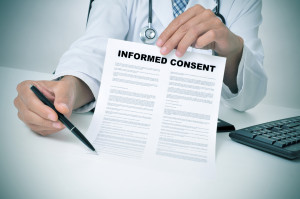
a doctor in his office showing an informed consent document and pointing with a pen where the patient must to sign

a doctor in his office showing an informed consent document and pointing with a pen where the patient must to sign


Wednesday, November 18, 2015 10:00 am
Pacific Standard Time (San Francisco, GMT-08:00)


Informed consent is intended to provide patients, clinical trial participants, and others undergoing medical procedures with the information they need to make a decision about whether to undergo a specific procedure or participate in research. The process of informed consent can sometimes be very legal in nature leading to lack of clarity and misunderstanding. This webinar will explain the informed consent process, why patients should pay attention to it, and why rare disease advocates may want to get involved in the process.

Rare disease organizations play a critical role in connecting patients with researchers and the informed consent document is critically important. It outlines who will have access to research data that results from a study. Understanding the informed consent process and how to engage will help patients receive the greatest benefit.


Panelists:
Megan O'Boyle bio photoMegan O’Boyle

Megan’s 15-year-old daughter, Shannon has Phelan-McDermid Syndrome (PMS), an ultra rare condition. This diagnosis includes autism, intellectual disabilities, epilepsy, ADHD, lymphedema, and other medical conditions.

For the past 5 years Megan has volunteered for the PMS Foundation’s Research Support Committee. She is the Principal Investigator for the Phelan-McDermid Syndrome Data Network (PMS_DN, PCORnet) and the Phelan-McDermid Syndrome International Registry (PMSIR). She directed the biosample collection at the 2012 PMSF Family Conference, creating a biorepository of over 30 DNA and fibroblast samples.

Megan is passionate about the importance of the patient’s voice in: research, drug development, clinical trial design, development of related legislation, and quality of life decisions. She advocates for data sharing, collaborating with other advocacy groups, sharing resources, a genetics-first approach and streamlining IRB practices and policies.

Megan and her family live in Arlington, VA.


john-wilbanksJohn Wilbanks

John Wilbanks is the Chief Commons Officer at Sage Bionetworks. Previously, Wilbanks worked as a legislative aide to Congressman Fortney “Pete” Stark, served as the first assistant director at Harvard’s Berkman Center for Internet & Society, founded and led to acquisition the bioinformatics company Incellico, Inc., and was executive director of the Science Commons project at Creative Commons. In February 2013, in response to a We the People petition that was spearheaded by Wilbanks and signed by 65,000 people, the U.S. government announced a plan to open up taxpayer-funded research data and make it available for free. Wilbanks holds a B.A. in philosophy from Tulane University and also studied modern letters at the Sorbonne.

Moderator:
Danny_LevineDaniel Levine, Founder & Principal, Levine Media Group

Daniel Levine is an award-winning business journalist who has reported on the life sciences, economic development, and business policy issues throughout his 25-year career. Since 2011, he has served as the lead editor and writer of Burrill Media’s acclaimed annual book on the biotech industry and hosts The Burrill Report’s weekly podcast. His work has appeared in The New York Times, The Industry Standard, TheStreet.com, and other national publications.


Register here: https://globalgenes.org/webinarinformedconsent/