Adrenal Insufficiency: Primary and Secondary

By Dr Tomislav Meštrović, MD, PhD

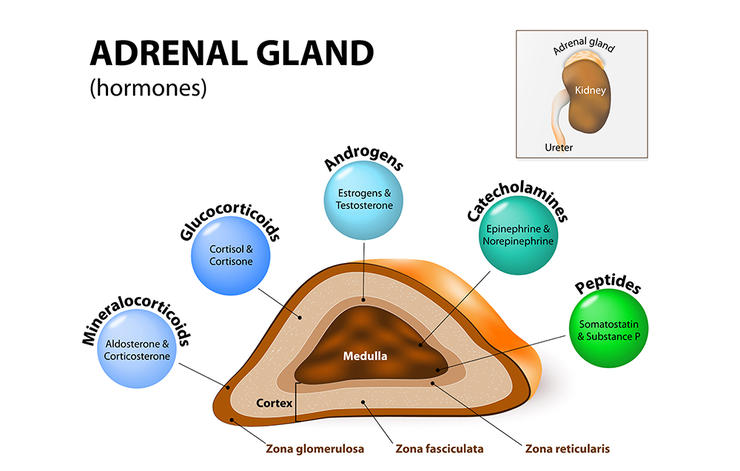
Adrenal insufficiency is a condition that develops when most of the adrenal gland is not functioning normally. Primary adrenal insufficiency arises due to the damage of the glands or because of using drugs that halt synthesis of cortisol. On the other hand, secondary adrenal insufficiency stems from processes that inhibit the secretion of the adrenocorticotropic hormone (ACTH) by the hypophysis as a result of a hypothalamic or pituitary pathology. The former is sometimes also referred to as tertiary adrenal insufficiency.

Adrenal insufficiency is still a significant challenge for both patients and their physicians, but also scientists and researchers. In the past decade, long-term studies with adequate follow-up have shown a surge in mortality and morbidity, as well as impaired quality of life in individuals with this condition.

Primary Adrenal Insufficiency

In developed countries, the most common cause of primary adrenal insufficiency is autoimmune adrenalitis, whereas in the developing world tuberculosis is still considered a primary causative factor. Moreover, in young males, an X-linked adrenoleukodystrophy (also known as the less severe form of adrenomyeloneuropathy) must also be considered.

Histopathologically, in autoimmune primary adrenal insufficiency, there is a diffuse mononuclear cell infiltrate that can gradually progress to atrophy. Primary adrenal insufficiency is linked to both cortisol and mineralocorticoid deficiency.

Recent research drew attention to drug-related and infectious causes of adrenal insufficiency. Antifungal agents are known to substantially reduce cortisol synthesis, while imunosuppression associated with human immunodeficiency virus (HIV) has resulted in a resurgence of infectious causes, most notably tuberculous and CMV adrenalitis.

Secondary Adrenal Insufficiency

Secondary adrenal insufficiency has three principal causes: adrenal suppression after exogenous glucocorticoid or ACTH administration, abnormalities of the hypothalamus or pituitary gland that lead to ACTH deficiency, as well as adrenal suppression upon the correction of endogenous glucocorticoid hypersecretion.

Any lesion of the hypophysis or hypothalamus can result in secondary adrenal insufficiency; some of the examples are space-occupying lesions such as adenomas, craniopharyngiomas, sarcoidosis, fungal infections, trauma, and also metastases from distant malignant processes.

The histologic appearance of the adrenal glands in secondary adrenal insufficiency can range from normal to complete atrophy of the cortex (with preserved medulla). In contrast to primary adrenal insufficiency, secondary types are associated with the lack of cortisol, but not mineralocorticoid deficiency.

Clinical Features of Adrenal Insufficiency

The clinical presentation of adrenal insufficiency is related to the rate of onset and severity of adrenal deficiency. In a large number of cases, the disease has a gradual onset, thus the diagnosis can be made only when the affected individual presents with an acute crisis due to an inadequate rise in cortisol secretion during a physiologic stress. Such acute adrenal insufficiency (also known as the Addisonian crisis) is a medical emergency.

On the other hand, the course of chronic adrenal insufficiency is more subtle and insidious, with the predomination of symptoms such as fatigue, weakness, weight loss, diarrhea or constipation, muscle cramps, pain in joints and postural hypotension (low blood pressure). Salt craving and low-grade fever may also be present.

The classic physical finding that can help in differentiating primary from secondary adrenal failure is hyperpigmentation of the skin or the “suntan that does not fade”. Furthermore, patients with secondary adrenal insufficiency may present with additional symptoms related to pituitary disease (e.g., menstrual disturbances, loss of libido, galactorrhea, or hypothyroidism).

Laboratory Findings and Management

In cases of adrenal insufficiency, the complete blood count usually reveals anemia, neutropenia, eosinophilia, and relative lymphocytosis. Common chemical abnormalities include metabolic acidosis and prerenal azotemia, while hyponatremia, hypoglycemia, and hyperkalemia may also be present.

A cosyntropin stimulation test (also known as ACTH or Synacthen test) is required to establish the diagnosis of adrenal insufficiency. Magnetic resonance imaging (MRI) of the hypophysis in secondary adrenal insufficiency and computed tomography (CT) of the adrenal glands in primary adrenal insufficiency can aid in establishing a diagnosis. The adrenal glands appear normal in cases of autoimmune disorder.

Glucocorticoid replacement in patients with adrenal insufficiency can be lifesaving. Nevertheless, renal crisis is still a threat to patients’ lives, which is why awareness and adequate preventative measures receive increasing attention in the recent years.

Reviewed by Susha Cheriyedath, MSc

From http://www.news-medical.net/health/Adrenal-Insufficiency-Primary-and-Secondary.aspx

Low Oxytocin Levels Linked to Reduced Empathy

People suffering from low levels of oxytocin perform worse on empathy tasks, according to new research presented at the 2016 Society for Endocrinology annual conference.

The research suggests that hormone replacement could improve the psychological well-being of those living with low levels, according to researchers at the University of Cardiff.

Oxytocin is often referred to as the “love hormone” due to its role in human behavior, including sexual arousal, recognition, trust, anxiety, and mother-infant bonding. It is produced by the hypothalamus — an area of the brain that controls mood and appetite — and stored in the pituitary gland.

For the study, researchers investigated empathic behavior in people who they suspected of having reduced oxytocin levels due to one of two medical conditions caused in response to pituitary surgery.

The study assessed 20 people with cranial diabetes insipidus (CDI). In CDI, the body has reduced levels of ADH, a chemical also produced in the hypothalamus and structurally very similar to oxytocin.

The researchers also assessed 15 people with hypopituitarism (HP), a condition in which the pituitary gland does not release enough hormones.

These two patient groups were compared to a group of 20 healthy people.

The researchers gave all participants two tasks designed to test empathy, both relating to the recognition of emotional expression. They also measured each group’s oxytocin levels and found that the 35 CDI and HP participants had slightly lower oxytocin compared to the healthy people. The researchers noted that a larger sample is required to establish statistical significance.

The researchers also discovered that the CDI and HP groups performed significantly worse on empathy tasks, compared to the healthy control group. In particular, CDI participants’ ability to identify expressions was predicted by their oxytocin levels — those with the lowest levels of oxytocin produced the worst performances, according to the study’s findings.

“This is the first study which looks at low oxytocin as a result of medical, as opposed to psychological, disorders,” said Katie Daughters, lead researcher. “If replicated, the results from our patient groups suggest it is also important to consider medical conditions carrying a risk of low oxytocin levels.”

“Patients who have undergone pituitary surgery, and in particular those who have acquired CDI as a consequence, may present with lower oxytocin levels,” she continued. “This could impact on their emotional behavior, and in turn affect their psychological well-being. Perhaps we should be considering the introduction of oxytocin level checks in these cases.”

The researchers said they hope to expand their study to further replicate and confirm their findings. They added that the study presents only preliminary results, and has not been peer reviewed.

Source: Society for Endocrinology

From http://psychcentral.com/news/2016/11/06/low-oxytocin-levels-linked-to-reduced-empathy/112110.html

Hydrocortisone Dosing for Adrenal Insufficiency

In a randomized crossover study, higher doses resulted in modestly higher blood pressure.

No universally accepted glucocorticoid replacement dose exists for patients with adrenal insufficiency. When hydrocortisone is used, divided doses often are given to mimic natural diurnal variation (higher dose early, lower dose later). In this double-blind crossover study, researchers compared the blood pressure effects of higher and lower hydrocortisone doses in 46 Dutch patients with secondary adrenal insufficiency. Each patient received courses of high-dose and low-dose hydrocortisone (10 weeks each, in random order), according to a dosing protocol. For example, a 70-kg patient received 15 mg daily during the low-dose phase (7.5 mg, 5.0 mg, and 2.5 mg before breakfast, lunch, and dinner, respectively), and twice these amounts during the high-dose phase.

Mean blood pressure was significantly higher at the end of the high-dose phase, compared with the low-dose phase (systolic/diastolic difference, 5/2 mm Hg). Plasma renin and aldosterone levels were lower with high-dose than with low-dose hydrocortisone, presumably reflecting hydrocortisone’s mineralocorticoid activity.

COMMENT

Although the higher blood pressure with high-dose hydrocortisone was modest, it conceivably could be consequential over many years of treatment. However, these researchers have published quality-of-life outcomes from this study elsewhere (Neuroendocrinology 2016; 103:771), and those outcomes generally were better with high-dose than with low-dose therapy. This study was too brief to be definitive, but it does highlight potential tradeoffs involved in glucocorticoid dosing for adrenal insufficiency. Whether the findings apply to patients with primary adrenal insufficiency is unclear.

EDITOR DISCLOSURES AT TIME OF PUBLICATION

  • Disclosures for Allan S. Brett, MD at time of publication Nothing to disclose

CITATION(S):

From http://www.jwatch.org/na42734/2016/11/03/hydrocortisone-dosing-adrenal-insufficiency

Severe Trauma May Damage The Brain as Well as the Psyche

NOTE: This is only a portion of the article.  Read the entire post at http://www.nytimes.com/1995/08/01/science/severe-trauma-may-damage-the-brain-as-well-as-the-psyche.html?pagewanted=all

Cortisol is a major means the body uses, with adrenaline, to arouse itself so quickly; its action, for example, triggers an increase in blood pressure and mobilizes energy from fat tissue and the liver.

“The dark side of this picture is the neurological effects,” said Dr. Sapolsky. “It’s necessary for survival, but it can be disastrous if you secrete cortisol for months or years on end. We’ve known it could lead to stress-exacerbated diseases like hypertension or adult onset diabetes. But now we’re finding the hippocampus is also damaged by these secretions.”

Studies in animals show that when glucocorticoids are secreted at high levels for several hours or days, there is a detectable effect on memory, though no neuronal death. But with sustained release from repeated stress, “it eventually kills neurons in the hippocampus,” said Dr. Sapolsky. “This has been shown solidly in rats, with the cell biology well understood.”

A parallel effect has long been known among patients with Cushing’s disease, a hormonal condition in which tumors in the adrenal or pituitary glands or corticosteroid drugs used for a prolonged time cause the adrenal glands to secrete high levels of a hormone called ACTHm and of cortisol. Such patients are prone to a range of diseases “in any organ with stress sensitivity,” including diabetes, hypertension and suppression of the immune system, said Dr. Sapolsky.

Cushing’s patients also have pronounced memory problems, especially for facts like where a car was parked. “The hippocampus is essential for transferring such facts from short-term to long-term memory,” said Dr. Sapolsky.

In 1993, researchers at the University of Michigan reported that magnetic resonance imaging had shown an atrophy and shrinkage of the hippocampus in patients with Cushing’s disease; the higher their levels of cortisol, the more shrinkage.

In an apparent paradox, low levels of cortisol in post-trauma victims were found in a separate research report, also in the July issue of The American Journal of Psychiatry. Dr. Rachel Yehuda, a psychologist at Mount Sinai Medical School in New York City, found the lower levels of cortisol in Holocaust survivors who had been in concentration camps 50 years ago and who still had post-traumatic symptoms.

“There are mixed findings on cortisol levels in trauma victims, with some researchers finding very high levels and others finding very low levels,” said Dr. Sapolsky. “Biologically speaking, there may be different kinds of post-traumatic stress.”

In a series of studies, Dr. Yehuda has found that those post-trauma patients who have low cortisol levels also seem to have “a hypersensitivity in cell receptors for cortisol,” she said. To protect itself, the body seems to reset its cortisol levels at a lower point.

The low cortisol levels “seem paradoxical, but both too much and too little can be bad,” said Dr. Yehuda. “There are different kinds of cells in various regions of the hippocampus that react to cortisol. Some atrophy or die if there is too little cortisol, some if there is too much.”

Dr. Yehuda added, “In a brain scan, there’s no way to know exactly which cells have died.”

To be sure that the shrinkage found in the hippocampus of trauma victims is indeed because of the events they suffered through, researchers are now turning to prospective studies, where before-and-after brain images can be made of people who have not yet undergone trauma, but are at high risk, or who have undergone it so recently that cell death has not had time to occur.

Dr. Charney, for example, is planning to take M.R.I. scans of the brains of emergency workers like police officers and firefighters and hopes to do the same with young inner-city children, who are at very high risk of being traumatized over the course of childhood and adolescence. Dr. Pitman, with Dr. Yehuda, plans a similar study of trauma victims in Israel as they are being treated in emergency rooms.

Dr. Yehuda held out some hope for people who have suffered through traumatic events. “It’s not necessarily the case that if you’ve been traumatized your hippocampus is smaller,” she said. She cited research with rats by Dr. Bruce McEwen, a neuroscientist at Rockefeller University, showing that atrophied dendritic extensions to other cells in the hippocampus grew back when the rats were given drugs that blocked stress hormones.

Dr. Sapolsky cited similar results in patients with Cushing’s disease whose cortisol levels returned to normal after tumors were removed. “If the loss of hippocampal volume in trauma victims is due to the atrophy of dendrites rather than to cell death, then it is potentially reversible, or may be so one day,” he said.

NOTE: This is only a portion of the article.  Read the entire post at http://www.nytimes.com/1995/08/01/science/severe-trauma-may-damage-the-brain-as-well-as-the-psyche.html?pagewanted=all

Endocrine Society issues new guidelines on hypopituitarism

The Endocrine Society today issued a Clinical Practice Guideline that recommends treating insufficient hormone levels in individuals with hypopituitarism by replacing hormones at levels as close to the body’s natural patterns as possible.

The guideline, titled “Hormonal Replacement in Hypopituitarism in Adults: An Endocrine Society Clinical Practice Guideline,” was published online and will appear in the November 2016 print issue of The Journal of Clinical Endocrinology & Metabolism (JCEM), a publication of the Endocrine Society.

Hypopituitarism, or pituitary insufficiency, occurs when the pituitary gland does not produce sufficient amounts of hormones–the chemical signals that regulate respiration, reproduction, growth, metabolism, sexual function and other important biological functions. The pituitary gland is often called the master gland because the hormones it produces impact many bodily functions. As a result, hypopituitarism can cause a range of symptoms, according to the Hormone Health Network.

The rare disorder can occur due to abnormal development or later in life as a result of a tumor, traumatic brain injury, hemorrhage or autoimmune condition, according to the Society’s

“Hypopituitarism can manifest as low levels of a variety of hormones, including cortisol, thyroid hormone, estrogen, testosterone and growth hormone,” said Maria Fleseriu, MD, FACE, of Oregon Health & Science University in Portland, OR. Fleseriu chaired the task force that developed the guideline. “The goal of treatment should be to restore hormone levels as close to healthy levels as possible The interactions between these hormones also are very important, and patients might require dose changes of one or more of the replacement hormones after starting or discontinuing another one.”

In recommending treatment options, the guideline task force followed the overriding principle of using hormone replacement therapy dose size and timing to mimic the body’s natural functioning as closely as possible.

Accurate and reliable measurements of hormones play a central role in diagnosing hypopituitarism and monitoring the effectiveness of treatments, Fleseriu said. Healthcare providers need to keep in mind technical considerations to ensure the testing procedure is as accurate as possible.

The guideline addresses special circumstances that may affect the treatment of patients with hypopituitarism, including pregnancy care, post-surgical care following pituitary or other operations, treatment in combination with anti-epilepsy medication, and care following pituitary apoplexy–a serious condition that occurs when there is bleeding into the gland or blood flow to it is blocked.

Recommendations from the guideline include:

  • Measurements of both free thyroxine and thyroid-stimulating hormone are needed to evaluate central hypothyroidism, a condition where the thyroid gland does not produce enough hormones because it isn’t stimulated by the pituitary gland.
  • People who have central hypothyroidism should be treated with levothyroxine in doses sufficient to raise levels of the thyroid hormone free thyroxine to the upper half of the reference range.
  • Growth hormone stimulation testing should be used to diagnose patients with suspected growth hormone deficiency.
  • People who have proven cases of growth hormone deficiency and no contraindications should be offered growth hormone replacement as a treatment option.
  • Premenopausal women who have central hypogonadism, a condition where the sex glands produce minimal amounts or no hormones, can undergo hormone treatment, provided there are no contraindications.
  • People producing abnormally large volumes of dilute urine should be tested for central diabetes insipidus–a rare condition that leads to frequent urination–by analyzing the concentration of their blood and urine.
  • For patients who have low levels of glucocorticoid hormones, hydrocortisone can be given in a daily single or divided dose.
  • All hypopituitarism patients should be instructed to obtain an emergency card, bracelet or necklace warning about the possibility of adrenal insufficiency.
  • Patients who are suspected of having an adrenal crisis due to secondary adrenal insufficiency should receive an immediate injection of 50 to 100 milligrams of hydrocortisone.
  • People who have central adrenal insufficiency should receive the lowest tolerable dose of hydrocortisone replacement on a long-term basis to reduce the risk of metabolic and cardiovascular disease.
Source:

The Endocrine Society

From http://www.news-medical.net/news/20161013/Endocrine-Society-issues-new-guidelines-on-hypopituitarism.aspx