Multiple aberrant hormone receptors in Cushing’s Syndrome

Eur J Endocrinol. 2015 May 13. pii: EJE-15-0200. [Epub ahead of print]
Multiple Aberrant Hormone Receptors in Cushing’s Syndrome.

Abstract

The mechanisms regulating cortisol production when ACTH of pituitary origin is suppressed in primary adrenal causes of Cushing’s syndrome include diverse genetic and molecular mechanisms. These can lead either to constitutive activation of the cAMP system and steroidogenesis or to its regulation exerted by the aberrant adrenal expression of several hormone receptors, particularly G-protein coupled hormone receptors (GPCR) and their ligands.

Screening for aberrant expression of GPCR in BMAH and unilateral adrenal tumors of patients with overt or subclinical CS demonstrates the frequent co-expression of several receptors. Aberrant hormone receptors can also exert their activity by regulating the paracrine secretion of ACTH or other ligands for those receptors in BMAH or unilateral tumors.

The aberrant expression of hormone receptors is not limited to adrenal Cushing’s syndrome but can be implicated in other endocrine tumors including primary aldosteronism and Cushing’s disease. Targeted therapies to block the aberrant receptors or their ligands could become useful in the future.

PMID:
25971648
[PubMed – as supplied by publisher]

“My feet are killing me!” An unusual presentation of Cushing’s syndrome

Adverse effects of steroid excess on bone metabolism are well established but presentation of Cushing’s syndrome with metabolic bone disease is reported to be uncommon. We describe a case of Cushing’s syndrome presenting with pathological fractures probably present for 8 years before diagnosis.

A 33 year old nurse first sustained spontaneous stress fractures of her metatarsals in 1994, with repeated fractures occurring up to 2002. In 2001 she developed hypertension, acute lumbar back pain and gained weight.

In 2002 she was admitted to hospital with chest/back pain. Lumbar spine X-ray showed new fracture of L3,old fractures of L4/5,with fractured ribs on CXR. Isotope bone scan revealed multiple hot spots. MRI showed collapse of T8 with features consistent with malignant disease. The primary malignancy was sought and a left-sided 1.5 centimetre thyroid nodule detected.

Suspicious cytology prompted thyroid lobectomy revealing follicular variant of papillary carcinoma. T8 biopsy revealed chronic infection with Propionobacteria rather than metastatic carcinoma. Despite antibiotic therapy further spontaneous vertebral fractures developed. Bone densitometry revealed Z scores of minus 2.4 at L2-4, minus 2.5 and 2.9 at the hips.

Referral to our centre prompted investigations for Cushing’s syndrome. Serum potassium was 4.1 millimols per litre, androgens, calcitonin and urinary catecholamines all normal. TSH was suppressed by T4 therapy. Urinary free cortisol values were raised,(563-959 nanomols per 24hours) with loss of diurnal rhythm in cortisol secretion (9am 429-586,midnight 397-431 nanomols per litre)and no suppression on low or high dose dexamethasone. Abdominal CT showed a 3.5 centimetre adrenal mass. These findings were consistent with adrenal dependent Cushing’s syndrome. Risedronate and metyrapone were commenced before adrenalectomy, completion thyroidectomy and ablative radioiodine.
Comment: Cushing’s syndrome may present with spontaneous fractures in both axial and appendicular skeleton in the absence of marked clinical features. This case demonstrates the importance of thorough investigation of unexplained fractures.

LM Albon, JD Rippin & JA Franklyn

From http://www.endocrine-abstracts.org/ea/0005/ea0005p26.htm

Cushing’s Syndrome

Prof André Lacroix, MDcorrespondence,  Richard A Feelders, MD, Constantine A Stratakis, MD, Lynnette K Nieman, MD

Common Asthma Steroids Linked to Side Effects in Adrenal Glands

(Reuters Health) – After stopping steroids commonly prescribed for asthma and allergies, a significant number of people may experience signs of malfunctioning in the adrenal glands, a European study finds.

So-called adrenal insufficiency can be dangerous, especially if the person’s body has to cope with a stress like surgery, injury or a serious illness, the study authors say.

“The takeaway message of the study is that in corticosteroid use there is a substantial risk of adrenal insufficiency,” senior author Dr. Olaf Dekkers, an endocrinologist at Aarhus University in Denmark, said by email. “Patients should be aware of this risk and be informed about potential symptoms.”

Those symptoms can include fatigue, dizziness, weight loss and salt cravings, the authors write in the Journal of Clinical Endocrinology and Metabolism.

Corticosteroids are man-made drugs designed to mimic the hormone cortisol, which the adrenal glands produce naturally. The drugs are usually used to counter inflammation in a wide range of conditions, including asthma, psoriasis, rheumatoid arthritis, lupus, blood cancers and organ transplants.

People with adrenal insufficiency do not make enough of two hormones, cortisol and aldosterone. Cortisol helps the body respond to stress, recover from infections and regulate blood pressure and metabolism. Aldosterone helps maintain the right amounts of salt, potassium and water in the body.

While on steroids, the body often produces less of these hormones naturally, and after coming off the drugs it can take a while for natural production to ramp back up. The result is adrenal insufficiency, which can be treated with medication to replace cortisol or aldosterone.

Dekkers and colleagues analyzed 74 research articles published from 1975 to 2014, covering a total of 3753 study participants, to see how different doses and types of corticosteroid treatment might impact the likelihood of developing adrenal insufficiency after treatment.

Researchers found the risk of adrenal insufficiency was highest when corticosteroids were taken orally or injected, and lower with inhaled, nasal or topical treatment.

When they looked just at patients using steroids for asthma, the researchers found that the risk of adrenal insufficiency was about 7 percent with inhaled corticosteroids, but about 44 percent with other formulations including oral medication.

Only about 2 percent of asthma patients on the lowest dose of steroids experienced adrenal insufficiency, compared with about 22 percent on the highest doses.

Similarly, slightly more than 1 percent of asthma patients on short-term steroids developed adrenal insufficiency, compared with about 27 percent on long-term treatment.

There is no way to safely halt treatment with corticosteroids that can rule out the potential for adrenal insufficiency, Dekkers said.

The side effect is more likely when patients take higher doses of steroids or remain on treatment for longer than three weeks, said Dr. Roberto Salvatori, medical director of the pituitary center at Johns Hopkins Hospital in Baltimore.

“It’s likely, and it’s often overlooked because most often the people who prescribe corticosteroids aren’t endocrinologists; they are in other specialities and they don’t recognize the symptoms of adrenal insufficiency,” said Salvatori, who wasn’t involved in the study.

He gives his patients on corticosteroids medical identification bracelets or necklaces to wear so they can be identified as at risk for adrenal insufficiency in an emergency. “This is a very important issue that’s not on the radar screen,” he said.

To be sure, more physicians are aware of the risk now than in the 1970s, and the standard doses and durations of corticosteroid treatment have been reduced in part because of this risk, said Dr. Douglas Coursin, a professor at the University of Wisconsin School of Medicine and Public Health in Madison. He, too, advises medical alert bracelets for patients on long-term or high-dose treatment.

“In the past, patients with asthma, certain immune diseases, those receiving some cancer therapies and those who had a solid organ transplant received higher doses for longer periods of time,” Coursin, who wasn’t involved in the study, said by email. “Overall, I think the risk may be lower than outlined in the study because of practice changes.”

SOURCE: bit.ly/1PjRHYw Journal of Clinical Endocrinology and Metabolism, online April 6, 2015.

Day Fourteen, Cushing’s Awareness Challenge 2015

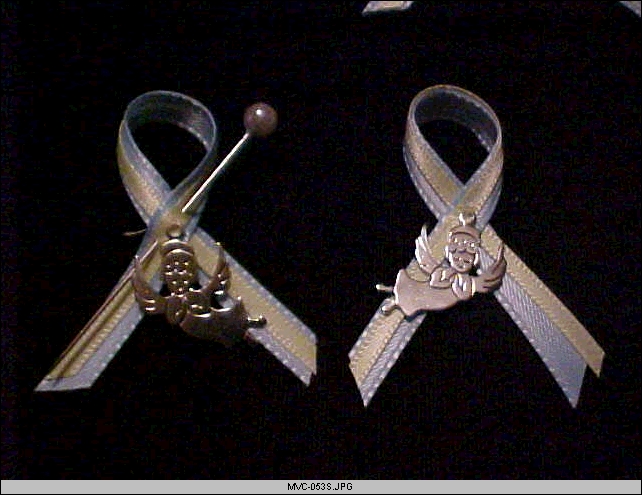
In Day 9 on April 9, 2015, I wrote about how we got the Cushing’s colors of blue and yellow.  This post is going to be about the first Cushing’s ribbons.


I was on vacation  in September, 2001 when SuziQ called me to let me know that we had had our first Cushie casualty (that we knew about).

On the message boards, Lorrie wrote: Our dear friend, Janice died this past Tuesday, September 4, 2001. I received an IM from her best friend Janine, tonight. Janine had been reading the boards, as Janice had told her about this site, and she came upon my name and decided to IM me. I am grateful that she did. She said that she knew that Janice would want all of us to know that she didn’t just stop posting.

For all of the newcomers to the board that did not know Janice, she was a very caring individual. She always had something positive to say. Janice was 36 years old, was married and had no children. She had a miscarriage in December and began to have symptoms of Cushing’s during that pregnancy. After the pregnancy, she continued to have symptoms. When discussing this with her doctor, she was told that her symptoms were just related to her D&C. She did not buy this and continued until she received the accurate diagnosis of Cushing’s Syndrome (adrenal) in March of 2001. Tragically, Janice’s tumor was cancerous, a very rare form of Cushing’s.

Janice then had her tumor and adrenal gland removed by open adrenalectomy, a few months ago. She then began chemotherapy. She was very brave through this even though she experienced severe side effects, including weakness and dizziness. She continued to post on this board at times and even though she was going through so much, she continued with a positive attitude. She even gave me a referral to a doctor a few weeks ago. She was my inspiration. Whenever I thought I had it bad, I thought of what she was dealing with, and I gained more perspective.

Janice was having difficulty with low potassium levels and difficulty breathing. She was admitted to the hospital, a CT scan was done and showed tumor metastasis to the lungs. She then was begun on a more aggressive regimen of chemo. She was discharged and apparently seemed to be doing well.

The potassium then began to drop again, she spiked a temp and she was again admitted to the hospital. She improved and was set to be discharged and then she threw a blood clot into her lungs. She was required to be put on a ventilator. She apparently was at high risk for a heart attack. Her husband did not want her to suffer anymore and did not want her to suffer the pain of a heart attack and so chose for the doctors to discontinue the ventilator on Tuesday. She died shortly thereafter.

Janice was our friend. She was a Cushie sister. I will always remember her. Janine asked me to let her know when we get the Cushing’s ribbons made as she and the rest of Janice’s family would like to wear them in her memory. She said that Janice would want to do anything she could to make others more aware of Cushing’s.

The image at the top of the page shows the first blue and yellow ribbon which were worn at Janice’s funeral.  When we had our “official ribbons” made, we sent several to Janice’s family.

Janice was the first of us to die but there have been more, way too many more, over the years.  I’ll write a bit more about that on Day 21.