Treatment-Resistant Depression with Acute Psychosis in an Adolescent Girl with Cushing’s Syndrome

Cushing’s syndrome (CS) is a rare disease with multiple somatic signs and a high prevalence of co-occurring depression. However, the characteristics of depression secondary to CS and the differences from major depression have not been described in detail. In this case, we report a 17-year-old girl with treatment-resistant depression with a series of atypical features and acute psychotic episodes, which is a rare condition secondary to CS. This case showed a more detailed profile of depression secondary to CS and highlighted the differences with major depression in clinical features, and it will improve insight into the differential diagnosis especially when the symptoms are not typical.

Introduction

Depression is a chronic medical problem with typical features, including sadness, decreased interest and cognitive impairments. In clinical practice, depression can occur in other medical conditions, especially endocrinopathies, making it a more complex problem and exhibiting a challenge in diagnosis, especially in first-contact patients or when the clinical presentations are atypical. It is generally accepted that patients who failed to respond to two or more adequate trials of first-line antidepressants for treatment of major depressive episode are considered to have treatment-resistant depression (TRD) (1). For patients with TRD, a throughout evaluation should be performed to investigate the underlying organic causes.

Cushing’s syndrome is a rare but serious endocrine disease due to chronic exposure to excess circulating glucocorticoids with multisystem effects (2). The etiology of CS can be divided into adrenocorticotropic hormone (ACTH)-dependent and ACTH-independent. It is characterized by a series of clinical features suggesting hypercortisolism, for example, metabolic abnormalities, hypertension and bone damages (3). A variety of neuropsychiatric symptoms, such as mood disturbance, cognitive impairment and psychosis, also occur in more than 70% CS patients (4). CS is life-threating if not timely diagnosed and treated, however, correct diagnosis can be delayed due to the wide range of phenotypes, especially when they are not classical (5).

Previous studies suggested that major depression was the most common co-morbid complication in CS patients, with a prevalence of 50–81% (6). Haskett’s study confirmed that 80% of subjects meet the criteria for major depression with melancholic features (7). As reported in most recent investigations, depression in CS was not qualitatively different from non-endocrine major depression and the similarity was even striking (38). However, some studies showed different conclusions and suggested a high prevalence of atypical depressive features other than melancholic features in CS (9). TRD and anxious depression has also been reported in CS patients (1011). All of the above conclusions suggest the complexity of depression with CS, and no distinct features have been found pertaining to hypercortisolism (1213). Although the intensity of depression secondary to CS is severe, suicidal depression is still an unusual condition (14).

Psychosis is a rare manifestation of CS, and the literature is limited. Only a few cases have been reported so far, especially combined with depression episode. In this case report, we presented a girl with CS, who experienced suicidal depression with a series of atypical features and acute psychotic symptoms, which was rarely reported in previous studies.

Case description

A 17-year-old girl with major depression for 3 years was involuntarily admitted for severe depressed mood with suicide attempts (neck cutting; tranquilizer overdose) and paranoid state in the last 2 weeks without any precipitating factors.

She experienced depressed and irritable mood in the last 3 years, and her condition had not improved although several adequate trials of antidepressants were used with satisfactory compliance (sertraline 200 mg/d; escitalopram oxalate 20 mg/d). Over the 2 weeks prior to admission, her depression continued to worsen with increasing irritability, she committed several suicide attempts, and once stated that she was unsafe at home. On admission, her heart rate was 116 bpm with blood pressure 139/81 mmHg and normal temperature; physical examination showed a cushingoid and virilising appearance (central obesity, swollen and hirsute face with acne, purple striae on the abdomen and bruises on the arms). No other abnormal signs were noted. She seemed drowsy but arousable, and she walked slowly, with bent shoulders and an inclined head. Mental state examination was hard to continue because she was passive and reluctant to answer our questions. Venlafaxine 150 mg/d has been used for more than 3 months with poor effects at that time.

Besides, weight gain (25 kg), irregular menstrual cycles and numbness of the hands and feet in the last half year were reported by her parents. Otherwise, No episodes of elevated mood and hyperactivity were found during the history taking. She does not have remarkable family history of serious physical or psychiatric illness; she was healthy, had an extroverted personality and had never used substances. Her premorbid social function and academic performance were good.

Several clinical characteristics found during the following mental state examinations were listed as follows:

• Prominent cognitive impairment without clouding of consciousness: Forgetfulness was frequently noted; she easily forgot important personal information such as her school and grade; she could not recall the suicide attempt committed recently and perfunctorily ascribed it to a casual event; and it was hard for her to recall her medical history (as it is for other depressive patients). The serial seven subtraction task could not be finished, and the interpretation of the proverb was superficial. Difficulty was found in attention maintenance; an effective conversation was hard to perform because she was mind-wandering (we needed to call her name to get her immediate attention) and often interrupted our conversations by introducing irrelevant topics or leaving without apparent reasons.

• Decreased language function that did not match her educational background: The patient could not find the proper words to articulate her feelings; instead, many simple, obscure and contradictory words were used, which made her response seem perfunctory. For example, she responded with “I do not know,” “I forgot,” or kept silent in response to our questions, which made the conversations hard to perform.

• Psychotic outbursts: Once she left the psychological therapy group, ranted about being persecuted and shook in fearfulness, stated “call the police” repeatedly, negative of explanations and comforts from others, but she cannot give any explanation about her behavior when calmed down. Sometimes she worried about being killed by the doctors but the worries were transient and fleeting.

• Depressed mood and negative thoughts (self-blame, worthlessness, and hopelessness) that were not persistent and profound: During most of her hospitalization, the patient seemed confused and apathetic, with intermittent anxiety, but she could not clearly express what made her anxious. Her crying and sadness happened suddenly, without obvious reasons, and she even denied low mood sometimes and said she had come to the hospital for cardiac disease treatment (she did not have any cardiac disease). Her description of her depressed mood was uncertain when specifically questioned, and she rarely reported her depressed feeling spontaneously as other depressed patients would. She did not even have the desire to get rid of her “depression”. Her suicidal ideation was transient and impulsive, and she could not provide a comprehensive explanation for her suicide attempts, such as emptiness, worthlessness or guilt. She was impatient and restless when interacting with others or when a more in-depth conversation was performed. She seemed apathetic, gave little response to emotional support from others and did not care about relevant important issues, such as hospital discharge or future plans. Elevated mood and motor activity were not found during the admission period.

• Social withdrawal and inappropriate behaviors: The patient often walked or stayed alone for long periods of time before speaking to other patients suddenly, which seemed improper or even odd in normal social interactions. During most hospitalization periods, lethargy and withdrawal were obvious.

Diagnostic assessment and therapeutic interventions

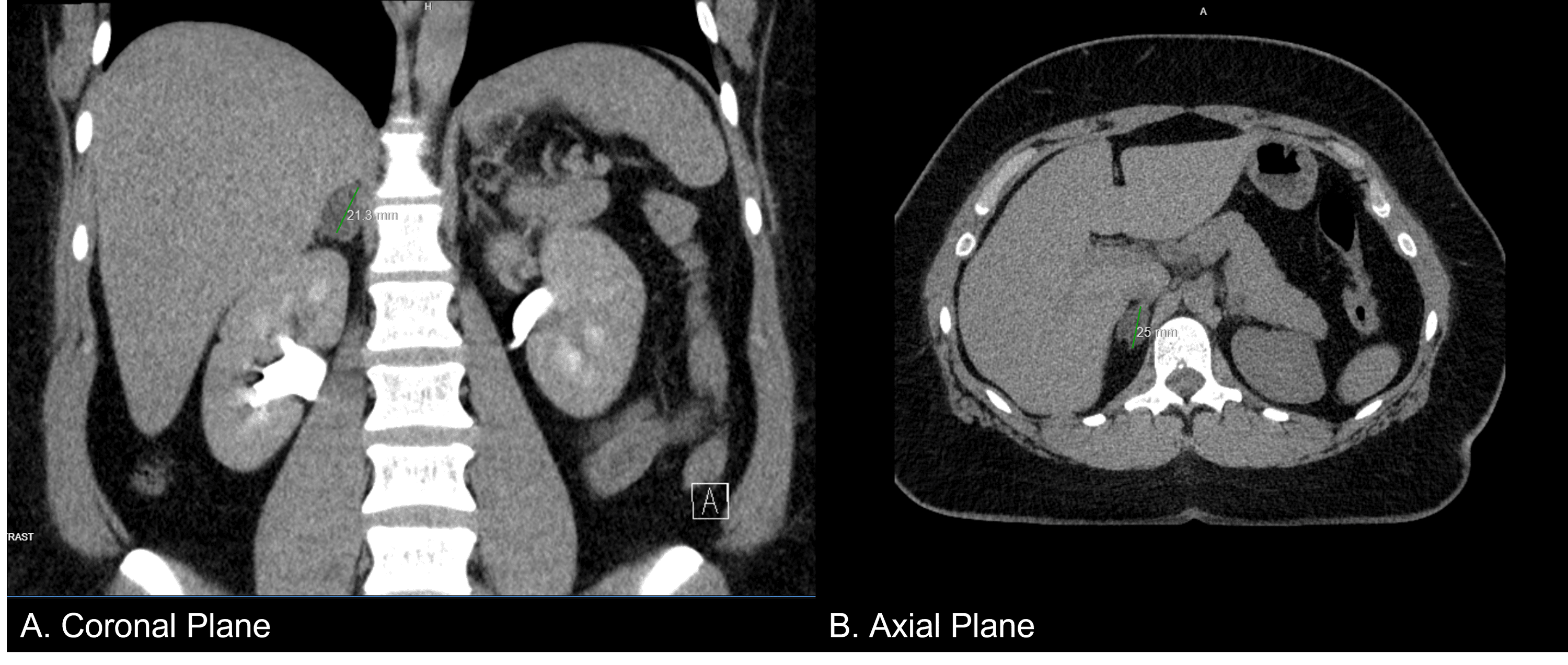
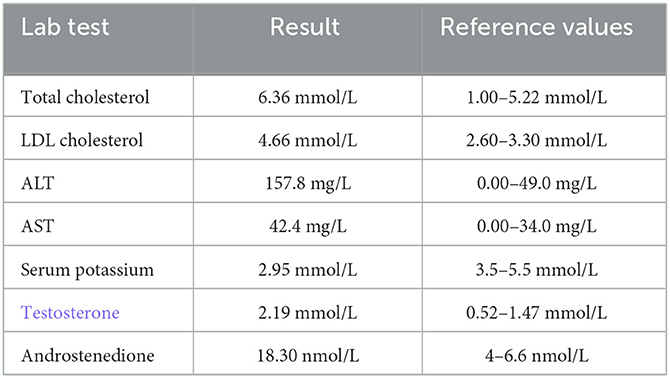
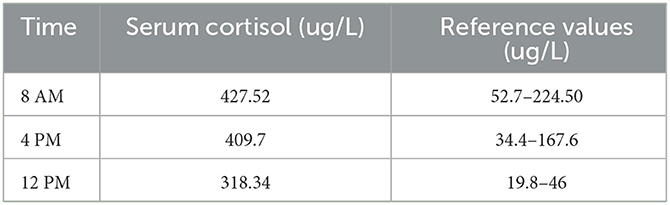
Basic laboratory tests reported abnormal results (Table 1), and the circulating cortisol level was far beyond the upper limit of normal, with a loss of circadian rhythm (Table 2); 24-h urinary free cortisol : >2897 nmol/24 h↑(69–345 nmol/24 h); serum ACTH (8 AM, 4 PM, 12 PM): 1.2 pg/ml, 1.3 pg/ml, <1 pg/ml (normal range: 1–46 pg/ml); low-dose dexamethasone suppression test (1 mg) (cortisol value): 1010.1 nmol/l (not suppressed; normal range: <50 nmol/L); high dose dexamethasone inhibition test (cortisol value): 879.0 nmol/l (not suppressed); OGTT and glycosylated hemoglobin; both normal. Other results used to rule out hyperaldosteronism and pheochromocytoma, such as the aldosterone/renin rate (ARR) and the vanillylmandelic acid, dopamine, norepinephrine and epinephrine levels, were reported to be within normal limits; ECG suggested sinus tachycardia; dual-energy X-ray bone density screening values were lower than the normal range; B-mode ultrasound showed a right adrenal tumor and fatty liver. The abdominal CT scan showed a tumor in her right adrenal gland. Brain MRI showed no abnormalities. Psychometric tests including HAMD (Hamilton depression scale), MADRS (Montgomery-Asberg Depression Rating Scale), WAIS (Wechsler Intelligence Scale) and MMSE (Mini-mental State Examination) were hard to perform due to her poor attention and non-cooperation presentation.

Table 1
www.frontiersin.orgTable 1. Abnormal lab results for the patient.

Table 2
www.frontiersin.orgTable 2. Circulating cortisol level.

The patient had little response to adequate antidepressants in our hospital, including fluoxetine 20–60 mg/d and aripiprazole 5–30 mg/d combined with 3 sessions of MECT (modified electroconvulsive therapy), which was stopped because of her poor cognitive function and poor response.

Her last diagnosis was right adrenal adenoma and non-ACTH-dependent Cushing’s syndrome. The adrenal adenoma was excised through laparoscopic resection in a general hospital. Hydrocortisone, amlodipine besylate, potassium chloride, metoprolol and escitalopram were used for treatment. Escitalopram 10 mg/d has been used until 2 weeks after her discharge. At the follow-up visit about 1 month after the surgery, her depressive mood had significantly improved, with no self-injury behaviors or psychiatric symptoms found. The patient was calm but still reacted slowly, and cognitive impairment was still found at the last visit.

Discussion

Previous studies have reported a close association between CS and depression (15). However, suicidal depression with atypical features and acute psychosis have rarely been reported, and the characteristics of depression secondary to CS and the differences from major depression have not been described in detail.

This case did not show a full-blown presentation of major depression according to the DSM-5. She presented with a series of features that were not typical as major depression, however, it should be emphasized that the atypical features were not identical to those noted in DSM5, especially regarding increased appetite and hypersomnia. The features suggesting difference from major depression were listed as follows: (a) depressed mood is not constant, it does not exist in most of the day; it is episodic without regular cyclicity, can happen or exacerbate suddenly; (b) the ability to describe anhedonia is poor, she can’t report her feeling voluntarily like other patients with major depression, which might be partially related with the decreased language function; (c) depressive thoughts such as self-accusation and feelings of guilt, the classical symptoms of major depression, were rarely found; (d) more exaggerated cognitive impairment and decrease language function; € partial or little useful effect of SSRIs (selective serotonin reuptake inhibitors). The above characteristics were similar to those reported in Starkman’s research (131617), in which increasing irritability was also regarded as one of the important features for depression in CS.

The literature about depression combined with psychosis episode in CS is rare. This patient showed acute episodes of persecutory delusion with disturbed behaviors; her psychotic symptoms occurred suddenly and were fragmentary, with poor sensitivity to antipsychotics; the content was not constant (she never referred to and even denied the unsafe feeling at home before admission), it changed with the environment and was not consistent with the mood state. However, we cannot reach an effective conclusion because the evidence was small; thus, these findings should be evaluated in combination with other clinical presentations.

Conclusion

Most reviews have concluded that mood disturbances in CS indicate “major depression”, but the detailed description of clinical features are lack, making clinicians uncertain about the presentation and confused about the diagnosis, especially when the somatic signs are indiscriminate. The clinical presentation in this case highlighted the fact that there is a wide range of phenotypes of depression in CS, for some CS patients, the depressive features are not highly consistent with the criteria of major depression regardless of the melancholic or atypical features in the DSM-5. Thus, a thorough and periodic evaluation is necessary to detect the underlying organic and psychosocial causes if the clinical symptoms are not typical (10).

Data availability statement

The original contributions presented in the study are included in the article/supplementary material, further inquiries can be directed to the corresponding author.

Ethics statement

Written informed consent was obtained from the individual(s), and minor(s)’ legal guardian/next of kin, for the publication of any potentially identifiable images or data included in this article.

Author contributions

XY, SC, XJ, and XH were responsible for clinical care. XY did literature search and drafted the manuscript. XH revised the manuscript. All authors contributed to the article and have approved the final manuscript.

Acknowledgments

We want to thank Juping Fu, Ying Zhang, and all other medical staff who gave careful nursing to the patient.

Conflict of interest

The authors declare that the research was conducted in the absence of any commercial or financial relationships that could be construed as a potential conflict of interest.

Publisher’s note

All claims expressed in this article are solely those of the authors and do not necessarily represent those of their affiliated organizations, or those of the publisher, the editors and the reviewers. Any product that may be evaluated in this article, or claim that may be made by its manufacturer, is not guaranteed or endorsed by the publisher.

References

1. Kverno KS, Mangano E. Treatment-resistant depression: approaches to treatment. J Psychosoc Nurs Ment Health Serv. (2021) 59:7–11. doi: 10.3928/02793695-20210816-01

PubMed Abstract | CrossRef Full Text | Google Scholar

2. Mokta J, Sharma R, Mokta K, Ranjan A, Panda P, Joshi I. Cushing’s disease presenting as suicidal depression. J Assoc Physicians India. (2016) 64:82–3.

PubMed Abstract | Google Scholar

3. Sonino N, Fava G. A Psychiatric disorders associated with Cushing’s syndrome epidemiology, pathophysiology and treatment. CNS Drugs. (2001) 15:361–73. doi: 10.2165/00023210-200115050-00003

PubMed Abstract | CrossRef Full Text | Google Scholar

4. Pivonello R, Simeoli C, De Martino MC, Cozzolino A, De Leo M, Iacuaniello D, et al. Neuropsychiatric disorders in Cushing’s syndrome. Front Neurosci. (2015) 9: 129. doi: 10.3389/fnins.2015.00129

PubMed Abstract | CrossRef Full Text | Google Scholar

5. Barbot M, Zilio M, Scaroni C. Cushing’s syndrome: Overview of clinical presentation, diagnostic tools and complications. Best Pract Res Clin Endocrinol Metab. (2020) 34:101380. doi: 10.1016/j.beem.2020.101380

PubMed Abstract | CrossRef Full Text | Google Scholar

6. Sonino N, Fava GA, Raffi AR, Boscaro, Fallo F. Clinical correlates of major depression in Cushing’s disease. Psychopathology. (1998) 31:302–6. doi: 10.1159/000029054

PubMed Abstract | CrossRef Full Text | Google Scholar

7. Haskett RF. Diagnostic categorization of psychiatric disturbance in Cushing’s syndrome. Am J Psychiatry. (1985) 142:911–6. doi: 10.1176/ajp.142.8.911

PubMed Abstract | CrossRef Full Text | Google Scholar

8. Fava GA. Affective disorders and endocrine disease. New insights from psychosomatic studies. Psychosomatics. (1994) 35:341–53. doi: 10.1016/S0033-3182(94)71755-2

PubMed Abstract | CrossRef Full Text | Google Scholar

9. Dorn LD, Burgess ES, Dubbert B, Simpson SE, Friedman T, Kling M, et al. Psychopathology in patients with endogenous Cushing’s syndrome: ‘atypical’ or melancholic features. Clin Endocrinol. (1995) 43:433–42. doi: 10.1111/j.1365-2265.1995.tb02614.x

PubMed Abstract | CrossRef Full Text | Google Scholar

10. Anil Kumar BN, Grover S. Cushing’s syndrome masquerading as treatment resistant depression indian. J Psychol Med. (2016) 38:246–8. doi: 10.4103/0253-7176.183095

PubMed Abstract | CrossRef Full Text | Google Scholar

11. Loosen PT, Chambliss B, DeBold CR, Shelton R, Orth D. Psychiatric phenomenology in Cushing’s disease. Pharmacopsychiatry. (1992) 25:192–8. doi: 10.1055/s-2007-1014405

PubMed Abstract | CrossRef Full Text | Google Scholar

12. Sonino N, Fava GA, Belluardo P, Girelli ME, Boscaro, M. Course of depression in Cushing’s syndrome: response to treatment and comparison with Graves’ disease. Horm Res. (1993) 39:202–6. doi: 10.1159/000182736

PubMed Abstract | CrossRef Full Text | Google Scholar

13. Starkman MN, Schteingart DE, Schork M. A depressed mood and other psychiatric manifestations of Cushing’s syndrome: relationship to hormone levels. Psychosom Med. (1981) 43:3–18. doi: 10.1097/00006842-198102000-00002

PubMed Abstract | CrossRef Full Text | Google Scholar

14. Al-Harbi SD, Mashi AH, Al Johani N. A case of Cushing’s disease presenting with isolated suicidal attempt clin med insights. Case Rep. (2021) 14:11795476211027668. doi: 10.1177/11795476211027668

PubMed Abstract | CrossRef Full Text | Google Scholar

15. Fujii Y, Mizoguchi Y, Masuoka J, Matsuda Y, Abe T, Anzai K, et al. Cushing’s syndrome and psychosis: a case report and literature review. prim care companion. CNS Disord. (2018) 20:279. doi: 10.4088/PCC.18br02279

PubMed Abstract | CrossRef Full Text | Google Scholar

16. Starkman MN, Giordani B, Berent S, Schork MA, Schteingart D. Elevated cortisol levels in Cushing’s disease are associated with cognitive decrements. Psychosom Med. (2001) 63:985–93. doi: 10.1097/00006842-200111000-00018

PubMed Abstract | CrossRef Full Text | Google Scholar

17. Starkman MN. Neuropsychiatric findings in Cushing syndrome and exogenous glucocorticoid administration. Endocrinol Metab Clin North Am. (2013) 42:477–88. doi: 10.1016/j.ecl.2013.05.010

PubMed Abstract | CrossRef Full Text | Google Scholar

Keywords: Cushing’s syndrome (CS), treatment-resistant depression, acute psychosis, adrenal adenoma (AA), adolescent girl

Citation: Yin X, Chen S, Ju X and Hu X (2023) Case report: Treatment-resistant depression with acute psychosis in an adolescent girl with Cushing’s syndrome. Front. Psychiatry 14:1170890. doi: 10.3389/fpsyt.2023.1170890

From https://www.frontiersin.org/articles/10.3389/fpsyt.2023.1170890/full

BMD may Underestimate Bone Deterioration for Women with Endogenous Cushing’s Syndrome

Nearly one-third of women with endogenous Cushing’s syndrome and normal bone mineral density have a low trabecular bone score, according to study data.

“A large proportion of patients had degraded microarchitecture despite normal BMD,” Hiya Boro, DM, MD, MBBS, consultant in endocrinology, diabetes and metabolism at Aadhar Health Institute in India, and colleagues wrote. “The risk of fracture may be underestimated if BMD alone is measured. Hence, trabecular bone score should be added as a routine complementary tool in the assessment of bone health in patients with Cushing’s syndrome.”

About one-third of women with endogenous Cushing's syndrome have normal BMD and low trabecular bone score. Data were derived from Boro H, et al. Clin Endocrinol. 2023;doi:10.1111/cen.14944.

Researchers conducted a cross-sectional study at a single center in India from March 2018 to August 2019. The study included 40 women with overt endogenous Cushing’s syndrome and 40 healthy sex-matched controls. Seum and salivary cortisol and plasma adrenocorticotropic hormone (ACTH) were measured. Participants were considered ACTH independent if they had a level of less than 2.2 pmol/L. Areal BMD was measured at the lumbar spine, femoral neck, total hip and distal one-third of the nondominant distal radius. Low BMD for age was defined as a z score of less than –2. Trabecular bone score was measured at the lumbar spine. Fully degraded microarchitecture was defined as a trabecular bone score of 1.2 or lower and partial degradation was a trabecular bone score of 1.21 to 1.34.

Of the 40 women with Cushing’s syndrome, 32 were ACTH-dependent and the other eight were ACTH independent. Of the independent group, seven had adrenal adenoma and one had adrenocortical carcinoma.

Women with Cushing’s syndrome had lower BMD at the lumbar spine (0.812 g/cm2 vs. 0.97 g/cm2< .001), femoral neck (0.651 g/cm2 vs. 0.773 g/cm2< .001) and total hip (0.799 g/cm2 vs. 0.9 g/cm2< .001) than the control group.

“No significant difference was noted in the distal radius BMD,” the researchers wrote. “This may be explained by the fact that cortisol excess predominantly affects trabecular rather than cortical bone.”

Absolute trabecular bone score was lower in the Cushing’s syndrome group compared with controls (1.2 vs. 1.361; P < .001). Based on trabecular bone score, 42.5% of women with Cushing’s syndrome had fully degraded bone microarchitecture, 45% had partially degraded microarchitecture and 12.5% had normal microarchitecture.

“In our study, 32.5% of patients had normal BMD with low trabecular bone score, thus highlighting the fact that patients may have normal BMD despite degraded microarchitecture,” the researchers wrote. “As such, assessment of BMD alone may underestimate the risk of fractures in patients with Cushing’s syndrome.”

Cushing Syndrome Caused by an Ectopic ACTH-Producing Pituitary Adenoma of the Clivus Region

Abstract

Rationale:

Ectopic ACTHproducing pituitary adenoma (EAPA) of the clivus region is extraordinarily infrequent condition and merely a few reports have been reported to date.

Patient concerns:

The patient was a 53-year-old woman who presented with Cushing-like appearances and a soft tissue mass in the clivus region.

Diagnoses:

The final diagnosis of clivus region EAPA was established by clinical, radiological and histopathological findings.

Interventions:

The patient underwent gross total clivus tumor resection via transsphenoidal endoscopy.

Outcomes:

Half a year after surgery, the patient Cushing-like clinical manifestations improved significantly, and urinary free cortisol and serum adrenocorticotropin (ACTH) returned to normal.

Lessons:

Given the extreme scarcity of these tumors and their unique clinical presentations, it may be possible to misdiagnose and delayed treatment. Accordingly, it is especially crucial to summarize such lesions through our present case and review the literature for their precise diagnosis and the selection of optimal treatment strategies.

1. Introduction

Pituitary adenoma arises from the anterior pituitary cells and is the commonest tumor of the sellar region.[1] It makes up approximately 10% to 15% of all intracranial tumors.[2] Ectopic pituitary adenoma (EPA) is defined as a pituitary adenoma that occurs outside the sellar area and has no direct connection to normal pituitary tissue.[3] The most frequent sites of EPA are the sphenoid sinus and suprasellar region, and much less frequent sites including the clivus region, cavernous sinus, and nasopharynx.[4]

Hypercortisolism and the series of symptoms it leads to is termed Cushing syndrome (CS).[5] CS is classified into adrenocorticotropin (ACTH)-dependent and ACTH-independent CS depending on the cause, accounting for 80% to 85% and 15% to 20% of cases, respectively.[6] Pituitary adenoma accounts for ACTH-dependent CS 75% to 80%, while ectopic ACTH secretion accounts for the remaining 15% to 20%.[7] Ectopic CS is a very rare disorder of CS caused by an ACTH-secreting tumor outside the pituitary or adrenal gland.[8] It has been reported that ectopic ACTHproducing pituitary adenoma (EAPA) can occur in the sphenoid sinus, cavernous sinus, clivus, and suprasellar region,[9] with EAPA in the clivus region being extremely rare, and merely 6 cases have been reported in the English literature (Table 1).[10–15] Furthermore, as summarized in the Table 1, EAPA in the clivus area has unique symptoms, which may lead to misdiagnosis as well as delay in treatment. Therefore, we herein described a case of CS from an EAPA of the clivus region and reviewed relevant literature for the purpose of further understanding this extraordinarily unusual condition.

Table 1 – Literature review of cases of primary clival ectopic ACTHproducing pituitary adenoma (including the current case).

Reference Age (yr)/sex Symptoms Imaging findings Maximum tumor diameter (mm) Preoperative elevated hormone IHC Surgery RT Follow-up (mo) Outcome
Ortiz et al 1975[10] 15/F NA NA NA NA NA Right transfrontal craniotomy, NA Yes NA Symptomatic relief
Anand et al 1993[11] 58/F Anosphrasia, blurred vision, occasional left frontal headache, Routine radiographic evaluation revealed a clival tumor and nasopharyngeal mass with bone erosion. MRI demonstrated a Midline homogeneous mass. 30 ACTH ACTH in a few isolated cells Maxillotomy approach, GTR Yes 12 Symptomatic relief
Pluta et al 1999[12] 20/F Cushing syndrome MRI revealed a hypodense contrast-enhancing lesion. NA ACTH ACTH Transsphenoidal surgery, GTR No 18 Symptomatic relief
Shah et al 2011[13] 64/M Facial paresthesias, myalgias, decreased muscle strength, and fatigue CT imaging showed a clival mass. 21 ACTH ACTH NA, GTR No 7 Symptomatic relief
Aftab et al 2021[14] 62/F Transient unilateral visual loss MRI showed a T2 heterogeneously enhancing hyperintense lesion. 21 No ACTH Transsphenoidal resection, GTR NO 6 Symptomatic relief
Li et al 2023[15] 47/F Bloody nasal discharge, dizziness and headache CT revealed an ill-defined mass eroding the adjacent bone. MRI T1 showed a heterogeneous mass with hypointensity, hyperintensity on T2-weighted images and isointensity on diffusion-weighted images. 58 NA ACTH Transsphenoidal endoscopy, STR Yes 2 Symptomatic relief
Current case 53/F Headache, and dizziness, Cushing syndrome CT demonstrated bone destruction and a soft tissue mass. MRI T1 revealed irregular isointense signal, and MRI T2 showed isointense signal/slightly high signal. 46 ACTH ACTH Transsphenoidal endoscopy, GTR NO 6 Symptomatic relief
ACTH = adrenocorticotropin, CT = computed tomography, GTR = gross total resection, IHC = immunohistochemistry, MRI = magnetic resonance imaging, NA = not available, RT = radiotherapy, STR = subtotal resection.

2. Case presentation

A 53-year-old female presented to endocrinology clinic of our hospital with headache and dizziness for 2 years and aggravated for 1 week. Her past medical history was hypertension, with blood pressure as high as 180/100 mm Hg. Her antihypertensive medications included amlodipine besylate, benazepril hydrochloride, and metoprolol tartrate, and she felt her blood pressure was well controlled. In addition, she suffered a fracture of the thoracic vertebrae 3 month ago; and bilateral rib fractures 1 month ago. Physical examination revealed that the patient presented classical Cushing-like appearances, including moon face and supraclavicular and back fat pads, and centripetal obesity (body mass index, 25.54 kg/m2) with hypertension (blood pressure, 160/85 mm Hg).

Laboratory studies revealed high urinary free cortisol levels at 962.16 µg/24 hours (reference range, 50–437 µg/24 hours) and absence of circadian cortisol rhythm (F [0am] 33.14 µg/dL, F [8am] 33.52 µg/dL, F [4pm] 33.3 µg/dL). ACTH levels were elevated at 90.8 pg/mL (reference range, <46 pg/mL). The patient low-dose dexamethasone suppression test demonstrated the existence of endogenous hypercortisolism. High-dose dexamethasone suppression test results revealed that serum cortisol levels were suppressed by <50%, suggesting the possibility of ectopic ACTH-dependent CS. Serum luteinizing hormone and serum follicle stimulating hormone were at low levels, <0.07 IU/L (reference range, 15.9–54.0 IU/L) and 2.57 IU/L (reference range, 23.0–116.3 IU/L), respectively. Insulin-like growth factor-1, growth hormone (GH), prolactin (PRL), thyroid stimulating hormone, testosterone, progesterone and estradiol test results are all normal. Oral glucose tolerance test showed fasting glucose of 6.3 mmol/L and 2-hour glucose of 18.72 mmol/L; glycosylated hemoglobin (HbA1c) was 7.1%. Serum potassium fluctuated in the range of 3.14 to 3.38 mmol/L (reference range, 3.5–5.5 mmol/L), indicating mild hypokalemia.

High-resolution computed tomography (CT) scan of the sinuses revealed osteolytic bone destruction of the occipital clivus and a soft tissue mass measuring 20 mm × 30 mm × 46 mm (Fig. 1A). The mass filled the bilateral sphenoid sinuses and involved the cavernous sinuses, but the pituitary was normal. Cranial MR scan showed the T1W1 isointense signal and the T2W1 isointense signal/slightly high signal in the sphenoid sinus and saddle area (Fig. 1B–D). Bone density test indicated osteoporosis.

F1
Figure 1.: 

Radiological findings. (A) CT demonstrated bone destruction and a soft tissue mass on the occipital clivus (white arrow). (B) Axial view of the MR T1 revealed irregular isointense signal in the sphenoid sinus and saddle area (white arrow). (C and D) Axial view and sagittal view of the MR T2 showed isointense signal/slightly high signal in the sphenoid sinus and saddle area (black arrow). CT = computed tomography.

Subsequently, the patient underwent gross total clivus tumor resection via transsphenoidal endoscopy. During surgery, the tumor was found to be light red in color with a medium texture, and the tumor tissue protruded into the sphenoidal sinus cavity and eroded the clival area. Histologically, the tumor cells were nested, with interstitially rich blood sinuses and organoid arrangement (Fig. 2A). The tumor cells were relatively uniform in size, with light red cytoplasm, delicate pepper salt-like chromatin, and visible nucleoli (Fig. 2B). In addition, mitosis of tumor cells was extremely rare. Immunohistochemically, the neoplasm cells were diffuse positive for CK (Fig. 2C), CgA (Fig. 2D), ACTH (Fig. 2E), Syn and CAM5.2, with low Ki-67 labeling index (<1%) (Fig. 2F). Simultaneously, all other pituitary hormone markers like GH, thyroid stimulating hormone, PRL, luteinizing hormone, as well as follicle stimulating hormone were negatively expressed. On the basis of these medically historical, clinical, laboratorial, morphologic, and immunohistochemical findings, the final pathological diagnosis of an EAPA was established.

F2
Figure 2.: 

HE and immunohistochemical findings. (A) Histologic sections revealed morphologically homogeneous tumor cells in nests with a prominent and delicate vascularized stroma (H&E, × 200). (B) The tumor cells had fine chromatin with visible nuclei and rare mitoses (H&E, × 400). CK (C), CgA (D) and ACTH (E) immunohistochemically showed diffuse reactivity of the tumor cells (SP × 200). (F) The proliferation index is <1% on Ki-67 staining (SP × 200).

When evaluated 2 months after surgery, her Cushing-like characteristics had well improved, and her blood pressure was normal. Furthermore, her serum cortisol and ACTH returned to the normal levels. Six-month postoperative follow-up revealed that serum cortisol and ACTH were stable at normal levels, and no signs of tumor recurrence were detected on imaging.

3. Discussion

EAPA is defined as an ACTH-secreting ectopic adenoma located outside the ventricles, and has no continuity with the normal intrasellar pituitary gland.[9] ACTH promotes cortisol secretion by stimulating the adrenal cortical fasciculus. The clinical manifestations of hypercortisolism are diverse, and the severity is partly related to the duration of the cortisol increase.[8] Clival tumors are typically uncommon, accounting for 1% of all intracranial tumors. There are many differential diagnoses for clival lesions, including the most common chordoma (40%), meningioma, chondrosarcoma, astrocytoma, craniopharyngioma, germ cell tumors, non-Hodgkin lymphoma, melanoma, metastatic carcinoma, and rarely pituitary adenoma.[16] The commonest clival EPA is a PRL adenoma, followed by null cell adenoma, and the least common are ACTH adenoma and GH adenoma.[2] The clival EAPA is extremely unwonted, and only 6 other cases apart from ours have been reported in literature so far (Table 1).

The average age of the patients with these tumors was 48 years (range, 15–64 years). There was a obvious female predominance with a female-to-male prevalence ratio of 6:1. Only 2 patients (2/6, 33.3%) with reported clinical symptoms, including our patients, presented with overt clinical manifestations of CS. Compression of the mass on adjacent structures (e.g., nerves) may result in anosphrasia, visual impairment, headache, myalgias, decreased muscle strength, dizziness and facial sensory abnormalities. The diagnosis and localization of these tumors relied heavily on radiological imaging. Head MRI was the most basic method used for them detection, for localization adenomas and their invasion of surrounding structures to guide the choice of treatment and surgical options methods. Radiographic characteristics had been reported in 6 patients with EAPA in the clivus region. All of these patients (6/6, 100%) had initial positive findings of sellar MRI (or CT) identifying an ectopic adenoma before surgery. MR T1 was usually a low-intensity or isointense signal, while MR T2 was usually an isointense or slightly higher signal. The maximum diameter of the tumor was reported in 5 cases, with the mean maximum diameter was 35.2 mm (range, 21–55 mm) according to preoperative MRI and intraoperative observations. As summarized in Table 1, 4/5 clival EAPA cases secreted ACTH. Histologically, all cases (6/6, 100%) expressed ACTH scatteredly or diffusely.

The gold standard for the treatment of CS caused by EAPA was the surgical removal of EPA, which was essential to achieve remission and histological confirmation of the disease.[9] The most common method of EAPA resection in the clivus region was transsphenoidal sinus resection (4/6, 66.67%), followed by craniotomy (1/6, 16.67%) and maxillary osteotomy (1/6, 16.67%). Transsphenoidal endoscopic surgery allowed resection of the EAPA and manipulation of neurovascular structures and avoidance of cerebral atrophy, whereas craniotomy allowed full exposure of the suprasellar region, direct visualization or manipulation of the adenoma, and reduced the risk of postoperative CSF leak.[9] Both approaches had their advantages, and there was no consensus on which surgical approach was best for the treatment of EAPA in the slope area.[9] The choice of the best surgical approach was believed to be based on the condition of the adenoma, as well as the general condition of the patient and the experience of the surgeon.[9] As summarized in Table 1, most complete tumor resections were achieved regardless of the method chosen. A minority of patients underwent postoperative radiotherapy (3/7, 42.86%), and most of them had invasion of the surrounding bone tissue. All patients experienced effective postoperative relief of symptoms.

In summary, due to the rarity of this disorder, an accurate preoperative diagnosis of EAPA in the slope area is extremely challenging for the clinician or radiologist. The final precise diagnosis relies on a combination of clinical symptoms, imaging findings, histology and immunohistochemical markers. For this type of tumor, surgery is an effective treatment to relieve the clinical manifestations caused by tumor compression or hormonal secretion. The choice of postoperative adjuvant radiotherapy is mainly based on the presence of invasion of the surrounding bone tissue. Further cases may be necessary to summarize the clinical features of such lesions and to develop optimal treatment strategies.

Acknowledgments

We would like to thank the patient and her family.

Author contributions

Conceptualization: Yutao He.

Data curation: Ziyi Tang.

Formal analysis: Na Tang.

Methodology: Yu Lu, Fangfang Niu, Jiao Ye, Zheng Zhang, Chenghong Fang.

Writing – original draft: Yutao He.

Writing – review & editing: Yutao He, Lei Yao.

Abbreviations:

ACTH
adrenocorticotropin
CS
cushing syndrome
CT
computed tomography
EAPA
ectopic ACTHproducing pituitary adenoma
EPA
ectopic pituitary adenoma
GH
growth hormone
PRL
prolactin

References

[1]. Gittleman H, Ostrom QT, Farah PD, et al. Descriptive epidemiology of pituitary tumors in the United States, 2004-2009. J Neurosurg. 2014;121:527–35.

[2]. Karras CL, Abecassis IJ, Abecassis ZA, et al. Clival ectopic pituitary adenoma mimicking a Chordoma: case report and review of the literature. Case Rep Neurol Med. 2016;2016:8371697.

[3]. Bălaşa AF, Chinezu R, Teleanu DM, et al. Ectopic intracavernous corticotroph microadenoma: case report of an extremely rare pathology. Rom J Morphol Embryol. 2017;58:1447–51.

[4]. Zhu J, Wang Z, Zhang Y, et al. Ectopic pituitary adenomas: clinical features, diagnostic challenges and management. Pituitary. 2020;23:648–64.

[5]. Paleń-Tytko JE, Przybylik-Mazurek EM, Rzepka EJ, et al. Ectopic ACTH syndrome of different origin-diagnostic approach and clinical outcome. experience of one clinical centre. PLoS One. 2020;15:e0242679.

[6]. Sharma ST, Nieman LK, Feelders RA. Cushing’s syndrome: epidemiology and developments in disease management. Clin Epidemiol. 2015;7:281–93.

[7]. Aniszewski JP, Young WF Jr, Thompson GB, et al. Cushing syndrome due to ectopic adrenocorticotropic hormone secretion. World J Surg. 2001;25:934–40.

[8]. Mohib O, Papleux E, Remmelink M, et al. An ectopic Cushing’s syndrome as a cause of severe refractory hypokalemia in the ICU. Acta Clin Belg. 2021;76:373–8.

[9]. Sun X, Lu L, Feng M, et al. Cushing syndrome caused by ectopic adrenocorticotropic hormone-secreting pituitary adenomas: case report and literature review. World Neurosurg. 2020;142:75–86.

[10]. Ortiz-Suarez H, Erickson DL. Pituitary adenomas of adolescents. J Neurosurg. 1975;43:437–9.

[11]. Anand VK, Osborne CM, Harkey HL. Infiltrative clival pituitary adenoma of ectopic origin. Otolaryngol Head Neck Surg. 1993;108:178–83.

[12]. Pluta RM, Nieman L, Doppman JL, et al. Extrapituitary parasellar microadenoma in Cushing’s disease. J Clin Endocrinol Metab. 1999;84:2912–23.

[13]. Shah R, Schniederjan M, DelGaudio JM, et al. Visual vignette.s Ectopic ACTH-secreting pituitary adenoma. Endocr Pract. 2011;17:966.

[14]. Aftab HB, Gunay C, Dermesropian R, et al. “An Unexpected Pit” – ectopic pituitary adenoma. J Endocr Soc. 2021;5:A557–8.

[15]. Li Y, Zhu JG, Li QQ, et al. Ectopic invasive ACTH-secreting pituitary adenoma mimicking chordoma: a case report and literature review. BMC Neurol. 2023;23:81.

[16]. Wong K, Raisanen J, Taylor SL, et al. Pituitary adenoma as an unsuspected clival tumor. Am J Surg Pathol. 1995;19:900–3.

Hide full references list
Keywords:

clivus regionCushingEctopic ACTHlike appearanceproducing pituitary adenoma

From https://journals.lww.com/md-journal/Fulltext/2023/06230/Cushing_syndrome_caused_by_an_ectopic.32.aspx

Cushing’s Syndrome is Associated with Early Medical- and Surgical-related Complications Following Total Joint Arthroplasty

I’m glad I didn’t know this before my recent knee surgery!

Abstract

Background

Cushing’s syndrome (CS) is a disorder characterized by exposure to supraphysiologic levels of glucocorticoids. The purpose of this study was to evaluate the association between CS and postoperative complication rates following total joint arthroplasty (TJA).

Methods

Patients diagnosed with CS undergoing TJA for degenerative etiologies were identified from a large national database and matched 1:5 to a control cohort using propensity scoring. Propensity score matching resulted in 1,059 total hip arthroplasty (THA) patients with CS matched to 5,295 control THA patients and 1,561 total knee arthroplasty (TKA) patients with CS matched to 7,805 control TKA patients. Rates of medical complications occurring within 90 days of TJA and surgical-related complications occurring within 1 year of TJA were compared using odds ratios.

Results

The THA patients with CS had higher incidences of pulmonary embolism (Odds Ratio (OR) 2.21, P=0.0026), urinary tract infection (OR 1.29, P=0.0417), pneumonia (OR 1.58, P=0.0071), sepsis (OR 1.89, P=0.0134), periprosthetic joint infection (OR 1.45, P=0.0109), and all-cause revision surgery (OR 1.54, P=0.0036). The TKA patients with CS had significantly higher incidences of urinary tract infection (OR 1.34, P=0.0044), pneumonia (OR 1.62, P=0.0042), and dislocation (OR 2.43, P=0.0049) and a lower incidence of manipulation under anesthesia (MUA) (OR 0.63, P=0.0027).

Conclusion

Cushing’s syndrome is associated with early medical- and surgical-related complications following TJA and a reduced incidence of MUA following TKA.

Introduction

Cushing’s syndrome (CS) is characterized by exposure to supraphysiologic levels of glucocorticoids, whether endogenous or exogenous. Chronic exposure to hypercortisolism can lead to the development of comorbidities known to be risk factors for complications following total joint arthroplasty (TJA) including obesity, hypertension, diabetes, hyperlipidemia, and cerebrovascular disease.[1,2] Hypercortisolism is also a known risk factor for the development of osteonecrosis, and there have been several case reports of this disease being caused by endogenous production of corticosteroids.[3, 4, 5, 6, 7, 8] It can therefore be expected that the incidence of arthroplasty procedures among CS patients is likely higher than the general population. It is important to identify and understand patient specific risk factors for complications following TJA. There has been a major push recently to investigate the association between uncommon disorders and complication rates following TJA in order to risk stratify, counsel, and optimize these patients appropriately.[9, 10, 11, 12, 13, 14, 15]

The typical clinical features of CS include increased central adiposity, purple striae, thin skin, fatigue, and proximal atrophy of the upper and lower limbs.[16,17] The most common etiology of endogenous CS is overproduction of adrenocorticotropic hormone (ACTH) from a pituitary adenoma, although ACTH-independent forms of CS may be caused by overproduction of glucocorticoids from the adrenal glands.[2] First-line laboratory tests for the diagnosis of CS include 24-hour urinary free cortisol, late night salivary cortisol, and the dexamethasone suppression test to determine if the negative feedback of the hypothalamic-pituitary-adrenal axis is functioning appropriately.[16] Hypercortisolism associated with CS is known to have a deleterious effect on bone health by decreasing osteoblast function and increasing bone resorption and has been associated with decreased bone mineral density at various sites in the femur including Ward’s triangle, the femoral neck, and the greater trochanter.[18] The effect of these changes in physiology on outcomes following TJA remains unclear. There are few prior case reports describing arthroplasty procedures for CS patients,[3, 4, 5] with one case report of total hip arthroplasty (THA) for femoral head osteonecrosis complicated by pulmonary thromboembolism requiring a 10-day admission to the ICU.[3] However, no large scale studies to date have investigated complication rates following TJA within this patient population. It is therefore important to better understand the risks associated with this pathology. The purpose of this study was to evaluate the association between CS and postoperative complication rates following TJA. We hypothesized that patients who have CS would have increased incidences of early medical- and surgical-related complications.

Section snippets

Methods

This is a retrospective cohort study utilizing the commercially available M151Ortho database via PearlDiver (PearlDiver Inc., Colorado Springs, Colorado). This database contains deidentified records for 151 million patients in the United States in accordance with the Health Insurance Portability and Accountability Act (HIPAA). Patient records were queried using International Classification of Diseases (ICD) codes and Current Procedural Terminology (CPT) codes. This study was deemed exempt from

Results

The THA patients who had CS had significantly higher 90-day incidences of PE (OR 2.21, P=0.0026), UTI (OR 1.29, P=0.0417), pneumonia (OR 1.58, P=0.0071), and sepsis (OR 1.89, P=0.0134) (Table 2). The TKA patients who had CS had significantly higher 90-day incidences of UTI (OR 1.34, P=0.0044) and pneumonia (OR 1.62, P=0.0042) (Table 3). Regarding surgical-related complications, CS patients undergoing THA had significantly higher incidences of PJI (OR 1.45, P=0.0109) and all-cause revision

Discussion

This study revealed that patients who have CS are at increased risk of developing early postoperative complications following TJA. Understanding this risk profile is important for accurate shared decision making between CS patients and their clinicians. Interestingly, CS seems to influence rates of instability and stiffness following TKA as patients in the test cohort were more likely to sustain a dislocation and less likely to undergo MUA. Rates of infectious medical complications including

Conclusion

Cushing’s syndrome is associated with an increased risk of early infectious complications following TJA including UTI, pneumonia, sepsis, and hip PJI and an increased incidence of dislocation following TKA. Interestingly, CS appears to be protective against arthrofibrosis as patients who have CS had lower incidences of MUA following TKA. Clinicians may be guided by this study to accurately risk stratify and counsel patients with CS prior to undergoing TJA.

References (29)


Unmet needs in Cushing’s Syndrome: the Patients

Abstract

Background

Cushing’s syndrome (CS) is a rare condition of chronically elevated cortisol levels resulting in diverse comorbidities, many of which endure beyond successful treatment affecting the quality of life. Few data are available concerning patients’ experiences of diagnosis, care and persistent comorbidities.

Objective

To assess CS patients’ perspectives on the diagnostic and care journey to identify unmet therapeutic needs.

Methods

A 12-item questionnaire was circulated in 2019 by the World Association for Pituitary Organisations. A parallel, 13-item questionnaire assessing physician perceptions on CS patient experiences was performed.

Results

Three hundred twenty CS patients from 30 countries completed the questionnaire; 54% were aged 35–54 and 88% were female; 41% were in disease remission. The most burdensome symptom was obesity/weight gain (75%). For 49% of patients, time to diagnosis was over 2 years. Following treatment, 88.4% of patients reported ongoing symptoms including, fatigue (66.3%), muscle weakness (48.8%) and obesity/weight gain (41.9%). Comparisons with delay in diagnosis were significant for weight gain (P = 0.008) and decreased libido (P = 0.03). Forty physicians completed the parallel questionnaire which showed that generally, physicians poorly estimated the prevalence of comorbidities, particularly initial and persistent cognitive impairment. Only a minority of persistent comorbidities (occurrence in 1.3–66.3%; specialist treatment in 1.3–29.4%) were managed by specialists other than endocrinologists. 63% of patients were satisfied with treatment.

Conclusion

This study confirms the delay in diagnosing CS. The high prevalence of persistent comorbidities following remission and differences in perceptions of health between patients and physicians highlight a probable deficiency in effective multidisciplinary management for CS comorbidities.

Introduction

Cushing’s syndrome (CS) is a morbid endocrine condition due to prolonged exposure to high circulating cortisol levels (123). Hypercortisolism may cause irreversible physical and psychological changes in several tissues, leading to debilitating morbidities which persist over the long term after the resolution of excessive hormone levels, such as cardiovascular complications, metabolic and skeletal disorders, infections and neuropsychiatric disturbances (34). Even patients who have been biochemically ‘cured’ for over 10 years have a residual overall higher risk of mortality, mostly from circulatory disease and diabetes (5). Moreover, people with a history of CS suffer from impaired quality of life (QoL) (6). Several studies suggest that the prevalence of persistent comorbidities is correlated with the duration of exposure to cortisol excess (78). However, as the signs and symptoms of CS overlap with common diseases such as the metabolic syndrome and depression, the time taken to diagnose CS is often long, resulting in a significant number of patients with persistent sequelae and impairments in QoL (69).

Given the burden of the disease, ideal CS treatment would include early diagnosis, curative surgery and multidisciplinary care of comorbidities both pre- and post-cure of CS, including the psychological dimension of the patient’s disease experience (10). Few data are available about patients’ perceptions of the medical journey from first symptoms to diagnosis, treatment and follow-up. The aim of this study was, therefore, to explore CS patients’ experiences of symptoms, diagnosis, care and treatment satisfaction around the world and to compare patients’ perceptions of CS with those of physicians.

Methods

Patient questionnaire design

A 12-item patient questionnaire was developed based on the generally understood clinical characteristics and symptomology of CS, aiming to assess patients’ experiences of symptoms, diagnosis, care and treatment satisfaction (12) (Supplementary File 1, see section on supplementary materials given at the end of this article). The questionnaire was initially offered in English and made available via the SurveyMonkey online platform from March to May 2019. The survey was completed anonymously and required no specific participant identification or any details that could be used to identify individual participants. In addition to basic demographics (i.e. country of residence, sex, age and highest educational level attained), the questionnaire asked ten multiple-choice and two open questions. The survey was shared by the World Association for Pituitary Organisations (WAPO), Adrenal Net, Cushing’s Support & Research Foundation and the Pituitary Foundation, as well as being distributed to local patient associations. As a second step, the questionnaire was translated into eight additional languages (French, Dutch, Spanish, Chinese, Portuguese, Italian and German) and was recirculated by the WAPO, Adrenal Net and China Hypercortisolism Patient Alliance to the different local patient associations for distribution in November 2019. As this was a non-interventional, anonymous patient survey, distributed by the patient associations themselves, and not initiated or funded by a research or educational institution, no ethical review was required. Written consent was obtained from each respondent after full explanation of the purpose and nature of the survey.

Comparative physician survey

In addition, a 13-item physician questionnaire was developed to assess physicians’ perspectives on CS symptoms and comorbidities. This physician questionnaire was conducted by HRA Pharma Rare Diseases at the 2019 European Congress of Endocrinology, in Lyon, France. This anonymous questionnaire was completed by 40 qualified physicians. The responses from the patient survey were compared for context with the physicians’ estimates of the prevalence of CS symptoms and comorbidities. Although the physician questionnaire was conducted independently of the patient questionnaire, and used a different question structure, the comparison with the current patient questionnaire is included to further enrich and contextualise the patient responses.

Data analysis

All responses and answers were collected, coded and analysed using Microsoft Excel. Data preparation involved removing duplicate answers, or where possible analysing and reclassifying qualitative responses reported as ‘other’, based on the accompanying details to new or existing response options.

Statistical methodology

Complementary statistical analyses using SAS software were performed using the chi-square and Fisher tests, depending on the cell counts, to compare (i) the time between first symptoms and diagnosis and the persistence of symptoms and (ii) persistence of symptoms, with the specialities of the physicians currently treating the respondents. Frequency distribution of a particular variable was displayed and compared with the frequency distribution of the comparator variable. A significance level of 0.05 was applied.

Results

Demographic characteristics

Three hundred twenty patients from 30 countries completed the patient questionnaire, with 27% (n  = 87) coming from the United Kingdom and 14% (n  = 44) from the United States of America. More than half (53.7%, n = 172) of the patients were aged between 35 and 54 years, and 88.4% (n  = 283) were female. The majority of patients (53.1%, n = 170) had undergraduate or postgraduate qualifications (Table 1).

Table 1Patient demographics.

Sex N = 319a
 Female 283 (88.4%)
 Male 36 (11.3%)
Age group N = 320
 18–24 years 16
 25–34 years 49
 35–44 years 71
 45–54 years 101
 55–64 years 54
 65–74 years 24
 ≥75 years 5
Regionb N = 320
 Western Europe 222
 North America 60
 China 16
 Australasia 14
 South America 5
 Africa 3
Education N = 320
 High school graduate/secondary education diploma 35%
 Undergraduate degree 25.6%
 Post-graduate degree 27.5%
 Prefer not to say 10.6%
Time from first symptoms to diagnosis N = 320
 0–6 months 18.4%
 6–12 months 15.6%
 1–2 years 14.4%
 2–3 years 18.4%
 3–5 years 11.6%
 5–10 years 8.4%
 10–15 years 7.5%
 15–20 years 0.9%
 20+ years 1.9%
 Unknown 2.8%

aOne patient responded ‘non-binary’. bWestern Europe: United Kingdom (n  = 87), the Netherlands (n  = 38), France (n  = 37), Spain (n  = 12), Denmark (n  = 10), Norway (n  = 9), Germany (n  = 6), Italy (n  = 5), Ireland (n  = 4), Belgium (n  = 4), Poland (n  = 4), Sweden (n  = 2), Malta (n  = 2), Switzerland (n  = 1), Czech Republic (n  = 1); Africa: South Africa (n  = 1), Gabon (n  = 1), Zimbabwe (n  = 1); Australasia: Australia (n  = 8), New Zealand (n  = 6); South America: Colombia (n  = 2), Bolivia (n  = 1), Argentina (n  = 1), Brazil (n  = 1); North America: United States of America (n  = 44), Canada (n  = 13), Costa Rica (n  = 1), Mexico (n  = 1), Dominican Republic (n  = 1).

Time to diagnosis

The time to diagnosis from first reporting of CS symptoms was declared to be within 2 years for 48.4% (n  = 155) (Table 1) and was over 2 years in 48.7% (n  = 156) and over 3 years in 30.3% (n  = 97).

Initial symptoms

A broad range of signs and symptoms were initially noticed by patients, with weight gain, hirsutism or acne, fatigue, sleep disturbances, depressive symptoms, muscle weakness, anxiety and hypertension all being reported in over 50% of patients (Table 2). Obesity/weight gain was most commonly cited (75%, n = 240) as being burdensome. Fatigue, feelings of depression or mood problems, sleep disturbances, muscle weakness and hirsutism were also very commonly (>40%) mentioned as being burdensome. Burdensome symptoms classified as ‘other’ were rare (<1%) and included issues such as hormonal problems and dental problems.

Table 2Patient-reported symptoms (multiple answers were possible).

Symptoms first noticed (%) Most burdensome perceived symptoms before diagnosis (%)
Weight gain 85.0 75.0
Hirsutism/acne 76.3 42.8
Fatigue 66.3 54.1
Sleep disturbances 64.4 41.9
Skin problems 64.7 21.3
Depression/mood problems 58.8 48.1
Muscle weakness 57.8 43.4
Anxiety 54.1 39.1
Hypertension 52.5 22.2
Loss of concentration 45.0 28.4
Memory problems 41.9 30.3
Menstrual disturbances 35.6 12.5
Decreased libido 32.5 12.5
Bone problems 23.1 14.4
Infections 23.8 10.3
Glucose intolerance 17.2 8.4
Blood clot 5.3
Pain(s) 3.1
Vision problems 2.8
Headache 2.5
Cravings 1.6
Other 8.4 1.9

Person who made the initial CS diagnosis

In 53.8% (n  = 172) of cases, an endocrinologist made the initial diagnosis of CS or prescribed the first screening tests, Table 3. General practitioners made 18.1% of diagnoses (n  = 58), in the remaining cases a diversity of other physicians directly or indirectly contributed to make the diagnosis, as indicated in Table 3. A small but noticeable number (5.6%, n = 18) of patients self-diagnosed and then convinced their physician to order the diagnostic tests.

Table 3Patient perception of physician specialty.

Specialty Person who made the initial diagnosis or suspected Cushing’s syndrome (%) (n = 320) Physicians involved in the management of Cushing’s syndrome (%) (n = 320)
Endocrinologist 53.8 97.8
General practitioner/family doctor 18.1 56.3
Self-diagnosed 5.6
Hospital/emergency doctor 3.8
Internist 2.5 0.9
Gynecologist 1.9 14.1
Cardiologist 1.9 13.4
Bone specialist 1.9 14.1
Dermatologist 1.6 11.6
Haematologist 0.9 3.8
Ophthalmologist 0.9 3.1
Nurse 0.9 2.5
Radiologist 0.9 0.6
Family or friend 0.9
Psychiatrist or psycologist 0.9 23.4
Healer 0.6 2.2
Surgeon 0.6
Oncologist 0.3 6.6
Gastroenterologist 0.3 1.3
Neurologist 0.3 4.1
Others 1.6
Physiotherapist 14.4
Dietician 9.7
Neurosurgeon 8.1
Social worker 4.1
Ear, nose and throat specialist 1.6
Sports physician 1.3
Sleep specialist 0.9
Urologist 0.6
Orthopaedic surgeon 0.3

Response to treatment

At the time of answering the questionnaire, 55.8% (n  = 178) of patients were not in remission. 40.8% of patients (n  = 130) were in true biochemical remission (Fig. 1). This latter group was a composite including patients who responded: ‘In remission (no treatment)’ (16.3%, n = 52), ‘Received an operation to remove adrenal glands’ (22.9%, n = 73) and ‘Treated with hydrocortisone’ (1.6%, n = 5). Thirteen percent of the patients (n  = 41) were on cortisol-lowering treatment and 6.6% of the patients (n  = 21) had not had or were awaiting surgery. Following treatment for CS, 11.6% of the patients (n  = 37) reported having no further symptoms related to the condition, with 88.4% (n  = 283) still symptomatic. Of the total population (n  = 320), the most bothersome symptoms were fatigue (66.3%, n = 212), muscle weakness (48.8%, n = 156) and obesity/weight gain (41.9%, n = 134) (Table 4).

Figure 1View Full Size
Figure 1
Patient description of their current clinical situation (n = 319). The category ‘Disease in true remission’ combines scores for ‘In remission (no treatment)’ (16.3%), ‘Received an operation to remove adrenal glands’ (22.9%) and ‘Treated with hydrocortisone’ (1.6%). One person did not complete the question.

Citation: Endocrine Connections 11, 7; 10.1530/EC-22-0027

Table 4Persistent symptoms.

Symptom Persistent bothersome symptomsa (%) (n = 320) Treatment received for symptoms (%) (n = 320)
Fatigue 66.3 15.9
Muscle weakness 48.8 17.2
Weight gain 41.9 8.4
Depression, mood problems 36.9 28.8
Poor concentration 35.9 4.1
Memory problems 33.8 5.6
Sleep problems 33.1 14.1
Anxiety 30.6 14.7
Decreased libido 25.3 4.1
Bone problems 19.1 21.9
Hypertension 18.4 29.4
Hirsutism 17.5 4.1
Skin problems 16.6 6.9
Glucose intolerance 8.8 10
Menstrual problems 9.1 4.7
Infections 7.2 4.7
Blood clot 3.8 2.2
Acne 2.8 1.3
Other 4.4 5.3
No treatment 1.3 8.1
Only hydrocortisone 1.6

aUp to five answers were possible.

Comparison of time to diagnosis and persistence of symptoms

To compare the time to diagnosis and the persistence of symptoms following treatment, an analysis of a number of variables was performed comparing the group with persistent symptoms after treatment (n  = 283) with those who did not (n  = 37) in terms of time to diagnosis. Patients with a longer time to diagnosis reported significantly more frequent weight gain (P = 0.008), and more frequent reduced libido (P = 0.03) after treatment. Although not statistically significant, there was a strong trend towards patients reporting a longer time to diagnosis and a greater frequency of persistent perceived bone issues after treatment (P = 0.053), as well anxiety (P = 0.07) and depression/mood concerns (P = 0.08).

Physicians involved in follow-up

Once diagnosed, almost all patients (97.8%, n = 313) were managed by an endocrinologist, followed by a GP/family doctor (56.3%, n = 180). A psychiatrist/psychologist was involved in 23.4% (n  = 75), followed by a physiotherapist (14.4%, n = 46), rheumatologist (14.4%, n = 46), gynecologist (14.1%, n = 45), cardiologist (13.4%, n = 43), dermatologist (11.6%, n = 37) and a dietician (9.7%, n = 31) (Table 3).

Treatment of persistent symptoms

Table 4 shows the prevalence of persistent symptoms after treatment, common ongoing comorbidities included fatigue, muscle weakness and weight gain. The percentage of patients who were treated for comorbidities is also shown. Noticeable undertreatment occurred for many symptoms, for example, fatigue was a consistent symptom for 66.3% (n  = 212), whereas only 15.9% (n  = 51) were receiving ongoing care for fatigue and persistent muscle weakness was reported in 48.8% (n  = 156) with 17.2% (n  = 55) of patients being treated for this (Table 4).

The high frequency of persistent symptoms suggests that patients were not followed-up by specific specialists, for example of the 212 patients with persistent fatigue, only 60 (28.2%) were seeing a psychiatrist/psychologist (Table 4). Enduring poor concentration and memory problems were relatively frequent (35.9%, 33.8%) but were rarely treated by a specialist (4.1 and 5.6%, respectively).

Three-quarters of patients reported that their work life had been affected (75%, n = 240). Social life (65.3%, n = 209), family life (57.8%, n = 185), interpersonal relationships (51.6%, n = 165), and sexual life (48.8%, n = 155) had also been significantly affected by their illness. Thirty-seven percent of the patients (n  = 118) reported that their economic situation had been negatively affected. ‘Other’ responses for this question included reductions in self-esteem, self-image and self-confidence. Sixty-three percent of patients (193/305) were satisfied with their treatment and 36.7% (n  = 112) were not.

Comparative analysis physician questionnaire

In the complementary physician questionnaire (n  = 40), unlike the patient questionnaire where most respondents were from the United Kingdom, the United States of America, the Netherlands and France, most of the physicians surveyed were from Western Europe, although there were representatives from other parts of the world. In the physician questionnaire, 83% (n  = 33) were endocrinologists, 13% (n  = 5) internal medicine specialists and 5% (n  = 2) other disciplines. Sixty percent (n  = 24) had over 10 years clinical experience, and 93% (n  = 37) were experienced in the treatment of CS, seeing an average of 10 patients per year. Of the specialities involved in the care of CS, 96% of physicians (n  = 38) considered endocrinologists to be involved, 48% (n  = 19) included family doctors/GPs, 20% (n  = 8) cardiologists, 28% (n  = 11) psychiatrists/psychologists and 28% (n  = 11) included dieticians. These results are consistent with the patients’ perceptions, with the exception of dieticians, who only 10% of patients reported seeing (Table 3).

Figure 2A compares the frequency of common symptoms that patients found to be most burdensome during the active phase of the disease, with what physicians thought were the most common symptoms. Although for methodological reasons a statistical comparison was not possible and the comparisons are approximate, these findings suggest that physicians’ perceptions of the prevalence of symptoms were different from those reported by patients. A majority of physicians (Fig. 2A) inadequately estimated (both underestimated and overestimated) the presence of depression, muscle weakness, cognitive impairment, hypertension, bone problems and glucose intolerance. Figure 2B compares the physician’s perception of the frequency of persistent symptoms with the patients’ experience of persistent symptoms. A majority of physicians differently estimated the prevalence of persistent cognitive impairment, muscle weakness, depressive symptoms and weight gain.

Figure 2View Full Size
Figure 2
(A) Physician (n = 40) perception of patient comorbidities (left) and patient reports of the most burdensome symptoms during active CS (right). (B) Physician (n = 40) perception of CS symptoms after cure (right) and patient reports of persistent burdensome symptoms after treatment (left). Only the relevant common results from the physician and patient surveys are shown above. The physician survey included categories ‘insulin resistance’, ‘dyslipidaemia’, ‘cardiovascular complications’ and ‘psychosis’, which are not shown because these same categories were not reported in the patient survey. In the patient survey, responses for the categories: ‘anxiety’ were regrouped with ‘depressive symptoms’ and ‘memory problems’ and ‘poor concentration’ were regrouped into the ‘cognitive impairment’ category for easier comparison with the physician survey.

Citation: Endocrine Connections 11, 7; 10.1530/EC-22-0027

Discussion

This large, international CS patient survey confirms previous findings that despite complaining of multiple symptoms, there is a mean 34-month delay in diagnosis (9). In addition, despite treatment resulting in biochemical remission, patients report persistent comorbidities with associated psychological and social impacts that negatively affect the QoL (1112). In the present survey a majority of patients reported that they are not being managed by the appropriate specialists, suggesting an absence in multidisciplinary care that may be secondary to an underestimation of the sequelae of CS by endocrinologists.

The present survey confirmed that no specific symptom initiated a diagnosis, but rather a range of burdensome symptoms occurring with similar frequency to those reported in previous surveys (12), with the notable difference in that in a USA-German survey, cognitive and psychological symptoms were bothersome for 61% of US and 66% of German patients (13), whereas in the present survey 38% considered depression/mood problems burdensome. Such differences may be a result of different terms being used to describe depression or mood symptoms as well as cultural differences between populations.

The distribution of time to diagnosis, with around 50% diagnosed after 2 years of symptoms and approximately 30% still undiagnosed after 3 years is of a similar magnitude to previous surveys, where 67% of patients waited at least 3 years until diagnosis (14). In the CSFR study in 2014, patients waited a median of 5 years until diagnosis (15). Even though the estimated time to diagnosis may be similar to those in previous studies – 34 months a recent meta-analysis (9) and 2 years in the ERCUSYN database (16) – there is clearly still room for improvement, especially as delayed diagnosis is associated with persistent comorbidities (9171819). Physicians should consider that in patients with diabetes, hypertension and osteoporosis hypercortisolism may be hidden (20). Due to the elevated incidence of mood and cognitive dysfunction at CS diagnosis, questioning the patient whether they feel that ‘something unusual is happening’ such as mood swings and sleeping disorders may be helpful, as a not insignificant proportion of patients self-diagnose CS (15).

Awareness of the clinical presentation patterns of CS should be increased among general practitioners but also in specialists other than endocrinologists. In the current survey, the low proportions of physiotherapists, neurologists, orthopaedic surgeons and psychiatrists identifying CS represent an educational opportunity to improve early diagnosis. It is for instance not widely known that venous thromboembolic events or fragility fractures can be a presenting symptom of CS (2021). It is encouraging that rheumatologists already recommend excluding occult endogenous hypercortisolism as a first cause of muscle weakness (22).

Multidisciplinary care is recommended for the ongoing management of patients after biochemical cure, with a particular emphasis on the QoL, depressive symptoms and anxiety (11). Specialist care is recommended for specific comorbidities, for example physiotherapists are required to help revert musculoskeletal impairment and prevent further deterioration (23), and bone specialists are required to manage the individual patient fracture risk according to the patient’s age and evolution of bone status after surgery (24). In the present survey, almost all patients were treated by endocrinologists and the role of specialists treating particular comorbidities was limited despite the ongoing complaints in patients. This is particularly evident in the high prevalence of muscle weakness, which was rarely managed by physiotherapists. This failure to provide multidisciplinary care may account for why nearly 40% of CS patients were dissatisfied with their treatment.

The exact number of patients with controlled hypercortisolism cannot be evaluated from the questionnaire. The degree of control of hypercortisolism remains debatable in patients treated with cortisol-lowering agents and may not be equivalent to remission following surgery (2526). In the present survey, the vast majority reported persistent and burdensome symptoms despite treatment, which is in line with previous reports of persistent low body satisfaction and high rates of depression and anxiety (27). When compared with longer time to diagnosis, the only comparisons that reached statistical significance were weight gain and decreased libido; whereas, there was a trend towards extended time to diagnosis and worsening of depressive symptoms and anxiety. These findings confirm the need for early diagnosis and treatment as the duration of exposure to hypercortisolism is a predictor of persistent morbidities and long-term impairments in the QoL (15).

Although the parallel physician perception questionnaire was limited by small size and methodological differences in comparison to the patient survey, the results suggest that physicians’ perceptions contrast with patients’ experiences. Physicians tended to underestimate weight gain and cognitive impairment during the active phase of the disease, and underestimate the prevalence of cognitive impairment, depressive symptoms and muscle weakness following treatment. A recent survey on physician vs patient perspectives on postsurgical recovery also highlighted important differences in perceptions, suggestive of poor communication (28). However, these comparisons are limited in that physicians’ estimations may be influenced by the clinical importance of certain symptoms, whereas for patients these may or may not be particularly onerous. Nevertheless, these findings do suggest that some symptoms do not receive enough attention, possibly due to insufficient awareness of these symptoms as real clinical problems.

The strength of this survey is that it includes a large and international population, whereas previous surveys tended to be carried out in individual countries. It informs the quantitative and qualitative understanding of CS patients’ experiences with their treatment journeys and highlights some important lacunae in the management of CS, as well as identifying some differences in physician and patient perceptions about the burden of CS comorbidities.

A limitation in the study design was the inability of the questionnaire to clearly distinguish a subgroup who were biochemically cured and had ongoing symptoms. Indeed, remission was based on patients’ declarations instead of an objective hormone assessment, which is an unavoidable limitation of online surveys. On the other hand, the survey was precisely designed to capture patients’ perceptions about their health status, regardless of having received a diagnosis of “remission” or not from their endocrinologist. Patients who had pituitary surgery were not considered as being “in remission” in order to mitigate the impact of this limitation on the final analysis. The major limitations of this survey also include its cross-sectional design, depending upon an individual assessment at a single time point and relying on patients’ memories. The comparison of the patient and doctor cohorts was limited by having different questionnaire methodologies and the lack of matching of patients and their endocrinologists. The questionnaire results could also not be corroborated against clinical records and no matched control group was assessed. Selection basis was another potential limitation, as patients were recruited through patient associations, which may have skewed the population towards patients with a higher disease burden; moreover, patients with chronic conditions who respond to questionnaires tend to have a low QoL (15).

Conclusion

This international cross-sectional study confirms that symptoms experienced by patients with CS are diverse, burdensome and endure beyond treatment (20). Delays in diagnosis may contribute to persistent symptoms after treatment. Care of patients with persistent comorbidities affecting the QoL (e.g. obesity, cognitive impairment, depression and muscle weakness) could be improved through more frequent multidisciplinary collaboration with healthcare professionals outside of endocrinology.

Supplementary materials

This is linked to the online version of the paper at https://doi.org/10.1530/EC-22-0027.

Declaration of interest

A T participated in research studies, received research grants and honorarium for talks at symposia and boards from HRA Pharma Rare Diseases, Pfizer, Novartis and Recordati Rare Diseases. C A participated in research studies and received honoraria for talks at symposia and participation in advisory boards from HRA Pharma Rare Diseases. E V participated in research studies and received honoraria for talks at symposia and participation in advisory boards from HRA Pharma Rare Diseases and Recordati Rare Diseases. I C is an investigator in studies using relacorilant (Corcept Therapeutics) in patients with hypercortisolism and has received consulting fees from Corcept Therapeutics and HRA Pharma Rare Diseases. R F has received research grants from Strongbridge and Recordati Rare Diseases and honoraria for talks at symposia and for participating in advisory boards from HRA Pharma Rare Diseases, Corcept, Ipsen, Novartis and Recordati Rare Diseases. M A H and S I are employees of HRA Pharma Rare Diseases. R A F is a member of the editorial board of Endocrine Connections. He was not involved in the editorial or review process of this paper, on which he is listed as an authors.

Funding

This work did not receive any specific grant from any funding agency in the public, commercial or not-for-profit sector.

Acknowledgements

The authors would like to thank all the patients involved who responded and the World Association for Pituitary Organisations (WAPO), Adrenal Net, China Hypercortisolism Patient Alliance, the Cushing’s Support & Research Foundation (CSRF) and the Pituitary Foundation for assisting with the distribution of the patient questionnaires. The authors would also like to gratefully acknowledge the contribution of the ApotheCom communications agency for helping to conduct this survey.

References