Cushing’s, The “Gift” that Keeps on Giving

I had an eye doctor appointment yesterday. No problems, just a routine check, maybe update my contacts to a newer version.

I was completely not ready when the doctor said “cataracts” to me. Say what? I’m not that old.  He mentioned a few other things like macular degeneration but that was less distressing to me somehow than the Cataract Word.

They’re not bad yet.  They’re slow growing.  I won’t need to do anything about them for 7-8 years.  AARRGGHH!

My mother is waiting for her cataract surgery.  Maybe we can do this together, a bonding thing.

When I got home and all the eye drops had worn off, I looked at the brochures he had given me.  One of the symptoms was light insensitivity.  So that explains why I have trouble first thing in the morning and it hurts to open my eyes and other bright lights can be painful.  It’s nice to be validated but…

Then, I turned the page to find contributing factors and came upon the word STEROIDS.  Not again!  Almost all the problems in my life start with the word steroids.  I did a search of the Cushing’s Help boards for “Cataracts” and came up with 84 entries.  How could I have missed this?

From Cigna.com:

The eye conditions glaucoma and cataracts also may occur in Cushing’s syndrome. In Cushing’s disease (tumors on the pituitary gland), your field of vision can be affected. You may have loss of side, or peripheral, vision.

$200 PAID Marketing Research Opportunity

Advanced Focus is a national marketing research firm based in New York.

We are currently working on a study nationwide for women, ages 25-45 years, diagnosed and being treated for Cushing’s Disease.  This study will be held entirely online at the beginning of August.  All participants will receive $200 for their time.

Thank you for your time,

Cathy

Executive Medical Recruiter

212-696-4455

Ext. 2048

www.advancedfocus.com

Cushing’s Disease and Idiopathic Intracranial Hypertension

Gabriel Zada, Amir Tirosh, Ursula B. Kaiser, Edward R. Laws and Whitney W. Woodmansee

Department of Neurosurgery (G.Z., E.R.L.) and Division of Endocrinology, Diabetes, and Hypertension (A.T., U.B.K., W.W.W.), Brigham and Women’s Hospital, Harvard Medical School, Boston, Massachusetts 02115

Address all correspondence and requests for reprints to: Gabriel Zada, M.D., 15 Francis Street, PBB3, Boston, Massachusetts 02115. E-mail: gzada@usc.edu.

Abstract

Case Illustration: A 33-yr-old woman with Cushing’s disease underwent successful surgical resection of a pituitary adenoma and developed IIH 11 months later after inadvertent withdrawal of oral glucocorticoids.

Methods: A review of the literature was conducted to identify previous studies pertaining to IIH in association with neuroendocrine disease, focusing on reports related to HPA axis dysfunction.

Results: A number of patients developing IIH due to a relative deficiency in glucocorticoids, after surgical or medical management for Cushing’s disease, withdrawal from glucocorticoid replacement, or as an initial presentation of Addison’s disease, have been reported. Hypotheses regarding the underlying pathophysiology of IIH in this context and, in particular, the role of cortisol and its relationship to other neuroendocrine and inflammatory mediators that may regulate the homeostasis of cerebrospinal fluid production and absorption are reviewed.

Conclusion: In a subset of patients, dysfunction of the HPA axis appears to play a role in the development of IIH. Hormonal control of cerebrospinal fluid production and absorption may be regulated by inflammatory mediators and the enzyme 11ß-hydroxysteroid dehydrogenase type 1. Further study of neuroendocrine markers in the serum and cerebrospinal fluid may be an avenue for further research in IIH.

Read the entire article at http://jcem.endojournals.org/content/95/11/4850.full

Day Thirty, Cushing’s Awareness Challenge

Today is the final day of the Cushing’s Awareness Challenge and I wanted to leave you with this word of advice…


To that end, I’m saving some of what I know for future blog posts, maybe even another Cushing’s Awareness Challenge next year.  Possibly this will become a tradition.

I am amazed at how well this Challenge went this year, giving that we’re all Cushies who are dealing with so much.  In the end, there were 23 of us posting daily.  I hope that some folks outside the Cushing’s community read these posts and learned a little more about us and what we go through.

So, tomorrow, I’ll probably go back to posting the regular Cushing’s stuff on this blog – after all, it does have Cushing’s in its name!

I am trying to get away from always reading, writing, breathing Cushing’s and trying to celebrate the good things in my life, not just the testing, the surgery, the endless doctors.  If you’re interested, I have other blogs about traveling, friends, fun stuff and trying to live a good life, finally.  Those are listed in the sidebar under “My Other Sites” (DUH!)

Meanwhile…

Time-for-me

Choose wisely…

Day Twenty-Seven, Cushing’s Awareness Challenge

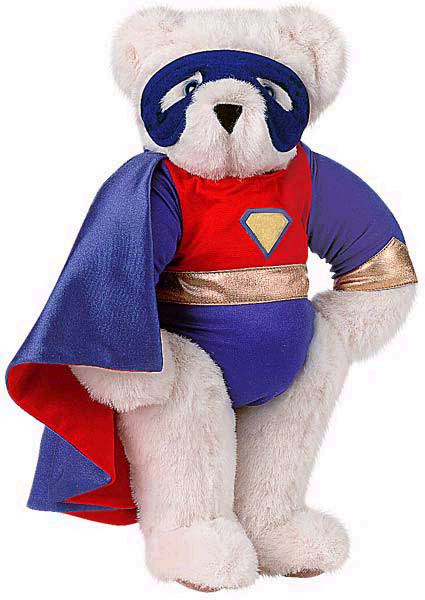
Cushie Crusader, that’s me…and many others.  I think we all have an opportunity to be Cushie Crusaders every time we tell others about our illness, share our story on or offline, post about our struggles – and triumphs – on the message boards, write blog posts in this Cushing’s Awareness Challenge…

When we have prayer time in my handbell practice or choir rehearsals I try to mention issues that are going on in the community.  People are slowly but steadily learning about Cushing’s week by week.

A piano student mentioned that a person in a group she is in has Cushing’s, a non-Cushie friend mentioned last week that she had gone with a friend of hers to an endo appointment to discuss Cushing’s.

Get out there and talk about Cushing’s.  Let people know that it’s not just for dogs and horses (and sometimes ferrets)!

Here’s something I had made for Sue with SuperSue on the back.  Picture your name instead: