


Cushing’s disease is a rare condition due to excess cortisol levels that result from a pituitary tumor secreting adrenocorticotropic hormone (ACTH), which stimulates cortisol secretion. Cushing’s disease should not be confused with Cushing’s syndrome which is increased cortisol levels but that increase can be due to any number of factors. However, Cushing’s disease is the most common form of Cushing’s syndrome.
Symptoms
The symptoms related to Cushing’s disease and Cushing’s syndrome are the same, since both are related to an excess of cortisol. Also, symptoms vary extensively among patients and that, with the inherent fluctuation in hormone levels make it difficult to diagnosis both conditions.
Changes in physical characteristics of the body
- Fullness and rounding of the face
- Added fat on back of neck (so-called “buffalo hump”)
- Easy bruising
- Purplish stretch marks on the abdomen (abdominal striae)
- Excessive weight gain, especially in abdominal region
- Red cheeks
- Excess hair growth on the face, neck, chest, abdomen and thighs
Changes in physiology/psychology
- Generalized weakness and fatigue
- Menstrual disorder
- Decreased fertility and/or sex drive
- High blood pressure that is often difficult to treat
- Diabetes mellitus
- Mood and behavior disorders
Diagnosis
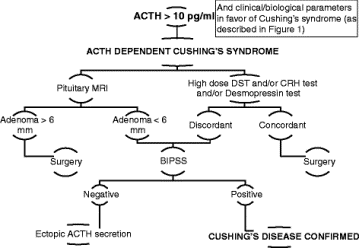
The early stages of Cushing’s disease may be difficult to recognize. However, if it is suspected, diagnosis is generally a 2 stage process. First to determine if cortisol levels are high, and if so, why they are high.
Tests to confirm high cortisol levels:
- 24-hour urine cortisol
- Dexamethasone suppression test (low dose)
Tests to determine cause:
- Blood ACTH level
- Brain MRI
- Corticotropin-releasing hormone test
- Dexamethasone suppression test (high dose)
- Petrosal sinus sampling
Treatment
Surgery
- Most patients with Cushing’s disease undergo surgery to remove the pituitary adenoma offers.
- If the tumor is isolated to the pituitary, cure rates of 80-85% are common.
- If the tumor has spread to nearby organs, cure rates of 50-55% are common.
Medicine (approved orphan drugs)
- Approved for patients with Cushing’s disease for whom pituitary is not an option or surgery has been ineffective.
- Signifor is a somatostatin receptor agonist that leads to inhibition of ACTY secretion (and subsequently decreased cortisol levels).
- Approved for patients with Cushing’s syndrome who have type 2 diabetes or glucose intolerance and have failed surgery (or not candidates for surgery).
- Korlym is a glucocorticoid receptor antagonist which in turn blocks the effects of the high levels of cortisol in the body. Korlym is used to treat high glucose levels due to elevated cortisol.
Medicines used but not indicated for Cushing’s disease include
Radiation
- Radiation therapy may be used in some patients and can be very effective in controlling the growth of these tumors.
Prognosis
In most cases, treatment can cure Cushing’s disease. If not treated properly, the chronic hypercortisolism can lead to excess morbidity and mortality due to increased cardiovascular and other risk factors.
For more information
National Library of Medicine, National Institute of Health
Cushing’s Disease Information (provided by Novartis Pharmaceuticals)
Images courtesy of the open access journal Orhanet Journal for Rare Diseases. Castinetti et al. Orphanet J Rare Dis. 2012 7:41 doi:10.1186/1750-1172-7-41
– See more at: http://www.raredr.com/front-page-medicine/articles/cushings-disease-rare-disease-quick-facts-0
Filed under: Cushing's, pituitary, Treatments | Tagged: 24-hour urine free cortisol test, ACTH, Adrenocorticotropic hormone, blood pressure, bruise, buffalo hump, cardiovascular risk, corticotropin-releasing hormone, cortisol, Cushing, Cushing Disease, Cushing Syndrome, dexamethasone, dexamethasone suppression test, diabetes mellitus, Etomidate, fatigue, fertility, glucose, hirsuitism, hypercortisolism, ketoconazole, Korlym, menstrual disorder, Metyrapone, mifepristone, mitoden, moon face, MRI, pasireotide, Petrosal Sinus Sampling, pituitary tumor, radiation, Rare disease, red cheeks, sex drive, Signifor, somatostatin, stretch marks, surgery, Type 2 diabetes, UFC, weakness, weight | 2 Comments »
 CushieBlog