Predictors of Cancer in Patients With Endogenous Cushing’s Syndrome

We previously reported an increase in overall cancer risk in patients with endogenous Cushing’s syndrome (CS), mainly during the 10-year period following CS diagnosis.

To identify predictors of cancer in patients with CS, we conducted this retrospective nationwide cohort study of patients with CS, diagnosed between 2000 and 2023 in Israel. The cohort comprised 609 patients with CS (age at diagnosis, 48.1 ± 17.2 years; 65.0% women) and 3,018 age-, sex-, socioeconomic status-, and body mass index-matched controls (1:5 ratio).

Patients were grouped according to the occurrence of any malignancy within 10-years after the diagnosis of CS. Cox proportional hazards models, with death as a competing event, were used to identify predictors of cancer development. Independent predictors of cancer development in patients with CS included age ≥60 years (HR 1.75, 95% CI 1.01–2.68), male gender (HR 1.67, 95% CI 1.04–3.05), and adrenal-origin CS (HR 1.66, 95% CI 1.01–2.73). Baseline urinary-free cortisol levels were not associated with cancer development. Patients with ≥4 CS-associated comorbidities had a higher cancer risk (HR 1.76, 95% CI 1.03–3.02; age- and sex-adjusted). The overall 10-year risk of malignancy was twice as high in patients with CS compared to matched controls, with cancer developing, on average, 5 years earlier in patients with CS (62.3 ± 15.0 vs 67.2 ± 12.3 years). Cancer-related mortality at 10-years was twice as high in deceased patients with CS, compared to deceased controls. In conclusion, age ≥60 years at CS diagnosis, male gender, and adrenal-origin CS are independent predictors of cancer diagnosis within 10-years of initial confirmation of CS.


Introduction

Prolonged cortisol exposure may promote cancer development and growth (Mayayo-Peralta et al. 2021Khadka et al. 2023). Epidemiological research showed that extended glucocorticoids use is associated with elevated overall cancer risk (Oh & Song 2020). Recently, several studies suggested that cortisol levels increase cancer risk in patients with endogenous Cushing’s syndrome (CS). A Danish study found higher rates of cancer at the time of CS diagnosis compared to controls (Dekkers et al. 2013). A Swedish study examined comorbidity rates in patients with CS and identified a nonsignificant trend of increased cancer rates in CS compared to the general population, but was probably underpowered for this relatively rare outcome (Papakokkinou et al. 2020). Our nationwide retrospective matched-cohort study, using the Clalit Health Services (CHS) database in Israel (including 609 patients with CS and 3,018 age-, sex-, socioeconomic status- and body mass index (BMI)-matched controls), observed higher rates of all cancer types in patients with CS, with a hazard ratio (HR) of 1.78 (95% CI 1.44–2.20) (Rudman et al. 2024). Elevated cancer incidence was evident in patients with Cushing’s disease (CD) and in patients with adrenal CS. The overall cancer risk remained elevated during the first 10 years that followed CS diagnosis (Rudman et al. 2024). Similarly, a nationwide cohort study from Taiwan investigated the association between endogenous CS and cancer incidence, and reported a standardized incidence ration of 2.08 (95% CI 1.54–2.75) for cancer in patients with endogenous CS (Wu et al. 2025).
Hypercortisolemia and CS-associated comorbidities could drive malignancy development in patients with CS (Rudman et al. 2024Wu et al. 2025). While it is known that the incidence of diabetes, obesity and insulin resistance is higher in patients with CS than that of the general population (Pivonello et al. 2016Fleseriu et al. 2021Reincke & Fleseriu 2023) – all of which are linked to cancer development (Renehan et al. 2008Ling et al. 2020) – it remains unclear whether these comorbidities specifically contribute to the risk of malignancy within the CS population.
Thus, the aims of the present study were to identify the baseline predictors of cancer development in CS and to test the hypothesis that cumulative cortisol exposure, measured by urinary-free cortisol (UFC), predicts cancer risk in patients with CS.

Methods

Study design and data collection

We conducted a retrospective matched-cohort study using the electronic health record database of Clalit Health Services (CHS), the largest health maintenance organization (HMO) in Israel with over 4.8 million members. The CHS database includes demographic and clinical data, hospital and outpatient clinic diagnoses, medication dispensation, and all laboratory test results conducted at the HMO’s laboratories. All diagnoses and respective dates were identified using the International Classification of Diseases, tenth revision (ICD-10) codes (Supplementary Table S1 (see section on Supplementary materials given at the end of the article)). Weight and height data, and smoking status, were recorded regularly during visits to primary care clinics and in some specialized clinics. 24 h UFC results were collected and the normal reference range for each kit used. As these tests were performed by several different laboratories and devices (in all cases the bioanalytical method used was an immunoassay test), the results were reported as multiples of the upper limit of normal (×ULN). Data were extracted using the CHS research data-sharing platform, powered by MDClone. Importantly, the diagnoses of chronic medical conditions, recorded at the time of CS diagnosis, were validated: any member of CHS who required chronic treatment for a medical condition (e.g., medication for hypertension or diabetes) could only receive his prescriptions if the primary physician has registered the diagnosis, coded according to the ICD-10, in the computerized system. Mortality data were collected from the hospital’s mortality database, which is updated from the Ministry of Interior’s population registry. Data on cancer-specific mortality were obtained from hospital discharge certificates at the time of the hospitalization that ultimately resulted in the patient’s death. The study protocol, including detailed data collection methods, has been previously published (Rudman et al. 2024).

Ethical approval

The study was approved by the institutional ethics review board of Rabin Medical Center. As data were collected anonymously and in a retrospective manner, a waiver of informed consent was granted.

Patients and outcome measures

The methods we used for patient selection and matched controls selection have been previously published (Rudman et al. 2024), as the current study is based on the same group of patients with CS and controls. After the initial screening, potential cases with ICD-10 diagnosis of CS had to fulfill at least one of the following criteria: i) 24 h UFC ≥4 ×ULN, ii) 24 h UFC ≥3 ×ULN and surgical intervention to remove a pituitary or adrenal adenoma, and iii) 24 h UFC ≥2 ×ULN and metyrapone, ketoconazole, osilodrostat, cabergoline, or pasireotide treatment. All patients with CS and non-suppressed adrenocorticotropic hormone (ACTH) levels who did not receive pituitary-directed therapy and were diagnosed with a malignancy possibly causative of ectopic CS, including small-cell lung carcinoma, bronchial and thymic carcinoids, medullary thyroid carcinoma, neuroendocrine tumors or pheochromocytoma, were suspected of ectopic CS and were excluded from this study (Rudman et al. 2024). Patients diagnosed with adrenocortical carcinoma before or within 5 years of CS diagnosis were excluded.
All identified cases were individually matched in a 1:5 ratio with age-, sex-, socioeconomic status-, and BMI-matched controls from the general population (CHS members who have never been tested for suspected hypercortisolism). The age of the individually matched controls matched the age of cases ±12 months.
The follow-up period began at the time of CS diagnosis for all cases (newly diagnosed patients with CS) and at the exact same day for each individually matched control. It continued until death, termination of CHS membership, or until the date of data collection (June 30, 2023).
The main outcome measure was the first diagnosis of any malignancy following CS diagnosis, excluding non-melanoma skin cancer. Recurrences of known malignancies were also excluded.

Statistical analysis

The statistical analysis was generated using the SAS Software, Version 9.4, SAS Institute Inc., Cary, NC, USA. Continuous variables were presented by the mean ± standard deviation or median (interquartile range (IQR)). Categorical variables were presented by (n, %). Normality of continuous variables was assessed using the Kolmogorov–Smirnov test. The t-test, Mann–Whitney test, and chi-square test were used for comparison of normally distributed, non-normal, and categorical variables, respectively. The Cox proportional hazard model, with death without malignancy treated as a competing risk, was used to calculate both univariate and multivariate HR; the Fine and Gray methodology for dealing with competing risks was used, both in the cumulative incidence plots and in HR calculations. Baseline variables found to be associated with malignancy in the univariate analysis (with a between-group P-value below 0.05) were incorporated into the multivariate model. The appropriateness of the proportional hazard assumption was assessed visually. Two-sided P-values less than 0.05 were considered statistically significant.

Results

Patient characteristics

From January 1, 2000, to June 30, 2023, a total of 609 patients with CS met the study inclusion criteria (65.0% women, mean age at CS diagnosis of 48.1 ± 17.2 years). All cases of CS were matched with up to five controls based on age, sex, socioeconomic status, and BMI, and amounted to a total of 3,018 controls. Baseline characteristics of all 609 patients and 3,018 controls, with subdivisions according to disease source, are shown in Table 1.

Table 1. Baseline characteristics (at diagnosis/time 0) of patients with Cushing’s syndrome (CS) and matched control of all patients with CS, Cushing’s disease (CD), and adrenal CS.

Baseline characteristics, all patients with CS CS (n = 609) Matched controls (n = 3,018) P value CD (n = 251) Matched controls (n = 1,246) P value Adrenal CS (n = 200) Matched controls (n = 991) P value
Age, years, mean (SD) 48.1 (17.2) 47.9 (17.2) 45.7 (17.8) 45.7 (17.8) 51.1 (16.6) 51.0 (16.6)
Sex, no. (%)
 Females 396 (65.0) 1,975 (65.4) 164 (65.3) 818 (65.6) 137 (68.5) 684 (69.0)
 Males 213 (35.0) 1,043 (34.6) 87 (34.7) 428 (34.4) 63 (31.5) 307 (31.0)
Socioeconomic status, no. (%)a
 Low 74 (12.8) 371 (13.0) 34 (14.2) 172 (14.5) 20 (10.5) 99 (10.4)
 Middle 349 (60.6) 1,719 (60.3) 145 (60.7) 713 (60.2) 119 (62.6) 594 (62.9)
 High 153 (26.6) 760 (26.7) 60 (25.1) 300 (25.3) 51 (26.9) 252 (26.7)
Body mass index, Kg/m2, mean (SD)b 30.9 (7.6) 30.0 (6.9) 30.2 (7.4) 29.6 (6.8) 30.8 (7.1) 30.3 (6.3)
Source of hypercortisolism, no. (%)
 Cushing’s disease 251 (41.2)
 Adrenal Cushing’s syndrome 200 (32.8)
 Indeterminatec 158 (25.9)
Smoking status, no. (%)d 0.35 0.77 0.18
 Non-smoker 198 (59.8) 910 (62.6) 87 (64.0) 387 (65.3) 61 (53.0) 327 (60.1)
 Smoker/former smoker 133 (40.2) 544 (37.4) 49 (36.0) 206 (34.7) 54 (47.0) 217 (39.9)
Comorbidities, no. (%)
 Diabetes mellitus 140 (23.0) 396 (13.1) <0.01 55 (21.9) 148 (11.9) <0.01 51 (25.5) 158 (15.9) <0.01
 Hypertension 343 (56.3) 957 (31.7) <0.01 129 (51.4) 338 (27.1) <0.01 129 (64.5) 387 (39.0) <0.01
 Dyslipidemia 258 (42.4) 874 (29.0) <0.01 97 (38.6) 305 (24.5) <0.01 97 (48.5) 339 (34.2) <0.01
 Ischemic heart disease 70 (11.5) 191 (6.3) <0.01 23 (9.2) 67 (5.4) 0.03 25 (12.5) 77 (7.8) 0.04
 Cerebrovascular disease 27 (4.4) 82 (2.7) 0.04 12 (4.8) 35 (2.8) 0.11 10 (5.0) 32 (3.2) 0.21
 Osteoporosis 75 (12.3) 187 (6.2) <0.01 26 (10.4) 57 (4.6) <0.01 28 (14.0) 82 (8.3) 0.02
 Malignancy before CS diagnosis 50 (8.2) 117 (3.9) <0.01 15 (6.0) 48 (3.9) 0.12 20 (10.0) 50 (5.0) 0.01
Cases and controls were individually matched for age, sex, socioeconomic status, and body mass index.
a
Cushing’s syndrome n = 576, controls n = 2,850; Cushing’s disease n = 239, controls n = 1,185; adrenal Cushing’s syndrome n = 190, controls n = 945.
b
Cushing’s syndrome n = 363, controls n = 1,549; Cushing’s disease n = 152, controls n = 644; adrenal Cushing’s syndrome n = 131, controls n = 570.
c
Ectopic ACTH secretion and adrenocortical carcinoma were excluded.
d
Cushing’s syndrome n = 331, controls n = 1,454; Cushing’s disease n = 136, controls n = 593; adrenal Cushing’s syndrome n = 115, controls n = 544.
At baseline, diabetes mellitus, hypertension, dyslipidemia, ischemic heart disease, and osteoporosis were more common among patients with CS (P < 0.01). Smoking rates were similar between the two groups (Table 1). A prior history of malignancy was more prevalent among patients with CS than controls (8.2 vs 3.9%, respectively; P < 0.01) (Table 1).

Predictors of new malignancy in patients with Cushing’s syndrome

Table 2 presents the baseline characteristics of 609 patients with CS, including demographic data, CS etiology, history of malignancy before CS diagnosis, maximal UFC at diagnosis, and CS-associated comorbidities. In a univariate time-to-event analysis of the 10-year cumulative cancer risk, accounting for death as a competing event, we found that age ≥60 years at CS diagnosis, male gender, adrenal-origin CS, hypertension, dyslipidemia, and ischemic heart disease at baseline were all associated with a higher cancer risk. The 10-year cumulative cancer risk, with death as a competing event, stratified by age, sex, and CS etiology is shown in Fig. 1. Prior malignancy, diabetes, and obesity were not associated with an increased risk of malignancy in patients with CS (Table 2). The cohort was divided into three groups based on baseline UFC level (below 5 ×ULN, 5–10 ×ULN, and above 10 ×ULN) with comparison of time to cancer occurrence. Higher UFC levels at the time of CS diagnosis were not associated with cancer development (Table 2 and Fig. 2). In a multivariable Cox regression model (multivariable model 1, Table 2), we found that age ≥60 years at CS diagnosis (HR 1.75, 95% CI 1.01–2.68), male gender (HR 1.67, 95% CI 1.04–3.05), and adrenal-origin CS (HR 1.66, 95% CI 1.01–2.73) were independent predictors of cancer development within 10 years after CS diagnosis. In an additional model (multivariable model 2, Table 2), we observed that patients with ≥4 CS-associated comorbidities at the time of CS diagnosis had a higher risk of cancer (HR 1.76, 95% CI 1.03–3.02), after adjustment for age and sex.

Table 2. Univariate analysis and multivariable regression models for the 10-year cumulative cancer risk in patients with Cushing’s syndrome, accounting for death as a competing event.

Baseline characteristics Patients (n = 609) Incident cases of cancer (n = 81) Deaths without cancer (n = 40) Univariate analysis Multivariable model 1* Multivariable model 2 (total no. of CS-associated comorbidities, with age and sex adjustment)
Age <60 years (ref) 444 44 10
Age ≥60 years 165 37 30 2.47 (1.60–3.82) 1.75 (1.01–2.68) 3.18 (2.09–4.86)
Female (ref) 396 42 23
Male 213 39 17 1.75 (1.13–2.70) 1.67 (1.04–3.05) 1.60 (1.11–2.29)
Low SESa 74 13 5 1.29 (0.65–2.56)
Medium SESa 349 42 21 0.87 (0.52–1.45)
High SES (ref)a 153 22 13
Cushing’s disease (ref)b 251 27 21
Adrenal CSb 200 39 8 1.87 (1.14–3.05) 1.66 (1.01–2.73)
Non-smoker (ref)c 198 25 12
Smoker/former smokerc 133 21 12 1.25 (0.70–2.23)
Prior malignancy 50 6 14 0.91 (0.40–2.08)
No prior malignancy (ref) 559 75 26
Maximal urinary free cortisold
 <5 × ULN (ref) 231 38 18
 5–10 × ULN 135 18 7 0.86 (0.49–1.48)
 ≥10 × ULN 70 10 4 0.89 (0.45–1.78)
CS-associated comorbidities
 Obesitye 176 28 17 1.22 (0.71–2.11)
 No obesity (ref)e 187 24 12
 Diabetes mellitus 140 21 14 1.28 (0.78–2.10)
 No diabetes mellitus (ref) 469 60 26
 Hypertension 343 59 34 2.23 (1.36–3.65) 1.52 (0.83–2.81)
 No hypertension (ref) 266 22 6
 Dyslipidemia 258 44 29 1.81 (1.17–2.81) 0.97 (0.55–1.72)
 No dyslipidemia (ref) 351 37 11
 Ischemic heart disease 70 19 11 2.70 (1.62–4.51) 1.48 (0.81–2.71)
 No ischemic heart disease (ref) 539 62 29
 Stroke 27 3 2 1.07 (0.33–3.49)
 No stroke (ref) 582 78 38
 Osteoporosis 75 9 9 0.92 (0.46–1.84)
 No osteoporosis (ref) 534 72 31
Total no. of CS-associated comorbiditiesf
 0–1 (ref) 295 27 9
 2–3 205 33 15 2.09 (1.36–3.22) 1.40 (0.87–2.26)
 ≥4 109 21 16 3.76 (2.37–5.97) 1.76 (1.03–3.02)
CS, Cushing’s syndrome; SES, socioeconomic status; ULN, upper limit of normal. Bold indicates statistical significance.
*
Included variables: age, sex, source of hypercortisolism, hypertension, dyslipidemia, and ischemic heart disease.
a
n = 576.
b
Ectopic ACTH secretion and adrenocortical carcinoma were excluded.
c
n = 331.
d
Maximal value of urinary-free cortisol divided by the upper limit of normal of the specific assay, n = 436.
e
n = 363.
f
CS-associated comorbidities include obesity, diabetes mellitus, hypertension, dyslipidemia, ischemic heart disease, and osteoporosis.
Figure 1

  1. Download: Download high-res image (201KB)
  2. Download: Download full-size image

Figure 1. The 10-year cumulative cancer risk, with death as a competing event, among patients with Cushing’s syndrome, according to age at diagnosis (A), sex (B), and Cushing’s syndrome etiology (C). CD, Cushing’s disease; CS, Cushing’s syndrome. A full colour version of this figure is available at https://doi.org/10.1530/ERC-25-0059.

Figure 2

  1. Download: Download high-res image (61KB)
  2. Download: Download full-size image

Figure 2. The 10-year cumulative cancer risk, with death as a competing event, among patients with Cushing’s syndrome, according to the maximal value of UFC divided by the upper limit of normal (ULN) of the specific assay used: UFC <5 × ULN (reference), 5–10 × ULN, and ≥10 × ULN. A full colour version of this figure is available at https://doi.org/10.1530/ERC-25-0059.

Univariate analysis and multivariable regression models for the 10-year cumulative cancer risk in patients with CD and adrenal CS are presented in Tables 3 and 4. In the univariate time-to-event analysis of 251 patients with CD, age ≥60 years at CS diagnosis and the presence of dyslipidemia and ischemic heart disease at baseline were associated with higher cancer risk. The multivariable Cox regression model did not identify any significant predicting factors in patients with CD. Tables 3 and 4 also present the univariate analysis for the 10-year cumulative cancer risk in 200 patients with adrenal CS, which showed that age ≥60 years, male gender, and ischemic heart disease were associated with cancer development. In the multivariable model, only age ≥60 years at CS diagnosis (HR 2.66, 95% CI 1.36–5.18) was found to be independently associated with cancer development in patients with adrenal CS (Table 4). UFC levels at the time of CS diagnosis were not associated with new cancer diagnosis in either patients with CD or with adrenal CS (Tables 3 and 4).

Table 3. Univariate analysis and multivariable regression models for the 10-year cumulative cancer risk in patients with Cushing’s disease, accounting for death as a competing event.

Cushing’s disease baseline characteristics Patients (n = 251) Incident cases of cancer (n = 27) Deaths without cancer (n = 21) Univariable Multivariable model 1 Multivariable model 2 (total no. of CS-associated comorbidities, with age and sex adjustment)
Age <60 years (ref) 196 16 8
Age ≥60 years 55 11 13 2.72 (1.27–5.81) 1.83 (0.65–5.18) 3.54 (1.81–6.92)
Female (ref) 164 14 14
Male 87 13 7 1.79 (0.85–3.80) 1.61 (0.73–3.56) 1.22 (0.68–2.18)
Low SESa 34 5 5 1.29 (0.42–3.99)
Medium SESa 145 13 12 0.81 (0.32–2.00)
High SES (ref)a 60 7 4
Non-smoker (ref)b 87 6 6
Smoker/former smokerb 49 8 8 2.59 (0.91–7.39)
Prior malignancy 15 26 15 0.66 (0.09–5.13)
No prior malignancy (ref) 236 1 6
Maximal urinary-free cortisolc
 <5 × ULN (ref) 133 15 14
 5–10 × ULN 70 6 3 0.78 (0.31–2.00)
 ≥10 × ULN 40 6 4 1.48 (0.57–3.79)
CS-associated comorbidities
 Obesityd 69 7 10 0.80 (0.31–2.09)
 No obesity (ref)d 83 10 6
 Diabetes mellitus 55 5 6 0.89 (0.34–2.35)
 No diabetes mellitus (ref) 196 22 15
 Hypertension 129 17 17 1.67 (0.76–3.64)
 No hypertension (ref) 122 10 4
 Dyslipidemia 97 15 13 2.31 (1.08–4.96) 1.64 (0.58–4.61)
 No dyslipidemia (ref) 154 12 8
 Ischemic heart disease 23 5 4 2.71 (1.03–7.08) 1.29 (0.43–3.86)
 No ischemic heart disease (ref) 228 22 17
 Stroke 12 2 1 2.34 (0.53–10.30)
 No stroke (ref) 239 25 20
 Osteoporosis 26 24 15 1.14 (0.35–3.66)
 No osteoporosis (ref) 225 3 6
Total no. of CS-associated comorbiditiese
 0–1 (ref) 136 11 6
 2–3 74 10 8 2.19 (1.13–4.26) 1.48 (0.72–3.04)
 ≥4 41 6 7 3.69 (1.78–7.66) 1.72 (0.73–4.02)
CS, Cushing’s syndrome; SES, socioeconomic status; ULN, upper limit of normal. Bold indicates statistical significance.
a
n = 239.
b
n = 136.
c
Maximal value of urinary free cortisol divided by the upper limit of normal of the specific assay; n = 243.
d
Cushing’s disease, n = 152.
e
CS-associated comorbidities include obesity, diabetes mellitus, hypertension, dyslipidemia, ischemic heart disease, and osteoporosis.

Table 4. Univariate analysis and multivariable regression models for the 10-year cumulative cancer risk in patients with adrenal Cushing’s syndrome, accounting for death as a competing event.

Adrenal Cushing’s syndrome baseline characteristics Patients with CS at risk (n = 200) Incident cases of cancer (n = 39) Deaths without cancer (n = 8) Univariable Multivariable model 1 Multivariable model 2 (total no. of CS-associated comorbidities, with age and sex adjustment)
Age <60 years (ref) 134 20 1
Age ≥60 years 66 19 7 2.12 (1.13–3.96) 2.66 (1.36–5.18) 2.70 (1.35–5.42)
Female (ref) 137 17 3
Male 63 22 5 2.97 (1.58–5.58) 1.81 (0.94–3.51) 3.11 (1.73–5.57)
Low SESa 20 3 0 0.62 (0.17–2.28)
Medium SESa 119 22 3 0.73 (0.36–1.44)
High SES (ref)a 51 13 5
Non-smoker (ref)b 61 12 3
Smoker/former smokerb 54 10 2 0.86 (0.38–1.99)
Prior malignancy 20 4 2 1.03 (0.38–2.81)
No prior malignancy (ref) 180 35 6
Maximal urinary free cortisolc
 <5 × ULN (ref) 98 23 4
 5–10 × ULN 65 12 4 0.84 (0.42–1.69)
 ≥10 × ULN 30 4 0 0.53 (0.18–1.52)
CS-associated comorbidities
 Obesityd 64 15 4 1.68 (0.75–3.74)
 No obesity (ref)d 67 10 3
 Diabetes mellitus 51 12 3 1.47 (0.75–2.89)
 No diabetes mellitus (ref) 149 27 5
 Hypertension 129 29 7 1.73 (0.84–3.58)
 No hypertension (ref) 71 10 1
 Dyslipidemia 97 20 7 1.20 (0.65–2.25)
 No dyslipidemia (ref) 103 19 1
 Ischemic heart disease 25 10 4 2.65 (1.31–5.34) 1.51 (0.68–3.32)
 No ischemic heart disease (ref) 175 29 4
 Stroke 10 1 1 0.58 (0.08–4.35)
 No stroke (ref) 190 38 7
 Osteoporosis 28 2 2 0.32 (0.08–1.33)
 No osteoporosis (ref) 172 37 6
Total no. of CS-associated comorbiditiese
 0–1 (ref) 82 14 1
 2–3 76 15 2 1.24 (0.62–2.48) 0.95 (0.44–2.02)
 ≥4 42 10 5 2.46 (1.20–5.05) 1.21 (0.51–2.85)
CS, Cushing’s syndrome; SES, socioeconomic status; ULN, upper limit of normal. Bold indicates statistical significance.
a
n = 190.
b
n = 115.
c
Maximal value of urinary-free cortisol divided by the upper limit of normal of the specific assay; n = 193.
d
n = 131.
e
CS-associated comorbidities include obesity, diabetes mellitus, hypertension, dyslipidemia, ischemic heart disease, and osteoporosis.

The 10-year cancer risk in patients with Cushing’s syndrome vs controls

In the 10 years following CS diagnosis, 81 (13.3%) patients with CS were diagnosed with cancer and 40 (6.6%) died without malignancy, compared with 206 (6.8%) and 152 (5.0%) controls, respectively. Similar to the previously reported risk for the entire follow-up period (Rudman et al. 2024), the overall 10-year risk of malignancy, calculated with death as a competing event, was twice as high in patients with CS than in matched controls (HR 2.01; 95% CI, 1.55–2.60) (Supplementary Fig. S1).
The mean age of cancer development in patients with CS was 62.3 ± 15.0 years, compared with 67.2 ± 12.3 years in controls (P < 0.01). The risk of cancer across different subgroups (patients with CS vs controls) is shown in Fig. 3 and Table 5. The number of cases for each type of cancer in patients with CS and controls is shown in Supplementary Table S2.
Figure 3

  1. Download: Download high-res image (222KB)
  2. Download: Download full-size image

Figure 3. The 10-year cancer risk in subgroups of the entire cohort (cases vs matched controls). Cases and controls were individually matched for age, sex, socioeconomic status, and body mass index.

Table 5. The 10-year cancer risk in subgroups of the entire cohort (cases vs matched controls).

Subgroup Cushing’s syndrome Individually matched controls HR 95% CI
Patients Incident cases of cancer Deaths Patients Incident cases of cancer Deaths
Age
 <60 444 44 10 2,200 84 30 2.67 1.85–3.85
 ≥60 165 37 30 818 122 122 1.55 1.08–2.24
Sex
 Females 396 42 23 1,975 117 89 1.83 1.29–2.61
 Males 213 39 17 1,043 89 63 2.25 1.54–3.28
Socioeconomic status
 Low 74 13 5 371 14 17 5.03 2.37–10.68
 Middle 349 42 21 1,719 116 90 1.83 1.28–2.60
 High 153 22 13 760 73 36 1.52 0.94–2.45
Smoking status
 Smoker/former smoker 133 21 12 544 46 34 1.84 1.09–3.10
 Non-smoker 198 25 12 910 66 48 1.79 1.13–2.83
Comorbidities
 Obesity 176 28 17 698 45 62 2.52 1.57–4.04
 No obesity 187 24 12 851 70 46 1.58 0.99–2.51
 Diabetes mellitus 140 21 14 396 45 75 1.35 0.80–2.25
 No diabetes mellitus 469 60 26 2,622 161 77 2.13 1.58–2.86
 Hypertension 343 59 34 957 106 126 1.59 1.16–2.19
 No hypertension 266 22 6 2,061 100 26 1.71 1.07–2.72
 Dyslipidemia 258 44 29 874 100 100 1.53 1.07–2.17
 No dyslipidemia 351 37 11 2,144 106 52 2.15 1.47–3.13
 Ischemic heart disease 70 19 11 191 30 49 1.89 1.06–3.35
 No ischemic heart disease 539 62 29 2,827 176 103 1.88 1.41–2.52
 Stroke 27 3 2 82 7 17 1.50 0.39–5.74
 No stroke 582 78 38 2,936 199 135 2.02 1.56–2.63
 Osteoporosis 75 9 9 187 23 32 0.98 0.45–2.10
 No osteoporosis 534 72 31 2,831 183 120 2.15 1.64–2.83
Cases and controls were individually matched for age, sex, socioeconomic status, and body mass index.
Among 487 cases and 2,411 controls with an attainable follow-up period of at least 10 years, 52 patients with CS and 184 controls died (from any cause) during the 10 years that followed CS diagnosis. Eight (15.4%) patients with CS died due to malignancy, compared with 12 (6.5%) patients in the control group (P = 0.04).
During the 10-year follow-up after CS diagnosis, 27 out of 251 patients with CD (10.8%) were diagnosed with malignancy, compared to 71 (5.7%) controls. Among 200 patients with adrenal CS, 39 (19.5%) were diagnosed with cancer, compared to 79 (8.0%) controls. The 10-year risk of overall malignancy was higher in patients with CD (HR 1.92, 95% CI 1.23–3.00) and in patients with adrenal CS (HR 2.63, 95% CI 1.79–3.87), compared to controls (Supplementary Fig. S1). The number of cases for each specific cancer type in patients with CD and adrenal CS and their individually matched controls is elaborated in Supplementary Table S2.

Sensitivity analyses

Due to possible bias in individuals with a genetic predisposition to cancer, and in patients at increased risk due to prior cancer treatment, we excluded all patients with prior history of cancer (50 cases and 117 controls). Following this exclusion, patients with CS still exhibited a higher 10-year cancer risk (HR 2.12, 95% CI 1.62–2.77).
Patients with adrenal cancer diagnosed before or within 5 years of CS diagnosis were excluded from the study. However, as it is possible that adrenal cancer was either not recorded properly or unrecognized at the time of CS diagnosis, we performed an analysis of the risk of malignancy excluding all adrenal cancer cases and found no change in the 10-year risk of overall cancer (HR 1.92, 95% CI 1.48–2.50).
The diagnosis of CS patients in the study included an ICD-10 coding of the diagnosis and laboratory evidence of hypercortisolism (and test date) in all cases. However, because in many cases the diagnostic and treatment process are lengthy, there is a possibility of information bias caused by patients included in the database who were diagnosed before the time period included in the study. Therefore, we performed a sensitivity analysis excluding the first year of the study, without any change in the 10-year risk of malignancy among CS patients (HR 1.98, 95% CI 1.51–2.58).

Discussion

Patients with CS have higher morbidity and mortality (Gadelha et al. 2023Loughrey et al. 2024), and it has been recently established that CS is associated with an increased cancer risk (Rudman et al. 2024Wu et al. 2025). However, predictors of a new cancer diagnosis have not been studied. In this nationwide retrospective study, the 10-year cancer risk in 609 patients with CS was twice as high as in 3,018 matched controls. Importantly, the 10-year risk was notably higher in patients with CD (HR 1.92, 95% CI 1.23–3.00) and in those with adrenal CS (HR 2.63, 95% CI 1.79–3.87), compared to controls. Furthermore, the risk of cancer was higher in patients with CS, regardless of age and sex. On average, cancer development in patients with CS occurred at an age that was 5 years younger than that of controls who developed cancer (62.3 ± 15.0 vs 67.2 ± 12.3 years, respectively).
Our study is the first to identify predictors of new cancer diagnosis in patients with CS. A multivariate regression model showed that age ≥60 years at CS diagnosis (HR 1.75, 95% CI 1.01–2.68), male gender (HR 1.67, 95% CI 1.04–3.05), and adrenal-origin CS (HR 1.66, 95% CI 1.01–2.73) were identified as independent predictors of cancer development within 10 years. In addition, we found that patients with ≥4 CS-associated comorbidities at the time of CS diagnosis had an increased risk of cancer (HR 1.76, 95% CI 1.03–3.02; adjusted for age and sex). Interestingly, diabetes and obesity were not associated with malignancy development in patients with CS. Importantly, we found no association between UFC levels at the time of CS diagnosis and cancer development rates.
CS most commonly affects young women, a population not inherently at high risk for malignancy, with the exception of breast cancer (National Cancer Institute, Surveillance, Epidemiology, and End Results (SEER) Program, December 2024. https://seer.cancer.gov/statfacts/html/aya.html). Our study demonstrates that young patients and female patients with CS are at an increased risk of cancer, as compared with matched controls from the general population. However, within the group of patients with CS, we found age and sex disparities in malignancy risk: men and elderly patients (over 60 years of age) showed a higher cancer risk (Table 2). Advanced age is a universal risk factor for cancer (Campisi 2013), and patients with CS are no exception. Previous studies found that male patients with CS are more susceptible to metabolic derangements than female patients (Liu et al. 2015Broersen et al. 2019), a difference that likely results from gender disparity in response to glucocorticoid receptor activation (Bourke et al. 2012).
In addition, our study found that CS of adrenal origin is associated with a higher risk of malignancy, as compared with CD, after adjustment for age, sex, and significant CS-related comorbidities. Notably, patients with a history of adrenal cancer or ectopic CS were excluded. This finding is difficult to explain, since most studies have found that patients with CD present with higher UFC levels (Berr et al. 2015Rubinstein et al. 2019Schernthaner-Reiter et al. 2019) and a longer delay in diagnosis (Rubinstein et al. 2019Schernthaner-Reiter et al. 2019) compared to those with adrenal CS. One potential explanation for this observation is that adrenal adenomas may be linked to a higher incidence of malignancy, as studies have shown that cancer mortality is increased with autonomic cortisol secretion, with malignancy being the most common cause of death in patients with mild autonomous cortisol secretion (Patrova et al. 2017Deutschbein et al. 2022). Another conceivable explanation stems from previous research that reported higher rates of non-adrenal malignancies in patients with bilateral adrenal tumors and autonomous cortisol secretion (Kawate et al. 2014), suggesting a possible genetic predisposition in patients with adrenal adenoma that may contribute to the development of overall cancer.
Interestingly, in our study, patients with adrenal CS had a history of malignancy at a higher rate than their individually matched controls at the time of CS diagnosis (Table 1). In contrast, no difference in the rate of malignancy was found between patients with CD and controls. Although it is possible that a prior history of malignancy contributed to the higher risk of cancer observed in patients with adrenal CS, we did not find that a prior malignancy predicted subsequent cancer risk in this population when we analyzed our cohort of patients with adrenal CS (Table 4).
In this study, we found no association between the cumulative exposure to excess glucocorticoids (measured as UFC levels) and the development of malignancy (Fig. 2), but we did identify an association between the total number of CS-related comorbidities and cancer risk (adjusted for age and sex) (Table 2). Previous studies have similarly shown no correlation between the degree of hypercortisolism and the presence of CS-related comorbidities in patients with CS (Schernthaner-Reiter et al. 2019), including diabetes and obesity (Giordano et al. 2014Bavaresco et al. 2024). Those findings support the hypothesis that individual sensitivity to glucocorticoids varies across tissues, such that UFC levels do not always correlate with symptom burden or comorbidities. Patients who are more sensitive to excess cortisol may experience a broader range of CS-associated comorbidities. Several genetic mutations and alterations have already been identified as causes of variation in cortisol sensitivity, including the genes encoding the human glucocorticoid receptor (NR3C1) (Chrousos et al. 1982Riebold et al. 2015Laulhé et al. 2024), the chaperone protein that regulates proper folding of the glucocorticoid receptor (HSP90) (Riebold et al. 2015), and the nuclear protein that modulates glucocorticoid receptor actions (NR2C2) (Zhang et al. 2016). In addition, mutations in glucocorticoid response elements (Vandevyver et al. 2013), variations in RNA-binding to the glucocorticoid receptor (Lammer et al. 2023), and epigenetic changes (Paes et al. 2024) may also play a role in inter-individual differences in response to cortisol excess.
In the univariate model we have performed, the total number of CS-related comorbidities was associated with cancer development, and the risk of malignancy increased with the number of comorbidities. However, after adjustment for age and sex, the HR was significantly moderated (mainly due to a strong correlation between age and comorbidity) but remained graded. We find this observation to support the concept that cancer is a CS-associated comorbidity, and suggest that patients with CS (especially older men with adrenal CS) suffering from multiple disease-related comorbidities require closer follow-up and a rigorous age-adjusted cancer screening, in accordance with guidelines for the general population.
We have previously reported an increased risk of genitourinary, thyroid, and gynecological cancers in patients with CS (Rudman et al. 2024). A Taiwanese national cohort study reported that liver (27.7%), kidney (16.7%), and lung (13.0%) cancers were the most common cancers among patients with CS (Wu et al. 2025). Despite the small absolute number of cases in each cancer type in this study, we found that the incidence in patients with CS was higher across all cancer groups, except for malignant melanoma. One might think that patients with CS underwent more imaging and laboratory tests, and therefore more cases of low-risk cancers (e.g., clinically insignificant prostate or thyroid cancer) were diagnosed in patients with CS than in controls. However, as we have shown, the overall 10-year malignancy-associated mortality was twice as high in patients with CS compared to controls, indicating that malignancies in this group were clinically significant.
Surgery for CS, especially for CD, improves some but not all comorbidities (Dekkers et al. 2013Terzolo et al. 2014Papakokkinou et al. 2020Puglisi et al. 2024). Improvement of comorbidities with medical therapy have been noted in several clinical trials (Fleseriu et al. 20122022Petersenn et al. 2017); however, there are no prospectively collected data on the risk of cancer in these patients treated long-term. A retrospective study examining the course of several CS-related comorbidities showed that the risk of cancer in patients with CS who did not achieve remission was higher compared to the risk of cancer for patients in remission, yet these analyses did not reach statistical significance, partly due to the limited sample size (Papakokkinou et al. 2020).
In order to successfully identify predictors of cancer in patients with CS, this research of an uncommon outcome (malignancy) in patients with a rare disease (CS) required a long-term follow-up of a large, population-representative cohort, paired with well-matched control group. Matching for socioeconomic status is another strength of this study, as its impact on morbidity has recently been demonstrated in several studies (Ebbehoj et al. 2022Claudel & Verma 2024).
However, this study has limitations. Missing data prevented us from determining the specific CS etiology in some patients. Correct classification of all cases with an indeterminate diagnosis (as either CD or adrenal CS) would have allowed us to improve the power of subgroup analysis of patients with CD and adrenal CS; however, we had very strict criteria for determining the etiology of CS. Not all data regarding socioeconomic status, BMI, and smoking status were available. In addition, the impact of hypopituitarism and overreplacement of glucocorticoids in patients with CD could not be assessed.
Since the control group was drawn from the general population, ascertainment bias cannot be ruled out, as it is likely that patients with CS underwent more physician-initiated imaging and laboratory tests, and therefore more cases of cancer could have been diagnosed in patients with CS than in controls. However, we consider this bias to be unlikely for most cases of aggressive cancer, especially given our long follow-up period.
While this nationwide study includes a relatively large sample size, we acknowledge that it is likely that our current sample size was not sufficiently powered to detect risk predictors that are only modestly associated with malignancy risk. The small sample size of subgroups and the low frequency of the outcome in these subgroups meant we were unable to predict malignancy in patients with CD or adrenal CS, nor could we estimate the risk of specific malignancies. Moreover, we could not account for certain factors that may influence the risk of malignancy, such as family history of malignancy, duration of exposure to elevated cortisol levels, and the presence of genetic syndromes that predispose individuals to both CS and certain malignancies (e.g., multiple endocrine neoplasia type 1) (Hernández-Ramírez & Stratakis 2018). Finally, the lack of systematic prospective assessment of comorbidities is an important limitation and should raise the standards for future clinical care of these patients and collecting data in new registries. While patients receiving treatment for a particular comorbidity were successfully identified, those without treatment were not systemically recorded, which may have led to underreporting. Such is the case with osteoporosis: only patients who received treatment or whose treating physician decided to send them for a bone density scan were diagnosed, while others without such evaluations were assumed to be free of osteoporosis.
In conclusion, this large nationwide retrospective matched-cohort study found that the risk of cancer was consistently higher in patients with CS, regardless of age or sex, and on average, cancer development occurred 5 years earlier in patients with CS than in controls. The multivariate regression model we developed identified age ≥60 years at CS diagnosis, male gender, and CS of adrenal-origin as independent predictors of malignancy during the 10 years following CS diagnosis. Importantly, we found no association between UFC levels at CS diagnosis and cancer development rates. However, patients with ≥4 CS-associated comorbidities at CS diagnosis were more likely to develop cancer, after adjusting for age and sex. Given previous studies that identified overall cancer as a CS-related comorbidity and as one of the leading causes of death in this population, the results of the current study will help identify patients at high risk of malignancy, emphasize the importance of timely screening tests, in accordance with guidelines for the general population, and highlight the need for larger international cohorts to establish specific cancer screening recommendations for patients with CS.

Supplementary materials

This is linked to the online version of the paper at https://doi.org/10.1530/ERC-25-0059.

Declaration of interest

Yaron Rudman, Genady Drozdinsky, Hiba Masr-Iraqi, Tzippy Shochat, and Shiri Kushnir do not have any financial or personal relationships with other people or organizations to disclose. Maria Fleseriu has been a PI with research funding to the university from Crinetics and Sparrow and has received occasional scientific fees for scientific consulting and advisory boards from Crinetics, Recordati, Sparrow and Xeris. Ilan Shimon has been an investigator for Xeris Biopharma and has received occasional scientific fees for scientific consulting and advisory boards from Medison, CTS pharma, and Neopharm. Amit Akirov has received occasional scientific fees for scientific consulting and advisory boards from Medison, CTS pharma, and Neopharm.

Funding

This work did not receive any specific grant from any funding agency in the public, commercial or not-for-profit sector.

Data availability

The data that support the findings of this study are available from Clalit Health Services. Restrictions apply to the availability of these data, which were used under license for this study. Deidentified individual participant-level data sharing will be considered by the corresponding author of this study, with the permission of Clalit Health Services. All applicants will be asked to sign a data access agreement. All requests will be assessed as to whether data sharing is appropriate, based on the scientific rigor of the proposal.

References

Ectopic Adrenocorticotropic Hormone Syndrome Due To Olfactory Neuroblastoma: A Case Report And Literature Review

Abstract

Ectopic adrenocorticotropic hormone (ACTH) syndrome (EAS) is a cause of Cushing’s syndrome usually associated with neuroendocrine tumors. Olfactory neuroblastoma (ONB) is a rare malignant neoplasm of the olfactory epithelium. This is the case of a 56-year-old woman with an ONB presenting with EAS. After initiating metyrapone, she developed a  Pneumocystis jirovecii  pneumonia. Following successful treatment of the infection, she underwent surgical tumor excision and radiotherapy, which has been in remission for the past 3 years. The authors provide a literature review of the 30 previously published cases of ONB presenting with EAS. Most were reported in middle-aged men, with a recurrence rate of 15.6% (3 patients eventually died). A total of 9.5% of all reported had an infection after starting corticosteroid-blocking therapy. ONB is a very rare cause of EAS with poor prognosis and a relapsing course. In the presence of severe hypercortisolism, chemoprophylaxis for common opportunistic agents must be considered.

Summary

Ectopic adrenocorticotropic hormone secretion syndrome (ACES) is a cause of Cushing’s syndrome commonly associated with neuroendocrine tumors. Olfactory neuroblastoma (ON) is a rare malignant tumor of the olfactory epithelium. We describe the case of a 56-year-old woman with ACES secondary to ON. After starting metyrapone, the patient developed  Pneumocystis jirovecii pneumonia . The infection was treated, the tumor was surgically removed, and she received radiotherapy. The patient has maintained remission for the past 3 years. We review the 30 previously reported cases of ACEs secondary to ON. Most occurred in middle-aged men, with a recurrence rate of 15.6% (3 patients died). Ninety-five percent of these cases had an infection after starting control of hypercortisolism. ON is a rare cause of ACEs with a poor prognosis and high recurrence rate. In the presence of hypercortisolism, chemoprophylaxis for common opportunistic agents should be considered.

Access through your organization

Check access to the full text by signing in through your organization.

Access through  your organization

Section snippets

Case description

Production of adrenocorticotropic hormone (ACTH) from nonpituitary tumors – known as ectopic ACTH syndrome (EAS) – is the cause of ACTH-dependent hypercortisolism in up to 18% of all cases of Cushing’s syndrome. 1  EAS is more commonly associated with neuroendocrine tumors located in the chest, namely small-cell lung carcinoma, bronchial carcinoids and thymic neuroendocrine tumors. 2  These are followed less frequently by breast, colon, gastric, pancreatic and prostate cancers.2, 3, 4, 5, 6

Management and evidence

We consider our case particularly interesting for two reasons: the rarity of an ONB as a cause of the EAS (there are only 30 other cases reported worldwide) (Table 1) 30, 31, 32, 33, 34, 35, 36, 37, 38 and clinical progression with an opportunistic infection after starting corticosteroid-blocking therapy. To identify the 30 cases referenced we performed a literature review across PubMed, until August 2024, using the

Areas of uncertainty

Although there is some doubt about the elevated infectious risk of these patients, not only due to hypercortisolism but also after starting steroid-blocking therapy, diagnosis of these complications is frequently delayed. Additionally, infectious chemoprophylaxis is not routinely instituted in these patients. Our case highlights these areas of discussion.
Once ACTH secretion is detected, steroid-blocking therapy is often initiated to control symptoms related to Cushing’s syndrome. Metyrapone and

Guidelines

Due to the rarity of ONB presenting with ACTH secretion, there are no specific and well-established guidelines that delineate the management of these conditions presenting simultaneously, but there are recommendations for the treatment of each of them separately.2, 13, 45, 46
Regarding ONB management, surgery must be considered whenever it is feasible, and adjuvant radiotherapy is recommended in every case.13, 46 Adjuvant and neoadjuvant chemotherapy can be considered, depending on the initial

Conclusions and recommendations

EAS secretion is a cause of Cushing’s syndrome and should be suspected in the presence of signs and symptoms of severe hypercortisolism, even without the typical Cushing’s syndrome stigmata. Although ONB is a very rare cause of the ACTH syndrome, it should not be missed considering its poor outcome when left untreated. Hypercortisolism should be controlled until it is possible to treat the underlying tumor, bearing in mind that normalizing cortisol levels can precipitate opportunistic

Funding

None declared.

Conflicts of interest

None declared.

References (46)

Thymic Neuroendocrine Tumor With Metastasis to the Breast Causing Ectopic Cushing’s Syndrome

Ectopic adrenocorticotropic hormone secretion (EAS) is responsible for approximately 10%–18% of Cushing’s syndrome cases. Thymic neuroendocrine tumors (NETs) comprise 5%–16% of EAS; therefore, they are very rare and the data about this particular tumors is scarce.

We present a case of a 34-year-old woman with a rapid onset of severe hypercortisolism in April 2016. After initial treatment with a steroid inhibitor (ketoconazole) and diagnostics including 68Ga DOTA-TATE PET/CT, it was shown to be caused by a small thymic NET.

After a successful surgery and the resolution of all symptoms, there was a recurrence after 5 years of observation caused by a metastasis to the breast, shown in the 68Ga DOTA-TATE PET/CT result and confirmed with a breast biopsy.

Treatment with a steroid inhibitor (metyrapone) and tumor resection were again curative. The last disease relapse appeared 7 years after the initial treatment, with severe hypercortisolism treated with osilodrostat. There was a local recurrence in the mediastinum, and a thoracoscopic surgery was performed with good clinical and biochemical effect.

The patient remains under careful follow-up. Our case stays in accordance with recent literature data, showing that patients with thymic NETs are younger than previously considered and that the severity of hypercortisolism does not correlate with the tumor size. The symptoms of EAS associated with thymic NET may develop rapidly and may be severe as in our case. Nuclear medicine improves the effectiveness of the tumor search, which is crucial in successful EAS therapy. Our case also underlines the need for lifelong monitoring of patients with thymic NETs and EAS.

1 Introduction

Ectopic adrenocorticotropic hormone secretion (EAS) represents between 9% and 18% of adrenocorticotropic hormone (ACTH)-dependent Cushing’s syndrome (CS) cases (13). The tumors secreting ACTH may occur in many locations and present with different histopathological differentiation, resulting in various clinical outcomes. In the past, most of the EAS cases were associated with small cell lung cancer, characterized by rapid tumor progression and unfavorable prognosis. Recently, well-differentiated neuroendocrine tumors (NETs) from the foregut prevail in the clinical series of EAS, with most common locations in the lungs, thymus, and pancreas (1).

EAS is often associated with severe hypercortisolism. Typical Cushing’s appearance may not be present due to the rapid onset of the disease. Patients with this type of hypercortisolism need urgent treatment because they have the highest mortality of all forms of CS (4). A retrospective review of 43 patients with EAS reported deaths in 27 patients (62.8%) and a median overall survival of 32.2 months. The leading causes of mortality were the progression of primary malignancies and systemic infections; two patients died from pulmonary embolism (5).

Prompt surgical removal of the tumor secreting ACTH is the mainstay of the therapy. However, finding the tumor causing EAS can be challenging due to its small size and variety of locations. Most authors recommend a combination of computed tomography (CT) scanning of the chest, abdomen, and pelvis, with additional magnetic resonance imaging (MRI) of the pituitary, as the first-line examinations (167). However, the sensitivity of standard imaging modalities is suboptimal (8). In the analysis of 231 patients with EAS, cross-sectional imaging revealed the source of ACTH in 52.4% of them at initial evaluation, and another 29% was found during follow-up or due to nuclear medicine functional imaging, while 18.6% remained occult (9). Nuclear medicine improves the sensitivity of conventional radiology in the case of EAS, with the use of 18-fluorodeoxyglucose (18F-FDG) positron emission tomography (PET)/CT (18F-FDG PET/CT) expected to be useful in identifying EAS tumors with high proliferative activity and 68gallium-labeled somatostatin analogues (68Ga DOTA-TATE) PET/CT with the potential to detect NETs. In the head-to-head comparison, the detection rate of the source of EAS was 75% for 68Ga DOTA-TATE and 60% for 18F-FDG PET/CT, while the highest sensitivity (90%) was achieved when both methods were combined (10).

Thymic NETs comprise 2%–5% of all thymic neoplasms and may cause some paraneoplastic syndromes, with the most frequent being myasthenia gravis, syndrome of inappropriate antidiuretic hormone secretion, and hypercortisolism (11). EAS associated with thymic NETs are rare, representing between 5% and 16% of EAS in published case series (1). Because of the rarity and heterogeneity of the disease, no evidence-based guidelines are available.

We present a case of a patient with thymic NET causing EAS, with metastasis to the breast after 5 years of post-surgical remission and another local recurrence 7 years after the first operation.

Our case is unique because thymic NETs causing EAS are known as an aggressive disease with a median recurrence time of 24 months after thymectomy (12). There are only a few cases described of metastases to the breast from thymic NETs causing EAS (1316). Moreover, 68Ga-SSTR PET/CT was very helpful in detecting both primary and metastatic ectopic ACTH-secreting tumor, which underlines its role in the diagnostic workout of EAS.

2 Case description

A 32-year-old woman with no relevant medical history was admitted to the endocrinology department in April 2016 due to the rapid onset of symptoms: weight gain, hypertension, skin changes, and oligomenorrhoea.

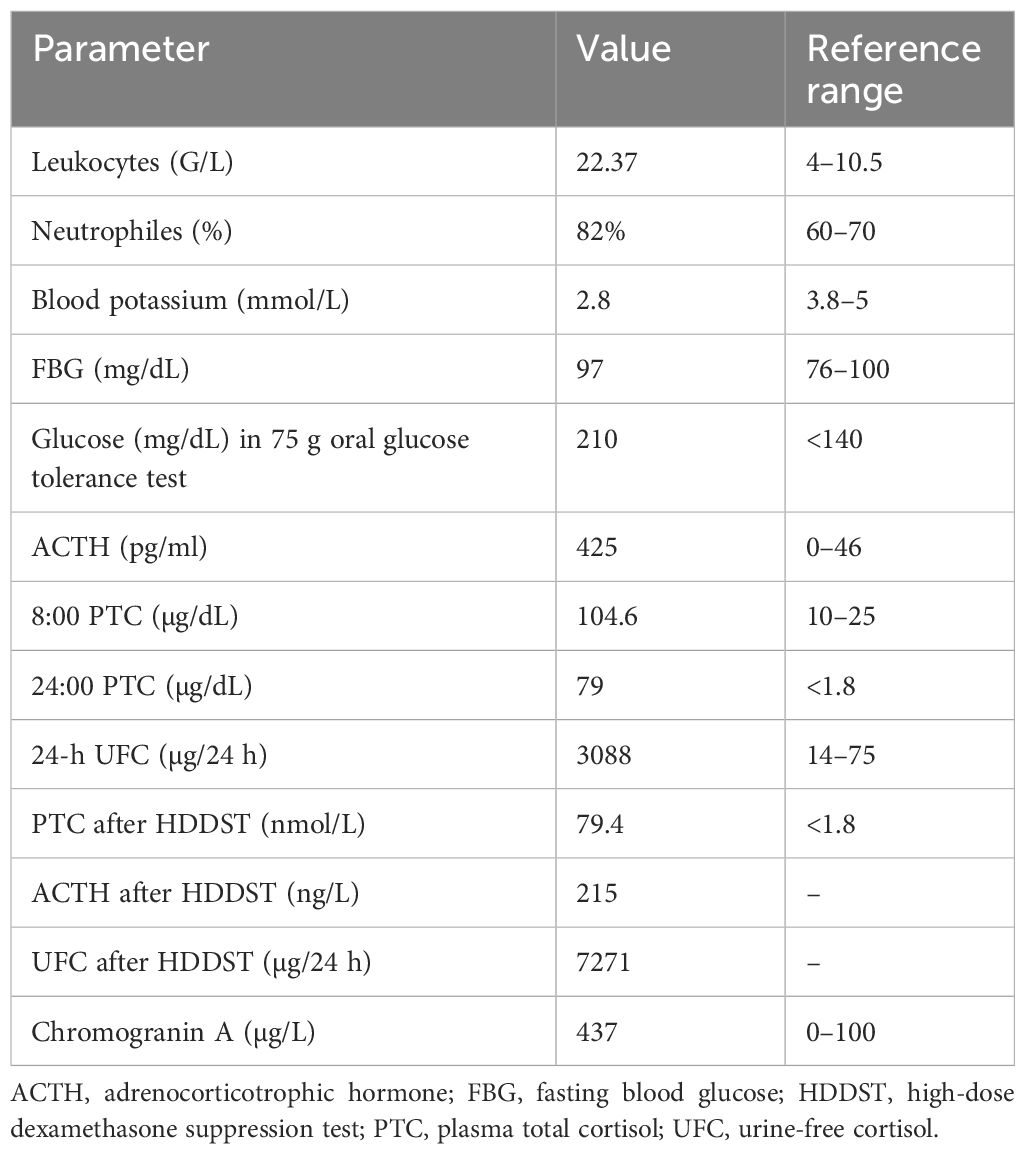
The measurements at initial physical examination were as follows: body mass index (BMI)—29 kg/m2, blood pressure—180/90 mmHg, and heart rate—88/min. She had plethora, acne, moon face, buffalo hump, central obesity, many red striae in the abdominal area, and mild hirsutism. The baseline laboratory findings are presented in Table 1, with hypokalemia, diabetes, leukocytosis, high levels of serum cortisol, ACTH, and chromogranin A, and increased urine-free cortisol (UFC) secretion. There was no suppression of serum cortisol or UFC after a high-dose dexamethasone test. ACTH-dependent CS was diagnosed, and EAS was suspected. The patient’s family history was negative for endocrine diseases or genetic disorders.

Table 1

www.frontiersin.org

Table 1. Laboratory results at diagnosis (April 2016).

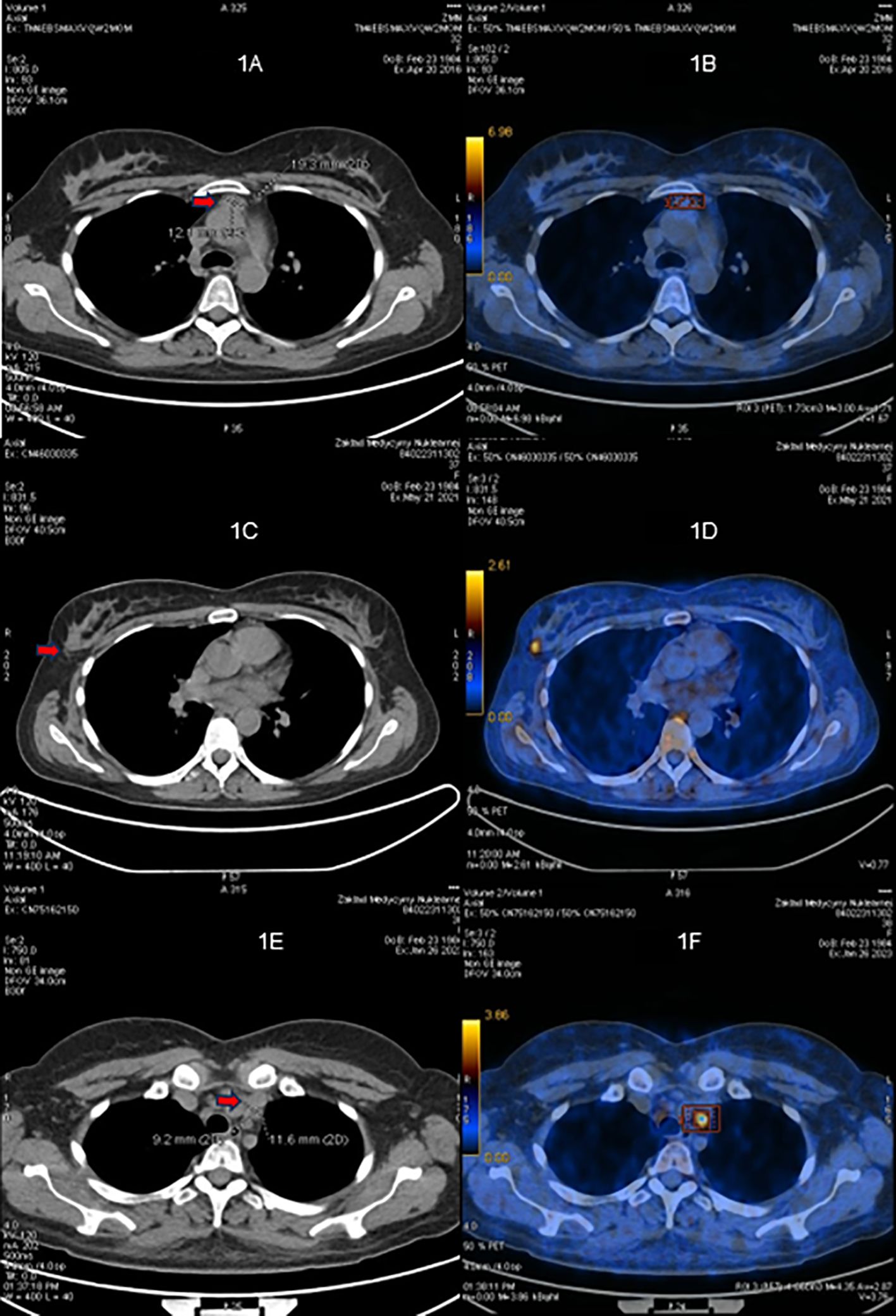
The first-line cross-sectional imaging studies (chest, abdomen, and pelvis CT and MRI of the pituitary gland) did not reveal the source of ACTH. Only a symmetrical enlargement of adrenals was observed. 68Ga DOTA-TATE PET/CT revealed an oval lesion in the anterior mediastinum (1.9 × 1.3 cm) with a subtle overexpression of somatostatin receptors (SUV max. 2.8, Figures 1A, B). The chest MRI confirmed a mass 1.5 × 2.0 × 2.5 cm, with high T2-weighted signal and high contrast enhancement, suggestive of NET. The patient was given ketoconazole (600 mg daily), spironolactone, potassium supplementation, antihypertensive drugs, and thromboembolic prophylaxis. In June 2016, thoracoscopic removal of the mediastinal tumor was performed. In the histopathological examination, the tumor was encapsulated, without evidence of invasion, and no lymph node metastases were described. The immunophenotype of the tumor was as follows: CgA (+), Syn (+), CKAE1+E3 (+) “dot-like”, S100 (-), calcitonin (-), EMA (+/-), Ki67 3% to 4% in hot spots, no necrosis, mitotic index 0/10HPF with conclusion: thymic NET—typical carcinoid (low-grade). The presence of paraganglioma was also taken into consideration, as such cases were described (17). However, the significant reaction with cytokeratin and lack of S100 protein expression made this diagnosis less probable.

Figure 1

www.frontiersin.org

Figure 168Ga-DOTATATE PET/CT scans. (A, B) Before the first surgery (April 2016). (C, D) Before the second surgery (May 2021). (E, F) Before the third surgery (January 2023).

The postoperative morning serum cortisol concentration was below 5 µg/dL, indicating biochemical remission. The patient received hydrocortisone substitution for a month. The clinical signs of CS disappeared, and there was a normalization of UFC.

During 5 years of follow-up, the patient got pregnant and delivered a healthy child. Genetic counseling was performed, and no germline mutation of MEN1 gene was identified. Other clinical manifestations of MEN1 (like primary hyperparathyroidism and pituitary secreting tumors) were excluded.

In May 2021, the patient experienced a sudden recurrence of CS symptoms. The laboratory findings confirmed severe hypercortisolism (Table 2); therefore, treatment with steroid inhibitor metyrapone was administered. The patient tolerated only 750 mg daily; there were side effects (skin rash and tachycardia) with higher doses. The chest MRI revealed no recurrence in the location of the primary tumor, only a lesion in the right breast (1.2 × 1.0 × 1.1 cm) with atypical contrast enhancement. The 68Ga-DOTA-TATE PET/CT result showed a subtle overexpression of the tracer (SUV max 1.9) in the right breast (Figures 1C, D). Breast ultrasonography confirmed a hypoechogenic, hypervascular mass in the right breast, BIRADS 3/4, diagnosed as NET in the breast biopsy. The tumor was removed in July 2021 without complications. The histopathological samples were compared with the primary lesion, confirming the metastasis from thymic NET to the breast—tumor size 0.7 × 1.5 cm, clear surgical margins (8 mm) with Ki67 3% (NET G2), and no lymph node metastases. After the breast surgery, the cortisol levels normalized in blood and urine and the CS symptoms disappeared. 18F-FDG PET/CT and 68Ga-DOTA-TATE PET/CT were performed, showing no pathological increase of radiotracer uptake in post-operative locations or mediastinal lymph nodes. The patient consulted with the oncology team, and no adjuvant therapy was recommended.

Table 2

www.frontiersin.org

Table 2. Laboratory results during 7 years of observation.

The next recurrence of the disease occurred in February 2023, with the symptoms developing suddenly during a very short period (1 to 2 weeks), additionally with significant mental deterioration (concentration disorders, anxiety, severe mood swing). The laboratory findings confirmed excessive hypercortisolism (Table 2). The patient was given osilodrostat (the initial dose was 20 mg daily but later reduced to 10 mg daily for 2 weeks until surgery) and symptomatic treatment with good clinical and biochemical effect. The 68Ga-DOTA-TATE PET/CT result showed a slightly increased uptake of the tracer in the left mediastinum, between cervical vessels, 0.9 × 1.2 cm (Figures 1E, F)—probably a local recurrence. Thoracotomy was performed in February 2023, with subsequent clinical and biochemical improvement (Table 2). In the histopathological examination, mediastinal NET G1 was diagnosed, without necrosis, mitotic activity 0/2 mm2, immunophenotype CgA (+), CD56 (+), Ki 67 1%, CK AE1/AE3 (+), CD117 (+), p40 (-), TdT (-), PAX8 (-), and the presence of tumor cell embolism in the vessels. One metastatic lesion was found in the pericardium (the maximal dimension of the tissue was 13 mm, resected radically). Two metastatic lesions in the fat tissue were found (one tissue fragment from the mediastinum, max. 16 mm diameter, and the second tissue fragment was surrounding the jugular vein, max. diameter up to 40 mm, both resected radically). Two of the 10 resected lymph nodes had metastatic lesions: one from the area of the jugular vein, diameter 11 mm, with capsular invasion, and the second lymph node N2R with capsular invasion, both resected radically. The symptoms of hypercortisolism disappeared, and the cortisol values were normalized after the operation. The patient is currently under careful monitoring, without signs of clinical or biochemical recurrence. 68Ga-DOTA-TATE PET/CT is performed every 6 months.

3 Discussion

Our case is representative for thymic NETs causing EAS presented in literature, but it also shows some distinct features, giving new insight into this rare condition.

In recent series, ACTH-secreting thymic NETs occurred often in young adults, like our patient. The typical age of presentation is 21–35 years in the largest case series, and 7.4% were children under 15 years (1213). In contrast, the former series of thymic NETs showed a peak incidence in the sixth decade of life (11).

ACTH-secreting thymic NETs show a slight male preponderance (58.6%); however, the patient’s gender does not seem to relate with the disease outcome (12). There was only an association between male sex and larger tumor size preoperatively as found in one case series (13).

Thymic NETs causing EAS are very rarely associated with MEN1; we have also excluded it in our patient. On the contrary, 30% of thymic NETs not associated with CS are found in patients with MEN1, mostly male smokers (18). It is not clear why thymic NETs with EAS are less likely caused by MEN1 gene mutation, but the possibility of this genetic predisposition should always be taken into consideration.

Thymic NETs associated with EAS are generally considered aggressive, presenting significant cellular atypia in the histopathological examination (19). However, the biology of the tumors is variable. In the histopathological examination of 92 thymic NETs secreting ACTH, the most common subtype was atypical NET (46.7%), while 30.4% of the cases were typical NETs and 21.7% were carcinomas, with the median Ki-67 10%, ranging from 1% to 40%. The median tumor size among 112 patients was 4.7 cm, ranging from 1 to 20 cm, and 55.7% of patients had metastases at presentation (12). It proves the significant heterogeneity of the disease.

Our patient had typical NET with small dimensions and localized disease at the time of diagnosis. Despite this, we observed aggressive Cushing’s syndrome with a short duration of symptoms and life-threatening hypokalemia. It has been observed that there is no correlation between tumor size and hormone levels (12). Thymic NETs associated with EAS are often large, which simplifies the diagnosis and localization. However, in the case of incidental sellar mass or small thymic tumor, the differential diagnosis might be difficult. The highest sensitivity in distinguishing thymic EAS from Cushing’s disease was documented in inferior petrosal sinus sampling and corticotropin-releasing hormone (CRH) stimulation test (1220).

In severe cases, when small ACTH-secreting NET needs to be found urgently, PET/CT is a very helpful diagnostic tool. In a prospective study comprising 20 patients with histologically proven EAS, the 68Ga-DOTATATE PET/CT result correctly identified the tumor in 75%, with SUV max. ranging from 1.4 to 20.7, while the 18F-FDG PET/CT findings had a slightly worse result (identified 60% tumors), with SUV max. ranging from 1.8 to 10.0. Those methods are believed to be complementary in case of localization and discrimination of EAS. The 68Ga-DOTATATE PET/CT result revealed tumor in six cases with a negative 18F-FDG PET/CT result, while the 18F-FDG PET/CT procedure was diagnostic in three cases with a negative 68Ga-DOTATATE uptake; the combined sensitivity of both methods was 90% (10). The typical first-line diagnostic modalities’ (CT and MRI) sensitivities range from 52% to 66% (9). Our case remains in accordance with those results, showing difficulties in localizing the ACTH source in first-line radiological methods and with 68Ga-DOTATATE PET/CT being the most useful diagnostic tool. It should also be noted that the 68Ga-DOTATATE uptake was only mildly elevated both in primary tumor and its recurrences despite excessive hormonal activity. We did not perform 18F-FDG PET/CT until second operation, as it was believed to be rather helpful in poorly differentiated tumors and 68Ga-DOTATATE PET/CT was diagnostic. Later, we performed it in search for other metastatic tumors, but the examination showed no tumor spread.

The recommended treatment of thymic NETs regarded radically resectable is thymectomy by median sternotomy or thoracotomy and lymph node dissection (112122). According to the last version of the ESMO Guidelines, available literature suggests no benefit from adjuvant therapy in ThCs. The majority of the authors of the Guidelines panel suggest individually discussing eventual postoperative therapies, including RT and/or systemic therapies, balancing the pros and cons only in selected patients with advanced stage R0 or R1-2 resection (22). Data on systemic therapies in thymic NETs are scarce; therefore, they should be discussed in a multidisciplinary expert team in case of morphologically progressive tumors, high tumor burden, or refractory hormonal syndromes. Somatostatin analogs are recommended as the first-line systemic therapy in typical carcinoids (22). We considered the adjuvant therapy with somatostatin analogs; however, due to the low uptake in PET examination and complete resolution of symptoms as well as the radical type of surgical removal, we did not decide to initiate such therapy. Other systemic treatment options include everolimus (second line in typical carcinoids or first line in atypical carcinoids), chemotherapy, peptide receptor radionuclide therapy (PRRT), and interferon-α (2223). There is also data on the benefits of combining long-acting lanreotide with temozolomide in progressive thymic NETs (24).

Due to the variable availability of steroid inhibitors during the course of the disease, our patient received three different preparations at each disease relapse. Both ketoconazole and osilodrostat were well tolerated and reduced the hypercortisolism within a few days, but metyrapone caused significant side effects (see below—”Patient’s perspective”), and it was not possible to normalize the cortisol values with this steroid inhibitor. It is worth noting that when using the most recent steroid inhibitor—osilodrostat—we initiated the therapy with a high dose without a previous dose titration. This strategy might be used in the case of severe hypercortisolism and proved effective and safe in our patient (25).

Most commonly, metastases from thymic NET producing ACTH are localized in lymph nodes, bone, lung, pleura, and, less commonly, liver and parotid gland (13). There are very few cases of EAS-related thymic NETs with breast metastases described in the literature, with some histopathological variability (one case related to atypical carcinoid, another to combined large-cell neuroendocrine carcinoma and atypical carcinoid, and third case of neuroendocrine carcinoma). All of them were female patients between 24 and 36 years of age, with mediastinal lymph nodes metastases at the time of presentation; one also had distant metastases to the bones (1315). Contrary to the reported cases, our patient had typical carcinoid (confirmed by three independent pathologists from different centers) but similarly presented with severe hypercortisolism. It suggests that there is no connection between tumor differentiation and the severity of hypercortisolism. Interestingly, in a review of 661 patients with metastatic NETs from Sweden, there were 20 patients with NETs and breast metastases, and among them only one case of thymic NET (Ki 67 12%), but without EAS. A total of 11 patients with breast metastases had a primary tumor in the small intestine and eight in the lung (16).

Our case underlines the necessity of long-term follow-up in EAS, as the recurrences occurred 5 and 7 years after the initial successful treatment. According to guidelines, follow-up after treatment of thymic NETs should be life-long (22).

The strength of our report is the presentation of a thymic NET with metastasis to the breast, diagnosed and treated with many currently available tools and with a long period of follow-up. The limitation is the low number of other similar cases to compare, which is a consequence of the rarity of this disease.

In conclusion, our case proves that thymic NETs with EAS might present in young patients with well-differentiated character in histopathological examination and severe, life-threatening hypercortisolism despite the small size of the primary lesion. 68Ga-DOTATATE PET/CT is a very helpful tool to localize the tumor. Finally, life-long follow-up should be performed despite complete remission after surgery.

4 Patient’s perspective

The first symptoms that I observed were face edema and mood changes. I rapidly lost muscle mass (approximately 6 kg in 2 weeks), and I was not able to climb stairs, especially with my child’s pram. The most difficult to accept were changes in my appearances—hirsutism, losing hair, changes of my facial features. My sense of pain (for example, during medical procedures) was diminished. Other disruptive symptoms were intensive sweating, increased appetite, thirst, brain fog, and digestive problems. At every relapse, the disease manifestations were fluctuating, all of them intensifying at the same time, which was very difficult for me. Also stress evoked disease symptoms. I experienced a strange feeling of warm during cortisol outbursts.

As for the treatment, I did not tolerate metyrapone well. I had skin rash, anxiety attacks with heart palpitations, and a metallic taste in my mouth. Other drugs (ketoconazole, osilodrostat) were better for me.

After operations of the relapses, the symptoms diminished very quickly, especially the most difficult ones. My blood pressure and glycemia normalized within a few days. Other manifestations, like loss of hair or skin changes, persisted up to 3 months.

Data availability statement

The datasets presented in this article are not readily available because the data are potentially identifiable. Requests to access the datasets should be directed to Aleksandra Zdrojowy-Wełna, aleksandra.zdrojowy-welna@umw.edu.pl.

Ethics statement

This study was exempt from ethical approval procedures being a case report of a single patient who has voluntarily provided oral and written consent to participate in the study and to have her case published for the sake of helping us better understand the clinical picture and the course of thymic neuroendocrine tumors with EAS and share it with the medical community for awareness about it. Written informed consent was obtained from the participant/patient(s) for the publication of this case report.

Author contributions

AZ-W: Conceptualization, Data curation, Investigation, Methodology, Software, Writing – original draft. MB: Conceptualization, Supervision, Writing – review & editing. JS: Data curation, Investigation, Methodology, Writing – review & editing. AJ-P: Data curation, Investigation, Writing – review & editing. JK-P: Conceptualization, Data curation, Investigation, Methodology, Supervision, Writing – original draft.

Funding

The author(s) declare that no financial support was received for the research, authorship, and/or publication of this article.

Acknowledgments

We would like to thank Prof. Barbara Górnicka and Prof. Michał Jeleń for their collaboration throughout the patient’s treatment.

Conflict of interest

The authors declare that the research was conducted in the absence of any commercial or financial relationships that could be construed as a potential conflict of interest.

The handling editor AJ declared a past co-authorship with the author MB.

The author(s) declared that they were an editorial board member of Frontiers, at the time of submission. This had no impact on the peer review process and the final decision.

Publisher’s note

All claims expressed in this article are solely those of the authors and do not necessarily represent those of their affiliated organizations, or those of the publisher, the editors and the reviewers. Any product that may be evaluated in this article, or claim that may be made by its manufacturer, is not guaranteed or endorsed by the publisher.


Supplementary material

The Supplementary Material for this article can be found online at: https://www.frontiersin.org/articles/10.3389/fonc.2025.1492187/full#supplementary-material

References

1. Young J, Haissaguerre M, Viera-Pinto O, Chabre O, Baudin E, Tabarin A. Management of endocrine disease: Cushing’s syndrome due to ectopic ACTH secretion: an expert operational opinion. Eur J Endocrinol. (2020) 182:29–58. doi: 10.1530/EJE-19-0877

PubMed Abstract | Crossref Full Text | Google Scholar

2. Feelders R, Sharma S, Nieman L. Cushing`s syndrome: epidemiology and developments in disease management. Clin Epidemiol. (2015) 7:281–93. doi: 10.2147/CLEP.S44336

PubMed Abstract | Crossref Full Text | Google Scholar

3. Lacroix A, Feelders RA, Stratakis CA, Nieman LK. Cushing’s syndrome. Lancet Lond Engl. (2015) 386:913–27. doi: 10.1016/S0140-6736(14)61375-1

PubMed Abstract | Crossref Full Text | Google Scholar

4. Javanmard P, Duan D, Geer EB. Mortality in patients with endogenous cushing’s syndrome. Endocrinol Metab Clin North Am. (2018) 47:313–33. doi: 10.1016/j.ecl.2018.02.005

PubMed Abstract | Crossref Full Text | Google Scholar

5. Ejaz S, Vassilopoulou-Sellin R, Busaidy NL, Hu MI, Waguespack SG, Jimenez C, et al. Cushing syndrome secondary to ectopic adrenocorticotropic hormone secretion: the University of Texas MD Anderson Cancer Center Experience. Cancer. (2011) 117:4381–9. doi: 10.1002/cncr.v117.19

PubMed Abstract | Crossref Full Text | Google Scholar

6. Sookur PA, Sahdev A, Rockall AG, Isidori AM, Monson JP, Grossman AB, et al. Imaging in covert ectopic ACTH secretion: a CT pictorial review. Eur Radiol. (2009) 19:1069–78. doi: 10.1007/s00330-008-1274-5

PubMed Abstract | Crossref Full Text | Google Scholar

7. Yogi-Morren D, Habra MA, Faiman C, Bena J, Hatipoglu B, Kennedy L, et al. Pituitary MRI findings in patients with pituitary and ectopic ACTH-dependent cushing syndrome: does A 6- mm pituitary tumor size cut-off value exclude ectopic acth syndrome? Endocr Pract. (2015) 21:1098–103. doi: 10.4158/EP15662.OR

PubMed Abstract | Crossref Full Text | Google Scholar

8. Ilias I, Torpy DJ, Pacak K, Mullen N, Wesley RA, Nieman LK. Cushing’s syndrome due to ectopic corticotropin secretion: twenty years’ Experience at the national institutes of health. J Clin Endocrinol Metab. (2005) 90:4955–62. doi: 10.1210/jc.2004-2527

PubMed Abstract | Crossref Full Text | Google Scholar

9. Isidori AM, Sbardella E, Zatelli MC, Boschetti M, Vitale G, Colao A, et al. Conventional and nuclear medicine imaging in ectopic cushing’s syndrome: A systematic review. J Clin Endocrinol Metab. (2015) 100:3231–44. doi: 10.1210/JC.2015-1589

PubMed Abstract | Crossref Full Text | Google Scholar

10. Liu Q, Zang J, Yang Y, Ling Q, Wu H, Wang P, et al. Head-to-head comparison of 68Ga- DOTATATE PET/CT and 18F-FDG PET/CT in localizing tumors with ectopic adrenocorticotropic hormone secretion: a prospective study. Eur J Nucl Med Mol Imaging. (2021) 48:4386–95. doi: 10.1007/s00259-021-05370-8

PubMed Abstract | Crossref Full Text | Google Scholar

11. Gaur P, Leary C, Yao JC. Thymic neuroendocrine tumors: a SEER database analysis of 160 patients. Ann Surg. (2010) 251:1117–21. doi: 10.1097/SLA.0b013e3181dd4ec4

PubMed Abstract | Crossref Full Text | Google Scholar

12. Guerrero-Pérez F, Peiró I, Marengo AP, Teulé A, Ruffinelli JC, Llatjos R, et al. Ectopic Cushing’s syndrome due to thymic neuroendocrine tumours: a systematic review. Rev Endocr Metab Disord. (2021) 22:1041–56. doi: 10.1007/s11154-021-09660-2

PubMed Abstract | Crossref Full Text | Google Scholar

13. Neary NM, Lopez-Chavez A, Abel BS, Boyce AM, Schaub N, Kwong K, et al. Neuroendocrine ACTH-producing tumor of the thymus—Experience with 12 patients over 25 years. J Clin Endocrinol Metab. (2012) 97:2223–30. doi: 10.1210/jc.2011-3355

PubMed Abstract | Crossref Full Text | Google Scholar

14. Dzialach L, Wojciechowska-Luzniak A, Maksymowicz M, Witek P. Case report: A challenging case of severe Cushing’s syndrome in the course of metastatic thymic neuroendocrine carcinoma with a synchronous adrenal tumor. Front Endocrinol. (2024). doi: 10.3389/fendo.2024.1399930/full

PubMed Abstract | Crossref Full Text | Google Scholar

15. Gaur S, Ayyappan AP, Nahleh Z. Breast metastases from an adrenocorticotropic hormone secreting thymic neuro-endocrine tumor. Breast Dis. (2013) 34:81–6. doi: 10.3233/BD-130354

PubMed Abstract | Crossref Full Text | Google Scholar

16. Crona J, Granberg D, Norlén O, Wärnberg F, Stålberg P, Hellman P, et al. Metastases from neuroendocrine tumors to the breast are more common than previously thought. A diagnostic pitfall? World J Surg. (2013) 37:1701–6. doi: 10.1007/s00268-013-2037-2

PubMed Abstract | Crossref Full Text | Google Scholar

17. Li B, Yan Z, Huang H. Case report: an unusual case of ectopic ACTH syndrome caused by mediastinal paraganglioma. Front Endocrinol. (2021) 12:790975. doi: 10.3389/fendo.2021.790975

PubMed Abstract | Crossref Full Text | Google Scholar

18. Ferolla P, Falchetti A, Filosso P, Tomassetti P, Tamburrano G, Avenia N, et al. Thymic neuroendocrine carcinoma (carcinoid) in multiple endocrine neoplasia type 1 syndrome: the Italian series. J Clin Endocrinol Metab. (2005) 90:2603–9. doi: 10.1210/jc.2004-1155

PubMed Abstract | Crossref Full Text | Google Scholar

19. Moran CA, Suster S. Neuroendocrine carcinomas (Carcinoid tumor) of the thymus. Am J Clin Pathol. (2000) 114:100–10. doi: 10.1309/3PDN-PMT5-EQTM-H0CD

PubMed Abstract | Crossref Full Text | Google Scholar

20. Kakade HR, Kasaliwal R, Jagtap VS, Bukan A, Budyal SR, Khare S, et al. Ectopic acth- secreting syndrome: A single-center experience. Endocr Pract. (2013) 19:1007–14. doi: 10.4158/EP13171.OR

PubMed Abstract | Crossref Full Text | Google Scholar

21. Girard N. Neuroendocrine tumors of the thymus: the oncologist point of view. J Thorac Dis. (2017) 9:1491–500. doi: 10.21037/jtd.2017.08.18

PubMed Abstract | Crossref Full Text | Google Scholar

22. Baudin E, Caplin M, Garcia-Carbonero R, Fazio N, Ferolla P, Filosso PL, et al. Lung and thymic carcinoids: ESMO Clinical Practice Guidelines for diagnosis, treatment and follow-up. Ann Oncol Off J Eur Soc Med Oncol. (2021) 32:439–51. doi: 10.1016/j.annonc.2021.01.003

PubMed Abstract | Crossref Full Text | Google Scholar

23. Ferolla P, Brizzi MP, Meyer T, Mansoor W, Mazieres J, Do Cao C, et al. Efficacy and safety of long-acting pasireotide or everolimus alone or in combination in patients with advanced carcinoids of the lung and thymus (LUNA): an open-label, multicentre, randomised, phase 2 trial. Lancet Oncol. (2017) 18:1652–64. doi: 10.1016/S1470-2045(17)30681-2

PubMed Abstract | Crossref Full Text | Google Scholar

24. Ferolla P, Berruti A, Spada F, Brizzi MP, Ibrahim T, Marconcini R, et al. Efficacy and safety of lanreotide autogel and temozolomide combination therapy in progressive thoracic neuroendocrine tumors (Carcinoid): results from the phase 2 ATLANT study. Neuroendocrinology. (2023) 113:332–42. doi: 10.1159/000526811

PubMed Abstract | Crossref Full Text | Google Scholar

25. Fleseriu M, Biller BMK. Treatment of Cushing’s syndrome with osilodrostat: practical applications of recent studies with case examples. Pituitary. (2022) 25:795–809. doi: 10.1007/s11102-022-01268-2

PubMed Abstract | Crossref Full Text | Google Scholar

Keywords: ectopic Cushing`s syndrome, thymic neuroendocrine tumor, thymic NET, ectopic ACTH secretion, case report

Citation: Zdrojowy-Wełna A, Bolanowski M, Syrycka J, Jawiarczyk-Przybyłowska A and Kuliczkowska-Płaksej J (2025) Case Report: Thymic neuroendocrine tumor with metastasis to the breast causing ectopic Cushing’s syndrome. Front. Oncol. 15:1492187. doi: 10.3389/fonc.2025.1492187

Received: 11 September 2024; Accepted: 31 January 2025;
Published: 25 February 2025.

Edited by:

Aleksandra Gilis-Januszewska, Jagiellonian University Medical College, Poland

Reviewed by:

Piero Ferolla, Umbria Regional Cancer Network, Italy
Lukasz Dzialach, Warsaw Medical University, Poland

Copyright © 2025 Zdrojowy-Wełna, Bolanowski, Syrycka, Jawiarczyk-Przybyłowska and Kuliczkowska-Płaksej. This is an open-access article distributed under the terms of the Creative Commons Attribution License (CC BY). The use, distribution or reproduction in other forums is permitted, provided the original author(s) and the copyright owner(s) are credited and that the original publication in this journal is cited, in accordance with accepted academic practice. No use, distribution or reproduction is permitted which does not comply with these terms.

*Correspondence: Aleksandra Zdrojowy-Wełna, aleksandra.zdrojowy-welna@umw.edu.pl

Disclaimer: All claims expressed in this article are solely those of the authors and do not necessarily represent those of their affiliated organizations, or those of the publisher, the editors and the reviewers. Any product that may be evaluated in this article or claim that may be made by its manufacturer is not guaranteed or endorsed by the publisher.

95% of researchers rate our articles as excellent or good

Learn more about the work of our research integrity team to safeguard the quality of each article we publish.

Find out more

People also looked at

Supplementary Material
  • Data Sheet 1.pdf

Insights on Diagnosing and Managing Cushing’s Syndrome

Cushing’s syndrome, or endogenous hypercortisolemia, is a rare condition that both general practice clinicians and endocrinologists should be prepared to diagnose and treat. Including both the pituitary and adrenal forms of the disease, the Endocrine Society estimates that the disorder affects 10 to 15 people per million every year in the United States. It is more common in women and occurs most often in people between the ages of 20 and 50.

Even though Cushing’s remains a rare disease, cortisol recently made waves at the American Diabetes Association 84th Scientific Session. A highlight of the meeting was the initial presentation of data from the CATALYST trial, which assessed the prevalence of hypercortisolism in patients with difficult-to-control type 2 diabetes (A1c 7.5+).

CATALYST is a prospective, Phase 4 study with two parts. In the prevalence phase, 24% of 1,055 enrolled patients had hypercortisolism, defined as an overnight dexamethasone suppression test (ODST) value greater than 1.8 µg/dL and dexamethasone levels greater than 140 µg/dL. Results of CATALYST’s randomized treatment phase are expected in late 2024.

Elena Christofides, MD, FACE, founder of Endocrinology Associates, Inc., in Columbus, OH, believes the CATALYST results will be a wake-up call for both physicians and patients seeking to advocate for their own health. “This means that nearly 1 in 4 patients with type 2 diabetes have some other underlying hormonal/endocrine dysfunction as the reason for their diabetes, or significant contribution to their diabetes, and they should all be screened,” she said. “All providers need to get comfortable with diagnosing and treating hypercortisolemia, and you need to do it quickly because patients are going to pay attention as well.”

In Dr. Christofides’ experience, patients who suspect they have a hormonal issue may start with their primary care provider or they may self-refer to an endocrinologist. “A lot of Cushing’s patients are getting diagnosed and treated in primary care, which is completely appropriate. But I’ve also met endocrinologists who are uncomfortable diagnosing and managing Cushing’s because it is so rare,” she said. “The important thing is that the physician is comfortable with Cushing’s or is willing to put in the work get comfortable with it.”

According to Dr. Christofides, the widespread popular belief that “adrenal fatigue” is causing millions of Americans to feel sick, tired, and debilitated may be creating barriers to care for people who may actually have Cushing’s. “As physicians, we know that adrenal fatigue doesn’t exist, but we should still be receptive to seeing patients who raise that as a concern,” said Dr. Christofides. “We need to acknowledsalige their lived experience as being very real and it can be any number of diseases causing very real symptoms. If we don’t see these patients, real cases of hypercortisolemia could be left undiagnosed and untreated.”

Dr. Christofides, who also serves as a MedCentral Editor-at-Large, said she reminds colleagues that overnight dexamethasone suppression test (ODST) should always be the first test when you suspect Cushing’s. “While technically a screening test, the ODST can almost be considered diagnostic, depending on how abnormal the result is,” she noted. “But I always recommend that you do the ODST, the ACTH, a.m. cortisol, and the DHEAS levels at the same time because it allows you to differentiate more quickly between pituitary and adrenal problems.”

Dr. Christofides does see a place for 24-hour urine collection and salivary cortisol testing at times when diagnosing and monitoring patients with Cushing’s. “The 24-hour urine is only positive in ACTH-driven Cushing’s, so an abnormal result can help you identify the source, but too many physicians erroneously believe you can’t have Cushing’s if the 24-hour urine is normal,” she explained. “Surgeons tend to want this test before they operate and it’s a good benchmark for resolution of pituitary disease.” She reserves salivary cortisol testing for cases when the patient’s ODST is negative, but she suspects Cushing’s may be either nascent or cyclical.

Surgical resection has long been considered first-line treatment in both the pituitary and adrenal forms of Cushing’s. For example, data shared from Massachusetts General Hospital showed that nearly 90% of patients with microadenomas did not relapse within a 30-year period. A recent study found an overall recurrence rate of about 25% within a 10-year period. When reoperation is necessary, remission is achieved in up to 80% of patients.

As new medications for Cushing’s syndrome have become available, Dr. Christofides said she favors medical intervention prior to surgery. “The best part about medical therapy is you can easily stop it if you’re wrong,” she noted. “I would argue that every patient with confirmed Cushing’s deserves nonsurgical medical management prior to a consideration of surgery to improve their comorbidities and surgical risk management, and give time to have a proper informed consent discussion.”

In general, medications to treat Cushing’s disease rely on either cortisol production blockade or receptor blockade, said Dr. Christofides. Medications that directly limit cortisol production include ketoconazoleosilodrostat (Isturisa), mitotane (Lysodren), levoketoconazole (Recorlev), and metyrapone (Metopirone). Mifepristone (Korlym, Mifeprex) is approved for people with Cushing’s who also have type 2 diabetes to block the effects of cortisol. Mifepristone does not lower the amount of cortisol the body makes but limits its effects. Pasireotide (Signifor) lowers the amount of ACTH from the tumor. Cabergoline is sometimes used off-label in the US for the same purpose.

Following surgery, people with Cushing’s need replacement steroids until their adrenal function resumes, when replacement steroids must be tapered. But Dr. Christofides said she believes that all physicians who prescribe steroids should have a clear understanding of when and how to taper patients off steroids.

“Steroid dosing for therapeutic purposes is cumulative in terms of body exposure and the risk of needing to taper. A single 2-week dose of steroids in a year does not require a taper,” she said. “It’s patients who are getting repeated doses of more than 10 mg of prednisone equivalent per day for 2 or more weeks multiple times per year who are at risk of adrenal failure without tapering.”

Physicians often underestimate how long a safe, comfortable taper can take, per Dr. Christofides. “It takes 6 to 9 months for the adrenals to wake up so if you’re using high-dose steroids more frequently, that will cause the patient to need more steroids more frequently,” she explained. “If you’re treating an illness that responds to steroids and you stop them without tapering, the patient’s disease will flare, and then a month from then to 6 weeks from then you’ll be giving them steroids again, engendering a dependence on steroids by doing so.”

When developing a steroid taper plan for postoperative individuals with Cushing’s (and others), Dr. Christofides suggests basing it on the fact that 5 mg of prednisone or its equivalent is the physiologic dose. “Reduce the dose by 5 mg per month until you get to the last 5 mg, and then you’re going to reduce it by 1 mg monthly until done,” she said. “If a patient has difficulty during that last phase, consider a switch to hydrocortisone because a 1 mg reduction of hydrocortisone at a time may be easier to tolerate.”

Prednisone, hydrocortisone, and the other steroids have different half-lives, so you’ll need to plan accordingly, adds Dr. Christofides. “If you do a slower taper using hydrocortisone, the patient might feel worse than with prednisone unless you prescribe it BID.” She suggests thinking of the daily prednisone equivalent of hydrocortisone as 30 mg to allow for divided dosing, rather than the straight 20 mg/day conversion often used.

What happens after a patient’s Cushing’s has been successfully treated? Cushing’s is a chronic disease, even in remission, Dr. Christofides emphasized. “Once you have achieved remission, my general follow-up is to schedule visits every 6 months to a year with scans and labs, always with the instruction if the patient feels symptomatic, they should come in sooner,” she said.

More on Cushing’s diagnosis and therapies.

https://www.medcentral.com/endocrinology/cushings-syndrome-a-clinical-update

Cushing Syndrome due to a CRH- and ACTH-Secreting Silent Pheochromocytoma

Highlights

  • EAS should be considered in patients presenting with rapid progression of ACTH-dependent hypercortisolism causing severe clinical and metabolic abnormalities.
  • Ectopic ACTH secretion by a pheochromocytoma should be suspected in cases of ACTH-dependent Cushing syndrome in the presence of an adrenal mass.
  • If required, medical management with steroidogenesis inhibitors can be initiated at the time of EAS diagnosis to control clinical and metabolic derangements associated with severe hypercortisolemia
  • In patients with ACTH-dependent Cushing syndrome from an ectopic source, inhibiting steroidogenesis should be reserved for cases where the initial diagnosis is unclear or patients who are not suitable candidates for surgery.
  • Unilateral adrenalectomy is indicated in the management of ACTH/CRH-secreting pheochromocytomas and is typically curative.
  • Catecholamine blockade should be started prior to surgical removal of catecholamines-secreting pheochromocytomas.
  • A multidisciplinary approach is required to diagnose and manage this condition.

Abstract

Background/Objective

Ectopic co-secretion of corticotropin-releasing hormone (CRH) and adrenocorticotropic hormone (ACTH) in silent (i.e., noncatecholamine-secreting) pheochromocytoma is a rare cause of Cushing Syndrome (CS).

Case Report

A 57-year-old woman rapidly developed hypercortisolism, clinically manifesting as fatigue, muscle weakness, weight gain, and worsening hypertension, and biochemically characterized by hypokalemia and marked elevation of serum cortisol and plasma ACTH. This acute presentation suggested a diagnosis of ectopic ACTH syndrome (EAS). Imaging studies revealed a right adrenal mass that enhanced after administration of the radioisotope 68Ga-DOTATATE. Plasma metanephrines were normal in two separate measurements. The possibility of a silent pheochromocytoma was considered. After controlling her hypercortisolism with metyrapone and surgical preparation with alpha blockade, the patient underwent elective right adrenalectomy. Pathology revealed a pheochromocytoma that stained focally for ACTH and CRH. Postoperatively, cortisol levels normalized, the hypothalamic–pituitary–adrenal (HPA) axis was not suppressed, and clinical symptoms from hypercortisolism abated.

Discussion

Patients who exhibit a rapid progression of ACTH-dependent hypercortisolism should be screened for ectopic ACTH syndrome (EAS). The use of functional imaging radioisotopes (such as gallium DOTA-peptides), improves the detection of ACTH-secreting tumors. Preoperative treatment with steroidogenesis inhibitors helps control clinical and metabolic derangements associated with severe hypercortisolemia, while alpha blockade prevents the onset of an adrenergic crisis.

Conclusion

We present a rare case of EAS due to a silent pheochromocytoma that co-secreted ACTH and CRH. Pheochromocytoma should be considered in patients with EAS who have an adrenal mass even in the absence of excessive catecholamine secretion.

Key words

ectopic ACTH syndrome
Cushing Syndrome
non-catecholamine-secreting pheochromocytoma

Abbreviations

EAS

ectopic ACTH syndrome
CS

Cushing Syndrome
CRH

corticotropin-releasing hormone
ACTH

adrenocorticotropic hormone
DHEA-S

dehydroepiandrosterone sulfate
UFC

urine free cortisol
PRA

plasma renin activity

Introduction

Cushing Syndrome (CS) is rare, with an estimated incidence of 0.2-5.0 per million people per year, and prevalence of 39-79 per million (1). Ectopic ACTH Syndrome (EAS), a type of CS originating from extra-pituitary ACTH-secreting tumors, is uncommon. The prevalence of CS due to ACTH-secreting adrenal medullary lesions is not well established. However, EAS is observed in approximately 1.3% of all identified cases of pheochromocytoma (2). Recognizing EAS can be challenging due to its rarity, leading to delayed diagnosis.

Neuroendocrine neoplasms can produce CRH, which can lead to the secretion of ACTH by the pituitary. In certain cases, co-secretion of ACTH and CRH by an adrenal neoplasm has been observed. Only two published cases have provided definitive biochemical and immunohistochemical evidence of exclusive CRH secretion (3).

Case Report

A 57-year-old woman with a history of well-controlled hypertension sought care due to a two-month history of 60 lb weight gain, facial rounding, easy bruising, muscle weakness, lower extremity edema and acne. Her blood pressure control had worsened, and laboratory tests showed a markedly low serum potassium level of 1.8 mmol/L while taking hydrochlorothiazide. To manage her blood pressure, she was prescribed a calcium channel blocker, an angiotensin receptor blocker, and potassium supplements. However, her symptoms worsened, and she was referred to our emergency department. Blood pressure at presentation to our hospital was 176/86 mmHg. She had characteristic features of CS, including face rounding, supraclavicular fullness, dorsocervical fat accumulation, pedal edema, oral candidiasis, multiple forearm ecchymoses, and acneiform skin eruptions. No visible abdominal striae were present. She had no family history of pheochromocytoma, or multiple endocrine neoplasia type 2.

Serum cortisol level was 128 mcg/dL (normal range: 4.6-23.4) at 5 PM, with an ACTH level of 1055 pg/mL (normal range: 6-50); serum DHEA-S level was elevated at 445 mcg/dL (normal range: 8-188). Her 24-hour urine cortisol was at 12,566 mcg (normal range: 4.0-50.0). Plasma metanephrines were normal at <25 pg/mL (normal range: <57), and plasma normetanephrine was 44 (normal range: <148). A second plasma metanephrine measurement showed similar results. Serum aldosterone level and plasma renin activity were low at 2 ng/dL (normal range: 3-16) and 0.11 ng/mL/h (normal range: 0.25-5.82), respectively. Dopamine and methoxytyramine levels were not measured. An abdominal CT revealed a 4.8 x 4.5 x 5 cm right heterogeneously enhancing adrenal mass with a mean Hounsfield Unit of 68 in the non-contrast phase, and an absolute percentage washout of 30% (Fig 1A). The left adrenal gland appeared hyperplastic (Fig 1B). An Octreoscan, which was the in-hospital available nuclear medicine imaging modality, confirmed a 5.1 cm adrenal mass that was mild to moderately avid, with diffuse bilateral thickening of the adrenal glands and no other focal radiotracer avidity. A pituitary MRI did not show an adenoma, and EAS was suspected. Further evaluation with 68Ga-DOTATATE PET/CT (Fig 2) performed after her admission demonstrated an avid right adrenal mass consistent with a somatostatin receptor-positive lesion. No other suspicious tracer uptake was detected. These findings were consistent with a neuroendocrine tumor, such as pheochromocytoma.

  1. Download : Download high-res image (261KB)
  2. Download : Download full-size image

Fig. 1. Preoperative abdominal computed tomography scan showing a 4.8 x 4.5 x 5 cm right heterogeneously enhancing adrenal mass with irregular borders (A) and a hyperplastic left adrenal gland (B).

  1. Download : Download high-res image (219KB)
  2. Download : Download full-size image

Fig 2. 68Ga-DOTATATE PET/CT showing an avid right adrenal mass.

To control her symptoms while undergoing workup, the patient received oral metyrapone 500 mg thrice daily and oral ketoconazole 200 mg twice daily. Ketoconazole was stopped due to an increase in transaminases. The dosage of metyrapone was increased to 500 mg four times daily and later decreased to alternating doses of 250 mg and 500 mg four times daily. Within 3 weeks of starting medical therapy, serum cortisol level normalized at 20 mcg/dL. The 24-hour UFC improved to 246.3 mcg/24h. She experienced gradual improvement in facial fullness, acne, and blood pressure control.

The possibility of a silent pheochromocytoma was considered, and a-adrenergic blockade with doxazosin 1 mg daily was started 1 month prior surgery. She underwent surgery after two months of metyrapone therapy. With an unclear diagnosis and a large, heterogeneous adrenal mass, the surgical team elected to perform open adrenalectomy for en bloc resection due to concerns for an adrenal malignancy. The tumor was well-demarcated and did not invade surrounding structures (Figure 3A). H&E-stained sections showed classic morphologic features of a pheochromocytoma (Figure 3B), with immunohistochemistry demonstrating strong immunoreactivity for synaptophysin and chromogranin, and negative SF- I and inhibin stains excluding an adrenal cortical lesion. The sections analyzed by QuPath (4) revealed that approximately 4% of ce11s were ACTH cells, often found in isolation, and had a clear, high signal-to-noise staining (Figure 3C). CRH cells were less prevalent, comprising about 2.4% of the total analyzed cells, and tended to cluster together (Figure 3D). These cells had more background staining, resulting in a lower signal- to-noise ratio.

  1. Download : Download high-res image (663KB)
  2. Download : Download full-size image

Figure 3. Gross and Histopathological analysis of the patient’s pheochromocytoma. (A) Image of the gross excised specimen. (B) H&E staining (200x final magnification) demonstrates prominent vascularity and cells with finely granular, eosinophilic cytoplasm and salt-and-pepper chromatin. (C) ACTH staining (200x final magnification) shows clear and isolated positive cells, representing about 4.0% of the section analyzed by QuPath. (D) CRH staining (200x final magnification) reveals tight clusters of positive cells, accounting for 2.4% of the total cells. Positive (human placenta and hypothalamus) and negative (thyroid gland) control tissues performed as expected (data not shown).

The patient’s postoperative recovery was uneventful, with a short course of hydrocortisone which was stopped 1 week after surgery after HPA axis evaluation showed normal results. After one month, hypercortisolism had resolved, as shown by a normal 24-hour UFC at 28 mcg.

Administration of dexamethasone at 11 PM resulted in suppression of morning cortisol to 0.8 and 0.6 mcg/dL 1 and 7 months after surgery, respectively. Her liver function tests normalized, and blood pressure was well-controlled with amlodipine 10 mg daily and losartan 100 mg daily. Genetic testing for pheochromocytoma predisposition syndromes is currently planned.

Discussion

EAS accounts for 10-20% of cases of ACTH-dependent CS (5). This condition can be caused by several neuroendocrine neoplasms that produce bioactive ACTH (6) In the literature, we have found 99 documented cases of EAS caused by a pheochromocytoma. Of these, 93% showed ACTH expression. Only two cases have been reported with dual staining of ACTH and CRH (7). Exclusive CRH production has only been reported in two cases (8:9). However, the true prevalence of CRH-producing pheochromocytomas might be underestimated, as most cases testing for CRH expression was not performed.

Although the clinical presentation of EAS may be highly variable, there is often a rapid onset of hypercortisolism accompanied by severe catabolic symptoms. The diagnostic process should focus on identifying the location of a potential neuroendocrine neoplasm responsible for the ACTH secretion. Sometimes the peripheral origin of ACTH must be confirmed by inferior petrosal sinus sampling (IPSS). In this case, given the clinical presentation consistent with EAS, negative pituitary MRI, and the presence of an adrenal mass that needed to be removed independently, IPSS was not performed.

Neuroendocrine neoplasms express somatostatin receptors on their surface, which allow functional imaging using [11 lln]-pentetreotide (Octreoscan). However, Octreoscan has a low sensitivity in detecting occult EAS. In cases where the tumor is in the abdomen and pelvis, Octreoscan has limited utility in locating the source of ACTH (10). This increased risk of false negatives is caused by physiological tracer uptake by the liver, spleen, urinary tract, bowel, and gallbladder. The use of Gallium-68 labeled somatostatin receptor ligands (PET/CT 68Ga-DOTATATE) is more effective in detecting somatostatin receptors (SSTR2) than [11lln]-pentetreotide due to its higher spatial resolution and affinity (11)_ This test was performed after discharge form the hospital to rule out the presence of a second, smaller neuroendocrine tumor that the Octreoscan might have missed. A new molecular imaging technique targeting CRH receptors (68Ga CRH PET/CT) has shown potential in identifying tumors expressing CRH, but its availability remains limited (12). In our patient’s case, both the Octreoscan and 68Ga- DOTATATE successfully identified the adrenal tumor as a potential ACTH/CRH secretion source.

According to relevant guidelines, presurgical adrenergic blockade is recommended for patients with biochemical evidence of catecholamine excess (1314). Conversely, silent pheochromocytomas can generally be operated without alpha blockade (15). Despite this, we opted to administer pre-operative alpha blockade as a precautionary measure for this patient.

Pathology examination confirmed the diagnosis of pheochromocytoma. ACTH and CRH staining demonstrated that clear and significant populations of two separate ACTH and CRH positive cells were present in the excised pheochromocytoma. ACTH/CRH cells were dispersed throughout various regions of the pheochromocytoma rather than being well-defined, separate histological entities. As a result, there is no indication that this resulted from collision tumors, but rather random mutation and expansion of tumor cells into ACTH or CRH secreting cells. These results have limitations, including variation in ACTH and CRH expressing regions due to tumor heterogeneity, nonspecific binding of polyclonal antibodies, and normal low-rate false negative/positive detection using QuPath.

Post-surgical normal HPA activity was likely due to the de-suppression of the HPA axis by medical therapy, but it may also be explained by chronic stimulation of corticotroph cells induced by ectopic CRH secretion.

The standard approach to managing EAS involves surgical intervention. However, surgery may not be a viable option in cases where the source of ACTH production is unknown. Medical therapy to reduce or block excess cortisol can be used in such circumstances.

Conclusions

In conclusion, a pheochromocytoma causing EAS should be considered even in the absence of elevated plasma metanephrines. These tumors may simultaneously express ACTH and CRH.CRH.

References

Cited by (0)

Sources of support: None

Permission in the form of written consent from patient for use of actual test results was obtained.

Cushing in silent pheochromocytoma

Clinical Relevance

This case highlights the importance of considering ectopic ACTH secretion by a pheochromocytoma in patients presenting with rapid progression and considerable clinical hypercortisolism concomitant with an adrenal mass and elevated plasma ACTH. This represents an unusual manifestation of a specific subtype of ACTH/CRH-secreting pheochromocytoma that did not exhibit catecholamine secretion

The authors declare that they have no known competing financial interests or personal relationships that could have appeared to influence the work reported in this paper

These 2 authors contributed equally to this work

From https://www.sciencedirect.com/science/article/pii/S2376060524000075