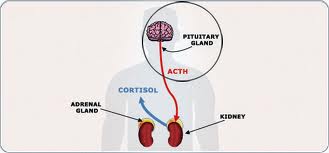
Pituitary Issues: Irregular Periods

Q: I am 28 years old and I have not yet started my periods naturally. I have to take medicine for periods — Novelon. The doctors say that there is some problem with my hormones in the pituitary gland. Please advise me how to get normal and natural periods, because after taking the medicine I get my period, but without medicines I don’t.

A by Dr Sharmaine Mitchell: The problem you have with your menstrual period being irregular is most likely due to overproduction of the hormone prolactin by the pituitary gland in the brain. The pituitary gland can sometimes enlarge and cause an overproduction of prolactin and this can result in inappropriate milk production in the breasts (white nipple discharge), irregular menstruation or absent menstrual periods, headaches and blurred vision. The blurred vision occurs as a result of compression of the optic nerve which supplies the eyes, by the enlarged brain tumour in the pituitary gland.

You should get a magnetic resonance imaging (MRI) or CT scan of the brain and pituitary gland done. You should also test your prolactin levels to determine the extent of overproduction of the hormone.

Other investigations should include a thyroid function test (TSH), follicle stimulating hormone (FSH) and leutinizing hormone (LH), and baseline testosterone level tests.

Abnormalities in the production of thyroid hormones can also cause menstrual irregularities and this should be ruled out.

Polycystic ovarian disease can also cause irregular menstrual periods and checking the level of FSH, LH and testosterone will help to rule out this diagnosis. This condition is usually associated with excessive weight gain, abnormal male pattern distribution on the face, chest and abdomen and an increased risk for diabetes mellitus. A pelvic ultrasound to look at the structure of the ovaries and to rule out polycystic ovaries is essential.

If the pituitary gland is enlarged, then medication can be prescribed to shrink it. Bromocriptine or Norprolac are commonly used drugs which work well in reducing the prolactin levels and establishing regular menstrual cycles. The use of these drugs will also help to establish ovulation and improve your fertility.

In some cases it may become necessary to have surgery done if the tumour in the pituitary gland is large and does not respond to the usual medications prescribed to shrink the pituitary gland. The MRI of the brain and pituitary gland will give an idea as to the size of the gland and help to determine if there is a need for you to see the neurosurgeon.

In most cases medical management with drugs will work well and there is no need for surgical intervention. This is a problem that can recur, so it may be necessary to take treatment intermittently for a long period of time, especially if fertility is desired.

Consult your doctor who will advise you further. Best wishes.

Dr Sharmaine Mitchell is an obstetrician and gynaecologist. Send questions via e-mail to allwoman@jamaicaobserver.com; write to All Woman, 40-42 1/2 Beechwood Ave, Kingston 5; or fax to 968-2025. All responses are published. Dr Mitchell cannot provide personal responses.

DISCLAIMER:

The contents of this article are for informational purposes only and must not be relied upon as an alternative to medical advice or treatment from your own doctor.

From http://www.jamaicaobserver.com/magazines/allwoman/Still-no-normal-period-at-28_87596

Into the brain through the nostrils (Sri Lanka)

There is purposeful concentration, while soft and soothing music plays in the background, as different teams of doctors and nurses, scrub up and move around Operating Theatre (OT) C of the Anuradhapura Teaching Hospital.

On the operating table is a pretty middle-aged woman, but something seems unusual with her face – it seems unduly large, with the nose being pronounced.

While Consultant Anaesthetist Dr. Ayesha Abeyratne and her team are preparing the patient for surgery, two Consultants from different specialties are studying the Magnetic Resonance Imaging pictures. They are Consultant Ear, Nose and Throat (ENT) Surgeon, Dr. Daminda Dumingoarachchi who is also a Head and Neck Surgeon and Consultant Neurosurgeon, Dr. Stravinsky Perera. Although not present in the OT that day, Consultant ENT Surgeon Dr. Upul Abeysundara is also very much a part of this pioneering work in Sri Lanka.

It is a Monday morning and we too are in OT clothes and masks privy to viewing an operation not done anywhere else in the state sector, except the Anuradhapura Hospital.

Accessing the patient’s brain through the nostrils is what the ENT and Neuro Teams will do in one of many trailblazing procedures, while the Anaesthetic Team will ensure that her vitals are stable and the able theatre nursing staff will play their part.

Image-guided (navigation-assisted) endoscopic trans-nasal trans-sphenoidal pituitary surgery is what we are about to view being performed in the country only since October this year. For, the 38-year-old patient lying inert on the operating table has a tumour just above her pituitary gland, between the optic nerves and the carotid arteries, making it a difficult operation-site to access. (The pea-size pituitary gland is dubbed the ‘master gland’ as it produces many hormones for the whole body, while also stimulating other glands to produce other hormones.)

Dr. Dumingoarachchi points out that the ENT navigator which the Anuradhapura Hospital was provided with recently, is like the GPS system of the brain which shows this vital organ’s architecture.

Dr. Perera explains that the patient has acromegaly, the abnormal production of growth hormones from the pituitary, causing a large nose and big hands etc. This is while it also causes an abnormal reduction in other hormones, affecting the functioning of the whole body. The enlarged pituitary is also compressing the main artery of the brain. A major issue is that the patient’s vision is being affected and if the tumour is not decompressed, she would go blind.

Dr. Daminda Dumingoarachchi

Matters also seem complicated as the patient had undergone ‘conventional’ brain surgery to remove an earlier tumour in the same area in 2009 in another hospital, but some parts had been left behind because it was complex surgery and the slightest slip of the scalpel could cause serious harm.

We watch in fascination as the surgical teams discuss how the tumour has grown around the right carotid artery making it a challenging procedure and is pressing down (compressing) on the brain.

This pituitary macroadenoma with acute intra-tumoural haemorrhage (bleeding) is “big” — 5X3.8X3.5cms, says Dr. Perera, adding that laterally, the lesion extends to the right cavernous sinus encircling almost the full circumference of the cavernous part of the right carotid artery. The left carotid artery is spared.

Super-imposing the patient’s Computed Tomography (CT) scan with images of the real anatomy, the ‘registration’ takes place for this ‘re-do’ surgery, as he explains that the anatomy is distorted after her previous surgery done seven years ago.

In the freezing OT, we don’t feel the time passing as both the Neurosurgeon and the ENT Surgeon attend to their tasks, two pairs of hands working in tandem, not looking down at the patient but up at the two screens, while navigating the pathways through the nostrils to the brain.

Usually, such a large tumour above the pituitary gland will entail open-skull surgery, with the brain having to be retracted (drawn away from the site of the operation) to gain access to the tumour, we learn. While the dangers of such surgery are numerous, the patient also has to spend a long time in the Intensive Care Unit (ICU) in the recovery phase.

With the frontiers of medicine pushed back more and more, Dr. Dumingoarachchi says that now skull-base structures can be approached through the nose, ear and throat. “Such surgery involves dealing with pathologies located on the under-surface of the brain, with Neurosurgeons and ENT Surgeons together accessing the skull-base more easily through the nose, ear and throat.”

Pointing out that these trans-nasal and trans-labyrinthine approaches to the skull-base will help bring down the rate of revision neurosurgeries and cut down the time that the patient will have to spend in the ICU post-operatively, he adds that the patients can go back home sooner without complications and be productive more quickly. Currently, some patients even go to other countries to get these services.

With the Health Ministry providing a high definition 3-chip endoscopic camera system, an anterior skull-base set, a micro-debrider and an ENT navigator, vast strides have been made at the Anuradhapura Hospital. They include:

Dr. Stravinsky Perera

Anterior skull-base surgeries — Endoscopic anterior skull-base surgeries, starting with pituitary surgeries using the endoscopic trans-sphenoidal approach for the first time in Sri Lanka. The latest addition, in October this year, is image-guidance (navigation).

The other procedures include cranio-pharyngioma, olfactory neuroblastoma, cerebrospinal fluid leak repairs, para-nasal sinus cancer resections and odontoid (cervical spine) decompression.

The advantages of this approach include a better field of view and ease of doing revision surgery if required, while leaving no external scars.

Nasal polyposis is also now being managed by image-guided powered full house functional endoscopic sinus surgeries, resulting in the reduction of the recurrence rate. This also cuts down revision surgeries.

*  Lateral skull-base surgeries – Through microscopic lateral skull-base surgery, trans-labyrinthine acoustic neuromas have been removed. With direct access to these eighth-nerve tumours, no brain retraction has been necessitated, resulting in less post-operative morbidity. The whole tumour can be removed while preserving the seventh cranial nerve, as the hospital has also been given intra-operative cranial nerve monitoring facilities.

Paying tribute to Dr. Palitha Mahipala, Director-General of Health Services, for making the navigator available to them, Dr. Dumingoarachchi also expresses appreciation to the Deputy Director-General (DDG) of the Biomedical Division, Muditha Jayathilake, Biomedical Engineers Apsara and Kumuduni and DDG Dr. Lakshmi Somatunga for all their support.

From http://www.sundaytimes.lk/161218/news/into-the-brain-through-the-nostrils-221019.html

Day 18, Cushing’s Awareness Challenge 2016

I have seen this image several places online and it never ceases to crack me up. Sometimes, we really have strange things going on inside our bodies.

Usually, unlike Kermit, we ourselves know that something isn’t quite right, even before the doctors know. Keep in touch with your own body so you’ll know, even before the MRI.

I asked doctors for several years – PCP, gynecologist, neurologist, podiatrist – all said the now-famous refrain. “It’s too rare. You couldn’t have Cushing’s.” I kept persisting in my reading, making copies of library texts even when I didn’t understand them, keeping notes. I just knew that someone, somewhere would “discover” that I had Cushing’s.

Finally, someone did.

These days, there’s no excuse to keep you from learning all you can about what’s going on with you. There’s your computer and the internet. Keep reading and learning all you can. You have a vested interest in what’s going on inside, not your doctor.


Interview with Fabiana October 21

Fabiana had transsphenoidal surgery (pituitary) July 30th 2004.  She had a recurrence after seven years of being Cushing’s free.  A second pituitary surgery on 10/26/2011 was unsuccessful.

Another Golden Oldie, this bio was last updated 9/12/2015

interview

Fabiana will be our guest in an interview on BlogTalk Radio  Wednesday, October 21 at 6:00 PM eastern.  The Call-In number for questions or comments is (657) 383-0416.

The archived interview will be available after 7:00 PM Eastern through iTunes Podcasts (Cushie Chats) or BlogTalkRadio.  While you’re waiting, there are currently 88 other past interviews to listen to!

~~~

Well it has taken me a year to write this bio…and just to give some hope to those of you just going thru this process…I have to say that after surgery I have not felt better! I am back to who i always knew I was….the depression and anxiety is gone and I am living life like a 24 year old should!

I guess it all started when i was sixteen (hindsight is 20-20 i guess). My periods stopped i was tired all the time and the depression started. We all kind of just chalked it up to being sixteen. But my mom insisted something was not right. we talked with my gyno…who said nothing was wrong, I had a fungus on my head (my hair was getting really thin) and sometimes girls who had normal periods (in my case three years of normal periods) just go awry.

My mom wasnt hearing that and demanded a script for an endo. I went….he did blood work…and metioned cushings. But nothing came back definitive…so they put me on birthcontol and gave me some hormones and the chushings was never mentioned again because that all seemed to work.

As time went on my depression got worse, the shape of my body started to change-my face and stomach was the most noticeable- and my energy level kept going down. I kept going back to the doctors asking to be tested for mono..or something. I went to a psycologist….but i knew there was no reason for my depression. Two of them told me “i had very good insight” and that I didnt need them. I started getting more anxiety..especially about going out socially.

High school ended and my typical optimistic personality started to decline. I put on a good act to my friends but my family was seeing me break down all the time. I went away for college (all the while gaining weight). My sophmore year I had a break down..I called my family crying that i needed help. I couldnt beat my depression. I didnt drink in college because i knew that would mean instant weight gain, i barely went out…i exercised everyday..hard….i joined weight watchers…i stuck with it. I was at 103 lbs….that crept up to 110…that crept up to 117…each time my weight goal would be “ohh if i could just get back to 108..112…115” with each weight gain my original weight goal would get higher and higher.

Internally i felt like I was constantly under a black cloud..i knew there was no reason why i shoudl feel this way..i was doing great in school, i had a supportive family, an amazing boyfriend and great friends…why was i depressed? I was becoming emotionally draining to the people closest to me…I would go home a lot on the weekends…i was diagnosed with PMDS….like severe PMS..and was given an antidepresant…i hated it it made me feel like a zombie…i stopped taking it and just made it apoint to work on fighting the depression….and the weight gain.

When i was done college i was about 120 lbs. My face was getting rounder and rounder..i was noticing more hair on my face and arms…and a hump between my shoulder blades and the bottom of my neck. My mom saw a tv show about Polycystic ovarian syndrome and felt that maybe that was what was going on with me…i went to my PCP with this and she said it was possible and that i should to talk to my gyno….I am 4’8 and at the time weighing close to 125..i talked to my gyno and she said I was not heavy..that i was just “itailan” ..i told her my periods were getting abnormal again even w/the birthcontrol and that i was so tired all the time and my arms and legs ached. I also told her that i was bruising very easily…and that the weight gain would not stop despite my exercising and following the atikins diet very strickly for over 6 weeks. My boyfriend and I decided to try the diet together..he lost 35 llbs in 6 weeks..i lost NOTHING! I went back to my PCP who ordered an ultra sound of my ovaries…..NOTHING.(i kept thinking i was going crazy and that it was all in my head)….she also decided to do some blood work…and as i was walking out the door she said..”you know what..i am going to give you this 24hr urine test too. Just so that we cover everything”. I just kept thinking please let something come back ….please dont let this be all my fault…please dont let this be all in my head…..please dont let me be crazy. When i got the test results back it turned out that the 24hr urine test was the one test i needed to get on the right track to finding what was wrong. My cortisol level was 3x’s the normal.

I went to an endo…by the time i got to the endocronoligist i was up to 130…i could not work a full day without needing a full day of sleep and my body was aching beyond description. I was crying all the time…in my room…and was becoming more and more of a recluse…i would only hang out with my boyfriend in our houses. I looked my symptoms up on the internet and saw cushings…that was it! I went to the endo and told him..i think it is cushings….he said he had only saw it one other time and that he wanted to do more tests. I got CAT scans, x-rays, MRI’s….my adrenals my pituitary my lungs….he did a CRH stimulation test which was getting blood work done every fifteen minutes for 90minutes….it took weeks to get that test scheduled..no one had ever heard of it and therefore did not know how to do it…..finally after 3 months of tests my dr. felt he had enough evidence to diagnos me with cushings disease (tumor on my pituitary) I was diagnosed in March of 2004. By this time i was about 137 lbs i had to work part time (i am an occupational therapist for children..i do home visits….i could not make it thru a whole day)

In April i had to change to office work…i could not lift the children and i could barely get up off the floor. I have to say i was one of the lucky people who worked for people who were very supportive and accomidating…my boss was very willing to work with me and willing to hold my job for me.

July 30th 2004 i finally had transphenodial surgery to remove my tumor (they went thru my lip and nose because they felt my nose was too small). It is now over 1 year later….i am down to 108 lbs, i have so much energy…no depression….and i dont mind looking at myself in the mirror…i am enjoying my friends and my boyfriend…(who stayed with me thru it all) And my family. I feel healthy mentally, emptionally, and physically. And i just got back into my size 2 jeans!!!

It was a crappy time…(as i am sure you all can atest to) but i learned a lot…..most importantly i was bombarded by good wishes and prayers….friends requested masses for me…a nun in brazil prayed for me…people who i never thought i touched their lives…took the time to wish me well…send an email..or call….I got to experience the wonderful loving nature of human beings and i was lucky to be supported by my family (my mom, dad, and two younger brothers) and my boyfriend throughout this entire tough journey.

This experience taught me to realize the strength i have as well as to appreciate the good and the bad in life. I was on hydrocortizone for about 8 months…i was lucky that my tumor was in its own little sack so my pituitary gland was not touched. In the end in took about 7 years to diagnose me..i think that if the dr. at 16 would have pursued the cushings idea nothing would have been found because it took so long for my symptoms to really peak…needless to say i love my PCP and my endo ..and that i changed gyno’s…

I just want to let anyone out there going thru this disease to know..you are not alone….and to take each day is stride…when you need help ask for it….and that this road can lead to a happy ending. God Bless!

ps- it is ok to feel bad about what you are going thru…it is a tough thing to endure…and when the docotors tell you there is noting wrong…..follow your gut…and you keep searching for the doctor that will listen… If there is anyone in the philadelphis of south jersey area who needs someone to talk to please feel free to email me…fapadula@hotmail.com…i will help you out the best i can!

Update November 6, 2011

Well- here is an update, after seven years of being Cushings free it has returned.

With in those seven years I married my college boyfriend and we now have a son- Nicholas who will be 2 in Decemeber. It has been a blessed and wonderful seven years. However right around when my son was turning 1 I started to notice symptoms again. Increase facial hair, the whole “roundness” of my body, buffalo hump. I decided I was going to work out hard, eat right, and see – I didnt just want to jump to any conclusions. I stuck to it- and nothing…..my hair started thinning again and the acne was coming back and then the missed periods…..so I went to my PCP- told them i needed the 24hr urine and wouldnt you know…..427 cortisol level (on that 0-50 scale)……here we go again.

So back to endo- now at Penn Pituitary Center…..it was another journey b/c the tumor wasnt definative on MRI, and it seems to be cycling…..but I was diagnosed with Cushings again- with the option of 2nd pit surgery or BLA…….after some months of trying to make a decision I went with the 50/50 chance of the second pituitary surgery on 10/26/2011.

It didnt work- my levels never came down in the hospital and I went home w/ out of range cortisol levels and no need for medication……BLURG……Sooooo on to the next step…..after I recover from this surgery I will most likely have the BLA- with the hopes of not having to deal with Cushings ever again. This time around has been a little more difficult just with being a mom and feeling sick- but I still continue to be amazingly blessed with a supportive family and husband and we are surrounded by love and support and for that I am beyond greatful.

I keep all of you in my prayers for relief and health- as I ( we all) know this no easy journey.

Many Blessings!

Fabiana

Update September 12, 2015

So to bring this up to date. My second pituitary surgery in 2011 was unsuccessful. January of 2012 I had both of my adrenal glands removed. Going to adrenal insufficiency was a very difficult transition for me. It took me nearly 2 years before I felt functional. As time went on I felt more human, but I haven’t felt healthy since that day. I can and do function, but at a lower expectation of what I used to be capable of….my “new normal”.

My husband and I decided to try for a second child…my pituitary was damaged from the second surgery and we needed fertility…after 8 months of fertility I got pregnant and we had our second son January of 2015.

In April of 2015 we discovered that my ACTH was increasing exponentially. MRI revealed a macroadenoma invading my cavernous sinus. The tumor is sitting on my carotid artery and milimeterrs away from my optic chasim. I was not a candidate for another surgery due to the tumors proximity to.both of those vital structures.

So September 1st of this year I started daily radiation treatments. I spent my 34th birthday getting my brain zapped. I am receiving proton beam therapy at the Hospital of the University of Pennsylvania. I am so lucky to live so close to an institute that has some of the rarest treatment options.

Again Cushing’s is disrupting our life, my husband goes with me every night to radiation while family takes turns watching the kids….I am now on my 18th year of fighting this disease. I never imagined it would get to this point.

But here we all are making the best of each day, fighting each day and trying to keep things as “normal” as possible. Blessings to all of you fighting this disease…my new go to saying is” ‘effing Cushing’s”! For you newbies…Fight, Advocate for yourselves, and find a doc who doesn’t dismiss you and hang on to them for dear life.

HOME | Sitemap | Adrenal Crisis! | Abbreviations | Glossary | Forums | Donate | Bios | Add Your Bio | Add Your Doctor | CushieWiki

Narrowing in on Pituitary Tumors

0276f-pituitary-gland


As many as 20 percent of people may have a benign cyst or tumor in their pituitary gland. The vast majority of pituitary tumors are noncancerous, but can cause headaches and profound fatigue, and can also disrupt hormone function.

Currently, surgeons rely on radiologic images and MRIs to gather information about the size and shape of the tumor, but the resolution of such imaging technologies is limited, and additional surgeries to remove more of the tumor may be needed if a patient’s symptoms persist. In a new study published in the Proceedings of the National Academy of Sciences on July 27, investigators from Brigham and Women’s Hospital (BWH) present a new technique that could help surgeons more precisely define the locations of tumors in near real-time.

The new strategy uses a visualization technique (matrix-assisted laser desorption/ionization mass spectrometry imaging – MALDI MSI) that can analyze specific hormones, including growth hormone and prolactin, in tissue. In the newly published study, the researchers find that it’s possible to use MALDI MSI to determine the composition of such hormones in a pituitary sample in less than 30 minutes. This could give surgeons critical information to help distinguish tumor from normal gland.

“Our work is driven by a clinical need: we’ve developed a test specifically tailored for the needs of our neurosurgeon colleagues,” said corresponding author Nathalie Agar, PhD, director of the Surgical Molecular Imaging Laboratory in the Department of Neurosurgery at BWH. “A surgeon may sacrifice half of the pituitary gland in an effort to get the tumor out. Without a tool to distinguish healthy tissue from tumor, it’s hard to know in real-time if the surgery was a success. With this technology, in under 30 minutes a surgeon will be able to know if a sample contains normal pituitary tissue or a pituitary tumor.”

“Patients show up with the clinical symptoms of a pituitary tumor, but the tumor itself may not be visible on an MRI,” said co-author Edward Laws, MD, director of the Pituitary and Neuroendocrine Center at BWH. “This technique, which maps out where excess concentrations of hormone levels are located, has the potential to allow us to confirm that we’ve removed the abnormal tissue.”

“Evaluating whether a piece of pituitary tissue is abnormal can be challenging on frozen section,” said co-author Sandro Santagata, MD, PhD, of BWH’s Department of Pathology. “This approach has wonderful potential for enhancing our diagnostic capabilities. It is clearly an important step toward providing intra-operative molecular characterization of pituitary tissues.”

To test the technique, the research team analyzed hormone levels in 45 pituitary tumors and six normal pituitary gland samples, finding a distinct protein signature unique to the normal or tumor sample.

Mass spectrometry, a technique for measuring chemicals present in a sample, is currently used in the operating room to help inform clinical decisions, but up until now, the focus has been on small molecules – metabolites, fatty acids and lipids – using a different type of approach. By analyzing proteins, MALDI MSI offers a way to visualize hormone levels.

Current methods used to detect hormone levels take too long to fit the time constraints of surgical intervention. Surgeons must either remove a larger amount of potentially healthy pituitary gland or perform follow up surgery if the tumor has not been fully removed.

“We’re hoping that techniques like this one will help move the field toward more precise surgery: surgery that not only removes all of the tumor but also preserves the healthy tissue as much as possible,” said Agar.

In the next phase of their work, Agar and her colleagues plan to test out the technique in BWH’s AMIGO suite and analyze the impact of the technique on clinical decision making.

Other researchers who contributed to this study include David Calligaris, Daniel R. Feldman, Isaiah Norton, Olutayo Olubiyi, Armen N. Changelian, Revaz Machaidze, Matthew L. Vestal and Ian F. Dunn.

This work was funded in part by US National Institute of Health (NIH) Director’s New Innovator Award (1DP2OD007383-01 to N.Y.R.A.), U.S. Army Medical Research/CIMIT (2010A052245), the National Center for Image Guided Therapy grant P41RR019703, NIH K08NS064168, the Pediatric Low Grade Astrocytoma Program at Dana-Farber Cancer Institute, the Brain Science Foundation and the Daniel E. Ponton fund for the Neurosciences at BWH.

Brigham and Women’s Hospital 2015 | 75 Francis Street, Boston MA 02115 | 617-732-5500

From http://www.healthcanal.com/cancers/65676-narrowing-in-on-pituitary-tumors.html