Experts offer Recommendations for Management of Pituitary Tumors


An international panel reached consensus for pre- and postoperative endocrine testing to manage adults undergoing transsphenoidal surgery, including measurement of prolactin and insulin-like growth factor I levels for all pituitary tumors.

In adults and children, transsphenoidal surgery represents the cornerstone of management for most large or functioning sellar lesions with the exception of prolactinomas, Maria Fleseriu, MD, FACE, an Endocrine Today Editorial Board Member, professor of medicine and neurological surgery and director of the Pituitary Center at Oregon Health & Science University in Portland, and colleagues wrote in Pituitary. Endocrine evaluation and management are an essential part of perioperative care; however, the details of endocrine assessment and care are not universally agreed on.

“Perioperative management of patients undergoing pituitary surgery is fascinating, as it involves many specialties — endocrinology, neurosurgery and ENT — and patients also get discharged very quickly in some countries, such as the United States,” Fleseriu told Healio. “At the start of the COVID-19 pandemic, the Physician Education Committee of the Pituitary Society, comprised of members from four continents, met to discuss a more streamlined process for workup before and after surgery for patients undergoing pituitary surgery. We have noticed big differences in management, but also some common themes, and decided to have a formal evaluation using a Delphi consensus and a much larger representation, with members from five continents.”

Building consensus

The task force behind the project, co-led by Nicholas A. Tritos, MD, DSc, associate professor of medicine at Harvard Medical School, and Pouneh K. Fazeli, MD, MPH, director of the neuroendocrinology unit and associate professor of medicine at University of Pittsburgh School of Medicine, created 35 questions and invited 55 pituitary endocrinologists to answer the questions in two Delphi rounds. Participants rated their extent of agreement with statements pertaining to perioperative endocrine evaluation and management, using a Likert-type scale.

Strong consensus, defined as at least 80% of panelists rating their agreement as 6 to 7 on a scale from 1 to 7, was achieved for 24 of 35 items. Less strict agreement, defined as ratings of 5 to 7, was reached for 31 of 35 items.

There were several significant findings, Fleseriu said.

Despite uncertainty in previous guidelines, panelists reached consensus to measure serum IGF-I for all patients with pituitary tumors preoperatively to ensure proper diagnosis of growth hormone excess, Fleseriu said.

“This is important because patients with GH-secreting adenomas do not always present with classic manifestations of acromegaly, require additional evaluation for comorbidities and postoperatively may benefit from further medical therapy or other adjuvant treatment,” Fleseriu said.

Panelists also expressed agreement on preoperative administration of glucocorticoid and thyroid hormone replacement for patients with diagnosed deficiencies, as well as perioperative use of stress-dose glucocorticoid coverage for patients with known or suspected hypoadrenalism, but not for all patients undergoing transsphenoidal surgery. Panelists also agreed on postoperative monitoring of serum sodium and cortisol and the use of desmopressin on-demand, required to control hypernatremia and/or polyuria, for patients with central diabetes insipidus.

“Agreement was achieved on postoperative monitoring of endocrine function, including morning serum cortisol in patients with Cushing’s disease, as well as serum IGF-I in patients with acromegaly,” Fleseriu said.

More research needed

Panelists did not reach consensus for a minority of items, representing areas where further research is needed, including measuring serum prolactin in dilution for all patients with large macroadenomas, Fleseriu said.

“Prolactin immunoassays can be susceptible to the ‘hook effect’ artifact, which may lead to substantial underreporting of prolactin values in sera containing very high prolactin concentrations, thus having important implications for patient management,” Fleseriu said. “Newer automated immunoassay platforms are likely to detect the hook effect; however, this may not be the case in older assays, which are still in use in many countries or laboratories. Therefore, especially when surgery is performed at an institution where automated assays are available to detect hook effect, yet patient workup has been carried out at an outside laboratory, additional lab workup might be needed. We envision this scenario can occur more often with the widespread use of telemedicine and endocrine testing being carried out at a distant laboratory.”

Additionally, there was a lack of consensus regarding preoperative testing for hypercortisolism in all patients with an apparently nonfunctioning pituitary adenoma. “This might reflect concern about false-positive results of endocrine testing in some individuals,” Fleseriu said. “On the other hand, published data suggest that some patients with Cushing’s disease may lack typical symptoms and signs and can present with an incidentally found sellar mass.”

Panelists did not reach consensus on items concerning preoperative medical therapy for patients with acromegaly or Cushing’s disease, potentially reflecting differences in practice among international centers, the clinical heterogeneity of patient populations, and ongoing uncertainties regarding the benefits of preoperative medical therapy.

“Single-center clinical experience suggests that preoperative medical therapy may be helpful in patients with Cushing’s disease and severe acute psychiatric illness or sepsis,” Fleseriu said. “Studies on acromegaly have very discordant results.

“With this study — the largest international Delphi consensus on perioperative management of patients undergoing pituitary surgery — we identified key steps in protocols which are ready to be implemented in most centers, especially for preoperative evaluation, sodium abnormalities and glucocorticoids administration postop,” Fleseriu said. “We have also highlighted several areas where need for more research is needed to optimize patients’ outcomes.”

For more information:

Maria Fleseriu, MD, FACE, can be reached at fleseriu@ohsu.edu; Twitter: @MariaFleseriu.

From https://www.healio.com/news/endocrinology/20210810/experts-offer-recommendations-for-management-of-pituitary-tumors

Predicting Prolonged Length of Stay After Endoscopic Transsphenoidal Surgery for Pituitary Adenoma

First published:03 May 2020
Read the entire article at https://doi.org/10.1002/alr.22540

Potential conflict of interest: None disclosed.

Presented at the 65th Annual Meeting of the American Rhinologic Society, on September 14, 2019, in New Orleans, LA.

Abstract

Background

Endoscopic transsphenoidal surgery (ETS) for the resection of pituitary adenoma has become more common throughout the past decade. Although most patients have a short postoperative hospitalization, others require a more prolonged stay. We aimed to identify predictors for prolonged hospitalization in the setting of ETS for pituitary adenomas.

Methods

A retrospective chart review as performed on 658 patients undergoing ETS for pituitary adenoma at a single tertiary care academic center from 2005 to 2019. Length of stay (LoS) was defined as date of surgery to date of discharge. Patients with LoS in the top 10th percentile (prolonged LoS [PLS] >4 days, N = 72) were compared with the remainder (standard LoS [SLS], N = 586).

Results

The average age was 54 years and 52.5% were male. The mean LoS was 2.1 days vs 7.5 days (SLS vs PLS). On univariate analysis, atrial fibrillation (p = 0.002), hypertension (p = 0.033), partial tumor resection (p < 0.001), apoplexy (p = 0.020), intraoperative cerebrospinal fluid (ioCSF) leak (p = 0.001), nasoseptal flap (p = 0.049), postoperative diabetes insipidus (DI) (p = 0.010), and readmission within 30 days (p = 0.025) were significantly associated with PLS. Preoperative continuous positive airway pressure (CPAP) (odds ratio, 15.144; 95% confidence interval, 2.596‐88.346; p = 0.003) and presence of an ioCSF leak (OR, 10.362; 95% CI, 2.143‐50.104; p = 0.004) remained significant on multivariable analysis.

Conclusion

For patients undergoing ETS for pituitary adenomas, an ioCSF leak or preoperative use of CPAP predicted PLS. Additional common reasons for PLS included postoperative CSF leak (10 of 72), management of DI or hypopituitarism (15 of 72), or reoperation due to surgical or medical complications (14 of 72).

From https://onlinelibrary.wiley.com/doi/abs/10.1002/alr.22540?af=R

ACTH Levels After Surgery Help Predict Remission, Recurrence in Cushing’s

Levels of adrenocorticotropic hormone (ACTH) in circulation after pituitary surgery may help predict which Cushing’s disease patients will achieve early remission and which will eventually see the disease return, a study shows.

Also, the earlier that patients reached their lowest peak of ACTH levels, the better their long-term outcomes.

The study, “Prognostic usefulness of ACTH in the postoperative period of Cushing’s disease,” was published in the journal Endocrine Connections.

Removing the pituitary tumor through a minimally invasive surgery called transsphenoidal surgery is still the treatment of choice for Cushing’s disease patients. But not all patients enter remission, and even among those who do, a small proportion will experience disease recurrence.

While cortisol levels have been suggested as a main predictor of remission and recurrence, there is no consensus as to which cutoff point should be used after surgery, or the best time for measuring this hormone.

Because Cushing’s disease is caused by an ACTH-producing tumor in the pituitary gland, and ACTH has a short half-life (approximately 10 minutes), it is expected that ACTH levels drop markedly within a few hours after surgery.

Thus, a group of researchers in Spain aimed to determine whether blood levels of ACTH could be useful for predicting remission of Cushing’s disease both immediately after surgery (defined as less than 72 hours) and in the long term.

Researchers analyzed 65 patients with Cushing’s disease who had undergone transsphenoidal surgery (seven required a second intervention) between 2005 and 2016. Remission within three months was seen in 56 of 65 cases; late disease recurrence was seen in 18 of 58 cases.

Investigators measured the ACTH nadir concentration (defined as the lowest concentration) and the time taken to reach nadir levels after surgery, as well as the plasma ACTH concentration before hospital discharge.

While ACTH levels had no predictive value, the team found that people who went into remission had significantly lower ACTH nadir levels and ACTH levels at discharge. On the other hand, levels of ACHT nadir and at discharge were significantly higher for people who experienced a relapse, compared to those who remained in remission.

Using artificial intelligence algorithms, the researchers further found that ACTH nadir, ACTH at discharge, and cortisol nadir values were all of great relevance to predict remission within three months.

Analysis indicated that using a cutoff point of 3.3 pmol/L of ACTH after surgery and before discharge gave the best sensitivity and specificity for predicting a patient’s prognosis.

Researchers further found that the time patients took to reach their ACTH nadir, regardless of nadir levels, also influenced their outcomes. In fact, patients reaching this nadir in less than than 46 hours more likely achieved early remission.

And taking longer than 39 hours to reach the ACTH nadir was significantly more frequent in patients who experienced recurrence. This indicates that the time to ACTH nadir is an important measure for prognosis.

“In the immediate postoperative period of patients with [Cushing’s disease], the ACTH concentration is of prognostic utility in relation to late disease remission,” the researchers said.

Overall, “we propose an ACTH value <3.3 pmol/L as a good long-term prognostic marker in the postoperative period of CD. Reaching the ACTH nadir in less time is associated to a lesser recurrence rate,” the study concluded.

Patricia holds her Ph.D. in Cell Biology from University Nova de Lisboa, and has served as an author on several research projects and fellowships, as well as major grant applications for European Agencies. She also served as a PhD student research assistant in the Laboratory of Doctor David A. Fidock, Department of Microbiology & Immunology, Columbia University, New York.

Recovery of HPA Axis Can Occur Late After Transsphenoidal Adenomectomy

Recovery of the hypothalamus-pituitary-adrenal (HPA) axis can occur as late as 12 months after transsphenoidal adenomectomy (TSA), according to study results published in The Journal of Clinical Endocrinology & Metabolism. These findings emphasize the need to periodically assess these patients to avoid unnecessary hydrocortisone replacement.

The primary treatment for most pituitary lesions is TSA. After pituitary surgery, the recovery of pituitary hormone deficits may be delayed; limited data are available regarding the postsurgical recovery of hormonal axes or predictors of recovery. The goal of this study was to assess HPA axis dysfunction and predictive markers of recovery following TSA, as well as time to recovery, to identify subgroups of patients who may be more likely to recover.

This single-center observational retrospective study enrolled 109 patients in the United Kingdom (71 men; mean age, 56 years; range, 17 to 82 years) who underwent TSA between February 2015 and September 2018 and had ≥1 reevaluation of the HPA axis with the short Synacthen (cosyntropin) test. The primary outcome was recovery of HPA axis function 6 weeks, 3 months, 6 months, and 9 to 12 months after TSA.

In 23 patients (21.1%), there was no evidence of pituitary hormone deficit before TSA. In 44 patients (40.4%), there was 1 hormone deficiency and in 25 patients (22.9%), preoperative evaluation showed >1 hormone deficiency.

Of the 23 patients with abnormal HPA function before surgery, 8 patients (34.8%) had recovered 6 weeks after the surgery. Patients who recovered were younger (mean age, 50±14 vs 70±9 years; P =.008) compared with patients who did not respond. Of the 15 remaining patients, 2 (13.3%) recovered at 3 months and 3 (20%) recovered at 9 to 12 months.

With regard to HPA function in the entire cohort 6 weeks after surgery, 32 patients (29.4%) did not pass the short Synacthen test. Of this group, 5 patients (15.6%) recovered at 3 months, 4 (12.5%) at 6 months, and 2 (6.2%) recovered 9 to 12 months after the surgery.

Predictors of future adrenal recovery at 6 weeks included having preoperative 30-minute cortisol >430 nmol/L (P <.001) and a day 8 postoperative cortisol >160 nmol/L (P =.001). With these cutoffs, 80% of patients with preoperative 30-minute cortisol >430 nmol/L (odds ratio [OR], 7.556; 95% CI, 2.847-20.055) and 80% of patients with day 8 postoperative cortisol >160 nmol/L (OR, 9.00; 95% CI, 2.455-32.989) passed the short Synacthen test at 6 weeks postsurgery. In addition, a 6-week baseline short Synacthen test cortisol level above or below 180 nmol/L (P <.001) predicted adrenal recovery at that time point.

None of the patients with all 3 variables below the aforementioned cutoffs recovered HPA axis within 1 year. On the other hand, 91.8% of patients with all 3 variables above those cutoffs had normal adrenal function at 6 weeks (OR, 12.200; 95% CI, 5.268-28.255).

In addition to the retrospective design, the study had other limitations, including the potential for selection bias, a heterogeneous patient cohort, and no data beyond 12 months after the surgery.

“[T]hese data offer the opportunity for patients who may have been given life-long replacement, to safely come off therapy and therefore avoid unnecessary glucocorticoid exposure,” wrote the researchers.

Reference

Pofi R, Gunatilake S, Macgregor V, et al. Recovery of the hypothalamo-pituitary-adrenal axis following transsphenoidal adenomectomy for non-ACTH secreting macroadenomas [published online June 21, 2019]. J Clin Endocrinol Metab. doi:10.1210/jc.2019-00406

From https://www.endocrinologyadvisor.com/home/topics/adrenal/recovery-of-hpa-axis-can-occur-late-after-transsphenoidal-adenomectomy/

Why It’s Safer Than Ever To Remove Pituitary Tumors

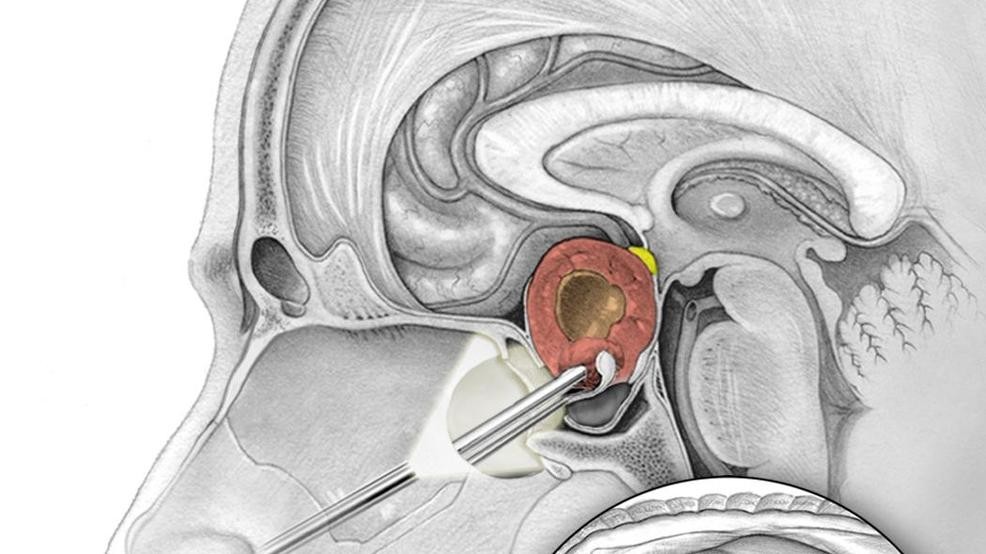
Removing a pituitary tumor by surgery can be tricky. The gland is surrounded by carotid arteries, optic nerves, and lots of important brain matter. Nor is it easy to access or visualize. But with the help of revolutionary technology and modern expertise, surgeons are now able to remove pituitary tumors in a safe and minimally invasive way. / Image courtesy of Mayfield Brain & Spine

There are three basic things you should know about your pituitary gland: it’s buried away at the base of your brain; it’s very important; and, alas, it has a habit of growing tumors.

Did your pulse quicken a tiny bit at mention of “tumors?” If so, it’s because your thyroid told it to, on instructions from your pituitary gland. But now it’s normal again, right? For that you can thank cortisol, which your pituitary gland told your adrenal glands to make in response to stress.

That’s just the tip of the iceberg, according to Yair Gozal, MD, neurosurgeon at Mayfield Brain & Spine.

“The pituitary gland is also known as the master gland,” he explains. “It regulates the release of hormones from other glands, controlling blood pressure, urine output, body temperature, growth, metabolism, lactation, ovulation, testosterone, stress response, and more.”

That of course means when something is wrong with your pituitary gland—say, a tumor—the symptoms can vary. Perhaps the tumor grows from the part of the pituitary gland that produces prolactin, which regulates sexual function. In that case, a prolactinoma will result in halted menstruation or erectile disfunction (among other things.) Alternatively, suppose the tumor grows from the part of the pituitary gland that produces growth hormone. These tumors cause gigantism in children and acromegaly in adults (again, among other things.)

So it follows, the part of the pituitary gland where the tumor grows will determine its symptoms. But these only account for “functioning” tumors—that is, tumors that secrete too much or too little of a particular hormone. Other tumors, termed “non-functioning,” do not secrete hormones at all. These buggers just take up space until they begin pressing on adjacent parts of the brain that would rather not be pressed on. Symptoms include headache, vision loss, nausea, vomiting, or fatigue. Non-functioning tumors can also pinch the pituitary gland itself, resulting in a broad-based loss of pituitary function.

Pituitary tumors are unusually common. Fifteen percent of adults have one. Most do not cause symptoms or require treatment. If you have one that does, your treatment may involve medication, radiation, and surgery.

Removing a pituitary tumor by surgery can be tricky. The gland is surrounded by carotid arteries, optic nerves, and lots of important brain matter. Nor is it easy to access or visualize. But with the help of revolutionary technology and modern expertise, surgeons are now able to remove pituitary tumors in a safe and minimally invasive way.

For the vast majority of cases, surgeons opt for a transsphenoidal approach. Here, the surgeon inserts an endoscope through the nostril to reach the pituitary gland. The endoscope’s camera relays video to a monitor, which allows the surgeon to visualize the tumor and be precise while removing it. Nowadays the surgeon is further aided by computer image guidance. The computer system gives the surgeon a real-time, three-dimensional model of his or her instruments in the operating space, adding extra degrees of precision—and safety—to the procedure.

“Technology has really moved ahead in this field,” says Gozal. “You get such good visualization. It’s made the operation relatively straightforward.”

Straightforward, that is, for a multidisciplinary team of neurosurgeons, ENT surgeons, and endocrinologists equipped with all that technology and all their training.

“I wouldn’t go anywhere that didn’t have a team for this,” says Gozal. “It’s all about developing expertise. That’s the key. It’s the expertise that has made this safer to do.”

– –

Internationally recognized as a leader in neurological surgery, Mayfield has forged a rich and lasting heritage through technical innovation, research, and a commitment to patient care. Mayfield physicians are continuously recognized among the Best Doctors in America and Top Doctors in Greater Cincinnati.

Mayfield Brain & Spine has four convenient locations in Greater Cincinnati: Rookwood Exchange (3825 Edwards Road, Suite 300, Cincinnati, 45209); Green Township (6130 Harrison Ave., 45247); West Chester (9075 Centre Point Drive, 45069); and Northern Kentucky (350 Thomas More Parkway, Suite 160, Crestview Hills, 41017).


From https://local12.com/sponsored/why-its-safer-than-ever-to-remove-pituitary-tumors