Different Patient Versus Provider Perspectives on Living with Cushing’s Disease

Abstract

Context

Patients with Cushing’s disease (CD) face challenges living with and receiving appropriate care for this rare, chronic condition. Even with successful treatment, many patients experience ongoing symptoms and impaired quality of life (QoL). Different perspectives and expectations between patients and healthcare providers (HCPs) may also impair well-being.

Objective

To examine differences in perspectives on living with CD between patients and HCPs, and to compare care goals and unmet needs.

Design

Memorial Sloan Kettering Pituitary Center established an annual pituitary symposium for pituitary patients and HCPs. Through anonymous pre-program surveys distributed at the 2020 and 2022 symposia, patients and HCPs answered questions related to their own sense, or perception of their patients’ sense, of hope, choice, and loneliness in the context of living with CD.

Participants

From 655 participants over two educational events, 46 patients with CD and 116 HCPs were included. Median age of both groups was 51 years. 78.3% of the patients were female vs. 53.0% of the HCPs.

Results

More patients than HCPs reported they had no choices in their treatment (21.7% vs. 0.9%, P < 0.001). More patients reported feeling alone living with CD than HCPs’ perception of such (60.9% vs. 45.5%, P = 0.08). The most common personal care goal concern for patients was ‘QoL/mental health,’ vs. ‘medical therapies/tumor control’ for HCPs. The most common CD unmet need reported by patients was ‘education/awareness’ vs. ‘medical therapies/tumor control’ for HCPs.

Conclusions

CD patients experience long term symptoms and impaired QoL which may in part be due to a perception of lack of effective treatment options and little hope for improvement. Communicating experiences and care goals may improve long term outcomes for CD patients.

Introduction

Patients with rare diseases face challenges receiving appropriate care. Cushing’s disease (CD), a condition associated with excess endogenous glucocorticoids due to an ACTH-secreting pituitary tumor, is a rare disease, occurring in 0.7 to 2.4 per million per year [1]. Patients with CD are at high risk for metabolic, cardiovascular, and psychiatric disease, in addition to long-term symptom burden and impaired quality of life (QoL), despite adequate treatment [1,2,3].

A critical aspect of effective patient care is communication and mutual understanding between healthcare provider (HCP) and patient. Patients with pituitary tumors experience significant anxiety associated with their diagnosis, in large part due to difficulties interacting with healthcare systems and limited communication of information [4]. Many pituitary patients express concern regarding the complexity of their care, and satisfaction improves with the delivery of more information by the HCP [4]. Patients with pituitary tumors, and CD specifically, require multidisciplinary care which necessitates effective communication in order to provide the best possible outcomes [5].

Similar to acromegaly patients [6], CD patients’ long-term well-being may be adversely affected by different perspectives and expectations between patients and HCPs, especially after treatment [7]. While HCPs primarily use biochemical data to define successful treatment, patients rely more on their symptoms and ability to regain normal functioning [7]. Despite achieving biochemical remission, CD patient perception of having persistent disease negatively impacts QoL [8]. In addition, 67.5% of Cushing’s syndrome patients report receiving insufficient information from their HCPs regarding the recovery experience after surgery despite the fact that all HCPs report providing this information [9]. Improved communication between HCPs and CD patients is vital to optimizing patients’ QoL and long term outcomes.

Recently there has been a growing emphasis on the use of internet-based platforms for healthcare delivery and education [10]. With the goals of offering HCP and patient education and assessing pituitary patients’ needs, since 2019 the pituitary center at Memorial Sloan Kettering (MSK) has offered annual virtual educational programs for pituitary patients, caregivers, HCPs, and members of the pharmaceutical industry. For the current study, we gathered deidentified information from 2020 to 2022 MSK program participants on CD patients’ and HCPs’ attitudes about CD, related to their sense of hope, choice, and loneliness, through anonymous pre-program surveys. Our specific aims were to: (1) Assess differences in perspectives between patients’ and HCPs’ responses in the pre-program survey; (2) Compare patients’ and HCPs’ perceived care goals and unmet needs.

Methods

Educational program enrollment

The MSK program was offered to patients with any type of pituitary tumor as well as HCPs, family members, caregivers, and members of industry. The role of the registrant as a patient, caregiver/family member, HCP, and/or member of industry was determined for all registrants of the virtual programs.

Any patient with a pituitary tumor treated at our center and outside institutions, inclusive of patients at all points along their treatment journey, were invited to register for the virtual education program. HCPs, including endocrinologists, neurosurgeons, otolaryngologists, radiation oncologists, neurologists, ophthalmologists, neuro-oncologists, family medicine and internal medicine physicians, physicians in training and other allied health professionals who treat and manage patients with pituitary diseases were also invited to register. Invitations were sent through email to neuroendocrine experts and endocrinologists, patient support groups on social media, direct messaging to patients with pituitary tumors by their treating physicians and via patient databases, advertisements through endocrine societies, brochure/postcard mailing, and Eventbrite, a virtual platform for live events.

Study participants

Registrants from MSK virtual programs held on December 5, 2020, (n = 328) and April 9, 2022, (n = 327) were included in the pool of subjects, among which the qualifying participants were determined.

Of the 655 total registrants from the 2020 and 2022 programs, 320 (48.9%) were patients or caregivers and 309 (47.2%) were HCPs (Fig. 1). Of the 147 providers (88 in 2020 and 59 in 2022) that attended and filled out a pre-program survey 31 were excluded from our analysis. Eight filled out surveys in both 2020 and 2022, 4 were members of industry, 3 did not fill out any responses, and 1 was not in the healthcare field. In addition, 12 providers had at least three fields missing in the survey and 3 had filled out two surveys for the same year, so they were also excluded. A total of 116 providers (72 from 2020 to 44 from 2022) were included in the analysis.
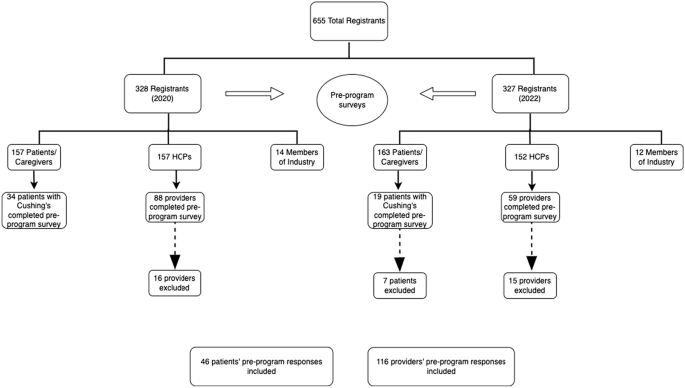
Fig. 1
figure 1

Enrollment flowchart

Among the 320 pituitary patients who attended the programs (157 from 2020 to 163 from 2022), 53 identified as ‘patients with Cushing’s’ and submitted surveys (34 participants from 2020 to 19 from 2022). Seven patients were excluded from the 2022 surveys as they had also filled out surveys in 2020, leaving a final group of 46 patients who were included in the analysis.

Virtual education programs

For each program, there was a single day of live interactive programming, meaning that all participants attended at the same time. The programs were recorded and made available for several weeks as enduring material for registrants on an online website.

After joint sessions in the morning, both programs consisted of two tracks in the afternoon: the ‘provider/clinical track’ and the ‘patient/caregiver track’. During the programs, an ongoing chat reeled through the virtual program which allowed patients to continually ask questions. Faculty experts answered these questions in written responses directly within the chat and/or in spoken responses during one of the live broadcasted Q&A sessions. Additionally, the programs both included panel discussions answering patient questions and moderated patient discussions with invited patient speakers.

Study procedures

Through anonymous pre-program surveys distributed at the 2020 and 2022 symposia, patients and HCPs answered questions related to their own sense, or perception of their patients’ sense, of hope, choice, and loneliness in the context of living with CD. This survey was developed by a multidisciplinary team and has been reported previously [11]. Demographic and clinical information was also assessed including year of diagnosis, prior treatments, and current medications (for patients) and specialty and practice type (for providers), as shown in Tables 1 and 2. Multiple-choice questions assessing patients’ attitudes toward their disease included possible answers of ‘I have no hope for improvement,’ ‘I have some hope for improvement,’ and ‘I have a lot of hope for improvement;’ and ‘I have no choice in my treatment,’ ‘I have some choices in my treatment,’ and ‘I have many choices in my treatment.’ Patients were also asked to respond ‘TRUE’ or ‘FALSE’ to the following statements: ‘I feel alone living with my Cushing’s,’ ‘Hearing the journeys of other patients helps me better understand my own,’ and ‘I feel anxious about my Cushing’s diagnosis.’

Table 1 Patient demographic data
Table 2 Provider demographic data

Multiple-choice questions assessing providers’ attitudes about their patients’ Cushing’s included possible answers of ‘I have no hope for their improvement,’ ‘I have some hope for their improvement,’ and ‘I have a lot of hope for their improvement;’ and ‘my patients have no choice in their treatment,’ ‘my patients have some choices in their treatment,’ and ‘my patients have many choices in their treatment.’ Providers were also asked to respond ‘TRUE’ or ‘FALSE’ to the following statements: ‘my patients feel alone living with their Cushing’s,’ ‘Hearing the journeys of other patients helps will help my patients better understand their own,’ and ‘my patients feel anxious about their Cushing’s diagnosis.’

Additionally, patients were surveyed on care goals and unmet needs related to their treatment. Specifically, patients were asked, ‘What are the healthcare outcomes/goals that matter to you the most?’ and ‘What do you think are unmet needs for the diagnosis or treatment of your condition?’ The first question was intended to refer to the patient specifically, while the second question was meant to examine how the condition is treated in general. Survey responses were submitted as free text and subsequently grouped by the authors (AH and EBG) into nine different categories: (a) Quality of life (QoL)/Mental Health; (b) Medical Therapies/Tumor Control; (c) Education/Awareness; (d) Communications/Multidisciplinary Care; (e) Insurance/Access; (f) Fertility; (g) Controlling Comorbidities; (h) Support System and (i) none. Responses could receive multiple designations if applicable. AH coded the free text themes independently, then EBG reviewed each answer and corresponding grouping to confirm accuracy. If there was disagreement or confusion, coding from our prior work [11] was reviewed.

HCPs were also surveyed on care goals and unmet needs related to their patient’s treatment. Providers were asked, ‘What are the healthcare outcomes/goals that matter to you the most?’ and ‘what do you think are unmet needs for the diagnosis or treatment of your patient’s condition?’ The first question was intended to refer to the provider and their goals related to Cushing’s, while the second question was meant to examine how the condition is treated in general. Survey responses were submitted as free text and subsequently grouped by the authors (AH and EBG) into nine different categories: (a) Quality of life (QoL)/Mental Health; (b) Medical Therapies/Tumor Control; (c) Education/Awareness; (d) Communications/Multidisciplinary Care; (e) Insurance/Access; (f) Fertility; (g) Controlling Comorbidities; (h) Support System and (i) none. Responses could receive multiple designations if applicable.

Statistical analysis

Descriptive statistics were presented as counts and percentages for categorical variables and as medians and interquartile range (IQR) for continuous variables. The Chi-square test or Fisher’s exact test was used to compare gender and survey responses between the CD patient group and the HCP group. All statistical tests were two-tailed, and a P-value of < 0.05 was considered statistically significant. SAS Software® (version 9.4; SAS Institute Inc., Cary, NC) was used for all analyses.

Results

Between the 2020 and 2022 events, there was combined representation from 25 different countries. A map and a full list of the countries is shown in Fig. 2.
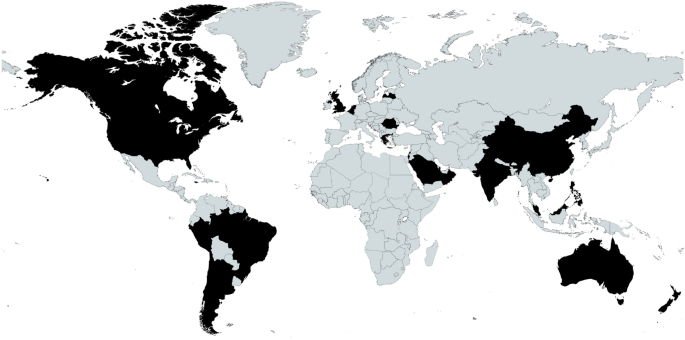
Fig. 2

figure 2

Map of registrant locations. Locations (listed alphabetically): Argentina, Australia, Belgium, Brazil, Canada, Chile, China, Greece, Hong Kong, India, Israel, Jamaica, Latvia, Malaysia, Netherlands, New, Zealand, Oman, Peru, Philippines, Qatar, Romania, Saudi Arabia, Singapore, UK, US

From a total of 655 participants over two educational events, 46 patients with CD and 116 HCP caring for CD patients were included in the analysis. The demographic data of the patients and HCPs are outlined in Tables 1 and 2, respectively. Median age of the patients and HCPs was 51 years. 78.3% of the CD group was female vs. 53.0% of the HCP group (P = 0.003).

CD patients ranged from newly diagnosed to being diagnosed 33 years prior. The HCPs who filled out the pre-program surveys were in practice for a mean duration of 18.5 years, with a range from 1 to 54 years.

As shown in Table 1, CD patients had a mean duration of suspected active disease prior to diagnosis of 5.26 years, as defined by onset of CD symptoms until diagnosis, and a mean duration of disease since diagnosis of 5.9 years. 42 (91%) had undergone surgical treatment of their Cushing’s. For those who underwent surgery, the mean number of surgeries was 1.17 (range 0–4). 20% had received pituitary radiation. Overall, 31% of patients were on medical therapy for Cushing’s. Metyrapone was the most used CD therapy (in 11%), followed by ketoconazole (in 9%). Of those requiring pituitary hormone replacement, 34.8% had one pituitary hormone deficiency and 21.7% had multiple hormone deficiencies. Thyroid hormone replacement (37%) and adrenal replacement (30%) were the most common.

As shown in Table 2, the majority of the HCPs were endocrinologists (72%) followed by neurosurgeons (9%) and nurses (8%). There was a total of 9 different specialties represented by the provider group. 16% of the providers worked in private practice, 16% were hospital based, and 16% worked in ‘unspecified clinical care.’ 38% of the providers practice type was ‘unspecified.’

Based on the pre-program survey responses, we identified different attitudes between patients and HCPs in several domains. Table 3 depicts pre-program survey responses from CD patients and HCPs assessing their attitudes about CD. 21.7% of patients reported they had no choices in their treatment, compared to 0.9% of HCPs (P < 0.001). Almost all HCPs (99.1%) reported that CD patients had least some choice in their management. In addition, less than half (45.7%) of patients reported they had a lot of hope for improvement whereas 71.3% of HCPs had a lot of hope for their patients’ improvement. Surprisingly, fewer CD patients reported feeling anxious about their diagnosis compared to HCPs’ perceived patient anxiety (65.2% vs 94.6%, P < 0.001). However, more patients tended to feel more alone living with CD than HCPs’ perception of such (60.9% vs. 45.5%, P = 0.08). Both CD patients and HCPs agreed that hearing the journeys of other CD patients would help patients better understand their own disease (97.8% vs 100%).

Table 3 Patient and provider attitudes by pre-program survey

CD patients and HCPs were also surveyed on their personal care goals and unmet needs, results of which are shown in Figs. 3A, B and 4A, B. The most common personal care goal concern for patients was ‘QoL/mental health’ which was reported by 70%, followed by ‘controlling comorbidities’ (39%) and ‘medical therapies/tumor control’ (24%). HCPs prioritized the same three care goals as patients but ‘medical therapies/tumor control’ was the most common (44%). ‘Controlling comorbidities’ and ‘QoL/mental health’ were the second and third most often HCP reported care goals (31 and 22% respectively). ‘Education/awareness’ was the most common perceived CD unmet need by patients (59%). HCPs reported both ‘medical therapies/tumor control’ and ‘education/awareness’ to be the most common unmet needs (35 and 26%, respectively). Examples of patient and provider responses, and how they were coded, are shown in Supplemental Table 1.
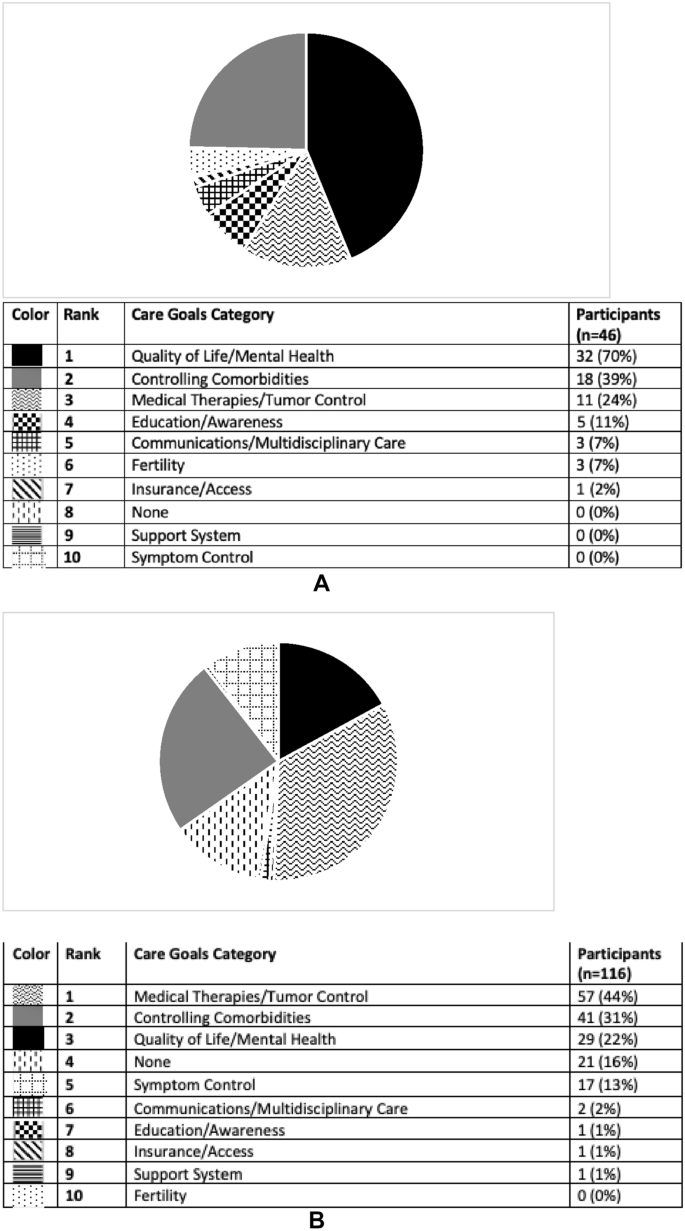
Fig. 3
figure 3

A Care goals according to participants with Cushing’s who completed pre-program survey. This pie graph represents the free-text survey response from patients regarding their personal care goals as categorized by topic. B Care goals according to providers who completed pre-program survey. This pie graph represents the free-text survey response from providers regarding their personal care goals as categorized by topic
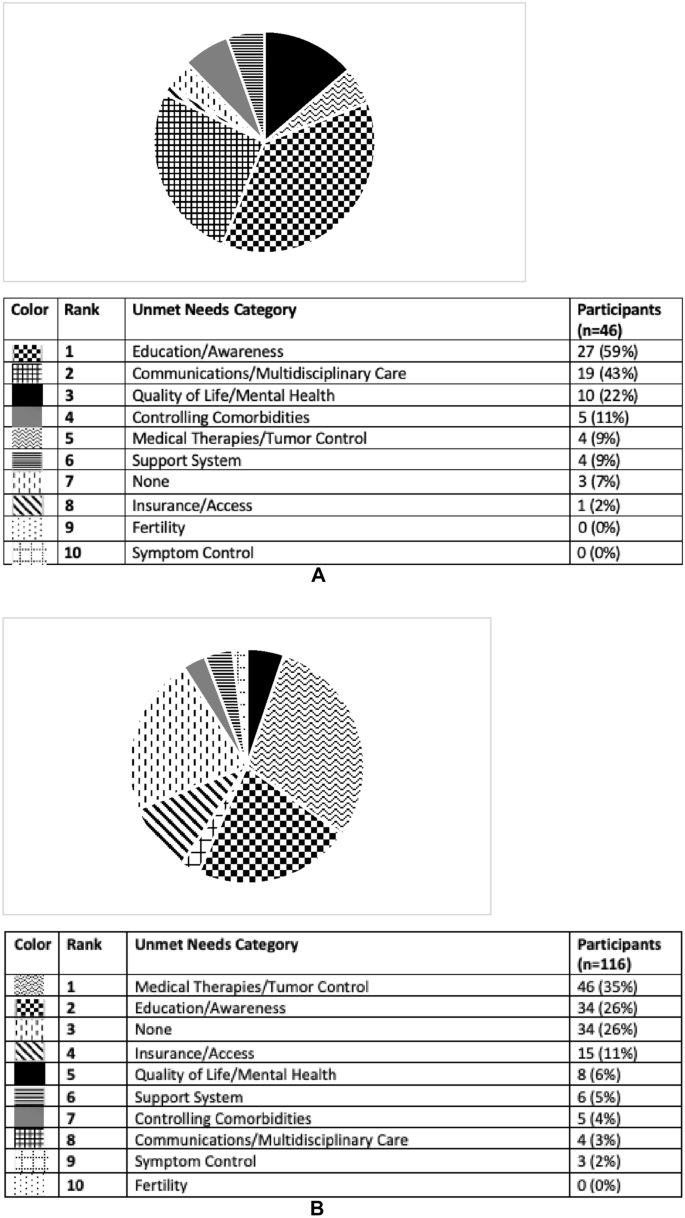
Fig. 4
figure 4

A Unmet needs for the field of Cushing’s disease according to participants with Cushing’s who completed pre-program survey. This pie graph represents the free-text survey response from patients regarding unmet needs in Cushing’s as categorized by topic. B Unmet needs for the field of Cushing’s disease according to providers who completed pre-program survey. This pie graph represents the free-text survey response from providers regarding unmet needs in Cushing’s as categorized by topic

Discussion

This study examined the differences between patients and HCP-reported perceptions of living with CD. We identified several differences in disease outlook between CD patients and HCPs. We found that more patients than HCPs reported they had no choices in their treatment. Furthermore, less than half of patients reported they had a lot of hope for improvement whereas most (71.3%) of HCPs had a lot of hope for their patients’ improvement. Interestingly, fewer CD patients reported feeling anxious about their diagnosis compared to HCPs’ perceived patient anxiety, although a higher percentage of patients reported feeling alone living with CD compared to the HCPs’ perception of patient loneliness. We also identified HCP and patient differences in reported personal care goals and perceived unmet needs in the field. The most common personal care goal concern for patients was ‘QoL/mental health,’ whereas it was ‘medical therapies/tumor control’ for HCPs. ‘Education/awareness’ was the most commonly perceived unmet need by patients, whereas it was ‘medical therapies/tumor control’ for HCPs.

Our findings support prior work demonstrating a discrepancy between patients and HCPs regarding the need for improved multidisciplinary care [12]. 43% of patients listed ‘communication/multidisciplinary care’ as an unmet need in the field, compared to 3% of providers. Pituitary centers of excellence provide expert multidisciplinary care in the neuroendocrine, neurosurgical, and radiation oncology domains, but often lack expertise in mental and physical health domains salient for CD patients, who suffer from depression, anxiety, myopathy and joint pain. In order to offer comprehensive care, psychiatrists, psychologists, social workers, pain medicine experts, physical therapists, and nutritionists with expertise in CD should be included in the pituitary center multidisciplinary team [13]. Our findings suggest that pituitary centers of excellence should take into account the most important personal care goal reported by CD patients, which is Qol/mental health, and provide expert treatment in this domain.

It is not surprising that Qol/mental health is the personal care goal most reported by CD patients. Prior assessment of acromegaly patients demonstrated the same finding: QoL/mental health was the most common personal care goal concern [11]. While surgical [14] and medical [15,16,17,18] treatment of Cushing’s improves QoL, QoL has been shown to remain impaired over time after treatment [19]. Several factors may contribute to long-term Qol impairments, including the presence of persistent disease, imperfect treatment modalities which themselves may be associated with burden and adverse side effects, and persistent comorbidities including depression, anxiety, fatigue, and overweight. Perception of disease status may also play a role in QoL. In surgically remitted CD patients, there may be discordance between biochemical remission and perceived disease status [8]. Specifically, this study found that of those with self-identified persistence of disease, 65% were in fact biochemically remitted. This group had lower QoL scores than the concordant group who self-identified as in remission with biochemical evidence of remission.

CD patients’ outlook on their condition, including their perception of choices and hope for change, has not been previously well described, despite the fact that these perceptions likely inform long term Qol. Patient outlook may be a modifiable target that if addressed, could improve long term patient well-being and outcomes. Aside from continuing progress in the development of new therapies for CD patients which can offer patients more objective choices in their treatment, other modalities should be considered. Prior work has shown that virtual educational programs improve acromegaly patients’ hope for improvement, perception of having choices in their treatment, and sense of loneliness [11]. Educational programs have also been shown to result in improved physical activity and sleep, and reduced pain levels in CS patients [20]. More work is needed to develop effective education programming tailored for CD patients to provide the appropriate support that these patients need.

Difference in HCP and patient disease perceptions may also play a role in Cushing’s patients’ quality of life and outcomes. Among a cohort of patients who underwent surgical resection for Cushing’s, 32.4% reported not receiving information from their doctors about the recovery experience, despite the fact that all physicians surveyed reported giving information about the recovery process [9]. Furthermore, 16.1% of patients in this cohort reported that not enough medical professionals were familiar with the symptoms of Cushing’s. Recovery time was also reported to be longer by patients than providers [9]. Similarly, discordance was found between acromegaly patients and HCPs regarding reported severity of symptoms, with patients more frequently reporting symptoms as severe compared to HCPs, and many patients reporting symptoms which were not reported by HCPs [6]. Improving communication between HCP and patients may positively affect CD patient outlook and QoL.

We identified a similar disparity between CD patients and HCP regarding care goals and unmet needs. 70% of patients surveyed considered QoL/mental health to be a top care goal, but only 22% of provider shared this goal. 59% of patients reported education/awareness as an unmet need, compared to 26% of HCPs. These findings support data shown by Acre et al. in which Cushing’s patients report a lack of symptom recognition by their providers [9]. HCPs should be aware that their patients may have different treatment priorities.

Our finding that more HCPs reported patient anxiety living with CD compared to patients themselves needs further exploration. This could reflect inadequate communication between HCP and patient, or skewed HCP perceptions of CD. This, and other findings in our study should be viewed in light of the small cohort, and as such, needs confirmation in larger cohorts and more in-depth symptom assessments. Additional limitations of our study include lack of paired patient-HCP responses as the HCPs included were not providing care for this specific CD cohort. Since this was a pituitary educational forum, likely most or all patients who identified as having Cushing’s had CD. However, our survey did not specify the type of surgery patients underwent or the etiology of their Cushing’s. Additionally, we used multidisciplinary team agreed upon measures and not validated assessments. Further work should consider validating a tool to assess patient-provider discordances. Our findings may also be confounded by selection bias, given that the patients participating in our virtual education programs are more likely to be under the care of experts in the field and may not represent the attitudes of all patients living with CD. Finally, the included HCPs were representatives from a range of specialties with different levels of experience taking care of patients with CD which may also affect their responses.

Our findings highlight the importance of understanding CD patients’ outlook and perspective in their condition, and that they may differ from their HCP. More than half of CD patients did not have a lot of hope for improvement and reported feeling alone, and many patients felt they had no choices in their treatment. QOL/mental health was the most commonly reported care goal for patients, which was not the case for HCPs. Comprehensive multidisciplinary care for CD patients should include mental health professionals with expertise in CD. Regular open communication between HCPs and CD patients will help bridge perception differences and facilitate personalized care, which will ultimately improve long-term outcomes for CD patients.

Data availability

The data that support the findings of this study are available from the authors upon request.

References

  1. Newell-Price J, Bertagna X, Grossman AB, Nieman LK (2006) Cushing’s syndrome. Lancet 367(9522):1605–1617. https://doi.org/10.1016/S0140-6736(06)68699-6

    Article CAS PubMed Google Scholar

  2. Kreitschmann-Andermahr I, Siegel S, Gammel C et al (2018) Support needs of patients with Cushing’s disease and Cushing’s syndrome: results of a survey conducted in Germany and the USA. Int J Endocrinol 2018:9014768. https://doi.org/10.1155/2018/9014768

    Article PubMed PubMed Central Google Scholar

  3. Feelders RA, Pulgar SJ, Kempel A, Pereira AM (2012) The burden of Cushing’s disease: clinical and health-related quality of life aspects. Eur J Endocrinol 167(3):311–326. https://doi.org/10.1530/EJE-11-1095

    Article CAS PubMed Google Scholar

  4. Donegan D, Gowan T, Gruber R et al (2021) The need for patient-centered education among patients newly diagnosed with a pituitary tumor. J Endocr Soc. https://doi.org/10.1210/jendso/bvab061

    Article PubMed PubMed Central Google Scholar

  5. Frara S, Rodriguez-Carnero G, Formenti AM, Martinez-Olmos MA, Giustina A, Casanueva FF (2020) Pituitary tumors centers of excellence. Endocrinol Metab Clin North Am 49(3):553–564. https://doi.org/10.1016/j.ecl.2020.05.010

    Article PubMed Google Scholar

  6. Geer EB, Sisco J, Adelman DT et al (2020) Observed discordance between outcomes reported by acromegaly patients and their treating endocrinology medical provider. Pituitary 23(2):140–148. https://doi.org/10.1007/s11102-019-01013-2

    Article PubMed Google Scholar

  7. Webb SM, Valassi E (2022) Quality of life impairment after a diagnosis of Cushing’s syndrome. Pituitary 25(5):768–771. https://doi.org/10.1007/s11102-022-01245-9

    Article PubMed PubMed Central Google Scholar

  8. Carluccio A, Sundaram NK, Chablani S et al (2015) Predictors of quality of life in 102 patients with treated Cushing’s disease. Clin Endocrinol (Oxf) 82(3):404–411. https://doi.org/10.1111/cen.12521

    Article PubMed Google Scholar

  9. Acree R, Miller CM, Abel BS, Neary NM, Campbell K, Nieman LK (2021) Patient and provider perspectives on postsurgical recovery of Cushing syndrome. J Endocr Soc. https://doi.org/10.1210/jendso/bvab109

    Article PubMed PubMed Central Google Scholar

  10. Ca BM, Badiu C, Bonomi M et al (2017) Developing and evaluating rare disease educational materials co-created by expert clinicians and patients: the paradigm of congenital hypogonadotropic hypogonadism. Orphanet J Rare Dis 12(1):57. https://doi.org/10.1186/s13023-017-0608-2

    Article Google Scholar

  11. Geer EB, Kilgallon JL, Liebert KJP, Kimball A, Nachtigall LB (2022) Virtual education programming for patients with acromegaly: a pilot study. Eur J Endocrinol 186(3):341–349. https://doi.org/10.1530/EJE-21-1071

    Article CAS PubMed Google Scholar

  12. Valassi E, Santos A, Yaneva M et al (2011) The European registry on Cushing’s syndrome: 2-year experience. Baseline demographic and clinical characteristics. Eur J Endocrinol 165(3):383–392. https://doi.org/10.1530/EJE-11-0272

    Article CAS PubMed Google Scholar

  13. Casanueva FF, Barkan AL, Buchfelder M et al (2017) Criteria for the definition of pituitary tumor centers of excellence (PTCOE): a pituitary society statement. Pituitary 20(5):489–498. https://doi.org/10.1007/s11102-017-0838-2

    Article PubMed PubMed Central Google Scholar

  14. Santos A, Resmini E, Martinez-Momblan MA et al (2012) Psychometric performance of the Cushing QoL questionnaire in conditions of real clinical practice. Eur J Endocrinol 167(3):337–342. https://doi.org/10.1530/EJE-12-0325

    Article CAS PubMed Google Scholar

  15. Colao A, Petersenn S, Newell-Price J et al (2012) A 12-month phase 3 study of pasireotide in Cushing’s disease. N Engl J Med 366(10):914–924. https://doi.org/10.1056/NEJMoa1105743

    Article CAS PubMed Google Scholar

  16. Fleseriu M, Biller BM, Findling JW et al (2012) Mifepristone, a glucocorticoid receptor antagonist, produces clinical and metabolic benefits in patients with Cushing’s syndrome. J Clin Endocrinol Metab 97(6):2039–2049. https://doi.org/10.1210/jc.2011-3350

    Article CAS PubMed Google Scholar

  17. Geer EB, Salvatori R, Elenkova A et al (2021) Levoketoconazole improves clinical signs and symptoms and patient-reported outcomes in patients with Cushing’s syndrome. Pituitary 24(1):104–115. https://doi.org/10.1007/s11102-020-01103-6

    Article CAS PubMed Google Scholar

  18. Pivonello R, Fleseriu M, Newell-Price J et al (2020) Efficacy and safety of osilodrostat in patients with Cushing’s disease (LINC 3): a multicentre phase III study with a double-blind, randomised withdrawal phase. Lancet Diabetes Endocrinol 8(9):748–761. https://doi.org/10.1016/S2213-8587(20)30240-0

    Article CAS PubMed Google Scholar

  19. Page-Wilson G, Oak B, Silber A et al (2023) Evaluating the burden of endogenous Cushing’s syndrome using a web-based questionnaire and validated patient-reported outcome measures. Pituitary. https://doi.org/10.1007/s11102-023-01314-7

    Article PubMed PubMed Central Google Scholar

  20. Martínez-Momblán MA, Gómez C, Santos A et al (2016) A specific nursing educational program in patients with Cushing’s syndrome. Endocrine 53:199–209. https://doi.org/10.1007/s12020-015-0737-0

    Article CAS PubMed Google Scholar

Download references

Acknowledgements

The authors would like to thank the HCP and patient participants who attended the events, the MSK faculty, invited speakers, Leslie Edwin of Cushing’s Support and Research Foundation, Amy Edouard and the MSK CME team, and Recordati Rare Diseases, Inc., Amryt Pharma (previously Chiasma, Inc.), Crinetics, Sparrow Pharmaceuticals, Corcept Therapeutics, and Xeris Biopharma (previously Strongbridge Biopharma) for providing educational grants for these educational activities.

Funding

This research was funded in part through the NIH/NCI Cancer Center Support Grant P30 CA008748.

Author information

Authors and Affiliations

  1. Division of Endocrinology, Department of Medicine, Weill Cornell Medicine, New York, NY, USA

    Amanda Halstrom

  2. Department of Epidemiology and Biostatistics, Memorial Sloan Kettering Cancer Center, New York, NY, USA

    I.-Hsin Lin

  3. Multidisciplinary Pituitary & Skull Base Tumor Center, Memorial Sloan Kettering Cancer Center, New York, NY, USA

    Andrew Lin, Marc Cohen, Viviane Tabar & Eliza B. Geer

  4. Department of Neurology, Memorial Sloan Kettering Cancer Center, New York, NY, USA

    Andrew Lin

  5. Department of Neurosurgery, Memorial Sloan Kettering Cancer Center, New York, NY, USA

    Andrew Lin, Marc Cohen & Eliza B. Geer

  6. Head and Neck Service, Department of Surgery, Memorial Sloan Kettering Cancer Center, New York, NY, USA

    Marc Cohen & Viviane Tabar

  7. Department of Medicine, Memorial Sloan Kettering Cancer Center, New York, NY, USA

    Eliza B. Geer

Contributions

A.H. and E.B.G. wrote the manuscript text and prepared the figures. All authors reviewed the manuscript.

Corresponding author

Correspondence to Eliza B. Geer.

Ethics declarations

Competing interests

The authors declare no competing interests.

Ethical approval

As an educational quality initiative project using de-identified data, it was determined that our project did not constitute human subjects research and thus did not require IRB oversight.

Additional information

Publisher’s Note

Springer Nature remains neutral with regard to jurisdictional claims in published maps and institutional affiliations.

Supplementary Information

Below is the link to the electronic supplementary material.

Cushing Syndrome due to a CRH- and ACTH-Secreting Silent Pheochromocytoma

Highlights

  • EAS should be considered in patients presenting with rapid progression of ACTH-dependent hypercortisolism causing severe clinical and metabolic abnormalities.
  • Ectopic ACTH secretion by a pheochromocytoma should be suspected in cases of ACTH-dependent Cushing syndrome in the presence of an adrenal mass.
  • If required, medical management with steroidogenesis inhibitors can be initiated at the time of EAS diagnosis to control clinical and metabolic derangements associated with severe hypercortisolemia
  • In patients with ACTH-dependent Cushing syndrome from an ectopic source, inhibiting steroidogenesis should be reserved for cases where the initial diagnosis is unclear or patients who are not suitable candidates for surgery.
  • Unilateral adrenalectomy is indicated in the management of ACTH/CRH-secreting pheochromocytomas and is typically curative.
  • Catecholamine blockade should be started prior to surgical removal of catecholamines-secreting pheochromocytomas.
  • A multidisciplinary approach is required to diagnose and manage this condition.

Abstract

Background/Objective

Ectopic co-secretion of corticotropin-releasing hormone (CRH) and adrenocorticotropic hormone (ACTH) in silent (i.e., noncatecholamine-secreting) pheochromocytoma is a rare cause of Cushing Syndrome (CS).

Case Report

A 57-year-old woman rapidly developed hypercortisolism, clinically manifesting as fatigue, muscle weakness, weight gain, and worsening hypertension, and biochemically characterized by hypokalemia and marked elevation of serum cortisol and plasma ACTH. This acute presentation suggested a diagnosis of ectopic ACTH syndrome (EAS). Imaging studies revealed a right adrenal mass that enhanced after administration of the radioisotope 68Ga-DOTATATE. Plasma metanephrines were normal in two separate measurements. The possibility of a silent pheochromocytoma was considered. After controlling her hypercortisolism with metyrapone and surgical preparation with alpha blockade, the patient underwent elective right adrenalectomy. Pathology revealed a pheochromocytoma that stained focally for ACTH and CRH. Postoperatively, cortisol levels normalized, the hypothalamic–pituitary–adrenal (HPA) axis was not suppressed, and clinical symptoms from hypercortisolism abated.

Discussion

Patients who exhibit a rapid progression of ACTH-dependent hypercortisolism should be screened for ectopic ACTH syndrome (EAS). The use of functional imaging radioisotopes (such as gallium DOTA-peptides), improves the detection of ACTH-secreting tumors. Preoperative treatment with steroidogenesis inhibitors helps control clinical and metabolic derangements associated with severe hypercortisolemia, while alpha blockade prevents the onset of an adrenergic crisis.

Conclusion

We present a rare case of EAS due to a silent pheochromocytoma that co-secreted ACTH and CRH. Pheochromocytoma should be considered in patients with EAS who have an adrenal mass even in the absence of excessive catecholamine secretion.

Key words

ectopic ACTH syndrome
Cushing Syndrome
non-catecholamine-secreting pheochromocytoma

Abbreviations

EAS

ectopic ACTH syndrome
CS

Cushing Syndrome
CRH

corticotropin-releasing hormone
ACTH

adrenocorticotropic hormone
DHEA-S

dehydroepiandrosterone sulfate
UFC

urine free cortisol
PRA

plasma renin activity

Introduction

Cushing Syndrome (CS) is rare, with an estimated incidence of 0.2-5.0 per million people per year, and prevalence of 39-79 per million (1). Ectopic ACTH Syndrome (EAS), a type of CS originating from extra-pituitary ACTH-secreting tumors, is uncommon. The prevalence of CS due to ACTH-secreting adrenal medullary lesions is not well established. However, EAS is observed in approximately 1.3% of all identified cases of pheochromocytoma (2). Recognizing EAS can be challenging due to its rarity, leading to delayed diagnosis.

Neuroendocrine neoplasms can produce CRH, which can lead to the secretion of ACTH by the pituitary. In certain cases, co-secretion of ACTH and CRH by an adrenal neoplasm has been observed. Only two published cases have provided definitive biochemical and immunohistochemical evidence of exclusive CRH secretion (3).

Case Report

A 57-year-old woman with a history of well-controlled hypertension sought care due to a two-month history of 60 lb weight gain, facial rounding, easy bruising, muscle weakness, lower extremity edema and acne. Her blood pressure control had worsened, and laboratory tests showed a markedly low serum potassium level of 1.8 mmol/L while taking hydrochlorothiazide. To manage her blood pressure, she was prescribed a calcium channel blocker, an angiotensin receptor blocker, and potassium supplements. However, her symptoms worsened, and she was referred to our emergency department. Blood pressure at presentation to our hospital was 176/86 mmHg. She had characteristic features of CS, including face rounding, supraclavicular fullness, dorsocervical fat accumulation, pedal edema, oral candidiasis, multiple forearm ecchymoses, and acneiform skin eruptions. No visible abdominal striae were present. She had no family history of pheochromocytoma, or multiple endocrine neoplasia type 2.

Serum cortisol level was 128 mcg/dL (normal range: 4.6-23.4) at 5 PM, with an ACTH level of 1055 pg/mL (normal range: 6-50); serum DHEA-S level was elevated at 445 mcg/dL (normal range: 8-188). Her 24-hour urine cortisol was at 12,566 mcg (normal range: 4.0-50.0). Plasma metanephrines were normal at <25 pg/mL (normal range: <57), and plasma normetanephrine was 44 (normal range: <148). A second plasma metanephrine measurement showed similar results. Serum aldosterone level and plasma renin activity were low at 2 ng/dL (normal range: 3-16) and 0.11 ng/mL/h (normal range: 0.25-5.82), respectively. Dopamine and methoxytyramine levels were not measured. An abdominal CT revealed a 4.8 x 4.5 x 5 cm right heterogeneously enhancing adrenal mass with a mean Hounsfield Unit of 68 in the non-contrast phase, and an absolute percentage washout of 30% (Fig 1A). The left adrenal gland appeared hyperplastic (Fig 1B). An Octreoscan, which was the in-hospital available nuclear medicine imaging modality, confirmed a 5.1 cm adrenal mass that was mild to moderately avid, with diffuse bilateral thickening of the adrenal glands and no other focal radiotracer avidity. A pituitary MRI did not show an adenoma, and EAS was suspected. Further evaluation with 68Ga-DOTATATE PET/CT (Fig 2) performed after her admission demonstrated an avid right adrenal mass consistent with a somatostatin receptor-positive lesion. No other suspicious tracer uptake was detected. These findings were consistent with a neuroendocrine tumor, such as pheochromocytoma.

  1. Download : Download high-res image (261KB)
  2. Download : Download full-size image

Fig. 1. Preoperative abdominal computed tomography scan showing a 4.8 x 4.5 x 5 cm right heterogeneously enhancing adrenal mass with irregular borders (A) and a hyperplastic left adrenal gland (B).

  1. Download : Download high-res image (219KB)
  2. Download : Download full-size image

Fig 2. 68Ga-DOTATATE PET/CT showing an avid right adrenal mass.

To control her symptoms while undergoing workup, the patient received oral metyrapone 500 mg thrice daily and oral ketoconazole 200 mg twice daily. Ketoconazole was stopped due to an increase in transaminases. The dosage of metyrapone was increased to 500 mg four times daily and later decreased to alternating doses of 250 mg and 500 mg four times daily. Within 3 weeks of starting medical therapy, serum cortisol level normalized at 20 mcg/dL. The 24-hour UFC improved to 246.3 mcg/24h. She experienced gradual improvement in facial fullness, acne, and blood pressure control.

The possibility of a silent pheochromocytoma was considered, and a-adrenergic blockade with doxazosin 1 mg daily was started 1 month prior surgery. She underwent surgery after two months of metyrapone therapy. With an unclear diagnosis and a large, heterogeneous adrenal mass, the surgical team elected to perform open adrenalectomy for en bloc resection due to concerns for an adrenal malignancy. The tumor was well-demarcated and did not invade surrounding structures (Figure 3A). H&E-stained sections showed classic morphologic features of a pheochromocytoma (Figure 3B), with immunohistochemistry demonstrating strong immunoreactivity for synaptophysin and chromogranin, and negative SF- I and inhibin stains excluding an adrenal cortical lesion. The sections analyzed by QuPath (4) revealed that approximately 4% of ce11s were ACTH cells, often found in isolation, and had a clear, high signal-to-noise staining (Figure 3C). CRH cells were less prevalent, comprising about 2.4% of the total analyzed cells, and tended to cluster together (Figure 3D). These cells had more background staining, resulting in a lower signal- to-noise ratio.

  1. Download : Download high-res image (663KB)
  2. Download : Download full-size image

Figure 3. Gross and Histopathological analysis of the patient’s pheochromocytoma. (A) Image of the gross excised specimen. (B) H&E staining (200x final magnification) demonstrates prominent vascularity and cells with finely granular, eosinophilic cytoplasm and salt-and-pepper chromatin. (C) ACTH staining (200x final magnification) shows clear and isolated positive cells, representing about 4.0% of the section analyzed by QuPath. (D) CRH staining (200x final magnification) reveals tight clusters of positive cells, accounting for 2.4% of the total cells. Positive (human placenta and hypothalamus) and negative (thyroid gland) control tissues performed as expected (data not shown).

The patient’s postoperative recovery was uneventful, with a short course of hydrocortisone which was stopped 1 week after surgery after HPA axis evaluation showed normal results. After one month, hypercortisolism had resolved, as shown by a normal 24-hour UFC at 28 mcg.

Administration of dexamethasone at 11 PM resulted in suppression of morning cortisol to 0.8 and 0.6 mcg/dL 1 and 7 months after surgery, respectively. Her liver function tests normalized, and blood pressure was well-controlled with amlodipine 10 mg daily and losartan 100 mg daily. Genetic testing for pheochromocytoma predisposition syndromes is currently planned.

Discussion

EAS accounts for 10-20% of cases of ACTH-dependent CS (5). This condition can be caused by several neuroendocrine neoplasms that produce bioactive ACTH (6) In the literature, we have found 99 documented cases of EAS caused by a pheochromocytoma. Of these, 93% showed ACTH expression. Only two cases have been reported with dual staining of ACTH and CRH (7). Exclusive CRH production has only been reported in two cases (8:9). However, the true prevalence of CRH-producing pheochromocytomas might be underestimated, as most cases testing for CRH expression was not performed.

Although the clinical presentation of EAS may be highly variable, there is often a rapid onset of hypercortisolism accompanied by severe catabolic symptoms. The diagnostic process should focus on identifying the location of a potential neuroendocrine neoplasm responsible for the ACTH secretion. Sometimes the peripheral origin of ACTH must be confirmed by inferior petrosal sinus sampling (IPSS). In this case, given the clinical presentation consistent with EAS, negative pituitary MRI, and the presence of an adrenal mass that needed to be removed independently, IPSS was not performed.

Neuroendocrine neoplasms express somatostatin receptors on their surface, which allow functional imaging using [11 lln]-pentetreotide (Octreoscan). However, Octreoscan has a low sensitivity in detecting occult EAS. In cases where the tumor is in the abdomen and pelvis, Octreoscan has limited utility in locating the source of ACTH (10). This increased risk of false negatives is caused by physiological tracer uptake by the liver, spleen, urinary tract, bowel, and gallbladder. The use of Gallium-68 labeled somatostatin receptor ligands (PET/CT 68Ga-DOTATATE) is more effective in detecting somatostatin receptors (SSTR2) than [11lln]-pentetreotide due to its higher spatial resolution and affinity (11)_ This test was performed after discharge form the hospital to rule out the presence of a second, smaller neuroendocrine tumor that the Octreoscan might have missed. A new molecular imaging technique targeting CRH receptors (68Ga CRH PET/CT) has shown potential in identifying tumors expressing CRH, but its availability remains limited (12). In our patient’s case, both the Octreoscan and 68Ga- DOTATATE successfully identified the adrenal tumor as a potential ACTH/CRH secretion source.

According to relevant guidelines, presurgical adrenergic blockade is recommended for patients with biochemical evidence of catecholamine excess (1314). Conversely, silent pheochromocytomas can generally be operated without alpha blockade (15). Despite this, we opted to administer pre-operative alpha blockade as a precautionary measure for this patient.

Pathology examination confirmed the diagnosis of pheochromocytoma. ACTH and CRH staining demonstrated that clear and significant populations of two separate ACTH and CRH positive cells were present in the excised pheochromocytoma. ACTH/CRH cells were dispersed throughout various regions of the pheochromocytoma rather than being well-defined, separate histological entities. As a result, there is no indication that this resulted from collision tumors, but rather random mutation and expansion of tumor cells into ACTH or CRH secreting cells. These results have limitations, including variation in ACTH and CRH expressing regions due to tumor heterogeneity, nonspecific binding of polyclonal antibodies, and normal low-rate false negative/positive detection using QuPath.

Post-surgical normal HPA activity was likely due to the de-suppression of the HPA axis by medical therapy, but it may also be explained by chronic stimulation of corticotroph cells induced by ectopic CRH secretion.

The standard approach to managing EAS involves surgical intervention. However, surgery may not be a viable option in cases where the source of ACTH production is unknown. Medical therapy to reduce or block excess cortisol can be used in such circumstances.

Conclusions

In conclusion, a pheochromocytoma causing EAS should be considered even in the absence of elevated plasma metanephrines. These tumors may simultaneously express ACTH and CRH.CRH.

References

Cited by (0)

Sources of support: None

Permission in the form of written consent from patient for use of actual test results was obtained.

Cushing in silent pheochromocytoma

Clinical Relevance

This case highlights the importance of considering ectopic ACTH secretion by a pheochromocytoma in patients presenting with rapid progression and considerable clinical hypercortisolism concomitant with an adrenal mass and elevated plasma ACTH. This represents an unusual manifestation of a specific subtype of ACTH/CRH-secreting pheochromocytoma that did not exhibit catecholamine secretion

The authors declare that they have no known competing financial interests or personal relationships that could have appeared to influence the work reported in this paper

These 2 authors contributed equally to this work

From https://www.sciencedirect.com/science/article/pii/S2376060524000075

Navigating the Surgical Landscape: A Comprehensive Analysis of Endoscopic vs. Microscopic Transsphenoidal Pituitary Surgery Outcomes

Abstract

Pituitary surgery, a critical intervention for various pituitary disorders, has sparked ongoing debates regarding the preference between endoscopic and microscopic transsphenoidal approaches. This systematic review delves into the outcomes associated with these techniques, taking into account the recent advancements in neurosurgery. The minimally invasive nature of endoscopy, providing improved visualization and reduced morbidity, stands in contrast to the well-established track record of the conventional microscopic method. Examining outcomes for disorders such as Cushing’s disease and acromegaly, the review synthesizes evidence from Denmark, Bulgaria, and China. Noteworthy advantages of endoscopy encompass higher resection rates, shorter surgery durations, and fewer complications, endorsing its effectiveness in pituitary surgery. While emphasizing the necessity for prospective trials, the review concludes that endoscopic approaches consistently showcase favorable outcomes, influencing the ongoing discourse on the optimal surgical strategies for pituitary disorders.

Introduction & Background

Pituitary surgery is a critical intervention for various pituitary disorders, and the choice between endoscopic and microscopic transsphenoidal approaches has been a subject of ongoing debate within the medical community. This systematic review aims to explore and analyze the outcomes associated with endoscopic and microscopic transsphenoidal pituitary surgery. As advancements in surgical techniques continue to shape the field of neurosurgery, understanding the comparative effectiveness of these two approaches becomes imperative. The endoscopic approach, characterized by its minimally invasive nature, has gained popularity for pituitary surgery in recent years [1]. Proponents argue that it provides enhanced visualization, improved maneuverability, and reduced patient morbidity. On the other hand, traditional microscopic transsphenoidal surgery has been the conventional method for decades, known for its familiarity among surgeons and established track record [2].

Several studies have investigated the outcomes of these approaches in treating pituitary disorders, including but not limited to Cushing’s disease, pituitary adenomas, and other tumors. For instance, a systematic review and meta-analysis by Chen et al. compared endoscopic and microscopic transsphenoidal surgery specifically for Cushing’s disease, shedding light on the effectiveness of these approaches in managing this specific condition [3]. Moreover, Møller et al. reported promising results for endoscopic pituitary surgery based on the experiences of experienced microscopic pituitary surgeons, indicating a potential shift towards the adoption of the endoscopic technique [1]. Guo et al. conducted a meta-analysis comparing the effectiveness of microscopic and endoscopic surgery for treating pituitary disorders, contributing valuable insights into the overall efficacy of these approaches [4].

This review aims to contribute to the ongoing discourse on pituitary surgery by providing a comprehensive analysis of the outcomes associated with endoscopic versus microscopic transsphenoidal approaches. By synthesizing the existing evidence, we strive to offer valuable insights that can guide both clinicians and researchers in making informed decisions regarding the optimal surgical approach for pituitary disorders.

Review

Materials and methods

This systematic review strictly adheres to the established Preferred Reporting Items for Systematic Reviews and Meta-Analyses (PRISMA) guidelines, employing a comprehensive approach to investigate the outcomes of endoscopic versus microscopic transsphenoidal pituitary surgery. The subsequent sections delineate the criteria for study inclusion, the search strategy utilized, and the methodology employed for data synthesis.

Search Strategy

We conducted a meticulous search across prominent electronic databases, including PubMed, Embase, and the Cochrane Library, to identify pertinent articles. Our search strategy comprised a combination of Medical Subject Headings (MeSH) terms and keywords related to pituitary surgery, encompassing both endoscopic and microscopic approaches. Boolean operators (AND, OR) were strategically employed to refine the search and identify studies meeting our predetermined inclusion criteria. The search string used for PubMed was (“Outcomes” OR “Treatment Outcome” OR “Surgical Outcome”) AND (“Endoscopic Transsphenoidal Pituitary Surgery” OR “Endoscopic Pituitary Surgery” OR “Endoscopic Hypophysectomy”) AND (“Microscopic Transsphenoidal Pituitary Surgery” OR “Microscopic Pituitary Surgery” OR “Microscopic Hypophysectomy” OR “Endoscopy”[Mesh] OR “Endoscopy, Surgical”[Mesh] OR “Transsphenoidal Hypophysectomy”[Mesh] OR “Microsurgery”[Mesh] OR “Microscopic Hypophysectomy”[Mesh]).

Eligibility Criteria

Stringent inclusion criteria were predefined to ensure the selection of high-quality and relevant studies. The included studies focused on investigating the outcomes of endoscopic versus microscopic transsphenoidal pituitary surgery. Only articles published in peer-reviewed journals within the timeframe from the inception of relevant databases until October 2023 were considered. Exclusion criteria encompassed studies on other interventions, those lacking sufficient data on surgical outcomes, and studies solely involving animal cells. Additionally, only studies in the English language with full-text availability were included, and gray literature was not considered eligible.

Data Extraction and Synthesis

Two independent reviewers meticulously screened titles and abstracts to identify potentially eligible studies. Subsequently, full-text articles were retrieved and evaluated for adherence to inclusion criteria. Discrepancies between reviewers were resolved through discussion and consultation with a third reviewer. Relevant data, including study design, patient characteristics, interventions, and surgical outcomes, were systematically extracted using a predefined data extraction form.

Data Analysis

A narrative synthesis approach was employed to summarize findings from included studies due to anticipated heterogeneity in study designs and outcome measures. Key themes and patterns related to the outcomes of endoscopic versus microscopic transsphenoidal pituitary surgery were identified and presented.

Results

Study Selection Process

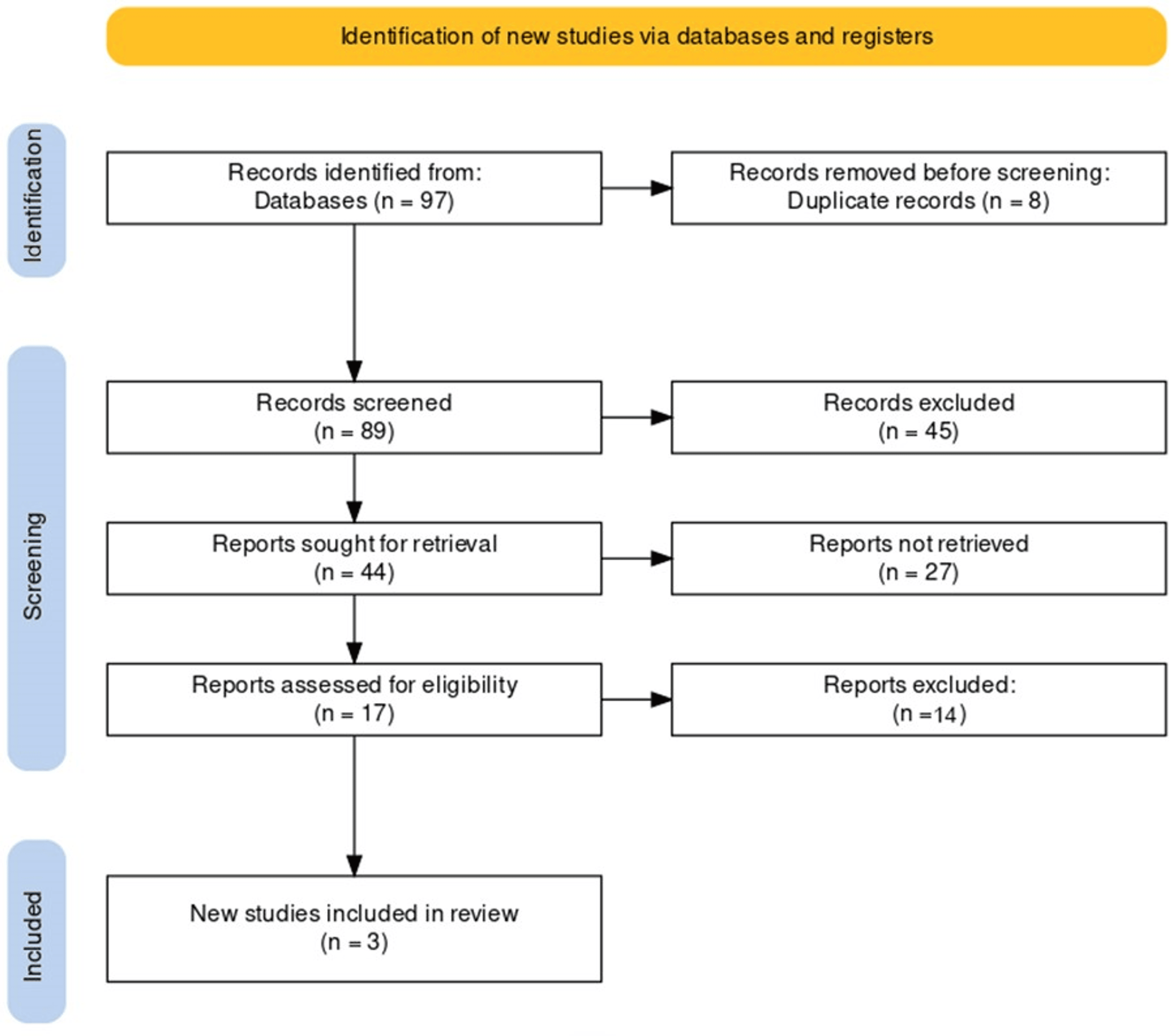
Following four database searches, 97 articles were initially identified. After eliminating eight duplicates, the titles and abstracts of the remaining 89 publications were evaluated. Subsequently, 17 potential studies underwent eligibility verification through a thorough examination of their full texts. Ultimately, three articles satisfied the inclusion criteria. No additional studies meeting the eligibility criteria were found during the examination of references in the selected articles. The entire process is visually depicted in the PRISMA flowchart (Figure 1).

PRISMA-flow-diagram-of-the-selection-of-studies-for-inclusion-in-the-systematic-review.
Figure 1: PRISMA flow diagram of the selection of studies for inclusion in the systematic review.

PRISMA: Preferred Reporting Items for Systematic Reviews and Meta-Analyses

Characteristics of Selected Studies

Overall, three papers met the inclusion criteria. Two studies were randomized controlled trials (RCTs), one each from Bulgaria and China. One study was an observational study from Denmark. The main findings and characteristics of the included studies are mentioned in the following tables (Table 1 and Table 2).

Author Year Country Study type Sample size No. of participants in the endoscopic group No. of participants in the microscopic group Main findings
Møller et al. [1] 2020 Denmark Observational study 240 45 195 The study comparing endoscopic and microscopic transsphenoidal pituitary surgery revealed that the endoscopic technique exhibited advantages, achieving a higher rate of gross total resection (39% vs. 22%) and shorter surgery duration (86 minutes vs. 106 minutes). Complications within 30 days were lower with the endoscope (17% vs. 27%), and grade II complications or higher were significantly reduced (4% vs. 20%) compared to the microscopic approach. Pituitary function outcomes favored the endoscope, with fewer new deficiencies in the HPA axis (3% vs. 34%) and TSH-dependent deficiencies (15% vs. 38%). The HPG axis also showed better normalization in the endoscopic group (32% vs. 19%). Visual field impairment and postoperative improvement did not significantly differ between the two techniques. Overall, the findings suggest that endoscopic transsphenoidal pituitary surgery may offer superior outcomes compared to the microscopic approach, particularly in terms of resection rates and complication profiles.
Vassilyeva et al. [5] 2023 Bulgaria RCT 83 43 40 The study compared endoscopic and microscopic transsphenoidal pituitary surgery in acromegaly patients, revealing comparable demographic profiles between the groups. Endoscopic surgery demonstrated advantages with shorter anesthesia and surgery times, as well as a reduced postoperative hospital stay. Complete tumor removal was more frequent with endoscopic adenomectomy, while microscopic surgery showed a higher rate of sub-total removal. Both techniques led to a tendency for somatic improvement, with more pronounced visual function improvement in the endoscopic group. Complications, such as liquorrhea and endocrine disorders, were generally low, with endoscopic surgery showing mainly mild complications. Disease remission rates were similar between the groups at various follow-up intervals. In conclusion, while both techniques proved effective in achieving remission, endoscopic surgery exhibited favorable outcomes in terms of efficiency and some aspects of complication profiles.
Zhang et al. [6] 2021 China RCT 46 23 23 Endoscopic transsphenoidal pituitary surgery for the treatment of Cushing’s disease showed comparable efficacy to microscopic transseptal pituitary surgery but with the added benefits of shorter operative time, reduced estimated blood loss, shorter hospital stays, and fewer complications.
Table 1: Summary of the studies included in this systematic review.

RCT: randomized controlled trial; HPA: hypothalamic-pituitary-adrenal; TSH: thyroid-stimulating hormone; HPG: hypothalamic-pituitary-gonadal

Technique Møller et al. [1] Vassilyeva et al. [5] Zhang et al. [6]
Male-to-female ratio (endoscopic) 25:20 17:26 13:10
Male-to-female ratio (microscopic) 107:88 16:24 12:11
Mean age in years (endoscopic) 61 43.26 55.6
Mean age in years (microscopic) 58 44.12 53.2
Functional tumors (endoscopic) 15 All functional All functional
Non-functional tumors (endoscopic) 29
Functional tumors (microscopic) 69 All functional All functional
Non-functional tumors (microscopic) 115
Microadenoma size (mm) (endoscopic) 4 19
Macroadenoma size (mm) (endoscopic) 39 4
Microadenoma size (mm) (microscopic) 3 18
Macroadenoma size (mm) (microscopic) 37 5
Mean operative time (min) (endoscopic) 86 142 108
Mean operative time (min) (microscopic) 106 176 174
Mean hospital stay (days) (endoscopic) 5 2.8
Mean hospital stay (days) (microscopic) 7 5.1
Postoperative complications (endoscopic) 2 15 3
Postoperative complications (microscopic) 39 10 8
Table 2: Summary of demographics, tumor characteristics, and postoperative outcomes of the studies included in this systematic review.

The quality assessment of the selected studies was done using the Newcastle-Ottawa Quality Assessment Scale. All three studies included in this study turned out to be of high quality with a rating of 9/9 stars (Table 3).

Author Selection Comparability Outcome Total stars
Møller et al. [1] ★★★★ ★★ ★★★ ★★★★★★★★★
Vassilyeva et al. [5] ★★★★ ★★ ★★★ ★★★★★★★★★
Zhang et al. [6] ★★★★ ★★ ★★★ ★★★★★★★★★
Table 3: Quality assessment of the included studies using the Newcastle-Ottawa Quality Assessment Scale.

Discussion

This systematic review thoroughly assesses the effectiveness and results of endoscopic transsphenoidal pituitary surgery in comparison to microscopic transsphenoidal surgery, with a specific focus on pituitary adenomas, including Cushing’s disease and acromegaly. The results contribute significant insights into the evolving landscape of pituitary surgery, highlighting the benefits and limitations of both surgical techniques.

The selected studies offer valuable insights into the comparative outcomes. Møller et al.’s observational study in Denmark suggests that endoscopic surgery exhibits superior outcomes with higher gross total resection rates, shorter surgery duration, and fewer complications [1]. Vassilyeva et al.’s RCT in Bulgaria, focusing on acromegaly patients, indicates endoscopic advantages such as shorter anesthesia and surgery times, reduced postoperative stay, and comparable remission rates [5]. Zhang et al.’s RCT in China, specifically for Cushing’s disease, suggests comparable efficacy with added benefits favoring endoscopy [6].

The endoscopic approach has been advocated for its panoramic visualization and superior mobility, which are crucial in resecting tumors while preserving normal structures [7,8]. Studies have shown a higher remission rate in endoscopic procedures for endocrine-active tumors, like growth hormone or adrenocorticotropic hormone (ACTH)-secreting adenomas, compared to the microscopic approach [9,10]. Patient comfort and recovery play a significant role in evaluating surgical methods. The endoscopic technique, by avoiding submucosal excision of nasal tissues, typically results in less postoperative pain and rhinological dysfunction. Studies, including ours, have reported shorter operative times and hospital stays with endoscopic surgery, attributed to fewer intraoperative and postoperative complications and a reduced need for wound management [11-13].

Safety is paramount to any surgical intervention. The endoscopic method has shown a decrease in common complications such as cerebrospinal fluid (CSF) leak, pituitary hormone dysfunction, and diabetes insipidus. Additionally, the endoscopic procedure exhibited fewer complications, which could be attributed to the enhanced visualization allowing for more precise tumor excision and preservation of vital structures [14-16].

In the context of acromegaly patients, the endoscopic technique has demonstrated increased radicality in tumor removal. Our review aligns with these findings, showing a higher rate of total tumor resection in endoscopic patients compared to those undergoing microscopic surgery. This improved outcome is likely due to better illumination and a wider angle of vision provided by endoscopic operations [5,17].

The endoscopic technique has shown a statistically significant improvement in visual function post surgery compared to the microscopic method. However, the frequency of certain postoperative complications, such as intraoperative liquorrhea, was higher in microscopic surgery. These differences underline the importance of the surgical technique in influencing the outcomes and complications of pituitary surgery [5,18].

Despite these findings, it is important to recognize the limitations inherent in these studies. Factors such as tumor size, density, and localization significantly influence surgical outcomes and procedure times. Additionally, the retrospective nature of many studies introduces potential biases, underscoring the need for more prospective, randomized trials for a comprehensive understanding of the long-term outcomes of these techniques.

Conclusions

This systematic review comparing endoscopic and microscopic transsphenoidal pituitary surgery outcomes indicates consistent evidence favoring the endoscopic approach. Notable studies from Denmark, Bulgaria, and China reveal superior results with endoscopic surgery, demonstrating higher resection rates, shorter surgery duration, and fewer complications. Endoscopy’s benefits extend to patient comfort, as evidenced by shorter operative times and hospital stays. Safety considerations also support endoscopy, showing a decrease in common complications such as CSF leaks and hormonal dysfunction. Despite these strengths, the review underscores the need for prospective, randomized trials to address limitations and provide a comprehensive understanding of long-term outcomes.

References

  1. Møller MW, Andersen MS, Glintborg D, Pedersen CB, Halle B, Kristensen BW, Poulsen FR: Endoscopic vs. microscopic transsphenoidal pituitary surgery: a single centre study. Sci Rep. 2020, 10:21942. 10.1038/s41598-020-78823-z
  2. Gao Y, Zhong C, Wang Y, et al.: Endoscopic versus microscopic transsphenoidal pituitary adenoma surgery: a meta-analysis. World J Surg Oncol. 2014, 12:94. 10.1186/1477-7819-12-94
  3. Chen J, Liu H, Man S, et al.: Endoscopic vs. microscopic transsphenoidal surgery for the treatment of pituitary adenoma: a meta-analysis. Front Surg. 2022, 8:806855. 10.3389/fsurg.2021.806855
  4. Guo S, Wang Z, Kang X, Xin W, Li X: A meta-analysis of endoscopic vs. microscopic transsphenoidal surgery for non-functioning and functioning pituitary adenomas: comparisons of efficacy and safety. Front Neurol. 2021, 12:614382. 10.3389/fneur.2021.614382
  5. Vassilyeva N, Mena N, Kirov K, Diatlova E: Comparative effectiveness of endoscopic and microscopic adenoma removal in acromegaly. Front Endocrinol (Lausanne). 2023, 14:1128345. 10.3389/fendo.2023.1128345
  6. Zhang T, Zhang B, Yuan L, Song Y, Wang F: Superiority of endoscopic transsphenoidal pituitary surgery to microscopic transseptal pituitary surgery for treatment of Cushing’s disease. Rev Assoc Med Bras (1992). 2021, 67:1687-91. 10.1590/1806-9282.20210732
  7. Yadav Y, Sachdev S, Parihar V, Namdev H, Bhatele P: Endoscopic endonasal trans-sphenoid surgery of pituitary adenoma. J Neurosci Rural Pract. 2012, 3:328-37. 10.4103/0976-3147.102615
  8. Louis RG, Eisenberg A, Barkhoudarian G, Griffiths C, Kelly DF: Evolution of minimally invasive approaches to the sella and parasellar region. Int Arch Otorhinolaryngol. 2014, 18:S136-48. 10.1055/s-0034-1395265
  9. Broersen LH, Biermasz NR, van Furth WR, de Vries F, Verstegen MJ, Dekkers OM, Pereira AM: Endoscopic vs. microscopic transsphenoidal surgery for Cushing’s disease: a systematic review and meta-analysis. Pituitary. 2018, 21:524-34. 10.1007/s11102-018-0893-3
  10. Torales J, Halperin I, Hanzu F, et al.: Endoscopic endonasal surgery for pituitary tumors. Results in a series of 121 patients operated at the same center and by the same neurosurgeon. Endocrinol Nutr. 2014, 61:410-6. 10.1016/j.endoen.2014.07.002
  11. Zubair A, M Das J: Transsphenoidal hypophysectomy. StatPearls [Internet]. StatPearls Publishing, Treasure Island (FL); 2023.
  12. Pan X, Ma Y, Fang M, Jiang J, Shen J, Zhan R: Improvement in the quality of early postoperative course after endoscopic transsphenoidal pituitary surgery: description of surgical technique and outcome. Front Neurol. 2020, 11:527323. 10.3389/fneur.2020.527323
  13. Aiyer RG, Upreti G: Endoscopic endo-nasal trans-sphenoidal approach for pituitary adenomas: a prospective study. Indian J Otolaryngol Head Neck Surg. 2020, 72:36-43. 10.1007/s12070-019-01725-8
  14. Oertel J, Gaab MR, Linsler S: The endoscopic endonasal transsphenoidal approach to sellar lesions allows a high radicality: the benefit of angled optics. Clin Neurol Neurosurg. 2016, 146:29-34. 10.1016/j.clineuro.2016.04.016
  15. Hanson M, Li H, Geer E, Karimi S, Tabar V, Cohen MA: Perioperative management of endoscopic transsphenoidal pituitary surgery. World J Otorhinolaryngol Head Neck Surg. 2020, 6:84-93. 10.1016/j.wjorl.2020.01.005
  16. Qiao N: Endocrine outcomes of endoscopic versus transcranial resection of craniopharyngiomas: a system review and meta-analysis. Clin Neurol Neurosurg. 2018, 169:107-15. 10.1016/j.clineuro.2018.04.009
  17. Nie D, Fang Q, Wong W, Gui S, Zhao P, Li C, Zhang Y: The effect of endoscopic transsphenoidal somatotroph tumors resection on pituitary hormones: systematic review and meta-analysis. World J Surg Oncol. 2023, 21:71. 10.1186/s12957-023-02958-2
  18. Butenschoen VM, Schwendinger N, von Werder A, Bette S, Wienke M, Meyer B, Gempt J: Visual acuity and its postoperative outcome after transsphenoidal adenoma resection. Neurosurg Rev. 2021, 44:2245-51. 10.1007/s10143-020-01408-x

From https://www.cureus.com/articles/213241-navigating-the-surgical-landscape-a-comprehensive-analysis-of-endoscopic-vs-microscopic-transsphenoidal-pituitary-surgery-outcomes#!/

Accidental Cushing Syndrome

Abstract

We present a patient with Cushing syndrome secondary to accidental intake of corticosteroid tablets—a 66-year-old woman with a history of well-controlled hypertension, who over the course of a few weeks developed full-blown Cushing syndrome with uncontrolled blood pressure, typical central fat accumulation, and easy bruising. The clinical features further worsened upon increase of the dosage of her antihypertensive medication because of rising blood pressure. Biochemical analyses showed low cortisol and ACTH concentrations. Inspection of the patient’s medications revealed that she had accidentally been taking corticosteroids tablets, prescribed for her husband, instead of antihypertensives, ie, dexamethasone 4 mg and then 8 mg, instead of candesartan at the same dose.

This case highlights the necessity of a thorough review of the medications taken by patients suspected to have exogenous Cushing syndrome, including inspection of the original packaging, and not just relying on information from the patient and electronic health records. This case also highlights the need of special labeling on the packaging for the easy identification of corticosteroid-containing medications given their widespread availability.

Introduction

Cushing syndrome (CS) is a disorder caused by prolonged and excessive exposure to glucocorticoids. The most common cause of CS is exogenous or iatrogenic, ie, CS caused by administration of glucocorticoids due to inflammatory, autoimmune, or neoplastic diseases. Endogenous CS is a rare condition, caused by either hypersecretion of ACTH from the pituitary gland, ectopic ACTH production, or hypersecretion of cortisol from the adrenal glands.

It is of great importance to exclude exogenous CS in all patients who present with signs and symptoms compatible with the syndrome. The following case highlights the need to rule out exogenous CS via a face-to-face review of the medications taken by a patient with CS, rather than only relying on the patient’s history and electronic health record.

Case Presentation

A 66-year-old woman was referred to our department for investigation of suspected CS. She was diagnosed with essential hypertension a couple of years earlier and was prescribed tablet candesartan 4 mg daily. Apart from an otherwise well-controlled hypertension, the patient had a history of bilateral hip replacement, the first performed in 2020 and the second 2 years later.

During the 6 weeks prior to our evaluation, the patient had noticed an increasing fat accumulation around her abdomen, upper back, neck, and over the collar bones, despite minimal increase of her body weight. Moreover, the patient had developed a rounded face and increased growth of facial hair, especially on the chin, as well as thin and fragile skin that bruised easily. About 1.5 weeks before she was referred to our clinic, the dose of candesartan was increased by her general practitioner from 4 to 8 mg daily because of rapidly worsening hypertension, confirmed by monitoring 24-hour ambulatory blood pressure.

Diagnostic Assessment

The physical examination of the patient revealed central obesity and multiple bruises that the patient could not recall. Increased growth of fine hairs on the chin and facial plethora was present. Blood pressure was 165/88 mmHg. The patient did not have any signs of abdominal stretch marks, nor did she have any obvious muscle wasting in the arms and legs (Fig. 1). When comparing to photographs taken about 6 months prior to the examination, the differences were obvious (Fig. 2).


Figure 1.

The patient few weeks prior to admission for evaluation of Cushing syndrome.


Figure 2.

The patient many months before the onset of Cushing syndrome.

Biochemical evaluation revealed unmeasurable plasma cortisol at 12:00 PM, 4:00 PM, and 6:00 AM (<28 nmol/L, reference 102-535 nmol/L; <1.01 μg/dL, reference 3.69-19.39 μg/dL). Serum ACTH was also undetectable (<0.2 pmol/L, reference 1.6-13.9 pmol/L; <0.91 pg/mL, reference 2.27-63.18 pg/mL), which raised suspicion of exogenous CS. The patient firmly denied any intake of anything other than her candesartan tablets. She even stated that she avoided any analgesics after the hip replacement previously the same year, nor had she received any intra-articular cortisone injection. The patient gave a very trustworthy and consistent impression, which inevitably led us to proceed to further investigation of the adrenal glands and the pituitary gland to exclude rarer forms of CS, such as cyclic CS and/or pituitary apoplexy of an ACTH-producing pituitary adenoma. The magnetic resonance imaging of the pituitary and the computed tomography of the adrenal glands were normal. Except for the low cortisol and ACTH levels, endocrine workup was unremarkable (Table 1).


Table 1.

Biochemical evaluation of the patient with Cushing syndrome at baseline, ie, at admission

Hormone tested Value Normal Range
Plasma cortisol at 08:00 AM <1.01 mcg/dL (<28 nmol/L) 3.70-19.39 mcg/dL (102-535 nmol/L)
ACTH <0.91 pg/mL (<0.2 pmol/L) 7.27-63.18 pg/mL (1.6-13.9 pmol/L)
TSH 1.0 mIU/L (1.0 mIU/L) 0.4-3.7 mIU/L (0.4-3.7 mIU/L)
Free T4 1.01 ng/dL (13 pmol/L) 0.76-1.32 ng/dL (9.8-17 pmol/L)
IGF-1 142 ng/mL (18.60 nmol/L) 38-162 ng/mL (4.98-21.22 nmol/L)
Prolactin 374 mIU/L (17.58 mcg/L) 63-561 mIU/L (2.96-26.37 mcg/L)
FSH 90 mIU/mL (90 IU/L) 27-133 mIU/mL (post-menopausal) (27-133 IU/L)
LH 16 mIU/mL (16 IU/L) 5.2-62 mIU/mL (post-menopausal) (5.2-62 IU/L)
SHBG 6.07 mcg/mL (54 nmol/L) 2.25-17.42 mcg/mL (20-155 nmol/L)
Testosterone 8.65 ng/dL (0.30 nmol/L) 11.53-34.58 ng/dL (0.4-1.2 nmol/L)
Estradiol <19.07 pg/mL (<70 pmol/L) <28.06 pg/mL (<103 pmol/L) (post-menopausal with no hormone substitute)
Aldosterone 9.05 ng/dL 0.251 pmol/L <23.61 ng/dL (recumbent position) <655 nmol/L
Renin 8.25 mIU/L 2.8-40 mIU/L (recumbent position)
DHEAS 14.81 mcg/dL (0.4 µmol/L) 29.63-181.48 mcg/dL (0.8-4.9 µmol/L)
HbA1c 45 mmol/mol (6.3 %) 31-46 mmol/mol (5-6.4 %)

Abnormal values are shown in bold font. Values in parenthesis are International System of Units (SI).

Abbreviations: ACTH, adrenocorticotropic hormone; TSH, thyroid-stimulating hormone; T4, thyroxine; IGF-1, insulin-like growth factor 1; FSH, follicle-stimulating hormone; LH, luteinizing hormone; SHBG, sex hormone binding globulin; DHEAS, dehydroepiandrosterone sulfate; HbA1c, glycated hemoglobin.

On day 3 after admission, we noted that plasma cortisol at 8:00 AM was measurable, though still low, at 134 nmol/L (4.86 μg/dL), which reinforced our first suspicion of exogenous CS and prompted a more thorough review of the patient’s medication. At this time, we asked the patient to show us the tablets that she had been taking at home and that she still carried in her purse. To the patient’s frank surprise, it turned out that she was indeed carrying tablets containing 4 mg dexamethasone in the belief that they were candesartan 4 mg tablets. The dexamethasone 4 mg tablet the patient had (generic) was white, scored with a diameter of 6 mm (Fig. 3A). The candesartan 4 mg tablet the patient had been dispensed (generic) was also white, scored and with a diameter of 7 mm (Fig. 3B).


Figure 3.

A. Tablet Dexamethasone 4 mg. White, scored, diameter 6 × 6 mm. B. Tablet Candesartan 4 mg. White, scored, diameter 7 × 7 mm.

Treatment

The patient was discharged with the same antihypertensive medications as prior to the deterioration and referred to her general practitioner for follow-up of blood pressure. Upon clinical evaluation 5 months after discharge, she showed no signs or symptoms of CS (Fig. 4).


Figure 4.

The patient 5 months after the resolution of Cushing syndrome.

Outcome and Follow-up

Thus, the patient had accidentally been taking her husband’s medication, with which the patient had been aiding her husband, and developed a surreptitious iatrogenic CS. In hindsight, the severity of the clinical features had been worsening and resulted in rapid deterioration alongside the increase of the dosage of the antihypertensives from 4 to 8 mg because of the rising blood pressure.

By day 5 after admission, the patient’s plasma cortisol and ACTH concentrations had normalized, as had her blood pressure.

Discussion

Exogenous hypercortisolism is the most common cause of CS, though seldomly published in the literature, and is mainly iatrogenic because of prolonged use of high doses of synthetic glucocorticoids prescribed for the treatment of nonendocrine diseases (1). A recent study has shown that as many as every seventh resident in western Sweden received a glucocorticoid prescription between 2007 and 2014 (2).

The rising use of generic medications during the past decade has resulted in corticosteroids being available in different forms, shapes, and packages that make them less easily recognizable. In many countries, corticosteroids are available over-the-counter in almost any form, whereas a variety of agents such as herbal preparations, tonics, and skin-bleaching creams may also contain corticosteroids to the unawareness of the people using them (34).

There are no large studies regarding how common the unintentional use of medicines or products that contain corticosteroids. However, studies on traditional Chinese medicine have shown that illegally impure herbs and medicines containing corticosteroids are widely used, suggesting that the accidental intake of corticosteroids is more frequent than we may think (35). Many cases of factitious CS have been reported as a cause of exogenous CS, which makes the diagnosis even more challenging (6-8).

The Endocrine Society Clinical Practice Guidelines for the diagnosis of CS recommend that exogenous CS be always excluded before starting the investigation of endogenous CS (9). However, a specific and definitive approach for diagnosing, respectively excluding, exogenous CS is currently lacking. In a recent review, the authors recommend that in addition to asking the patient which medicines they take, the physician should review the electronic health record and ask particularly for medications that are administered via nonoral routes, as well as over-the-counter agents as mentioned earlier (10).

If not confirmed by history, the physician is advised to proceed to the measurement of ACTH and/or dehydroepiandrosterone sulfate as well as screening for synthetic glucocorticoids (10). The results usually show low ACTH, dehydroepiandrosterone sulfate, and cortisol levels even though the clinical picture suggests CS. The cross-reactivity of hydrocortisone or cortisone, which is similar to endogenous steroids, in immunoassay-based measurements of plasma and urinary cortisol may show variable levels of cortisol. These measurements combined with low ACTH can make the diagnostic workup much more complex (7). Screening for exogenous substances with the help of high-performance liquid chromatography is usually positive and constructive (7).

It is increasingly clear that the risk of accidental ingestion of potent medicines can have deleterious effects on health. This leads us to conclude that thorough face-to-face review of the packaging of medications taken by the patient is mandatory and can spare both physicians and patients from a series of unnecessary investigations. Given the high availability, easy access, and catastrophic adverse effects of the unintentional use of corticosteroids, we therefore propose that all corticosteroid-including medications and agents be marked with a recognizable label.

Learning Points

  • Exogenous CS should be always excluded before starting investigation of endogenous CS.
  • Concerning exogenous CS, practitioners should always think broadly and ask for use of herbal preparations, skin-bleaching creams, and any over-the-counter products.
  • Unintentional use of corticosteroids can still be the case even after a thorough review of the electronic records; practitioners should always inspect the medicines the patient has taken.

Contributors

All authors (K.K., O.R., P.T.) made equal contributions to authorship. K.K., O.R., and P.T. were involved in the diagnosis and management of this patient, as well as in manuscript submission. K.K. and P.T. authored the manuscript draft. All authors (K.K., O.R., P.T.) reviewed and approved the final draft.

Funding

No public or commercial funding.

Disclosures

None declared.

Informed Patient Consent for Publication

Signed informed consent was obtained directly from the patient.

© The Author(s) 2024. Published by Oxford University Press on behalf of the Endocrine Society.
This is an Open Access article distributed under the terms of the Creative Commons Attribution License (https://creativecommons.org/licenses/by/4.0/), which permits unrestricted reuse, distribution, and reproduction in any medium, provided the original work is properly cited.