Researchers at Department of Endocrinology and Diabetes Release New Data on Cushing Syndrome

By a News Reporter-Staff News Editor at Biotech Week — Research findings on Adrenal Gland Diseases are discussed in a new report. According to news reporting originating from Melbourne, Australia, by NewsRx correspondents, research stated, “Stereotactic radiation therapy has emerged as an alternative to conventional radiotherapy for treatment of Cushing disease. The aim of this study was to investigate the efficacy and safety of this treatment.”

Our news editors obtained a quote from the research from the Department of Endocrinology and Diabetes, “Records of patients with Cushing disease treated with stereotactic radiation were reviewed. Seventeen patients underwent stereotactic radiosurgery.”

According to the news editors, the research concluded: “Ten achieved remission after a mean of 23 (95% confidence interval, 15-31) months, and two developed hormone deficiencies.”

For more information on this research see: Stereotactic radiosurgery for treatment of Cushing disease: an Australian experience. Internal Medicine Journal, 2012;42(10):1153-6. (Wiley-Blackwell – www.wiley.com/; Internal Medicine Journal – onlinelibrary.wiley.com/journal/10.1111/(ISSN)1445-5994)

The news editors report that additional information may be obtained by contacting L. Wein, Dept. of Endocrinology and Diabetes, Alfred Hospital, Melbourne, Victoria, Australia. Additional authors for this research include M. Dally and L.A Bach (see also Adrenal Gland Diseases).

Keywords for this news article include: Melbourne, Treatment, Radiotherapy, Radiation Therapy, Cushing’s Syndrome, Adrenal Gland Diseases, Australia and New Zealand.

Our reports deliver fact-based news of research and discoveries from around the world. Copyright 2013, NewsRx LLC

From http://www.hispanicbusiness.com/2013/9/18/researchers_at_department_of_endocrinology_and.htm

Differences Between Cushing’s Syndrome and Cushing’s Disease

What’s the difference between Cushing’s Disease and Cushing’s Syndrome?

disease-syndrome

Cushing’s syndrome is a hormonal disorder

Cortisol is a normal hormone produced in the outer portion of the adrenal glands. When functioning normally, cortisol helps the body respond to stress and change. It mobilizes nutrients, modifies the body’s response to inflammation, stimulates the liver to raise blood sugar, and helps control the amount of water in the body. Cortisol production is regulated by the adrenocorticotrophic hormone (ACTH), produced in the pituitary gland. Spontaneous overproduction of cortisol in the adrenals is divided into two groups – those attributed to an excess of ACTH and those that are independent of ACTH.

Cushing’s syndrome is the term used to describe a group of symptoms that occur when a persons’ cortisol levels are too high (known as hypercortisolism) for too long. The majority of people have Cushing’s syndrome because they are regularly taking certain medicine(s) that continually add too much cortisol to the body. Doctors call this an “exogenous” (outside the body) cause of Cushing’s syndrome. Other people have Cushing’s syndrome because something is causing the adrenal gland(s) to overproduce cortisol. Doctors call this an “endogenous” (inside the body) cause of Cushing’s syndrome.

Cushings-causes.png

Cushing’s disease is a form of Cushing’s syndrome

Cushing’s disease is the most common form of endogenous Cushing’s syndrome. It is caused by a tumor in the pituitary gland that secretes excessive amounts of a hormone called Adrenocorticotropic hormone, or ACTH. Fortunately, this type of tumor is typically benign. Unlike a cancerous (malignant) tumor, a benign tumor stays in its original location and will not spread. After you are diagnosed with Cushing’s syndrome, it is important that your doctor continues the diagnostic process to determine the cause of hypercortisolism.

From the message boards It is not only a tumor that causes Cushings Disease—many of us have the rarer form of this rare disease which is Pituitary Hyperplasia. It also causes CD and may be nodular (shown on MRI s a tumor) or dispersed (meaning spread throughout the gland).

How a pituitary tumor causes Cushing’s disease

Pituitary.jpg

ACTH is a hormone produced in your pituitary gland. ACTH travels to your adrenal glands and signals them to produce cortisol.

Pituitary adenomas are benign tumors of the pituitary gland which secrete increased amounts of ACTH, causing excessive cortisol production. Most patients have a single adenoma. First described in 1912 by neurosurgeon Harvey Cushing in his book The Pituitary Body and its Disorders, Cushing’s disease is the most common cause of spontaneous Cushing’s syndrome, accounting for 60 to 70 percent of cases.

If a person has Cushing’s disease, it means that a group of abnormal cells has built up in the pituitary gland to form an ACTH-producing pituitary tumor. These abnormal cells produce ACTH, just as normal pituitary gland cells do—only far too much. The excess ACTH travels to adrenal glands. The adrenal glands are then bombarded with signals to produce more and more cortisol. As a result, the adrenal glands continuously secrete too much cortisol.

Ectopic ACTH Syndrome

Some benign or malignant (cancerous) tumors that arise outside the pituitary can produce ACTH. This condition is known as ectopic ACTH syndrome. Lung tumors cause more than 50 percent of these cases. Other less common types of tumors that can produce ACTH are thymomas, pancreatic islet cell tumors, and medullary carcinomas of the thyroid.

Adrenal Tumors

Adrenal glands.jpg

An abnormality of the adrenal glands such as an adrenal tumor may cause Cushing’s syndrome. Most of these cases involve non-cancerous tumors called adrenal adenomas, which release excess cortisol into the blood.

Adrenocortical carcinomas, or adrenal cancers, are the least common cause of Cushing’s syndrome. Cancer cells secrete excess levels of several adrenal cortical hormones, including cortisol and adrenal androgens. Adrenocortical carcinomas often cause very high hormone levels and rapid onset of symptoms.

Familial Cushing’s syndrome

Most cases of Cushing’s syndrome are not genetic. However, some individuals may develop Cushing’s syndrome due to an inherited tendency to develop tumors of one or more endocrine glands. In Primary Pigmented Micronodular Adrenal Disease, children or young adults develop small cortisol-producing tumors of the adrenal glands. In Multiple Endocrine Neoplasia Type I (MEN I), hormone secreting tumors of the parathyroid glands, pancreas and pituitary occur. Cushing’s syndrome in MEN I may be due to pituitary, ectopic or adrenal tumors.

Risk factors

Obesity, type 2 diabetes, poorly controlled blood glucose (blood sugar levels), and high blood pressure may increase the risk of developing this disorder.

Adapted from http://www.cushiewiki.com/index.php?title=Cushing%27s_Disease_or_Syndrome

The Man Unable to Feel Fear

Jordy is a British man who has been dealing with Cushing’s and many surgeries.


Jordy-Cernik

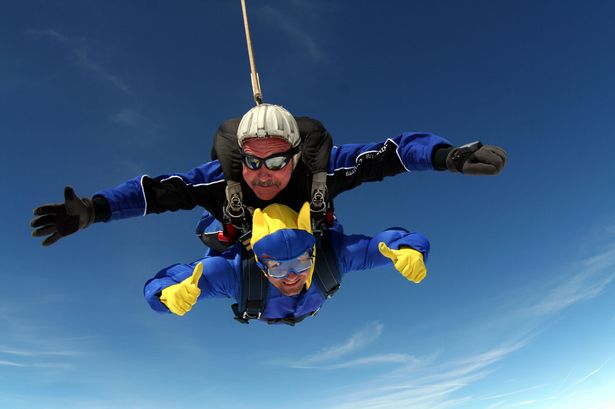
He finds rollercoasters boring, barely broke a sweat zip-wiring off the Tyne bridge and even a parachute jump did not raise his heart rate.

Just a few years ago even the thought of daredevil exploits would have terrified him, but now Jordy Cernik is frightened of nothing.

While that might sound an ideal scenario, the 38-year-old’s new-found bravery is actually the unexpected side-effect of surgery for a rare condition.

Cushing’s Syndrome resulted in the dad-of-two having an operation to remove the gland which produces adrenalin, the hormone which makes us feel scared.

He says: “I would never have had the guts to do any of this, but now nothing fazes me. I’m up for anything – I’m even thinking about doing a wing-walk on a plane too.

“I nearly did a bungee jump a few years ago, but I just couldn’t do it.

“Now I just take whatever is thrown at me and if a challenge helps me raise money for charity, the more daring the better.”

Over the past four months he has completed the parachute jump and zip-wired from the top of Newcastle’s Tyne Bridge and now he is getting ready to complete the last of a trio of challenges – next month’s Bupa Great North Run.

“The doctors didn’t tell me this could be one of the side-effects of the operation,” says Jordy. “But then the condition is so rare I don’t think they know everything about Cushing’s yet.

“Doing the skydive was the ultimate test. I thought that if I was ever going to get scared again then that would be the moment.

“But as we took off in the plane I felt nothing, and when I edged towards the door to jump I felt nothing, and even when I leapt out and pulled my parachute, I didn’t feel scared at all.

“It can be quite frustrating as well though.

“The first time I realised I had changed was when I went on the rides at a theme park with my kids and I just didn’t feel a thing. I just sat there, bored.”

However, the last of his hat-trick of challenges, the Run, will require him to push through the ever-present pain which he has endured for years as a result of Cushing’s.

Britain’s biggest mass participation event, for which The Daily Mirror is a media partner, takes place over a 13.1 mile course from Newcastle to South Shields.

But the syndrome has left Jordy, from Jarrow, near Newcastle, with arthritis, back problems and brittle bones. Worse still, the absence of adrenalin means he now lacks one of the body’s natural painkillers.

“I’m always in pain,” he says. “I’ve just had to learn to zone it out day-to-day and I’m going to have to do that even more when I’m on the run.”

Cushing’s affects around one in 50,000 people in Britain.

It causes a malfunction of the adrenal and pituitary glands which means increased amounts of corticosteroids are produced – often leading to massive, irregular weight gain.

In just three years 5ft 8in Jordy ballooned from 11st 5lb to almost 17st.

While his limbs remained slim, the former Territorial Army recruit saw the pounds pile around the major organs in his torso and head.

“I went through years of hell and I can only describe it as living in someone else’s body,” says the part-time radio presenter and events host.

“I developed this big round moon face and really quite large man boobs, which was so embarrassing.

“But there was absolutely nothing I could do about it. I could go to the gym six days a week and still couldn’t lose any of the weight.

“One of the worst things was that people would stare.

“Sometimes they’d take the mickey – often to try and make me feel better, by making light of things – but it would almost always hurt my feelings.

“And my career as a presenter suffered. I tried to play up to the character of being a big, jolly chap but I always felt I was too fat for TV, which is what I would have liked to do a lot more of.”

But it was the effect on his home life with wife Tracy, 43, and daughters Aimee, seven, and four-year-old Eive that for him was far worse.

“I had other really difficult symptoms which included profuse sweating which meant I couldn’t even hold my kids without wrapping them in towels first,” he says.

“Anyone who has children knows how hard that is, not to be able to do normal things. I often used to be in tears.

“Another symptom was extreme grumpiness, so I would find myself suddenly getting really angry and just exploding at them, plus I was always too exhausted to play with them. It was terrible.”

Jordy believes he can trace his symptoms back 15 years although his Cushing’s was only diagnosed in 2005.

He had visited his local surgery with a string of complaints, but by chance saw a different doctor one day and the syndrome was diagnosed.

“I don’t have any ill-feeling about that,” he says, “because the syndrome can be tricky to spot, partly because it is so rare.”

He went on to have both his pituitary and adrenal glands removed but needed a total of seven operations between 2005 and 2010 and not all went smoothly.

During one to remove his pituitary gland, which is inside the skull, the lining of his brain burst due to the stress of repeated surgery.

And while removing a rib to access the adrenal gland in his torso, his lung was punctured.

That wasn’t the end of the complications. He later developed severe meningitis and ended up on a life-support machine.

“But I still consider myself lucky,” he says. “The doctors told me, ‘You died twice really, you shouldn’t even be here’.”

Things have begun to look up in the past few years, however. The Cushing’s is in remission and Jordy has lost four stone.

His life hasn’t returned to normal entirely – he still has to take 30 pills a day, a cocktail of painkillers and hormones, plus drugs to slow the corrosion of his bones.

He has also been diagnosed with another rare condition, sarcoidosis, which creates nodules of irregular cells in the body and can cause serious complications. He’s convinced he has always had it but it has lain dormant until his body was at its most vulnerable.

At present the nodules can only be found on his skin and he’s being monitored to ensure that it doesn’t spread to his internal organs.

Thanks to the surgery, his life has improved enormously since 2010.

In July he had a breast reduction op which not only improved his appearance but also removed the dangerous accumulation of fat around his heart.

Part of this new chapter involves taking part in the Great North Run and raising money for the Cash for Kids appeal run by his local radio station Metro Radio.

The appeal aims to help children and young people in the North East who are disabled or have special needs, or those who suffer from abuse or neglect.

Jordy’s fundraising goal is a relatively modest £1,000, but for him joining the half marathon’s 56,000 participants on September 15 will be as rewarding as hitting his target.

“I really don’t know if I’ll be able to complete the course.” he says. “But I’m looking forward to it and I’m going to give it my best shot.

“Not feeling fear may feel like the power of a superhero, but what I really need for the Great North Run is superhero strength.”

The Bupa Great North Run is Britain’s biggest mass participation event and is organised by Nova International.

It will include world class athletes Mo Farah, Haile Gebrselassie and Kenenisa Bekele – plus 56,000 other runners.

The event is live on BBC One on Sunday 15th September between 9.30am to 13.30

For more information, visit www.greatrun.org

From  http://www.mirror.co.uk/news/real-life-stories/jordy-cernik-man-unable-fear-2208002#ixzz2cny6XeFr 

Seminar: Putting Patients First

putting-patients


September 30, 2013 | 9:30 am – 2:30 pm
W Hotel, 515 15th Street, NW, Washington, DC

How do patients, providers, and payers know whether health information is credible, accurate, useful or appropriate?

Comparative effectiveness research (CER) has the potential to improve health outcomes by helping people make better-informed decisions. But how do we know that CER will generate information that is useful?

You can help us find the answers by joining us on September 30 for a conversation and symposium featuring a broad range of health care stakeholders—patients, providers, policymakers, payers, researchers, and those who fund research. We’ll focus on an effort led by the National Health Council to create a framework to guide the development of CER, evaluate its results, and assist in communicating the findings to the right audiences.

Be a part of the conversation—register today and add your voice to our efforts to make CER useful. Tweet about it using #useCER.

Bio Categories

Chemical structure of cortisol.

Chemical structure of cortisol. (Photo credit: Wikipedia)

List of all the categories from Cushing’s Bios