Unilateral Adrenalectomy for Pediatric Cyclical Cushing Syndrome With Novel PRKAR1A Variant Associated Carney Complex

Abstract

Primary pigmented nodular adrenocortical disease is a rare cause of Cushing syndrome accounting for less than 1% of cases. We present a 9-year-old boy who presented at age 4 with cyclical Cushing syndrome and was eventually diagnosed with a novel, previously unreported, unpublished variant in PRKAR1A associated with Carney complex. He was treated with unilateral left adrenalectomy. At 1-year follow-up, he continues to be in remission of his symptoms of Cushing syndrome.

Introduction

Cushing syndrome is characterized by prolonged exposure to excess glucocorticoids and is broadly classified as either ACTH-dependent or ACTH-independent [12]. Primary pigmented nodular adrenocortical disease (PPNAD) is a rare cause of ACTH-independent Cushing syndrome, characterized by bilateral adrenal hyperplasia with autonomous, hyperfunctioning nodules [12]. Approximately 90% of PPNAD cases occur in the context of Carney complex, with isolated cases being exceedingly uncommon [12].

PPNAD was first described in 1984 by Carney et al, who coined the term in a case series of 4 patients and a review of 24 previously reported cases [1]. In that series, patients presented with ACTH-independent Cushing syndrome and no radiographic evidence of adrenal tumors. All underwent bilateral adrenalectomy, with histopathology revealing bilateral pigmented nodules in otherwise small or normal-sized adrenal glands [1]. Histologically, the classic features of PPNAD include multiple small black or brown cortical nodules surrounded by an atrophic adrenal cortex—reflecting chronic ACTH suppression [1].

Clinically, PPNAD most often presents with cyclical Cushing syndrome, characterized by alternating periods of hypercortisolism and normocortisolemia [2]. This intermittent pattern poses a substantial diagnostic challenge, as biochemical confirmation requires detection of cortisol excess during active phases of the cycle.

Carney complex is a multiple neoplasia syndrome involving endocrine, cardiac, cutaneous, and neural tumors. First described by Carney et al in 1985, it is typically inherited in an autosomal dominant fashion. Approximately 70% of cases occur in familial settings, while the remaining 30% arise from de novo pathogenic variants [34]. Over half of affected individuals harbor pathogenic variants in the PRKAR1A tumor suppressor gene on chromosome 17q24.2, while approximately 20% of cases are linked to alternate loci such as 2p16 [24].

Diagnostic criteria for Carney complex include either 2 clinical manifestations or 1 clinical manifestation in combination with a pathogenic PRKAR1A variant or an affected first-degree relative [2]. The most common endocrine manifestation is PPNAD, reported in approximately 25% of patients with Carney complex, though this likely underestimates the true prevalence, as autopsy studies reveal histologic evidence of PPNAD in nearly all affected individuals [2].

The Endocrine Society clinical practice guidelines recommend bilateral adrenalectomy as the definitive treatment for PPNAD, effectively curing hypercortisolism but necessitating lifelong glucocorticoid and mineralocorticoid replacement therapy due to resultant adrenal insufficiency [5]. Unilateral adrenalectomy has emerged as an alternative approach, particularly in pediatric patients, with the potential to preserve endogenous adrenal function.

Herein, we present the case of a 9-year-old boy with Carney complex and cyclical Cushing syndrome due to PPNAD, successfully managed with unilateral adrenalectomy.

Case Presentation

A 4-year-old boy presented with a week-long history of facial swelling, hyperphagia, weight gain, and scrotal swelling. At presentation, his weight was 22 kg (99th percentile) and body mass index (BMI) was 18 kg/m² (96th percentile). Initial workup revealed normal 24-hour urinary free cortisol <0.0913 µg/day (SI: 274 nmol/day) with low urinary creatinine 215 mg/day (SI: 1.9 mmol/day) (normal reference range 973-2195 mg/day; SI: 8.6-19.4 mmol/day) suggesting an incomplete sample. A repeat collection produced similar results. A 1 mg dexamethasone suppression test demonstrated nonsuppressed cortisol (27.9 µg/dL; SI: 772 nmol/L), suggestive of Cushing syndrome.

Over 5 years, the patient experienced 2 to 3 episodes per year of rapid weight gain (20-50 lbs), facial flushing, abdominal distention, and mood changes. Despite persistent obesity (>97th percentile), linear growth remained normal.

Diagnostic Assessment

At age 7, midnight salivary cortisol was markedly elevated at 3.7 µg/dL (SI: 103 nmol/L) (normal reference range < 0.4 µg/dL; SI: < 11.3 nmol/L), raising suspicion for cyclical Cushing syndrome. Magnetic resonance imaging of the abdomen was negative for adrenal lesions. At age 8, during an active episode, 2 elevated salivary cortisol samples, 2.0 µg/dL (SI: 55.1 nmol/L) and 2.2 µg/dL (SI: 61.9 nmol/L) (normal reference range < 0.4 µg/dL; SI: < 11.3 nmol/L), were obtained. A high-dose dexamethasone suppression test yielded a low baseline cortisol 3.2 µg/dL (SI: 89 nmol/L) and nonsuppressed cortisol post-dexamethasone 3.0 µg/dL (SI: 83 nmol/L). Baseline ACTH was 7.7 pg/mL (SI: 1.7 pmol/L), suppressed to <3.2 pg/mL (SI: < 0.7 pmol/L) post-dexamethasone—consistent with ACTH-independent cortisol excess.

At age 9, the patient underwent the gold standard diagnostic testing for cyclical Cushing, the Liddle test. The test involves 6 days of urine collection: days 1 to 2 establish baseline urinary cortisol levels, days 3 to 4 assess response to low-dose dexamethasone, and days 5 to 6 evaluate response to high-dose dexamethasone. The patient’s cortisol increased paradoxically from 118.5 µg/day (SI: 327 nmol/day) to 402.0 µg/day (SI: 1109 nmol/day) over 6 days, consistent with PPNAD physiology. Genetic testing was performed with the following report: “A heterozygous variant, NM_002734.4(PRKAR1A):c.550-2_553delinsG, p.(Val184_Tyr185delinsAsp), was detected in exon 7 of this gene. This variant does not appear to have been reported in population (gnomAD, ESP, dbSNP) and clinical databases (ClinVar), or in the literature. The impact of this variant on RNA splicing as assessed by multiple algorithms (Alamut Suite) is: abolishment of canonical acceptor splice site. Based on the current evidence, this variant was classified as likely pathogenic, American College for Medical Genetics category 2”. Family testing revealed this to be a de novo pathogenic variant.

Further workup included echocardiogram and thyroid ultrasound, both of which were normal. During workup for scrotal swelling at initial presentation, the patient was found to have bilateral testicular masses with negative testicular cancer tumor markers: α-fetoprotein, human chorionic gonadotropin, and lactate dehydrogenase. The family declined invasive biopsy of these lesions. He was followed by pediatric urology with yearly serial ultrasound, and these were felt to be benign testicular tumors, presumed noncalcifying Sertoli cell tumors, associated with Carney complex (Fig. 1).


Ultrasound of bilateral testicular lesions. A) Left testicle. B) Right testicle.

Figure 1.

Ultrasound of bilateral testicular lesions. A) Left testicle. B) Right testicle.

Based on the presence of 2 major diagnostic criteria in combination with the molecular diagnosis of a likely pathogenic variant of PRKAR1A, the diagnosis of Carney complex was established.

Treatment

The patient was referred for surgical evaluation for consideration of adrenalectomy. A comprehensive discussion was conducted regarding the potential benefits and risks of unilateral vs bilateral adrenalectomy. The family was counseled that unilateral adrenalectomy might not fully resolve the hypercortisolemia and that a subsequent contralateral adrenalectomy could be necessary. In contrast, bilateral adrenalectomy would definitively address cortisol excess but result in permanent adrenal insufficiency requiring lifelong glucocorticoid and mineralocorticoid replacement. After multidisciplinary consultation with endocrinology and surgery, the decision was made to proceed with unilateral adrenalectomy.

Preoperative IV contrast-enhanced computed tomography (CT), reviewed by a physician experienced in PPNAD, demonstrated greater nodularity in the left adrenal gland compared to the right. Therefore, a laparoscopic left adrenalectomy was performed electively without intraoperative complications. The patient was discharged on postoperative day 1. At the time of surgery (age 9), his weight was 70 kg (100th percentile), and BMI was 31.6 kg/m² (99th percentile). The resected left adrenal gland was submitted for histopathologic evaluation. Gross examination revealed no overt nodularity (Fig. 2); however, microscopic analysis identified multiple pigmented cortical nodules consistent with PPNAD (Fig. 3).


Left adrenal gland gross morphology. No macroscopic nodularity appreciable.

Figure 2.

Left adrenal gland gross morphology. No macroscopic nodularity appreciable.


Hematoxylin and Eosin staining on microscopy of left adrenal gland demonstrating hyperpigmented nodule.

Figure 3.

Hematoxylin and Eosin staining on microscopy of left adrenal gland demonstrating hyperpigmented nodule.

Outcome and Follow-up

The patient was followed closely in the postoperative period and was last evaluated 11 months after adrenalectomy. He remained clinically well, with complete resolution of Cushingoid features and no evidence of recurrence. Since surgery, he had experienced significant weight loss of 11.4 kg, with a current weight of 58.6 kg and a BMI of 25 kg/m² (97th percentile).

In summary, this case describes a 9-year-old boy with ACTH-independent, cyclical Cushing syndrome secondary to PPNAD, associated with a de novo likely pathogenic variant in the PRKAR1A gene, consistent with Carney complex. Histopathologic analysis of the resected adrenal gland confirmed the diagnosis of PPNAD. At nearly 1 year post-unilateral adrenalectomy, the patient remains asymptomatic with no biochemical or clinical signs of disease recurrence.

Discussion

Diagnosis of cyclical Cushing is challenging due to the cyclical nature of the disease and the challenges with current available testing modalities. Late-night salivary cortisol testing was a more reliable screening tool in this case as the 24-hour urinary cortisol were affected by inaccurate collection. The cyclical nature of the disease, coupled with the necessity for appropriately timed testing, contributed to a prolonged interval before definitive diagnosis and treatment. Additionally, initial imaging was interpreted as normal, and it was only upon review by a clinician with expertise in PPNAD that subtle adrenal nodularity was identified on CT. Ultimately, the Liddle test and genetic testing were the highest yield for confirmation of disease. This test measures the suppressibility of endogenous cortisol following exogenous dexamethasone administration. In patients with PPNAD, a paradoxical increase in cortisol excretion may occur, attributed to glucocorticoid receptor–mediated activation of protein kinase A catalytic subunits [6]. The likely pathogenic variant found in this case is a novel, previously unreported, variant in the PRKAR1A gene. This rare variant impact both the canonical acceptor splice site in intron 6 as well as results in an in-frame protein change in exon 7 (Val184_Tyr185delinsAsp).

The treatment of PPNAD in the context of Carney complex is typically with bilateral adrenalectomy, as per Endocrine Society guidelines [5]. The drawback of bilateral adrenalectomy is the resultant adrenal insufficiency resulting in lifelong adrenal replacement. Unilateral adrenalectomy is an attractive option for the treatment of PPNAD given the ability to avoid adrenal insufficiency brought upon by bilateral adrenalectomy. Case reports and case series in adult patients have demonstrated variable success in unilateral treatment. In a case series of 17 patients with classic cyclical Cushing, 3 patients had recurrence of Cushing syndrome after unilateral adrenalectomy and were cured with contralateral adrenalectomy [7]. One patient had subtotal (<90%) left adrenalectomy and did not have recurrence with 66 years of follow-up [7].

A case series by Xu et al 2013 described 12 out of 13 patients with PPNAD successfully cured with unilateral adrenalectomy at median 47 months follow-up [8]. The side of adrenalectomy was selected based on CT/magnetic resonance imaging in 3 patients and adrenal iodine131-norcholesterol scintigraphy in the remaining. At our center, the iodine131-norcholesterol scintigraphy was not available so CT was the chosen imaging modality.

Ultimately, the efficacy and morbidity of unilateral adrenalectomy remains unclear. Furthermore, due to the rarity of PPNAD, the criteria for selection of patients who are candidates for unliteral adrenalectomy is challenging to establish. This case reports adds to the existing literature the clinical characteristics of one patient treated successfully by unilateral adrenalectomy.

Learning Points

  • Diagnosis of cyclical Cushing can be very challenging. Late-night salivary cortisol is more reliable than 24-hour urinary cortisol.
  • The paradoxical rise in cortisol in the Liddle test is confirmatory for cyclical Cushing, hence the testing should be considered early in affected patients.
  • Genetic testing assessing for Carney complex, PRAKA1A pathogenic variant, should be considered early in a patient with concern for cyclical Cushing and another system involved like testicular lesions.
  • Although bilateral adrenalectomy is the recommendation for PPNAD; in selected patients, unilateral adrenalectomy might provide several years of remission.

Acknowledgements

Thank you to Dr. Hong Wang, MD, PhD, DABMGG, FACMG, FCCMG, for her support on this project and in all things. Thank you to Dr. Andre Lacroix MD, FCAHS, for reviewing the preoperative CT adrenals with the team.

Contributors

All authors made individual contributions to authorship. F.B. was involved in the diagnosis and management of the patient. N.S. was responsible for the patient’s surgery. C.J.Z. was involved in the patient’s surgery and postoperative care. R.S., M.S., and P.W. were all medical professionals involved in his management and care. All authors contributed, reviewed, and approved the final draft.

Funding

No public or commercial funding.

Disclosures

None declared.

Informed Patient Consent for Publication

Signed informed consent obtained directly from the patient’s relatives or guardians

Data Availability Statement

Data sharing is not applicable to this article as no datasets were generated or analyzed during the current study.

Author notes

Natashia Seemann and Funmbi Babalola co-senior author.

© The Author(s) 2025. Published by Oxford University Press on behalf of the Endocrine Society.
This is an Open Access article distributed under the terms of the Creative Commons Attribution-NonCommercial-NoDerivs licence (https://creativecommons.org/licenses/by-nc-nd/4.0/), which permits non-commercial reproduction and distribution of the work, in any medium, provided the original work is not altered or transformed in any way, and that the work is properly cited. For commercial re-use, please contact reprints@oup.com for reprints and translation rights for reprints. All other permissions can be obtained through our RightsLink service via the Permissions link on the article page on our site—for further information please contact journals.permissions@oup.com. See the journal About page for additional terms.

A Case 0f Hailey–Hailey Disease Accompanied by Cushing’s Syndrome and Adrenal Insufficiency Due to Long-Term Usage of Topical Steroids With Review of Literature

Abstract

Hailey–Hailey disease (HHD), or familial benign chronic pemphigus, is a rare autosomal dominant disorder characterized by recurrent vesicles and erosions in intertriginous areas. Topical corticosteroids are the primary treatment, but their potential systemic side effects are often overlooked. Prolonged use on compromised skin can lead to excessive absorption, increasing the risk of iatrogenic Cushing’s syndrome and adrenal insufficiency.

Here, we report the case of a 50-year-old woman with HHD who had been using topical clobetasol or betamethasone for over 10 years, reaching doses up to 50 g/day.

She developed Cushingoid features, metabolic abnormalities, and suppression of the hypothalamic–pituitary–adrenal (HPA) axis. After tapering off topical corticosteroids, she developed adrenal insufficiency and associated withdrawal symptoms. Following the initiation of hydrocortisone replacement therapy, psychiatric symptoms, impaired glucose tolerance, and osteoporotic fractures emerged, suggesting exacerbation of iatrogenic Cushing’s syndrome.

This case highlights the risk of systemic complications from chronic topical corticosteroid use, particularly in high-absorption areas. Gradual dose reduction, close endocrine monitoring, and individualized tapering strategies are essential to prevent severe outcomes.

Clinicians should be aware of potential adrenal suppression and consider endocrine evaluation in patients receiving prolonged, high-dose topical corticosteroid therapy.

Patient Finds Relief After Adrenal Gland Tumor Removed by Baylor Endocrine Surgeon

Hanna Pierce didn’t expect to learn she had a tumor on her adrenal gland during a CT scan. Just two weeks after delivering her second child and recovering from COVID-19, she went to urgent care with concerns about a possible blood clot. Instead, imaging revealed a tumor in her adrenal gland. “I didn’t have symptoms,” she said. “They were checking for something else and just happened to find it.”

That unexpected discovery in 2021 launched Pierce into a years-long journey that ultimately led to robotic surgery at Baylor Medicine with Dr. Feibi Zheng, an endocrine surgeon who specializes in treating adrenal tumors.

“Many people haven’t heard much about the adrenal glands,” said Zheng, assistant professor in the Division of Surgical Oncology. “They sit on top of the kidneys and produce hormones like cortisol that regulate everything from metabolism to the body’s stress response. If a tumor is overproducing cortisol, it can silently wreak havoc on the body over time.”

Doctors told Pierce that her tumor was consistently producing slightly elevated cortisol, a red flag. “My doctor told me if we left it alone, it could develop into diabetes or full-blown Cushing’s syndrome. At first, we just monitored it,” she said.

In the months and years that followed, Pierce did experience symptoms but attributed them to the demands of motherhood. “After my second child, I couldn’t lose weight no matter what I did. I had anxiety, constant fatigue in the afternoons, and I wasn’t sleeping well,” she recalled. “But I just chalked it up to being a mom of two.”

By 2024, her endocrinologist said it was time to act and referred her to Zheng, who confirmed the tumor was still producing excess cortisol. “Dr. Zheng told me I was going to feel so much better and explained what she was going to do,” Pierce said. “When I went to see her for the consultation, she was very informative. She didn’t pressure me to have surgery but explained everything to me.”

The Baylor Medicine endocrine surgery team, including Zheng and supported by physician assistant Holly Clayton, provided a seamless and collaborative care experience. “Our team-based model allows for better coordination and patient support,” said Clayton, who helped manage Pierce’s preoperative workup and performed her postop visit via telemedicine. “It was clear she wanted answers and a plan, and we were glad to be able to guide her through this process together.”

Zheng performed the adrenalectomy robotically, using a posterior approach — an advanced technique that involves going through the back instead of the front of the abdomen. “It’s a less common approach, but for the right patients, it can reduce pain and speed up recovery,” Zheng said.

Pierce said she felt calm going into the procedure. “Usually, I have white coat syndrome and feel anxious, but this time I didn’t. Everyone gave me step-by-step instructions, and Dr. Zheng explained everything clearly. I really felt like I was in good hands.”

Within a week or two of her June surgery, Pierce noticed changes. “I dropped four pounds almost immediately,” she said. “My face wasn’t as puffy. I felt less anxious and more like myself. Even though I was still recovering, I had more energy, and my body felt like it had reset.”

“Surgery to correct cortisol-producing tumors can make a major difference in quality of life, even if patients don’t meet the full criteria for a Cushing’s diagnosis,” Zheng said. “Mrs. Pierce’s case is a perfect example. She didn’t feel well, but she didn’t know why. Her endocrinologist saw [that] her metabolic parameters were getting worse. Now that the tumor is gone, her symptoms are improving, and her health trajectory is back on track.”

Just a month after surgery, Pierce says she has more energy and is continuing to lose weight. She’s relieved that a straightforward procedure made such a noticeable difference in how she feels.

From https://blogs.bcm.edu/2025/07/23/patient-finds-relief-after-adrenal-gland-tumor-removed/

A Second Look at Cushing Disease: Hypercortisolism Recurrence From Another Gland

Abstract

Cushing disease (CD) is the most common form of adrenocorticotropin (ACTH)-dependent Cushing syndrome (CS), whereas unilateral adrenal adenoma is the most common cause of ACTH-independent CS. However, the occurrence of different subtypes of CS in a single individual is very rare.

We present a case of a 44-year-old woman with distant histories of left adrenalectomy for an adrenal adenoma and total thyroidectomy following the diagnosis of papillary thyroid carcinoma.

She was later diagnosed with CD, achieving disease remission after pituitary surgery, but subsequently developed adrenal CS from the remaining right adrenal gland. After discussing the potential advantages and drawbacks of another adrenalectomy to remove her right adrenal gland, the patient declined surgery and opted for medical management. After 7 years of imaging follow-up studies, her right adrenal adenoma has remained stable in size and she is biochemically controlled on low-dose osilodrostat therapy. Our case emphasizes the importance of recognizing the rare occurrence of successfully treated CD followed by the recurrence of CS from a different gland, and the adoption of management strategies tailored to each individual patient’s preferences.

Introduction

Cushing syndrome (CS) arising from either pituitary or adrenal lesions is generally a rare condition, with an estimated prevalence of 10 to 15 cases per million individuals [1]. The majority of cases of endogenous CS are adrenocorticotropin (ACTH) dependent, accounting for 80% to 85% of cases. Among these cases, approximately 75% to 80% are attributed to pituitary corticotroph adenomas [23], whereas ACTH-independent CS constitutes 15% to 20% of cases, with 90% of such cases caused by unilateral adrenal adenomas [4]. Surgery is the preferred first-line treatment option for all cases of CS; however, approximately 20% cases may recur following surgical resection that necessitates second-line treatments, such as medical therapy, adrenalectomy, and radiation therapy [56].

Bilateral adrenalectomy may be considered for some Cushing disease (CD) patients, such as patients with persistent or recurrent disease following pituitary surgery, medication intolerance, nonadherent or unresponsive to medical therapy, or in situations where rapid normalization of life-threatening hypercortisolism is required. However, this procedure carries the risk of development of Nelson syndrome and lifelong use of glucocorticoid and mineralocorticoid replacement therapies [7]. Consequently, the role of bilateral adrenalectomy in patients with CS still remains a subject of debate and medical therapy is increasingly preferred [8]. Additionally, there is accumulating evidence affirming the effectiveness, safety, and tolerability of medical therapies leading to its increased use in the treatment of CS, subsequently allowing a more personalized approach for these patients [9].

We hereby present a case of a patient with distant histories of left adrenalectomy for an adrenal adenoma and total thyroidectomy for papillary thyroid carcinoma, who later developed CD that required transsphenoidal resection. After 6 years of disease remission following her transsphenoidal resection, the patient sought medical guidance for recurrence of her hypercortisolemic symptoms leading to the discovery of a right cortisol-secreting adrenal adenoma and the subsequent diagnosis of adrenal CS.

Case Presentation

A 44-year-old African American woman presented to our clinic in 2017 for worsening headaches, joint and muscle pains, muscle weakness, facial acne, facial roundness, facial plethora, pink abdominal striae, easy skin bruising, hair loss, and weight gain of 7 kg over 6 months. Her past surgical history included a left adrenalectomy for an adrenal adenoma in 2009, transsphenoidal resection of a corticotroph adenoma in 2011, and total thyroidectomy for papillary thyroid carcinoma in 2016. The left adrenalectomy was undertaken due to worsening hypertension and mildly elevated plasma metanephrines and catecholamines; however, the pathology revealed an adrenal cortical adenoma and not pheochromocytoma characteristics, demonstrating clear and eosinophilic cytoplasm, low mitotic activity, no significant atypia, and no vascular invasion, while immunohistochemistry was positive for inhibin, calretinin, and Melan-A. Genetic studies, including multiple endocrine neoplasia (MEN) 1 testing, were performed and were negative. Her past medical history included long-standing type 2 diabetes mellitus, metabolic dysfunction–associated steatohepatitis, and osteoporosis with compression fractures on her lumbar 4 to 5 vertebral bodies of her spine. The patient reported no known family history of endocrine disorders.

Diagnostic Assessment

Further testing at this clinic visit revealed elevated 24-hour urine cortisol levels of 49.3 μg/24 hours (135.73 nmol/24 hours) (reference range [RR] <45 μg/24 hours; <124.40 nmol/24 hours), unsuppressed overnight 1-mg dexamethasone suppression test with a postdexamethasone cortisol level of 15.8 µg/dL (435.88 nmol/L) (RR <5 µg/dL; <138 nmol/L), a low dehydroepiandrosterone sulfate level of 14 µg/dL (0.38 µmol/L) (RR: 32-240 µg/dL; 0.86-6.49 µmol/L), and normal 24-hour urine metanephrine levels. These findings, in conjunction with the patient’s clinical symptoms, raised concerns of recurrence of CS, especially considering a recent magnetic resonance imaging scan that had revealed some residual tissue in the sella described as a nonenhancing cystic foci in the left lateral aspect of the pituitary gland (Fig. 1).

Nonenhancing cystic foci in the left lateral aspect of the pituitary gland (A: sagittal view; B: coronal view).

Figure 1.

Nonenhancing cystic foci in the left lateral aspect of the pituitary gland (A: sagittal view; B: coronal view).

Follow-up laboratory testing revealed plasma morning ACTH of less than .1 pg/mL (<23.98 pmol/L) (RR: 7-63 pg/mL; 152.6-1373.4 pmol/L), whereas 24-hour urinary free cortisol and serum morning cortisol levels were within the normal range at 47 mcg/24 hours (129.98 nmol/24 hours) and 14.8 mcg/dL (408.67 nmol/L) (RR <45 μg/24 hours; 124.40 nmol/24 hours). Due to the low plasma morning ACTH level, an abdominal magnetic resonance imaging scan was performed that revealed a right adrenal adenoma measuring 6.3 × 3.5 cm. Additionally, her insulin-like growth factor 1 was elevated at 316 ng/mL (41.28 nmol/L) (RR: 7.44-25.44 nmol/L), while her prolactin levels were normal. Based on her elevated insulin-like growth factor 1 level, an oral glucose tolerance test for growth hormone suppression was performed that ruled out acromegaly, with a nadir growth hormone level of 0.20 ng/mL (0.61 mIU/L) (RR <1 ng/mL; <3.03 mIU/L) [10].

Suspecting recurrence of CS, her serum cortisol and ACTH levels were closely monitored over the course of a year (Table 1). During this period, her 24-hour urinary free cortisol levels were either mildly elevated or within the normal range at 47, 39, and 32 mcg/24 hours (129.74, 107.63, and 88.14 nmol/day, respectively) (RR <45 μg/24 hours; <124.40 nmol/24 hours), prompting further evaluation with late-night salivary cortisol measurements on 4 separate occasions that were consistently elevated at 0.154, 0.218, 0.298, and 0.109 μg/dL (4.24, 6.01, 8.21, and 3.01 nmol/L, respectively) (RR: <0.010-0.090 μg/dL; <0.28-2.48 nmol/L). The persistent suppression of ACTH levels supported the diagnosis of adrenal CS, and an abdominal computed tomography (CT) scan revealed a lipid-rich adenoma that was stable in size measuring 6.6 × 3.5 cm (Fig. 2).

Abdominal computed tomography images demonstrating adrenal adenoma in the right adrenal gland measuring 6.6 × 3.5 cm.

Figure 2.

Abdominal computed tomography images demonstrating adrenal adenoma in the right adrenal gland measuring 6.6 × 3.5 cm.

Table 1.

Comparison of hormonal parameters over time

Hormone tested Initial consult Post adrenal adenoma findingsa Post osilodrostat (1 y)b Reference range
8 Am ACTH <1.1 pg/mL
(<0.24 pmol/L)
<1.1 pg/mL
(<0.24 pmol/L)
3.5 pg/mL
(0.76 pmol/L)
7.2-63.3 pg/mL
(1.6-13.9 pmol/L)
8 Am serum cortisol 14.8 μg/dL
(408.67 nmol/L)
16.3 μg/dL
(448.1 nmol/L)
4.2 μg/dL
(115.8 nmol/L)
6.2-19.4 μg/dL
(171.1-534.41 nmol/L)

Reported in conventional units (SI units).

Abbreviation: ACTH, adrenocorticotropin.

aOne year after initial consult.

bTwo years and 9 months after initial consult.

Treatment

Because our patient was biochemically in remission following her pituitary surgery for CD for 6 years before the current presentation and now has biochemical evidence of recurrence of hypercortisolism due to adrenal CS, treatment options were discussed with the patient, including medical therapy and right adrenalectomy. The patient opted against a right adrenalectomy due to concerns about the need for lifelong hydrocortisone and fludrocortisone, and decided to commence medical therapy. The patient was offered the option to start either ketoconazole or a glucocorticoid receptor antagonist (mifepristone). The patient declined being treated with ketoconazole and mifepristone, as she was concerned about the side-effect profile of liver function test derangements due to her history of metabolic dysfunction–associated steatohepatitis and hypokalemia, respectively. Hence, she decided to start osilodrostat therapy and began a low dose of 1 mg twice daily.

Outcome and Follow-up

Annual follow-up CT imaging studies of the patient’s adrenal gland for the next 7 years after the current presentation have shown stability in the size of her right adrenal adenoma. Her blood pressure is well controlled with a single antihypertensive medication (amlodipine), and her glycated hemoglobin has remained in the nondiabetic range. Additionally, she has been experiencing increased energy levels and improvement in peripheral edema. While on osilodrostat therapy, she continues to be biochemically well controlled and has had only a single episode of adrenal insufficiency. A chronological overview of clinical events is displayed in Fig. 3. Because her morning serum cortisol level was relatively low (5.6 µg/dL [154.5 nmol/L]), her osilodrostat dose was further decreased to 1 mg in the evening in December 2024 and she was educated on the proper timing and administration of rescue oral hydrocortisone therapy of 5 to 10 mg, as needed, whenever she developed symptoms of adrenal insufficiency.

Chronological overview of clinical events.

Figure 3.

Chronological overview of clinical events.

Discussion

While previous reports have documented the coexistence of CD with a solitary adrenal adenoma [9], the unique aspect of our case lies in the development of a right adrenal adenoma after a distant history of surgical resection of a left adrenal adenoma and the achievement of disease remission following transsphenoidal resection of a pituitary corticotroph adenoma [4]. Several molecular studies have been performed to elucidate the pathogenesis of recurrent and refractory endocrine tumors, revealing links to genetic factors. The majority of previously reported cases of pituitary adenomas coexisting with adrenal adenoma are seen in patients with MEN syndromes [11]. The genetic testing for MEN 1 syndrome conducted on our patient yielded negative results. However, while MEN 1 was ruled out in our patient, it is possible that other, yet-unidentified genetic factors may contribute to this pattern of tumor formation, including Carney complex and McCune-Albright syndrome, that can be associated with adrenal adenomas and will need to be tested in our patient. Notably, our patient does not report any family history of endocrine tumor syndromes, and corticotroph adenomas are primarily sporadic monoclonal neoplasms that are rarely found in genetic syndromes [12].

In assessing our patient, we also noted a discrepancy between the overt cushingoid features in our patient and the marginal elevations in 24-hour urine free cortisol levels, underscoring the complexities in diagnosing and characterizing the severity of hypercortisolemic states. While 24-hour urine free cortisol remains an important screening test, its limitations must be acknowledged, including variability in 24-hour cortisol secretion, renal clearance differences, and the potential for episodic hypercortisolism that may not be fully captured in a single 24-hour urine collection measurement [13]. These factors have been substantiated by Petersenn et al [14], who reported significant intrapatient variability in 24-hour urinary free cortisol measurements, with a coefficient of variation of approximately 50%, highlighting the need for multiple sample collections to improve the reliability of assessments. These fluctuations, along with individual differences in cortisol sensitivity and metabolism, may account for the presence of varying phenotypic features that are not correlated with the degree of urinary hypercortisolism [15]. In our patient’s case, her clinical phenotype, imaging data, and the associated comorbidities are more useful in assessing the severity of CS, highlighting the importance of thorough and comprehensive clinical and biochemical assessments for CS patients.

Another aspect contributing to the complexity of our case included the treatment options that we could offer to our patient. She opted to avoid a second adrenalectomy, which has the potential of causing Nelson syndrome [9]. Initially, we offered the patient to start treatment with a steroidogenesis inhibitor such as ketoconazole, which has been used to treat hypercortisolism for more than 30 years with an average remission rate of 71.1% [9]. Another alternative was mifepristone, a glucocorticoid receptor antagonist used in the treatment of hyperglycemic patients with underlying CS [16]. However, our patient decided against being treated with ketoconazole and mifepristone due to the side-effect profiles of liver function test derangements and hypokalemia, respectively. Hence, she was offered osilodrostat treatment, to which she has responded well symptomatically, and her disease currently remains well-controlled in remission.

Because of the effectiveness of osilodrostat, adrenal insufficiency is a side effect that was commonly reported in previous pivotal clinical trials [1718]. More recently there have been several publications describing prolonged duration of adrenal insufficiency even after osilodrostat discontinuation that requires close monitoring, a finding that remains mechanistically unclear, especially with its short half-life of approximately 4 hours [1920]. Given the emerging reports of prolonged adrenal insufficiency after osilodrostat discontinuation [1920], close monitoring of serum cortisol levels and patient education to manage symptoms of adrenal insufficiency are essential for the long-term management of patients on osilodrostat therapy. Finally, eventual recovery of adrenal function has also been recently reported [21], hence clinicians are advised to exercise a low threshold of retesting the adrenal reserve of patients who have discontinued osilodrostat therapy.

Learning Points

  • This case highlights an unusual scenario in which a patient with CS presented with both adrenal and pituitary adenomas following prior surgical resections. Physicians should be aware of the rare occurrence of two different etiologies of CS in the same patient and should consider its possibility in patients with recurrent hypercortisolism.
  • The patient’s hesitation to undergo a second adrenalectomy demonstrates the importance of personalized medicine in individualizing the treatment plan for our patient.
  • Recent reports suggest that prolonged adrenal insufficiency after discontinuation of osilodrostat and the eventual recovery of adrenal function can occur in some patients. Clinicians should be aware of this and ensure close monitoring of adrenal function after discontinuing therapy.

Contributors

All authors made individual contributions to authorship. K.C.J.Y. was involved in the diagnosis and management of this case, manuscript review, and text editing. M.M.-G. was involved in manuscript preparation, writing, and submission. Both authors reviewed and approved the final draft.

Funding

This research did not receive any specific grants from any funding agencies in the public, commercial, or not-for-profit sectors.

Disclosures

None.

Informed Patient Consent for Publication

Signed informed consent obtained directly from the patient.

Data Availability Statement

Data sharing is not applicable to this article as no data sets were generated or analyzed during the present study.

From https://academic.oup.com/jcemcr/article/3/6/luaf089/8117205?login=false

Changes in Clinical Features of Adrenal Cushing Syndrome

Abstract

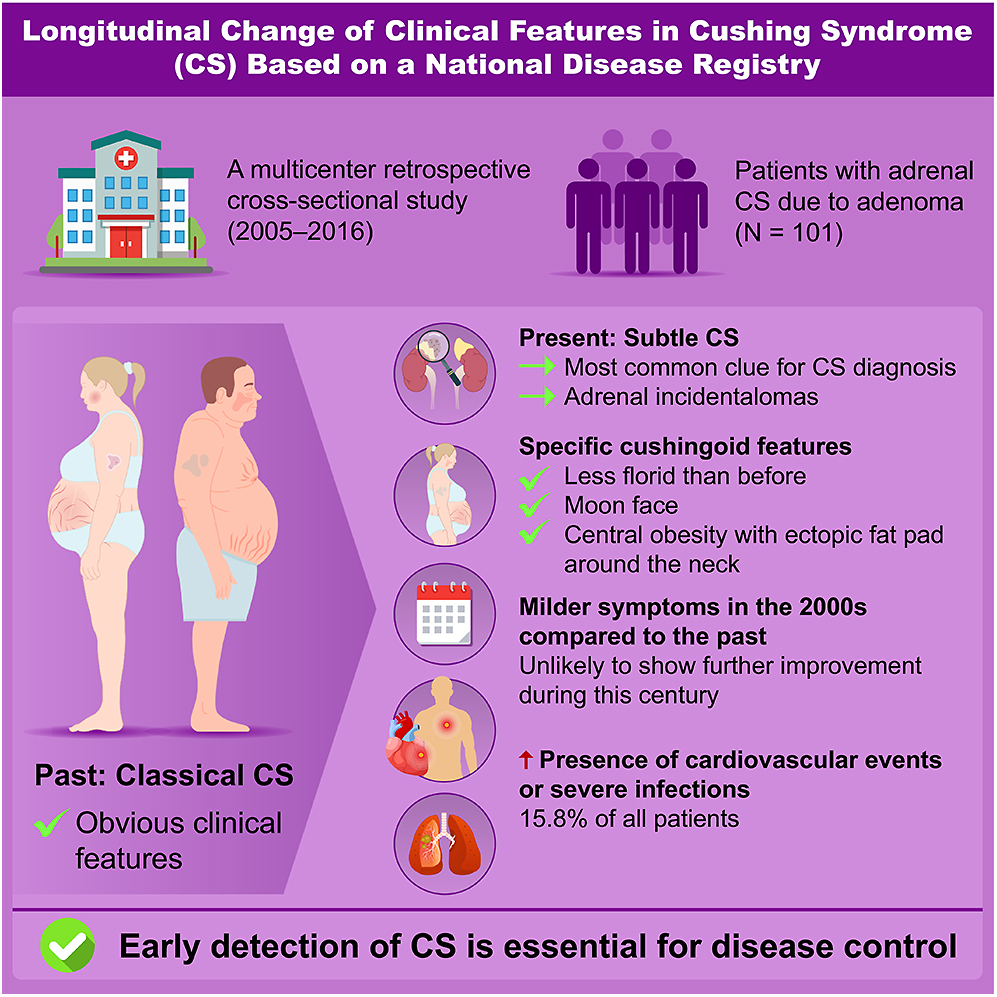
Adrenal Cushing syndrome (CS) has been rarely studied in recent years in Japan. This study aimed to investigate clinical characteristics and their changes over time in patients with adrenal CS. We analyzed 101 patients with adrenal CS caused by adenoma, dividing them into two groups based on diagnosis period: December 2011–November 2016 (later group, n = 50) and August 2005–November 2011 (earlier group, n = 51). Differences between the groups and comparisons with previous reports were assessed. Patients with subclinical CS were excluded. Adrenal incidentalomas were the most frequent reason for CS diagnosis (34%). Most patients exhibited few specific cushingoid features (2.5 ± 1.3), with moon faces and central obesity being the most common. Compared to earlier reports, specific cushingoid features were less frequent; nonetheless, no significant differences were observed between the earlier and later groups. All patients had midnight and post-dexamethasone suppression test serum cortisol levels exceeding 5 μg/dL. No significant differences were found between the groups regarding non-specific symptoms, endocrinological findings related to cortisol secretion, cardiometabolic commodities or infections, except for glucose intolerance and bone complications. The prevalence of metabolic disorders other than glucose intolerance and osteoporosis fluctuated over time. Sixteen patients developed cardiovascular diseases or severe infections. In conclusion, adrenal CS became less florid in the 2000s, showed no improvement in the following years, and remained associated with a high complication rate. Further research is needed to establish an early detection model for CS.

Plain language summary

Our study found that one-sixth of patients with adrenal Cushing syndrome continued to develop severe complications in this century despite their specific cushingoid features being less pronounced than in the past. Notably, the findings provide clinical insights that may aid in earlier disease diagnosis.

Introduction

Chronic exposure to excess glucocorticoids leads to Cushing syndrome (CS), with hypercortisolism causing a range of symptoms, signs and comorbidities, including arterial hypertension, diabetes mellitus, osteoporosis, severe infections and cardiovascular disease, all of which contribute to increased mortality (12345). CS also negatively impacts quality of life and cognitive function, leading to worsening socioeconomic conditions; moreover, some of these effects persist even after remission (67). Early diagnosis is therefore essential to reducing morbidity and mortality. A recent study (8) suggests that florid CS has become less common than previously reported, yet the time from symptom onset to diagnosis remains as long as 4 years (910). A similar trend toward an increase in less florid CS is expected in Japan. However, to our knowledge, no nationwide epidemiological survey of adrenal CS has been conducted in Japan in recent decades.

The number of adrenal incidentalomas (AIs) detected through abdominal imaging has been increasing (1112), potentially aiding in the early diagnosis of adrenal CS. However, in most studies from other countries, adrenal CS accounts for a smaller proportion of all CS cases compared to Japan (20–47 vs >50%, respectively), despite a rise in incidence in recent reports (1013141516). Consequently, there is limited evidence regarding diagnostic clues, clinical presentation, endocrinological findings and disease progression in a large cohort of patients with adrenal CS caused by adenomas in this century. This study aimed to examine the clinical phenotype, comorbidities and biochemical characteristics of Japanese patients with adrenal CS due to adenomas in the 2000s and to identify differences from previously reported findings.

Materials and methods

Study design and participants

This retrospective observational study was part of the Advancing Care and Pathogenesis of Intractable Adrenal Diseases in Japan (ACPA-J) study, which involved 10 referral centers (171819). The ACPA-J was established to develop a disease registry and cohort for patients with subclinical adrenal CS, adrenal CS, primary macronodular adrenal hyperplasia or adrenocortical carcinoma. The study group collected clinical, biochemical, radiological and pathological data at enrollment to generate new evidence and inform clinical guidelines. Data were obtained from patients aged 20–90 years who were diagnosed with CS due to an adrenal adenoma between August 2005 and November 2016. The dataset used in this study were validated in March 2019. The study protocol was approved by the Ethics Committee of the National Center for Global Health and Medicine (Approval No.: NCGM-S-004259) and the ethics committees of the participating centers. This study adhered to the clinical research guidelines of the Ministry of Health, Labour and Welfare, Japan (MHLWJ) and the principles of the Declaration of Helsinki. Informed consent was obtained through an opt-out option available on the websites of each referral center.

In the ACPA-J study, adrenal diseases, including CS, were initially diagnosed by attending physicians. Patients with iatrogenic CS or CS caused by primary macronodular adrenal hyperplasia or adrenocortical carcinoma were excluded. Of the 106 patients diagnosed with adrenal CS due to adenomas, five were excluded for the following reasons: baseline plasma adrenocorticotropic hormone (ACTH) ≥10 pg/mL (n = 1) or significant missing data related to the hypothalamic-pituitary-adrenal axis (n = 4). None of the patients met the criteria for subclinical CS according to the Japan Endocrine Society clinical practice guidelines (20). Except for three cases, adrenal adenomas were pathologically confirmed through surgical specimens. In patients who did not undergo surgery, a tumor was classified as an adenoma if it appeared round or oval, hypodense (i.e., ≤10 Hounsfield units), homogeneous and well-defined on computed tomography (12). As a result, the final analysis included 101 patients with adrenal CS due to adrenal adenomas (Fig. 1).

Figure 1View Full Size
Figure 1

Flowchart of patient selection. ACTH, adrenocorticotropic hormone; UFC, urinary free cortisol.

Citation: Endocrine Connections 14, 5; 10.1530/EC-24-0684

The diagnosis of adrenal CS was validated based on the diagnostic criteria established by the Research on Intractable Diseases, Research Committee on Disorders of Adrenal Hormones from the MHLWJ in 2016 (21). These criteria included a combination of the following: the presence of specific and non-specific cushingoid features, confirmation of cortisol hypersecretion through elevated morning serum cortisol levels (generally ≥20 μg/dL) and/or high 24 h urinary free cortisol (UFC; typically more than four times the upper limit of normal (ULN) for the assay used at each center), disruption of the circadian rhythm in serum cortisol levels (serum cortisol at 21:00–23:00 h ≥5 μg/dL), suppression of ACTH secretion (morning plasma ACTH <10 pg/mL and/or a blunted response to corticotropin-releasing hormone (CRH) stimulation, defined as either an increase of <1.5 times the baseline ACTH or peak ACTH <10 pg/mL), failure to suppress serum cortisol levels (≥5 μg/dL) after the standard overnight 1 mg and/or 8 mg dexamethasone suppression test (DST), and the presence of an adrenal tumor on imaging.

Measurements

The collected data included patient demographics such as age at diagnosis, sex, body mass index (BMI) and the reason for diagnosing CS. Specific cushingoid features recorded were moon face, dorsocervical or subclavian fat pad, central obesity, easy bruising, thin skin, muscle weakness, purple striae and facial plethora. Non-specific cushingoid features included acne, virilism or hirsutism in women, psychiatric disorders, menstrual irregularity and leg edema. Biochemical and hormonal profiles were assessed, including hemoglobin A1c (HbA1c), low-density lipoprotein cholesterol (LDL-C), high-density lipoprotein cholesterol (HDL-C), triglycerides (TG), morning and midnight serum cortisol, serum cortisol after the 1 mg or 8 mg DST, plasma ACTH before and after CRH stimulation, 24 h UFC and plasma dehydroepiandrosterone sulfate (DHEA-S). Comorbidities examined included hypertension, impaired glucose tolerance, dyslipidemia, obesity, bone fracture, osteoporosis, venous thromboembolism, cerebral infarction, cerebral hemorrhage, angina pectoris, myocardial infarction, heart failure, pneumonia, sepsis, deep abscess and other infections. Adrenal tumor diameter was assessed using imaging. To systematically assess various measurements, including specific and non-specific cushingoid features in patients with adrenal CS, we predefined survey items before initiating the study. We did not predefine the period for the major adverse cardiovascular and cerebrovascular events (MACCEs) and serious infections. The diseases were registered only if attending physicians determined they were associated with hypercortisolism. Missing data were excluded from the analysis. UFC and serum cortisol levels were partially expressed as multiples of the ULN or lower limit of normal (LLN) due to changes in assay methods. Further details on assay methods are provided in the supplementary data (see section on Supplementary materials given at the end of the article).

Hypertension was defined as a blood pressure of ≥140/90 mmHg or the use of antihypertensive medication (22). Due to inconsistencies in registration data, prediabetes and type 2 diabetes have been classified together under impaired glucose tolerance. Impaired glucose tolerance was defined as a fasting plasma glucose level of ≥110 mg/dL, a 2 h plasma glucose level of ≥140 mg/dL after a 75 g oral glucose load, an HbA1c level of ≥6.2% or current antidiabetic therapy (23). Dyslipidemia was defined by LDL-C levels ≥140 mg/dL, HDL-C levels <40 mg/dL, TG levels ≥150 mg/dL or the use of lipid-lowering therapy (24). Obesity was classified as a BMI ≥25 kg/m2, following the criteria of the Japan Society for the Study of Obesity (25). Osteoporosis was diagnosed based on a T-score ≤−2.5 standard deviation (SD) on dual-energy X-ray absorptiometry, in accordance with World Health Organization criteria (26). The presence of other symptoms, signs or comorbidities beyond the listed conditions was determined by the attending physicians based on medical records. The prevalence of MACCEs was also calculated. The CRH loading test is used to assess ACTH suppression in patients with suspected ACTH-independent hypercortisolism (20). A normal ACTH response to CRH stimulation was defined as plasma ACTH levels exceeding 10 pg/mL and increasing by more than 50% from baseline.

Classification of participants according to the date of diagnosis

The primary objective of this study was to examine temporal changes in the clinical presentation of adrenal CS, necessitating classification based on the date of diagnosis. We also sought to clarify recent trends in CS diagnosis. The most recent diagnosis among study participants was recorded in November 2016. To analyze changes in clinical presentation over 10 years, we classified patients into two groups: those diagnosed within 5 years of the most recent case (i.e., December 2011–November 2016, later group; n = 50) or those diagnosed earlier (i.e., August 2005–November 2011, earlier group; n = 51).

Changes in the clinical pictures over time

To examine changes in the clinical picture over time, we compared the prevalence of symptoms, signs and comorbidities in this study with findings from a nationwide survey conducted by the Research on Intractable Diseases, Research Committee on Disorders of Adrenal Hormones under the MHLWJ in 1997 (16) and data from traditional reports compiled by Rosset et al. (8). The nationwide survey was conducted in 1997 and 1998 using questionnaires sent to 4,060 departments. It included 737 patients with CS, covering adrenal CS caused by adenoma and bilateral hyperplasia, pituitary CS and ectopic ACTH syndrome, with adrenal CS accounting for 47.1% of cases. While the later research did not provide details on patient numbers, study duration or data collection methods, the data sources were clearly stated.

Statistical analysis

Statistical analyses were conducted using SPSS (version 26.0; IBM Corp., USA) or EZR (Saitama Medical Center, Jichi Medical University, Japan) (27). Results are expressed as means ± SDs and frequencies (positive/total observations) unless otherwise specified. Data distributions were assessed using the Kolmogorov–Smirnov test. Quantitative variables were compared between groups using the Student’s t-test, while the categorical variables were analyzed using the χ 2 test or Fisher’s exact test. We used a single-sample binomial test to compare our variable frequencies with those in previous studies (8). Statistical significance was defined as a P-value of <0.05.

Results

Clinical characteristics

This study included 101 patients with adrenal CS, with a higher prevalence in women than men. The average age of participants was 46.9 ± 13.3 years, with only 20% aged over 60 (Table 1). Notably, AIs were the most frequent finding leading to a CS diagnosis, followed by hypertension. Specific cushingoid features, such as moon face and muscle weakness, prompted diagnosis in approximately 15% of cases. The mean maximum diameter of the adenomas was approximately 3 cm. More than 90% of patients (94/101) had adrenal adenomas >2 cm. Bilateral adenomas were observed in nearly 20% of the study population. No significant differences were observed between the earlier and later groups regarding age, sex distribution, diagnostic triggers (except fractures), adenoma size or the prevalence of bilateral adenomas.

Table 1Clinical characteristics of patients with Cushing syndrome.

All patients with Cushing syndrome Earlier group Later group P-value
n = 101 n = 51 n = 50
Age, years 46.9 (13.3) 45.9 (13.3) 47.8 (13.4) 0.459
20–39/40–59/>60, n (%) 30/50/20 (30.0%/50.0%/20.0%) 19/21/10 (38.0%/42.0%/20.0%) 11/29/10 (22.0%/58.0%/20.0%) 0.181
Female, n (%) 90/100 (90.0%) 45/50 (90.0%) 45/50 (90.0%) 0.999
BMI, kg/m2 24.6 (4.3) 24.9 (4.3) 24.4 (4.2) 0.545
Reasons leading to Cushing syndrome diagnosis
 Incidentaloma, n (%) 34/101 (33.7%) 17/51 (33.3%) 17/50 (34.0%) 0.999
 Hypertension, n (%) 30/101 (29.7%) 16/51 (31.4%) 14/50 (28.0%) 0.828
 Moon face, n (%) 11/101 (10.9%) 8/51 (15.7%) 3/50 (6.0%) 0.2
 Weight gain, n (%) 10/101 (9.9%) 4/51 (7.8%) 6/50 (12.0%) 0.525
 Edema, n (%) 10/101 (9.9%) 5/51 (9.8%) 5/50 (10.0%) 0.999
 Fracture, n (%) 8/101 (7.9%) 1/51 (2.0%) 7/50 (14.0%) 0.031
 Muscle weakness, n (%) 4/101 (4.0%) 3/51 (5.9%) 1/50 (2.0%) 0.617
Bilateral adrenal tumors, n (%) 17/101 (16.8%) 11/51 (21.6%) 6/50 (12.0%) 0.308
Maximum diameter of tumor (mm) 28.4 (7.6) 27.2 (7.2) 29.6 (7.9) 0.111
≥20 mm, n (%) 94 (94.0%) 47 (92.2%) 47 (95.9%) 0.678

Data are presented as mean (SD) or number of patients (%). Patients were categorized into two groups based on their diagnosis date: within 5 years of the most recent case (December 2011–November 2016, later group) or earlier (August 2005–November 2011, earlier group).

P-values were calculated using Student’s t-test. Proportions between the before and after groups were compared using the X 2 or Fisher’s exact tests.

BMI, body mass index.

Specific and non-specific cushingoid features

Most patients with CS exhibited a limited number of specific features (mean ± SD, 2.5 ± 1.3) (Table 2). Nearly 40% of patients had two or fewer specific cushingoid features, while only 5% had five or more. The most frequently observed feature was moon face, followed by central obesity with a dorsocervical or subclavian fat pad, easy bruising or thin skin, facial plethora and muscle weakness or purple striae. The two most common features were present in over 50% of patients. Non-specific cushingoid features, including menstrual irregularity, acne, psychiatric disorders, hirsutism, virilization in women and edema, were observed in fewer than 25% of cases. The mean number of non-specific features was approximately one (0.6 ± 0.7). No significant differences in symptoms and signs of CS were found between the earlier and later groups.

Table 2Presence of specific and non-specific cushingoid features.

All patients with Cushing syndrome Earlier group Later group P-value
Cushingoid appearance, n (%) 99/101 (98.0%) 51/51 (100%) 48/50 (96.0%) 0.243
Specific features
 (1) moon face, n (%) 85/101 (84.2%) 41/51 (80.4%) 44/50 (88.0%) 0.439
 (2) central obesity, n (%) 60/101 (59.4%) 32/51 (62.7%) 28/50 (56.0%) 0.626
 (3) easy bruising or thin skin, n (%) 45/101 (44.6%) 19/51 (37.3%) 26/50 (52.0%) 0.163
 (4) facial plethora, n (%) 25/101 (24.8%) 10/51 (19.6%) 15/50 (30.0%) 0.327
 (5) muscle weakness, n (%) 21/101 (20.8%) 10/51 (19.6%) 11/50 (22.0%) 0.959
 (6) purple striae, n (%) 21/101 (20.8%) 14/51 (27.5%) 7/50 (14.0%) 0.156
Non-specific features
 (7) menstrual irregularity, n (%) 20/79 (25.3%) 10/37 (27.0%) 10/42 (23.8%) 0.945
 (8) acne, n (%) 15/101 (14.9%) 8/51 (15.7%) 7/50 (14.0%) 0.999
 (9) psychiatric disorders, n (%) 13/101 (12.9%) 7/51 (13.7%) 6/50 (12.0%) 0.999
 (10) hirsutism or virilization in female, n (%) 9/85 (10.6%) 6/41 (14.6%) 3/44 (6.8%) 0.303
 (11) leg edema, n (%) 4/101 (4.0%) 4/51 (7.8%) 0/50 (0.0%) 0.118
Number of items
In specific features ((1)–(6)), mean (SD) 2.5 (1.3) 2.5 (1.2) 2.6 (1.4) 0.562
In non-specific features ((7)–(11)), mean (SD) 0.6 (0.7) 0.7 (0.8) 0.5 (0.7) 0.258

Data are presented as mean (SD) or number of patients (frequency). Patients were categorized into two groups based on their diagnosis date: within 5 years of the most recent case (December 2011–November 2016, later group) or earlier (August 2005–November 2011, earlier group).

P-values were calculated using Student’s t-test. Proportions between the before and after groups were compared using the X 2 or Fisher’s exact tests.

Endocrinological findings

Serum cortisol levels after the 1 mg or 8 mg DST and midnight serum cortisol levels exceeded 5.0 μg/dL in all participants who underwent these tests (Table 3). In addition, all patients had markedly low baseline plasma ACTH levels. More than 50% of patients had morning serum cortisol levels below the ULN, while over 25% had UFC levels below this threshold (Fig. 2). Absolute serum cortisol concentrations (μg/dL) following the 8 mg DST were higher in the earlier group than in the latter group. However, when expressed as multiples of the LLN, there was no difference between groups, suggesting that this discrepancy was due to variations in assay methods. In contrast, baseline plasma ACTH levels were higher in the earlier group than in the latter group. Other parameters related to the hypothalamic-pituitary-adrenal axis, such as morning, midnight and post-DST serum cortisol levels, UFC levels, serum DHEA-S levels and plasma ACTH levels after CRH stimulation, were comparable between groups. The CRH stimulation test was performed in about 33% of participants. All but one patient had peak plasma ACTH levels below 10 pg/mL after CRH loading.

Table 3Endocrinological findings.

All patients with Cushing syndrome Earlier group Later group P-value
n = 101 n = 51 n = 50
Morning serum cortisol levels (n = 100) μg/dL 17.7 (5.7) 18.4 (4.8) 17.0 (6.5) 0.232
× the ULN times 0.90 (0.3) 0.96 (0.3) 0.88 (0.4) 0.264
Midnight serum cortisol levels (n = 97) μg/dL 17.6 (5.3) 18.6 (4.7) 16.7 (5.8) 0.088
≥5 μg/dL n (%) 97/97 (100%) 48/48 (100%) 49/49 (100%) N/A
× the lower limit of normal times 3.2 (1.3) 3.2 (1.3) 3.2 (1.3) 0.846
Plasma ACTH levels in the morning (n = 100) pg/mL 1.9 (1.7) 2.6 (2.0) 1.2 (0.9) <0.001
<10 pg/mL n (%) 100/100 (100%) 50/50 (100%) 50/50 (100%) N/A
DHEA-S (n = 97) μg/dL 40.7 (50.6) 35.2 (34.3) 45.8 (61.8) 0.313
Urinary free cortisol (n = 91) mg/24 h 283.1 (329.8) 279.8 (273.2) 285.8 (372.5) 0.932
× the ULN times 3.5 (4.1) 3.5 (3.4) 3.6 (4.6) 0.928
Serum cortisol levels after 1 mg DST (n = 96) μg/dL 18.6 (5.4) 19.3 (4.4) 17.9 (6.2) 0.202
≥5 μg/dL n (%) 96/96 (100%) 48/48 (100%) 48/48 (100%) N/A
× the LLN times 3.4 (1.4) 3.3 (1.3) 3.5 (1.4) 0.566
Serum cortisol levels after 8 mg DST (n = 71) μg/dL 18.6 (5.2) 19.9 (5.2) 17.0 (5.0) 0.017
≥5 μg/dL n (%) 71/71 (100%) 38/38 (100%) 33/33 (100%) N/A
× the LLN times 3.4 (1.3) 3.5 (1.5) 3.4 (1.2) 0.775
Peak plasma ACTH value after CRH stimulation test (n = 36) pg/mL 3.4 (3.4) 3.9 (1.5) 2.9 (4.3) 0.413

Data are presented as mean (SD) or number of patients (%). Patients were categorized into two groups based on their diagnosis date: within 5 years of the most recent case (Dec 2011–Nov 2016, later group) or earlier (Aug 2005–Nov 2011, earlier group).

P-values were calculated using Student’s t-test. Proportions between the before and after groups were compared using the X 2 or Fisher’s exact tests.

ACTH, adrenocorticotropic hormone; CRH, corticotropin-releasing hormone; DHEA-S, dehydroepiandrosterone sulfate; DST, dexamethasone suppression test; N/A, not available; LLN, lower limit of normal; ULN, upper limit of normal.

Figure 2View Full Size
Figure 2

Distribution of the ratio of morning serum (left) cortisol and (right) urinary free cortisol levels to the upper limit of normal (ULN).

Citation: Endocrine Connections 14, 5; 10.1530/EC-24-0684

Comorbidities

Among cardiometabolic conditions, hypertension was the most prevalent comorbidity (79.2%), followed by dyslipidemia, bone disorders, obesity and glucose intolerance (Table 4). The incidence of venous thromboembolism was 4.2%. Apart from all fractures or osteoporosis, no significant differences in complication rates were observed between the groups. Table 5 presents the frequency of MACCEs and severe infections among participants. Thirteen MACCEs (10.9%), including cerebral infarction or hemorrhage, angina pectoris, myocardial infarction and heart failure, were reported in 11 patients. In addition, six patients (6.0%) developed severe infections, such as pneumonia, sepsis or deep abscesses. Overall, 16 (15.8%) patients experienced serious illnesses. The prevalence of these conditions did not differ significantly between the earlier and later groups.

Table 4Comorbidities in patients with Cushing syndrome.

All patients with Cushing syndrome Earlier group Later group P-value
n = 101 n = 51 n = 50
Cardiometabolic
 Hypertension, n (%) 80/101 (79.2%) 42/51 (82.4%) 38/50 (76.0%) 0.588
 Dyslipidemia, n (%) 61/99 (61.6%) 32/50 (64.0%) 29/49 (59.2%) 0.775
 Obesity (BMI ≥25 kg/m2), n (%) 39/96 (40.6%) 23/48 (47.9%) 16/48 (33.3%) 0.212
 Impaired glucose tolerance, n (%) 33/101 (32.7%) 17/51 (33.3%) 16/50 (32.0%) 1
Bone
 All fractures, n (%) 25/93 (26.9%) 9/45 (20.0%) 16/48 (33.3%) 0.224
 Osteoporosis, n (%) 42/90 (46.7%) 17/42 (40.5%) 25/48 (52.1%) 0.374
 All fractures or osteoporosis, n (%) 48/101 (47.5%) 18/51 (35.3%) 30/50 (60.0%) 0.017
Coagulopathy
 Venous thromboembolism, n (%) 4/96 (4.2%) 3/50 (6.0%) 1/46 (2.2%) 0.670

Patients were categorized into two groups based on their diagnosis date: within 5 years of the most recent case (December 2011–November 2016, later group) or earlier (August 2005–November 2011, earlier group). BMI, body mass index.

Table 5Number of cardiovascular disease and infection events.

All patients with Cushing syndrome Earlier group Later group P-value
n = 101 n = 51 n = 50
MACCEs, n (%) 11/101 (10.9%) 6/51 (11.8%) 5/50 (10%) 1
 Cerebral infarction, n (%) 2/101 (2.0%) 1/51 (2.0%) 1/50 (2.0%) 1
 Cerebral hemorrhage, n (%) 0/101 (0%) 0/51 (0%) 0/50 (0%) N/A
 Angina pectoris, n (%) 2/101 (2.0%) 2/51 (3.9%) 0/50 (0%) 0.484
 Myocardial infarction, n (%) 2/101 (2.0%) 1/51 (2.0%) 1/50 (2.0%) 1
 Heart failure, n (%) 7/101 (6.9%) 4/51 (7.8%) 3/50 (6.0%) 1
Severe infection, n (%) 6/101 (6.0%) 4/51 (7.8%) 2/50 (4.1%) 0.678
 Pneumonia, n (%) 2/101 (2.0%) 1/51 (2.0%) 1/50 (2.0%) 1
 Deep abscess, n (%) 2/101 (2.0%) 1/51 (2.0%) 1/50 (2.0%) 1
 Sepsis, n (%) 1/101 (1.0%) 1/51 (2.0%) 0/50 (0%) 1
 Other infections, n (%) 1/101 (1.0%) 1/51 (2.0%) 0/50 (0%) 1

Patients were categorized into two groups based on their diagnosis date: within 5 years of the most recent case (December 2011–November 2016, later group) or earlier (August 2005–November 2011, earlier group). MACCEs, major adverse cardiovascular and cerebrovascular events; N/A, not available.

Changes in the clinical presentation over time

To assess temporal changes in the clinical presentation, we compared the prevalence of symptoms, signs and comorbidities in this study with data from a nationwide survey conducted by the MHLWJ in 1997 (16) and traditional reports compiled by Rosset et al. (8) (Supplementary Table 1). The frequency of specific cushingoid features, except for moon face, and non-specific cushingoid features, such as diabetes mellitus, menstrual irregularities, obesity and dyslipidemia, was significantly lower in our cohort compared with previous reports. The trends in hypertension, depression and osteoporosis varied by region. In addition, significant differences in the prevalence of easy bruising, hypertension and osteoporosis were observed between the earlier and later groups.

Discussion

This multicenter study in Japan demonstrated that fully developed adrenal CS has been identified less frequently in the twenty-first century compared with the previous century, and clinical outcomes did not improve during the 2000s. One possible reason for the increased detection of less florid CS is the higher likelihood of encountering AIs, as AIs discovery led to CS diagnosis in approximately 33% of the study cohort. Similar trends have been observed in West and North Africa (10141516). In addition, Braun et al. (28) reported that the presence of AIs independently increased the likelihood of a CS diagnosis. However, the incidence of AIs far exceeds that of CS (1112). Given that the Endocrine Society’s practice guidelines for CS (29) advise against widespread testing for all suspected cases, additional information is needed to enhance the pretest probability for detecting CS. In this study, only one patient (1/100, 1%) was male with an adrenal tumor smaller than 2.0 cm (7/101, 6.0%), suggesting that clinical evaluation can significantly reduce the likelihood of CS.

To assess the impact of AIs on early CS detection, we categorized adrenal CS patients into two groups based on whether their diagnosis resulted from AIs (n = 34) or not (n = 67). The mean number of specific cushingoid features was comparable between the two groups (2.3 ± 1.4 vs 2.7 ± 1.2, P = 0.119, data not shown). Similar trends were observed in non-specific cushingoid features, endocrinological findings, comorbidities and MAACEs. Conversely, when categorized based on having fewer than two specific cushingoid features (n = 21) versus two or more (n = 80), the detection rate of AIs tended to be higher, and serum cortisol levels at midnight or after a 1 mg DST were lower in those with fewer features than in those with more pronounced features (52.4 vs 28.7%, P = 0.067; 15.4 ± 4.4 μg/dL vs 18.2 ± 5.4 μg/dL, P = 0.031; and 16.3 ± 5.0 μg/dL vs 19.1 ± 5.3 μg/dL, P = 0.03, respectively, data not shown). Furthermore, the Cochran–Armitage test indicated that the trend across the diagnosis rate of CS leading to AIs rose with an increasing number of positive findings of specific cushingoid features (P = 0.035, data not shown). These findings suggest that while AIs may aid in identifying patients with less florid CS, they are unlikely to contribute to earlier diagnosis.

Cushingoid features can be categorized as specific or non-specific. Specific features help differentiate patients with severe CS from those without CS or those with cardiometabolic disorders or AIs with mild autonomous cortisol secretion (30). In this study, a moon face was observed in over 80% of participants, making it the most prevalent specific cushingoid feature. This suggests that a moon face may appear early and/or serve as the first distinct sign in most CS cases. Therefore, when evaluating patients at risk for CS, physicians should compare past and current photographs to facilitate early diagnosis. The development of advanced facial recognition software capable of detecting facial changes over time could further aid in preventing missed diagnoses of CS (3132). In addition, central obesity, defined by a dorsocervical and/or subclavian fat pad, was present in over 50% of CS cases, whereas obesity based on BMI criteria was observed in approximately 40% (24). The rising global prevalence of overweight and obesity complicates the diagnosis of CS. However, general obesity may negatively impact CS prediction (33). Our findings suggest that body shape, fat distribution – including the presence of a distinct fad pad – and facial contour are more relevant than body weight in distinguishing CS from general obesity. This distinction may help reduce unnecessary testing for CS.

Consistent with previous studies (3334), cardiometabolic conditions such as metabolic syndrome and bone comorbidities (i.e., osteoporosis and fractures) were frequently observed in patients with CS. However, as noted earlier, the prevalence of AIs with mild cortisol hypersecretion is significantly higher than that of CS, and non-specific cortisol-related cardiometabolic comorbidities are also common in AIs (34). Because these conditions are prevalent in the general population, broad screening has not been endorsed, as some non-specific features (e.g., hypertension, obesity and glucose intolerance) are more likely to indicate non-CS (35). Therefore, as recommended by clinical guidelines (29), additional factors – such as comorbidities that develop atypically with age, worsen over time or appear sequentially – should be considered before initiating screening. Moreover, in this study, 19 MACCEs or severe infections requiring hospitalization were reported in 16 patients (15.8%). This underscores the fact that, even in the 2000s, delays in diagnosing adrenal CS persist, necessitating improvements to reduce complications. Similarly, Rubinstein et al. (10) found no evidence of earlier CS diagnosis in patients treated after 2000 compared to studies conducted before 2000.

Our study revealed four notable findings in the endocrinological data. First, we confirm that CS should not be ruled out even if morning serum cortisol levels are normal, as this was observed in 66% of our patients. Endocrinologists must inform general practitioners to prevent missed diagnoses of CS. Second, post-1 mg DST serum cortisol levels in our cohort were much higher than the 1.8 μg/dL (50 nmol/L) cutoff recommended by the Endocrine Society Practical Guideline (29), consistently exceeding 5.0 μg/dL (138 nmol/L). Ceccato et al. (33) suggested a new threshold of 7.1 μg/dL (196 nmol/L) to distinguish CS from AIs without CS and 2.4 μg/dL (66 nmol/L) to differentiate CS from non-CS. We considered adjusting DST cutoffs based on the patient’s circumstances (e.g., the presence or absence of AIs or specific cushingoid features). Recent guidelines state that cortisol autonomy exists on a biological continuum, without a distinct separation between nonfunctioning and functioning adenomas with varying degrees of cortisol excess (12). Any post-DST cortisol cutoff value generally demonstrates poor accuracy in predicting prevalent comorbidities in patients with AIs. However, this finding applies to patients without overt CS, as the risk of developing CS is very low in the absence of clinical signs at the initial assessment. Furthermore, adrenal adenomas associated with overt CS have shown a distinct mutation profile compared to those with mild autonomous cortisol secretion (36). These results suggest that the two types of adenomas should be distinguished. Our data indicate that if serum cortisol levels after DST are significantly higher than the current cutoff value (i.e., 1.8 μg/dL), physicians should carefully assess patients for specific cushingoid features. A large-scale nationwide study in Japan, including adrenal CS, AIs with autonomous cortisol secretion, and non-CS, is needed to determine the optimal serum cortisol level cutoff after a DST for diagnosing adrenal CS in the Japanese population.

Third, normal UFC levels were found in 25% of participants despite elevated serum cortisol levels after the DST or at midnight in all patients. Several factors such as urinary volume, adherence to proper urine collection, day-to-day variability, and the number of measurements can affect UFC levels (37). To assess the impact of renal function on these results, we analyzed the estimated glomerular filtration rate (eGFR) in patients with normal UFC levels. The mean UFC levels were lower in patients with an eGFR <60 mL/min/m2 (n = 22) than in those with an eGFR ≥60 mL/min/m2 (n = 68) (1.0 ± 0.8 × ULN vs 4.0 ± 4.3 × ULN, P = 0.016), suggesting that renal impairment partially contributed to the discrepancies. Unfortunately, other factors affecting the results were not available in our data. Finally, all but one patient (97.3%) had peak plasma ACTH levels <10 pg/mL after CRH stimulation. This test may yield pseudo-positive results, as the exceptional patient had five specific cushingoid features along with typical autonomous cortisol secretion in CS (e.g., serum cortisol levels at midnight and after 1 mg DST near 20 μg/dL). Thus, the CRH stimulation test may not provide additional information for most patients with adrenal CS exhibiting clear ACTH suppression.

This study has several limitations, primarily due to its retrospective, cross-sectional design. First, selection bias may have occurred due to differences in data handling across participating centers, endocrine tests related to CS, or assay methods for CS-related comorbidities. Second, there were varying numbers of patients available for each measurement. Third, the absence of a predefined diagnostic protocol for CS and its comorbidities may have contributed to inconsistencies in diagnosis. Fourth, comparisons were challenging due to the wide variability in assay methods. Fifth, a 5-year period may be insufficient to evaluate changes in the clinical presentation of CS over time. Finally, as the study was conducted solely in Japan and primarily referenced Japanese CS and/or subclinical CS clinical guidelines (2021), its findings may not be generalizable. However, a key strength of this study is its involvement of multiple centers and a larger sample size compared to previous studies.

In conclusion, cases of adrenal CS in the 2000s were less florid than in previous decades although no further clinical improvement was observed during this century. A new model for the early detection of CS is necessary, as the prevalence of CS-related complications remains high. To reduce the time to diagnosis of adrenal CS, it is important to avoid overlooking moon face and central obesity with dorsocervical and/or subclavian fat pad, assess morning ACTH and serum cortisol after a DST with higher cutoff values than those recommended by the Endocrine Society, use abdominal computed tomography, and consider tumor size and patient sex when evaluating patients with suspected CS. Additional studies are needed to create a more effective diagnostic method for earlier identification of CS.

Supplementary materials

This is linked to the online version of the paper at https://doi.org/10.1530/EC-24-0684.

Declaration of interest

The authors declare that there are no conflicts of interest that could be perceived as affecting the impartiality of the research presented.

Funding

This research was supported by the National Center for Global Health and Medicine, Japan (grant numbers 21A1015, 24A1004), the MHLWJ (grant number Nanbyo-Ippan-23FC1041) and AMED, Japan (grant numbers JP17ek010922, JP20ek0109352).

Author contribution statement

Takuyuki Katabami (conceptualization (lead), methodology (lead), validation (equal), visualization (lead), writing–original draft (lead), writing–review and editing (equal)), Shiko Asai (data curation (lead), formal analysis (lead), investigation (equal), software (equal), visualization (equal), writing–review and editing (equal)), Ren Matsuba (data curation (equal), formal analysis (lead), investigation (equal), software (equal), visualization (equal), writing–review and editing (equal)), Masakatsu Sone (data curation (equal), investigation (supporting), writing–review and editing (supporting)), Shoichiro Izawa (data curation (equal), investigation (supporting), writing–review and editing (supporting)), Takamasa Ichijo (data curation (equal), investigation (supporting), writing–review and editing (supporting)), Mika Tsuiki (data curation (equal), investigation (supporting), writing–review and editing (supporting)), Shintaro Okamura (data curation (equal), investigation (supporting), writing–review and editing (supporting)), Takanobu Yoshimoto (data curation (equal), investigation (supporting), writing–review and editing (supporting)), Michio Otsuki (data curation (equal), investigation (supporting), writing–review and editing (supporting)), Yoshiyu Takeda (data curation (equal), investigation (supporting), writing–review and editing (supporting)), Mitsuhide Naruse (data curation (equal), project administration (equal), supervision (lead), validation (lead), writing–review and editing (lead)), Akiyo Tanabe (data curation (equal), funding acquisition (lead), project administration (equal), resource (lead), supervision (lead), validation (lead), writing–review and editing (lead)), ACPA-J Study Group (data curation (equal), investigation (supporting), writing–review and editing (supporting)).

Data availability

The data supporting this article cannot be shared publicly due to restrictions imposed by the authors’ institutes. Data can be made available upon reasonable request to the corresponding author.

Acknowledgments

We acknowledge the contributions of the ACPA-J Study Group members, including Daisuke Taura (Kyoto University), Mukai Kosuke (Osaka University), Shigeatsu Hashimoto (Fukushima Medical University Aizu Medical Center), Masanori Murakami (Tokyo Medical and Dental University), Norio Wada (Sapporo City General Hospital), Mai Asano (Kyoto Prefectural University), Yutaka Takahashi (Nara Medical University), Hidenori Fukuoka (Nara Medical University) and Tomoko Suzuki (International University of Health and Welfare).

References