European Journal of Endocrinology, 08/30/2013 Review Article
Ragnarsson O et al. – One–hundred years have passed since Harvey Williams Cushing presented the first patient with the syndrome that bears his name.
The focus of the long–term specialized care should be to identify cognitive impairments and psychiatric disorders, evaluate cardiovascular risk, follow pituitary function and to detect possible recurrence of Cushing’s syndrome.
O Ragnarsson, Department of Endocrinology, Sahlgrenska University Hospital, Gothenburg, Sweden.
Abstract
One-hundred years have passed since Harvey Williams Cushing presented the first patient with the syndrome that bears his name. In patients with Cushing’s syndrome body composition, lipid-, carbohydrate- and protein-metabolism is dramatically affected and psychopathology and cognitive dysfunction is frequently observed.
Untreated patients with Cushing’s syndrome have a grave prognosis with an estimated five-year survival of only 50%. Remission can be achieved by surgery, radiotherapy and sometimes with medical therapy.
Recent data indicate that the adverse metabolic consequences of Cushing’s syndrome are present for years after successful treatment. In addition, recent studies have demonstrated that health related quality of life and cognitive function is impaired in patients with Cushing’s syndrome in long-term remission.
The focus of specialized care should therefore not only be on the diagnostic work-up and the early post-operative management, but also the long-term follow-up.
In this paper we review the long-term consequences in patients with Cushing’s syndrome in remission with focus on the neuropsychological effects and discuss the importance of these findings for long-term management. We also discuss three different phases in the postoperative management of surgically treated patients with Cushing’s syndrome, each phase distinguished by specific challenges; the immediate post-operative phase, the glucocorticoid dose tapering phase and the long-term management. The focus of the long-term specialized care should be to identify cognitive impairments and psychiatric disorders, evaluate cardiovascular risk, follow pituitary function and to detect possible recurrence of Cushing’s syndrome.
All terms used to describe a football team’s offensive line.
More often than not, it takes a special breed of player to be willing to do battle in the trenches.
Humboldt State right guard Dillon Reagan can without a doubt be bestowed with the title of special.
From overcoming Cushing’s Syndrome — a rare disease which left him with the use of only one lung — to the depression that was associated with the disorder, the Issaquah, Wash. native has definitely taken the road less traveled.
”The hardest part,” Reagan began, “was the first four months. (Doctors) didn’t know what was necessarily wrong with me. I was misdiagnosed as bipolar.”
Reagan displayed the initial symptoms of Cushing’s in 2009 after earning second-team All-State honors as a freshman at College of the Redwoods. A disorder caused by a tumor on one of the endocrine glands, Cushing’s causes a massive secretion of hormones which can affect behavior and physical appearance.
It did that and more to Reagan.
”I had full-ride scholarships taken away,” he said.
A full-body scan revealed a softball-sized tumor wrapped around his heart and left lung. Open heart surgery remedied the situation but his left lung useless.
In the midst of all this, Reagan also developed diabetes.
It would have been quite easy for the 6-foot-3 kid from Washington to call it quits. No one would have blamed him.
But an offensive lineman never quits.
”I never changed my approach,” Reagan said. “It’s a position of dominance and perseverance. Being an offensive lineman helped me get through all that. It helped me not feel sorry for myself.
”It was a long road back to full speed, but, your body reacts to how you push it.”
And push he did.
Reagan hit the weight room and transformed his body — which ballooned to 380 pounds due to Cushing’s — back to the muscular 300-pound frame he showcased his freshman year. He returned to Redwoods for his sophomore campaign and again displayed the skills that made him a Division I commodity.
”I ended up getting All-California,” Reagan said. “And with the use of only one lung.”
Looking to further his football career at the university level, there was really only one option.
”I wanted to go to a good program,” Reagan said. “That clear answer was Humboldt State.”
Reagan noted the close ties Redwoods and Humboldt shared as a deciding factor. His coach at CR was Duke Manyweather, a former HSU player himself. Reagan also sought the guidance of Humboldt State strength and conditioning coach Drew Petersen during his road to physical recovery.
Reagan asked to join Humboldt State as a non-scholarship athlete during the 2012 Spring semester and head coach Rob Smith and his coaching staff were more than happy to have him.
The following season, Reagan showed why.
As a junior, Reagan started 11 games for the Jacks providing a stabilizing force for a unit which paved the way for running backs to gain 2,152 total yards. He also earned second-team all conference honors.
It is amazing how high Reagan has risen after seeing how far he had fallen. An inspiration and uplifting athlete, it is easy to label him special.
Just don’t tell Reagan that.
”It takes me a little longer to warm up and get to game speed. But I don’t want to be treated differently than my teammates,” he said.
Entering his senior season, Reagan is being counted upon to be a stalwart right guard as he is only one of two returning starters (center and good friend David Kulp the other) from last season’s road graders.
Reagan is more than ready.
”As an offensive lineman, you show up every day, no matter what happens outside of practice, no matter what’s going on at home, no matter how beat up you are. You do it again and do it every day,” he said. “We set the tempo for the rest of the practice, rest of the game. If we don’t know up, it’s hard for everyone else to show up.”
Three positions are up for grabs on the Jacks’ front line. Reagan likes what he is seeing from the player stepping up to the plate.
”Start with tackle,” Reagan began, “(Jonathon) Rowe has made tremendous contributions at camp. He’s really growing up for his in a short time. Jonathan Bajet, he’s moving over from the defensive line, and he’s been really neck-and-neck for a starting guard position. David (Kulp), he’s a great guy to play next too, a great guy to have in your corner. It just works. We don’t have to say anything, we know what we’re doing. And (Jarrett) Adams has stepped up a bit. In the last few weeks he’s learned how to play right tackle.”
Humboldt is still knee-deep in competition in preparation for the Sept. 7 season-opening home contest against Simon Fraser. Reagan notes practicing daily against a defensive line which features returners Alex Markarian, Silas Sarvinski and Tommy Stuart, to name a few, helps both the O and D.
”They are adapting to our fast offense,” Reagan said. “You’re only as good as you practice. No one shows up game day and plays good. We challenge each other every day. It gets intense. But it’s all out of competition. Competition is a thing that drives a football team.”
If everything falls into place, all the Jacks’ hard work will result in one thing: Great Northwest Athletic Conference supremacy.
There’s simply no better lasting impression for Reagan.
”A GNAC Championship,” he said. “That puts you down in the books forever, that GNAC Championship.”
Title or not, it’s a pretty safe bet Reagan has already left a lasting impression.
What’s the difference between Cushing’s Disease and Cushing’s Syndrome?
Cushing’s syndrome is a hormonal disorder
Cortisol is a normal hormone produced in the outer portion of the adrenal glands. When functioning normally, cortisol helps the body respond to stress and change. It mobilizes nutrients, modifies the body’s response to inflammation, stimulates the liver to raise blood sugar, and helps control the amount of water in the body. Cortisol production is regulated by the adrenocorticotrophic hormone (ACTH), produced in the pituitary gland. Spontaneous overproduction of cortisol in the adrenals is divided into two groups – those attributed to an excess of ACTH and those that are independent of ACTH.
Cushing’s syndrome is the term used to describe a group of symptoms that occur when a persons’ cortisol levels are too high (known as hypercortisolism) for too long. The majority of people have Cushing’s syndrome because they are regularly taking certain medicine(s) that continually add too much cortisol to the body. Doctors call this an “exogenous” (outside the body) cause of Cushing’s syndrome. Other people have Cushing’s syndrome because something is causing the adrenal gland(s) to overproduce cortisol. Doctors call this an “endogenous” (inside the body) cause of Cushing’s syndrome.
Cushing’s disease is a form of Cushing’s syndrome
Cushing’s disease is the most common form of endogenous Cushing’s syndrome. It is caused by a tumor in the pituitary gland that secretes excessive amounts of a hormone called Adrenocorticotropic hormone, or ACTH. Fortunately, this type of tumor is typically benign. Unlike a cancerous (malignant) tumor, a benign tumor stays in its original location and will not spread. After you are diagnosed with Cushing’s syndrome, it is important that your doctor continues the diagnostic process to determine the cause of hypercortisolism.
From the message boards It is not only a tumor that causes Cushings Disease—many of us have the rarer form of this rare disease which is Pituitary Hyperplasia. It also causes CD and may be nodular (shown on MRI s a tumor) or dispersed (meaning spread throughout the gland).
How a pituitary tumor causes Cushing’s disease
ACTH is a hormone produced in your pituitary gland. ACTH travels to your adrenal glands and signals them to produce cortisol.
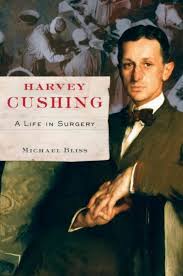
Pituitary adenomas are benign tumors of the pituitary gland which secrete increased amounts of ACTH, causing excessive cortisol production. Most patients have a single adenoma. First described in 1912 by neurosurgeon Harvey Cushing in his book The Pituitary Body and its Disorders, Cushing’s disease is the most common cause of spontaneous Cushing’s syndrome, accounting for 60 to 70 percent of cases.
If a person has Cushing’s disease, it means that a group of abnormal cells has built up in the pituitary gland to form an ACTH-producing pituitary tumor. These abnormal cells produce ACTH, just as normal pituitary gland cells do—only far too much. The excess ACTH travels to adrenal glands. The adrenal glands are then bombarded with signals to produce more and more cortisol. As a result, the adrenal glands continuously secrete too much cortisol.
Ectopic ACTH Syndrome
Some benign or malignant (cancerous) tumors that arise outside the pituitary can produce ACTH. This condition is known as ectopic ACTH syndrome. Lung tumors cause more than 50 percent of these cases. Other less common types of tumors that can produce ACTH are thymomas, pancreatic islet cell tumors, and medullary carcinomas of the thyroid.
Adrenal Tumors
An abnormality of the adrenal glands such as an adrenal tumor may cause Cushing’s syndrome. Most of these cases involve non-cancerous tumors called adrenal adenomas, which release excess cortisol into the blood.
Adrenocortical carcinomas, or adrenal cancers, are the least common cause of Cushing’s syndrome. Cancer cells secrete excess levels of several adrenal cortical hormones, including cortisol and adrenal androgens. Adrenocortical carcinomas often cause very high hormone levels and rapid onset of symptoms.
Familial Cushing’s syndrome
Most cases of Cushing’s syndrome are not genetic. However, some individuals may develop Cushing’s syndrome due to an inherited tendency to develop tumors of one or more endocrine glands. In Primary Pigmented Micronodular Adrenal Disease, children or young adults develop small cortisol-producing tumors of the adrenal glands. In Multiple Endocrine Neoplasia Type I (MEN I), hormone secreting tumors of the parathyroid glands, pancreas and pituitary occur. Cushing’s syndrome in MEN I may be due to pituitary, ectopic or adrenal tumors.
Risk factors
Obesity, type 2 diabetes, poorly controlled blood glucose (blood sugar levels), and high blood pressure may increase the risk of developing this disorder.
Jordy is a British man who has been dealing with Cushing’s and many surgeries.
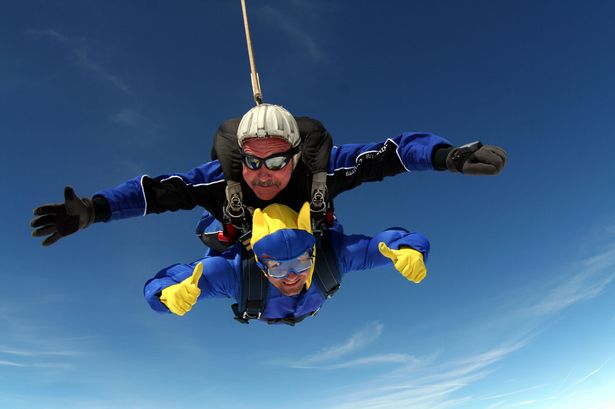
He finds rollercoasters boring, barely broke a sweat zip-wiring off the Tyne bridge and even a parachute jump did not raise his heart rate.
Just a few years ago even the thought of daredevil exploits would have terrified him, but now Jordy Cernik is frightened of nothing.
While that might sound an ideal scenario, the 38-year-old’s new-found bravery is actually the unexpected side-effect of surgery for a rare condition.
Cushing’s Syndrome resulted in the dad-of-two having an operation to remove the gland which produces adrenalin, the hormone which makes us feel scared.
He says: “I would never have had the guts to do any of this, but now nothing fazes me. I’m up for anything – I’m even thinking about doing a wing-walk on a plane too.
“I nearly did a bungee jump a few years ago, but I just couldn’t do it.
“Now I just take whatever is thrown at me and if a challenge helps me raise money for charity, the more daring the better.”
Over the past four months he has completed the parachute jump and zip-wired from the top of Newcastle’s Tyne Bridge and now he is getting ready to complete the last of a trio of challenges – next month’s Bupa Great North Run.
“The doctors didn’t tell me this could be one of the side-effects of the operation,” says Jordy. “But then the condition is so rare I don’t think they know everything about Cushing’s yet.
“Doing the skydive was the ultimate test. I thought that if I was ever going to get scared again then that would be the moment.
“But as we took off in the plane I felt nothing, and when I edged towards the door to jump I felt nothing, and even when I leapt out and pulled my parachute, I didn’t feel scared at all.
“It can be quite frustrating as well though.
“The first time I realised I had changed was when I went on the rides at a theme park with my kids and I just didn’t feel a thing. I just sat there, bored.”
However, the last of his hat-trick of challenges, the Run, will require him to push through the ever-present pain which he has endured for years as a result of Cushing’s.
Britain’s biggest mass participation event, for which The Daily Mirror is a media partner, takes place over a 13.1 mile course from Newcastle to South Shields.
But the syndrome has left Jordy, from Jarrow, near Newcastle, with arthritis, back problems and brittle bones. Worse still, the absence of adrenalin means he now lacks one of the body’s natural painkillers.
“I’m always in pain,” he says. “I’ve just had to learn to zone it out day-to-day and I’m going to have to do that even more when I’m on the run.”
Cushing’s affects around one in 50,000 people in Britain.
It causes a malfunction of the adrenal and pituitary glands which means increased amounts of corticosteroids are produced – often leading to massive, irregular weight gain.
In just three years 5ft 8in Jordy ballooned from 11st 5lb to almost 17st.
While his limbs remained slim, the former Territorial Army recruit saw the pounds pile around the major organs in his torso and head.
“I went through years of hell and I can only describe it as living in someone else’s body,” says the part-time radio presenter and events host.
“I developed this big round moon face and really quite large man boobs, which was so embarrassing.
“But there was absolutely nothing I could do about it. I could go to the gym six days a week and still couldn’t lose any of the weight.
“One of the worst things was that people would stare.
“Sometimes they’d take the mickey – often to try and make me feel better, by making light of things – but it would almost always hurt my feelings.
“And my career as a presenter suffered. I tried to play up to the character of being a big, jolly chap but I always felt I was too fat for TV, which is what I would have liked to do a lot more of.”
But it was the effect on his home life with wife Tracy, 43, and daughters Aimee, seven, and four-year-old Eive that for him was far worse.
“I had other really difficult symptoms which included profuse sweating which meant I couldn’t even hold my kids without wrapping them in towels first,” he says.
“Anyone who has children knows how hard that is, not to be able to do normal things. I often used to be in tears.
“Another symptom was extreme grumpiness, so I would find myself suddenly getting really angry and just exploding at them, plus I was always too exhausted to play with them. It was terrible.”
Jordy believes he can trace his symptoms back 15 years although his Cushing’s was only diagnosed in 2005.
He had visited his local surgery with a string of complaints, but by chance saw a different doctor one day and the syndrome was diagnosed.
“I don’t have any ill-feeling about that,” he says, “because the syndrome can be tricky to spot, partly because it is so rare.”
He went on to have both his pituitary and adrenal glands removed but needed a total of seven operations between 2005 and 2010 and not all went smoothly.
During one to remove his pituitary gland, which is inside the skull, the lining of his brain burst due to the stress of repeated surgery.
And while removing a rib to access the adrenal gland in his torso, his lung was punctured.
That wasn’t the end of the complications. He later developed severe meningitis and ended up on a life-support machine.
“But I still consider myself lucky,” he says. “The doctors told me, ‘You died twice really, you shouldn’t even be here’.”
Things have begun to look up in the past few years, however. The Cushing’s is in remission and Jordy has lost four stone.
His life hasn’t returned to normal entirely – he still has to take 30 pills a day, a cocktail of painkillers and hormones, plus drugs to slow the corrosion of his bones.
He has also been diagnosed with another rare condition, sarcoidosis, which creates nodules of irregular cells in the body and can cause serious complications. He’s convinced he has always had it but it has lain dormant until his body was at its most vulnerable.
At present the nodules can only be found on his skin and he’s being monitored to ensure that it doesn’t spread to his internal organs.
Thanks to the surgery, his life has improved enormously since 2010.
In July he had a breast reduction op which not only improved his appearance but also removed the dangerous accumulation of fat around his heart.
Part of this new chapter involves taking part in the Great North Run and raising money for the Cash for Kids appeal run by his local radio station Metro Radio.
The appeal aims to help children and young people in the North East who are disabled or have special needs, or those who suffer from abuse or neglect.
Jordy’s fundraising goal is a relatively modest £1,000, but for him joining the half marathon’s 56,000 participants on September 15 will be as rewarding as hitting his target.
“I really don’t know if I’ll be able to complete the course.” he says. “But I’m looking forward to it and I’m going to give it my best shot.
“Not feeling fear may feel like the power of a superhero, but what I really need for the Great North Run is superhero strength.”
The Bupa Great North Run is Britain’s biggest mass participation event and is organised by Nova International.
It will include world class athletes Mo Farah, Haile Gebrselassie and Kenenisa Bekele – plus 56,000 other runners.
The event is live on BBC One on Sunday 15th September between 9.30am to 13.30