Day 1: Cushing’s Awareness Challenge

April is always Cushing’s Awareness Challenge month because Dr. Harvey Cushing was born on April 8th, 1869.

30-posts

Thanks to Robin for this wonderful past logo!  I’ve participated in these 30 days for Cushing’s Awareness several times so I’m not quite sure what is left to say this year but I always want to get the word out when I can.

As I see it, there have been some strides the diagnosis or treatment of Cushing’s since last year.  More drug companies are getting involved, more doctors seem to be willing to test, a bit more awareness, maybe.


April Fool's Day

How fitting that this challenge should begin on April Fool’s Day.  So much of Cushing’s  Syndrome/Disease makes us Cushies seem like we’re the April Fool.  Maybe, just maybe, it’s the doctors who are the April Fools…

Doctors tell us Cushing’s is too rare – you couldn’t possibly have it.  April Fools!

All you have to do is exercise and diet.  You’ll feel better.  April Fools!

Those bruises on your legs?  You’re just clumsy. April Fools!

Sorry you’re growing all that hair on your chin.  That happens as you age, you know.  April Fools!

Did you say you sleep all day?  You’re just lazy.  If you exercised more, you’d have more energy. April Fools!

You don’t have stretch marks.  April Fools!

You have stretch marks but they are the wrong [color/length/direction] April Fools!

The hump on the back of your neck is from your poor posture. April Fools!

Your MRI didn’t show a tumor.  You couldn’t have Cushing’s. April Fools!

This is all in your mind.  Take this prescription for antidepressants and go home.  April Fools!

If you have this one surgery, your life will get back to normal within a few months. April Fools!

What?  You had transsphenoidal surgery for Cushing’s?  You wasted your time and money. April Fools!

I am the doctor.  I know everything.  Do not try to find out any information online. You could not have Cushing’s.  It’s too rare…  April FOOL!

All this reminds me of a wonderful video a message board member posted a while ago:

So now – who is the April Fool?  It wasn’t me.  Don’t let it be you, either!

Think Like a Doctor: Red Herrings Solved!

By LISA SANDERS, M.D.

On Thursday we challenged Well readers to take the case of a 29-year-old woman with an injured groin, a swollen foot and other abnormalities. Many of you found it as challenging as the doctors who saw her. I asked for the right test as well as the right diagnosis. More than 200 answers were posted.

The right test was…

The dexamethasone suppression test,though I counted those of you who suggested measuring the cortisol in the urine.

The right diagnosis was…

Cushing’s disease

More than a dozen of you got the right answer or the right test, but Dr. Davin Quinn, a consultant psychiatrist at the University of New Mexico Hospital, was the first to be right on both counts. As soon as he saw that the patient’s cortisol level was increased, he thought of Cushing’s. And he had treated a young patient like this one some years ago as a second year resident.

The Diagnosis:

Cushing’s disease is caused by having too much of the stress hormone cortisol in the body. Cortisol is made in the adrenal glands, little pyramid shaped organs that sit atop the kidneys. It is normally a very tightly regulated hormone that helps the body respond to physical stress.

Sometimes the excess comes from a tumor in the adrenal gland itself that causes the little organ to go into overdrive, making too much cortisol. More often the excess occurs when a tumor in the pituitary gland in the brain results in too much ACTH, the hormone that controls the adrenal gland.

In the body, cortisol’s most fundamental job is to make sure we have enough glucose around to get the body’s work done. To that end, the hormone drives appetite, so that enough fuel is taken in through the food we eat. When needed, it can break muscle down into glucose. This essential function accounts for the most common symptoms of cortisol excess: hyperglycemia, weight gain and muscle wasting. However, cortisol has many functions in the body, and so an excess of the hormone can manifest itself in many different ways.

Cushing’s was first described by Dr. Harvey Cushing, a surgeon often considered the father of modern neurosurgery. In a case report in 1912, he described a 23-year-old woman with sudden weight gain, mostly in the abdomen; stretch marks from skin too thin and delicate to accommodate the excess girth; easy bruising; high blood pressure and diabetes.

Dr. Cushing’s case was, it turns out, a classic presentation of the illness. It wasn’t until 20 years later that he recognized that the disease had two forms. When it is a primary problem of an adrenal gland gone wild and producing too much cortisol on its own, the disease is known as Cushing’s syndrome. When the problem results from an overgrown part of the pituitary making too much ACTH and causing the completely normal adrenal glands to overproduce the hormone, the illness is called Cushing’s disease.

It was an important distinction, since the treatment often requires a surgical resection of the body part where the problem originates. Cushing’s syndrome can also be caused by steroid-containing medications, which are frequently used to treat certain pulmonary and autoimmune diseases.

How the Diagnosis Was Made:

After the young woman got her lab results from Dr. Becky Miller, the hematologist she had been referred to after seeing several other specialists, the patient started reading up on the abnormalities that had been found. And based on what she found on the Internet, she had an idea of what was going on with her body.

“I think I have Cushing’s disease,” the patient told her endocrinologist when she saw him again a few weeks later.

The patient laid out her argument. In Cushing’s, the body puts out too much cortisol, one of the fight-or-flight stress hormones. That would explain her high blood pressure. Just about everyone with Cushing’s disease has high blood pressure.

She had other symptoms of Cushing’s, too. She bruised easily. And she’d been waking up crazy early in the morning for the past year or so – around 4:30 – and couldn’t get back to sleep. She’d heard that too much cortisol could cause that as well. She was losing muscle mass – she used to have well-defined muscles in her thighs and calves. Not any more. Her belly – it wasn’t huge, but it was a lot bigger than it had been. Cushing’s seemed the obvious diagnosis.

The doctor was skeptical. He had seen Cushing’s before, and this patient didn’t match the typical pattern. She was the right age for Cushing’s and she had high blood pressure, but nothing else seemed to fit. She wasn’t obese. Indeed, she was tall (5- foot-10) and slim (150 pounds) and athletic looking. She didn’t have stretch marks; she didn’t have diabetes. She said she bruised easily, but the endocrinologist saw no bruises on exam. Her ankle was still swollen, and Cushing’s can do that, but so can lots of other diseases.

The blood tests that Dr. Miller ordered measuring the patient’s ACTH and cortisol levels were suggestive of the disease, but many common problems — depression, alcohol use, eating disorders — can cause the same result. Still, it was worth taking the next step: a dexamethasone suppression test.

Testing, Then Treatment:

The dexamethasone suppression test depends on a natural negative feedback loop whereby high levels of cortisol suppress further secretion of the hormone. Dexamethasone is an artificial form of cortisol. Given in high doses, it will cause the level of naturally-occurring cortisol to drop dramatically.

The patient was told to take the dexamethasone pills the night before having her blood tested. The doctor called her the next day.

“Are you sure you took the pills I gave you last night?” the endocrinologist asked her over the phone. The doctor’s voice sounded a little sharp to the young woman, tinged with a hint of accusation.

“Of course I took them,” she responded, trying to keep her voice clear of any irritation.

“Well, the results are crazy,” he told her and proposed she take another test: a 24-hour urine test.

Because cortisol is eliminated through the kidneys, collecting a full day’s urine would show how much cortisol her body was making. So the patient carefully collected a day’s worth of urine.

A few days later, the endocrinologist called again: her cortisol level was shockingly high. She was right, the doctor conceded, she really did have Cushing’s.

An M.R.I. scan revealed a tiny tumor on her pituitary. A couple of months later, she had surgery to remove the affected part of the gland.

After recovering from the surgery, the patient’s blood pressure returned to normal, as did her red blood cell count and her persistently swollen ankle. And she was able to once again sleep through the night.

Red Herrings Everywhere:

As many readers noted, there were lots of findings that didn’t really add up in this case. Was this woman’s groin sprain part of the Cushing’s? What about the lower extremity swelling, and the excess red blood cell count?

In the medical literature, there is a single case report of high red blood cell counts as the presenting symptom in a patient with Cushing’s. And with this patient, the problem resolved after her surgery – so maybe they were linked.

And what about the weird bone marrow biopsy? The gastritis? The enlarged spleen? It’s hard to say for certain if any of these problems was a result of the excess cortisol or if she just happened to have other medical problems.

Why the patient didn’t have the typical symptoms of Cushing’s is easier to explain. She was very early in the course of the disease when she got her diagnosis. Most patients are diagnosed once symptoms have become more prominent

By the time this patient had her surgery, a couple of months later, the round face and belly characteristic of cortisol excess were present. Now, two years after her surgery, none of the symptoms remain.

From http://well.blogs.nytimes.com/2014/01/17/think-like-a-doctor-red-herrings-solved/?_php=true&_type=blogs&_r=0

Iatrogenic Cushing’s Syndrome and the Hidden Ingredient of Artri King

Abstract

Cushing’s syndrome is a rare disorder caused by prolonged exposure to glucocorticoids, either from endogenous overproduction or exogenous sources, with exogenous steroid use being the most common etiology. Clinical manifestations may include moon facies, abdominal striae, easy bruising, muscle weakness, and complications such as osteoporosis and fragility fractures. Many remedies and supplements marketed for inflammatory conditions are sold online or over the counter, and some may contain hidden or undisclosed steroids that can lead to hypercortisolism. We present a case of a 52-year-old man with osteoporosis who sustained fragility fractures and became wheelchair-bound due to progressive lower extremity weakness. Evaluation demonstrated suppression of the hypothalamic-pituitary-adrenal axis, with undetectable salivary and urinary cortisol levels. Further investigation revealed long-term use of Artri King, a supplement for musculoskeletal pain that contains undisclosed glucocorticoids. This case highlights the risk of unregulated supplements causing iatrogenic Cushing’s syndrome and its associated complications.

Introduction

Cushing’s syndrome represents a constellation of signs and symptoms resulting from prolonged exposure to glucocorticoids [1]. Common manifestations may include moon facies, facial plethora, abdominal striae, easy bruising, and proximal muscle weakness [1]. Etiologies may be adrenocorticotropic hormone (ACTH)-dependent, originating from pituitary or ectopic sources, or ACTH-independent, such as adrenal pathology. In everyday clinical practice, however, exogenous glucocorticoid exposure remains the most common cause [2,3].

Exogenous steroids are available in multiple formulations, including oral, parenteral, inhaled, and topical preparations, and may be prescribed by healthcare providers or found in commercial products sold online or over the counter [4]. Prolonged exposure can result in hypercortisolism and its associated complications [5]. Therefore, careful assessment for exogenous steroid use is essential when evaluating patients with suspected Cushing’s syndrome. We report a case of iatrogenic Cushing’s syndrome secondary to the use of Artri King, a “herbal” supplement containing undisclosed glucocorticoids.

Case Presentation

A 52-year-old male with a history of prediabetes presented with osteoporosis and fragility fractures. Osteoporosis was diagnosed during imaging performed for the evaluation of back pain, which revealed thoracic spine compression fractures as well as a healed rib fracture. As a result, he became wheelchair-bound due to progressive lower extremity weakness. The patient denied prior trauma and had no family history of osteoporosis or pathologic fractures. He denied the use of steroids, proton pump inhibitors, anticoagulants, or antiseizure medications. He did not smoke and reported no alcohol use. There was no history of hypogonadism, bone disease, or fractures during childhood. Biochemical evaluation revealed a normal complete blood count, with pertinent laboratory results summarized in Table 1.

Laboratory test Value Units Reference range
Total testosterone 415 ng/dL 264–916
Intact parathyroid hormone 9.4 pg/mL 8.7–77.1
Corrected serum calcium 9.6 mg/dL 8.6–10.3
24-hour urine calcium 144 mg/24 hours 100–300*
Plasma adrenocorticotropic hormone Undetectable pg/mL 7–63*
Late-night salivary cortisol Undetectable µg/dL ≤0.09*
24-hour urine free cortisol Undetectable µg/24 hours 10–50*
Table 1: Biochemical laboratory results.

*: Reference intervals may vary by assay method and laboratory.

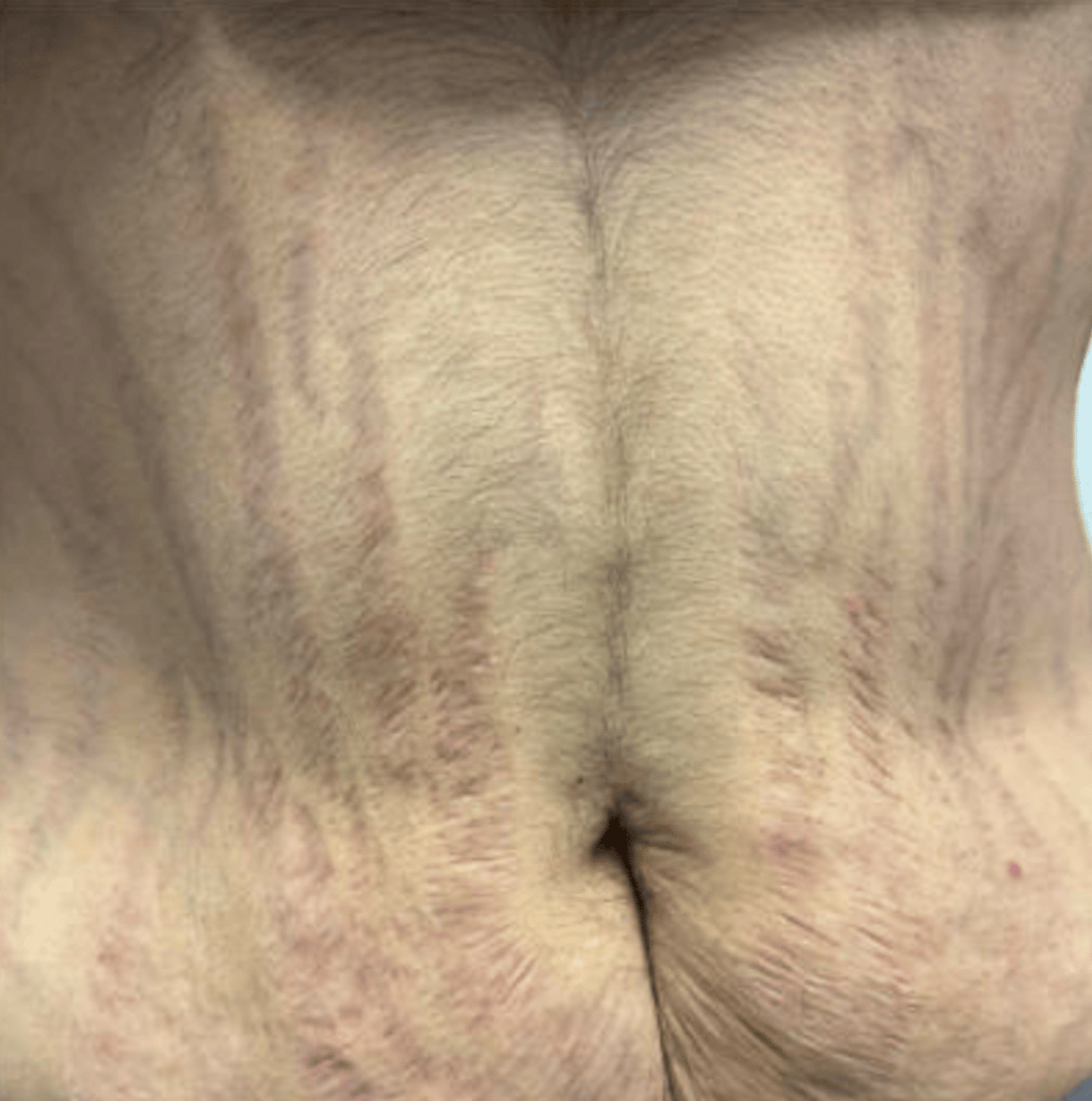
Given the presence of fragility fractures and physical examination findings consistent with Cushing’s syndrome, including moon facies, dorsocervical and supraclavicular fat fullness, and purplish striae (Figure 1), further evaluation was pursued. Laboratory testing demonstrated an undetectable serum ACTH level, and both late-night salivary cortisol and 24-hour urinary free cortisol levels were undetectable, raising concern for exogenous glucocorticoid exposure (Table 1). Dual-energy X-ray absorptiometry demonstrated a spinal bone mineral density of 0.686 g/cm² with a T-score of −3.7.

Purplish-(violaceous)-abdominal-striae-over-the-abdomen.
Figure 1: Purplish (violaceous) abdominal striae over the abdomen.

On further questioning, the patient reported taking Artri King for two years, obtained from Mexico, for joint pain and arthritis. A review of U.S. Food and Drug Administration (FDA) reports confirmed that Artri King contains hidden ingredients, including dexamethasone, not listed on its label. The supplement was discontinued, and the patient was started on a gradual steroid taper to minimize glucocorticoid withdrawal symptoms and allow for the recovery of hypothalamic-pituitary-adrenal (HPA) axis function.

Discussion

Cushing’s syndrome is a rare disorder characterized by a constellation of signs and symptoms affecting multiple organ systems as a result of prolonged exposure to excess cortisol. Hypercortisolism may result from endogenous overproduction of cortisol or from exposure to exogenous glucocorticoids [1]. Regardless of etiology, clinical manifestations commonly include moon facies, abdominal striae, truncal obesity, and easy bruising [1]. Patients with Cushing’s syndrome may also develop complications such as hyperglycemia, uncontrolled hypertension, proximal muscle weakness, and reduced BMD, which can lead to fragility fractures [2]. These complications significantly impair quality of life and may be fatal if the condition is not diagnosed and treated promptly [3].

Endogenous hypercortisolism is less common, with an estimated incidence of 2-3 cases per million per year [4]. However, recent studies suggest a higher prevalence among individuals with diabetes mellitus, osteoporosis, particularly those with fragility fractures, and hypertension [5]. Cushing’s syndrome can be classified as ACTH-dependent, in which ACTH originates from the pituitary gland or an ectopic source, or ACTH-independent, typically due to adrenal adenoma, adrenal hyperplasia, or adrenal carcinoma [5]. Although exogenous glucocorticoid exposure is the most common cause of Cushing’s syndrome, the true incidence of iatrogenic Cushing’s syndrome remains unknown [6]. Rarely, Cushing’s syndrome may result from concurrent exogenous steroid use and endogenous cortisol overproduction, which presents diagnostic challenges [6].

Glucocorticoid-containing medications are widely used in the management of inflammatory diseases, malignancies, and post-transplant care [7,8]. All forms of exogenous glucocorticoids, including oral, inhaled, injectable, and topical preparations, can cause features of hypercortisolism when used at high doses or for prolonged periods [9-12]. Extended exposure, particularly at higher doses, may also result in secondary adrenal insufficiency, even with topical formulations [13]. In addition to conventional glucocorticoids, other medications may induce iatrogenic hypercortisolism; for example, high-dose megestrol exhibits glucocorticoid-like activity and can produce Cushing’s syndrome-like features [14]. Furthermore, drugs that inhibit cytochrome P450 metabolism, such as itraconazole, can impair steroid clearance and increase systemic glucocorticoid exposure [15].

Of increasing concern is the availability of steroid-containing supplements sold over the counter or online without prescription [16]. These products are commonly marketed for conditions such as arthritis and other inflammatory disorders [16]. Prolonged use may cause Cushing’s syndrome with complications such as skin atrophy, obesity, myopathy, and fractures. The U.S. FDA has issued multiple warnings regarding dietary supplements and conventional foods found to contain undisclosed pharmaceutical ingredients [17]. A 2016 study evaluating 12 over-the-counter “adrenal support” supplements in the United States found that most contained at least one steroid hormone [18]. Another analysis of FDA warnings on unapproved pharmaceutical ingredients reported that 37.5% of products marketed for inflammatory conditions, including joint and muscle pain, contained dexamethasone [19]. Among these products, Artri King, marketed for joint pain and arthritis, has been associated with multiple FDA reports of adverse events due to undisclosed dexamethasone and methylprednisolone. These supplements remain widely available online, in select retail stores, and internationally [20].

Conclusions

This case highlights the importance of considering unregulated supplements as a potential source of exogenous glucocorticoids in patients presenting with osteoporosis and unexplained fragility fractures. Although the patient initially denied steroid use, detailed history revealed prolonged exposure to Artri King, resulting in iatrogenic Cushing’s syndrome with HPA axis suppression. Before discontinuation of steroid-containing supplements, evaluation for adrenal insufficiency is essential. Gradual tapering of glucocorticoids remains the standard approach to prevent withdrawal symptoms and support recovery of adrenal function.

References

  1. Nieman LK: Recent updates on the diagnosis and management of Cushing’s syndrome. Endocrinol Metab (Seoul). 2018, 33:139-46. 10.3803/EnM.2018.33.2.139
  2. Dunn C, Amaya J, Green P: A case of iatrogenic Cushing’s syndrome following use of an over-the-counter arthritis supplement. Case Rep Endocrinol. 2023, 2023:4769258. 10.1155/2023/4769258
  3. Castinetti F, Morange I, Conte-Devolx B, Brue T: Cushing’s disease. Orphanet J Rare Dis. 2012, 7:41. 10.1186/1750-1172-7-41
  4. Nieman LK, Biller BM, Findling JW, Newell-Price J, Savage MO, Stewart PM, Montori VM: The diagnosis of Cushing’s syndrome: an Endocrine Society Clinical Practice Guideline. J Clin Endocrinol Metab. 2008, 93:1526-40. 10.1210/jc.2008-0125
  5. Manubolu S, Nwosu O: Exogenous Cushing’s syndrome secondary to intermittent high dose oral prednisone for presumed asthma exacerbations in the setting of multiple emergency department visits. J Clin Transl Endocrinol Case Rep. 2017, 6:4-8. 10.1016/j.jecr.2017.07.001
  6. Tong CV, Rajoo S: Co-occurrence of exogenous and endogenous Cushing’s syndromes-dilemma in diagnosis. Case Rep Endocrinol. 2019, 2019:2986312. 10.1155/2019/2986312
  7. Broersen LH, Pereira AM, Jørgensen JO, Dekkers OM: Adrenal insufficiency in corticosteroids use: systematic review and meta-analysis. J Clin Endocrinol Metab. 2015, 100:2171-80. 10.1210/jc.2015-1218
  8. Yasir M, Goyal A, Sonthalia S: Corticosteroid Adverse Effects. StatPearls Publishing, Treasure Island, FL; 2025.
  9. Dow A, Yu R, Carmichael J: Too little or too much corticosteroid? Coexisting adrenal insufficiency and Cushing’s syndrome from chronic, intermittent use of intranasal betamethasone. Endocrinol Diabetes Metab Case Rep. 2013, 2013:130036. 10.1530/EDM-13-0036
  10. Hopkins RL, Leinung MC: Exogenous Cushing’s syndrome and glucocorticoid withdrawal. Endocrinol Metab Clin North Am. 2005, 34:371-84, ix. 10.1016/j.ecl.2005.01.013
  11. Hughes JM, Hichens M, Booze GW, Thorner MO: Cushing’s syndrome from the therapeutic use of intramuscular dexamethasone acetate. Arch Intern Med. 1986, 146:1848-9.
  12. Weber SL: Cushing’S syndrome attributable to topical use of lotrisone. Endocr Pract. 1997, 3:140-4. 10.4158/EP.3.3.140
  13. Pektas SD, Dogan G, Cinar N: Iatrogenic Cushing’s syndrome with subsequent adrenal insufficiency in a patient with psoriasis vulgaris using topical steroids. Case Rep Endocrinol. 2017, 2017:8320254. 10.1155/2017/8320254
  14. Steer KA, Kurtz AB, Honour JW: Megestrol-induced Cushing’s syndrome. Clin Endocrinol (Oxf). 1995, 42:91-3. 10.1111/j.1365-2265.1995.tb02603.x
  15. Bolland MJ, Bagg W, Thomas MG, Lucas JA, Ticehurst R, Black PN: Cushing’s syndrome due to interaction between inhaled corticosteroids and itraconazole. Ann Pharmacother. 2004, 38:46-9. 10.1345/aph.1D222
  16. Saad-Omer SM, Kinaan M, Matos M, Yau H: Exogenous Cushing syndrome and hip fracture due to over-the-counter supplement (Artri King). Cureus. 2023, 15:e41278. 10.7759/cureus.41278
  17. Patel R, Sherf S, Lai NB, Yu R: Exogenous Cushing syndrome caused by a “herbal” supplement. AACE Clin Case Rep. 2022, 8:239-42. 10.1016/j.aace.2022.08.001
  18. Akturk HK, Chindris AM, Hines JM, Singh RJ, Bernet VJ: Over-the-counter “adrenal support” supplements contain thyroid and steroid-based adrenal hormones. Mayo Clin Proc. 2018, 93:284-90. 10.1016/j.mayocp.2017.10.019
  19. Tucker J, Fischer T, Upjohn L, Mazzera D, Kumar M: Unapproved pharmaceutical ingredients included in dietary supplements associated with US Food and Drug Administration warnings. JAMA Netw Open. 2018, 1:e183337. 10.1001/jamanetworkopen.2018.3337
  20. U.S. Food and Drug Administration. Public Notification: Artri King contains hidden drug ingredients. (2022). Accessed: December 18, 2025: https://www.fda.gov/drugs/medication-health-fraud/public-notification-artri-king-contains-hidden-drug-ingredients.

https://www.cureus.com/articles/451949-iatrogenic-cushings-syndrome-and-the-hidden-ingredient-of-artri-king#!/

You Know You’re Chronically Ill When You…

…have a pajama collection.

…call the pharmacist and she recognizes your voice before you tell her what it is.

…are psyched to get a computer table tray for sitting in bed as a gift.

…find out that you can order a three month supply of meds online and you think it’s great.

…share and discuss journal articles with your doctor.

…have an inbox full of emails all from people with your disease or related to your disease.

…get updates from MedScape.

…set up your pills a month ahead of time in pill holders.

…have pill stashes in your car, purse, backpack, etc.

MaryO’Updates:

…have Dr F, Dr L and/or Dr IMMC on speed dial.

…bought a case of sharps containers on eBay.

…have a hospital bag always ready to go.

…have a “Got Hump” tattoo

…share pictures online of your stretch marks like they were badges of honor

…you know why there’s a zebra in my avatar

MaryOZebra

MaryO’Zebra

Added by Facebook friends:

…know approximately how much your urine output is in mL’s before you go because you’ve measured it so often before.

…When a specialists at a leading university hospital tells you “you are too complicated”.

…when multiple specialists at multiple leading hospitals tell you your case is complicated! (had to add to that!)

…when you only know the day of the week by your pill container!!

…when you get to park in the handicap spots and you’re only 25 years old!!

…you know to tell the person who’s drawing your blood to ice and centrofuge your vile for the ACTH test!!

…you can’t make plans beyond the next hour because you don’t know how sick you’ll feel!!

…when the most excitement you’ve had in a month is your drs appt! And you’re looking forward to your next appt so you can get out of the house!!

…When the people who work in the lab great you like Norm on Cheers when you arrive.

…When you know which vein is the “sweet vein.”

Feel free to add your own! 🙂

Changing face of Cushing’s Disease Over Three Decades in Pituitary Center

Abstract

Objective

Cushing Disease (CD) presents with typical clinical findings, even though, there is a wide spectrum of manifestations. Over the years, the sings and symptoms of Cushing’s syndrome (CS) have become more subtle and atypical forms of CS have emerged. In this study, we aimed to investigate the changes in the clinical presentation of CD in recent years.

Materials and methods

In this study, CD patients followed by our center were examined. A total of 258 patients with CD were included in the study. The clinical findings at the time of presentation, laboratory and imaging findings, treatment modalities and remission status in the first year after treatment were evaluated.

Results

The mean age of the patients included in the study was 41.3 ±13.28 years. CD patients diagnosed between 2013 and 2023 were older than those diagnosed between 1990 and 2012 (p < 0.001). There was no difference between the groups in terms of gender. Moon face, purple striae, hirsutism, and menstrual irregularities were statistically significantly less frequent in the last 10 years than in previous years (p < 0.001; p = 0.004; p < 0.001; p < 0.001, respectively). In addition, patients who applied after 2013 had lower baseline cortisol and adrenocorticotropic hormone (ACTH) levels, and a smaller median size of the pituitary adenoma. Limitations of the study include its retrospective design and the subjectivity of clinical data.

Conclusion

As the clinical presentation of Cushing’s disease changes over time, waiting for the typical Cushing’s clinic can delay diagnosis. It is important that clinicians take this into account when they suspect CD.

 This is a preview of subscription content, log in via an institution  to check access.