Day 7, Cushing’s Awareness Challenge

sunday-glitter

It’s Sunday again, so this is another semi-religious post so feel free to skip it 🙂

I’m sure that many would think that Abide With Me is a pretty strange choice for my all-time favorite hymn.

My dad was a Congregational (now United Church of Christ) minister so I was pretty regular in church attendance in my younger years.

Some Sunday evenings, he would preach on a circuit and I’d go with him to some of these tiny churches.  The people there, mostly older folks, liked the old hymns best – Fanny Crosby and so on.

So, some of my “favorite hymns” are those that I sang when I was out with my Dad.  Fond memories from long ago.

In 1986 I was finally diagnosed with Cushing’s after struggling with doctors and trying to get them to test for about 5 years.  I was going to go into the NIH (National Institutes of Health) in Bethesda, MD for final testing and then-experimental pituitary surgery.

I was terrified and sure that I wouldn’t survive the surgery.

Somehow, I found a 3-cassette tape set of Readers Digest Hymns and Songs of Inspiration and ordered that. The set came just before I went to NIH and I had it with me.

At NIH I set up a daily “routine” of sorts and listening to these tapes was a very important part of my day and helped me get through the ordeal of more testing, surgery, post-op and more.

When I had my kidney cancer surgery, those tapes were long broken and irreplaceable, but I had replaced all the songs – this time on my iPod.

Abide With Me was on this original tape set and it remains a favorite to this day.  Whenever we have an opportunity in church to pick a favorite, my hand always shoots up and I request page 700.  When someone in one of my handbell groups moves away, we always sign a hymnbook and give it to them.  I sign page 700.

I think that many people would probably think that this hymn is depressing.  Maybe it is but to me it signifies times in my life when I thought I might die and I was so comforted by the sentiments here.

This hymn is often associated with funeral services and has given hope and comfort to so many over the years – me included.

If you abide in Me, and My words abide in you, you will ask what you desire, and it shall be done for you.

~John 15:7

Abide With Me

Words: Henry F. Lyte, 1847.

Music: Eventide, William H. Monk, 1861. Mrs. Monk described the setting:

This tune was written at a time of great sorrow—when together we watched, as we did daily, the glories of the setting sun. As the last golden ray faded, he took some paper and penciled that tune which has gone all over the earth.

Lyte was inspired to write this hymn as he was dying of tuberculosis; he finished it the Sunday he gave his farewell sermon in the parish he served so many years. The next day, he left for Italy to regain his health. He didn’t make it, though—he died in Nice, France, three weeks after writing these words. Here is an excerpt from his farewell sermon:

O brethren, I stand here among you today, as alive from the dead, if I may hope to impress it upon you, and induce you to prepare for that solemn hour which must come to all, by a timely acquaintance with the death of Christ.

For over a century, the bells of his church at All Saints in Lower Brixham, Devonshire, have rung out “Abide with Me” daily. The hymn was sung at the wedding of King George VI, at the wedding of his daughter, the future Queen Elizabeth II, and at the funeral of Nobel peace prize winner Mother Teresa of Calcutta in1997.

Abide with me; fast falls the eventide;

The darkness deepens; Lord with me abide.

When other helpers fail and comforts flee,

Help of the helpless, O abide with me.

Swift to its close ebbs out life’s little day;

Earth’s joys grow dim; its glories pass away;

Change and decay in all around I see;

O Thou who changest not, abide with me.

Not a brief glance I beg, a passing word;

But as Thou dwell’st with Thy disciples, Lord,

Familiar, condescending, patient, free.

Come not to sojourn, but abide with me.

Come not in terrors, as the King of kings,

But kind and good, with healing in Thy wings,

Tears for all woes, a heart for every plea—

Come, Friend of sinners, and thus bide with me.

Thou on my head in early youth didst smile;

And, though rebellious and perverse meanwhile,

Thou hast not left me, oft as I left Thee,

On to the close, O Lord, abide with me.

I need Thy presence every passing hour.

What but Thy grace can foil the tempter’s power?

Who, like Thyself, my guide and stay can be?

Through cloud and sunshine, Lord, abide with me.

I fear no foe, with Thee at hand to bless;

Ills have no weight, and tears no bitterness.

Where is death’s sting? Where, grave, thy victory?

I triumph still, if Thou abide with me.

Hold Thou Thy cross before my closing eyes;

Shine through the gloom and point me to the skies.

Heaven’s morning breaks, and earth’s vain shadows flee;

In life, in death, O Lord, abide with me.

Day 6: Cushing’s Awareness Challenge

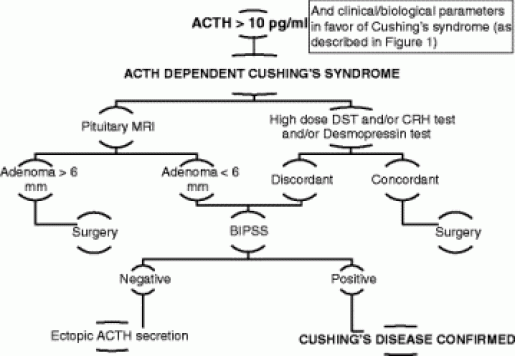
cushings-diagnosis.gif?resize=515%2C356

The above is the official Cushing’s path to a diagnosis but here’s how it seems to be in real life:

Egads!  I remember the naive, simple days when I thought I’d give them a tube or two of blood and they’d tell me I had Cushing’s for sure.

Who knew that diagnosing Cushing’s would be years of testing, weeks of collecting every drop of urine, countless blood tests, many CT and MRI scans…

Then going to NIH, repeating all the above over 6 weeks inpatient plus an IPSS test, an apheresis (this was experimental at NIH) and specialty blood tests…

The path to a Cushing’s diagnosis is a long and arduous one but you have to stick with it if you believe you have this Syndrome.

stick-with-it.jpeg?resize=575%2C87&ssl=1

maryo-blue.gif?resize=228%2C70&ssl=1

PET/MRI may improve diagnosis of Cushing disease

PET/MRI could become the diagnostic method of choice over MRI alone for identifying small pituitary tumors associated with Cushing disease, according to a study published March 21 in the Journal of Nuclear Medicine.

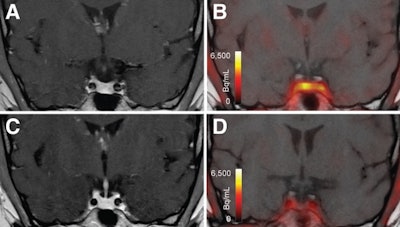
In patients diagnosed with the disease yet who had inconclusive MRI results, PET/MRI was positive in 100% of cases, noted lead author Ilanah Pruis, a doctoral student at Erasmus University Medical Center in Rotterdam, Netherlands.

“This multimodal imaging technique provides a welcome improvement for diagnosis, planning of surgery, and clinical outcome in patients with Cushing disease,” the authors wrote.

Cushing disease is characterized by small tumors in pituitary glands, which causes them to secrete excess cortisol, the authors explained. While it is a rare disease, over time it can cause severely disabling conditions, such as high blood pressure or type II diabetes.

Currently, guidelines recommend the use of MRI and inferior petrosal sinus sampling (IPSS) to diagnose these tumors. IPSS is an invasive procedure in which cortisol hormone levels are sampled from the veins that drain the pituitary gland.

In up to 40% of patients, however, MRI is inconclusive, as the lesions are smaller than 10 millimeters in diameter. Even advanced MRI techniques, such as dynamic perfusion imaging, can leave small lesions undetected in up to one third of patients, the authors noted.

In preclinical work, PET imaging using a radiotracer named F-18 FET has been shown to bind with high affinity to a molecular target in pituitary tumors, and in this study, the researchers aimed to test this technique combined with MRI in a multimodal approach.

The researchers analyzed results from 22 patients (68% women; mean age 48 years) who underwent F-18 FET PET/MRI at Erasmus MC between February 2021 and December 2022. All patients showed a clear pituitary tumor F-18 FET-PET/MRI, whereas reading of the MRI alone yielded a suspected lesion in only 50%, the authors found.

T1-weighted postgadolinium MR images (A and C) and F-18 FET-PET/MR images (B and D) centered at pituitary before (A and B) and after (C and D) transsphenoidal surgery. This patient with Cushing disease showed clear focal uptake (B) but no clear lesion on previously obtained and accompanying MRI (A). Postoperative tissue analysis did confirm resection of small pituitary adenoma/PitNET, and postoperative F-18 FET-PET showed no residual uptake (D). Image courtesy of the Journal of Nuclear Medicine.T1-weighted postgadolinium MR images (A and C) and F-18 FET-PET/MR images (B and D) centered at pituitary before (A and B) and after (C and D) transsphenoidal surgery. This patient with Cushing disease showed clear focal uptake (B) but no clear lesion on previously obtained and accompanying MRI (A). Postoperative tissue analysis did confirm resection of small pituitary adenoma/PitNET, and postoperative F-18 FET-PET showed no residual uptake (D). Image courtesy of the Journal of Nuclear Medicine.

Importantly, 16 patients underwent treatment based on the results — either surgery, Gamma Knife, or CyberKnife therapy — with 12 of these patients achieving short-term remission, the authors noted.

“[F-18 FET-PET/MRI] is of great clinical value because it allows precision surgery and targeted Gamma Knife or CyberKnife therapy,” the group wrote.

The researchers noted that only one previous study evaluated F-18 FET-PET/MRI in these patients and that their study was limited, given the relatively small number of patients.

“Future studies will be directed at head-to-head comparisons of the performance of F-18 FET- PET and other diagnostic techniques, including advanced MRI sequences… preferably in patients at the time of initial clinical presentation,” the authors concluded.

A link to the full study can be found here.

From https://www.auntminnie.com/clinical-news/molecular-imaging/article/15667496/petmri-may-improve-diagnosis-of-cushing-disease

Day 5, Cushing’s Awareness Challenge

In Day 9 on April 9, 2015, I wrote about how we got the Cushing’s colors of blue and yellow.  This post is going to be about the first Cushing’s ribbons.

I was on vacation  in September, 2001 when SuziQ called me to let me know that we had had our first Cushie casualty (that we knew about).

On the message boards, Lorrie wrote: Our dear friend, Janice died this past Tuesday, September 4, 2001. I received an IM from her best friend Janine, tonight. Janine had been reading the boards, as Janice had told her about this site, and she came upon my name and decided to IM me. I am grateful that she did. She said that she knew that Janice would want all of us to know that she didn’t just stop posting.

For all of the newcomers to the board that did not know Janice, she was a very caring individual. She always had something positive to say. Janice was 36 years old, was married and had no children. She had a miscarriage in December and began to have symptoms of Cushing’s during that pregnancy. After the pregnancy, she continued to have symptoms. When discussing this with her doctor, she was told that her symptoms were just related to her D&C. She did not buy this and continued until she received the accurate diagnosis of Cushing’s Syndrome (adrenal) in March of 2001. Tragically, Janice’s tumor was cancerous, a very rare form of Cushing’s.

Janice then had her tumor and adrenal gland removed by open adrenalectomy, a few months ago. She then began chemotherapy. She was very brave through this even though she experienced severe side effects, including weakness and dizziness. She continued to post on this board at times and even though she was going through so much, she continued with a positive attitude. She even gave me a referral to a doctor a few weeks ago. She was my inspiration. Whenever I thought I had it bad, I thought of what she was dealing with, and I gained more perspective.

Janice was having difficulty with low potassium levels and difficulty breathing. She was admitted to the hospital, a CT scan was done and showed tumor metastasis to the lungs. She then was begun on a more aggressive regimen of chemo. She was discharged and apparently seemed to be doing well.

The potassium then began to drop again, she spiked a temp and she was again admitted to the hospital. She improved and was set to be discharged and then she threw a blood clot into her lungs. She was required to be put on a ventilator. She apparently was at high risk for a heart attack. Her husband did not want her to suffer anymore and did not want her to suffer the pain of a heart attack and so chose for the doctors to discontinue the ventilator on Tuesday. She died shortly thereafter.

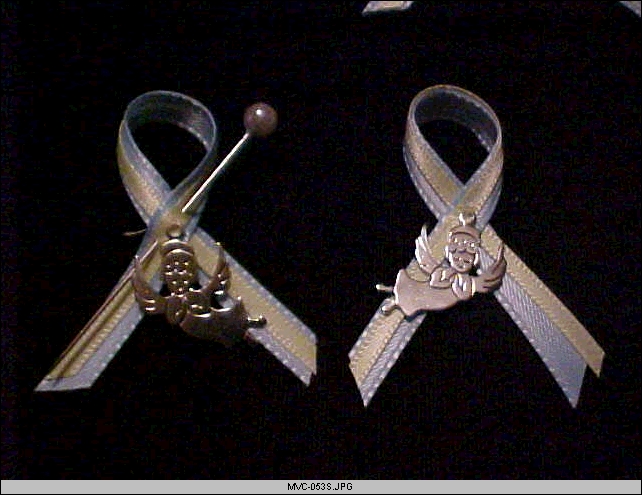
Janice was our friend. She was a Cushie sister. I will always remember her. Janine asked me to let her know when we get the Cushing’s ribbons made as she and the rest of Janice’s family would like to wear them in her memory. She said that Janice would want to do anything she could to make others more aware of Cushing’s.

The image at the top of the page shows the first blue and yellow ribbon which were worn at Janice’s funeral.  When we had our “official ribbons” made, we sent several to Janice’s family.

Janice was the first of us to die but there have been more, way too many more, over the years.  I’ll write a bit more about that on Day 21.

Day 4, Cushing’s Awareness Challenge

This is one of the suggestions from the Cushing’s Awareness Challenge post:

“Give yourself, your condition, or your health focus a mascot. Is it a real person? Fictional? Mythical being? Describe them. Bonus points if you provide a visual!”


Our “Official mascot” is the zebra.

Our mascot

Our mascot

In med school, student doctors are told “When you hear hoofbeats, think horses, not zebras“.

According to Wikipedia: “Zebra is a medical slang term for a surprising diagnosis. Although rare diseases are, in general, surprising when they are encountered, other diseases can be surprising in a particular person and time, and so “zebra” is the broader concept.

The term derives from the aphorism ‘When you hear hoofbeats behind you, don’t expect to see a zebra’, which was coined in a slightly modified form in the late 1940s by Dr. Theodore Woodward, a former professor at the University of Maryland School of Medicine in Baltimore.  Since horses are the most commonly encountered hoofed animal and zebras are very rare, logically you could confidently guess that the animal making the hoofbeats is probably a horse.

zebra-mug

A zebra cup my DH bought me 🙂

By 1960, the aphorism was widely known in medical circles.”

Why? Because those of us who DO have a rare disorder know from personal experience what it feels like to be dismissed by a doctor or in many cases, multiple doctors. Many physicians have completely lost the ability to even imagine that zebras may exist!  Cushing’s is too rare – you couldn’t possible have that.  Well… rare means some people get it.  Why couldn’t it be me?

Although one of my signature images has a zebra, many have rainbows or butterflies in them so I guess that I consider those my own personal mascots.

I posted this in 2010 in 40 Days of Thankfulness: Days Twenty-Two through Thirty

I have a special affinity for rainbows. To me, a rainbow is a sign that things are going to be ok.

Years ago, our little family was in Florida. I felt guilty about going because my dad was terminally ill with his second bout of colon cancer. I was worried about him and said a little prayer for him.

I was lying on the beach while DH and our son were in the ocean and I looked up and saw a rainbow. It was a perfectly clear, sunny afternoon. I even called the people out of the water, in case it was something I wanted to see that didn’t really exist. They saw it, too.

Where in the world did that rainbow come from, if it wasn’t a sign that everything would be ok?

Butterflies are something else again.  I like them because I would like to think that my life has evolved like a butterfly’s, from something ugly and unattractive to something a big easier on the eye.

My Cushie self was the caterpillar, post-op is more butterfly-ish, if not in looks, in good deeds.

From July, 2008

For as long as I can remember, I’ve loved butterflies for their beauty and what they stood for. I’ve always wanted to shed my cocoon and become someone else, someone beautiful, graceful.

One of my first memories as a kid was knocking on the back door of my house and when my mom answered, I’d pretend to somehow be an orphan, looking for some kind person to take me in. And I would try to be that different child, with new habits, in the hopes that my parents would somehow think better of me, love me more as this poor homeless kid than they did as their own.

The butterfly was trying to emerge but it never got too far. Somehow, I would slip into my original self and be a bother to my parents.

Hope springs eternal, though!