Dr. Friedman: Update on Compounded GLP-1s

The landscape for compounded weight loss medicines is changing rapidly. Some availability depends on the state you live in. You may have heard that a U.S. federal judge has denied an injunction that would have allowed compounding pharmacies to keep making copies of Eli Lilly’s weight-loss and diabetes drugs Zepbound and Mounjaro (generic name Tirzepatide) in the United States. This was based on Lilly saying the shortage of Zepbound and Mounjaro has ended which most experts say is not true.

The Outsourcing Facility Association that filed the lawsuit said that the number of patients taking compounded GLP-1s as in the millions, so banning compounding pharmacies from providing these medicines will cause a shortage. This injunction does not current affect the Novo Nordisk’s drugs Ozempic or Wegovy (generic name Semaglutide), although it may in April 2025. Hundreds of Dr. Friedman’s patients have benefited from these compounded GLP-1s which are available in syringes allowing individual dosing that is not possible with the commercial medicines. Compounded GLP-1s do not require insurance pre-authorization and are much more affordable.

Compounding Pharmacies that Dr. Friedman works with
Dr. Friedman works with several compounding pharmacies to provide affordable and safe GLP-1 drugs that have improved patients’ health and weight. Dr. Friedman has communicated with representatives from the three compounding pharmacies he works with University Compounding Pharmacy (UCP), Strive Pharmacy and Empower Pharmacy and each pharmacy with each companies’ availability below. Dr. Friedman’s philosophy is that compounded pharmacies are supplying “Tirzepatide” and “Semaglutide” and not “Ozempic”, “Wegovy”, “Zepbound” and “Mounjaro” and that they are supplying customized dosing that are not available with the fixed doses supplied by the pharmaceutical companies.

According to the Wall Street Journal, Hims & Hers referred to a March 2 social-media post by Chief Executive Andrew Dudum saying the firm would stop selling commercially available doses in mid-May but would keep providing compounded versions if they have been getting a personalized dosing regimen. Thus, the personalized dosing regimen of GLP-1s (syringes that allow patients to adjust dosing) may allow them to continue to supply these compounds.

Legal Status as of April 1, 2025
Eli Lilly is suing two pharmacies for compounding Zepbound and Mounjaro, claiming the companies are skirting the Food and Drug Administration’s ban on the practice and luring people away from Lilly’s medicines. In lawsuits filed April 1, 2025 in Delaware and New Jersey, Lilly alleges the two companies — Strive Pharmacy and Empower Pharmacy — are falsely marketing their products as personalized versions of the drugs that have been clinically tested and are made using stringent safety standards. Lilly argues these claims are turning people toward compounded drugs and away from its FDA-approved treatments.

Tirzepatide versus Semaglutide 
Overall, Dr. Friedman prefers Tirzepatide over Semaglutide as it gives more weight loss and less side effects but is currently available in CA only in the sublingual form. Dr. Friedman’s top recommendations are in red.

Siblingual Tirzepatide at UCP– is an excellent choice. Patients pay UCP. Tirzepatide injections have been discontinued but they have sublingual (under the tongue) Tirzepatide (10 mg/mL). One can start with 2.5 mg (0.25 mL) twice a week for 2 weeks, then go up to 5 mg (0.5 mL) twice a week for 4 weeks and then go up to 10 mg under the tongue twice a week, which is the final recommended dose. The price for 10 mL (lasts about 2 months) is $199. The 20 mL is $299. It needs to be refrigerated and can be used for 90 days after opening the bottle. It comes with a syringe that can withdraw the liquid from the vial and put under the tongue, where it should be held for 1 minute and then swallowed. It is best to take with a “dry” mouth and not to drink/eat for 30 minutes after administration. Because the sublingual product is new, its weight-loss properties compared to injectable Tirzepatide are not known.

Compounded Semaglutide/ B12 FIVE is available from UCP until April 22, 2025, and is available in 44 states including Califormia. A 5 mg vial that last about 2 months is $299.

Strive Pharmacy Strive Pharmacy, which compounds Semaglutide (brand name Ozempic, Wegovy), and Tirzepatide (brand name Mounjaro, Zepbound) is a 503B compounding pharmacy that offers GLP-1RAs to patients at a low price in 31 states including California. For Strive pharmacy, patients pay Dr. Friedman directly. There are several options available at Strive Pharmacy, with the common 3 options seen in this table:

Strive How to order Mg per vial Use for which dose Theoretical doses per vial* Cost per vial* State
Semaglutide# 2.5 mg/ml – 2 ml vial 5 mg 0.25 mg weekly for 4 weeks, then .5 mg weekly for 4 weeks, then 1 mg weekly for 2 weeks 10 $299 CA
Semaglutide/Glycine/B12 5mg/5mg/1mg/mL 2 ml vial 10 mg 0.25 mg weekly for 4 weeks, then 0.5 mg weekly for 4 weeks, then 1 mg weekly for 7 weeks 15 $299 Out of CA
Tirzepatide/Glycine/B12 10mg/5mg/500mcg/mL 2 ml vial 20 mg 1 mg (0.1 ml) weekly for 2 weeks, then 2 mg (0.2 ml) weekly for 4 weeks, then 4 mg (0.4 ml) weekly 9 $299 Out of CA

Empower compounding pharmacy ships to all states but CA, WI and IA. Patients pay Empower directly.
Semaglutide / Cyanocobalamin Injection
1/0.5 mg/mL 1 mL $94.68
1/0.5 mg/mL 2.5 mL $118.96
5/0.5 mg/mL 1 mL $132.18
5/0.5 mg/mL 2.5 mL $219.49
Tirzepatide / Niacinamide Injection
8/2 mg/mL 2.5 mL $188.20
17/2 mg/mL 2 mL $308.53
17/2 mg/mL 4 mL $559.21

Zepbound Glass Vials For those patients who insist on non-compounded preparations, Zepbound Glass Vials from Lilly Direct are an option. The cost for the 4 of the 10 mg vials is $499 for the first vial and $499 if renewed within 45 days or $699 if renewed after 45 days. Patients need to register on LillyDirect.lilly.com and purchase syringes for a small fee. Each vial is 0.5 ml, so the concentration is 2 mg/0.1 ml. Although the company discourages using the vial for multi-dosing (it doesn’t contain a preservative), one option would be to inject 1 mg (0.05 mL) weekly for 2 weeks, 2 mg (0.1 mL) weekly for 2 weeks, then 4 mg (0.2 ml) weekly. The box of 4 vials would last about 10 weeks.

Because of the different options for compounded GLP-1s, Dr. Friedman is advising his patients to make a 10-minute followup appointment to discuss options.

For more information, please read about compounded GLP-1s, and listen to listen Dr. Friedman’s original GoodHormoneHealth Webinar on November 17, 2024 on compounded Tirzepatide vs Semaglutide for patients with endocrine problems

https://www.facebook.com/goodhormonehealth, https://www.goodhormonehealth.com/webinars or on your podcast channel.

Dr. Friedman discussed the updated situation for compounded GLP-1s at his most recent GoodHormoneHealth Webinar on Sunday March 23rd at 6:00 PM after his talk on “How can Blue Zones and Maimonides’ principles be applied to lead a healthy life for patients with endocrine problems?”

It is available on YouTube:

Protect access to compounded medications — make your voice heard. Sign the Petition!  

For more information go to Dr. Friedman’s website https://www.goodhormonehealth.com or contact his office at mail@goodhormonehealth.com.

The Role of Endocrinology in Managing Polycystic Ovary Syndrome and Diabetes

Introduction to Endocrinology

Endocrinology is a medical specialty that focuses on the diagnosis and treatment of diseases related to hormones. Endocrinologists are experts in managing and treating diseases related to the endocrine system, which includes the thyroid, pituitary, adrenal glands, and pancreas. Endocrinologists are trained to diagnose and treat conditions such as diabetes, thyroid disorders, pituitary disorders, and other conditions related to hormones. Endocrinologists also specialize in reproductive health and fertility issues, including PCOS.

Endocrinology is a complex field that requires a deep understanding of the endocrine system and its role in regulating the body’s hormones. Endocrinologists must be able to interpret laboratory tests and understand the underlying causes of endocrine disorders. They must also be able to develop individualized treatment plans to address the specific needs of each patient.

Diagnosing PCOS and Diabetes

Endocrinologists are experts in diagnosing and managing PCOS and diabetes. PCOS is a hormonal disorder that affects the ovaries, and it is characterized by irregular menstrual cycles, excess facial and body hair, and infertility. To diagnose PCOS, an endocrinologist will perform a physical exam and order laboratory tests to measure hormone levels. The endocrinologist will also ask the patient about her symptoms and family history to determine if PCOS is the cause.

Diabetes is a chronic condition that affects the body’s ability to process sugar. To diagnose diabetes, an endocrinologist will perform a physical exam and order laboratory tests to measure blood sugar levels. The endocrinologist may also order imaging tests to check for signs of diabetes-related complications.

Treating PCOS and Diabetes

Once the endocrinologist has diagnosed PCOS or diabetes, they will develop an individualized treatment plan to address the patient’s specific needs. For PCOS, the endocrinologist may recommend lifestyle changes such as weight loss, exercise, and dietary changes to help manage symptoms. The endocrinologist may also prescribe medications to regulate hormone levels and improve fertility.

For diabetes, the endocrinologist may recommend lifestyle changes such as weight loss, exercise, and dietary changes to help manage blood sugar levels. The endocrinologist may also prescribe medications to help regulate blood sugar levels. In addition, the endocrinologist may recommend regular check-ups to monitor the patient’s progress and to adjust the treatment plan if needed.

Conclusion

Endocrinology plays an important role in managing PCOS and diabetes. Endocrinologists are experts in diagnosing and treating these conditions, and they are trained to develop individualized treatment plans that address the specific needs of each patient. By working with an endocrinologist, patients can get the help they need to manage their PCOS or diabetes and achieve their health goals.

Endocrinology is a complex field that requires a deep understanding of the endocrine system and its role in regulating the body’s hormones. An endocrinologist can help patients with PCOS and diabetes manage their conditions and achieve their health goals. By working with an endocrinologist, patients can get the help they need to manage their PCOS or diabetes and achieve their health goals.

From https://www.diabetesincontrol.com/the-role-of-endocrinology-in-managing-polycystic-ovary-syndrome-and-diabetes/

CDC Expands Eligibility for COVID-19 Booster Shots


For Immediate Release: Thursday, October 21, 2021
Contact: Media Relations
(404) 639-3286

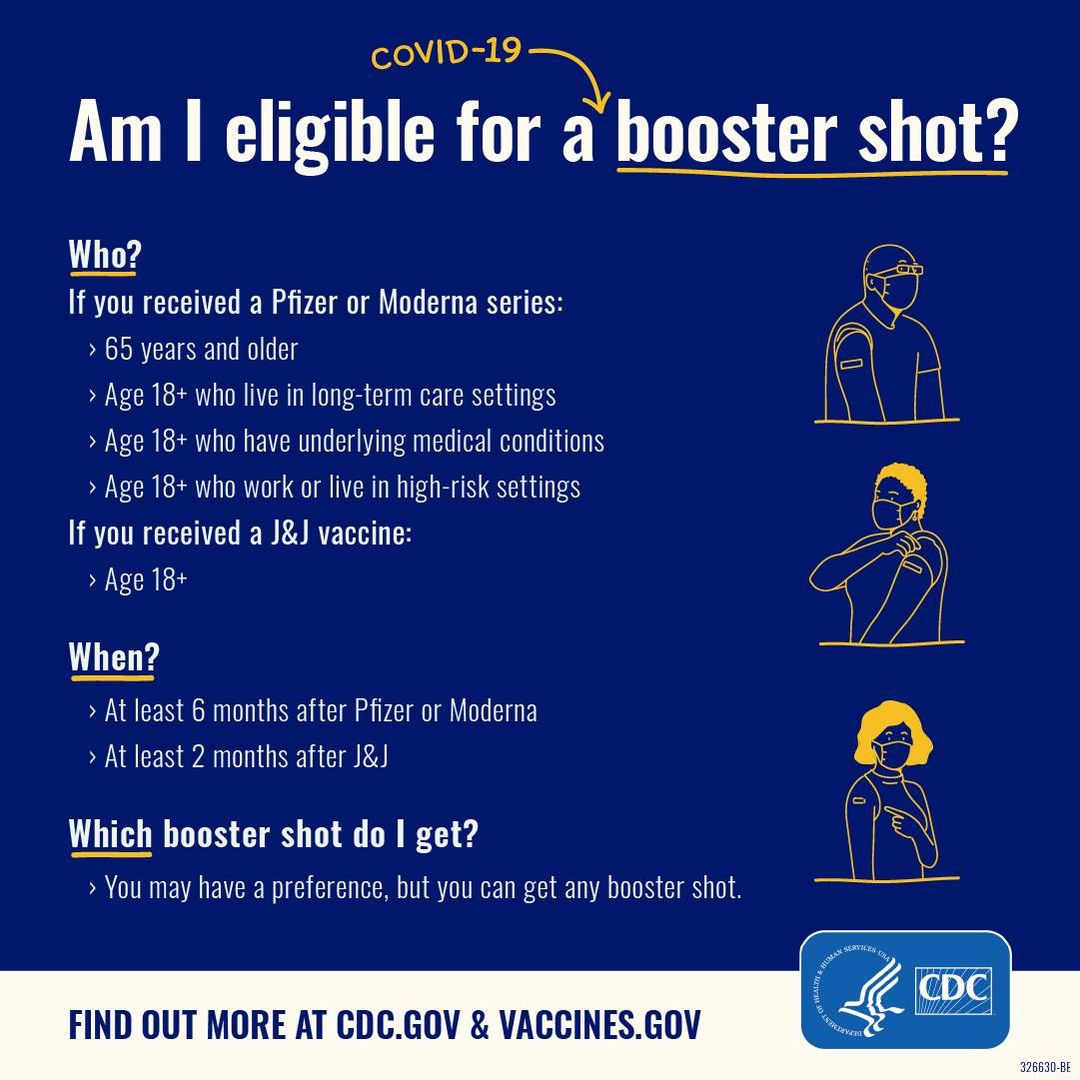
Today, CDC Director Rochelle P. Walensky, M.D., M.P.H., endorsed the CDC Advisory Committee on Immunization Practices’ (ACIP) recommendation for a booster shot of COVID-19 vaccines in certain populations. The Food and Drug Administration’s (FDA) authorization and CDC’s recommendation for use are important steps forward as we work to stay ahead of the virus and keep Americans safe.

For individuals who received a Pfizer-BioNTech or Moderna COVID-19 vaccine, the following groups are eligible for a booster shot at 6 months or more after their initial series:

For the nearly 15 million people who got the Johnson & Johnson COVID-19 vaccine, booster shots are also recommended for those who are 18 and older and who were vaccinated two or more months ago.

There are now booster recommendations for all three available COVID-19 vaccines in the United States. Eligible individuals may choose which vaccine they receive as a booster dose. Some people may have a preference for the vaccine type that they originally received, and others may prefer to get a different booster. CDC’s recommendations now allow for this type of mix and match dosing for booster shots.

Millions of people are newly eligible to receive a booster shot and will benefit from additional protection. However, today’s action should not distract from the critical work of ensuring that unvaccinated people take the first step and get an initial COVID-19 vaccine. More than 65 million Americans remain unvaccinated, leaving themselves – and their children, families, loved ones, and communities– vulnerable.

Available data right now show that all three of the COVID-19 vaccines approved or authorized in the United States continue to be highly effective in reducing risk of severe disease, hospitalization, and death, even against the widely circulating Delta variant. Vaccination remains the best way to protect yourself and reduce the spread of the virus and help prevent new variants from emerging.

The following is attributable to Dr. Walensky:

“These recommendations are another example of our fundamental commitment to protect as many people as possible from COVID-19. The evidence shows that all three COVID-19 vaccines authorized in the United States are safe – as demonstrated by the over 400 million vaccine doses already given. And, they are all highly effective in reducing the risk of severe disease, hospitalization, and death, even in the midst of the widely circulating Delta variant.”

###
U.S. DEPARTMENT OF HEALTH AND HUMAN SERVICESexternal icon

CDC works 24/7 protecting America’s health, safety and security. Whether disease start at home or abroad, are curable or preventable, chronic or acute, or from human activity or deliberate attack, CDC responds to America’s most pressing health threats. CDC is headquartered in Atlanta and has experts located throughout the United States and the world.

Hypopituitarism and COVID-19 – exploring a possible bidirectional relationship?

As of September 1, 2021, the severe acute respiratory syndrome coronavirus 2 (SARS-CoV-2), which is the virus responsible for the coronavirus disease 2019 (COVID-19), has infected over 219 million and caused the deaths of over 4.5 million worldwide. Although COVID-19 has been traditionally associated with its ability to cause varied symptoms resembling acute respiratory distress syndrome (ARDS), emerging scientific evidence has demonstrated that SARS-CoV-2 causes much more damage beyond its effects on the upper respiratory tract.

To this end, in a recent study published in Reviews in Endocrine and Metabolic Disorders, the researchers discuss the extra-pulmonary manifestations of COVID-19.

Risk factors for severe COVID-19

It is now a well-known fact that the likelihood of people falling severely ill or dying from COVID-19 is increases if these individuals are obese, or have certain comorbidities like diabetes mellitus (DM), vitamin D deficiency, and vertebral fractures (VFs).

Any abnormality in the pituitary gland may lead to metabolic disorders, impaired immunity, and a host of other conditions that also make the body susceptible to infections. Since such conditions are common in patients with COVID-19 as well, it has been hypothesized that there might be a relationship between COVID-19 and pituitary gland disorders.

On the other hand, researchers have also observed that COVID-19 causes increased severity of pituitary-related disorders, and even pituitary apoplexy, which is a condition defined as internal bleeding or impaired blood supply in the pituitary gland. A group of Italian researchers has reviewed this bidirectional relationship between the pituitary gland abnormalities and COVID-19 in their study recently published in Reviews in Endocrine and Metabolic Disorders.

The link between pituitary gland abnormalities and COVID19

The pituitary gland releases hormones that regulate and control some of the most important functions of the body like growth, metabolism, energy levels, bone health, mood swings, vision, reproduction, and immunity, to name a few. The inability of the pituitary gland to release one or more of these hormones is known as ‘hypopituitarism.’  Factors responsible for hypopituitarism include traumatic brain injury, pituitary adenomas (tumors), genetic mutations, as well as infiltrative and infectious diseases.

Hypopituitarism can lead to severe cases of DM, growth hormone deficiency (GHD), abnormal lipid profile, obesity, arterial hypertension, and immune dysfunctions. Interestingly, similar consequences of COVID-19 have also been reported.

SARS-CoV-2 infects the human body by binding to a special class of receptors known as the angiotensin-converting enzyme 2 (ACE2) receptors. These receptors are located in the endothelial linings of most organs like the brain, heart, lungs, kidneys, intestine, liver, and pancreas, among others. The main function of the ACE2 receptors is binding to specific target molecules to maintain the renin-angiotensin system that is crucial for regulating dilation of blood vessels, as well as maintain blood glucose levels, the immune system, and homeostasis.

Therefore, SARS-CoV-2 binding to these ACE2 receptors facilitates the entry of this virus into all the organs that have these receptors, thus leading to the ability of SARS-CoV-2 to cause widespread damage in the body. Upon entry into the pancreas, for example, SARS-CoV-2 can inhibit ß-cells function, which worsens hyperglycemia and increases the risk for acute diabetic complications.

Similarly, the presence of ACE2 receptors in brain tissues may cause invasion into the pituitary gland and lead to pituitary apoplexy. The entry of SARS-CoV-2 into the brain can also cause neurological damage in infected patients, which may account for some of the common neurological complaints of COVID-19 including headaches, confusion, dysgeusia, anosmia, nausea, and vomiting.

Study findings

Hypopituitarism leading to metabolic syndrome has been scientifically linked to higher mortality in COVID-19 patients. In fact, the presence of a single metabolic syndrome component has been observed to double the risk of death by COVID-19. This risk was even higher among patients with DM and hypertension.

There was also an increased incidence of VFs in COVID-19 patients with hypopituitarism. Hence, patients with DM, obesity, hypertension, and chronic inflammatory disease, are all at an increased risk of poor outcomes and death in COVID-19.

Arterial hypertension is a common finding in adults with GHD, which is another consequence of hypopituitarism. Hypopituitarism also causes adrenal insufficiency, a condition that is primarily managed with glucocorticoids and hormonal replacement therapies.

Notably, patients with COVID-19 are often treated for prolonged periods with high-dose exogenous glucocorticoids, which is a class of steroids that suppress some activities of the immune system. This treatment approach may result in suppression of the hypothalamic-pituitary–adrenal axis that can lead to adrenal insufficiency.

Hypogonadism is another aspect of pituitary insufficiency that predisposes patients, especially males, to COVID-19. Evidence shows that males with hypogonadism were more frequently affected by metabolic syndrome.

Pituitary apoplexy, albeit rare, has also been linked to COVID-19, especially in patients with pituitary adenomas and those who are being treated with anticoagulant therapy. This may be because the pituitary gland becomes overstimulated during an infectious disease, which may increase pituitary blood demand and lead to sudden infarction precipitating acute apoplexy.

This phenomenon has also been shown in patients suffering from infectious diseases that cause hemorrhagic fevers. Taken together, pituitary apoplexy complicates treatment and management procedures in COVID-19 patients.

Despite the use of steroids in COVID-19 patients, there have been no contraindications for vaccination in such patients. However, those on extensive hormonal therapies need constant monitoring for best results.

Implications

The pituitary gland acts like a double-edged sword for COVID-19. On one end, hypopituitarism predisposes patients to metabolic disorders like DM, obesity, and VFs, all of which are known risk factors for COVID-19.

On the other hand, COVID-19 may cause direct or indirect damage to the pituitary glands by entering the brain and inducing unfavorable vascular events – though evidence on this remains lesser in comparison to that of hypopituitarism. Ultimately, the researchers of the current study conclude that managing patients with hormonal insufficiencies optimally with steroids is likely to improve outcomes in severe COVID-19.

Journal reference:

Primary Adrenal Insufficiency Due to Bilateral Adrenal Infarction in COVID-19

This article was originally published here

J Clin Endocrinol Metab. 2021 Jul 29:dgab557. doi: 10.1210/clinem/dgab557. Online ahead of print.

ABSTRACT

CONTEXT: Coronavirus disease 2019 (COVID-19) is a proinflammatory and prothrombotic condition, but its impact on adrenal function has not been adequately evaluated.

CASE REPORT: A 46-year-old woman presented with abdominal pain, hypotension, and skin hyperpigmentation after COVID-19 infection. The patient had hyponatremia, serum cortisol <1.0 µg/dL, adrenocorticotropin (ACTH) of 807 pg/mL, and aldosterone ❤ ng/dL. Computed tomography (CT) findings of adrenal enlargement with no parenchymal and minimal peripheral capsular enhancement after contrast were consistent with bilateral adrenal infarction. The patient had autoimmune hepatitis and positive antiphospholipid antibodies, but no previous thrombotic events. The patient was treated with intravenous hydrocortisone, followed by oral hydrocortisone and fludrocortisone.

DISCUSSION: We identified 9 articles, including case reports, of new-onset adrenal insufficiency and/or adrenal hemorrhage/infarction on CT in COVID-19. Adrenal insufficiency was hormonally diagnosed in 5 cases, but ACTH levels were measured in only 3 cases (high in 1 case and normal/low in other 2 cases). Bilateral adrenal nonhemorrhagic or hemorrhagic infarction was identified in 5 reports (2 had adrenal insufficiency, 2 had normal cortisol levels, and 1 case had no data). Interestingly, the only case with well-characterized new-onset acute primary adrenal insufficiency after COVID-19 had a previous diagnosis of antiphospholipid syndrome. In our case, antiphospholipid syndrome diagnosis was established only after the adrenal infarction triggered by COVID-19.

CONCLUSION: Our findings support the association between bilateral adrenal infarction and antiphospholipid syndrome triggered by COVID-19. Therefore, patients with positive antiphospholipid antibodies should be closely monitored for symptoms or signs of acute adrenal insufficiency during COVID-19.

PMID:34463766 | DOI:10.1210/clinem/dgab557