Cushing’s Disease: When Symptoms Are Mistaken for Menopause

After 8 years of menopause-like symptoms, a 62 year old patient discovered she actually had Cushing’s disease. Read about her long journey to get a diagnosis and her success in finding her dream-come-true neurosurgeon.

A Mysterious Decline in Health

When Elisabeth N., 62, started developing symptoms that included obesity, osteoporosis, insomnia, kidney stones and hair loss, she attributed it to what most women her age would: menopause. Back in 2000 she never would have thought those seemingly normal symptoms for a woman her age would lead her to Santa Monica to be treated eight years later by Daniel Kelly, MD., neurosurgeon and director of the Pacific Pituitary Disorders Center at Pacific Neuroscience Institute and Saint John’s Health Center. In fact, it wasn’t till February of 2008 that she learned it could all be caused by something completely different.

A Sister’s Observation Leads to a Breakthrough

“I wouldn’t have known about Cushing’s disease if it weren’t for my youngest sister; I’m 25 years older and so fortunate she has her medical degree,” explained Elisabeth, a kitchen and bath designer in Mesa, Arizona. “We hadn’t seen one another for five years when we visited in February of 2008. My appearance had drastically changed by then. She told me, ‘Don’t be scared, Bethie, but I think you should be tested for Cushing’s.’”

Learning About Cushing’s Disease
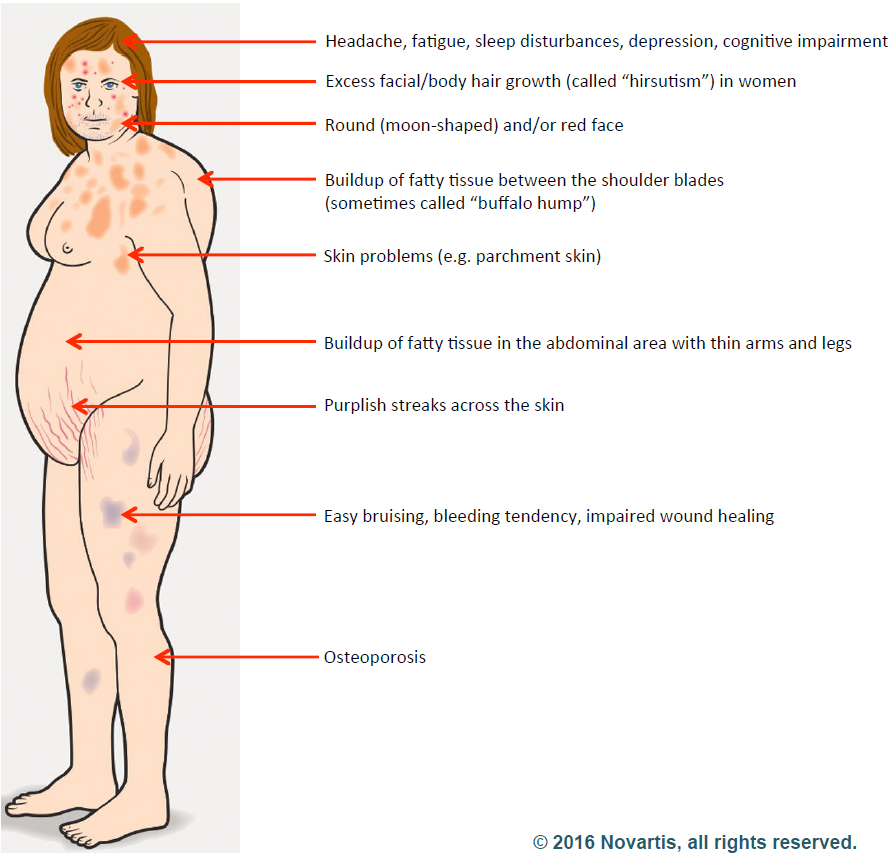
cushing's disease symptoms infographic

Elisabeth started researching Cushing’s disease right away and was relieved to learn that a cure was possible. Cushing’s is a hormonal disorder caused by high levels of the hormone cortisol. Symptoms include upper-body obesity, fragile skin that bruises easily, weakened bones, severe fatigue, weak muscles, high blood pressure, high blood glucose, increased thirst and urination, depression and a fatty hump between the shoulders. Women can also experience irregular menstrual periods and excess hair growth on their bodies. It can be caused by taking glucocorticoids such as prednisone or if there is a problem with a person’s pituitary gland or hypothalamus.

A Long and Uncertain Testing Journey

Elisabeth immediately set up a doctor’s appointment to get her cortisol and adrenocorticotropic hormone (ACTH – the pituitary hormone that stimulates the adrenal glands to make cortisol) levels tested. Over the next nine months Elisabeth went through several blood, urine, saliva and plasma tests for her cortisol and ACTH production and had an MRI. The tests showed elevated cortisol and ACTH levels but the initial impression was that her levels were not high enough to indicate Cushing’s disease and her pituitary MRI showed no apparent tumor. Elisabeth met with both a pituitary neurosurgeon and an endocrinologist, but both determined her condition not to be Cushing’s.

“My cortisol was not high enough; I wasn’t obese enough; I wasn’t disabled enough; I wasn’t depressed enough,” Elisabeth said.

Finding the Missing Clue

She felt frustrated by the diagnosis and continued to research possibilities online. It was during this research that she stumbled upon an article comparing MRI Tesla strengths. It recommended getting a Tesla 3.0 with contrast to pick up small abnormalities. Elisabeth scheduled a new MRI at the beginning of November. This time the scan detected a 6 mm tumor on the right side of her pituitary gland. Additional hormonal testing also confirmed that she did indeed have high ACTH and cortisol levels consistent with Cushing’s, “I was thrilled to finally have proof I had Cushing’s, but terrified because I knew I’d have to have brain surgery to remove it,” Elisabeth said. “I knew I wanted transsphenoidal surgery – the safest, most successful procedure with the least complications if done by an experienced surgeon.”

Understanding the Endonasal Transsphenoidal Approach
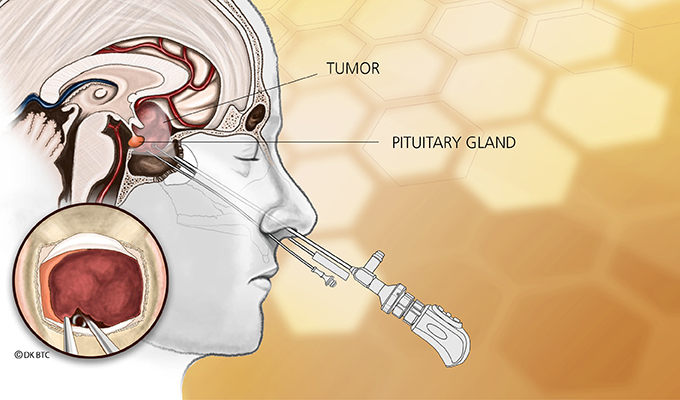
endonasal procedure illustration

Endonasal transsphenoidal tumor removal, aka endoscopic endonasal approach, such as what Elisabeth needed, is a surgery that uses the nostril as the entry point with visualization from the operating microscope and endoscope. The approach passes through the back of the nasal cavity and into the sphenoid sinus to the skull base without facial incisions, brain retraction or post-operative nasal packing.

“This type of surgery is ideal for removing over 99% of pituitary adenomas, like what Elisabeth had and is considered first-line therapy for patients with Cushing’s disease,” Dr. Kelly explained. “Untreated or incompletely treated, Cushing’s disease is a very serious condition leading to uncontrolled hypertension, diabetes, weight gain and increased mortality.”

Choosing the Right Surgeon

With all the months she had to prepare for a diagnosis, Elisabeth knew exactly what needed to be done.

“I’d known I wanted Dr. Kelly to perform surgery but never imagined it could happen,” Elisabeth said. “I found him online. He’s ranked as one of the world’s top neurosurgeons specializing in this type of surgery. While watching his YouTube videos, I was awed by his kindness, patience, sense of humor, approachability, professionalism and complete lack of arrogance in spite of his fame. I’m still pinching myself that I had the fortune and honor to become one of his patients.”

A Life-Changing Call
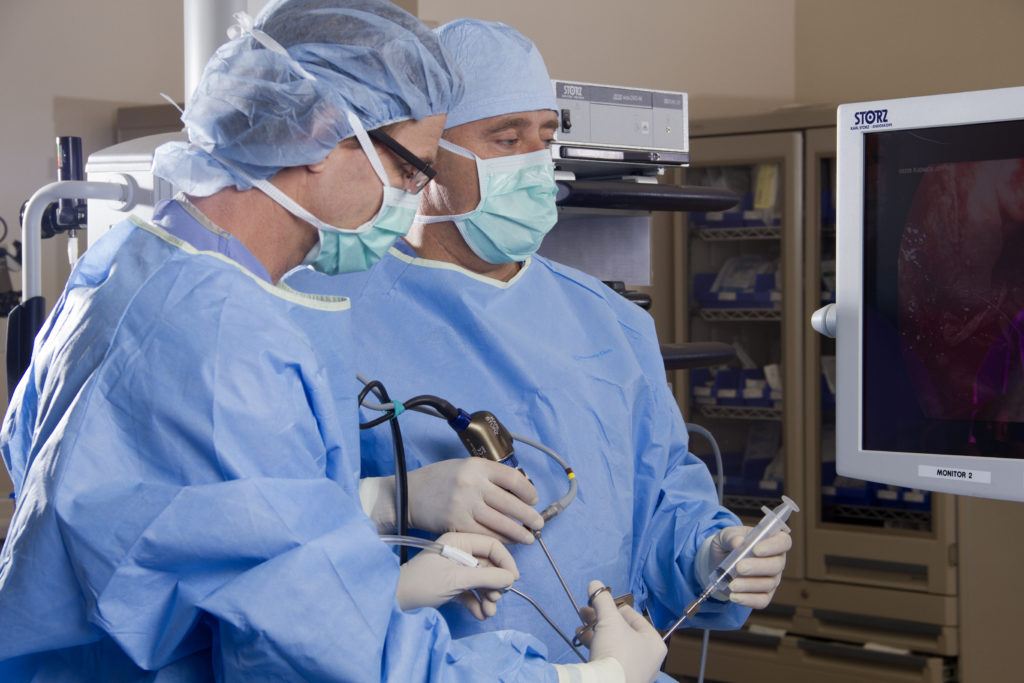
Dr. Daniel Kelly and Dr. Chester Griffiths perform surgery

Figuring she didn’t have anything to lose, Elisabeth called Dr. Kelly’s office and asked if he was accepting new patients (he was) and how long was his waiting list (she could see him next week). Elisabeth was astounded. She immediately mailed Dr. Kelly all the test results, films and reports she could gather.

“Two days later, Dr. Kelly personally called and left a message, indicating it appeared there was indeed an ACTH secreting adenoma on my pituitary gland and to call him back,” Elisabeth said. “I was blown away. I’d have expected to win the lottery first.”

Successful Surgery and a New Beginning

Dr. Kelly arranged to perform Elisabeth’s surgery two weeks later on November 26 – the day before Thanksgiving. Her cortisol levels fell dramatically within 24 hours of surgery. She has remained in remission since then. Years after surgery, she continues to feel like a new person and regularly stays in contact with Dr. Kelly and his office staff.

About Dr. Daniel Kelly

Dr. Daniel Kelly, a board-certified neurosurgeon, is the director and one of the founders of the Pacific Neuroscience Institute, director of the Pacific Brain Tumor Center and Pacific Pituitary Disorders Center, and is Professor of Neurosurgery at Saint John’s Cancer Institute at Providence Saint John’s Health Center. Considered to be one of the top neurosurgeons in the US, he is a multiple recipient of the Patients’ Choice Award and Southern California Super Doctors distinction.

CDC Expands Eligibility for COVID-19 Booster Shots


For Immediate Release: Thursday, October 21, 2021
Contact: Media Relations
(404) 639-3286

Today, CDC Director Rochelle P. Walensky, M.D., M.P.H., endorsed the CDC Advisory Committee on Immunization Practices’ (ACIP) recommendation for a booster shot of COVID-19 vaccines in certain populations. The Food and Drug Administration’s (FDA) authorization and CDC’s recommendation for use are important steps forward as we work to stay ahead of the virus and keep Americans safe.

For individuals who received a Pfizer-BioNTech or Moderna COVID-19 vaccine, the following groups are eligible for a booster shot at 6 months or more after their initial series:

For the nearly 15 million people who got the Johnson & Johnson COVID-19 vaccine, booster shots are also recommended for those who are 18 and older and who were vaccinated two or more months ago.

There are now booster recommendations for all three available COVID-19 vaccines in the United States. Eligible individuals may choose which vaccine they receive as a booster dose. Some people may have a preference for the vaccine type that they originally received, and others may prefer to get a different booster. CDC’s recommendations now allow for this type of mix and match dosing for booster shots.

Millions of people are newly eligible to receive a booster shot and will benefit from additional protection. However, today’s action should not distract from the critical work of ensuring that unvaccinated people take the first step and get an initial COVID-19 vaccine. More than 65 million Americans remain unvaccinated, leaving themselves – and their children, families, loved ones, and communities– vulnerable.

Available data right now show that all three of the COVID-19 vaccines approved or authorized in the United States continue to be highly effective in reducing risk of severe disease, hospitalization, and death, even against the widely circulating Delta variant. Vaccination remains the best way to protect yourself and reduce the spread of the virus and help prevent new variants from emerging.

The following is attributable to Dr. Walensky:

“These recommendations are another example of our fundamental commitment to protect as many people as possible from COVID-19. The evidence shows that all three COVID-19 vaccines authorized in the United States are safe – as demonstrated by the over 400 million vaccine doses already given. And, they are all highly effective in reducing the risk of severe disease, hospitalization, and death, even in the midst of the widely circulating Delta variant.”

###
U.S. DEPARTMENT OF HEALTH AND HUMAN SERVICESexternal icon

CDC works 24/7 protecting America’s health, safety and security. Whether disease start at home or abroad, are curable or preventable, chronic or acute, or from human activity or deliberate attack, CDC responds to America’s most pressing health threats. CDC is headquartered in Atlanta and has experts located throughout the United States and the world.

Hypopituitarism and COVID-19 – exploring a possible bidirectional relationship?

As of September 1, 2021, the severe acute respiratory syndrome coronavirus 2 (SARS-CoV-2), which is the virus responsible for the coronavirus disease 2019 (COVID-19), has infected over 219 million and caused the deaths of over 4.5 million worldwide. Although COVID-19 has been traditionally associated with its ability to cause varied symptoms resembling acute respiratory distress syndrome (ARDS), emerging scientific evidence has demonstrated that SARS-CoV-2 causes much more damage beyond its effects on the upper respiratory tract.

To this end, in a recent study published in Reviews in Endocrine and Metabolic Disorders, the researchers discuss the extra-pulmonary manifestations of COVID-19.

Risk factors for severe COVID-19

It is now a well-known fact that the likelihood of people falling severely ill or dying from COVID-19 is increases if these individuals are obese, or have certain comorbidities like diabetes mellitus (DM), vitamin D deficiency, and vertebral fractures (VFs).

Any abnormality in the pituitary gland may lead to metabolic disorders, impaired immunity, and a host of other conditions that also make the body susceptible to infections. Since such conditions are common in patients with COVID-19 as well, it has been hypothesized that there might be a relationship between COVID-19 and pituitary gland disorders.

On the other hand, researchers have also observed that COVID-19 causes increased severity of pituitary-related disorders, and even pituitary apoplexy, which is a condition defined as internal bleeding or impaired blood supply in the pituitary gland. A group of Italian researchers has reviewed this bidirectional relationship between the pituitary gland abnormalities and COVID-19 in their study recently published in Reviews in Endocrine and Metabolic Disorders.

The link between pituitary gland abnormalities and COVID19

The pituitary gland releases hormones that regulate and control some of the most important functions of the body like growth, metabolism, energy levels, bone health, mood swings, vision, reproduction, and immunity, to name a few. The inability of the pituitary gland to release one or more of these hormones is known as ‘hypopituitarism.’  Factors responsible for hypopituitarism include traumatic brain injury, pituitary adenomas (tumors), genetic mutations, as well as infiltrative and infectious diseases.

Hypopituitarism can lead to severe cases of DM, growth hormone deficiency (GHD), abnormal lipid profile, obesity, arterial hypertension, and immune dysfunctions. Interestingly, similar consequences of COVID-19 have also been reported.

SARS-CoV-2 infects the human body by binding to a special class of receptors known as the angiotensin-converting enzyme 2 (ACE2) receptors. These receptors are located in the endothelial linings of most organs like the brain, heart, lungs, kidneys, intestine, liver, and pancreas, among others. The main function of the ACE2 receptors is binding to specific target molecules to maintain the renin-angiotensin system that is crucial for regulating dilation of blood vessels, as well as maintain blood glucose levels, the immune system, and homeostasis.

Therefore, SARS-CoV-2 binding to these ACE2 receptors facilitates the entry of this virus into all the organs that have these receptors, thus leading to the ability of SARS-CoV-2 to cause widespread damage in the body. Upon entry into the pancreas, for example, SARS-CoV-2 can inhibit ß-cells function, which worsens hyperglycemia and increases the risk for acute diabetic complications.

Similarly, the presence of ACE2 receptors in brain tissues may cause invasion into the pituitary gland and lead to pituitary apoplexy. The entry of SARS-CoV-2 into the brain can also cause neurological damage in infected patients, which may account for some of the common neurological complaints of COVID-19 including headaches, confusion, dysgeusia, anosmia, nausea, and vomiting.

Study findings

Hypopituitarism leading to metabolic syndrome has been scientifically linked to higher mortality in COVID-19 patients. In fact, the presence of a single metabolic syndrome component has been observed to double the risk of death by COVID-19. This risk was even higher among patients with DM and hypertension.

There was also an increased incidence of VFs in COVID-19 patients with hypopituitarism. Hence, patients with DM, obesity, hypertension, and chronic inflammatory disease, are all at an increased risk of poor outcomes and death in COVID-19.

Arterial hypertension is a common finding in adults with GHD, which is another consequence of hypopituitarism. Hypopituitarism also causes adrenal insufficiency, a condition that is primarily managed with glucocorticoids and hormonal replacement therapies.

Notably, patients with COVID-19 are often treated for prolonged periods with high-dose exogenous glucocorticoids, which is a class of steroids that suppress some activities of the immune system. This treatment approach may result in suppression of the hypothalamic-pituitary–adrenal axis that can lead to adrenal insufficiency.

Hypogonadism is another aspect of pituitary insufficiency that predisposes patients, especially males, to COVID-19. Evidence shows that males with hypogonadism were more frequently affected by metabolic syndrome.

Pituitary apoplexy, albeit rare, has also been linked to COVID-19, especially in patients with pituitary adenomas and those who are being treated with anticoagulant therapy. This may be because the pituitary gland becomes overstimulated during an infectious disease, which may increase pituitary blood demand and lead to sudden infarction precipitating acute apoplexy.

This phenomenon has also been shown in patients suffering from infectious diseases that cause hemorrhagic fevers. Taken together, pituitary apoplexy complicates treatment and management procedures in COVID-19 patients.

Despite the use of steroids in COVID-19 patients, there have been no contraindications for vaccination in such patients. However, those on extensive hormonal therapies need constant monitoring for best results.

Implications

The pituitary gland acts like a double-edged sword for COVID-19. On one end, hypopituitarism predisposes patients to metabolic disorders like DM, obesity, and VFs, all of which are known risk factors for COVID-19.

On the other hand, COVID-19 may cause direct or indirect damage to the pituitary glands by entering the brain and inducing unfavorable vascular events – though evidence on this remains lesser in comparison to that of hypopituitarism. Ultimately, the researchers of the current study conclude that managing patients with hormonal insufficiencies optimally with steroids is likely to improve outcomes in severe COVID-19.

Journal reference:

Primary Adrenal Insufficiency Due to Bilateral Adrenal Infarction in COVID-19

This article was originally published here

J Clin Endocrinol Metab. 2021 Jul 29:dgab557. doi: 10.1210/clinem/dgab557. Online ahead of print.

ABSTRACT

CONTEXT: Coronavirus disease 2019 (COVID-19) is a proinflammatory and prothrombotic condition, but its impact on adrenal function has not been adequately evaluated.

CASE REPORT: A 46-year-old woman presented with abdominal pain, hypotension, and skin hyperpigmentation after COVID-19 infection. The patient had hyponatremia, serum cortisol <1.0 µg/dL, adrenocorticotropin (ACTH) of 807 pg/mL, and aldosterone ❤ ng/dL. Computed tomography (CT) findings of adrenal enlargement with no parenchymal and minimal peripheral capsular enhancement after contrast were consistent with bilateral adrenal infarction. The patient had autoimmune hepatitis and positive antiphospholipid antibodies, but no previous thrombotic events. The patient was treated with intravenous hydrocortisone, followed by oral hydrocortisone and fludrocortisone.

DISCUSSION: We identified 9 articles, including case reports, of new-onset adrenal insufficiency and/or adrenal hemorrhage/infarction on CT in COVID-19. Adrenal insufficiency was hormonally diagnosed in 5 cases, but ACTH levels were measured in only 3 cases (high in 1 case and normal/low in other 2 cases). Bilateral adrenal nonhemorrhagic or hemorrhagic infarction was identified in 5 reports (2 had adrenal insufficiency, 2 had normal cortisol levels, and 1 case had no data). Interestingly, the only case with well-characterized new-onset acute primary adrenal insufficiency after COVID-19 had a previous diagnosis of antiphospholipid syndrome. In our case, antiphospholipid syndrome diagnosis was established only after the adrenal infarction triggered by COVID-19.

CONCLUSION: Our findings support the association between bilateral adrenal infarction and antiphospholipid syndrome triggered by COVID-19. Therefore, patients with positive antiphospholipid antibodies should be closely monitored for symptoms or signs of acute adrenal insufficiency during COVID-19.

PMID:34463766 | DOI:10.1210/clinem/dgab557

Estrogen receptor α plays an important role in Cushing’s syndrome during pregnancy

Abstract

Cushing’s syndrome (CS) during pregnancy is very rare with a few cases reported in the literature.

Of great interest, some cases of CS during pregnancy spontaneously resolve after delivery. Most studies suggest that aberrant luteinizing hormone (LH)/human chorionic gonadotropin (hCG) receptor (LHCGR) seems to play a critical role in the pathogenesis of CS during pregnancy.

However, not all women during pregnancy are observed cortisol hypersecretion. Moreover, some cases of adrenal tumors or macronodular hyperplasia with LHCGR expressed, have no response to hCG or LH.

Therefore, alternative pathogenic mechanisms are indicated. It has been recently reported that estrogen binding to estrogen receptor α (ERα) could enhance the adrenocortical adenocarcinoma (ACC) cell proliferation.

Herein, we hypothesize that ERα is probably involved in CS development during pregnancy.

Better understanding of the possible mechanism of ERα on cortisol production and adrenocortical tumorigenesis will contribute to the diagnosis and treatment of CS during pregnancy.

Read the entire article here: https://www.sciencedirect.com/science/article/pii/S0306987720303893?via%3Dihub