Interview May 13 with Michelle B (MichelleB), Cyclic Cushing’s Patient

Hello all, I’m Michelle mother of 3 beautiful children, I work part-time, 33yrs young, non-smoker, non-drinker, overall health is good for the most part…..Where do I even begin.

I just recently received the diagnosis of cyclic Cushing’s. I’m not really sure how long I have actually had Cushing’s because I have had a diagnosis of PCOS since I was 17 yrs. old ( I’m now the ripe young age of 33). However looking back through labs with my endocrinologist who I see every 6 months, my ACTH levels have been elevated for a bit over 1 yr. It was not until recently January of 2015- things were going terribly wrong.

Starting in January I started to feel genuinely unwell, on a regular basis. I cant really explain all my symptoms there were so many different sensations and feelings that were seemingly different daily. However the red flag was I was having blood pressure spikes from really high, to very low back to back. I never had any blood pressure issues so this was a concern that led me to see a cardiologist. Upon tons of testing the cardio MD felt that something was telling my otherwise very healthy heart to do this and I should see a endocrinologist. (thank goodness for him) I contacted my endo and let him know…. the testing began.

I did every test: the midnightcortisol saliva test, dex suppression, 24 hr urine test, CRH stimulation testing. And I did them more than once. Each time it was a different response either, inconclusive, normal high, or high. I was then referred to the head of the Cleveland clinics pituitary department Dr. Kennedy. He said he is having a hard time believing when he looks at me that its Cushing’s. However all my labs say it is. I will say I do fit the mold of PCOS to a tee- which symptoms of that do coincide with Cushing’s but he still said we have to be sure its Cushing’s. To add to the mix I did have a normal MRI as well.

Dr. Kennedy started me on a 2 week midnight cortisol saliva test- Upon completion we noted levels of cortisol all over the place, some Normal, normal on high range, high, and really high. He confirmed with all the other tests this is Cushing’s. Now we are trying to figure out what is next…. and where is this damn little tumor at. he feels that it is most likely in the pituitary from my test results, but we still are not ruling out else where. He is thinking that the next step would be exploratory neurosurgery or the IPSS. I’m not sure what to think of all this, except I want to hope for the best like everyone- and just be cured!!

On a side note during all of this I also had episodes of severe pain in my chest and nausea. I went to see a GI who did an upper endo scope. They found I had eosinpphilic esophagitis. I also have never had any GI problems until now; and they came on suddenly. Im also having pain in my pancreas area- not sure if any of the two are related at all to Cushing’s. But once again I was fine until recently with all these issues at once it seems.

wish me luck on further testing, treatment, and ultimately a CURE!!

interview

Michelle was our guest in an interview on BlogTalk Radio  Wednesday, May 13, 2015.

The archived interview is available now through iTunes Podcasts (Cushie Chats) or BlogTalkRadio. There are currently 83 other past interviews for your listening pleasure!

HOME | Sitemap | Adrenal Crisis! | Abbreviations | Glossary | Forums | Donate | Bios | Add Your Bio

Day Twenty-one, Cushing’s Awareness Challenge 2015

Since I’m posting this on April 21, I had a built-in topic.


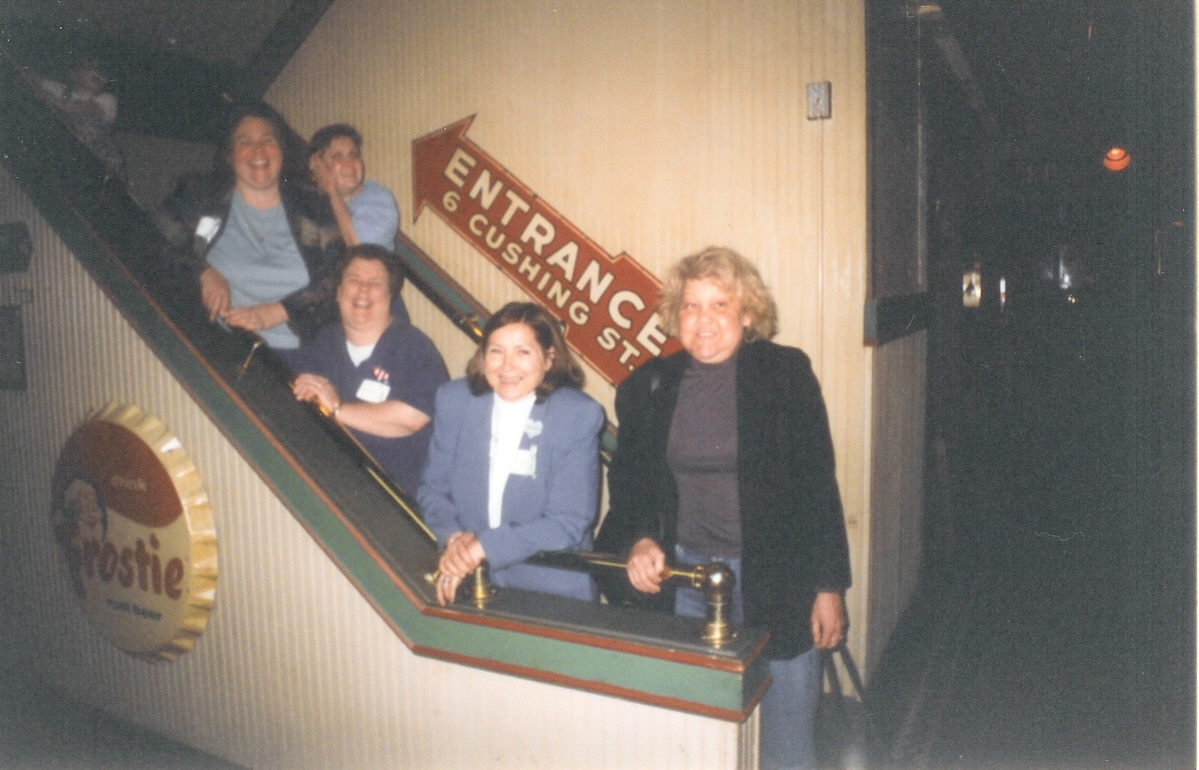
The image above is from our first local meeting – note the 6 Cushing St. sign behind us.  Natalie was the one in the middle.

Today is the  anniversary of Natalie’s death.  Last month was the anniversary of Sue’s death. I wrote about Janice earlier.

It’s just not right that this disease has been known for so many years, yet doctors still drag their feet diagnosing it and curing Cushing’s.

Why is it that we have to suffer so much, so long, and still there are so many deaths from Cushing’s or related to Cushing’s symptoms?

I know far too many people, good people, who suffered for many years from this disease that doctors said they didn’t have.  Then they died.  It’s time this stopped!

Speaking of death – what a cheery blog post this is turning out to be.  NOT!

I had been following the blog posts of a young woman who had “my” cancer”.  She recently died.  I never knew her but she sounded like such a wonderful person who truly lived while she had the chance.

I wish I could be more like that and have a real life while I’m still here.  My life seems to be reduced to doing for others.

When is it my turn?


Day Eleven, Cushing’s Awareness Challenge 2015

UVA 2004
Cushing’s Conventions have always been special times for me – we learn a lot, get to meet other Cushies, even get referrals to endos!

As early as 2001 (or before) my pituitary function was dropping.  My former endo tested annually but did nothing to help me with the symptoms.

In the fall of 2002 my endo refused to discuss my fatigue or anything at all with me until I lost 10 pounds. He said I wasn’t worth treating in my overweight condition and that I was setting myself up for a heart attack. He gave me 3 months to lose this weight. Those 3 months included Thanksgiving, Christmas and New Years.  Needless to say, I left his office in tears, again.

Fast forward 2 years to 2004.  I had tried for awhile to get my records from this endo. He wouldn’t send them, even at doctors’ or my requests.

I wanted to go see Dr. Vance at UVa but I had no records so she would’t see me until I could get them.

Finally, my husband went to the former endo’s office and threatened him with a court order. The office manager managed to come up with about 13 pages of records. For going to him from 1986 to 2001 including weeks and weeks at NIH and pituitary surgery, that didn’t seem like enough records to me.

In April of 2004, many of us from the message boards went to the UVa Pituitary Days Convention. That’s where the picture above comes in.  Other pictures from that convention are here.

By chance, we met a wonderful woman named

Read Barbara Craven. She sat at our table for lunch on the last day and, after we learned that she was a dietitian who had had Cushing’s, one of us jokingly asked her if she’d do a guest chat for us. I didn’t follow through on this until she emailed me later. In the email, she asked how I was doing. Usually I say “fine” or “ok” but for some reason, I told her exactly how awful I was feeling.

Barbara emailed me back and said I should see a doctor at Johns Hopkins. I said I didn’t think I could get a recommendation to there, so SHE referred me. The doctor got right back to me, set up an appointment. Between his vacation and mine, that first appointment turned out to be Tuesday, Sept 14, 2004.

Just getting through the maze at Johns Hopkins was amazing. They have the whole system down to a science, moving from one place to another to sign in, then go here, then window 6, then… But it was very efficient.

My new doctor was wonderful. Understanding, knowledgeable. He never once said that I was “too fat” or “depressed” or that all this was my own fault. I feel so validated, finally.

He looked through my records, especially at my 2 previous Insulin Tolerance Tests. From those, he determined that my growth hormone has been low since at least August 2001 and I’ve been adrenal insufficient since at least Fall, 1999 – possibly as much as 10 years! I was amazed to hear all this, and astounded that my former endo not only didn’t tell me any of this, he did nothing. He had known both of these things – they were in the past records that I took with me. Perhaps that was why he had been so reluctant to share copies of those records. He had given me Cortef in the fall of 1999 to take just in case I had “stress” and that was it.

The new endo took a lot of blood (no urine!) for cortisol and thyroid stuff. I went back on Sept. 28, 2004 for arginine, cortrosyn and IGF testing.

He said that I would end up on daily cortisone – a “sprinkling” – and some form of GH, based on the testing the 28th.

For those who are interested, my new endo is Roberto Salvatori, M.D.
Assistant Professor of Medicine at Johns Hopkins

Medical School: Catholic University School of Medicine, Rome, Italy
Residency: Montefiore Medical Center
Fellowship: Cornell University, Johns Hopkins University
Board Certification: Endocrinology and Metabolism, Internal Medicine

Clinical Interests: Neuroendocrinology, pituitary disorders, adrenal disorders

Research Interests: Control of growth hormone secretion, genetic causes of growth hormone deficiency, consequences of growth hormone deficiency.

Although I have this wonderful doctor, a specialist in growth hormone deficiency at Johns Hopkins, in November, 2004, my insurance company saw fit to over-ride his opinions and his test results based on my past pharmaceutical history! Hello??? How could I have a history of taking GH when I’ve never taken it before?

Of course, I found out late on a Friday afternoon. By then it was too late to call my case worker at the drug company, so we had to appeal on Monday. My local insurance person also worked on an appeal, but the whole thing was  just another long ordeal of finding paperwork, calling people, FedExing stuff, too much work when I just wanted to start feeling better by Thanksgiving.

As it turned out the insurance company rejected the brand of hGH that was prescribed for me. They gave me the ok for a growth hormone was just FDA-approved for adults on 11/4/04. The day this medication was approved for adults was the day after my insurance said that’s what is preferred for me. In the past, this form of hGH was only approved for children with height issues. Was I going to be a ginuea pig again?

The new GH company assigned a rep for me, submitted info to pharmacy, and waited for insurance approval, again.

I finally started the Growth Hormone December 7, 2004.

Was the hassle and 3 year wait worth it?

Stay tuned for tomorrow, April 12, 2015 when all will be revealed.

Read

Read Dr. Barbara Craven’s Guest Chat, October 27, 2004

Thanks for reading 🙂

MaryO

Day 7: Cushing’s Awareness Challenge 2015

Sleep.  Naps.  Fatigue, Exhaustion.  I still have them all.  I wrote on my bio in 1987 after my pituitary surgery “I am still and always tired and need a nap most days. I do not, however, still need to take whole days off just to sleep.

That seems to be changing back, at least on the weekends.  Last weekend, both days, I took 7-hour naps each day and I still woke up tired. That’s awfully close to taking a whole day off to sleep again.

In 2006, I flew to Chicago, IL for a Cushing’s weekend in Rockford.  Someone else drove us to Lake Geneva, Wisconsin for the day.  Too much travel, too Cushie, whatever, I was too tired to stay awake.  I actually had put my head down on the dining room table and fallen asleep but our hostess suggested the sofa instead.  Amazing that I traveled that whole distance – and missed the main event 😦


Sleeping in Rockford


This sleeping thing really impacts my life.  Between piano lessons, I take a nap.  I sleep as late as possible in the mornings and afternoons are pretty much taken up by naps.  I nod off at night during TV. One time I came home between church services and missed the third one because I fell asleep.

I only TiVo old tv shows that I can watch and fall asleep to since I already know the ending.

Maybe now that I’m more than 8 years out from my kidney cancer (May 9, 2006) I can go back on Growth Hormone again.  My surgeon says he “thinks” it’s ok.  I’m sort of afraid to ask my endo about it, though.  I want to feel better and get the benefits of the GH again but I dont want any type of cancer again and I certainly can’t afford to lose another kidney.

I’m feeling so old and weary today, and yesterday.  And tomorrow…


Webinar: How to Discuss Genetic Disease with Your Loved Ones

Date:  April 1, 2015
Time:  11:00 am PT / 2:00 pm ET

register button

There are currently about 7,000 rare diseases identified worldwide, and approximately 80 percent of these are caused by genetic changes. But genetics is a topic that not all of us are familiar with.

This webinar covers the basics of the underlying genetics of rare disease and provides viewers with the strategies and advice to discuss them with the ones they love.

Panelists will share strategies they have used to explain genetic disease, challenges they faced, and helpful resources.

Panelists:
jenna_recombine Jenna Miller, MS, CGC, Genetic Counselor, Recombine

Jenna Miller is a certified genetic counselor at Recombine, a genetic testing company based in New York, NY. She works closely with families seeking preconception and prenatal genetic carrier screening and noninvasive prenatal screening. She also assists physicians and genetic counselors to facilitate appropriate genetic testing procedures. Jenna is passionate about genetics education; her Master’s thesis project involved developing and teaching a Genetics 101 class for student inmates at a maximum security women’s prison. Jenna is an advocate for informed consent, ethical approaches to genetic testing, and support of families affected by genetic conditions.

cyndiCynthia Frank, Director, Patient Advocacy & Meetings, Nat’l Gaucher Foundation

Cyndi is a long-standing member of the Gaucher community and has participated in many clinical trials to help get treatments to market.  She is an NGF Mentor and advocate for Gaucher patients and raising awareness through speaking at conferences, meetings and events, including NGF and other rare and genetic disease-organization meetings, LSD symposiums, and industry and pharmaceutical conferences and educational events.  She serves on multiple boards and committees for many organizations, including the Global Genes Advocacy Leaders Group and the NGF’s Gaucher Advisory Group.

jmillsJanet Mills, Trustee and Patient Advocate, cureCADASIL Association

Janet is often the first point of contact when a new patient is diagnosed with the rare genetic disease CADASIL. She serves on the Board of Trustees of cureCADASIL, and she networks with others in the rare disease community online and at  events. She recently spoke about the genetics behind CADASIL on a Los Angeles radio show. Janet has provided content for two RARE Toolkits, is a guest blogger for the RARE Daily, and has participated in the Global Genes Advocacy Advisors Group.

MichelleFoxMichelle Fox, MS, LCGC, Genetic Counselor Consultant, Invitae

For over 30 years, Michelle coordinated the UCLA Genetics Clinic, providing genetic counseling services to both pediatric and adult populations, including the UCLA Predictive Huntington Disease Testing Program, early onset Alzheimer, and genetic neurodegenerative disorders. Her expertise is both on the provision of clinical services and clinical genetic research in the areas of newborn screening, carrier screening, diagnostic testing, and predictive testing.

A focus of Michelle’s work has been on the ethical issues surrounding the provision of genetic services, shared decision making in offering genetic testing, and best practices in communicating genetic information. Educating the public and providers about genetic testing is the mission of Michelle’s professional career. Michelle is currently providing consultation services to organizations, laboratories, and businesses including Invitae.

Moderator:
Danny_LevineDaniel Levine, Founder & Principal, Levine Media Group

Daniel Levine is an award-winning business journalist who has reported on the life sciences, economic development, and business policy issues throughout his 25-year career. Since 2011, he has served as the lead editor and writer of Burrill Media’s acclaimed annual book on the biotech industry and hosts The Burrill Report’s weekly podcast. His work has appeared in The New York Times, The Industry Standard, TheStreet.com, and other national publications.