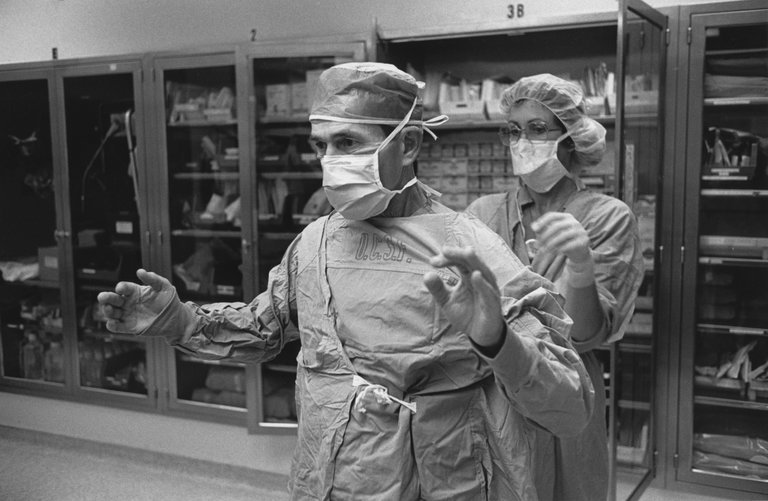
Dr. Charles Wilson, One of the world’s greatest neurosurgeons and pioneer of transsphenoidal pituitary surgery died at 88


The UCSF website in an obituary from Kate Vidinsky reads “He took a particular interest in pituitary disorders, those affecting the pea-sized ‘master gland’ at the base of the brain responsible for controlling the body’s hormone levels. He was a pioneer of transsphenoidal surgery – the endonasal approach for removing pituitary tumors – and performed more than 3,300 of these procedures at UCSF Medical Center.”

The New York Times in an obituary published yesterday described him as “a pioneering and virtuosic San Francisco neurosurgeon”.

Dr. Wilson died February 28, 2018.

Cushing’s Patients at Risk for Autoimmune Diseases After Condition Is Resolved

Children with Cushing’s syndrome are at risk of developing new autoimmune and related disorders after being cured of the disease, a new study shows.

The study, “Incidence of Autoimmune and Related Disorders After Resolution of Endogenous Cushing Syndrome in Children,” was published in Hormone and Metabolic Research.

Patients with Cushing’s syndrome have excess levels of the hormone cortisol, a corticosteroid that inhibits the effects of the immune system. As a result, these patients are protected from autoimmune and related diseases. But it is not known if the risk rises after their disease is resolved.

To address this, researchers at the Eunice Kennedy Shriver National Institute of Child Health and Human Development (NICHD) examined 127 children with Cushing’s syndrome at the National Institutes of Health from 1997 until 2017.

Among the participants, 77.5 percent had a pituitary tumor causing the disease, 21.7 percent had ACTH-independent disease, and one patient had ectopic Cushing’s syndrome. All patients underwent surgery to treat their symptoms.

After a mean follow-up of 31.2 months, 7.8 percent of patients developed a new autoimmune or related disorder.

Researchers found no significant differences in age at diagnosis, gender, cortisol levels, and urinary-free cortisol at diagnosis, when comparing those who developed autoimmune disorders with those who didn’t. However, those who developed an immune disorder had a significantly shorter symptom duration of Cushing’s syndrome.

This suggests that increased cortisol levels, even for a short period of time, may contribute to more reactivity of the immune system after treatment.

The new disorder was diagnosed, on average, 9.8 months after Cushing’s treatment. The disorders reported were celiac disease, psoriasis, Hashimoto thyroiditis, Graves disease, optic nerve inflammation, skin hypopigmentation/vitiligo, allergic rhinitis/asthma, and nerve cell damage of unknown origin responsive to glucocorticoids.

“Although the size of our cohort did not allow for comparison of the frequency with the general population, it seems that there was a higher frequency of optic neuritis than expected,” the researchers stated.

It is still unclear why autoimmune disorders tend to develop after Cushing’s resolution, but the researchers hypothesized it could be a consequence of the impact of glucocorticoids on the immune system.

Overall, the study shows that children with Cushing’s syndrome are at risk for autoimmune and related disorders after their condition is managed. “The presentation of new autoimmune diseases or recurrence of previously known autoimmune conditions should be considered when concerning symptoms arise,” the researchers stated.

Additional studies are warranted to further explore this link and improve care of this specific population.

From https://cushingsdiseasenews.com/2018/03/06/after-cushings-cured-autoimmune-disease-risk-looms-study/

High Levels of MMP-9 Enzyme May Predict Tumor Recurrence in Cushing’s Patients

Measuring the levels of a specific enzyme in pituitary tumors producing excess adrenocorticotrophic hormone (ACTH) may help predict the recurrence of Cushing’s disease in patients, a study shows.

The study, “Expression of MMP-9, PTTG, HMGA2, and Ki-67 in ACTH-secreting pituitary tumors and their association with tumor recurrence,” was published in the journal World Neurosurgery.

Cushing’s syndrome is characterized by excess cortisol levels in the blood. In 70 percent of cases, this is caused by pituitary tumors making too much ACTH, a hormone that regulates cortisol production. This condition is called Cushing’s disease.

While transsphenoidal adenomectomy, a surgery to remove a pituitary gland tumor, is the first treatment choice, tumor recurrence rates can be as high as 45 percent.

Only a few studies have investigated the association between biomarkers and the risk of ACTH-secreting pituitary tumors recurring, leaving physicians with limited methods to predict which patients will have a recurrence.

Identifying biomarkers that can effectively predict the potential recurrence of Cushing’s disease would allow clinicians to look for early signs in patients and start appropriate follow-up and therapeutic protocols, avoiding long-term mortality.

Many studies have suggested that matrix metalloproteinase-9 (MMP-9) enzymes, the pituitary tumor transforming gene (PTTG), and high mobility group A 2 proteins (HMGA2) all play vital roles in the development of pituitary tumors.

Metalloproteinases (MMPs) are enzymes that work to degrade the cell’s extracellular matrix, which anchors the cell, thus enabling tumor invasion. PTTG is highly expressed in pituitary tumors, and is a marker of malignancy in many types of tumors. HMGA2 is overexpressed in various tumors, and is also associated with high malignancy.

However, whether levels of MMP-9, PTTG, and HMGA2 are related to ACTH-secreting tumor recurrence has not been investigated.

Researchers set out to determine the expression levels of MMP-9, PTTG, HMGA2, and Ki-67 (a marker of cell growth) in ACTH-secreting pituitary tumors, and evaluate their association with tumor behavior and recurrence.

They conducted a retrospective study that included 55 patients with sporadic Cushing’s disease with long-term remission after a transsphenoidal adenomectomy. Their tumor specimens were collected and examined.

Patients were divided into two groups based on whether or not they had tumor recurrence. There were 28 patients in the non-recurrent group, and 27 in the recurrent.

Results showed there was significantly increased expression of MMP-9 in tumor samples of recurrent patients, compared with the non-recurrent group. Levels of MMP-9 were also strongly associated with a shorter time period to recurrence (recurrence-free interval).

On the other hand, PTTG, HMGA2, and Ki-67 expression was not significantly different between the recurrent group and the non-recurrent group.

“ACTH-secreting pituitary tumors with higher levels of MMP-9 were associated with a higher recurrence rate and a shorter recurrence-free interval. MMP-9 could be a valuable tool for predicting recurrence of ACTH-secreting pituitary tumors,” the researchers concluded.

From https://cushingsdiseasenews.com/2018/03/02/mmp-9-enzyme-levels-may-predict-tumor-recurrence-in-cushings-study/

Benefits of Medication Before Surgery for Cushing’s Syndrome Still Unclear

In Europe, nearly 20 percent of patients with Cushing’s syndrome receive some sort of medication for the disease before undergoing surgery, a new study shows.

Six months after surgery, these patients had remission and mortality rates similar to those who received surgery as a first-line treatment, despite having worse disease manifestations when the study began. However, preoperative medication may limit doctors’ ability to determine the immediate success of surgery, researchers said.

A randomized clinical trial is needed to conclusively address if preoperative medication is a good option for Cushing’s patients waiting for surgery, they stated.

The study, “Preoperative medical treatment in Cushing’s syndrome. Frequency of use and its impact on postoperative assessment. Data from ERCUSYN,” was published in the European Journal of Endocrinology. 

Surgery usually is the first-line treatment in patients with Cushing’s syndrome. But patients also may receive preoperative medication to improve cortisol excess and correct severe diseases occurring simultaneously with Cushing’s.

Multiple studies have hypothesized that preoperative medication can have a beneficial effect on patients who undergo surgery. However, data on the beneficial impact of medication on morbidity, and the immediate surgical and long-term outcomes in patients with Cushing’s syndrome, are limited and inconclusive.

So, researchers made use of the European Registry on Cushing’s Syndrome (ERCUSYN), the largest database that collects information on diagnosis, management, and long-term follow-up in Cushing’s patients.

The team set out to collect information of the prevalence of preoperative medication in Cushing’s patients throughout Europe, and whether it influences patients’ outcomes after surgery. It also aimed to determine the differences between patients who receive preoperative medication versus those who undergo surgery directly.

Researchers analyzed 1,143 patients in the ERCUSYN database from 57 centers in 26 countries. Depending on what was causing the disease, patients were included in four major groups: pituitary-dependent Cushing’s syndrome (68%), adrenal-dependent Cushing’s syndrome (25%), Cushing’s syndrome from an ectopic source (5%), and Cushing’s syndrome from other causes (1%).

Overall, 20 percent of patients received medication – ketoconazole, metyrapone, or a combination of both – before surgery. Patients with ectopic and pituitary disease were more likely to receive medication compared to patients whose disease stemmed from the adrenal glands. Preoperative treatment lasted for a median of 109 days.

Patients in the pituitary group who were prescribed preoperative medication had more severe clinical features at diagnosis and poorer quality of life compared to those who received surgery as first-line treatment. No differences were found in the other groups.

But patients with pituitary-dependent disease receiving medication were more likely to have normal cortisol within seven days of surgery, or the immediate postoperative period, compared to patients who had surgery without prior medication. These patients also had a lower remission rate.

Within six months of surgery, however, there were no differences in morbidity or remission rates observed between each group. Also, no differences were seen in perioperative mortality rates – within one month of surgery.

Interestingly, researchers noted that patients who took medication prior to surgery were less likely to be in remission immediately after surgery. The reason, they suggest, might be because the medication already had begun to improve the clinical and biochemical signs of the disease, “so changes that take place in the first week after surgery may be less dramatic.”

“A randomized trial assessing simple endpoints, such as length of hospital stay, surgical impression and adverse effects of surgery, is needed to conclusively demonstrate that [preoperative medication] is a valid option in patients waiting for surgical correction of hypercortisolism,” the team concluded.

From https://cushingsdiseasenews.com/2018/02/22/benefits-cushings-syndrome-pre-surgery-medication-unclear-study/

Preoperative medical treatment in Cushing’s syndrome.

European Journal of Endocrinology — | February 14, 2018

Valassi E, et al. – This study was performed to assess how frequently preoperative medical treatment (PMT) was given to Cushing’s syndrome (CS) patients across Europe and to investigate differences in preoperative characteristics of patients who receive PMT and those who undergo primary surgery. In addition, the physicians determined if PMT influenced the postoperative outcome in pituitary-dependent CS (PIT-CS). In contrast with adrenal-dependent CS (ADR-CS), CS from an ectopic source (ECT-CS) and PIT-CS exhibited greater likelihood of receiving PMT. Data reported more severe clinical features at the diagnosis and poorer quality of life in PIT-CS patients treated with PMT. The interpretation of immediate postoperative outcome could be confounded with PMT. They recommended follow-up to definitely evaluate surgical results.

Methods

  • A total of 1,143 CS patients entered into the ERCUSYN database from 57 centres in 26 countries.
  • During this study, 69% patients presented with PIT-CS, 25% adrenal-dependent CS (ADR-CS), 5% CS from an ectopic source (ECT-CS), and 1% were classified as having CS from other causes (OTH-CS).

Results

  • In this study, 20% of patients took PMT.
  • PMT was offered more frequently in ECT-CS and PIT-CS compared to ADR-CS (p < 0.001).
  • Ketoconazole (62%), metyrapone (16%), and a combination of both (12%) were the most commonly used drugs.
  • The median (interquartile range) duration of PMT was 109 (98) days.
  • More severe clinical features at diagnosis and poorer quality of life were noted in PIT-CS patients treated with PMT compared to those undergoing primary surgery (SX) (p < 0.05).
  • PIT-CS patients treated with PMT were more likely to have normal cortisol (p < 0.01) and a lower remission rate (p < 0.01) within 7 days of surgery.
  • Between SX and PMT groups, no differences in morbidity or remission rates were observed within 6 months of surgery.

Read the full article on European Journal of Endocrinology