


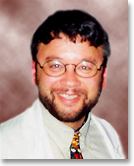
Dr. Theodore Friedman explains the role of the pituitary gland in a woman’s body.
Filed under: Cushing's, pituitary, Video | Tagged: Dr. Theodore Friedman, Pituitary gland, video | Leave a comment »

Dr. Theodore Friedman explains the role of the pituitary gland in a woman’s body.
Filed under: Cushing's, pituitary, Video | Tagged: Dr. Theodore Friedman, Pituitary gland, video | Leave a comment »
The perspectives of individuals living with Cushing’s disease, their caregivers and advocates.
In creating this series, Novartis hoped to shine a spotlight on key factors involved in living with Cushing’s disease, including diagnosis, disease management and the importance of a strong support network.
The video series has been posted on the Novartis YouTube channel and can be viewed via the following links:
Filed under: adrenal, Cushing's, pituitary, Treatments, Video | Tagged: advocates, caregivers, Cushing's, diagnosis, disease management, Novartis, patients, support network, video, YouTube | Leave a comment »
Scientists at the Salk Institute for Biological Studies have identified a protein that drives the formation of pituitary tumors in Cushing’s disease, a development that may give clinicians a therapeutic target to treat this potentially life-threatening disorder.
The protein, called TR4 (testicular orphan nuclear receptor 4), is one of the human body’s 48 nuclear receptors, a class of proteins found in cells that are responsible for sensing hormones and, in response, regulating the expression of specific genes. Using a genome scan, the Salk team discovered that TR4 regulates a gene that produces adrenocorticotropic hormone (ACTH), which is overproduced by pituitary tumors in Cushing’s disease (CD). The findings were published in the May 6, 2013 early online edition of Proceedings of the National Academy of Sciences.

“We were surprised by the scan, as TR4 and ACTH were not known to be functionally linked,” says senior author Ronald M. Evans, a professor in Salk’s Gene Expression Laboratory and a lead researcher in the Institute’s Helmsley Center for Genomic Medicine. “TR4 is driving the growth and overexpression of ACTH. Targeting this pathway could therapeutically benefit treatment of CD.”
In their study, Evans and his colleagues discovered that forced overexpression of TR4 in both human and mouse cells increased production of ACTH, cellular proliferation and tumor invasion rates. All of these events were reversed when TR4 expression was reduced.
First described more than 80 years ago, Cushing’s disease is a rare disorder that is caused by pituitary tumors or excess growth of the pituitary gland located at the base of the brain. People with CD have too much ACTH, which stimulates the production and release of cortisol, a hormone that is normally produced during stressful situations.
While these pituitary tumors are almost always benign, they result in excess ACTH and cortisol secretion, which can result in various disabling symptoms, including diabetes, hypertension, osteoporosis, obesity and psychological disturbances. Surgical removal of the tumors is the first-line therapy, with remission rates of approximately 80 percent; however, the disease recurs in up to 25 percent of cases.
Drugs such as cabergoline, which is used to treat certain pituitary tumors, alone or in combination with ketoconazole, a drug normally used to treat fungal infections, have been shown to be effective in some patients with Cushing’s disease. More recently, mefipristone-best known as the abortion pill RU-486-was approved by the FDA to treat CD. Despite these advances in medical therapy, the Salk scientists say additional therapeutic approaches are needed for CD.
“Pituitary tumors are extremely difficult to control,” says Michael Downes, a senior staff scientist in the Gene Expression Laboratory and a co-author of the study. “To control them, you have to kill cells in the pituitary gland that are proliferating, which could prevent the production of a vital hormone.”
Previous studies have found that, by itself, TR4 is a natural target for other signaling molecules in the pituitary. Small-molecule inhibitors that have been developed for other cancers could be potentially applied to disrupt this signaling cascade. “Our discovery,” says Evans, a Howard Hughes Medical Institute investigator and holder of the March of Dimes Chair in Molecular and Developmental Biology, “might lead clinicians to an existing drug that could be used to treat Cushing’s disease.
Notes about this neurogenetics and Cushing’s disease research
Other researchers on the study were Li Du, Marvin Bergsneider, Leili Mirsadraei, Stephen H. Young, William H. Yong and Anthony P. Heaney of the David A. Geffen School of Medicine at the University of California, Los Angeles, and Johan W. Jonker of the University of Groningen.
The study was supported by the National Institutes of Health, the Leona M. and Harry B. Helmsley Charitable Trust, the Samuel Waxman Cancer Research Foundation, the Jonsson Comprehensive Cancer Center at UCLA, and Ipsen/Biomeasure.
Contact: Andy Hoang – Salk Institute
Source: Salk Institute press release
Image Source: The ACTH Cushing’s disease diagram is credited to NIDDK/NIH and is available in the public domain.
Original Research: Abstract for “Evidence for orphan nuclear receptor TR4 in the etiology of Cushing disease” by Li Du, Marvin Bergsneider, Leili Mirsadraei, Steven H. Young, Johan W. Jonker, Michael Downes, William H. Yong, Ronald M. Evans, and Anthony P. Heaney in Proceedings of the National Academy of Sciences. Published May 6 2013 doi: 10.1073/pnas.1306182110
From http://neurosciencenews.com/tr4-cushings-disease-acth-neurogenetics-120/
Filed under: Cushing's, pituitary | Tagged: ACTH, cabergoline, cortisol, Cushing's Disease, diabetes, Dr. Anthony Heaney, hypertension, ketoconazole, mefipristone, obesity, osteoporosis, pituitary, protein, RU-486, Salk Institute for Biological Studies, surgery, TR4, tumor | Leave a comment »

First of all, a huge thank you to Robin Ess for making us a new image again this year. She does great work and I really appreciate all the images she’s made over the years.
As of right now, we have 8 bloggers taking the challenge. They’re all listed on the right side of http://cushie-blogger.blogspot.com/ Each time a new post is made, that blog moves to the head of the list.
Participants so far are:

Girls VS boys sleepover….how weird is it? – There is a HUGE difference from girl sleepover to boy sleepovers. Wait…Do boys even call it a boy sleepover? I don’t think they do because that doesn’t s…


Adrenal Insufficiency United –Since my bilateral adrenalectomy, I’ve realized very few medical personnel understand adrenal insufficiency and adrenal crisis. There are many reasons for…
Filed under: adrenal, adrenal crisis, Cushing's, pituitary, Rare Diseases | Tagged: blogs, CushieBlog, Cushing's Awareness Challenge 2015 | Leave a comment »

Menopause, obesity, and diabetes will top the clinical agenda at the Endocrine Society’s annual meeting, ENDO 2015, with a focus on personalized and precision approaches to disease management.
Endocrine-disrupting chemicals will also take the stage at the meeting, which runs from Thursday, March 5, through Sunday, March 8, in San Diego, California. New research to be presented includes an examination of the economic costs of exposure to these chemicals and their potential teratogenic effects.
Other topics on the agenda are the effects of male obesity on a couple’s fertility, a nasal spray that could cut calorie consumption, and a renewed look at the long-term safety of menopausal hormone therapy.
“The Endocrine Society is really known for cutting-edge research,” society president Richard J Santen, MD, from the University of Virginia School of Medicine, Charlottesville, told Medscape Medical News.
“For many of us in the field, it’s the premier meeting for both science and clinical reviews and new science presentations and networking,” added steering committee chair Matthew Ringel, MD, from Wexner Medical Center, Ohio State University, Columbus. “We’re excited about trying to increase the clinical-science part of the meeting and what would be relevant to clinical, basic, and translational-research attendees.”
As always, the meeting will feature bench science, bedside medicine, and the translation from one to the other, including plenary talks on both precision and personalized approaches to menopause, new genetic discoveries in obesity that could point to novel treatment targets, the link between antihyperglycemic therapy and cardiovascular disease, and fresh insights into the mechanisms of polycystic ovary syndrome.
The meeting begins the morning of Thursday, March 5, with two presidential plenary talks: “Genomics, Pharmacogenomics, and Functional Genomics in Menopausal Women: Implications for Precision Medicine,” by oncologist James N Ingle, MD, from the Mayo Clinic, Rochester, Minnesota, and “Personalized Menopause Management: Clinical and Biomarker Data That Inform Decision Making,” by JoAnn E Manson, MD, of Brigham and Women’s Hospital, Boston, Massachusetts.
“This issue of precision medicine has been such a hot topic, but people don’t really understand it. So the fact that we’re going to feature it in the very first talk is of interest,” Dr Santen said.
While this talk will offer a glimpse of the future, individualized approaches to menopause treatment are already here and will be featured in the session immediately following the plenary, when “Treatment of Symptoms of Menopause: An Endocrine Society Clinical-Practice Guideline” will be presented.
Wide Range of Endocrine Topics Will Be Addressed
Two other clinical-practice guidelines, on management of primary adrenal insufficiency and treatment of Cushing’s syndrome, will also be revealed during the meeting, on Saturday and Sunday, respectively.
And in a special scientific session on Friday, Janet Woodcock, MD, director of the US Food and Drug Administration’s Center for Drug Evaluation and Research, will speak on “Safety and Efficacy of Diabetes Drugs: Steering Between Scylla and Charybdis.”
Meanwhile, clinically focused “Meet the Professor” sessions will address obesity and diabetes, along with a wide range of other endocrine topics, including flushing and sweating disorders, vitamin D, thyroid, gynecomastia, endocrine tumors, testosterone therapy, and genetic counseling for endocrine patients. .
The meeting’s move — from June in previous years to March — means that it is no longer back-to-back with the annual scientific sessions of the American Diabetes Association (ADA).
“We’ve moved the meeting to March, which allows us some separation from the ADA to give us an opportunity to pull in some top diabetes topics and speakers. We’ve always done that over the years, but it allows a little more focus on that area,” Dr Ringel noted.
And, he hopes, more clinicians will be able to attend both meetings going forward. “Years ago, people tried to go to both, one after the other….It’s especially hard for clinicians to be away for that length of time,” he said.
There’s another new feature for ENDO 2015 that is likely to prove popular: “Endocrine Science Social” events will take place at 6:00 pm following the afternoon symposia each day, so attendees can discuss the topics over drinks.
“The philosophy is there’s synergy between scientists and clinicians,” Dr Santen explained.
“With more than 8000 attendees expected, the meeting overall is too big for networking, so we’re going to have a social gathering after the sessions each afternoon.”
Filed under: adrenal, Cushing's, Meetings and Conferences, pituitary, Rare Diseases | Tagged: Cushing's, Cushing's Syndrome, diabetes, ENDO 2015, menopause, obesity | Leave a comment »

