Study Shows Metyrapone Effective for Treating Rare Cushing’s Syndrome

The first ever prospective study to test the safety and efficacy of metyrapone in patients with Cushing’s Syndrome in a real-life setting has shown successful results.

HRA Pharma Rare Diseases SAS, of Paris, has presented data from PROMPT, the first ever prospective study designed to confirm metyrapone efficacy and good tolerance in patients with endogenous Cushing’s Syndrome, with results confirming that metyrapone controlled 80% of the patients at week 12 with either normalisation or at least 50% decrease of urinary free cortisol. These initial results are being published to coincide with HRA Pharma Rare Diseases’ participation in the e-ECE conference 2020.

Cushing’s Syndrome is a rare condition where patients have too much cortisol in their blood. Endogenous Cushing’s Syndrome is most often caused by hormone-releasing tumours of the adrenal or the pituitary glands. To manage this condition, controlling high cortisol levels in patients is important.

Successful results with metyrapone

Metyrapone is an inhibitor of the 11-beta-hydroxylase enzyme, which majorly contributes to cortisol synthesis and is approved in Europe for the treatment of endogenous Cushing’s Syndrome based on observational retrospective studies published over more than 50 years. As this prospective study took place over five years from April 2015 to April 2020, the longitudinal format reduced potential sources of bias and helped determine the risk factors of metyrapone when compared to the previous retrospective studies.

The first results of this study showed that at the end of the 12 weeks, metyrapone therapy is a rapid-onset, effective and safe medical treatment in patients living with the syndrome.

Evelina Paberze, COO of HRA Pharma Rare Diseases, said: “At HRA Pharma Rare Diseases, we are dedicated to building comprehensive evidence of our products. The first results of this prospective study clearly demonstrate the effectiveness of metyrapone in treating Cushing’s Syndrome.”

The next set of data on the six-month optional extension is awaiting confirmation and the full study with the final results will be published next year.

Frederique Welgryn, Managing Director of HRA Pharma Rare Diseases, added: “Cushing’s Syndrome is a chronic disease that can lead to deterioration in patients’ conditions if not treated appropriately. We are thrilled to announce that this first prospective study verifies that metyrapone is both an effective and safe way to treat endogenous Cushing’s Syndrome. This is a big step given the high unmet medical need for patients with endogenous Cushing’s Syndrome.”

From https://www.healtheuropa.eu/study-shows-metyrapone-effective-for-treating-rare-cushings-syndrome/102584/

High Cortisol Levels in Urine May Be Linked to Changes in Blood Sugar Metabolism

Abnormally high levels of cortisol in the urine — one of the hallmarks of Cushing’s syndrome — seem to be associated with alterations in blood sugar metabolism in obese patients, a study found.

The study, “Hypercortisolism and altered glucose homeostasis in obese patients in the pre-bariatric surgery assessment,” was published in the journal Diabetes/Metabolism Research and Reviews.

Short-Term Oral Corticosteroid Use Tied to Higher Risks of GI Bleeds, Sepsis, Heart Failure

Study Authors: Tsung-Chieh Yao, Ya-Wen Huang, et al.; Beth I. Wallace, Akbar K. Waljee

Target Audience and Goal Statement: Primary care physicians, rheumatologists, pulmonologists, dermatologists, gastroenterologists, cardiologists

The goal of this study was to examine the associations between oral corticosteroid bursts and severe adverse events among adults in Taiwan.

Question Addressed:

  • What were the associations between steroid bursts and severe adverse events, specifically gastrointestinal (GI) bleeding, sepsis, and heart failure?

Study Synopsis and Perspective:

It has long been known that long-term use of corticosteroids can be both effective and toxic. Long-term use is associated with adverse effects such as infections, GI bleeding/ulcers, cardiovascular disease (CVD), Cushing syndrome, diabetes and metabolic syndromes, cataracts, glaucoma, and osteoporosis. Most clinical practice guidelines caution against long-term steroid use unless medically necessary.

Action Points

  • In a retrospective cohort study and self-controlled case series, prescriptions for oral steroid bursts were found to be associated with increased risks for gastrointestinal bleeding, sepsis, and heart failure within the first month after initiation, despite a median exposure of just 3 days.
  • Note that the risks were highest 5 to 30 days after exposure, and attenuated during the subsequent 31 to 90 days.

Instead, clinical practice guidelines recommend steroid bursts for inflammatory ailments such as asthma, inflammatory bowel disease, and rheumatoid arthritis. Waljee and colleagues noted in 2017 that they are most commonly used for upper respiratory infections, suggesting that many people are receiving steroids in the real world.

In a retrospective cohort study and self-controlled case series, prescriptions for oral steroid bursts — defined as short courses of oral corticosteroids for 14 or fewer days — were found to be associated with increased risks for GI bleeding, sepsis, and heart failure within the first month after initiation, despite a median exposure of just 3 days, according to Tsung-Chieh Yao, MD, PhD, of Chang Gung Memorial Hospital in Taoyuan, and colleagues.

The risks were highest 5 to 30 days after exposure, and attenuated during the subsequent 31 to 90 days, they reported in Annals of Internal Medicine.

The self-controlled case series was based on national medical claims records. Included were adults, ages 20-64, covered by Taiwan’s National Health Insurance in 2013-2015.

Out of a population of more than 15.8 million, study authors identified 2,623,327 people who received a steroid burst during the study period. These individuals were age 38 on average, and 55.3% were women. About 85% had no baseline comorbid conditions.

The most common indications for the steroid burst were skin disorders and respiratory tract infections.

The incidence rates among patients prescribed steroid bursts were 27.1 per 1,000 person-years for GI bleeding (incidence rate ratio [IRR] 1.80, 95% CI 1.75-1.84), 1.5 per 1,000 person-years for sepsis (IRR 1.99, 95% CI 1.70-2.32), and 1.3 per 1,000 person-years for heart failure (IRR 2.37, 95% CI 2.13-2.63).

Absolute risk elevations were similar in patients with and without comorbid conditions, meaning that the potential for harm was not limited to those at high risk for these adverse events.

The study authors acknowledged that they could not adjust for disease severity and major lifestyle factors such as alcohol use, smoking, and body mass index; because these factors were static, the effect could be eliminated using the self-controlled case series design. Their reliance on prescription data also meant they could not tell if patients actually complied with oral corticosteroid therapy. Furthermore, the exclusion of the elderly and younger populations also left room for underestimation of the risks of steroid bursts, they said.

Source References: Annals of Internal Medicine 2020; DOI: 10.7326/M20-0432

Editorial: Annals of Internal Medicine 2020; DOI: 10.7326/M20-4234

Study Highlights and Explanation of Findings:

Over the 3-year study period, steroid bursts were commonly prescribed to adults. Such prescriptions were written for common conditions, including skin disorders and upper respiratory tract infections. The highest risks for GI bleeding, sepsis, and heart failure occurred within the first month after receipt of the steroid burst, and this risk was attenuated during the subsequent 31 to 90 days.

“Our findings are important for physicians and guideline developers because short-term use of oral corticosteroids is common and the real-world safety of this approach remains unclear,” the researchers wrote. Notably, one corticosteroid that fits the bill is dexamethasone — a medication that holds promise for the treatment of critically ill COVID-19 patients, although it is not generally prescribed orally for these patients.

Based on preliminary results, the NIH’s COVID-19 treatment guidelines panel recommended the use of “dexamethasone (at a dose of 6 mg per day for up to 10 days) in patients with COVID-19 who are mechanically ventilated and in patients with COVID-19 who require supplemental oxygen but who are not mechanically ventilated.” In addition, they recommend “against using dexamethasone in patients with COVID-19 who do not require supplemental oxygen.”

“We are now learning that bursts as short as 3 days may increase risk for serious AEs [adverse events], even in young and healthy people. As providers, we must reflect on how and why we prescribe corticosteroids to develop strategies that prevent avoidable harms,” wrote Beth Wallace, MD, and Akbar Waljee, MD, both of the VA Ann Arbor Healthcare System and Michigan Medicine.

On the basis of the reported risk differences in the study, Wallace and Waljee calculated that one million patients exposed to corticosteroid bursts experienced 41,200 GI bleeding events, 400 cases of sepsis, and 4,000 cases of new heart failure per year that were directly attributed to this brief treatment.

“Although many providers already avoid corticosteroids in elderly patients and those with comorbid conditions, prescribing short bursts to ‘low-risk’ patients has generally been viewed as innocuous, even in cases where the benefit is unclear. However, Yao and colleagues provide evidence that this practice may risk serious harm, making it difficult to justify in cases where corticosteroid use lacks evidence of meaningful benefit,” they wrote in an accompanying editorial.

“Medication-related risks for AEs can, of course, be outweighed by major treatment benefit. However, this study and prior work show that corticosteroid bursts are frequently prescribed for self-limited conditions, where evidence of benefit is lacking,” Wallace and Waljee noted.

“As we reflect on how to respond to these findings, it is useful to note the many parallels between use of corticosteroid bursts and that of other short-term medications, such as antibiotics and opiates. All of these treatments have well-defined indications but can cause net harm when used — as they frequently are — when evidence of benefit is low,” they emphasized.

Last Updated August 07, 2020
Reviewed by Dori F. Zaleznik, MD Associate Clinical Professor of Medicine (Retired), Harvard Medical School, Boston

From https://www.medpagetoday.org/primarycare/generalprimarycare/87959?xid=nl_mpt_DHE_2020-08-08&eun=g1406328d0r&utm_term=NL_Daily_DHE_dual-gmail-definition&vpass=1

Treatment improved multiple cardiovascular risk and other factors in Cushing’s disease patients


Hypercortisolism Quickly Reversed With Oral Tx

Oral osilodrostat (Isturisa) normalized cortisol levels in Cushing’s disease patients who were ineligible for or not cured with pituitary surgery, according to the phase III LINC 3 trial.

After 24 weeks of open-label treatment with twice-daily osilodrostat, 53% of patients (72 of 137; 95% CI 43.9-61.1) were able to maintain a complete response — marked by mean 24-hour urinary free cortisol concentration of the upper limit of normal or below — without any uptitration in dosage after the initial 12-week buildup phase, reported Rosario Pivonello, MD, of the Università Federico II di Napoli in Italy, and colleagues.

As they explained in their study online in The Lancet Diabetes & Endocrinology, following the 24-week open-label period these complete responders to treatment were then randomized 1:1 to either remain on osilodrostat or be switched to placebo.

During this 10-week randomization phase, 86% of patients maintained their complete cortisol response if they remained on osilodrostat versus only 29% of those who were switched to placebo (odds ratio 13.7, 95% CI 3.7-53.4, P<0.0001) — meeting the trial’s primary endpoint.

As for adverse events, more than half of patients experienced hypocortisolism, and the most common adverse events included nausea (42%), headache (34%), fatigue (28%), and adrenal insufficiency (28%).

“Alongside careful dose adjustments and monitoring of known risks associated with osilodrostat, our findings indicate a positive benefit-risk consideration of treatment for most patients with Cushing’s disease,” the researchers concluded.

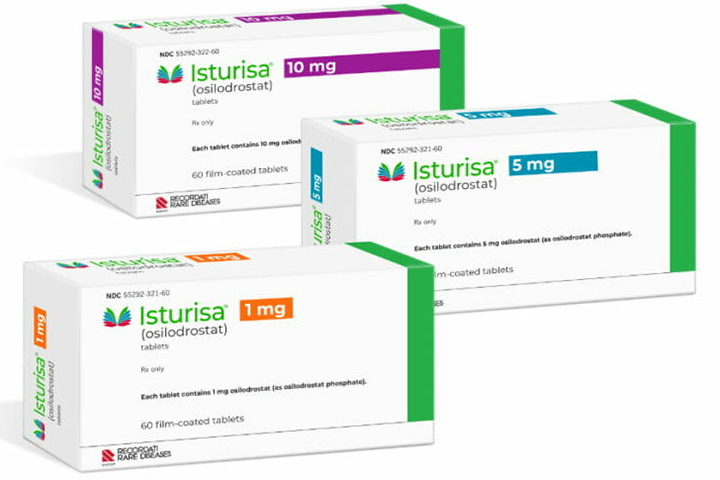
This oral inhibitor of 11β-­hydroxylase — the enzyme involved in the last step of cortisol synthesis — was FDA approved in March 2020 based on these findings, and is currently available in 1 mg, 5 mg, and 10 mg film-coated tablets.

The prospective trial, consisting of four periods, included individuals between the ages of 18 and 75 with confirmed persistent or recurrent Cushing’s disease — marked by a mean 24-h urinary free cortisol concentration over 1.5 times the upper limit of normal (50 μg/24 hours), along with morning plasma adrenocorticotropic hormone above the lower limit of normal (9 pg/mL). All individuals had either undergone prior pituitary surgery or irradiation, were not deemed to be candidates for surgery, or had refused to have surgery.

During the first open-label study period, all participants took 2 mg of oral osilodrostat twice daily, spaced 12 hours apart. This dose was then titrated up if the average of three 24-h urinary free cortisol concentration samples exceeded the upper limit of normal. During the second study period, which spanned weeks 12 through 24, all participants remained on their osilodrostat therapeutic dose. By week 24, about 62% of the participants were taking a therapeutic dose of 5 mg or less twice daily; only about 6% of patients needed a dose higher than 10 mg twice daily.

In the third study period, which spanned weeks 26 through 34, “complete responders” who achieved normal cortisol levels were then randomized to continue treatment or be switched to placebo, while those who did not fully respond to treatment continued on osilodrostat. For the fourth study period, from weeks 24 through 48, all participants were switched back to active treatment with osilodrostat.

Overall, 96% of participants were able to achieve a complete response at some point while on osilodrostat treatment, with two-thirds of these responders maintaining this normalized cortisol level for at least 6 months. The median time to first complete response was 41 days.

Metabolic profiles also improved along with this reduction in cortisol levels. These included improvements in body weight, body mass index, fasting plasma glucose, both systolic and diastolic blood pressures, and total cholesterol levels.

“Given the known clinical burden of cardiovascular risk associated with Cushing’s disease, the improvement in clinical features shown here indicates important benefits of osilodrostat,” the researchers said. “By improving multiple cardiovascular risk factors, our findings are likely to be clinically relevant.”

Along with metabolic improvements, patients also had “clinically meaningful improvements” in quality of life, as well as reductions in depressive symptoms measured by the Beck Depression Inventory score, the investigators reported.

One limitation to the trial, they noted, was an inability to control for concomitant medications, since nearly all participants were taking other medications, particularly antihypertensive and antidiabetic therapies.

“Further examination of the effects of osilodrostat on the clinical signs of Cushing’s disease, and the reasons for changes in concomitant medications and the association between such medications and clinical outcomes would be valuable,” Pivonello’s group said.


Smart, Soft Contact Lens For Wireless Immunosensing of Cortisol

Abstract

Despite various approaches to immunoassay and chromatography for monitoring cortisol concentrations, conventional methods require bulky external equipment, which limits their use as mobile health care systems. Here, we describe a human pilot trial of a soft, smart contact lens for real-time detection of the cortisol concentration in tears using a smartphone. A cortisol sensor formed using a graphene field-effect transistor can measure cortisol concentration with a detection limit of 10 pg/ml, which is low enough to detect the cortisol concentration in human tears. In addition, this soft contact lens only requires the integration of this cortisol sensor with transparent antennas and wireless communication circuits to make a smartphone the only device needed to operate the lens remotely without obstructing the wearer’s view. Furthermore, in vivo tests using live rabbits and the human pilot experiment confirmed the good biocompatibility and reliability of this lens as a noninvasive, mobile health care solution.

INTRODUCTION

The steroid hormone, cortisol, which is known as a stress hormone, is secreted by the adrenal gland when people are stressed psychologically or physically (1). This secretion occurs when the adrenal gland is stimulated by adrenocorticotropic hormone, which is secreted by the pituitary gland when it is stimulated by the corticotropin-releasing hormone secreted by the hypothalamus. This serial cortisol secretion system is referred to as a hypothalamus–pituitary gland–adrenal gland axis, which is affected by chronic stress, resulting in abnormal secretion of cortisol (23). The accumulation of cortisol caused by the abnormal secretion of cortisol increases the concentrations of fat and amino acid, which can result in diverse severe diseases (e.g., Cushing’s disease, autoimmune disease, cardiovascular complications, and type 2 diabetes) and neurological disorders (such as depression and anxiety disorders) (27). In contrast, abnormally low cortisol levels can lead to Addison’s disease, which results in hypercholesterolemia, weight loss, and chronic fatigue (8). In addition, it was recently reported that plasma cortisol can be correlated to the prognosis of traumatic brain injury (9). Furthermore, the extent of cortisol secretion varies from person to person, and it changes continuously (1011). Thus, developing health care systems for real-time monitoring of the cortisol level has been explored extensively over the past decade as the key to the quantitative analysis of stress levels. Although various efforts have led to the development of cortisol sensors that can measure the concentration of cortisol in blood, saliva, sweat, hair, urine, and interstitial fluid (1217), the accurate measurement of cortisol concentrations has been limited because of the difficulties associated with the transportation and storage of cortisol as well as the instability of the biologically active cortisol in these body fluids at room temperature. In addition, these conventional sensing methods require bulky equipment for the extraction and analysis of these body fluids, which is not suitable for mobile health care systems (1218). Therefore, the development of noninvasive and wearable sensors that can monitor cortisol concentration accurately is highly desirable for a smart health care solution. For example, the immunoassay method, which uses an antigen-antibody binding reaction, has been used extensively for electrochemical cortisol immunosensors using saliva and interstitial fluid, except tears (121419). However, these immunosensors still require the use of bulky impedance analyzers for the analysis of the Nyquist plot from electrochemical impedance spectroscopy. Although the cyclic voltammetry (CV) technique can be used as an alternative approach for sensing cortisol, additional bulky electrochemical instruments still are necessary for analyzing the CV curves (131419). Recently, wearable forms of cortisol sensors that use sweat were developed (15), but they still required bulky measurement equipment (1516). Therefore, portable and smart sensors that can monitor the accurate concentration of cortisol in real time are highly desirable for use in mobile health care.

Among the various body fluids, tears, in particular, contain important biomarkers, including cortisol (2021). Thus, the integration of biosensors with contact lenses is a potentially attractive candidate for the noninvasive and real-time monitoring of these biomarkers from tears (2225). However, an approach for fabricating a smart contact lens for sensing the cortisol in tears has not been demonstrated previously. Thus, here, we present an extraordinary approach for the formation of a smart, soft contact lens that enables remote, real-time monitoring of the cortisol level in the wearer’s tears using mobile phones. This smart, soft contact lens is composed of a cortisol sensor, a wireless antenna, capacitors, resistors, and integrated circuit chips that use stretchable interconnects without obstructing the wearer’s view. The components of this device (except the antenna) were protected from mechanical deformations by locating each of the components on discrete, rigid islands and by embedding these islands inside an elastic layer. A graphene field-effect transistor (FET; with the binding of monoclonal antibody) was used as this cortisol immunosensor, which exhibited a sufficiently low detection limit, i.e., 10 pg/ml, for its sensing of cortisol in human tears in which the cortisol concentration ranges from 1 to 40 ng/ml (26). This sensor was integrated with a near-field communication (NFC) chip and antenna inside the soft contact lens for the real-time wireless transmission of the data to the user’s mobile device (e.g., a smart phone or a smart watch). The antenna occupies a relatively large area of this soft lens, so it requires its high stretchability, good transparency, and low resistance for operating a standard NFC chip at 13.56 MHz. In our approach, the hybrid random networks of ultralong silver nanofibers (AgNFs) and fine silver nanowires (AgNWs) enabled high transparency and good stretchability of this antenna and its low sheet resistance for reliable standard NFCs (at 13.56 MHz) inside this smart contact lens. Thus, the fully integrated system of this smart contact lens provided wireless and battery-free operation for the simultaneous detection and transmission of the cortisol concentration from tears to a mobile phone using standard NFC. In addition, a human pilot trial and in vivo tests conducted using live rabbits demonstrated the biocompatibility of this lens, and its safety against inflammation and thermal/electromagnetic field radiation suggests its substantial usability as a noninvasive, mobile health care solution.

RESULTS

Cortisol immunosensor

A graphene FET sensor was fabricated by binding the cortisol monoclonal antibody (C-Mab) to the surface of graphene for the immunosensing of cortisol. Here, graphene acts as a transducer that converts the interaction between cortisol and C-Mab into electrical signals. Figure 1A shows the immobilization process of C-Mab to graphene. Immobilization proceeds through amide bonding of the C-Mab onto the carboxyl group of the graphene surface via the EDC [1-ethyl-3-(3-dimethylaminopropyl) carbodiimide hydrochloride]/NHS (N-hydroxysulfosuccinimide) coupling reaction. A chemical vapor deposition–synthesized graphene layer was transferred onto a desired substrate and exposed to ultraviolet ozone (UVO) to activate the surface of the graphene with the carboxylate group. Figure S1 shows the contact angle between this surface of the graphene and a droplet of deionized (DI) water. Longer exposure time to UVO can decrease the hydrophobicity of graphene with decreasing the contact angle. Table S1 shows the increase in the electrical resistance of graphene that resulted from this UVO treatment. In our experiment, 2 min of exposure time to UVO decreased the contact angle from 70° to 38° without increasing the resistance of the graphene notably. UVO exposure times longer than this threshold time degraded the resistance of the graphene excessively, so the time of exposure of our samples to UVO was limited to 2 min. Figure S2A illustrates the process of immobilizing C-Mab through the EDC/NHS coupling reaction. This two-step coupling reaction of EDC and NHS can mediate the amide bonding between the carboxylate group of the UVO-exposed graphene and the amine group of the protein (12172728). Here, EDC forms reactive O-acylisourea ester, thereby making the surface unstable. This O-acylisourea ester reacts with the NHS to form amine-reactive NHS ester with the surface still remaining semistable. Then, C-Mab with the amine group reacts with the amine-reactive NHS ester, thereby forming stable amide bonding that can immobilize C-Mab to the NHS on the surface of the graphene. Figure S2B shows the Fourier transform infrared (FTIR) spectroscopy spectra of the DI water after the cortisol sensor had been immersed for 24 hours. The spectra of the DI water in which the sensor was immersed were not significantly different from those of the pristine DI water. However, the C-Mab solution that had a concentration of 1 μg/ml had a significant peak intensity in the range of 3000 to 2800 cm−1, representing the N-H bonding in the C-Mab. These results indicated that C-Mab formed stable bonding on the carboxylated graphene and was negligibly detached by exposure to water.

From https://advances.sciencemag.org/content/6/28/eabb2891