BLA Instead of Second Pituitary Surgery

One of the problems that can arise with a BLA (bilateral adrenalectomy) instead of a repeat pituitary surgery for Cushing’s recurrence is Adrenal Insufficiency.  Another is Nelson’s Syndrome.

Nelson’s syndrome is a rare disorder that occurs in some patients with Cushing’s disease patients as a result of removing both adrenal glands. In Nelson’s syndrome, the pituitary tumor continues to grow and release the hormone ACTH.

This invasive tumor enlarges, often causing visual loss, pituitary failure and headaches. One key characteristic of Nelson’s disease is dark skin pigmentation, resulting from the skin pigment cells responding to the release of ACTH.


AnchorNelson’s Syndrome: Physiology

Nelson’s syndrome can develop as a result of a specific treatment (bilateral adrenalecomy) for the pituitary disease called Cushing’s disease. The harmful effects of Cushing’s disease are due to the excessive amount of the hormone cortisol produced by the adrenal glands.

To treat Cushing’s disease, your doctor may recommend removing the adrenal glands, during a procedure called a bilateral adrenalectomy. The procedure will stop cortisol production and provide relief. However, the procedure does not treat the actual tumor. Rapid growth of the pituitary tumor can occur.

In about 15-25 percent of patients who had a bilateral adrenalectomy, Nelson’ syndrome develops within one to four years.


Darkening of Skin Color - Nelson's Syndrome SymptomAnchor

Nelson’s Syndrome: Symptoms

The most obvious symptom of Nelson’s syndrome is the darkening of the skin color (hyperpigmentation).

Macroadenomas

Macroadenomas are large pituitary tumors. Large tumors can compress surrounding structures, primarily the normal pituitary gland and optic (visual) pathways, causing symptoms. The symptoms that result from the compression are independent of the effects of excess growth hormone secretion.
This may result in vision problems:

  • Vision loss. This occurs when macroadenomas grow upward into the brain cavity, compressing the optic chiasm.
  • A loss of the outer peripheral vision, called a bitemporal hemianopsia Bitemporal Hemianopsia - Symptom of Nelson's Syndrome
    • When severe, a patient can only see what is directly in front of them.
    • Many patients do not become aware of their visual loss until it is quite severe.
  • Other visual problems can include:
    • Loss of visual acuity (blurry vision), especially if the macroadenoma grows forward and compresses an optic nerve.
    • Colors not perceived as bright as usual

Pituitary Failure or Hypopituitarism

Increased compression of the normal gland can cause hormone insufficiency, called hypopituitarism. The symptoms depend upon which hormone is involved.


AnchorNelson’s Syndrome: Diagnosis

Most patients with Nelson’s syndrome have undergone a bilateral adrenalectomy for the treatment of Cushing’s disease

Diagnostic testing includes:

  • Hormone testing. Typically, the blood ACTH levels are very elevated. Learn more about hormone testing at the UCLA Pituitary Tumor Program.
  • MRI imaging. Magnetic resonance imaging (MRI) scan of the pituitary gland can detect the presence of an adenoma, a pituitary tumor.

AnchorNelson’s Syndrome: Treatment Options

Surgery for Nelson's Syndrome

Treating Nelson’s syndrome effectively requires an experienced team of experts. Specialists at the UCLA’s Pituitary Tumor Program have years of experience managing the complex coordination and care for treatment of Nelsons’ syndrome.

Treatment options include:

AnchorSurgery for Nelson’s Syndrome

Surgical removal of the pituitary adenoma is the ideal treatment; however, it is not always possible. Surgical removal requires advanced surgical approaches, including delicate procedures involving the cavernous sinus.

If surgery is required, typically the best procedure is through a nasal approach. Our neurosurgeons who specialize in pituitary tumor surgery are experts in the minimally invasive expanded endoscopic endonasal technique. This procedure removes the tumor while minimizing complications, hospital time and discomfort. This advanced technique requires specialized training and equipment.

Very large tumors that extend into the brain cavity may require opening the skull (craniotomy) to access the tumor. Our surgeons are also experts in the minimally invasive “key-hole” craniotomy, utilizing a small incision hidden in the eyebrow.

AnchorRadiation Therapy for Nelson’s Syndrome

Radiation Therapy for Nelson's SyndromeRadiation therapy can be effective in controlling the growth of the tumor. However, if you received radiation therapy in the past, additional radiation may not be safe.

Our Pituitary Tumor Program offers the latest in radiation therapy, including stereotactic radiosurgery. This approach delivers a highly focused dose of radiation to the tumor while leaving the surrounding brain structures unharmed (with the exception of the normal pituitary gland).

One consequence of radiation treatment is that it can cause delayed pituitary failure. This typically occurs several years after treatment, and continued long-term follow-up with an endocrinologist is important. You may require hormone replacement therapy.

Medical Therapy for Nelson’s Syndrome

Medication for Nelson's SyndromeMedical therapies for the treatment of Nelson’s syndrome are currently limited, but include:

  • Somatostatin-analogs (SSAs). These medications are typically used to treat acromegaly. A small number of Nelson’s syndrome patients may respond.
  • Cabergoline. This medication is typically used to treat prolactinomas; you may require a very high dose.
  • Temozolomide. This is a type of chemotherapy used to treat primary brain tumors called glioblastoma.

If you require medication to treat Nelson’s syndrome, our endocrinologists will monitor you closely.

From http://pituitary.ucla.edu/body.cfm?id=53


New Jersey Ambulances Carrying Solu-Cortef

solu-cortefThe New Jersey Department of Health passed a waiver in October of last year that allows ambulances to carry Solu- Cortef, for the purposes of treating an adrenal crisis. As a result, New Jersey ambulances can be better prepared to treat adrenal insufficiency.

This news was brought to NADF by Karen Fountain of the CARES Foundation, who has been helping push state health directors to accept protocols to help treat adrenal insufficient patients during an emergency.

Adrenal insufficient people in New Jersey should contact their local EMS to make them aware of the waiver, and encourage them to carry Solu-Cortef in their ambulances.

The hope is that other states, and eventually the entire country and beyond, will start having their ambulances carry the needed medication to treat adrenal crisis.

http://www.nadf.us

Myth: It is MY fault that I got Cushing’s…

Myth: “It is MY fault that I got Cushing’s. I did something wrong that caused me to be sick! If I would have just done XYZ, this would not be happening to me!”

myth-busted

Fact: This is a very controversial topic because we don’t like to talk about it. However, many people struggle with this myth. We NEED to dispel this myth my friends! Patients themselves assume responsibility, accountability, and self blame for becoming ill.

To compound all of that, patients are often told by loved ones, family, and sometimes even their churches or other supports that there is something that THEY could be doing or haven’t done that has caused their declining health. “If you would just follow that raw food diet, then all of your symptoms would go away”, “Juicing is the answer! I told you to juice and you wouldn’t get those tumors!”, Sometimes, you are told that if you would just pray harder or have greater faith, then there is no way that you would be sick right now. And my absolute favorite, “you are just too obsessed with being sick and having Cushing’s!  Stop thinking that you have it and it will go away!”.

Now, don’t get me wrong, I find value in “positive thinking” and affirming health, wealth, and all kinds of great things. This helps build up strength and personally keeps me motivated, especially during the times that I feel like absolutely throwing in the towel and giving up!

However, I am NOT the reason and YOU are not the reason for this war with this dreadful disease. What many people don’t understand is how tenacious, brave, courageous, and INDOMITABLE you are! Cushing’s patients do not just get surgery and then everything is magically OK.

Many patients have to go through multiple surgeries, sometimes radiation, sometimes years of testing to find the ultimate source of the disease, even after having several organs messed with. Even after patients obtain their “cure”, they are faced with residual and lingering negative effects of the illness, other hormone dysregulation issues, and the anxiety and fear of a recurrence which is based in absolute reality.

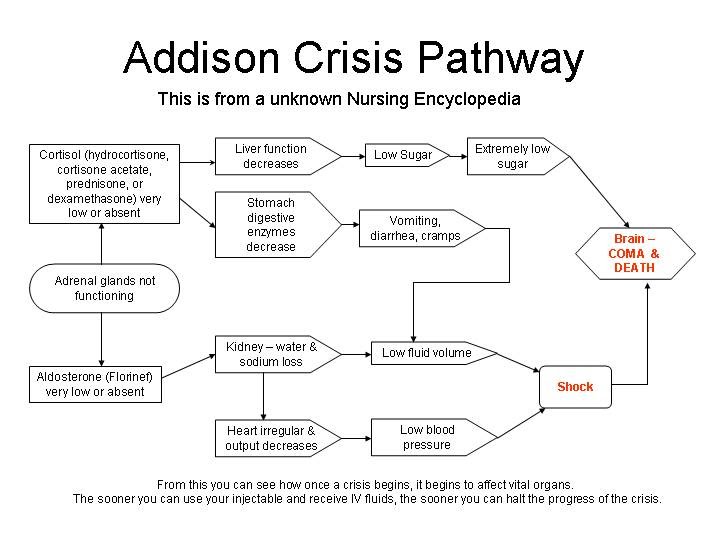
There are people, like myself, who are in remission from Cushing’s, BUT we now have Addison’s Disease/Adrenal Insufficiency as a result of removing vital organs in order to save our lives from Cushing’s. So, are we to think that Adrenal Insufficiency is ALSO our faults every time we near death after an adrenal crisis?! NO! NO! NO!

This is NOT your fault! This is NOT your doing! STOP blaming yourself! The best you can do is to FIGHT! Take an empowered stance by saying “NO” to those who won’t listen. Say “NO” to those who project blame onto you and tell you that this is just a “fat person’s excuse to stay fat”. You are not just a “fat person”! YOU are an amazing person who is fighting for your life!

Let me be clear that this blaming is common and we all do it. In my “5 stages of Loss” series on Youtube; I address the “Bargaining” stage of loss, in which we assume responsibility for getting sick or even for getting better.

Everyone should watch this to understand why and how we do this:

Remember, you are a survivor! YOU are Indomitable!!! This is NOT your fault! You WILL overcome!

Myth: YOU are the problem and the reason for your cortisol levels…

Myth: YOU are the problem and the reason for your cortisol levels. Having issues with too much or too little cortisol, the stress hormone, means that YOU are stressing too much or are too anxious. “YOU could control your levels if you would JUST calm down!”
myth-busted
Fact: YOU are NOT the problem! The dysfunction in your body is the problem. It is true that cortisol is your stress hormone or fight or flight hormone. This hormone helps your body compensate for and deal with trauma or stress, both physical and emotional. So, yes, your body does have a reaction to stress.
However, for people with Cushing’s, that hormone goes haywire. Too much cortisol leads to Cushing’s symptoms and having too little cortisol leads to Adrenal Insufficiency. Normally, our bodies’ response to stress is to pump out 10X the amount of your baseline cortisol to cope. If it is not able to do this, it will go into shock and can lead to death unless the emergency protocol is followed with an emergency injection of steroid. No amount of coping skills can “control” one’s physiological response to stress.

Today in Lab History

Jokichi Takamine was a Japanese-American biochemist and industrialist, born Nov. 3, 1854, who isolated the hormone produced in the adrenal gland that causes the body to respond to emergencies. This chemical was adrenalin — now called epinephrine — from the suprarenal gland. It was the first pure hormone to be isolated from natural sources.

He applied for and received a U.S. patent on the substance, and went on to make a fortune with his marketing of Adrenalin. In fact, the product that he marketed was not pure epinephrine, but a mixture of the hormone and its sibling compound, norepinephrine, or noradrenaline. It is now made synthetically. He also found takadastase, and played a key role in the introduction of phosphate fertilizer along with various other manufacturing and chemical industries to Japan.

~~~~~

How_to_give_EpiPen

Epinephrine, an EpiPen or Auvi-Q/Allerject injection, should be given in the mid-anterior lateral thigh (not the outer thigh). We call this the EpiCenter of the thigh, and this video segment from the EpiCenter Medical (http://www.epicentermedical.com) online anaphylaxis first aid course has a thigh location graphic to help you pinpoint the most effective location for the injection.

http://youtu.be/C87K9MI946M