We’re 17 Years Old!

happybirthday-2015

It’s unbelievable but the idea for Cushing’s Help and Support arrived 17 years ago last night.  That’s a long time for anything online.

I was talking with my dear friend Alice, who ran a wonderful menopause site called Power Surge, wondering why there weren’t many support groups online (OR off!) for Cushing’s and I wondered if I could start one myself and we decided that I could.

The first website (http://www.cushings-help.com) first went “live” July 21, 2000 and the message boards September 30, 2000. Hopefully, with these sites, I’m making some helpful differences in someone else’s life!

The message boards are very active and we have weekly online text chats, occasional live interviews, local meetings, email newsletters, a clothing exchange, a Cushing’s Awareness Day Forum, podcasts, phone support and much more.

Whenever one of the members of the boards gets into NIH, I try to go to visit them there. Other board members participate in the “Cushie Helper” program where they support others with one-on-one support, doctor/hospital visits, transportation issues and more.

Of course, we now have a Facebook page and 2 groups.  Both are secret, so if you want to join, please email  or PM me for an invitation.

Other sites in the Cushing’s Help “Family”


maryo colorful zebra

Sloan Kettering (New York City) Clinical Trials & Research


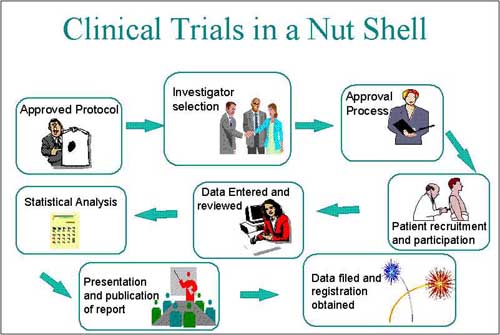
Clinical trials are research studies that test new treatments to see how well they work. Our Pituitary and Skull Base Tumor Center is leading clinical trials investigating new medical therapies for patients with Cushing’s disease and acromegaly. They are also involved in quality-of-life studies aimed at improving long-term follow-up care for patients who need it.

Our experts can help determine which clinical trials are right for you. The following clinical trials for pituitary tumors are currently enrolling new patients.

To learn more about a particular study, choose from the list below. For more information about our research and clinical trials, call us at 212-639-3935, or talk with your doctor.

16 Years Old!

happybirthday-2015

It’s unbelievable but the idea for Cushing’s Help and Support arrived 16 years ago last night.  That’s a long time for anything online.

I was talking with my dear friend Alice, who ran a wonderful menopause site called Power Surge, wondering why there weren’t many support groups online (OR off!) for Cushing’s and I wondered if I could start one myself and we decided that I could.

The first website (http://www.cushings-help.com) first went “live” July 21, 2000 and the message boards September 30, 2000. Hopefully, with these sites, I’m making some helpful differences in someone else’s life!

The message boards are very active and we have weekly online text chats, occasional live interviews, local meetings, email newsletters, a clothing exchange, a Cushing’s Awareness Day Forum, podcasts, phone support and much more.

Whenever one of the members of the boards gets into NIH, I try to go to visit them there. Other board members participate in the “Cushie Helper” program where they support others with one-on-one support, doctor/hospital visits, transportation issues and more.

Of course, we now have a Facebook page and 2 groups.  Both are secret, so if you want to join, please email  or PM me for an invitation.

Other sites in the Cushing’s Help “Family”


maryo colorful zebra

8th Annual Johns Hopkins Pituitary Patient Day

Johns Hopkins Pituitary Patient Day

Join us on Saturday, September 17, 2016

8th Annual Johns Hopkins Pituitary Patient Day
Saturday, September 17, 2016, 9:30 a.m.
Location:
Johns Hopkins Mt. Washington Conference Center
5801 Smith Avenue
Baltimore, MD 21209
map and directions

This is a free event, but seating is limited. Reserve your space now: Please R.S.V.P. by September 9, 2016 by email (preferred) to PituitaryDay@jhmi.edu  or by calling Alison Dimick at 410-955-3921.

Agenda

9:30 – 9:55 a.m.: Registration

9:55 – 10:00 a.m.: Welcome and Acknowledgements

10:00 – 10:25 a.m.: Different Kinds of Tumors in the Pituitary Area: Non-Functioning, Acromegaly, Cushing, etc. (Roberto Salvatori, M.D.)

10:25 – 10:50 a.m.: The Pituitary Gland, Cortisol and Stress (Gary Wand, M.D.)

10:50 – 11:10 a.m.: A Patient’s Story

11:10 – 11:30 a.m.: The Eye and the Pituitary Gland: Why It’s Important to SEE the Right Doctor (Pun Intended) (Dan Gold, D.O.)

11:30 – 11:50 a.m.: Surgery for Pituitary Tumors: (Not So Scary) Pictures from the Operating Room Treating Acromegaly, Cushing and Non-Functioning Tumors (Gary Gallia, M.D., Ph.D.)

11:50 a.m. – 12:10 p.m.: Coordinating the Care of Pituitary Patients: It Takes a Village (Pituitary Nurse)

12:10 – 12:30 p.m.: Radiation Therapy for Cushing, Acromegaly and Non-Functioning Tumors: A Good Option when Needed (Lawrence Kleinberg, M.D.)

12:30 – 1:25 p.m.: Lunch

1:30 – 3:00 p.m. Round Table Discussions:

  • Medical: Making Sense of So Many Medications
  • Surgical: Meet Surgeons and Patients Who Have Had Pituitary Surgery
  • Radiation: Share Your eX-peRience!

Why Was This Woman Gaining Weight Despite Her Diet?

“I just can’t seem to lose weight,” the 59-year-old woman said quietly. She had tried everything, she told the young doctor, who was training to be an endocrinologist at Mount Sinai Hospital in New York City. Weight Watchers. Exercise. She ate more vegetables, less fat, then fewer carbs. But still she was gaining weight, 30 pounds during the past seven months, including 12 in the past two weeks. She had never been skinny, she continued, but shapely. In her mid-40s, she started gaining weight, slowly at first, then rapidly. She was considering bariatric surgery, but she wanted to make sure she wasn’t missing something obvious. She had low thyroid hormones and had to take medication. Could her thyroid be off again?

The doctor asked her about symptoms associated with a low thyroid-hormone level. Fatigue? Yes, she was always tired. Changes in her hair or skin? No. Constipation? No. Do you get cold easier? Never. Indeed, these days she usually felt hot and sweaty.

It was probably not the thyroid, the doctor said. She asked if the woman had any other medical problems. She had high blood pressure and high cholesterol — both well controlled with medications. She also had obstructive sleep apnea, a disorder in which the soft tissue at the back of the throat collapse during sleep, cutting off air flow and waking the person many times throughout the night. She had a machine that helped keep her airway open, and she used it every night. She also had back pain, knee pain and carpal-tunnel syndrome. The pain was so bad that she had to retire from her job years before she was ready.

Big, Bigger, Biggest

The doctor examined her, then went to get Dr. Donald Smith, an endocrinologist and director of lipids and metabolism at Mount Sinai’s cardiovascular institute. After hearing a summary of the case, Smith asked the patient if she had anything to add. She did: She didn’t understand why she was getting so much bigger. Her legs were huge. She used to have nice ankles, but now you could hardly see them. Her doctor had given her a diuretic, but it hadn’t done a thing. Everything was large — her feet, her hands, even her face seemed somehow bigger. She hardly recognized the woman in the mirror. Her doctors just encouraged her to keep trying to lose weight.

Worth a Thousand Words

“Let me show you a picture,” she said suddenly and reached over to her purse. The patient’s sister had made a comment recently that led the patient to wonder whether the changes she saw in the mirror were more than simple aging. The patient pulled out a photograph of an attractive middle-aged woman and handed it to Smith. That was me eight years ago, she told him. Looking at the two faces, it was hard to believe they belonged to the same woman. Smith suspected this was something more than the extra pounds.

Two possibilities came to mind. Each was a disease of hormonal excess; each caused rapid weight gain. The first was Cushing’s disease, caused by overproduction of one of the fight-or-flight hormones, cortisol. The doctor looked at the patient, seeking clues. On her upper back, just below her neck, the woman had a subtle area of enlargement. This discrete accumulation of fat, called a buffalo hump, can occur with normal weight gain but is frequently seen in patients with Cushing’s. Do you bruise more easily these days? he asked. Cushing’s makes the skin fragile. No, she said. Did she have stretch marks on her stomach from the weight gain? The rapid expansion of the abdomen can cause the fragile skin to develop dark purple stretch lines. No. So maybe it wasn’t Cushing’s.

Find out the answer at http://www.nytimes.com/interactive/2016/04/17/magazine/17mag-diagnosis.html#/#7