Higher Risk and Earlier Onset Glaucoma in Cushing’s Syndrome

Abstract

Purpose

Glaucoma incidence in patients with endogenous Cushing’s syndrome (CS) has never been established. We aim to assess the risk for glaucoma among CS patients compared to controls and determine the age of disease onset.

Methods

A nationwide retrospective matched-cohort study of patients with endogenous CS diagnosed between 2000 and 2023. Patients with CS were matched in a 1:5 ratio, with a control group individually matched for age, sex, socioeconomic status and body mass index. Main outcomes were the incidence of glaucoma and disease onset.

Results

A total of 609 patients [396 women (65%); mean age 48.1 ± 17 years] were included in the CS group and 3018 controls. Follow-up duration was 14.6 years (IQR 9.8–20.2) for the study group. The aetiology of hypercortisolism was divided into pituitary (259, 42.6%), adrenal (206, 33.8%) and unconfirmed aetiology (144, 23.6%) patients. At baseline, 44 (7.2%) CS patients had a diagnosis of glaucoma, compared with 151 (5%) controls. The overall risk for glaucoma was 74% higher in patients with CS compared with matched controls (hazard ratio = 1.74, p = 0.002). Patients with CS who developed glaucoma were younger (mean age of 62 ± 14.7 years) than controls (mean ± SD age, 62 ± 14.7 years), (p = 0.02). The overall risk for glaucoma in CS was high for both patients in remission and patients with persistent hypercortisolism (p = 0.048). Patients with active hypercortisolism experienced an earlier glaucoma onset (82.1 ± 88.0 months).

Conclusions

Endogenous CS is associated with increased risk for glaucoma regardless of remission status and develops at a younger age compared with the general population.

1 INTRODUCTION

Glaucoma is a chronic, irreversible vision-threatening disease affecting more than 80 million people worldwide (Quigley & Broman, 2006). It is the leading cause of irreversible blindness and the second cause of overall global blindness after cataracts (Tham et al., 2014).

Steroid-induced glaucoma, categorized as secondary open-angle glaucoma, is commonly associated with exogenous topical steroid administration rather than endogenous glucocorticoid overproduction (Phulke et al., 2017). Approximately, 30% of the general population are classified as steroid responders, experiencing elevated intraocular pressure (IOP) following corticosteroid administration (Becker, 1965).

Cushing syndrome (CS) is an endocrine disorder which results from excess cortisol production. The most common cause of CS is exogenous steroid use, followed by endogenous cortisol overproduction (Gadelha et al., 2023). In most cases (60%–70%), the corticotropin excess is produced by an adrenocorticotropic-hormone (ACTH)-secreting pituitary adenoma, followed by adrenal aetiologies (20%–30%) and ectopic ACTH-producing neuroendocrine tumours (Gadelha et al., 2023; Reincke & Fleseriu, 2023).

The treatment of CS typically commences with surgical intervention to remove the source responsible for excessive cortisol production, followed by medical therapies (Fleseriu et al., 2021).

There is a known higher risk of glaucoma in patients treated with glucocorticoids; however, data concerning the risk for developing high IOP and glaucoma in patients with CS are limited to case reports and small studies (Blumenthal et al., 1999; Gupta et al., 2015; Haas & Nootens, 1974; Khaw et al., 2010; Tsushima et al., 2019; Virevialle et al., 2014).

In this retrospective matched-cohort study, we aim to assess the risk for glaucoma in patients with CS, as compared with age, sex, socioeconomic status and body mass index (BMI)-matched controls. Furthermore, we assess the glaucoma risk according to the CS aetiology, degree of UFC elevation and remission status.

2 MATERIALS AND METHODS

A retrospective matched-cohort study compared patients with CS to controls without hypercortisolism. Data were sourced from Clalit Health Services (CHS), serving over 4.8 million members. Institutional ethics committee approval was obtained from Rabin Medical Center, adhering to the Declaration of Helsinki and good clinical practice (RMC-0779-22, 11.12.2022). As data were anonymized, written consent was deemed unnecessary.

Using International Classification of Diseases (ICD-10) codes, clinical diagnoses with matching dates were identified. Data were extracted from the electronic health record database via the CHS research data-sharing platform, operated by MDClone. Collected information for potential cases included patient demographics and clinical features at CS diagnosis, along with diagnoses of various comorbidities, including glaucoma.

Diagnosis time was defined as the first occurrence of elevated UFC, CS diagnosis or pituitary/adrenal surgery. Glaucoma diagnoses for both the patients with CS and control groups were acquired through ICD-10 coding. Patients with a diagnosis of glaucoma were identified by the appropriate ICD-10 coding, given by the treating ophthalmologist and incorporated to the patient’s medical record. Each patient with CS was matched 1:5 with controls by age, sex, socioeconomic status and BMI; notably, these controls have never had testing for hypercortisolism.

The follow-up duration commenced from the diagnosis date for both patients with CS and their matched controls, extending until death, CHS membership cessation or the data collection cut-off of 30 September 2023. Early biochemical remission was established as of 24-h UFC levels normalization without requiring medical intervention for hypercortisolism or necessitating glucocorticoid replacement therapy following pituitary or adrenal surgery, occurring within 26 months from the initial diagnosis of CS. The main outcome was defined as the timing of glaucoma diagnosis following the diagnosis of CS in the study group.

In secondary analyses, the occurrence of glaucoma was compared between patients who achieved biochemical remission and those who did not as well as by aetiology of CS and degree of maximal UFC elevation.

2.1 Statistical analysis

Statistical analysis was generated using SAS Software, Version 9·4, SAS Institute Inc., Cary, NC, USA. Continuous variables were presented by mean ± standard deviation or median and interquartile range [IQR]. Categorical variables were presented by (N, %). The t-test, the Mann–Whitney U-test, and the Chi-squared test were used for comparison, between cases and controls, of normally distributed, non-normal and categorical variables, respectively. Cumulative incidence plots, for glaucoma after CS, where death without glaucoma was treated as a competing risk, were created. The Cox proportional hazard model, with death without glaucoma treated as a competing risk, was used to calculate hazard ratios (HR). The appropriateness of the proportional hazard assumption was assessed visually. Two-sided p-values less than 0.05 were considered statistically significant.

3 RESULTS

3.1 Study cohort and patient characteristics

Between 1 January 2000 and 30 September 2023, a cohort of 609 patients (65% women) with CS was included, with a mean age of 48.1 ± 17 years. Each patient was matched with up to five controls based on age, sex, socioeconomic status and BMI, resulting in a control group comprising 3018 patients. (Table 1).

TABLE 1. Demographics and Clinical Characteristics of Study Patients.
CS patients/controls All
CS patients Controls
Patients, n 609 3018 3627
Age at diagnosis, Mean ± SD 48 ± 17.17 47.97 ± 17.19 47.99 ± 17.18
Gender
Male 213 (35%) 1043 (35%) 1256 (35%)
Female 396 (65%) 1975 (65%) 2371 (65%)
Glaucoma 44 (23%) 151 (77%) 195 (5%)
Socioeconomic statusa
Low 74 (13%) 371 (13%) 445 (13%)
Middle 349 (60%) 1719 (60%) 2068 (60%)
High 153 (27%) 760 (27%) 913 (27%)
Smoking statusa
Never 198 (60%) 910 (63%) 1108 (62%)
Current/Past smoker 133 (40%) 544 (37%) 677 (38%)
BMI at diagnosis, Mean ± SDb 30.9 ± 7.6 30 ± 6.9 30.2 ± 7.01
Diabetes mellitus at diagnosis 140 (23%) 396 (13%) 536 (15%)
HTN at diagnosis 343 (56%) 957 (32%) 1300 (36%)
Dyslipidaemia at diagnosis 258 (42%) 874 (29%) 1132 (31%)
CAD at diagnosis 70 (11%) 191 (6%) 261 (7%)
History of stroke 27 (4%) 82 (3%) 109 (3%)
  • Abbreviations: BMI, body mass index; CAD, coronary artery disease; CS, Cushing’s syndrome; HTN, hypertension; N, number; SD, standard deviation.
  • a Data were not available for all patients.
  • b Number of patients were: 363 (60%) cases, 1549 (51%) controls and 1912 (53%) total.

Follow-up duration was 14.6 years (IQR 9.8–20.2) for the study group and 14.8 (IQR 9.9–20.2) for the matched controls.

Diabetes mellitus, hypertension, coronary artery disease, dyslipidaemia and stroke exhibited higher prevalence among CS patients compared to their matched controls (p < 0.01) (See Table 1).

The aetiology of hypercortisolism was divided into pituitary CS (pCS) in 259 (42.6%) patients and adrenal CS (aCS) in 206 (33.8%) patients. Disease aetiology could not be ascertained from the available data in 144 (23.6%) patients.

3.2 Risk factors for glaucoma in Cushing’s syndrome

Overall, 78 (78/609, 12.8%) patients with CS and 250 (250/3018, 8.3%) patients without CS developed glaucoma up to the last follow-up. When stratified by age group at the time of glaucoma diagnosis, patients with CS had the following distribution: 1.5% (nine patients) were diagnosed before the age of 40; 6.2% (38 patients) between the ages of 40 and 65; and 5% (31 patients) at the age of 65 and older. In comparison, among controls, the proportions were 0.3% (eight patients), 3.7% (113 patients) and 4.3% (129 patients) for the respective age groups.

These groups were further divided into patients with a history of glaucoma before and after the study baseline (CS diagnosis).

Reported prior history of glaucoma before CS diagnosis was noted in 34 patients with CS (5.58%), whereas among the controls, 99 patients (3.28%) had a history of glaucoma before the study baseline (p < 0.0089).

Following the diagnosis of CS, 44 (7.2%) patients with CS developed glaucoma, compared with 151 (5%) controls. (Table 1) The difference between groups was statistically significant (HR 1.74, 95% CI 1.17–2.60, p = 0.002).

The risk assessment for glaucoma, with death considered as a competing risk, revealed that by the end of the follow-up period, CS patients had a 74% higher overall risk for glaucoma compared to their matched controls (p = 0.002), (Figure 1).

Details are in the caption following the image

Overall risk for glaucoma with death as a competing event. CS = Cushing’s syndrome.

Patients with CS experienced glaucoma onset at a notably younger age than controls. The mean age of glaucoma onset among those with a history of glaucoma before CS diagnosis was 56.6 ± 12.9 years, in contrast to controls with a mean age of 61.6 ± 10.1 years (p = 0.005). After CS diagnosis, the age of glaucoma onset remained significantly younger in CS patients compared to their matched controls (mean age of 62 ± 14.7 years vs. 66 ± 11.3 years, respectively; p = 0.02).

We performed a subgroup analysis of patients with CS and glaucoma by the source of the excessive production of cortisol, including pituitary, adrenal and unknown-origin CS. No difference was observed in the risk for glaucoma in patients with either pituitary, adrenal or unknown-origin CS, compared to their matched controls. In the CD group, 15 patients (7%) were diagnosed with glaucoma, whereas in the control group, 47 patients (4%) developed glaucoma. Similarly, among patients with adrenal CS, 12 patients (7%) were diagnosed with glaucoma, compared with 45 (5%) individually-matched controls.

A univariate analysis to examine the effect of specific variables, including diabetes mellitus, BMI, smoking history, ischemic heart disease, hypertension, dyslipidaemia, history of stroke, socio-economic status and gender in CS patients with and without glaucoma was performed.

Severity of CS disease was evaluated by the maximal UFC levels that were ≥5 times higher in 8.1% (14/172) of patients with glaucoma, and ≤5 times higher in 8.8% (15/170). There was no correlation between maximal UFC levels and the risk for glaucoma (p = 0.19).

Of the 44 patients with CS diagnosed with glaucoma following a CS diagnosis, 13 cases (29%) had comorbid diabetes mellitus, compared to 85 of 441 (19.3%) patients without glaucoma. This suggests a trend towards an 82% higher risk of glaucoma in patients with diabetes mellitus compared to those without it (p = 0.06).

Additionally, a history of stroke was found to be more prevalent among patients with CS with glaucoma (three cases, 6.8%) compared to those without glaucoma (17 cases, 3.8%); however, the difference did not reach statistical significance. Gender did not emerge as a risk factor for glaucoma as the female-to-male ratio was consistent among patients with and without glaucoma.

3.3 Risk for glaucoma following remission of Cushing’s syndrome

Data on early biochemical remission status following a CS diagnosis were available for 471 patients; 312 (66%) achieved early biochemical remission, while 159 (34%) had persistent hypercortisolaemia. Overall, 62 (13%) patients CS, either with or without remission, had glaucoma in this study group. To assess the risk for glaucoma following a CS diagnosis, we excluded 28 patients who developed glaucoma before the CS diagnosis. Among the remaining 34 glaucoma patients diagnosed after a CS diagnosis, 22 (7.5%) achieved early biochemical remission, while 12 (7.9%) did not. The overall risk of glaucoma in Cushing’s syndrome was elevated for both individuals experiencing remission and those with persistent hypercortisolism (p = 0.048) (Figure 2). However, the difference between those who achieved remission and those who did not was not statistically significant (Table 2). Compared to their matched controls, patients with CS without early biochemical remission did not exhibit a statistically significant higher risk for glaucoma (p = 0.18). However, while the time span between CS diagnosis and glaucoma diagnosis was comparable between CS patients in remission and controls (88.6 ± 73.06 and 88.9 ± 88.4 months, respectively), CS patients not in remission experienced an earlier onset of glaucoma (82.1 ± 88.0 months).

Details are in the caption following the image

Risk for glaucoma in patients with and without early biochemical remission with death as a competing event.
TABLE 2. Patients with glaucoma and Cushing’s syndrome, with and without disease remission.
CS Glaucoma Glaucoma prior to CS
Total N. 471 34 28
Remission (n, %)a 312 (66%) 22 (65%) 20 (71%)
No remission (n, %) 159 (34%) 12 (35%) 8 (29%)
  • Abbreviations: CS, Cushing’s syndrome; N, number.
  • a Remission is defined as a normal 24-h UFC level without treatment for hypercortisolism, or hypocortisolism necessitating glucocorticoid replacement after pituitary or adrenal surgery, within 24 months following diagnosis of CS.

4 DISCUSSION

While data on glucocorticoid treatment and glaucoma are more established, the incidence of glaucoma in patients with CS is not known. In this nationwide retrospective matched-cohort study, the first of its kind to assess the risk for glaucoma in patients with CS, we demonstrated that individuals with endogenous CS exhibit a heightened risk of early-onset glaucoma. Additionally, patients with CS tended to develop glaucoma at a significantly younger age compared to matched controls from the general population. Importantly, this difference persisted even after excluding both cases and controls with a prior diagnosis of glaucoma.

The mechanism of steroid-induced glaucoma is not well understood; decreased trabecular meshwork outflow due to increased resistance is suspected to be the main cause of IOP elevation (Kersey & Broadway, 2005).

The overall prevalence of glaucoma in the general population increases with age and ranges from 1.5% to 1.9% in ages 40 to 65 years, increasing to 2% to 7% in patients 65 and older (Friedman, 2004). In our cohort, we observed that while the incidence of glaucoma in the control group increased with age, among patients with CS, the highest incidence of glaucoma was observed among those aged between 40 and 65 years. Additionally, the incidence of glaucoma before the age of 40 was five times higher among patients with CS compared to controls, highlighting a significantly elevated risk of early-onset glaucoma among individuals with hypercortisolism. Glaucoma prevalence in Israel is similar to worldwide reported rates (Levkovitch-Verbin et al., 2014). The higher incidence of glaucoma observed in both the study and control groups in our study as compared to the literature may be attributed to the study’s definition of glaucoma, which is based on ICD-10 codes in patients’ medical records. Furthermore, patients receiving medications potentially increasing IOP were not excluded. Thus, despite the overall higher glaucoma rates observed here, since both the study and control groups rely on the same diagnostic criteria, the increased incidence of glaucoma in patients with CS as compared to matched controls in our study is significant and warrants attention.

In addition, patients with CS experienced the onset of glaucoma at a notably younger age compared to controls, with CS patients exhibiting glaucoma onset 4 years earlier than controls. When examining the ages of patients before their CS diagnosis, those diagnosed with glaucoma were statistically significantly younger than controls, with mean ages of 56 and 61 years, respectively. This observation, coupled with the well-documented diagnostic delay of CS (Rubinstein et al., 2020), suggests that the hypercortisolism before the formal diagnosis of CS did put them at a heightened risk of developing glaucoma at a younger age.

Notably, we did not find any correlation between maximum elevation of UFC and the risk of developing glaucoma. We postulate that extended hypercortisolism exposure could exert a more significant influence than the maximum UFC levels measured in the urine, which has known significant variability also.

The association between diabetes mellitus and glaucoma remains inconclusive due to conflicting findings in cohort and epidemiological studies (de Voogd et al., 2006; Hennis et al., 2003). However, a comprehensive meta-analysis published in 2014 suggested that individuals with diabetes mellitus face an elevated risk of developing glaucoma (Zhou et al., 2014). In our study, we observed that patients with CS and diabetes mellitus were more likely to develop glaucoma compared to those without diabetes mellitus. Another significant risk factor for developing high IOP and consequently glaucoma is chronic corticosteroids use, specifically topical steroids. When the IOP remains high for a prolonged duration, damage to the optic nerve (steroid-induced secondary glaucoma) may occur (Kersey & Broadway, 2005).

Though it seems intuitive that endogenous CS could match the exogenous CS numbers, there are no large population studies examining the association between CS and glaucoma. Several studies suggested a role for endogenous cortisol in the development of ocular hypertension and glaucoma, noting increased plasma and aqueous humour cortisol levels in glaucoma patients (Patel et al., 2023). However, only a few small cohort clinical studies have been performed on endogenous hypercortisolism in patients with CS causing increased IOP and glaucoma (Jonas et al., 1990; Ma et al., 2022), while another study showed no correlation between endogenous hypercortisolism and increased IOP (Mishra et al., 2017). There are several published case reports on endogenous hypercortisolism as a cause for secondary glaucoma; Virevialle et al. reported a case of a young female with painless loss of vision who had severe open-angle glaucoma with uncontrolled high IOP, requiring glaucoma surgery, which later was found to be secondary to CS related to an adrenal adenoma (Virevialle et al., 2014). Another case report published by Blumenthal et al. described a 33-year-old man with increased IOP represented as a manifestation of hypercortisolism caused by ectopic CS. Importantly, after surgical removal of the tumour, the high IOP resolved (Blumenthal et al., 1999). CD has also led to ocular hypertension and glaucoma in two cases, with IOP returning to normal levels in all four eyes after transsphenoidal tumour resection (Gupta et al., 2015). Noteworthy, in some of the reports, ocular hypertension and glaucoma were the presenting manifestations for CS diagnosis (Jonas et al., 1990; Ma et al., 2022; Mishra et al., 2017).

The overall risk for glaucoma was high for both patients with early biochemical remission and patients with no remission, which can be due to the limited number of patients in each group. However, patients with persistent hypercortisolaemia were diagnosed with glaucoma approximately 6 months earlier compared to both patients with CS in remission and controls. This observation could be attributed to the prolonged hypercortisolaemia in patients with CS without remission, leading to elevated IOP and subsequent development of glaucoma.

This study has several strengths, including a sufficiently large sample size for the primary analysis, long-term follow-up, and strict criteria for diagnosing CS, along with consideration of disease aetiology and remission status. The control group was carefully matched to minimize the influence of factors like age, sex, socioeconomic status and BMI on cancer risk. Additionally, the database encompasses the entire population, eliminating the risk of selection bias. Given the increased mortality associated with CS, we accounted for death as a competing risk in all analyses. Lastly, we performed necessary sensitivity analyses to ensure the robustness of our results.

The limitations of this study include the potential for missing data, which, due to its retrospective design, may have affected our ability to identify patients with CS and glaucoma, as well as to determine disease aetiology or remission status in some cases. Additionally, ascertainment bias cannot be excluded, as patients with CS may have been diagnosed with glaucoma more frequently due to more regular ophthalmologic examinations. Surveillance bias, where patients with more frequent healthcare visits or monitoring are more likely to be diagnosed with additional conditions due to being examined more often than others, could also result in an overestimation of the association between CS and glaucoma.

In this large nationwide retrospective matched-cohort study, we have shown for the first time that endogenous CS, whether caused by a pituitary or adrenal adenoma, is associated with an increased risk for glaucoma and a clinical manifestation at an earlier age versus general population, regardless of remission status or degree of UFC elevation. A delay in diagnosing both CS and glaucoma can result in significant ocular and systemic morbidities. Guidelines should also incorporate recommendations for periodic monitoring for intraocular pressure and/or glaucoma development to be routinely performed for patients with CS, especially if they also have concomitant comorbidities. Further research using larger multinational databases is warranted to validate our findings and uncover additional insights.

FUNDING INFORMATION

This research did not receive any specific grant from funding agencies in the public, commercial or not-for-profit sectors.

CONFLICT OF INTEREST STATEMENT

Y.S., A.Z., Y.R., S.K., I.S. and T.S. do not have any financial or personal relationships with other people or organizations to disclose. A.A. has received occasional scientific fee for scientific consulting and advisory boards from Medison, C.T.S. pharma and Neopharm. M.F. has received research support from Oregon Health & Science University as a principal investigator from Recordati, Sparrow and Xeris and has performed occasional scientific consultancy for Recordati, Sparrow and Xeris.

From https://onlinelibrary.wiley.com/doi/10.1111/aos.16787

Sparrow Pharmaceuticals Announces Completion of Phase 2 Trial and FDA Orphan Drug Designation of Clofutriben for Endogenous Cushing’s Syndrome

Sparrow Pharmaceuticals, a clinical-stage biopharmaceutical company developing novel, targeted therapies to address unmet needs in both endocrinology and immunology, today announced that the Phase 2 RESCUE trial of clofutriben, a potent and selective HSD-1 inhibitor, for the treatment of endogenous Cushing’s syndrome is complete. All eligible patients who completed the trial elected to continue treatment with clofutriben in an open label extension (OLE) protocol. The promising results observed to date have catalyzed planning for the next phase of development to begin next year. In addition, Sparrow announced that clofutriben has been granted Orphan Drug Designation by the US Food and Drug Administration (FDA) for the treatment of endogenous Cushing’s syndrome.

The RESCUE trial was a randomized, placebo-controlled trial of clofutriben for ACTH-dependent endogenous Cushing’s syndrome, a rare disease caused by a tumor that leads to hypersecretion of cortisol. HSD-1 inhibition with clofutriben lowers intracellular cortisol in key tissues where excess cortisol causes toxicity, thereby potentially reducing morbidity from cortisol excess. “HSD-1 inhibition with clofutriben is a completely novel approach to the treatment of endogenous Cushing’s syndrome that may overcome many of the serious problems with current therapies, including major safety, tolerability, and complexity issues such as the risk of adrenal insufficiency and adrenal crisis,” commented Sparrow Chief Medical Officer Frank Czerwiec, MD, PhD. “One of the most encouraging observations is that, given the option to continue clofutriben or switch to another treatment at the end of the trial, patients chose to continue clofutriben in the OLE. We are working closely with our medical, scientific, and patient advisors on plans to present these data and on designs for our next phase of clinical trials to startup next year.”

Sparrow also announced that clofutriben has been granted Orphan Drug Designation (ODD) by the FDA for the treatment of endogenous Cushing’s syndrome. “ODD qualifies sponsors for incentives including tax credits for qualified clinical trials, exemption from user fees, and a potential seven years of market exclusivity after NDA approval,” added Jamie MacPherson, PharmD, Sparrow’s SVP of Regulatory Affairs and Quality. “We are pleased that the FDA has recognized the potential for clofutriben to treat this devastating disease.”

Clofutriben is a potent and selective HSD-1 inhibitor that is in clinical testing for endogenous Cushing’s syndrome (EnCS) and autonomous cortisol secretion (ACS), a milder and more prevalent, yet still serious, form of hypercortisolism than EnCS. HSD-1 is an intracellular enzyme that activates glucocorticoids in target tissues in which glucocorticoids such as cortisol are associated with morbidity including liver, adipose, brain, bone, muscle, and skin. Additionally, clofutriben in combination with the glucocorticoid medicine prednisolone is in Phase 2 clinical trials for the treatment of immunological disorders, beginning with polymyalgia rheumatica (PMR), a prevalent autoimmune disease that mainly affects people over 50. Clofutriben co-administration is intended to reduce the side effects of prednisolone while maintaining its immune suppressive and anti-inflammatory benefits, thereby unlocking the potential of a class of medicines that has been limited in utility for more than 75 years by severe toxicity.

To learn more about Sparrow Pharmaceuticals and clofutriben, visit www.sparrowpharma.com.

About Sparrow Pharmaceuticals

Sparrow Pharmaceuticals was founded to spare patients the ravages of steroids. Leveraging underappreciated scientific insights into glucocorticoid biology, the company is working to provide better treatment options for serious disorders of hypercortisolism, and to revolutionize the treatment of autoimmune and inflammatory conditions. Its lead product, clofutriben (previously SPI-62), is an oral, small molecule, novel therapeutic treatment designed to target a source of active intracellular glucocorticoids in key tissues.

From https://www.morningstar.com/news/business-wire/20241028067997/sparrow-pharmaceuticals-announces-completion-of-phase-2-trial-and-fda-orphan-drug-designation-of-clofutriben-for-endogenous-cushings-syndrome

A Medical Chart Audit to Assess Endocrinologist Perceptions of the Burden of Endogenous Cushing’s Syndrome

Abstract

Purpose

This study was undertaken to assess the unmet needs within the endogenous Cushing’s syndrome (CS) care paradigm from the endocrinologist’s perspective, including data abstracted from patient charts. The study evaluated endocrinologists’ perceptions on burden of illness and treatment rationale along with the long-term clinical burden of CS, tolerability of CS treatments, and healthcare resource utilization for CS.

Methods

Retrospective medical chart data from treated patients with a confirmed diagnosis of CS was abstracted using a cross-sectional survey to collect data from qualified endocrinologists. The survey included a case report form to capture patient medical chart data and a web-enabled questionnaire to capture practitioner-level data pertaining to endocrinologists’ perceptions of disease burden, CS treatments, and treatment attributes.

Results

Sixty-nine endocrinologists abstracted data from 273 unique medical charts of patients with CS. Mean patient age was 46.5 ± 13.4 years, with a 60:40 (female:male) gender split. The mean duration of endogenous CS amongst patients was 4.1 years. Chart data indicated that patients experienced a high burden of comorbidities and symptoms, including fatigue, weight gain, and muscle weakness despite multi-modal treatment. When evaluating treatments for CS, endocrinologists rated improvement in health-related quality of life (HRQoL) as the most important treatment attribute (mean score = 7.8; on a scale of 1 = Not at all important to 9 = Extremely important). Surgical intervention was the modality endocrinologists were most satisfied with, but they agreed that there was a significant unmet treatment need for patients with CS.

Conclusion

Endocrinologists recognized that patients with CS suffered from a debilitating condition with a high symptomatic and HRQoL burden and reported that improvement in HRQoL was the key treatment attribute influencing their treatment choices. This study highlights unmet needs for patients with CS. Patients with CS have a high rate of morbidity and comorbidity, even after treatment.

Introduction

Endogenous Cushing’s syndrome (CS) is a rare, debilitating disorder caused by chronic overproduction of cortisol [1,2,3]. CS has an estimated incidence of 0.7 to 2.4 cases per million per year, with a majority of cases (~ 70%) occurring in women [145]. Active CS is characterized by a variety of signs and symptoms, including muscle weakness, obesity, depression, menstrual changes, facial redness, decreased libido, hirsutism, acne, ecchymoses, hypertension, diabetes, and neurocognitive deficits [6]. Because of the diverse constellation of associated symptoms, many of which are common in the general population, CS can be challenging to diagnose and patients often seek input from multiple specialists (i.e., orthopedists, rheumatologists, gynecologists, and endocrinologists) prior to receiving a correct diagnosis [6].

Current treatment options for CS include surgery as the first line of treatment, followed by pharmacotherapies as the second line option and radiation therapy, among other treatments, as a potential third line option. Pharmacotherapies include steroidogenesis inhibitors (e.g., ketoconazole, levoketoconazole, metyrapone, osilodrostat, mitotane), glucocorticoid receptor antagonists (e.g., mifepristone), and medications that inhibit tumoral ACTH secretion (e.g., pasireotide, cabergoline) [6,7,8,9,10]. These pharmacotherapies can be administered as monotherapy or in combination.

The impact of CS on overall health-related quality of life (HRQoL) has been previously described [11]. However, studies reporting both the patient burden (via medical charts) and physician perceptions of burden are lacking, and studies examining healthcare resource utilization (HCRU) and the economic burden of CS are limited. The current study reviewed medical charts of patients with CS to characterize the overall burden of CS (including symptoms, treatments, and HCRU) as well as physician perceptions of available treatments for CS and the rationale behind associated treatment decisions.

Methods

Study design and recruitment

This quantitative, cross-sectional study was conducted to collect disease burden data pertaining to patients with CS from qualified physician respondents. All study materials were reviewed and granted exemption by a central Institutional Review Board (IRB) prior to study execution (Advarra; Columbia, MD; https://www.advarra.com/). HCPs were recruited via a physician panel through an independent recruitment partner (Toluna) and received an appropriate honorarium for their time participating in the study.

This study was fielded between May 26 and July 27, 2021, and involved the abstraction of retrospective medical chart data from patients with a confirmed diagnosis of CS by endocrinologists. The survey included a 45–60-min web-enabled questionnaire, including a case report form (CRF) component, to capture patient medical chart data and health care practitioner (HCP)-level data in order to assess perceptions of CS disease burden, treatments, and attributes associated with treatments. Considering the rarity of CS, each HCP was required to abstract information from a minimum of 2 patient charts, and a maximum of 8 patient charts.

Selection of study population

HCPs were able to participate in the study if they:

  1. 1.Were board-certified or board-eligible in endocrinology in the United States.
  2. 2.Had been in practice for more than 3 years and less than 35 years post residency.
  3. 3.Spent at least 25% of their professional time providing direct patient care.
  4. 4.Had treated or managed at least 40 unique patients (of any condition) in an average month.
  5. 5.Had managed (i.e., had an appointment with) at least 3 patients with CS in the past year.
  6. 6.Had access to confirmed CS patient chart(s) at the time of the study.

Each HCP who qualified to participate provided information via chart abstraction from the medical records of 2–8 patients with CS. The selected medical charts were from patients ≥ 21 years of age who had received a physician confirmed diagnosis of CS at least 3 months before the time of the study, and had received at least one therapy (surgical, radiological, or pharmacological) to treat their CS within the past 12 months. Patients who were diagnosed with adrenal or pituitary carcinomas were excluded.

Data analysis

The data analysis was conducted in SAS 9.4 (SAS Institute Inc., Cary, NC, USA) and Q Research Software 5.6. (Q Research Software, New York, NY). After pilot interviews and throughout the fielding, quality control checks of all the case report forms were conducted to ensure that charts with logical inconsistencies were removed from the sample. Descriptive statistics (such as means, medians, and frequencies) were used to describe the study population across various patient and physician level metrics.

Results

Endocrinologists’ demographics and practice characteristics

Endocrinologists’ demographic information and practice characteristics are presented in Table 1. A total of 69 endocrinologists were surveyed and they provided information on 273 unique patient charts. The majority of the 69 endocrinologists surveyed (53/69, 73%) were male. The mean (± SD) time in practice was 17.3 (± 7.6) years. The majority of endocrinologists (35/69, 51%) worked in urban practices and were in private practice settings (47/69, 68%) (Table 1). The sample was almost equally distributed between physicians from the northern (26%), southern (29%), eastern (25%) and western (22%) regions of the United States. The mean (± SD) estimated number of patients with endogenous CS seen in the last 6 months was 30 (± 34.4) patients.

Table 1 Endocrinologist demographics and practice characteristics

aEndocrinologist were allowed to select multiple practice settings, if applicable

Patient demographics

Patient demographics and clinical characteristics at the time of the survey are shown in Table 2. The majority of patients (165/273, 60%) were female with a mean (± SD) age at diagnosis of 40.2 (± 12.3) years and a mean (± SD) age at the most recent visit of 46.5 (± 13.4) years. Mean (± SD) BMI was 33.3 (± 8.3) kg/m2, with 50.5% of patients categorized as obese, 33.0% of patients categorized as overweight, 14.7% of patients categorized as normal or healthy weight, and 1.8% of patients categorized as underweight (Table 2). Most patients (167/273, 61%) had private or commercial health insurance. Patient demographics and clinical characteristics at disease diagnosis are shown in Table 2. A majority of patients (194/273, 79%) originally saw their primary care physician (PCP) prior to diagnosis and were diagnosed in a private practice setting (182/273, 67%). At the time of diagnosis, 46/273 patients (17%) had poor health, 107/273 patients (39%) had fair health, 68/273 patients (25%) had neutral health, 45/273 patients (16%) had good health, and 7/273 patients (3%) had excellent health, according to the responding physician.

Table 2 Patient demographics, clinical characteristics and therapy experience at diagnosis and time of the study

Treatment of endogenous Cushing’s syndrome

The patient treatment experience at the time of the study is presented in Table 2. Of the 273 patients, 79 (28.9%) underwent surgery only, 11 patients (4.0%) underwent surgery and radiation therapy, 4 patients (1.4%) underwent radiation therapy and pharmacotherapy, 5 patients (1.8%) underwent surgery, radiation therapy, and pharmacotherapy, 85 patients (31.1%) underwent surgery and pharmacotherapy, 2 patients (< 1%) underwent radiation alone and 87 patients (31.9%) underwent pharmacotherapy alone.

Symptomatic burden of endogenous Cushing’s syndrome

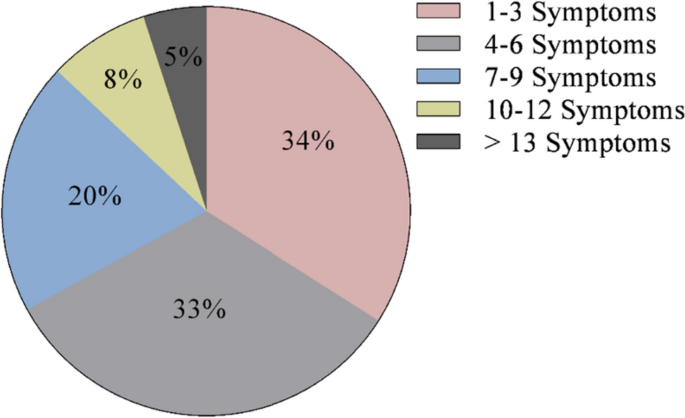
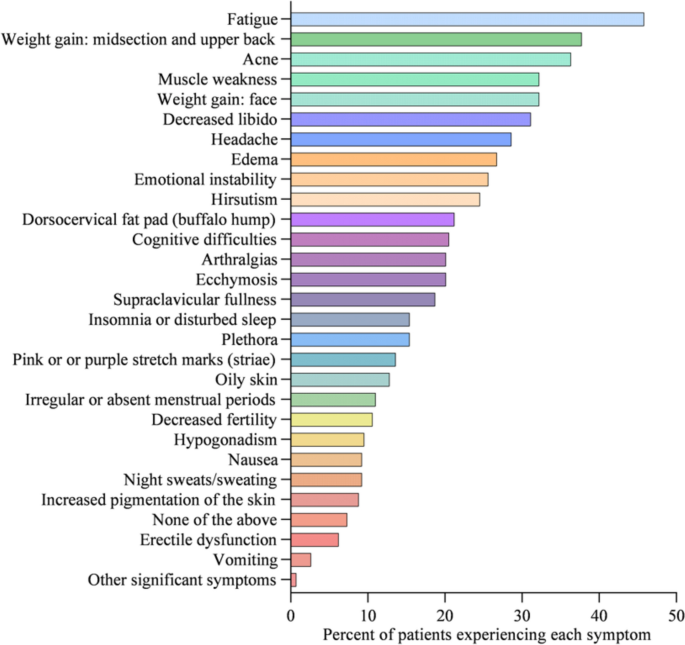
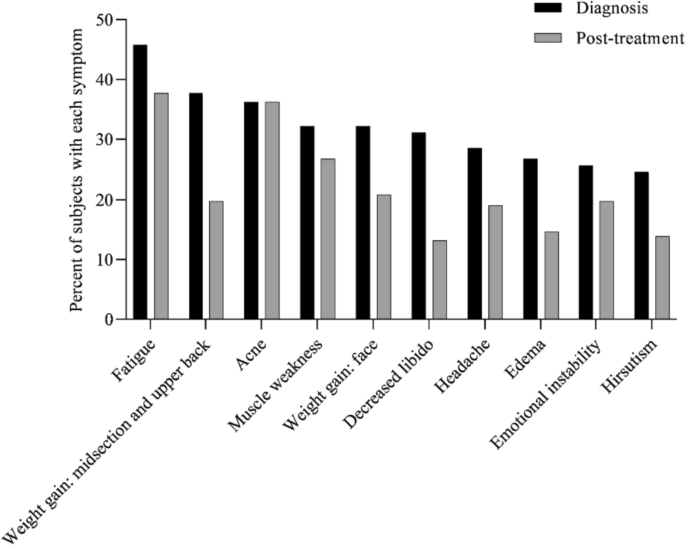
At diagnosis, 34% of patients presented with 1–3 symptoms, 33% of patients presented with 4–6 symptoms, 20% of patients presented with 7–9 symptoms, 8% of patients presented with 10–12 symptoms, and 5% of patients presented with > 13 symptoms (Fig. 1). Symptoms of CS at the time of diagnosis are shown in Fig. 2. The top 10 most common symptoms of CS at the time of diagnosis (Fig. 3) included fatigue, weight gain (in the midsection and upper back), acne, muscle weakness, facial weight gain (i.e., facial roundness), decreased libido, headache, edema, emotional lability, and hirsutism. Although symptoms decreased post-treatment, a large proportion of subjects still exhibited these symptoms post-treatment (Fig. 3). The most commonly reported comorbidities observed in patients with CS at the time of CS diagnosis (i.e., those affecting ≥ 20% of patients) included obesity, hypertension, depression, diabetes, dyslipidemia, anxiety, and impaired glucose tolerance (Table 2).

Fig. 1

figure 1

Number of CS symptoms reported at diagnosis

Fig. 2

figure 2

Symptoms of CS at diagnosis (N = 273)

Fig. 3
figure 3

Top 10 symptoms of CS over time. Responses were restricted for Erectile Dysfunction and Irregular Menstrual Periods. Hirsutism was not restricted to females only. All denominators in the table reflect the entire patient cohort, while the metrics below are based on only the affected genders: Female Only Hirsutism: 19% of the cohort (= 52/273), 32% of the females (= 52/165), Erectile Dysfunction: 6% of the cohort (= 17/273), 16% of the males (= 17/108) and, Irregular Menstrual Period: 11% of the cohort (= 30/273), 18% of the females (= 30/165)

Economic burden of Cushing’s syndrome

Healthcare resource utilization was assessed (Table 3). Patients required a mean (± SD) of 1 (± 1.4) hospitalization annually with a mean (± SD) length of impatient stay of 4.3 (± 3.1) days. Patients required a mean (± SD) of 0.6 (± 1.3) annual emergency room (ER) visits, and 4.3 (± 6.3) outpatient visits.

Table 3 Healthcare resource utilization

Endocrinologists’ perceptions of disease burden

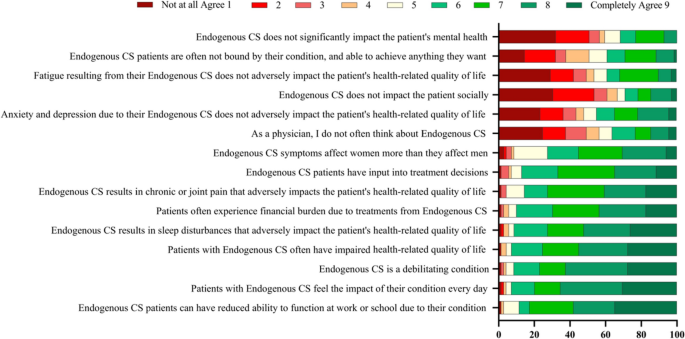
Endocrinologists were asked if they agreed with a series of statements regarding their perception of CS burden and impact on a scale of 1–9, where 1 = Not at all agree and 9 = Completely agree (Fig. 4). The highest proportion of endocrinologists responded “Completely agree” with the statements “CS patients can have reduced ability to function at work or school due to their condition” (percent of endocrinologists who responded “Completely agree” = 35%), “patients with CS feel the impact of their condition every day” (30%), that “CS is a debilitating condition” (28%), “patients with CS often have impaired health-related quality of life” (28%), and “CS results in sleep disturbances that adversely impact patient’s HRQoL” (26%).

Fig. 4

figure 4

Physicians’ perceptions of CS burden and impact. On a scale of 1–9, where 1 = Not at all agree and 9 = Completely agree

Endocrinologists’ treatment perceptions

Endocrinologists were asked for their perceptions of the most important treatment attributes on a scale of 1 to 5, where 1 = the least important and 5 = the most important (Table 4). The two most important treatment attributes included treatments that were efficacious post-surgery (mean score = 4.0) and efficacious as a combination therapy (3.7). Endocrinologists were asked to rank satisfaction with currently available treatments for CS including surgical intervention, pharmacotherapy, and radiological or other interventions on a scale of 1–9, where 1 = Not at all satisfied and 9 = Extremely satisfied (Table 5). Overall, endocrinologists reported highest satisfaction with surgical intervention with regards to initial efficacy (mean score = 7.2), durability (6.9), safety (6.3), side effects (6.2), tolerability (6.4), and patient’s overall experience (6.9). Endocrinologists also ranked pharmacotherapy higher than radiation therapy for the treatment of CS for initial efficacy (5.9 versus 5.2), safety (5.9 versus 5.4), side effects (5.3 versus 5.2), tolerability (5.7 versus 5.5), and patient’s overall experience (5.9 versus 5.4).

Table 4 Top 5 highest rated treatment attributes
Table 5 Physicians’ satisfaction across therapeutic categories

Endocrinologists’ attitudes toward treatments and interventions

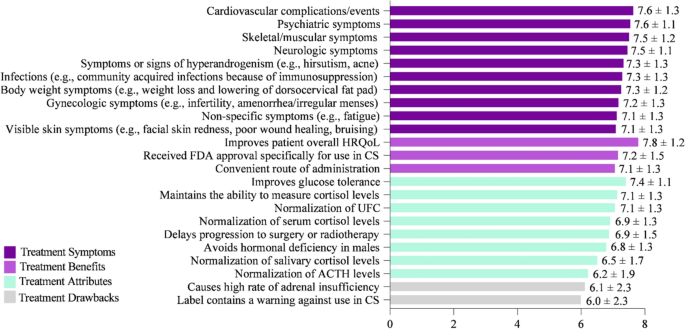
Key factors for evaluating and selecting a CS treatment were rated on a scale of 1–9, with 1 = Not at all important and 9 = Extremely important (Fig. 5). Improving HRQoL (mean score = 7.8) was rated as the most important attribute. Similarly, improving cardiovascular complications/events (e.g., myocardial infarction, stroke, embolism) (7.6), psychiatric symptoms (e.g., depression, anxiety, mood changes) (7.6), skeletal/muscular symptoms (e.g., muscular weakness, decrease in bone mineral density, bone fractures) (7.5), and neurologic symptoms (e.g., headaches, memory, and cognitive difficulties including brain fog) (7.5) were ranked as key factors when choosing CS treatment. While factors in the survey such as “causes high rate of adrenal insufficiency” and “label contains a warning against use in CS” were ranked as less important, none of the factors listed were considered unimportant by physician respondents for choosing CS treatment.

Fig. 5

figure 5

Key factors for evaluating CS treatments that influence medication selection. On a scale of 1–9, where 1 = Not at all important and 9 = Extremely important

Endocrinologists were asked if they agreed with a series of statements regarding CS treatment and intervention attitudes on a scale of 1–9, where 1 = strongly disagree and 9 = strongly agree (Table 6). The three highest scoring statements were “there is a significant clinical unmet need for patients with endogenous CS” (mean score = 6.6), “better patient support services for CS medications often leads to better patient adherence” (6.5), and “patient out of pocket cost is a significant burden for CS patients on a pharmacological therapy” (6.5). The lowest scoring statement was “patient out of pocket cost is not a significant factor when prescribing pharmacological therapy for my CS patients” (4.6).

Table 6 Physicians’ attitudes toward CS treatment and intervention

Discussion

This study provides valuable information on the physician’s perspective of unmet needs and treatment goals for patients with CS. Endocrinologists in our sample strongly agreed that patients with CS suffered from a debilitating daily condition with a high HRQoL burden. Endocrinologists also strongly agreed with the view that “there is a significant clinical unmet need for patients with endogenous CS” and ranked prescribing treatments to improve HRQoL, cardiovascular events, depression, and anxiety as key factors influencing treatment decisions. The importance providers place on the availability of post-surgery treatment options reflects the inability of many patients with CS to achieve complete post-surgical symptom resolution and suggests all symptoms in patients with CS are not currently addressed with available treatments.

Multiple treatment modalities were utilized by endocrinologists in the care of patients with CS, including surgery, pharmacotherapy, and/or radiation therapy. Improvement in HRQoL was the key treatment attribute influencing CS treatment choices, followed by the goal of reducing cardiovascular complications, and decreasing psychiatric symptoms. However, the prevalence of comorbidities after CS treatment as well as endocrinologists’ perceptions and attitudes regarding an unmet need for CS treatments and ongoing disease burden showed that few therapies are able to improve patients’ ongoing disease burden. New CS treatments are needed that have long-term efficacy, fewer side effects, and effective reimbursement.

Patients with CS have a high symptomatic disease burden at diagnosis. This study and others have demonstrated that many of these signs and symptoms (e.g., hypertension, obesity, and depression) persist even after receiving treatment aimed at normalizing cortisol levels [12,13,14,15]. Results from the present study show that many patients continue to experience fatigue, weight gain, muscle weakness, and emotional lability even after treatment, indicating an unmet need for CS treatments that can effectively manage these persistent symptoms. The persistence of symptoms after treatment for CS is likely multifactorial, and may, at least in part, be due to complications of prolonged hypercortisolism, given diagnostic and treatment delays; however, the ability to predict which patients will continue to experience persistent symptoms after treatment is challenging [141617]. Additionally, the effects of inadequate cortisol control, symptoms due to glucocorticoid withdrawal, and side effects from medications taken to address comorbidities may contribute to persistent symptoms after treatment for CS. Although there are currently established reference values and treatment guidelines used to stratify patients, there are no current clear guidelines on management of ongoing symptoms after cortisol levels have been addressed [18]. Additionally, the present study indicated that only 32% of patients were diagnosed at the first presentation of their CS symptoms, underscoring the importance of increasing awareness of CS and its presentation among PCPs to expedite diagnosis and treatment.

The economic burden of illness from CS includes both the direct impact on HCRU, and the indirect impact on the patient due to loss of work productivity. The present study determined that the mean (± SD) annual number of hospitalization among patients with CS was 1 (± 1.4) day with an average length of inpatient stay of 4.3 days, similar in duration to the mean length of stay for all hospitalizations in the US [19]. However, the average number of outpatient visits among patients with CS was 4.3 visits per year, slightly lower than described in a recent study of patients with CS [11], but almost twice the rate of the average American, indicating a substantial direct cost burden [20]. Patients’ reduced ability to function at work or at school could limit their full economic potential, not only for themselves, but for family members and caregivers, indicating an indirect economic cost.

The degree of concordance between patients’ chart data and the perceptions of providers regarding disease symptoms is an important issue raised, but not directly addressed, by this study. Although endocrinologists agreed that there was a high HRQoL burden attributable to CS, this study did not analyze patients’ perceptions of HRQoL burden of CS. Discordance between patients’ perceptions and the perceptions of their healthcare providers, as well as the tendency of providers to perceive disease burden as less impactful or severe than is perceived by patients, has been reported in other medical conditions such as acromegaly, rheumatoid arthritis and chronic pain. The result of this is often worse medical outcomes for patients with rheumatoid arthritis or worse pain and functioning in patients with chronic pain [21,22,23,24]. Further study is necessary to analyze the concordance between the perceptions of physicians and patients with CS.

A recent cross-sectional web-enabled survey burden of illness study and a recent systemic literature review [112526], conducted by the authors of this study, elucidated both the burden of CS as well as unmet needs in the healthcare system for patients with CS. The results of the current study corroborate the findings of both of these studies, confirming that patients experience a substantial and complex burden of cumulative CS symptoms that impacts their HRQoL. Similar to prior studies, the current results also demonstrate that although symptoms improve with treatment, some symptoms such as weight gain, pain, and anxiety persist even after treatment interventions, including surgery, pharmacotherapy, and radiation therapy. Patients with CS have previously been shown to have worse HRQoL scores compared to healthy counterparts [26], underscoring the long-term effects of CS despite treatment. This study and others have demonstrated that current therapies do not completely mitigate this HRQoL burden and indicate an unmet need among many patients with CS for additional treatments to control symptoms after cortisol level normalization.

Study limitations

During the time in which this study was conducted, additional CS treatments could have been approved, potentially changing the treatment landscape, and thereby altering the proportion of patients that continued to have symptoms after treatment (Fig. 3) or the proportion of patients with a particular comorbidity after treatment. Physician response may have been subject to recall bias; although this may have been mitigated by the use of patient chart data the possibility that details were omitted at the time of patient visits exists. Additionally, when physicians were asked about working in a Center of Excellence, the term was not explicitly defined which may have led to varying interpretations by respondents. Due to the nature of the method used (i.e., a survey given to endocrinologists treating patients at the present time), we have limited historical chart data on the entire medical journey of each patient and all important medical events may not have been captured. For example, treatments administered to patients prior to this study (i.e., those administered by previous doctors or from a different hospital) may not be present in the patients’ charts and were not captured by our survey. Additionally, we did not capture biochemical data to make definitive statements on disease status based on patient cortisol levels. Updated guidelines on cortisol levels indicative of disease severity have recently been issued by the Pituitary Society [18], and a shift toward standardized clinical guidelines may help physicians provide timely and appropriate treatment for patients with CS. Future patient-centered research in CS should focus on identifying biomarkers associated with persistent symptoms after initial treatment, which could influence the development of guidelines for managing ongoing symptoms as current treatments are focused on cortisol management. The cohort of patients with CS included in our study is also not representative of the full spectrum of patients with CS as they were required to have received at least one pharmacological therapy to be eligible for the study. This requirement was added to our eligibility criteria as the aim of our study was to evaluate the burden of illness faced by patients with Cushing’s Syndrome, post-treatment, in the real world. Future studies evaluating concordance between patient chart data and physician perceptions of CS symptoms are also likely to be of interest. Finally, patient symptoms in this study could potentially have been masked due to the use of over-the-counter medications or other prescription treatments not fully captured in charts.

Conclusion

Patients with CS continue to experience symptoms such as fatigue, weight gain, muscle weakness, and emotional instability even after seeking and receiving treatment, indicating an unmet need for treatments that control symptoms. Future research is needed to develop a treatment paradigm that alleviates disease burden in patients with CS and that results in long-term disease control with a favorable side effect profile.

Data availability

The authors confirm that all pertinent data generated or analyzed during this study are included in this manuscript or Supplementary Materials.

Consent to publish

Study participants consented to the publication of their data anonymously on an aggregate basis.

References

  1. Lacroix A et al (2015) Cushing’s syndrome. Lancet 386(9996):913–927

    Article CAS PubMed Google Scholar

  2. Hopkins RL, Leinung MC (2005) Exogenous Cushing’s syndrome and glucocorticoid withdrawal. Endocrinol Metab Clin North Am 34(2):371–384, ix

  3. NORD (2021) Cushing syndrome. NORD. https://rarediseases.org/rare-diseases/cushing-syndrome/

  4. Wengander S et al (2019) The incidence of endogenous Cushing’s syndrome in the modern era. Clin Endocrinol (Oxf) 91(2):263–270

    Article CAS PubMed Google Scholar

  5. Hakami OA, Ahmed S, Karavitaki N (2021) Epidemiology and mortality of Cushing’s syndrome. Best Pract Res Clin Endocrinol Metab 35(1):101521

    Article CAS PubMed Google Scholar

  6. Nieman LK (2015) Cushing’s syndrome: update on signs, symptoms and biochemical screening. Eur J Endocrinol 173(4):M33–M38

    Article CAS PubMed PubMed Central Google Scholar

  7. Castinetti F, Conte-Devolx B, Brue T (2010) Medical treatment of Cushing’s syndrome: glucocorticoid receptor antagonists and mifepristone. Neuroendocrinology 92(Suppl 1):125–130

    Article CAS PubMed Google Scholar

  8. Castinetti F, Brue T, Conte-Devolx B (2012) The use of the glucocorticoid receptor antagonist mifepristone in Cushing’s syndrome. Curr Opin Endocrinol Diabetes Obes 19(4):295–299

    Article CAS PubMed Google Scholar

  9. Sharma ST, Nieman LK, Feelders RA (2015) Cushing’s syndrome: epidemiology and developments in disease management. Clin Epidemiol 7:281–293

    PubMed PubMed Central Google Scholar

  10. Hinojosa-Amaya JM, Cuevas-Ramos D, Fleseriu M (2019) Medical management of Cushing’s syndrome: current and emerging treatments. Drugs 79(9):935–956

    Article CAS PubMed Google Scholar

  11. Page-Wilson G et al (2023) Evaluating the burden of endogenous Cushing’s syndrome using a web-based questionnaire and validated patient-reported outcome measures. Pituitary 26(4):1–11

    Article Google Scholar

  12. Pivonello R et al (2016) Complications of Cushing’s syndrome: state of the art. Lancet Diabetes Endocrinol 4(7):611–629

    Article CAS PubMed Google Scholar

  13. Pertichetti M et al (2020) Pituitary adenomas and neuropsychological status: a systematic literature review. Neurosurg Rev 43(4):1065–1078

    Article PubMed Google Scholar

  14. Andela CD et al (2015) Mechanisms in endocrinology: Cushing’s syndrome causes irreversible effects on the human brain: a systematic review of structural and functional magnetic resonance imaging studies. Eur J Endocrinol 173(1):R1-14

    Article CAS PubMed Google Scholar

  15. Papakokkinou E et al (2020) Excess morbidity persists in patients with Cushing’s disease during long-term remission: a Swedish nationwide study. J Clin Endocrinol Metab 105(8):dgaa291

    Article PubMed Google Scholar

  16. Espinosa-de-Los-Monteros AL et al (2013) Persistence of Cushing’s disease symptoms and comorbidities after surgical cure: a long-term, integral evaluation. Endocr Pract 19(2):252–258

    Article PubMed Google Scholar

  17. Bhattacharyya A et al (2005) Steroid withdrawal syndrome after successful treatment of Cushing’s syndrome: a reminder. Eur J Endocrinol 153(2):207–210

    Article CAS PubMed Google Scholar

  18. Fleseriu M et al (2021) Consensus on diagnosis and management of Cushing’s disease: a guideline update. Lancet Diabetes Endocrinol 9(12):847–875

    Article PubMed PubMed Central Google Scholar

  19. Freeman W, Weiss A, Heslin K (2018) Overview of U.S. hospital stays in 2016: variation by geographic region. Agency for Healthcare Research and Quality. https://www.hcup-us.ahrq.gov/reports/statbriefs/sb246-Geographic-Variation-Hospital-Stays.jsp

  20. Control, C.f.D. National Center for Health Statistics (2023) Ambulatory care use and physician office visits. https://www.cdc.gov/nchs/fastats/physician-visits.htm

  21. Michelsen B et al (2017) Discordance between tender and swollen joint count as well as patient’s and evaluator’s global assessment may reduce likelihood of remission in patients with rheumatoid arthritis and psoriatic arthritis: data from the prospective multicentre NOR-DMARD study. Ann Rheum Dis 76(4):708–711

    Article PubMed Google Scholar

  22. Smolen JS et al (2016) Discordance between patient and physician assessments of global disease activity in rheumatoid arthritis and association with work productivity. Arthritis Res Ther 18(1):114

    Article PubMed PubMed Central Google Scholar

  23. Geer EB et al (2020) Observed discordance between outcomes reported by acromegaly patients and their treating endocrinology medical provider. Pituitary 23(2):140–148

    Article PubMed Google Scholar

  24. Panda M et al (2006) The influence of discordance in pain assessment on the functional status of patients with chronic nonmalignant pain. Am J Med Sci 332(1):18–23

    Article PubMed Google Scholar

  25. Page-Wilson GO, Maguire A, O’Hara M, Moloney S, Eliza G (2022) Patient-reported burden of illness in endogenous Cushing’s syndrome

  26. Page-Wilson GO, Bhagyashree O, Silber A, Meyer J, O’Hara M, Geer E (2022) Physician perceptions on the treatment and health-related quality of life burden of endogenous Cushing’s syndrome

Download references

Acknowledgements

Medical editorial assistance was provided by Amal Gulaid, MPH from Trinity Life Sciences. Medical writing assistance was provided by Iona Bartek, PhD. Funding for this study was provided by Strongbridge Biopharma plc, a wholly owned subsidiary of Xeris BioPharma Holdings, Inc.

Target Journal

Pituitary.

Funding

Funding for this study was provided by Strongbridge Biopharma plc, a wholly-owned subsidiary of Xeris Biopharma Holdings, Inc. Gabrielle Page-Wilson, MD and Eliza B. Geer, MD were contracted by Strongbridge Biopharma, a wholly owned subsidiary of Xeris Biopharma Holdings, Inc. to provide expert guidance for this study. Bhagyashree Oak, PhD, Abigail Silber, MPH, and Mathew O’Hara, MBA are employees of Trinity Life Sciences, which was commissioned by Strongbridge Biopharma, a wholly owned subsidiary of Xeris Biopharma Holdings, Inc. to conduct the current study. James Meyer, MBA, PharmD is an employee and shareholder of Xeris Pharmaceuticals, Inc. This research was funded in part through the NIH/NCI Cancer Center Support Grant P30 CA008748.

Author information

Authors and Affiliations

  1. Division of Endocrinology, Columbia University Irving Medical Center, New York, NY, USA

    Gabrielle Page-Wilson

    1. Trinity Life Sciences, Waltham, MA, USA

      Bhagyashree Oak, Abigail Silber & Matthew O’Hara

    2. Xeris Pharmaceuticals, Inc, Chicago, IL, USA

      James Meyer

    3. Multidisciplinary Pituitary and Skull Base Tumor Center, Memorial Sloan Kettering Cancer Center, 1275 York Avenue, New York, NY, 10065, USA

      Eliza B. Geer

    Contributions

    All authors contributed to the study conception and design. Study material preparation, data collection, analyses, and manuscript development were conducted by BO, AS, and MO. JM provided overall strategic guidance. GP-W and EBG provided expert reviews of the work. All authors read and approved the final published version.

    Corresponding author

    Correspondence to Eliza B. Geer.

    Ethics declarations

    Conflict of interest

    Funding for this study was provided by Strongbridge Biopharma plc, a wholly-owned subsidiary of Xeris Biopharma Holdings, Inc. Gabrielle Page-Wilson, MD and Eliza B. Geer, MD were contracted by Strongbridge Biopharma, a wholly owned subsidiary of Xeris Biopharma Holdings, Inc. to provide expert guidance for this study. Bhagyashree Oak, PhD, Abigail Silber, MPH, and Mathew O’Hara, MBA are employees of Trinity Life Sciences, which was commissioned by Strongbridge Biopharma, a wholly owned subsidiary of Xeris Biopharma Holdings, Inc. to conduct the current study. James Meyer, MBA, PharmD is an employee and shareholder of Xeris Pharmaceuticals, Inc. This research was funded in part through the NIH/NCI Cancer Center Support Grant P30 CA008748.

    Ethical approval

    This was an observational study conducted in accordance with the 1964 Declaration of Helsinki and its later amendments. As this was not a randomized clinical trial, the study was not registered as such. The ADVARRA Institutional Review Board (Columbia, MD; https://www.advarra.com/) has granted the study exemption from IRB oversight using the Department of Health and Human Services regulations found at 45 CFR 46.104(d)(2). The IRB also completed the necessary additional limited review considerations as set forth under the Revised Common Rule, 45 CFR 46.104(d).

    Informed consent

    Informed consent was obtained from all participants included in the study during the screening process and this was required to successfully enroll into the study. Participants were able to exit the study at any time or refuse to answer any questions.

    Additional information

    Publisher’s Note

    Springer Nature remains neutral with regard to jurisdictional claims in published maps and institutional affiliations.

BMD may Underestimate Bone Deterioration for Women with Endogenous Cushing’s Syndrome

Nearly one-third of women with endogenous Cushing’s syndrome and normal bone mineral density have a low trabecular bone score, according to study data.

“A large proportion of patients had degraded microarchitecture despite normal BMD,” Hiya Boro, DM, MD, MBBS, consultant in endocrinology, diabetes and metabolism at Aadhar Health Institute in India, and colleagues wrote. “The risk of fracture may be underestimated if BMD alone is measured. Hence, trabecular bone score should be added as a routine complementary tool in the assessment of bone health in patients with Cushing’s syndrome.”

About one-third of women with endogenous Cushing's syndrome have normal BMD and low trabecular bone score. Data were derived from Boro H, et al. Clin Endocrinol. 2023;doi:10.1111/cen.14944.

Researchers conducted a cross-sectional study at a single center in India from March 2018 to August 2019. The study included 40 women with overt endogenous Cushing’s syndrome and 40 healthy sex-matched controls. Seum and salivary cortisol and plasma adrenocorticotropic hormone (ACTH) were measured. Participants were considered ACTH independent if they had a level of less than 2.2 pmol/L. Areal BMD was measured at the lumbar spine, femoral neck, total hip and distal one-third of the nondominant distal radius. Low BMD for age was defined as a z score of less than –2. Trabecular bone score was measured at the lumbar spine. Fully degraded microarchitecture was defined as a trabecular bone score of 1.2 or lower and partial degradation was a trabecular bone score of 1.21 to 1.34.

Of the 40 women with Cushing’s syndrome, 32 were ACTH-dependent and the other eight were ACTH independent. Of the independent group, seven had adrenal adenoma and one had adrenocortical carcinoma.

Women with Cushing’s syndrome had lower BMD at the lumbar spine (0.812 g/cm2 vs. 0.97 g/cm2< .001), femoral neck (0.651 g/cm2 vs. 0.773 g/cm2< .001) and total hip (0.799 g/cm2 vs. 0.9 g/cm2< .001) than the control group.

“No significant difference was noted in the distal radius BMD,” the researchers wrote. “This may be explained by the fact that cortisol excess predominantly affects trabecular rather than cortical bone.”

Absolute trabecular bone score was lower in the Cushing’s syndrome group compared with controls (1.2 vs. 1.361; P < .001). Based on trabecular bone score, 42.5% of women with Cushing’s syndrome had fully degraded bone microarchitecture, 45% had partially degraded microarchitecture and 12.5% had normal microarchitecture.

“In our study, 32.5% of patients had normal BMD with low trabecular bone score, thus highlighting the fact that patients may have normal BMD despite degraded microarchitecture,” the researchers wrote. “As such, assessment of BMD alone may underestimate the risk of fractures in patients with Cushing’s syndrome.”

Withdrawal Study Details Effects of Levoketoconazole in Cushing’s Syndrome

Data presented at AACE 2022 detail levoketoconazole-specific effects observed among patients with endogenous Cushing’s syndrome from the phase 3 LOGICS trial.

New research presented at the American Academy of Clinical Endocrinology (AACE) annual meeting provides insight into the effects of treatment with levoketoconazole (Osilodrostat) among patients with endogenous Cushing’s syndrome.

An analysis of data from a double-blind, placebo-controlled, randomized withdrawal study, results of the study demonstrate levoketoconazole provided benefits across a range of etiologies and provide evidence of levoketoconazole-specific effects through the withdrawal and reintroduction of therapy during the trial.

“This LOGICS study showed that treatment with levoketoconazole benefitted patients with Cushing’s syndrome of different etiologies and a wide range in UFC elevations at baseline by frequent normalization of mUFC and concurrent improvements in serum cholesterol,” said Maria Fleseriu, MD, professor of medicine and neurological surgery and director of the Northwest Pituitary Center at Oregon Health and Science University, during her presentation. “The benefits observed were established as levoketoconazole-specific via the loss of therapeutic effect upon withdrawal to placebo and restoration upon reintroduction of levoketoconazole.”

An orally administered cortisol synthesis inhibitor approved by the US FDA for treatment of endogenous hypercortisolemia in adult patients with Cushing’s syndrome considered ineligible for surgery, levoketoconazole received approval based on results of the phase 3 open-label SONICS trial, which demonstrated . Launched on the heels of SONICS, the current trial, LOGICS, was designed as phase 3, double-blind, placebo-controlled, randomized withdrawal study aimed at assessing the drug-specificity of cortisol normalization in adult patients with Cushing’s syndrome through a comparison of the effects of withdrawing levoketoconazole to placebo against continuing treatment.

The trial began with an open-label titration maintenance phase followed by a double-blind randomized withdrawal phase and a subsequent restoration phase, with the randomized withdrawal and restoration phase both lasting 8 weeks. A total of 89 patients with Cushing’s syndrome received levoketoconazole to normalize mUFC. Of these, 39 patients on a stable dose for 4 weeks or more were included in the randomized withdrawal stage of the study. These 39, along with 5 completers of the SONICS trial, were randomized in a 1:1 ratio to continue therapy with levoketoconazole or placebo therapy, with 22 patients randomized to each arm.

The primary outcome of interest in the study was the proportion of patients with loss of mean urinary free cortisol response during the randomized withdrawal phase of the study, which was defined as an mUFC 1.5 times the upper limit of normal or greater or an mUFC 40% or more above baseline. Secondary outcomes of interest included mUFC normalization at the end of the randomized withdrawal phase of the study and changes in comorbidity biomarkers.

Overall, 21 of the 22 patients randomized to placebo during the withdrawal stage met the primary endpoint of loss of mUFC compared to just 9 of 22 among the levoketoconazole arm of the trial (treatment difference: -54.5% [95% CI, -75.7 to -27.4]; P=.0002). Additionally, at the conclusion of the randomization phase, mUFC normalization was observed among 11 patients in the levoketoconazole arm of the trial compared to 1 patient receiving placebo (treatment difference: 45.5% [95% CI, 19.2 to 67.9]; P=.0015).

Further analysis indicated the restoration of levoketoconazole therapy was associated with a. Reversal of loss of contrail control in most patients who had been randomized to placebo. Investigators pointed out the mean change from randomized withdrawal baseline to the end of the randomized withdrawal period in total cholesterol was -0.04 mmol/L for levoketoconazole and 0.9 mmol/L for placebo (P=.0004) and the mean change in LDL-C was -0.006 mmol/L and 0.6 mmol/L, respectively (P=0.0056), with the mean increases in cholesterol observed among the placebo arm reversed during the restoration phase.

In safety analyses, results suggest the most commonly reported adverse events seen with levoketoconazole treatment, during all study phases combined were nausea and hypokalemia, which occurred among 29% and 26% of patients, respectively. Investigators also pointed out liver-related events, QT interval prolongation, and adrenal insufficiency, which were respecified adverse events of special interest occurred among 10.7%, 10.7%, and 9.5% of patients receiving levoketoconazole, respectively.

This study, “Levoketoconazole in the Treatment of Endogenous Cushing’s Syndrome: A Double-Blind, Placebo-Controlled, Randomized Withdrawal Study,” was presented at AACE 2022.