Roundup may cause potentially fatal ‘adrenal insufficiency’

IMPORTANT!  A new study finds that the Roundup herbicide disrupts the hormonal system of rats at low levels at which it’s meant to produce no adverse effects. By the same mechanism It may be causing the potentially fatal condition of ‘adrenal insufficiency’ in humans.

Monsanto’s glyphosate-based herbicide Roundup is an endocrine (hormone) disruptor in adult male rats, a new study shows.

The lowest dose tested of 10 mg/kg bw/d (bodyweight per day) was found to reduce levels of corticosterone, a steroid hormone produced in the adrenal glands. This was only one manifestation of a widespread disruption of adrenal function.

No other toxic effects were seen at that dose, so if endocrine disruption were not being specifically looked for, there would be no other signs that the dose was toxic. However a 2012 study detected a 35% testosterone down-regulation in rats at a concentration of 1 part per million.

In both studies endocrine disruption was detected at the lowest level tested for, so we don’t know if, when it comes to endocrine disruption, there are ‘safe’ lower doses of Roundup. In technical parlance, this means that no NOAEL (no observed adverse effect level), was found.

Significantly, the authors believe that the hormonal disruption could lead to the potentially fatal condition know as ‘adrenal insufficiency’ in humans, which causes fatigue, anorexia, sweating, anxiety, shaking, nausea, heart palpitations and weight loss.

“A progressive increase in its prevalence has been observed in humans, while a very few studies relating to xenobiotic exposure and adrenal insufficiency development have been reported”, they write. The increasing levels of Roundup in the environment and food could be “one of the possible mechanisms of adrenal insufficiency.”

How does this level relate to safety limits set by regulators?

One problem with trying to work out how the endocrine disruptive level of 10 mg/kg bw/d relates to how ‘safe’ levels are set by regulators.

The experiment looked at Roundup, the complete herbicide formulation as sold and used, but regulators only look at the long-term safety of glyphosate alone, the supposed active ingredient of Roundup.

Safe levels for chronic exposure to the Roundup herbicide product have never been tested or assessed for regulatory processes. This is a serious omission because Roundup has been shown in many tests to be more disruptive to hormones than glyphosate alone, thanks to the numerous other ingredients it contains to enhance its weed-killing properties.

Given this yawning data gap, let’s for a moment assume that the regulatory limits set for glyphosate alone can be used as a guide for the safe level of Roundup.

The endocrine disruptive level of Roundup found in the experiment, of 10 mg/kg bw/d, is is well above the acceptable daily intake (ADI) set for glyphosate in Europe (0.3 mg/kg bw/d) and the US (1.75 mg/kg bw/d). But this isn’t a reason to feel reassured, since with endocrine effects, low doses can be more disruptive than higher doses.

Another worrying factor is that 10 mg/kg bw/d is well below the NOAEL (no observed adverse effect level) for chronic toxicity of glyphosate: 500 mg/kg bw/d for chronic toxicity, according to the US EPA.

In other words, the level of 500 mg/kg bw/d – a massive 50 times higher than the level of Roundup found to be endocrine disruptive in the experiment – is deemed by US regulators not to cause chronic toxicity.

This experiment shows they are wrong by a long shot. They failed to see toxicity below that level because they failed to take endocrine disruptive effects from low doses into account and industry does not test for them.

Hormone disruption take place at or below ‘no adverse effects’ levels

Interestingly, the NOAEL for glyphosate in industry’s three-generation reproductive studies in rats was much lower than that for chronic toxicity – 30 mg/kg bw/day for adults and 10 mg/kg bw/day for offspring.

However the latter figures – at which no adverse effects should be apparent from glyphosate – are at the same as or higher level than the level of Roundup found to be endocrine disruptive in the new study.

These results therefore show that the reproductive processes of the rats are sensitive to low doses that are apparently not overtly toxic. This in turn suggests that the reproductive toxicity findings are due to endocrine disruptive effects.

Regulatory tests still do not include tests for endocrine disruption from low doses, in spite of the fact that scientists have known about the syndrome since the 1990s.

In the final section of the new study, the researchers discuss its implications. They note that the effects seen in the Roundup-treated rats to the Adrenocorticotropic hormone receptor (ACTH) were similar to adrenal insufficiency in humans:

“The findings that Roundup treatment down regulates endogenous ACTH, is similar to the condition known as adrenal insufficiency in humans. This condition manifests as fatigue, anorexia, sweating, anxiety, shaking, nausea, heart palpitations and weight loss. Chronic adrenal insufficiency could be fatal, if untreated.

“A progressive increase in its prevalence has been observed in humans, while a very few studies relating to xenobiotic exposure and adrenal insufficiency development have been reported. The present study describes one of the possible mechanisms of adrenal insufficiency due to Roundup and suggests more systematic studies, to investigate the area further. “

Claire Robinson of GMWatch commented: “Since no safe dose has been established for Roundup with regard to endocrine disrupting effects, it should be banned.”


The study:Analysis of endocrine disruption effect of Roundup in adrenal gland of male rats‘ is by Aparamita Pandey and Medhamurthy Rudraiah, and published in Toxicology Reports 2 (2015) pp.1075-1085 on open access.

This article was originally published by GMWatch. This version has been subject to some edits and additions by The Ecologist.

From http://www.theecologist.org/News/news_round_up/2985058/roundup_may_cause_potentially_fatal_adrenal_insufficiency.html

Narrowing in on Pituitary Tumors

0276f-pituitary-gland


As many as 20 percent of people may have a benign cyst or tumor in their pituitary gland. The vast majority of pituitary tumors are noncancerous, but can cause headaches and profound fatigue, and can also disrupt hormone function.

Currently, surgeons rely on radiologic images and MRIs to gather information about the size and shape of the tumor, but the resolution of such imaging technologies is limited, and additional surgeries to remove more of the tumor may be needed if a patient’s symptoms persist. In a new study published in the Proceedings of the National Academy of Sciences on July 27, investigators from Brigham and Women’s Hospital (BWH) present a new technique that could help surgeons more precisely define the locations of tumors in near real-time.

The new strategy uses a visualization technique (matrix-assisted laser desorption/ionization mass spectrometry imaging – MALDI MSI) that can analyze specific hormones, including growth hormone and prolactin, in tissue. In the newly published study, the researchers find that it’s possible to use MALDI MSI to determine the composition of such hormones in a pituitary sample in less than 30 minutes. This could give surgeons critical information to help distinguish tumor from normal gland.

“Our work is driven by a clinical need: we’ve developed a test specifically tailored for the needs of our neurosurgeon colleagues,” said corresponding author Nathalie Agar, PhD, director of the Surgical Molecular Imaging Laboratory in the Department of Neurosurgery at BWH. “A surgeon may sacrifice half of the pituitary gland in an effort to get the tumor out. Without a tool to distinguish healthy tissue from tumor, it’s hard to know in real-time if the surgery was a success. With this technology, in under 30 minutes a surgeon will be able to know if a sample contains normal pituitary tissue or a pituitary tumor.”

“Patients show up with the clinical symptoms of a pituitary tumor, but the tumor itself may not be visible on an MRI,” said co-author Edward Laws, MD, director of the Pituitary and Neuroendocrine Center at BWH. “This technique, which maps out where excess concentrations of hormone levels are located, has the potential to allow us to confirm that we’ve removed the abnormal tissue.”

“Evaluating whether a piece of pituitary tissue is abnormal can be challenging on frozen section,” said co-author Sandro Santagata, MD, PhD, of BWH’s Department of Pathology. “This approach has wonderful potential for enhancing our diagnostic capabilities. It is clearly an important step toward providing intra-operative molecular characterization of pituitary tissues.”

To test the technique, the research team analyzed hormone levels in 45 pituitary tumors and six normal pituitary gland samples, finding a distinct protein signature unique to the normal or tumor sample.

Mass spectrometry, a technique for measuring chemicals present in a sample, is currently used in the operating room to help inform clinical decisions, but up until now, the focus has been on small molecules – metabolites, fatty acids and lipids – using a different type of approach. By analyzing proteins, MALDI MSI offers a way to visualize hormone levels.

Current methods used to detect hormone levels take too long to fit the time constraints of surgical intervention. Surgeons must either remove a larger amount of potentially healthy pituitary gland or perform follow up surgery if the tumor has not been fully removed.

“We’re hoping that techniques like this one will help move the field toward more precise surgery: surgery that not only removes all of the tumor but also preserves the healthy tissue as much as possible,” said Agar.

In the next phase of their work, Agar and her colleagues plan to test out the technique in BWH’s AMIGO suite and analyze the impact of the technique on clinical decision making.

Other researchers who contributed to this study include David Calligaris, Daniel R. Feldman, Isaiah Norton, Olutayo Olubiyi, Armen N. Changelian, Revaz Machaidze, Matthew L. Vestal and Ian F. Dunn.

This work was funded in part by US National Institute of Health (NIH) Director’s New Innovator Award (1DP2OD007383-01 to N.Y.R.A.), U.S. Army Medical Research/CIMIT (2010A052245), the National Center for Image Guided Therapy grant P41RR019703, NIH K08NS064168, the Pediatric Low Grade Astrocytoma Program at Dana-Farber Cancer Institute, the Brain Science Foundation and the Daniel E. Ponton fund for the Neurosciences at BWH.

Brigham and Women’s Hospital 2015 | 75 Francis Street, Boston MA 02115 | 617-732-5500

From http://www.healthcanal.com/cancers/65676-narrowing-in-on-pituitary-tumors.html

Adrenal insufficiency – how to spot this rare disease and how to treat it

adrenal-glandsAddison’s disease, or adrenal insufficiency, is a rare hormonal disorder of the adrenal glands that affects around 8,400 people in the UK.

The adrenal glands are about the size of a pea and perched on top of the kidneys, and affect the body’s production of the hormones cortisol and sometimes aldosterone.

When someone suffers from adrenal insufficiency, those glands aren’t producing a sufficient amount of these hormones. This can have a detrimental effect on someone’s health and well-being. But because the symptoms are similar to a host of other conditions, Addison’s disease can prove tough to isolate.

What to look out for

According to advice provided by the NHS, the symptoms in the early stages of Addison’s disease, which affects both men and women, are gradual and easy to misread as they’re similar to many other conditions.

People can experience severe fatigue, muscle weakness, low moods, loss of appetite, unintentional weight loss, low blood pressure, nausea, vomiting and salt craving.

“Symptoms are often misread or ignored until a relatively minor infection leads to an abnormally long convalescence, which prompts an investigation,” says Professor Wiebke Arlt from the Centre for Endocrinology, Diabetes & Metabolism at the University of Birmingham.

Life-threatening condition

If Addison’s disease is left untreated, the level of hormones produced by the adrenal gland will gradually decrease in the body. This will cause symptoms to get progressively worse and eventually lead to a potentially life-threatening situation called an adrenal, or Addisonian, crisis. Signs include severe dehydration; pale, cold, clammy skin; rapid, shallow breathing; extreme sleepiness; severe vomiting and diarrhoea. If left untreated, it can prove fatal, so the patient should be admitted to hospital as an emergency.

Back to basics

To understand the disorder, it’s important to get to grips with the basics and that means understanding what the adrenal glands are – and so to the science.

“Adrenal glands have an inner core (known as the medulla) surrounded by an outer shell (known as the cortex) ,” explains Arlt.
The inner medulla produces adrenaline, the ‘fight or flight’ stress hormone. While the absence of this does not cause the disease, the cortex is more critical.

“It produces the steroid hormones that are essential for life: cortisol and aldosterone,” he adds.

“Cortisol mobilises nutrients, enables the body to fight inflammation, stimulates the liver to produce blood sugar and also helps control the amount of water in the body. Aldosterone, meanwhile, regulates the salt and water levels, which can affect blood volume and pressure.”

Why does it happen?

The disorder occurs if the adrenal glands are destroyed, absent or unable to function and failure of the glands themselves is known as primary adrenal insufficiency.

“It’s most often caused by autoimmune disease where the body’s immune system mounts an attack against its own adrenal glands,” explains Arlt.

“However it can also be caused by infection, most importantly by tuberculosis and sometimes by both adrenal glands being surgically removed.”

The pituitary effect

Another important cause is any disease affecting the pituitary gland, which is located behind the nose at the bottom of the brain.
“The pituitary is the master gland that tells the other glands in the body what to do,” continues Arlt.

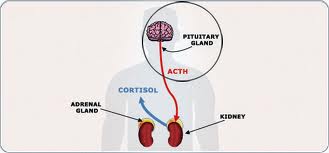
“The pituitary gland produces a hormone called ACTH (adrenocorticotropic hormone to give it its full name), which travels in the blood stream to the adrenal glands.

“Here it acts as a signal, causing the adrenal glands to produce more cortisol. If the pituitary gland stops making ACTH, [then] cortisol production by the adrenals is no longer controlled properly and a condition called secondary adrenal insufficiency arises.”

But in most cases, aldosterone is still produced, which means that people suffering from secondary adrenal insufficiency have fewer problems than those with primary adrenal insufficiency.

Determining a diagnosis

Due to the ambiguous nature of the symptoms, a Short Synacthen Test (SST) needs to be performed in order to diagnose adrenal insufficiency.

“This measures the ability of the adrenal glands to produce cortisol in response to (the pituitary hormone) ACTH,” says Arlt. “When carrying out this test, a baseline blood sample is drawn before injecting a dose of ACTH, followed by drawing a second blood sample 30 to 60 minutes later. Failing adrenal glands will not be able to produce a certain level of cortisol.”

Getting treatment

If someone has been conclusively diagnosed with adrenal insufficiency, they should receive adrenal hormone replacement therapy as advised by an endocrinologist, a doctor specialising in hormone-related diseases.

“A normal adrenal gland does not need supplements to function properly and there is no recognised medical condition called ‘adrenal fatigue’,” warns Arlt.

“Either the adrenal gland is fine and needs no treatment or there is adrenal insufficiency due to adrenal or pituitary failure.”

So if in doubt, don’t self-diagnose but book an appointment with your GP.

For more information, visit Addison’s Disease Self-Help Group (www.addisons.org.uk) or Pituitary Foundation.

From https://home.bt.com/lifestyle/wellbeing/adrenal-insufficiency-how-to-spot-this-rare-disease-and-how-to-treat-it-11363985141306

Common Asthma Steroids Linked to Side Effects in Adrenal Glands

(Reuters Health) – After stopping steroids commonly prescribed for asthma and allergies, a significant number of people may experience signs of malfunctioning in the adrenal glands, a European study finds.

So-called adrenal insufficiency can be dangerous, especially if the person’s body has to cope with a stress like surgery, injury or a serious illness, the study authors say.

“The takeaway message of the study is that in corticosteroid use there is a substantial risk of adrenal insufficiency,” senior author Dr. Olaf Dekkers, an endocrinologist at Aarhus University in Denmark, said by email. “Patients should be aware of this risk and be informed about potential symptoms.”

Those symptoms can include fatigue, dizziness, weight loss and salt cravings, the authors write in the Journal of Clinical Endocrinology and Metabolism.

Corticosteroids are man-made drugs designed to mimic the hormone cortisol, which the adrenal glands produce naturally. The drugs are usually used to counter inflammation in a wide range of conditions, including asthma, psoriasis, rheumatoid arthritis, lupus, blood cancers and organ transplants.

People with adrenal insufficiency do not make enough of two hormones, cortisol and aldosterone. Cortisol helps the body respond to stress, recover from infections and regulate blood pressure and metabolism. Aldosterone helps maintain the right amounts of salt, potassium and water in the body.

While on steroids, the body often produces less of these hormones naturally, and after coming off the drugs it can take a while for natural production to ramp back up. The result is adrenal insufficiency, which can be treated with medication to replace cortisol or aldosterone.

Dekkers and colleagues analyzed 74 research articles published from 1975 to 2014, covering a total of 3753 study participants, to see how different doses and types of corticosteroid treatment might impact the likelihood of developing adrenal insufficiency after treatment.

Researchers found the risk of adrenal insufficiency was highest when corticosteroids were taken orally or injected, and lower with inhaled, nasal or topical treatment.

When they looked just at patients using steroids for asthma, the researchers found that the risk of adrenal insufficiency was about 7 percent with inhaled corticosteroids, but about 44 percent with other formulations including oral medication.

Only about 2 percent of asthma patients on the lowest dose of steroids experienced adrenal insufficiency, compared with about 22 percent on the highest doses.

Similarly, slightly more than 1 percent of asthma patients on short-term steroids developed adrenal insufficiency, compared with about 27 percent on long-term treatment.

There is no way to safely halt treatment with corticosteroids that can rule out the potential for adrenal insufficiency, Dekkers said.

The side effect is more likely when patients take higher doses of steroids or remain on treatment for longer than three weeks, said Dr. Roberto Salvatori, medical director of the pituitary center at Johns Hopkins Hospital in Baltimore.

“It’s likely, and it’s often overlooked because most often the people who prescribe corticosteroids aren’t endocrinologists; they are in other specialities and they don’t recognize the symptoms of adrenal insufficiency,” said Salvatori, who wasn’t involved in the study.

He gives his patients on corticosteroids medical identification bracelets or necklaces to wear so they can be identified as at risk for adrenal insufficiency in an emergency. “This is a very important issue that’s not on the radar screen,” he said.

To be sure, more physicians are aware of the risk now than in the 1970s, and the standard doses and durations of corticosteroid treatment have been reduced in part because of this risk, said Dr. Douglas Coursin, a professor at the University of Wisconsin School of Medicine and Public Health in Madison. He, too, advises medical alert bracelets for patients on long-term or high-dose treatment.

“In the past, patients with asthma, certain immune diseases, those receiving some cancer therapies and those who had a solid organ transplant received higher doses for longer periods of time,” Coursin, who wasn’t involved in the study, said by email. “Overall, I think the risk may be lower than outlined in the study because of practice changes.”

SOURCE: bit.ly/1PjRHYw Journal of Clinical Endocrinology and Metabolism, online April 6, 2015.

Day Seventeen, Cushing’s Awareness Challenge 2015

I wrote parts of this in 2008, so all the “yesterdays” and “last weeks” are a little off.  There is no way that yesterday was the best day of my life.  Possibly, the day I wrote this post was the only one…

Wow.  That’s about all I can say.  Yesterday was possibly the best day of my life since I started getting Cushing’s symptoms, and that was over 25 years ago.  A quarter of a century of feeling exhausted, fatigued.  A quarter of my life spent taking naps and sleeping.

Last week  in this post I wrote in part:

I went to the endo yesterday.  Nothing has changed for me.  Nothing will.  He wants me to take more cortef.  I don’t want to gain weight again.  He looked up Provigil and it’s not indicated for panhypopituitarism.  So he won’t prescribe it.  My kidney surgeon probably won’t let me take, anyway, but it was worth a try.

He did mention that in “only” 2.5 years maybe I can go back on growth hormone.  I don’t want to live like this another year let alone 2.5.  But then, when I was on GH before it didn’t help me like it helps most everyone else.

I’m tired of catering to a kidney that may or may not fail sometime anyway, tired of being so exhausted all the time.  I feel like I’ve lost nearly half my life to this Cushing’s stuff already.

So, yesterday I was supposed to go to a conference on web design for churches.  My church sent me because they want me to spiff up their site and make them a new one for Christmas.  I wanted to go because, well, I like learning new stuff about the web.  I figured that I would learn stuff that would also be useful to me in others of my sites.

And I did!

But the amazing thing is this.  My son had told me  about a medication that was very similar to Provigil, that he had tried it while he was writing his doctoral thesis and it had helped him.

So, having tried the official doctor route and being rebuffed – again – I had decided to try this stuff on my own.

Just the night before I had written a response on Robin’s wonderful blog that reads in part:

I hate this disease, too.

I was just talking to a friend today about how I’d try nearly anything – even if it ruined my one remaining kidney – to have a few days where I felt good, normal, where I could wake up in the morning rested and be able to have energy for the day.

I want to go out and have fun, to be able to drive for more than 45 minutes without needing to rest, to be have people over for dinner, whatever. I hate being restricted by my lack of energy.

My endo says to cheer up. In two and a half years I can try the growth hormone again. Whoopee. Didn’t work the first time and maybe gave me, or contributed to, cancer growth. Why would I want to look forward to trying that again?

I want to feel good now. Today.

I hate that this disease kills but I also hate that it’s robbed me of half my life already.

I wish doctors would understand that even though we’ve “survived”, there’s no quality of life there.

I hate Cushing’s. It robs so much from so many of us. 😦

As I said earlier, I have a history of daily naps of at least 3 hours a day.  It cuts into everything and prevents me from doing many things.  I have to schedule my life around these naps and it’s awful.

rockford-2006-sue 12-18-2006 2-09-18 pmA few years ago I went on a Cushie trip to Rockford.  I’ve been there a few times and it’s always so much fun.  But this first year, we were going to another Cushie’s home for barbecue.  I didn’t drive, I rested in the back of the car during the drive.  We got there and I managed to stay awake for a little while.  Them I put my head down on the dining room table and fell asleep. Our hostess kindly suggested that I move over to the sofa.

So, I have a long history of daily naps, not getting through the day, yadda, yadda.

So, I was a little nervous about yesterday.  I really wanted to go to this conference, and was afraid I’d have to go nap in my car.

I got up at 5:30 am yesterday.  Before I left at 7:15, I took my Cortef and then I took my non-FDA approved simulated Provigil.  (Although it’s not FDA approved, it is not illegal to possess without a prescription and can be imported privately by citizens)

I stayed awake for the whole conference, went to a bell rehearsal, did Stacey’s interview, had dinner and went to bed about 10:30PM.  NO NAP!  I did close my eyes a little during the 4:00PM session but it was also b-o-r-i-n-g.

I stayed awake, I enjoyed myself, I learned stuff, I participated in conversations (completely unlike shy me!).

I felt like I think normal people feel.  I was amazed.  Half my life wasted and I finally (thank you Michael!) had a good day.

My kidney doctor and my endo would probably be appalled but it’s about time that I had some life again!  Maybe in another 25 years, I’ll take another pill.  LOL


Well, the energy from the Adrafinil was a one day thing.  I felt great on Thursday.   Friday and Saturday I slept more than usual.  Saturday, today, was one of those days where I sleep nearly all day.  Maybe if I took the drug more it would build up in my system, maybe not.  But it was still worth having that one day where I felt what I imagine normal to be.

While I was being a slug today, my husband painted the entire house.

I’m not sure if I would have been this tired today or if I was somehow making up for the nap I didn’t get on Thursday.  Whatever the case, I’m glad that I had the opportunity to try this and to experience the wonderful effects, if only for one day.

Information from a site that sells this:

Alertness Without Stimulation

Adrafinil is the prototype of a new class of smart drug – the eugeroics (ie, “good arousal”) designed to promote vigilance and alertness. Developed by the French pharmaceutical company Lafon Laboratories, adrafinil (brand name, Olmifon) has been approved in many European countries for treating narcolepsy, a condition characterized by excessive daytime sleepiness and other unusual symptoms.

Non-narcoleptic users generally find that adrafinil gives them increased energy and reduces fatigue, while improving cognitive function, mental focus, concentration, and memory. It has been reported that quiet people who take adrafinil become more talkative, reserved people become more open, and passive people become more active.

Of course, many stimulant drugs, ranging from caffeine to methamphetamine, are known to produce similar alerting/energizing effects. Adrafinil has been described by some users as a “kinder, gentler” stimulant, because it provides these benefits but usually with much less of the anxiety, agitation, insomnia, associated with conventional stimulants.

Adrafinil’s effects are more subtle than those of the stimulants you may be used to, building over a period of days to months. They appear to be based on its ability to selectively stimulate 1-adrenergic receptors in the brain.2 These receptors normally respond to norepinephrine (noradrenaline), a neurotransmitter linked to alertness, learning, and memory. This is in contrast to conventional stimulants, which stimulate a broader spectrum of brain receptors, including those involving dopamine. Its more focused activity profile may account for adrafinil’s relative lack of adverse side effects.

There’s more info about Adrafinil on Wikipedia

It’s interesting that that snipped report that people become more talkative.  I reported that in the original post, too, even though I didn’t realize that this was a possibility.

A good quote that I wish I could relate to better:

“Time is limited, so I better wake up every morning fresh and know that I have just one chance to live this particular day right, and to string my days together into a life of action and purpose.”

Lance Armstrong (1971 – )
Cyclist, seven-time Tour de France champion and cancer survivor


Newer stuff starts here:

Awhile ago I went to a handbell festival. I took a bit of adrafinil on the main day to try to stay awake for the whole day. It didn’t seem to keep me as on as it did before. I can’t be used to it already. Maybe I’m just that much more tired than I was before.

Our son lives in New York and every few years he gives us tickets to see a Broadway show.  A couple years ago we took the train to NY to see Wicked.  Usually my DH wants to go out and see sights while we’re there.  I usually want to nap.

This time we got up on Saturday morning, went out for breakfast.  I wanted to take in the whole day and enjoy Wicked so I took some Adrafinil.  We got back to the hotel and got ready to go to a museum or other point of interest.

But, DH wanted to rest a bit first.  Then our son closed his eyes for a bit…

So, I found myself the only one awake for the afternoon.  They both work up in time for the show…

Sigh  It was a great show, though.


A recent Christmas I was going to get my son some Adrafinil as a gift.  The original place we bought it didn’t have any more stock so I tracked it down as a surprise.  He was going to give me some, as well, but couldn’t get it from the original source, either.  So he found something very similar called Modafinil.  GMTA!