Why Was This Woman Gaining Weight Despite Her Diet?

“I just can’t seem to lose weight,” the 59-year-old woman said quietly. She had tried everything, she told the young doctor, who was training to be an endocrinologist at Mount Sinai Hospital in New York City. Weight Watchers. Exercise. She ate more vegetables, less fat, then fewer carbs. But still she was gaining weight, 30 pounds during the past seven months, including 12 in the past two weeks. She had never been skinny, she continued, but shapely. In her mid-40s, she started gaining weight, slowly at first, then rapidly. She was considering bariatric surgery, but she wanted to make sure she wasn’t missing something obvious. She had low thyroid hormones and had to take medication. Could her thyroid be off again?

The doctor asked her about symptoms associated with a low thyroid-hormone level. Fatigue? Yes, she was always tired. Changes in her hair or skin? No. Constipation? No. Do you get cold easier? Never. Indeed, these days she usually felt hot and sweaty.

It was probably not the thyroid, the doctor said. She asked if the woman had any other medical problems. She had high blood pressure and high cholesterol — both well controlled with medications. She also had obstructive sleep apnea, a disorder in which the soft tissue at the back of the throat collapse during sleep, cutting off air flow and waking the person many times throughout the night. She had a machine that helped keep her airway open, and she used it every night. She also had back pain, knee pain and carpal-tunnel syndrome. The pain was so bad that she had to retire from her job years before she was ready.

Big, Bigger, Biggest

The doctor examined her, then went to get Dr. Donald Smith, an endocrinologist and director of lipids and metabolism at Mount Sinai’s cardiovascular institute. After hearing a summary of the case, Smith asked the patient if she had anything to add. She did: She didn’t understand why she was getting so much bigger. Her legs were huge. She used to have nice ankles, but now you could hardly see them. Her doctor had given her a diuretic, but it hadn’t done a thing. Everything was large — her feet, her hands, even her face seemed somehow bigger. She hardly recognized the woman in the mirror. Her doctors just encouraged her to keep trying to lose weight.

Worth a Thousand Words

“Let me show you a picture,” she said suddenly and reached over to her purse. The patient’s sister had made a comment recently that led the patient to wonder whether the changes she saw in the mirror were more than simple aging. The patient pulled out a photograph of an attractive middle-aged woman and handed it to Smith. That was me eight years ago, she told him. Looking at the two faces, it was hard to believe they belonged to the same woman. Smith suspected this was something more than the extra pounds.

Two possibilities came to mind. Each was a disease of hormonal excess; each caused rapid weight gain. The first was Cushing’s disease, caused by overproduction of one of the fight-or-flight hormones, cortisol. The doctor looked at the patient, seeking clues. On her upper back, just below her neck, the woman had a subtle area of enlargement. This discrete accumulation of fat, called a buffalo hump, can occur with normal weight gain but is frequently seen in patients with Cushing’s. Do you bruise more easily these days? he asked. Cushing’s makes the skin fragile. No, she said. Did she have stretch marks on her stomach from the weight gain? The rapid expansion of the abdomen can cause the fragile skin to develop dark purple stretch lines. No. So maybe it wasn’t Cushing’s.

Find out the answer at http://www.nytimes.com/interactive/2016/04/17/magazine/17mag-diagnosis.html#/#7

Endocrine Society experts call for expanded screening for primary aldosteronism

Washington, DC–The Endocrine Society today issued a Clinical Practice Guideline calling on physicians to ramp up screening for primary aldosteronism, a common cause of high blood pressure.

People with primary aldosteronism face a higher risk of developing cardiovascular disease and dying from it than other people with high blood pressure. As many as one in ten people with high blood pressure may have primary aldosteronism. Uncontrolled high blood pressure can put these individuals at risk for stroke, heart attack, heart failure or kidney failure.

The guideline, entitled “The Management of Primary Aldosteronism: Case Detection, Diagnosis, and Treatment: An Endocrine Society Clinical Practice Guideline,” was published online and will appear in the May 2016 print issue of The Journal of Clinical Endocrinology & Metabolism (JCEM), a publication of the Endocrine Society. The guideline updates recommendations from the Society’s 2008 guideline on primary aldosteronism.

“In the past eight years, we have come to recognize that primary aldosteronism, despite being quite common, frequently goes undiagnosed and untreated,” said John W. Funder, MD, PhD, of the Hudson Institute of Medical Research in Clayton, Australia, and chair of the task force that authored the guideline. “This is a major public health issue. Many people with primary aldosteronism are never screened due to the associated costs. Better screening processes are needed to ensure no person suffering from primary aldosteronism and the resulting risks of uncontrolled high blood pressure goes untreated.”

Primary aldosteronism occurs when the adrenal glands — the small glands located on the top of each kidney – produce too much of the hormone aldosterone. This causes aldosterone, which helps balance levels of sodium and potassium, to build up in the body. The resulting excess sodium can lead to a rise in blood pressure.

The Endocrine Society recommends primary aldosterone screening for people who meet one of the following criteria:

  • Those who have sustained blood pressure above 150/100 in three separate measurements taken on different days;
  • People who have hypertension resistant to three conventional antihypertensive drugs;
  • People whose hypertension is controlled with four or more medications;
  • People with hypertension and low levels of potassium in the blood;
  • Those who have hypertension and a mass on the adrenal gland called an adrenal incidentaloma;
  • People with both hypertension and sleep apnea;
  • People with hypertension and a family history of early-onset hypertension or stroke before age 40; and
  • All hypertensive first-degree relatives of patients with primary aldosteronism.

Other recommendations from the guideline include:

  • The plasma aldosterone-to-renin ratio (ARR) test should be used to screen for primary aldosteronism.
  • All patients diagnosed with primary aldosteronism should undergo a CT scan of the adrenal glands to screen for a rare cancer called adrenocortical carcinoma.
  • When patients choose to treat the condition by having one adrenal gland surgically removed, an experienced radiologist should take blood samples from each adrenal vein and have them analyzed. This procedure, called adrenal vein sampling, is the gold standard for determining whether one or both adrenal glands is producing excess aldosterone.
  • For people with primary aldosteronism caused by overactivity in one adrenal gland, the recommended course of treatment is minimally invasive surgery to remove that adrenal gland.
  • For patients who are unable or unwilling to have surgery, medical treatment including a mineralocorticoid receptor (MR) agonist is the preferred treatment option.

###

The Hormone Health Network offers resources on primary aldosteronism athttp://www.hormone.org/questions-and-answers/2012/primary-aldosteronism.

Other members of the Endocrine Society task force that developed this guideline include: Robert M. Carey, of the University of Virginia Health System in Charlottesville, VA; Franco Mantero of the University of Padova in Padua, Italy; M. Hassan Murad of the Mayo Clinic in Rochester, MN; Martin Reincke of the Klinikum of the Ludwig-Maximilians-University of Munich in München, Bavaria, Germany; Hirotaka Shibata of Oita University in Oita, Japan; Michael Stowasser of the University of Queensland in Brisbane, Australia; and William F. Young, Jr. of the Mayo Clinic in Rochester, MN.

The Society established the Clinical Practice Guideline Program to provide endocrinologists and other clinicians with evidence-based recommendations in the diagnosis and treatment of endocrine-related conditions. Each guideline is created by a task force of topic-related experts in the field. Task forces rely on evidence-based reviews of the literature in the development of guideline recommendations. The Endocrine Society does not solicit or accept corporate support for its guidelines. All Clinical Practice Guidelines are supported entirely by Society funds.

The Clinical Practice Guideline was co-sponsored by the American Heart Association, the American Association of Endocrine Surgeons, the European Society of Endocrinology, the European Society of Hypertension, the International Association of Endocrine Surgeons, the International Society of Hypertension, the Japan Endocrine Society and The Japanese Society of Hypertension.

The guideline was published online at http://press.endocrine.org/doi/10.1210/jc.2015-4061, ahead of print.

Endocrinologists are at the core of solving the most pressing health problems of our time, from diabetes and obesity to infertility, bone health, and hormone-related cancers. The Endocrine Society is the world’s oldest and largest organization of scientists devoted to hormone research and physicians who care for people with hormone-related conditions.

The Society, which is celebrating its centennial in 2016, has more than 18,000 members, including scientists, physicians, educators, nurses and students in 122 countries. To learn more about the Society and the field of endocrinology, visit our site at http://www.endocrine.org. Follow us on Twitter at @TheEndoSociety and @EndoMedia.

Disclaimer: AAAS and EurekAlert! are not responsible for the accuracy of news releases posted to EurekAlert! by contributing institutions or for the use of any information through the EurekAlert system.

From http://www.eurekalert.org/pub_releases/2016-04/tes-ese042616.php

Given Adrenal Symptoms, Blood Test Recommended

adrenal-glands


Q: My husband’s recent CT scan of his stomach and digestive system revealed that he has nodules on both adrenal glands. It was suggested that he undergo a blood test to determine whether the nodules are producing hormones.

For 21 months, he has experienced high blood pressure, nausea, diarrhea, anxiety and abdominal pain. Could this be the source of his problems? If so, what course of action would you recommend?

A: The adrenal gland is responsible for the production of several essential hormones.

Tumors, or nodules, of the adrenal glands are common. They can be categorized into those that make hormones and those that don’t, and also by whether the tumors are benign or malignant.

The most common, by far, are benign, nonfunctioning tumors. These are usually discovered on an ultrasound or a CT scan obtained for some other reason.

More than 4 percent of people have an adrenal mass, and 85 percent are nonfunctional.

The symptoms that your husband has, however, raise a concern that he might have a hormone-producing tumor.

Four types of hormones are commonly produced by adrenal tumors: cortisone, aldosterone, sex hormones (estrogen or androgens) and catecholamines (epinephrine and norepinephrine).

A cortisone-producing adrenal tumor causes Cushing’s syndrome. It usually causes weight gain, especially in the abdomen; skin changes, including striae, or “stretch marks”; high blood pressure; and a predisposition to diabetes. Anxiety and abdominal pain are uncommon.

Aldosterone raises blood pressure, so a person with a functioning adrenal tumor making aldosterone usually has high blood pressure, but the other symptoms you mention for your husband aren’t common for this type of tumor.

Adrenal tumors that make epinephrine and the related norepinephrine are called pheochromocytomas. Hypertension is almost universal with this condition, and anxiety is frequently reported.

Tumors that produce sex hormones are rare, and they are present in men with androgen excess or feminization, in the case of estrogen-secreting tumors.

Although your husband’s symptoms aren’t specific for any one condition, the combination of his symptoms and adrenal nodules concerns me.

I agree with the recommendation to look for excess amounts of hormones in the blood. This can often be achieved with a simple blood test; however, a catheter is occasionally placed in the adrenal vein to sample blood coming from the gland (and its nodule) directly.

By comparing one side against the other, doctors can determine which side might be producing excess hormones.

An endocrinologist is the expert most likely to be familiar with these conditions.

Dr. Roach answers letters only in his North America Syndicate column but provides an order form of available health newsletters at http://www.rbmamail.com. Write him at 628 Virginia Dr., Orlando, FL 32853-6475; or ToYour GoodHealth@med. cornell.edu.

From http://www.dispatch.com/content/stories/life_and_entertainment/2015/07/27/given-adrenal-symptoms-blood-test-recommended.html

Silibinin from milk thistle seeds as novel, non-invasive treatment strategy for Cushing Disease

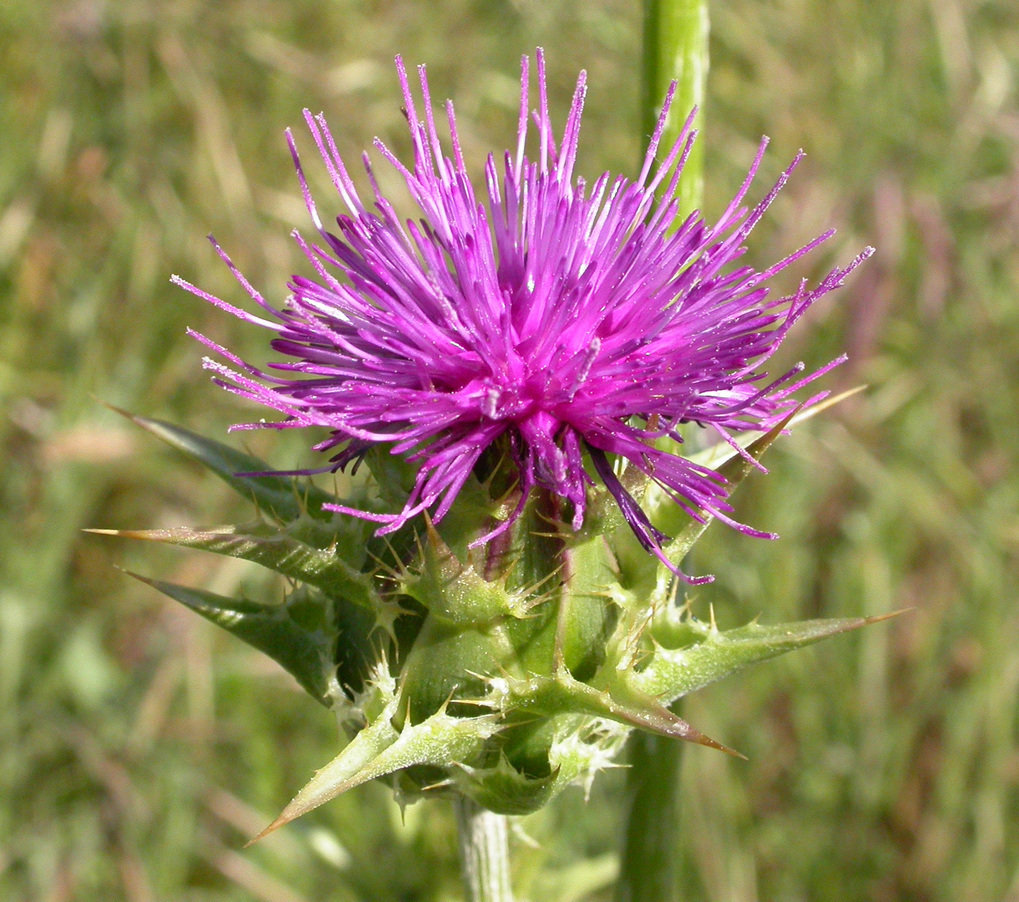
Silibinin has an outstanding safety profile in humans and is currently used for the treatment of liver disease and poisoning. Scientists at the Max Planck Institute of Psychiatry in Munich discovered in collaboration with scientists from the Helmholtz Zentrum München in cell cultures, animal models and human tumor tissue that silibinin can be applied to treat Cushing Disease, a rare hormone condition caused by a tumor in the pituitary gland in the brain. The researchers have filed a patent and now plan clinical trials using silibinin as a non-invasive treatment strategy. Thus, in future, patients might not have to undergo brain surgery anymore.
Treatment with silibinin, a constituent of milk thistle seeds, alleviated symptoms of Cushing Disease in cell cultures, animal models and human tumor tissue. In future, patients might not have to undergo brain surgery anymore.

Cushing Disease, not to be confused with Cushing’s Syndrome, is caused by a tumor in the pituitary gland in the brain. The tumor secrets increased amounts of the stress hormone adrenocorticotropin (ACTH) followed by cortisol release from the adrenal glands leading to rapid weight gain, elevated blood pressure and muscular weakness. Patients are prone to osteoporosis and infections and may show cognitive dysfunction or even depression. In 80 to 85 % of the patients, the tumor can be removed by uncomfortable brain surgery. For inoperable cases, there is currently only one targeted therapy approved, which unfortunately causes intense side effects such as hyperglycemia in more than 20 % of the patients.

Scientists around Günter Stalla, endocrinologist at the Max Planck Institute of Psychiatry in Munich, have now discovered in cell cultures, animal models and human tumor tissue that a harmless plant extract can be applied to treat Cushing Disease. “Silibinin is the major active constituent of milk thistle seeds. It has an outstanding safety profile in humans and is already used for the treatment of liver disease and poisoning,” explains Marcelo Paez-Pereda, leading scientist of the current study published in the renowned scientific journal Nature Medicine. After silibinin treatment, tumor cells resumed normal ACTH production, tumor growth slowed down and symptoms of Cushing Disease disappeared in mice.

In 2013, the Max Planck scientists filed a patent on a broad family of chemical and natural compounds, including silibinin, to treat pituitary tumors. Compared to humans, where only 5.5 in 100,000 people worldwide develop Cushing Disease, this condition is very common in several pets. For example, 4 % of dogs and even 7 % of horses suffer from Cushing Disease. Thus, the researchers now plan to test special formulations with a very pure substance and slow release of the active component silibinin in clinical trials.

Silibinin: Mode of action

“We knew that Cushing Disease is caused by the release of too much ACTH. So we asked ourselves what causes this over production and how to stop it,” says Paez-Pereda. In their first experiments, the researchers found tremendously high amounts of the heat shock protein 90 (HSP90) in tumor tissue from patients with Cushing Disease. In normal amounts, HSP90 helps to correctly fold another protein, the glucocorticoid receptor, which in turn inhibits the production of ACTH. “As there are too many HSP90 molecules in the tumor tissue, they stick to the glucocorticoid receptor,” explains Paez-Pereda. “We found that silibinin binds to HSP90 thus allowing glucocorticoid receptor molecules to dissolve from HSP90. With silibinin, we might have discovered a non-invasive treatment strategy not only for the rare Cushing Disease but also for other conditions with the involvement of glucocorticoid receptors, such as lung tumors, acute lymphoblastic leukemia or multiple myeloma,” concludes Paez-Pereda.

From http://www.psych.mpg.de/2034377/PM1507

TO BE RESCHEDULED! Interview with Stephanie – PCOS, Possibly Cushing’s Patient

interview

The next interview on BlogTalk Radio will be rescheduled.  The Call-In number for questions or comments is (657) 383-0416.

Steph has a bio posted here: http://cushingsbios.com/2015/04/16/stephanie-steph-undiagnosed-bio/

The archived interview will be available after 7:00 PM Eastern through iTunes Podcasts (Cushie Chats) or BlogTalkRadio.  While you’re waiting, there are currently 82 other past interviews to listen to!

In her bio, Steph writes:

Hi. My name Steph, and this has been a long journey for me so far, and I see a long road ahead. Hopefully their will be a rainbow once all these clouds have melted away.

I just turned 33 years old (this month) and have been dealing with symptoms of Cushing’s since I was a pre-teen without even knowing it. I was diagnosed (or possibly mis-diagnosed) with PCOS when I was about 11. That’s when the irregular (to almost non-existent) menstrual cycles, hirutism (chin, upper lip, upper and lower thighs, fingers, toes, basically everywhere) and weight problems began. I was immediately put on birth control to regulate my periods, which only made my life a living nightmare. They forced on a fake (non-ovulating) period and made my moods a disaster. I went on to be on birth control until from the age of 11 until about 3 years ago when I just couldn’t take it anymore, and took myself off. I’ve been using herbal supplements for menstrual regulalation since then, and feel MUCH better.

Over the years I’ve always felt like there was something “more than PCOS” wrong with me. From the extreme inability to lose weight normally, and the ease to gain it, to the weak legs, vitamen d insuffeciency, high cholesterol, high blood pressure, extreme irritability, now non-existent cycle, shortness of breath (just from walking up 1 flight of stairs), slow healing, hoarse voice, high testosterone, male pattern baldness, blurry vision, EXTREME brain fog etc….. It has been very, very, very tough and emotional over the years. It has taken a toll on my personality, emotions, and those around me….

The way that I found out about cushing’s is rather unique. I was on a popular PCOS message board site called “soul cysters”, and I have always been EXTREMELY self conscience of my round puffy face, and was wondering if it could be a side effect of PCOS. So I searched Puffy face on the message board to see if others on the board had experienced it, and sure enough Cushing’s came up, and a suprising number of women either had both (cushing’s and PCOS) or had been mis-diagnosed, which apparently is very common with cushing’s. it was like a gigantic light bulb went off in my head when I started googling cushings symptoms. All these things that I have been experiencing almost my entire life started coming together. I’m really not crazy!! Everything is possibly related. Im almost 100% sure that this is it!!! I don’t know if this is a good or bad thing, as I see that cushing’s is curable in most cases, but it is also scary, and diagnosing it seems like hell!!

I have began my -already slow- journey to diagnosis. And, the the Dr.’s don’t seem to be all that well informed. However, I am DETERMINED. I am excited at the thought of possibly being able to get my life back through surgery or meds. I went to a well respected Endo in my area, and she is gonna test all of my hormones, including my cortisol level. Though she didn’t seem to be too informed on Cushing’s when I brought it up, along with my “dead ringer” symptoms. I’m going to a pulmonologist on the 29th as suggested by my GP (who also thinks I have cushings, but admits he’s not well informed enough or equipped to diagnose). I’m also going to an OBGYN soon (tried going to one today, and had to walk out because it was such a bad experience). But I am determined to get 2nd, 3rd, and however many opinions are needed until I am satisfied.

Also, on a side note, possibly having cushing’s, along with having PCOS, has made me look at the doctors and the medical profession as a whole in a different light. I feel like if you find a genuinely good doctor who listens, cares, takes you seriously, and is willing to test you without question, and work with you, your levels, and your symptoms, you are blessed!! I have had so many doctors try to push meds down my throat (for their own pockets/greed obviously) when it wasn’t needed or necessary without hesitation or question. And, then when I tell them that the medicine is affecting me adversely, they just tell me to keep taking it! It’s sad and ridiculous. I’ve had to learn to do my own research, know my own body well, and trust my own judgement…..

I will be praying for myself and everyone on this message board who has had to deal with this horrific symptoms over the years.

Updates coming…..

HOME | Sitemap | Adrenal Crisis! | Abbreviations | Glossary | Forums |Donate | Bios | Add Your Bio