Causes of Cushing’s Syndrome

Cushing’s syndrome—also referred to as hypercortisolism—is fairly rare. However, researchers have boiled down a few key causes of Cushing’s syndrome, which you’ll read about below.

The cause of Cushing’s syndrome boils down to: Your body is exposed to too much cortisol. There are a few ways that this over-exposure can happen, including taking certain medications and having a tumor on your pituitary gland or adrenal gland.

Can Taking Corticosteroids Cause Cushing’s Disease?
One particular type of medication can cause Cushing’s syndrome: corticosteroids. But rest assured: Not all steroid medications cause Cushing’s syndrome. It’s more common to develop Cushing’s syndrome from steroids you take in pill form or steroids you inject. Steroid creams and steroids you inhale are not common causes of Cushing’s syndrome.

Some steroid medications have the same effect as the hormone cortisol does when produced in your body. But as with an excessive production of cortisol in your body, taking too much corticosteroid medications can, over time, lead to Cushing’s syndrome.

It’s common for people with asthma, rheumatoid arthritis, and lupus to take corticosteroids. Prednisone (eg, Deltasone) is an example of a corticosteroid medication.

Other Cushing’s Disease Causes
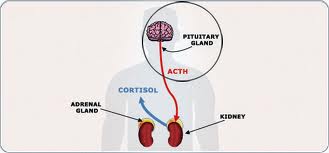
Your body can over-produce cortisol or adrenocorticotropic hormone (ACTH). The pituitary gland secretes ACTH, which is in charge of stimulating the adrenal glands to produce cortisol, and the adrenal glands are responsible for releasing cortisol into the bloodstream.

Cortisol performs important tasks in your body, such as helping to maintain blood pressure and regulate how your body metabolizes proteins, fats, and carbohydrates, so it’s necessary for your body to maintain normal levels of it.

The following can cause excessive production of cortisol or ACTH, leading to Cushing’s syndrome.

  • Pituitary gland tumors: A benign (non-cancerous) tumor of the pituitary gland can secrete an excess amount of ACTH, which can cause Cushing’s syndrome. Also known as pituitary adenomas, benign tumors of the pituitary gland affect women 5 times more often than men.
  • Adrenal gland tumors: A tumor in one of your adrenal glands can lead to Cushing’s syndrome by causing too much cortisol to enter your bloodstream. Most of these tumors are non-cancerous (called adrenal adenomas).

    Cancerous adrenal tumors—called adrenocortical carcinomas—are relatively rare. These types of tumors typically cause extremely high levels of cortisol and very rapid development of symptoms.

  • Other tumors in the body: Certain tumors that develop outside the pituitary gland can also produce ACTH. When this happens, it’s known as ectopic ACTH syndrome. Ectopic means that something is in an abnormal place or position. In this case, only the pituitary gland should produce ACTH, so if there is a tumor producing ACTH and it isn’t located on the pituitary, it’s ectopic.

    It’s unusual to have a tumor that secretes ACTH outside the pituitary. These tumors are usually found in the pancreas, lungs, or thyroid, and they can be benign or malignant (cancerous).

    The most common forms of ACTH-producing tumors are small cell lung cancer, which accounts for about 13% of all lung cancer cases, and carcinoid tumors—small, slow-growing tumors that arise from hormone-producing cells in various parts of the body.

  • Familial Cushing’s syndrome: Although it’s rare, Cushing’s syndrome can develop from an inherited tendency to have tumors on one or more of your endocrine glands. Some inherited conditions, such as multiple endocrine neoplasia (MEN 1), can involve tumors that over-produce cortisol or ACTH, leading to Cushing’s syndrome.

If you think you could have Cushing’s syndrome or you have questions about the causes of Cushing’s syndrome, talk to your doctor immediately.

Written by | Reviewed by Daniel J. Toft MD, PhD, adapted from  http://www.endocrineweb.com/conditions/cushings-syndrome/cushings-syndrome-causes

All About the Pituitary Gland

0276f-pituitary-gland


The pituitary gland stimulates all the other endocrine glands to produce their own hormones. It produces a number of hormones including Human Growth Hormone (hGH) responsible for bone and muscle growth and Follicle Stimulating Hormone (FSH) which stimulates the production of the female egg or male sperm.  It is found at the base of the brain.
What can happen when it goes wrong?

When the pituitary gland doesn’t produce enough ‘trigger’ hormones, hypopituitarism occurs. Most often, it is caused by a benign tumor of the pituitary gland although it can also be caused by infections, head injury or even stroke.

Symptoms?
Excessive tiredness, reduced fertility, irregular periods, weight gain, poor libido, dry skin and headaches.
Treatment?
If caused by a tumor, surgery will be required to remove it. Regardless of whether this is successful, daily hormones will then be required to replace those no longer produced.

Adapted from http://www.hippocraticpost.com/palliative/whole-story-hormones/

Hypopituitarism – Deficiency in Pituitary Hormone Production

By Yolanda Smith, BPharm

Hypopituitarism is a health condition in which there is a reduction in the production of hormones by the pituitary gland.

The pituitary gland is located at the base of the brain and is responsible for the production of several hormones, including:

  • Adrenocorticotropic hormone (ACTH), which controls the production of the vital stress hormones cortisol and dehydroepiandrosterone (DHEA) in the adrenal gland
  • Thyroid stimulating hormone (TSH), which controls the production of hormones by the thyroid gland
  • Luteinizing hormone (LH) and follicle-stimulating hormone (FSH), which control the secretion of the primary sex hormones and affect fertility
  • Growth hormone (GH), which regulates the growth processes in childhood and other metabolic processes throughout life
  • Prolactin (PRL), which facilitates the production of breast milk
  • Oxytocin, which is crucial during labor, childbirth and lactation
  • Antidiuretic hormone (ADH), also known as vasopressin, which regulates the retention of water and the blood pressure

An individual with hypopituitarism shows a deficiency in one or more of these hormones. This inevitably leads to abnormal body function, as an effect of the low levels of the hormone in the body, and may result in symptoms.

Causes

Hypopituitarism is most commonly due to the destruction, compression or inflammation of pituitary tissue by a brain tumor in that region. Other causes include:

  • Head injury
  • Infections such as tuberculosis
  • Ischemic or infarct injury
  • Radiation injury
  • Congenital and genetic causes
  • Infiltrative diseases such as sarcoidosis

Symptoms

General symptoms that are associated with pituitary hormone deficiency include:

  • Weakness and fatigue
  • Decreased appetite
  • Weight loss
  • Sensitivity to cold
  • Swollen facial features or body

There are also likely to be more specific symptoms according to the type of pituitary hormone deficiency, such as:

  • ACTH deficiency:
    • abdominal pain
    • low blood pressure
    • low serum sodium levels
    • skin pallor
  • TSH deficiency:
    • generalized body puffiness
    • sensitivity to cold
    • constipation
    • impaired memory and concentration
    • dry skin
    • anemia
  • LH and FSH deficiency:
    • reduction in libido
    • erectile dysfunction in men
    • abnormal menstrual periods
    • vaginal dryness in women
    • difficulty in conceiving
    • infertility.
  • GH deficiency:
    • slow growth
    • short height
    • an increase in body fat

Treatment

The first step in the treatment of hypopituitarism is to identify the cause of the condition.

Secondly, the hormones that are deficient must be identified. From this point, the appropriate treatment decisions can be made to promote optimal patient outcomes.

Hormone replacement therapy is the most common type of treatment for a patient with hypopituitarism.

This may involve supplementation of one or more hormones that are deficient, to reduce or correct the impact of the deficiency.

Follow Up

As hormone replacement therapy is expected to continue on a lifelong basis, it is important that patients have a good understanding of the therapy.

It is especially important to educate patients on what to do in case of particular circumstances that may change their hormone requirements.

For example, during periods of high stress, the demand for many hormones is increased, and the dose of hormone replacement may need to be adjusted accordingly.

It is recommended that patients have regular blood tests to monitor their hormone levels and ensure that they are in the normal range.

Patients should also carry medical identification, such as a medical bracelet or necklace, to show that they are affected by hypopituitarism and inform others about their hormone replacement needs and current treatment. This can help to meet their medical needs in case of any emergency.

Epidemiology

Hypopituitarism is a rare disorder that affects less than 200,000 individuals in the United States, with an incidence of 4.2 cases per 100,000 people per year.

The incidence is expected to be higher in certain subsets of the population, such as those that have suffered from a brain injury. Statistics in reference to these population groups have not yet been determined.

Reviewed by Dr Liji Thomas, MD.

References

From http://www.news-medical.net/health/Hypopituitarism-Deficiency-in-Pituitary-Hormone-Production.aspx

Pituitary tissue grown from human stem cells releases hormones in rats

Researchers have successfully used human stem cells to generate functional pituitary tissue that secretes hormones important for the body’s stress response as well as for its growth and reproductive functions. When transplanted into rats with hypopituitarism–a disease linked to dwarfism and premature aging in humans–the lab-grown pituitary cells promoted normal hormone release. The study, which lays the foundation for future preclinical work, appears June 14 in Stem Cell Reports, a publication of the International Society for Stem Cell Researchers.

“The current treatment options for patients suffering from hypopituitarism, a dysfunction of the pituitary gland, are far from optimal,” says first study author Bastian Zimmer of the Sloan Kettering Institute for Cancer Research. “Cell replacement could offer a more permanent therapeutic option with pluripotent stem cell-derived hormone-producing cells that functionally integrate and respond to positive and negative feedback from the body. Achieving such a long-term goal may lead to a potential cure, not only a treatment, for those patients.”

The pituitary gland is the master regulator of hormone production in the body, releasing hormones that play a key role in bone and tissue growth, metabolism, reproductive functions, and the stress response. Hypopituitarism can be caused by tumors, genetic defects, brain trauma, immune and infectious diseases, or radiation therapy. The consequences of pituitary dysfunction are wide ranging and particularly serious in children, who can suffer severe learning disabilities, growth and skeletal problems, as well as effects on puberty and sexual function.

Currently, patients with hypopituitarism must take expensive, lifelong hormone replacement therapies that poorly mimic the body’s complex patterns of hormone secretion that fluctuates with circadian rhythms and responds to feedback from other organs. By contrast, cell replacement therapies hold promise for permanently restoring natural patterns of hormone secretion while avoiding the need for costly, lifelong treatments.

Recently, scientists developed a procedure for generating pituitary cells from human pluripotent stem cells–an unlimited cell source for regenerative medicine–using organoid cultures that mimic the 3D organization of the developing pituitary gland. However, this approach is inefficient and complicated, relies on ill-defined cellular signals, lacks reproducibility, and is not scalable or suitable for clinical-grade cell manufacturing.

To address these limitations, Zimmer and senior study author Lorenz Studer of the Sloan Kettering Institute for Cancer Research developed a simple, efficient, and robust stem cell-based strategy for reliably producing a large number of diverse, functional pituitary cell types suitable for therapeutic use. Instead of mimicking the complex 3D organization of the developing pituitary gland, this approach relies on the precisely timed exposure of human pluripotent stem cells to a few specific cellular signals that are known to play an important role during embryonic development.

Exposure to these proteins triggered the stem cells to turn into different types of functional pituitary cells that released hormones important for bone and tissue growth (i.e., growth hormone), the stress response (i.e., adrenocorticotropic hormone), and reproductive functions (i.e., prolactin, follicle-stimulating hormone, and luteinizing hormone). Moreover, these stem cell-derived cells released different amounts of hormone in response to known feedback signals generated by other organs in the body.

To test the therapeutic potential of this approach, the researchers transplanted the stem cell-derived pituitary cells under the skin of rats whose pituitary gland had been surgical removed. The cell grafts not only secreted adrenocorticotropic hormone, prolactin, and follicle-stimulating hormone, but they also triggered appropriate hormonal responses in the kidneys.

The researchers were also able to control the relative composition of different hormonal cell types simply by exposing human pluripotent stem cells to different ratios of two proteins: fibroblast growth factor 8 and bone morphogenetic protein 2. This finding suggests their approach could be tailored to generate specific cell types for patients with different types of hypopituitarism. “For the broad application of stem cell-derived pituitary cells in the future, cell replacement therapy may need to be customized to the specific needs of a given patient population,” Zimmer says.

In future studies, the researchers plan to further improve the protocol to generate pure populations of various hormone-releasing cell types, enabling the production of grafts that are tailored to the needs of individual patients. They will also test this approach on more clinically relevant animal models that have pituitary damage caused by radiation therapy and receive grafts in or near the pituitary gland rather than under the skin. This research could have important implications for cancer survivors, given that hypopituitarism is one of the main causes of poor quality of life after brain radiation therapy.

“Our findings represent a first step in treating hypopituitarism, but that does not mean the disease will be cured permanently within the near future,” Zimmer says. “However, our work illustrates the promise of human pluripotent stem cells as it presents a direct path toward realizing the promise of regenerative medicine for certain hormonal disorders.”

###

The researchers were supported by the New York State Stem Cell Science and the Starr Foundation. The work was further supported in part by the National Institutes of Health and the National Cancer Institute.

Stem Cell Reports, Zimmer et al.: “Derivation of diverse hormone-releasing pituitary cells from human pluripotent stem cells” http://www.cell.com/stem-cell-reports/fulltext/S2213-6711(16)30060-1

Stem Cell Reports, published by Cell Press for the International Society for Stem Cell Research (@ISSCR), is a monthly open-access forum communicating basic discoveries in stem cell research, in addition to translational and clinical studies. The journal focuses on shorter, single-point manuscripts that report original research with conceptual or practical advances that are of broad interest to stem cell biologists and clinicians. Visit http://www.cell.com/stem-cell-reports. To receive Cell Press media alerts, please contact press@cell.com.

Disclaimer: AAAS and EurekAlert! are not responsible for the accuracy of news releases posted to EurekAlert! by contributing institutions or for the use of any information through the EurekAlert system.

Hair Analysis Provides a Historical Record of Cortisol Levels in Cushing’s Syndrome

Exp Clin Endocrinol Diabetes. Author manuscript; available in PMC 2010 Sep 24.
Published in final edited form as:
PMCID: PMC2945912
NIHMSID: NIHMS235640
Hair Analysis Provides a Historical Record of Cortisol Levels in Cushing’s Syndrome

Abstract

The severity of Cushing’s Syndrome (CS) depends on the duration and extent of the exposure to excess glucocorticoids. Current measurements of cortisol in serum, saliva and urine reflect systemic cortisol levels at the time of sample collection, but cannot assess past cortisol levels. Hair cortisol levels may be increased in patients with CS, and, as hair grows about 1 cm/month, measurement of hair cortisol may provide historical information on the development of hypercortisolism.

We attempted to measure cortisol in hair in relation to clinical course in six female patients with CS and in 32 healthy volunteers in 1 cm hair sections. Hair cortisol content was measured using a commercially available salivary cortisol immune assay with a protocol modified for use with hair.

Hair cortisol levels were higher in patients with CS than in controls, the medians (ranges) were 679 (279–2500) and 116 (26–204) ng/g respectively (P <0.001). Segmental hair analysis provided information for up to 18 months before time of sampling. Hair cortisol concentrations appeared to vary in accordance with the clinical course.

Based on these data, we suggest that hair cortisol measurement is a novel method for assessing dynamic systemic cortisol exposure and provides unique historical information on variation in cortisol, and that more research is required to fully understand the utility and limits of this technique.

Keywords: glucocorticoids, pituitary adenoma, cancer, adrenal gland, hormones, cushing hair