Is Cushing Syndrome More Common in the US Than We Think?

I think members of the Cushing’s Help boards have been saying this forever!  Cushing’s isn’t all that rare.  Just rarely diagnosed,


BOSTON — The prevalence of Cushing syndrome (CS) in the United States may be considerably higher than currently appreciated, new data from a single US institution suggest.

In contrast to estimates of 1 to 3 cases per million patient-years from population-based European studies, researchers at the University of Wisconsin, Milwaukee, estimated that the incidence of CS in Wisconsin is a minimum of 7.2 cases per million patient-years. What’s more, contrary to all previous studies, they found that adrenal Cushing syndrome was more common than pituitary adrenocorticotropic hormone (ACTH)– secreting tumors (Cushing disease), and that fewer than half of individuals with adrenal Cushing syndrome had classic physical features of hypercortisolism, such as weight gain, round face, excessive hair growth, and stretch marks.

“Cases are absolutely being missed…. Clinicians should realize that cortisol excess is not rare. It may not be common, but it needs to be considered in patients with any constellation of features that are seen in cortisol excess,” study investigator Ty B. Carroll, MD, Associate Professor of Medicine, Endocrinology and Molecular Medicine, and the Endocrine Fellowship Program Director at Medical College of Wisconsin in Milwaukee, told Medscape Medical News.

There are several contributing factors, he noted, “including the obesity and diabetes epidemics which make some clinical features of cortisol excess more common and less notable. Providers get used to seeing patients with some features of cortisol excess and don’t think to screen. The consequence of this is more difficult-to-control diabetes and hypertension, more advance metabolic bone disease, and likely more advanced cardiovascular disease, all resulting from extended exposure to cortisol excess,” he said.

Are Milder Cases the Ones Being Missed?

Asked to comment, session moderator Sharon L. Wardlaw, MD, professor of medicine at Columbia University College of Physicians and Surgeons, New York City, said “When we talk about Cushing [syndrome], we usually think of pituitary ACTH as more [common], followed by adrenal adenomas, and then ectopic. But they’re seeing more adrenal adenoma…we are probably diagnosing this a little more now.”

She also suggested that the Wisconsin group may have a lower threshold for diagnosing the milder cortisol elevation seen with adrenal Cushing syndrome. “If you screen for Cushing with a dexamethasone suppression test…[i]f you have autonomous secretion by the adrenal, you don’t suppress as much…. When you measure 24-hour urinary cortisol, it may be normal. So you’re in this in-between [state]…. Maybe in Wisconsin they’re diagnosing it more. Or, maybe it’s just being underdiagnosed in other places.”

She also pointed out that “you can’t diagnose it unless you think of it. I’m not so sure that with these mild cases it’s so much that it’s more common, but maybe it’s like thyroid nodules, where we didn’t know about it until everybody started getting all of these CT scans. We’re now seeing all these incidental thyroid nodules…I don’t think we’re missing florid Cushing.”

However, Wardlaw said, it’s probably worthwhile to detect even milder hypercortisolism because it could still have long-term damaging effects, including osteoporosis, muscle weakness, glucose intolerance, and frailty. “You could do something about it and normalize it if you found it. I think that would be the reason to do it.”

Is Wisconsin Representative of Cushing Everywhere?

Carroll presented the findings at the annual meeting of the Endocrine Society. He began by noting that most of the previous CS incidence studies, with estimates of 1.2-3.2 cases per million per year, come from European data published from 1994 to 2019 and collected as far back as 1955. The method of acquisition of patients and the definitions of confirmed cases varied widely in those studies, which reported CS etiologies of ACTH-secreting neoplasms (pituitary or ectopic) in 75%-85% and adrenal-dependent cortisol excess in 15%-20%.

The current study included data from clinic records between May 1, 2017, and December 31, 2022, of Wisconsin residents newly diagnosed with and treated for CS. The CS diagnosis was established with standard guideline-supported biochemical testing and appropriate imaging. Patients with exogenous and non-neoplastic hypercortisolism and those who did not receive therapy for CS were excluded.

A total of 185 patients (73% female, 27% male) were identified from 27 of the total 72 counties in Wisconsin, representing a population of 4.5 million. On the basis of the total 5.9 million population of Wisconsin, the incidence of CS in the state works out to 7.2 cases per million population per year, Carroll said.

However, data from the Wisconsin Hospital Association show that the University of Wisconsin’s Milwaukee facility treated just about half of patients in the state who are discharged from the hospital with a diagnosis of CS during 2019-2023. “So…that means that an actual or approximate incidence of 14-15 cases per million per year rather than the 7.2 cases that we produce,” he said.

Etiologies were 60% adrenal (111 patients), 36.8% pituitary (68 patients), and 3.2% ectopic (6 patients). Those proportions were similar between genders.

On biochemical testing, values for late-night salivary cortisol, dexamethasone suppression, and urinary free cortisol were highest for the ectopic group (3.189 µg/dL, 42.5 µg/dL, and 1514.2 µg/24 h, respectively) and lowest for the adrenal group (0.236 µg/dL, 6.5 µg/dL, and 64.2 µg/24 h, respectively). All differences between groups were highly statistically significant, at P < .0001, Carroll noted.

Classic physical features of CS were present in 91% of people with pituitary CS and 100% of those ectopic CS but just 44% of individuals with adrenal CS. “We found that adrenal-dependent disease was the most common form of Cushing syndrome. It frequently presented without classic physical features that may be due to the milder biochemical presentation,” he concluded.

Carroll reports consulting and investigator fees from Corcept Therapeutics. Wardlaw has no disclosures. 

Miriam E. Tucker is a freelance journalist based in the Washington DC area. She is a regular contributor to Medscape, with other work appearing in The Washington Post, NPR’s Shots blog, and Diatribe. She is on X (formerly Twitter) @MiriamETucker.

1

Credit

Lead image: Designer491/Dreamstime

Medscape Medical News © 2024 WebMD, LLCSend comments and news tips to news@medscape.net.

Cite this: Is Cushing Syndrome More Common in the US Than We Think? – Medscape – June 07, 2024.

Day 15, Cushing’s Awareness Challenge

Today’s Cushing’s Awareness Challenge post is about kidney cancer (renal cell carcinoma). You might wonder how in the world this is related to Cushing’s. I think it is, either directly or indirectly.

I alluded to this a couple days ago when I said:

I finally started the Growth Hormone December 7, 2004.
Was the hassle and 3 year wait worth it?
Stay tuned for tomorrow, April 15, 2016 when all will be revealed.

So, as I said, I started Growth Hormone for my panhypopituitarism on December 7, 2004.  I took it for a while but never really felt any better, no more energy, no weight loss.  Sigh.

April 14 2006 I went back to the endo and found out that the arginine test that was done in 2004 was done incorrectly. The directions were written unclearly and the test run incorrectly, not just for me but for everyone who had this test done there for a couple years. My endo discovered this when he was writing up a research paper and went to the lab to check on something.

So, I went off GH again for 2 weeks, then was retested. The “good news” was that the arginine test is only 90 minutes now instead of 3 hours.

Wow, what a nightmare my arginine retest started! I went back for that Thursday, April 27, 2006. Although the test was shorter, I got back to my hotel and just slept and slept. I was so glad that I hadn’t decided to go right home after the test.

Friday I felt fine and drove back home, no problem. I picked up my husband for a biopsy he was having and took him to an outpatient surgical center. While I was there waiting for the biopsy to be completed, I started noticing blood in my urine and major abdominal cramps.

There were signs all over that no cellphones were allowed so I sat in the restroom (I had to be in there a lot, anyway!) and I left messages for several of my doctors on what I should do. It was Friday afternoon and most of them were gone 😦  I finally decided to see my PCP after I got my husband home.

When Tom was done with his testing, his doctor took one look at me and asked if I wanted an ambulance. I said no, that I thought I could make it to the emergency room ok – Tom couldn’t drive because of the anaesthetic they had given him. I barely made it to the ER and left the car with Tom to park. Tom’s doctor followed us to the ER and instantly became my new doctor.

They took me in pretty fast since I was in so much pain, and had the blood in my urine. At first, they thought it was a kidney stone. After a CT scan, my new doctor said that, yes, I had a kidney stone but it wasn’t the worst of my problems, that I had kidney cancer. Wow, what a surprise that was! I was admitted to that hospital, had more CT scans, MRIs, bone scans, they looked everywhere.

My new “instant doctor” felt that he wasn’t up to the challenge of my surgery, so he called in someone else.  My next new “instant doctor” came to see me in the ER in the middle of the night.  He patted my hand, like a loving grandfather might and said “At least you won’t have to do chemotherapy”.  And I felt so reassured.

It wasn’t until later, much after my surgery, that I found out that there was no chemo yet that worked for my cancer.  I was so thankful for the way he told me.  I would have really freaked out if he’d said that nothing they had was strong enough!

My open radical nephrectomy was May 9, 2006 in another hospital from the one where the initial diagnosis was made. My surgeon felt that he needed a specialist from that hospital because he believed preop that my tumor had invaded into the vena cava because of its appearance on the various scans. Luckily, that was not the case.

My entire left kidney and the encapsulated cancer (10 pounds worth!) were removed, along with my left adrenal gland and some lymph nodes. Although the cancer (renal cell carcinoma AKA RCC) was very close to hemorrhaging, the surgeon believed he got it all.

He said I was so lucky. If the surgery had been delayed any longer, the outcome would have been much different. I will be repeating the CT scans every 3 months, just to be sure that there is no cancer hiding anywhere. As it turns out, I can never say I’m cured, just NED (no evidence of disease). This thing can recur at any time, anywhere in my body.

I credit the arginine re-test with somehow aggravating my kidneys and revealing this cancer. Before the test, I had no clue that there was any problem. The arginine test showed that my IGF is still low but due to the kidney cancer I couldn’t take my growth hormone for another 5 years – so the test was useless anyway, except to hasten this newest diagnosis.

So… either Growth Hormone helped my cancer grow or testing for it revealed a cancer I might not have learned about until later.

My five years are up now.  When I was 10 years free of this cancer my kidney surgeon *thought* it would be ok to try the growth hormone again.  I was a little leery about this, especially where I didn’t notice that much improvement.

What to do?

BTW, I decided to…

Day 13, Cushing’s Awareness Challenge

UVA 2004
Cushing’s Conventions have always been special times for me – we learn a lot, get to meet other Cushies, even get referrals to endos!

As early as 2001 (or before) my pituitary function was dropping.  My former endo tested annually but did nothing to help me with the symptoms.

In the fall of 2002 my endo refused to discuss my fatigue or anything at all with me until I lost 10 pounds. He said I wasn’t worth treating in my overweight condition and that I was setting myself up for a heart attack. He gave me 3 months to lose this weight. Those 3 months included Thanksgiving, Christmas and New Years.  Needless to say, I left his office in tears, again.

Fast forward 2 years to 2004.  I had tried for a while to get my records from this endo. He wouldn’t send them, even at doctors’ or my requests.

I wanted to go see Dr. Vance at UVa but I had no records so she wouldn’t see me until I could get them.

Finally, my husband went to the former endo’s office and threatened him with a court order. The office manager managed to come up with about 13 pages of records. For going to him from 1986 to 2001 including weeks and weeks at NIH and pituitary surgery, that didn’t seem like enough records to me.

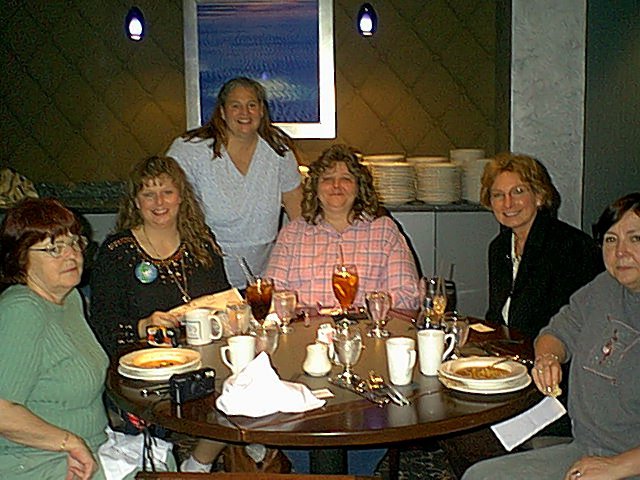
In April of 2004, many of us from the message boards went to the UVa Pituitary Days Convention. That’s where the picture above comes in.  Other pictures from that convention are here.

By chance, we met a wonderful woman named Barbara Craven. She sat at our table for lunch on the last day and, after we learned that she was a dietitian who had had Cushing’s, one of us jokingly asked her if she’d do a guest chat for us. I didn’t follow through on this until she emailed me later. In the email, she asked how I was doing. Usually I say “fine” or “ok” but for some reason, I told her exactly how awful I was feeling.

Barbara emailed me back and said I should see a doctor at Johns Hopkins. I said I didn’t think I could get a recommendation to there, so SHE referred me. The doctor got right back to me, set up an appointment. Between his vacation and mine, that first appointment turned out to be Tuesday, Sept 14, 2004.

Just getting through the maze at Johns Hopkins was amazing. They have the whole system down to a science, moving from one place to another to sign in, then go here, then window 6, then… But it was very efficient.

My new doctor was wonderful. Understanding, knowledgeable. He never once said that I was “too fat” or “depressed” or that all this was my own fault. I feel so validated, finally.

He looked through my records, especially at my 2 previous Insulin Tolerance Tests (ITT). From those, he determined that my growth hormone has been low since at least August 2001 and I’ve been adrenal insufficient since at least Fall, 1999 – possibly as much as 17 years! I was amazed to hear all this, and astounded that my former endo not only didn’t tell me any of this, he did nothing. He had known both of these things – they were in the past records that I took with me. Perhaps that was why he had been so reluctant to share copies of those records. He had given me Cortef in the fall of 1999 to take just in case I had “stress” and that was it.

The new endo took a lot of blood (no urine!) for cortisol and thyroid stuff. I went back on Sept. 28, 2004 for arginine, cortrosyn and IGF testing.

He said that I would end up on daily cortisone – a “sprinkling” – and some form of GH, based on the testing the 28th.

For those who are interested, my new endo is Roberto Salvatori, M.D.
Assistant Professor of Medicine at Johns Hopkins

Medical School: Catholic University School of Medicine, Rome, Italy
Residency: Montefiore Medical Center
Fellowship: Cornell University, Johns Hopkins University
Board Certification: Endocrinology and Metabolism, Internal Medicine

Clinical Interests: Neuroendocrinology, pituitary disorders, adrenal disorders

Research Interests: Control of growth hormone secretion, genetic causes of growth hormone deficiency, consequences of growth hormone deficiency.

Although I have this wonderful doctor, a specialist in growth hormone deficiency at Johns Hopkins, in November, 2004, my insurance company saw fit to over-ride his opinions and his test results based on my past pharmaceutical history! Hello??? How could I have a history of taking GH when I’ve never taken it before?

Of course, I found out late on a Friday afternoon. By then it was too late to call my case worker at the drug company, so we had to appeal on Monday. My local insurance person also worked on an appeal, but the whole thing was  just another long ordeal of finding paperwork, calling people, FedExing stuff, too much work when I just wanted to start feeling better by Thanksgiving.

As it turned out the insurance company rejected the brand of hGH that was prescribed for me. They gave me the ok for a growth hormone was just FDA-approved for adults on 11/4/04. The day this medication was approved for adults was the day after my insurance said that’s what is preferred for me. In the past, this form of hGH was only approved for children with height issues. Was I going to be a ginuea pig again?

The new GH company assigned a rep for me, submitted info to pharmacy, and waited for insurance approval, again.

I finally started the Growth Hormone December 7, 2004.

Was the hassle and 3 year wait worth it?

Stay tuned for April 15, 2016 when all will be revealed.

Read

Read Dr. Barbara Craven’s Guest Chat, October 27, 2004

Thanks for reading 🙂

MaryO

Rare Disease Day 2020

rare disease day


Each and every day since 1987,  I tell anyone who will listen about Cushing’s.  I pass out a LOT Cushing’s business cards. My husband also passes out cards and brochures.

Adding to websites, blogs and more which I have maintained continuously since 2000 – at mostly my own expense.

Posting on the Cushing’s Help message boards about Rare Disease Day.

Tweeting/retweeting info about Cushing’s and Rare Disease Day today.

Adding info to one of my blogs about Cushing’s and Rare Disease Day.

Adding new and Golden Oldies bios to another blog, again most every week.

Thinking about getting the next Cushing’s Awareness Blogging Challenge set up for April…and will anyone else participate?

And updating https://www.facebook.com/CushingsInfo with a bunch of info today (and every day!)

~~~

Today is Rare Disease Day.

I had Cushing’s Disease due to a pituitary tumor. I was told to diet, told to take antidepressants and told that it was all my fault that I was so fat. My pituitary surgery in 1987 was a “success” but I still deal with the aftereffects of Cushing’s and of the surgery itself.

I also had another Rare Disease – Kidney Cancer, rare in younger, non-smoking women.

And then, there’s the secondary adrenal insufficiency…and growth hormone deficiency

If you’re interested, you can read my bio here: https://cushingsbios.com/2018/10/28/maryo-pituitary-bio/

What are YOU doing for Rare Disease Day?


HOME | Sitemap | Abbreviations | Adrenal Crisis! | Glossary | Forums | Bios | Add Your Bio | Add Your Doctor | MemberMap | CushieWiki

Rare Disease Day 2019

rare disease day


Each and every day since 1987,  I tell anyone who will listen about Cushing’s.  I pass out a LOT Cushing’s business cards. My husband also passes out cards and brochures.

Adding to websites, blogs and more which I have maintained continuously since 2000 – at mostly my own expense.

Posting on the Cushing’s Help message boards about Rare Disease Day.  I post there most every day.

Tweeting/retweeting info about Cushing’s and Rare Disease Day today.

Adding info to one of my blogs about Cushing’s and Rare Disease Day.

Adding new and Golden Oldies bios to another blog, again most every day.

Thinking about getting the next Cushing’s Awareness Blogging Challenge set up for April…and will anyone else participate?

And updating https://www.facebook.com/CushingsInfo with a bunch of info today (and every day!)

~~~

Today is Rare Disease Day.

I had Cushing’s Disease due to a pituitary tumor. I was told to diet, told to take antidepressants and told that it was all my fault that I was so fat. My pituitary surgery in 1987 was a “success” but I still deal with the aftereffects of Cushing’s and of the surgery itself.

I also had another Rare Disease – Kidney Cancer, rare in younger, non-smoking women.

And then, there’s the secondary adrenal insufficiency…and growth hormone deficiency

If you’re interested, you can read my bio here: https://cushingsbios.com/2018/10/28/maryo-pituitary-bio/

What are YOU doing for Rare Disease Day?


HOME | Sitemap | Abbreviations | Adrenal Crisis! | Glossary | Forums | Bios | Add Your Bio | Add Your Doctor | MemberMap | CushieWiki