Adrenal Insufficiency Patients Require More Education on Adrenal Crisis

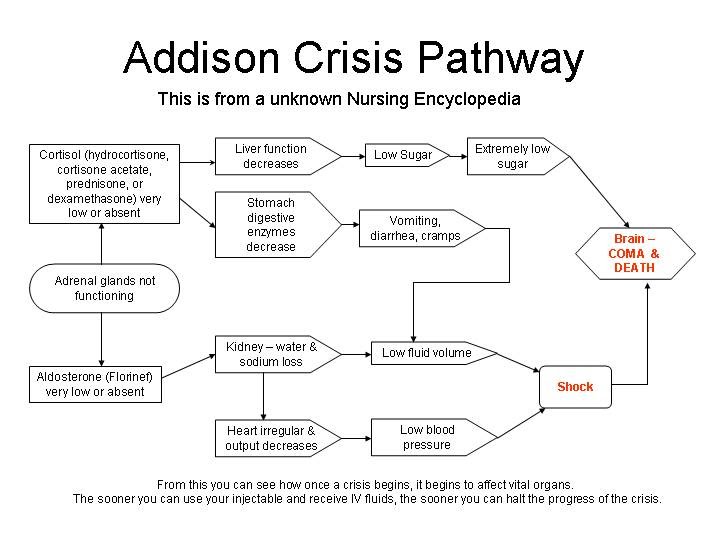
adrenalcrisispathway

Greater efforts to educate patients with adrenal insufficiency and their families about prevention of adrenal crisis may be necessary, according to data presented at the American Association of Clinical Endocrinologists (AACE) 24th Annual Scientific & Clinical Congress.

Additionally, the researchers, who looked at patients treated for adrenal insufficiency, found that many are not being adequately trained or equipped to deal with an adrenal crisis.

“These patients can crash and we are not doing enough to help prevent problems,” study investigator Nitika Malhotra, MD, endocrinologist in Lansing, Michigan, said. “We did this study because we think this is a big problem.”

Malhotra, who presented the study findings at the meeting, explained that patients with adrenal insufficiency are at risk for developing adrenal crisis, and it is now estimated that 8% of patients with adrenal insufficiency are hospitalized for adrenal crisis each year.

The problem, according to Malhotra, is that far too many patients are failing to receive crises prevention education. Moreover, they are not receiving emergency glucocorticoid kits.

“All of the families need to be taught and that is not happening,” Malhotra said in an interview with Endocrinology Advisor. “It will reduce the morbidity and mortality and the hospitalization, and it may improve the quality of life of patients too.”

For their study, Malhotra and her colleagues collected data from patients with adrenal insufficiency who were seen at a single institution between March 2009 and March 2014.

The investigators conducted a retrospective chart review and examined age, gender, causes of adrenal insufficiency, glucocorticoid dose, and monitoring for hyponatremia and hyperkalemia. They also looked at postural blood pressure, crises prevention education for glucocorticoid dose adjustments during stress, and whether patients had a Medic Alert ID or a parenteral glucocorticoid kit.

The researchers identified 85 patients (29 males and 56 females) with adrenal insufficiency. Of these patients, 33 patients had primary adrenal insufficiency (38.8%) and 52 had secondary adrenal insufficiency (61.2%). The mean age of the patients was 55.8 years.

Among the 85 patients, 23 (27%) had postural blood pressures checked — five of whom were positive (21.7%). Seventy-seven patients (90.6%) were monitored for electrolytes, and 41 patients (48.2%) were on steroid doses above 20 mg per day.

However, the researchers found that only 57 patients (67.1%) had received steroid dose adjustment instructions. In addition, only 29 patients (34.1%) had a Medic Alert ID, and only 17 patients (20%) were setup with emergency parenteral glucocorticoid kits.

Even though this study has many inherent limitations, Malhotra said, it appears that the preventive strategies for adrenal crisis in patients with adrenal insufficiency are not being consistently followed.

Patient education is paramount for achieving a successful prevention strategy for adrenal crisis, and endocrinologists have a responsibility to make sure that all patients with adrenal insufficiency have a Medic Alert ID and access to emergency glucocorticoid kits, according to Malhotra.

Furthermore, she said families should receive adequate education about parenteral steroid administration and steroid dose adjustments in stressful situations.

At her institution, Malhotra said, endocrinologists are introducing an automated electronic alert in their electronic medical records to determine if this electronic prompt will improve adherence.

Reference

  1. Malhotra N et al. Abstract #102. Presented at: American Association of Clinical Endocrinologists (AACE) 24th Annual Scientific & Clinical Congress; May 13-17, 2015; Nashville, Tenn.


From http://www.endocrinologyadvisor.com/aace-2015/adrenal-crisis-in-adrenal-insufficiency/article/415123/

Medic Alert Bracelets

This was posted today on Facebook from Jeannie Middlebrooks, an EMS provider.  She says “Anyone can message me with questions too!”
I have seen alot of people recently asking for advice as to what to put on their Medic Alert Bracelets, What Kind to buy, etc.
The most common things I see are that bracelets are being bought that look like “normal jewelry” because they don’t want it to stick out.
The other thing is that they are putting the IMPORTANT information on the BACK of the bracelet
Guys I have been in EMS 16 years, and recently Diagnosed SAI this past april. so I have a few things to say on this subject. You can take it for what it’s worth, but please understand this is coming from someone who lives in the heat of the moment taking care of people like us when that moment counts.. When we find an unconscious patient we have several things that we are attempting to do to save that patient, granted looking for a medic alert tag is important, but it is not more important that keeping a compromised airway open, checking vitals, getting an IV, asking family for a history, etc. Looking for a medic alert is usually done en route to the hospital if it is not blatantly obvious upon arrival.
#1 Anything that looks pictures I have posted below, I can 100% promise you, will be looked over in the heat of the moment if you are unconscious. Your family will more than likely be on edge and forget to tell us, or you will be by yourself and no one will know to tell us to look. It looks like standard jewelry.. so I’m not going to look at it.. therefore missing your life threatening emergency.. and if I am one of MILLIONS of first responders that are unfamiliar with Adrenal Insufficiency, I will NOT recognize the signs and symptoms, and you will NOT get the care you need pre-hospital.. leaving your body without the necessary cortisol for that much longer.
#2- If you place your Pertinent information on the back of your bracelet, PLEASE make sure that the medic alert symbol is on the front of the bracelet, BIG AND RED… don’t make it small and pink, or the same color as the bracelet.. yet again. we will overlook it in the moment..
#3- Necklaces are a bad idea.. They almost always get tucked into a shirt, and we almost NEVER see them. they are easily moved.
#4- Your medic alert tag should have your name. What you Suffer From, That you are Steroid Dependant. Where your Injection Kit is location (if applicable), Instructions to give the meds or you will die.. (This alerts bystanders to give you the injection as well.. I can say this because I had a bystander do it based solely on my Medic Alert tag.. she found it, drew it up, and gave it to me), and an emergency contact who can give responders information they need. If you have more than one Critical condition. List the most life threatening in order.
Please Please Please don’t take this post the wrong way. I am saying all of this coming from someone who lives in these moments every day. I know how many first responders are not familiar with the disease that can so easily kill us, and if you are willing to risk your life for the sake of a “pretty” bracelet, then I can’t stop you.. nor can anyone here.. Just know that it is a HUGE risk…

Remaining calm = Reducing illness

Have you ever noticed that when you are “stressed” you can feel either emotionally/physically depleted or energized?  When our body is under stress the brain responds by producing epheniphrine or adrenaline, sending signals to our adrenal glands, increasing the rate at which our heart beats while releasing oxygen to our muscles.  The long term response to this process produces cortisol (aka the stress hormone) facilitating the release of energy throughout our body.  However, when our body isn’t properly balanced these hormones can wreak havoc on our wellness possibly resulting in one of three conditions:  Cushing’s syndrome, Cushing’s disease or Addison’s disease.

adrenal-glandsThe actual Adrenal glands sit physically atop both kidneys, taking on a triangular shape and a roundish rectangular type shape.  These glands are responsible for our sex hormones and cortisol, helping us respond to stress amongst other functions.  When our body is under stress, physically and/or nutritionally, it responds one of two ways:  Produces too much or too little of the cortisol hormone.  Our Adrenal glands also contribute to regulating our blood sugar, blood pressure, salt and water.

Adrenal disorders can cause our body to make too much or not enough of these hormones, bringing about adrenal gland related syndromes and disease.  Cushing’s syndrome results from our body making too much versus Addison’s disease produces too little.

Cushing’s syndrome vs. Cushing’s disease

Glucocorticoids (naturally produced in our body or received through medicine) are groups of corticosteroids (cortisol or dexamethasone) involved in metabolizing our carbohydrate and protein.  When taken synthetically (i.e. treatment of allergies, skin problems, and respiratory problems) or over-produced naturally, the side effects can result in “Cushing’s syndrome”.

Cushing’s syndrome can occur one of two ways:  Endogenous or Exogenous.  Endogenous is caused by the body (usually through tumors).  Exogenous is caused by medication.  In both cases, the body produces too much cortisol.

Symptoms: Severe fatigue/muscle weakness, high blood sugar and high blood pressure, upper body obesity, thin arms/legs, bruising easily

Treatment:  The cure and treatment for Cushing’s disease can come through medicine, surgery, or by lowering the dosage of your current synthetic hormone treatment.  Cushing’s syndrome can be cured.

Cushing’s disease is the most common form of endogenous Cushing’s syndrome and is likely treatable.  Caused by a tumor in the pituitary gland secreting too much Adrenocorticotropic hormone (ACTH), this type of tumor does not spread and can be removed through surgery.

Nutrition:  See a nutritionist or dietician for your condition.  Mostly, avoid excess sodium.  High blood sugar (hyperglycemia) and high blood pressure can easily occur with this condition.  Bone loss density is common with this condition, so be extra aware of your calcium (800 – 1200 mg per day, based upon age) and Vitamin D intake (5mcg from age 0-50, increasing up to 10 mcg 50-71, and 15 mcg after 71).  Eating healthy, balanced and whole food (versus processed) is extremely important.

(Resource:  http://www.aboutcushings.com/understanding-cushings-disease/causes-and-differences.jsp)

Addison’s disease

Opposite from Cushing’s syndrome, Addison’s disease doesn’t make “enough” of the sex hormones and cortisol.  The result of this disease causes our immune system to attack our tissue, damaging our adrenal glands.

Symptoms:  Weight loss, muscle weakness, increasingly worse fatigue, low blood pressure and patchy or dark skin.

Treatment:  If left untreated, the condition can be fatal.  Lifetime hormone treatment is usually required. Addison disease patients should always carry medical/emergency ID on them, listing their medication, dosage and disease

Lab tests can confirm that you have Addison’s disease. If you don’t treat it, it can be fatal. You will need to take hormone pills for the rest of your life. If you have Addison’s disease, you should carry an emergency ID. It should say that you have the disease, list your medicines and say how much you need in an emergency.”

(Ref: http://www.nlm.nih.gov/medlineplus/cushingssyndrome.html, NIH: National Institute of Neurological Disorders and Stroke)                                                                                                                                                                                                                                        Learning how to balance our stress-filled lives is extremely important to our overall health.  Healthy nutrition always contributes benefits to our overall wellness.  We can overwhelm our endocrine system by simply not eating nutritionally.  Understanding that “Food is a drug” is vitally important to how we help our body naturally heal itself.  The above two conditions are the result of our body not handling the stress we are putting it through, causing our body to producing too much or too little of the sex hormones and cortisol.

Unless we first address what we can do naturally through nutrition, the medicine we consume will only do so much in helping our body heal completely.  You simply cannot continue doing the same thing over and over again, expecting the medicine to do all the work.  Some diseases are brought upon us through our environment (emotionally as well as physically) as well as our diet/nutrition.  Reviewing our entire wellness is always wisdom whenever we’re diagnosed with anything.

Certainly listen to your doctor and their advice.  But also ask your doctor to refer you to a nutritionist or clinical/registered dietician for a complete evaluation that includes a review of your nutritional diet/wellness.  Too often we reach for a pill or a procedure to “fix” our health problems, ignoring what we should be doing on our own to help our body heal.  Medical intervention is the result of providing our body with what it cannot produce on its own.  Nutrition should always be the “natural” medicine we take, as well as what we might need through prescribed medication.

Adapted from (Spelling errors corrected) http://hamptonroads.com/2013/10/remaining-calm-reducing-illness

Cushing’s FAQ

A FAQ (Frequently Asked Questions).  Directions are in each category for adding your own question.

IMPORTANT: The information and material posted on this Web site is intended as general reference information only. Specific facts and circumstances may alter the concepts and applications of materials and information described herein. The information provided is not a substitute for professional advice and should not be relied upon in the absence of such professional advice specific to whatever facts and circumstances are presented in any given situation.

Please note that there are several questions waiting to be answered at this time. Your question will be answered as soon as possible.

This is a different website than the message boards and requires a different log-in, although you may use the same log-in name and password.


Adrenal Insufficiency

Adrenal insufficiency is a life threatening chronic illness. An active and vigorous lifestyle with normal life expectancy is possible as long as the prescribed medications are taken regularly and adjusted when indicated. As with most chronic diseases, adrenal insufficiency demands that the patients take responsibility and develop self-management skills and techniques.

Read an article on Adrenal insufficiency

Cushing’s Types

Cushing’s Disease/ Cushing’s Syndrome: Cushing’s is a hormonal disorder caused by prolonged exposure of the body’s tissues to high levels of the hormone cortisol. Your adrenal glands, which are right above your kidneys, release cortisol when they receive a chemical message from your pituitary gland. The message comes in the form of adrenocorticotrophic hormone (ACTH), which travels through the bloodstream.

Cushing’s Disease Is the result of a pituitary tumor which causesthe emergence of secondary male characteristics (like hair growth, acne, etc.), and ovarian failure. Other symptoms usually include high blood pressure and water retention.

Cushing’s Syndrome: Causes the same symptoms, but is a disorder marked by overproduction of adrenal hormones, which can cause a drop in LH and FSH.

An estimated 10 to 15 of every million people are affected each year. Cushing’s is an increased concentration of glucocorticoid hormone (ACTH) in the bloodstream that is being produced by an adrenal gland tumor (adenoma). Ectopic Cushing syndrome refers to the production of ACTH in a location other than the pituitary gland or adrenalgland. Examples of ectopic sites include thymoma, medullary carcinoma of the thyroid, pheochromocytoma, islet cell tumors of the pancreas, and oat cell carcinoma of the lung.Symptoms include weight gain, central obesity, moon face, weakness, fatigue, backache, headache, increased thirst, increased urination, impotence, mental status changes, and muscle atrophy.

Treatment varies with cause. If an ACTH secreting tumor is involved then it must be removed surgically.

More about Cushing’s.

Talk about Cushing’s with people who understand.

Subcategories:

Growth Hormone

Human Growth Hormone (hGH) is produced in the pituitary gland of humans, and the hormone is secreted throughout a person’s lifetime. It promotes growth in children and plays an important role in adult metabolism.

More about HgH

Where Can I Find…?