Mifepristone in children with refractory Cushing’s disease

Introduction

This study is being done to examine the effects of a medication called mifepristone in children with Cushing’s disease. This medication has been approved by the Food and Drug Administration (FDA) for use in adult patients with Cushing’s syndrome. It is not FDA approved for use in children.

The study will investigate how children’s bodies absorb and process mifepristone, how it works in children and what effect it has on the use of sugar in the body, on the child’s weight and on growth hormone. An important part of the study is to determine the proper dosing and to evaluate the side effects of mifepristone in children.

Children 6 to 17 years old will be enrolled in the study if they have had surgery for Cushing’s disease and currently have elevated cortisol levels.

To get started, please click here.

NIH: An Open-Label Study of The Safety, Pharmacokinetics and Pharmacodynamics of Mifepristone in Children With Refractory Cushing’s Disease

This study is currently recruiting participants.

Summary

Number 13-CH-0170
Sponsoring Institute National Institute of Child Health and Human Development (NICHD)
Recruitment Detail Type: Participants currently recruited/enrolled
Gender: Male & Female
Min Age: 6
Max Age: 17
Referral Letter Required No
Population Exclusion(s) None
Special Instructions Currently Not Provided
Keywords Child;
Cushing Syndrome;
Metabolism;
Mifepristone;
Pharmacokinetic-Pharmacodynamic
Recruitment Keyword(s) None
Condition(s) Cushing’s Syndrome;
Cushing Syndrome
Investigational Drug(s) Mifepristone
Investigational Device(s) None
Intervention(s) Drug: mifepristone
Supporting Site National Institute of Child Health and Human Development

Background:

– There are currently no approved therapies for children with Cushing’s disease who are not cured by surgery alone. A drug called mifepristone has been approved to treat adults with Cushing’s syndrome and elevated blood glucose caused by Cushing’s. The drug is marketed under the name Korlym(Registered Trademark). The study drug may have a different effect on a child’s body than an adult’s, so researchers want to know how much of the drug to give children and what effect it will have. They want to learn if mifepristone improves Cushing’s disease in children as it does in adults. They also want to know about the drug’s side effects in children.

Objectives:

– To study the effect of a medication called mifepristone in children with Cushing’s disease that has not been helped by pituitary surgery.

Eligibility:

– Children ages 6 to 17 with active Cushing’s disease following pituitary surgery and who have a body weight higher than expected for their height and age.

Design:

– Participants will be screened for up to 8 weeks with a physical exam, medical history, and medical tests including blood tests and X-rays.

– Participants will take tablets of the study drug each day for 12 weeks.

– Participants will stay at the clinic for 4 nights at the beginning of the study. They will have three 1-day visits during the study. They will stay at the clinic the last 3 days of the study.

– At these visits, participants will be given several tests. In one test, a small wire is inserted under the skin of the belly and a small monitor is attached taped to the belly. In another, the participant drinks a liquid and blood samples are taken.

– Follow-up visits will occur 4 weeks and 12 weeks after the study ends.

–Back to Top–

Eligibility

INCLUSION CRITERIAPatients who are eligible for enrollment must meet the following eligibility criteria:

– Males and females 6-17 years at informed consent

– Active Cushing’s disease as demonstrated by the following:

–24 hour Urinary Free Cortisol greater than the upper limit of normal for age on two urine collections during screening and

— midnight serum cortisol > 4.4 mcg/dL (mean of two determinations on a single day at 2330 and 2400 during screening)

– Previous trans-sphenoidal surgery (TSS) for ACTH secreting pituitary tumor at least 3 months prior to screening

– Increased body weight defined by BMI Z-score of 1.5 or above

– Able to provide consent/assent

– Able to swallow study drug tablets (not crushed or split)

– Willing to use non-hormonal method of contraception in patients of reproductive potential

– Primary health care provider in home location

EXCLUSION CRITERIA:

– Hypercortisolism not due to Cushing’s disease.

– Type 1 diabetes mellitus

– HbA1c geater than or equal to 9.5% at Screening

– Body weight < 25 kg

– Use of certain medications that are CYP3A substrates with narrow therapeutic ranges, such as simvastatin, lovastatin, cyclosporine, dihydroergotamine, ergotamine, fentanyl, pimozide, quinidine, sirolimus, and tacrolimus during the 4 weeks prior to starting study drug. Use of these medications is also prohibited until 2 weeks after end of dosing.

– Use of certain medications that are strong CYP3A inhibitors such as itraconazole, nefazodone, ritonavir, nelfinavir, indinavir, atazanavir, amprenavir, fosamprenavir, boceprevir, clarithromycin, conivaptan, lopinavir, mibefradil, posaconazole, saquinavir, telaprevir, telithromycin, and voriconazole during the 2 weeks prior to starting study drug.

Use of these medications is also prohibited until 2 weeks after end of dosing. Grapefruit and grapefruit juice are prohibited during this time frame.

– Use of certain medications that are strong inducers on CYP3A such as rifampin, rifabutin, rifapentin, phenobarbital, phenytoin, carbamazepine, St. John’s wort during the 2 weeks prior to starting study drug. Use of these medications is also prohibited until 2 weeks after end of dosing.

– Use of medications used to treat hypercortisolism from the duration indicated below prior to Day 1. Use of the medications is also prohibited until after the end of study 4 week follow up visit.

–steroidogenesis inhibitors such as ketoconazole, metyrapone: 4 weeks

–cabergoline, bromocriptine, somatostatin analogs such as octreotide, lanreotide, pasireotide long acting formulations: 8 weeks (immediate release formulations: 2 weeks)

–mitotane: 8 weeks

– Use of systemic glucocorticoid medications beginning 1 month prior to screening or anticipated use of these medications except for the treatment of adrenal insufficiency. Use of glucocorticoid medications is prohibited during the study until after the end of study 4 week study visit.

– Inflammatory, rheumatological, proliferative or other disorder(s) that would be anticipated to worsen with glucocorticoid blockade (e.g. inflammatory bowel disease, rheumatoid arthritis, psoriasis, etc.).

– Uncontrolled hypo- or hyperthyroidism.

– Uncorrected hypokalemia (< 3.5 mEq/L). The screening period may be used to correct hypokalemia prior to starting study drug. Use of potassium and/or mineralocorticoid antagonists is permitted during the study.

– QTc geater than or equal to 450 msec on Screening electrocardiogram

– Unexplained vaginal bleeding in females and/or any history of endometrial pathology.

– Positive pregnancy test in females.

From http://clinicalstudies.info.nih.gov/cgi/detail.cgi?A_2013-CH-0170.html

Long-term mifepristone associated with endometrial thickening, bleeding

SAN FRANCISCO – Long-term mifepristone therapy for Cushing’s syndrome was associated with endometrial thickening, with some women showing histologic changes consistent with progesterone receptor modulator–associated endometrial changes, in two studies of a total of 35 patients.

The women received 300-1,200 mg/day of mifepristone in the 24-week open-label Study of the Efficacy and Safety of Mifepristone in the Treatment of Endogenous Cushing’s Syndrome (SEISMIC) and in an extension of the study in 18 patients who continued for a median of 27 months (range, 14-43 months).

Mifeprex is used, with misoprostol, to end an early pregnancy (within 49 days of the start of a woman’s last menstrual period), according to the Food and Drug Administration’s website. The treatment of Cushing’s syndrome is an off-label use.

Transvaginal ultrasounds in 26 women at baseline and 27 women after the start of the study showed that mifepristone use was associated with endometrial thickening, especially in premenopausal women. The endometrium thickened by more than 5 mm in 8 of 26 premenopausal women (31%) and in two of nine postmenopausal women (22%), with thickening of more than 10 mm in 4 premenopausal women (15%) and one postmenopausal woman (11%), Dr. Ty Carroll reported.

Four (22%) of the 18 women in the extension study who’d been on mifepristone for 14 or more weeks and who had endometrial thickening greater than 20 mm developed clinically relevant endometrial bleeding and underwent hysterectomy (three patients) or dilation and curettage. The endometrial thickening ranged from 25 to 55 mm in these women, who remained on mifepristone therapy throughout the studies, Dr. Carroll and his associates reported in a featured poster presentation at the annual meeting of the Endocrine Society.

“Gynecologic consultation may be required in patients with persistent endometrial bleeding,” said Dr. Carroll of the Medical College of Wisconsin, Milwaukee.

Vaginal bleeding of any kind occurred in 10 premenopausal women (38.5%) and two postmenopausal patients (7%). Three premenopausal women reported minor bleeding upon starting mifepristone, and one premenopausal woman reported minor bleeding after stopping mifepristone. Two premenopausal and two postmenopausal women reported intermittent, self-limited spotting or bleeding during treatment.

Bleeding did not always occur following endometrial thickening. Three patients with endometrial thickening greater than 20 mm after 6 months reported no bleeding.

Mifepristone use was not associated with precancerous endometrial lesions. In 33 endometrial biopsies obtained from 15 patients (11 premenopausal and 4 postmenopausal women), 31 biopsies (94%) had benign histology with variable findings of inactive, atrophic, disordered, or mixed-pattern endometrium, and 18 biopsies (56%) showed findings of progesterone receptor modulator–associated endometrial changes. Simple hyperplasia in one patient could not be confirmed on a repeat biopsy, and complex atypical endometrial hyperplasia in a second patient was thought to have existed prior to the study, Dr. Carroll reported. No patients showed evidence of endometrial carcinoma.

Previous studies have reported progesterone receptor modulator–associated endometrial changes from the use of mifepristone, a competitive progesterone receptor antagonist, in doses of 5-200 mg/day that are not associated with glucocorticoid receptor antagonism.

In the current study, median endometrial thickness for the premenopausal women was 5 mm at baseline and 11 mm at 6 months, and for postmenopausal women, was 3 mm at baseline and 6.4 mm at 6 months. The gain was statistically significant for premenopausal but not postmenopausal women. Endometrial thickness continued to increase in the extension study.

The SEISMIC study included adult females with endogenous Cushing’s syndrome and type 2 diabetes or impaired glucose function and/or hypertension. It excluded premenopausal women with an endometrial thickness greater than 20 mm, postmenopausal women with an endometrial thickness greater than 5 mm, patients with ovarian cysts with diameters measuring greater than 5 cm (premenopausal) or 2 cm (postmenopausal), or women with free fluid pockets greater than 4 cm. Premenopausal participants had a mean age of 39 years, and postmenopausal participants had a mean age of 57 years.

Dr. Carroll has been a speaker and researcher for Corcept Therapeutics, which markets mifepristone. His coinvestigators were employees, contractors, or consultants for Corcept, which provided some funding for the study.

By: SHERRY BOSCHERT, Clinical Endocrinology News Digital Network

sboschert@frontlinemedcom.com

On Twitter @sherryboschert

From Clinical Endocrinology News

Cushing’s Disease – Rare Disease Quick Facts

cushings-diagnosis


Cushing’s disease is a rare condition due to excess cortisol levels that result from a pituitary tumor secreting adrenocorticotropic hormone (ACTH), which stimulates cortisol secretion.  Cushing’s disease should not be confused with Cushing’s syndrome which is increased cortisol levels but that increase can be due to any number of factors. However, Cushing’s disease is the most common form of Cushing’s syndrome.

Symptoms

The symptoms related to Cushing’s disease and Cushing’s syndrome are the same, since both are related to an excess of cortisol. Also, symptoms vary extensively among patients and that, with the inherent fluctuation in hormone levels make it difficult to diagnosis both conditions.

Changes in physical characteristics of the body

  • Fullness and rounding of the face
  • Added fat on back of neck (so-called “buffalo hump”)
  • Easy bruising
  • Purplish stretch marks on the abdomen (abdominal striae)
  • Excessive weight gain, especially in abdominal region
  • Red cheeks
  • Excess hair growth on the face, neck, chest, abdomen and thighs

Changes in physiology/psychology

  • Generalized weakness and fatigue
  • Menstrual disorder
  • Decreased fertility and/or sex drive
  • High blood pressure that is often difficult to treat
  • Diabetes mellitus
  • Mood and behavior disorders

Diagnosis

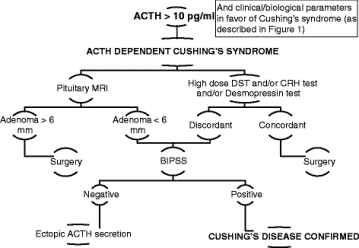
The early stages of Cushing’s disease may be difficult to recognize. However, if it is suspected, diagnosis is generally a 2 stage process. First to determine if cortisol levels are high, and if so, why they are high.

Tests to confirm high cortisol levels:

  • 24-hour urine cortisol
  • Dexamethasone suppression test (low dose)

Tests to determine cause:

  • Blood ACTH level
  • Brain MRI
  • Corticotropin-releasing hormone test
  • Dexamethasone suppression test (high dose)
  • Petrosal sinus sampling

Treatment

Surgery

  • Most patients with Cushing’s disease undergo surgery to remove the pituitary adenoma offers.
  • If the tumor is isolated to the pituitary, cure rates of 80-85% are common.
  • If the tumor has spread to nearby organs, cure rates of 50-55% are common.

Medicine (approved orphan drugs)

Signifor (pasireotide)

  • Approved for patients with Cushing’s disease for whom pituitary is not an option or surgery has been ineffective.
  • Signifor is a somatostatin receptor agonist that leads to inhibition of ACTY secretion (and subsequently decreased cortisol levels).

Korlym (mifepristone)

  • Approved for patients with Cushing’s syndrome who have type 2 diabetes or glucose intolerance and have failed surgery (or not candidates for surgery).
  • Korlym is a glucocorticoid receptor antagonist which in turn blocks the effects of the high levels of cortisol in the body. Korlym is used to treat high glucose levels due to elevated cortisol.

Medicines used but not indicated for Cushing’s disease include

Mitoden

ketoconazole

Metyrapone

Etomidate

Radiation

  • Radiation therapy may be used in some patients and can be very effective in controlling the growth of these tumors.

Prognosis

In most cases, treatment can cure Cushing’s disease. If not treated properly, the chronic hypercortisolism can lead to excess morbidity and mortality due to increased cardiovascular and other risk factors.

For more information

National Library of Medicine, National Institute of Health

Cushing’s Disease Information (provided by Novartis Pharmaceuticals)


Images courtesy of the open access journal Orhanet Journal for Rare Diseases.  Castinetti et al. Orphanet J Rare Dis. 2012 7:41   doi:10.1186/1750-1172-7-41

– See more at: http://www.raredr.com/front-page-medicine/articles/cushings-disease-rare-disease-quick-facts-0

Research and Markets: Pituitary ACTH Hypersecretion (Cushing’s Disease) – Pipeline Review Report, H1 2013 Edition

Research and Markets(http://www.researchandmarkets.com/research/rdf6gm/pituitary_acth) has announced the addition of the “Pituitary ACTH Hypersecretion (Cushing’s Disease) – Pipeline Review, H1 2013” report to their offering.

‘Pituitary ACTH Hypersecretion (Cushing’s Disease) – Pipeline Review, H2 2013’, provides an overview of the indication’s therapeutic pipeline. This report provides information on the therapeutic development for Pituitary ACTH Hypersecretion (Cushing’s Disease), complete with latest updates, and special features on late-stage and discontinued projects. It also reviews key players involved in the therapeutic development for Pituitary ACTH Hypersecretion (Cushing’s Disease).

Scope

– A snapshot of the global therapeutic scenario for Pituitary ACTH Hypersecretion (Cushing’s Disease).

– A review of the Pituitary ACTH Hypersecretion (Cushing’s Disease) products under development by companies and universities/research institutes based on information derived from company and industry-specific sources.

– Coverage of products based on various stages of development ranging from discovery till registration stages.

– A feature on pipeline projects on the basis of monotherapy and combined therapeutics.

– Coverage of the Pituitary ACTH Hypersecretion (Cushing’s Disease) pipeline on the basis of route of administration and molecule type.

– Key discontinued pipeline projects.

– Latest news and deals relating to the products.

Companies Involved in Pituitary ACTH Hypersecretion (Cushing’s Disease) Therapeutics Development


  • Isis Pharmaceuticals, Inc.
  • Ipsen S.A.
  • Novartis AG
  • HRA Pharma, SA
  • Cortendo Invest AB


Drug Profiles: Product Description, Mechanism of Action and R&D Progress


  • LCI-699
  • mifepristone
  • ISIS-GCCRRx
  • Inhibitors of ACTH receptor
  • ketoconazole
  • Next Generation Cortisol Inhibitor
  • pasireotide Long Acting Release


For more information visit http://www.researchandmarkets.com/research/rdf6gm/pituitary_acth