Day 13, Cushing’s Awareness Challenge

UVA 2004
Cushing’s Conventions have always been special times for me – we learn a lot, get to meet other Cushies, even get referrals to endos!

As early as 2001 (or before) my pituitary function was dropping.  My former endo tested annually but did nothing to help me with the symptoms.

In the fall of 2002 my endo refused to discuss my fatigue or anything at all with me until I lost 10 pounds. He said I wasn’t worth treating in my overweight condition and that I was setting myself up for a heart attack. He gave me 3 months to lose this weight. Those 3 months included Thanksgiving, Christmas and New Years.  Needless to say, I left his office in tears, again.

Fast forward 2 years to 2004.  I had tried for a while to get my records from this endo. He wouldn’t send them, even at doctors’ or my requests.

I wanted to go see Dr. Vance at UVa but I had no records so she wouldn’t see me until I could get them.

Finally, my husband went to the former endo’s office and threatened him with a court order. The office manager managed to come up with about 13 pages of records. For going to him from 1986 to 2001 including weeks and weeks at NIH and pituitary surgery, that didn’t seem like enough records to me.

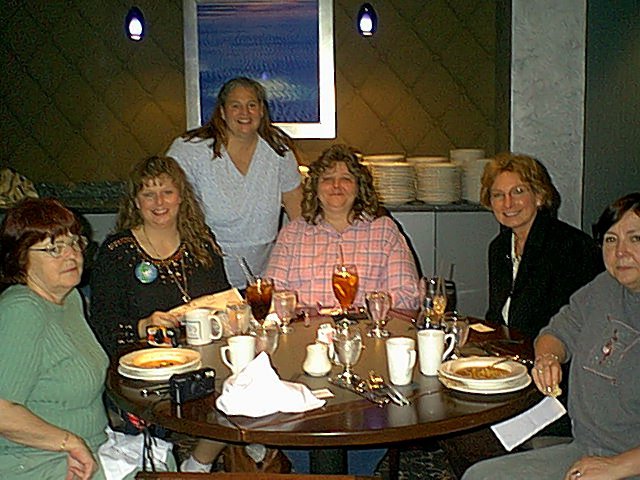
In April of 2004, many of us from the message boards went to the UVa Pituitary Days Convention. That’s where the picture above comes in.  Other pictures from that convention are here.

By chance, we met a wonderful woman named Barbara Craven. She sat at our table for lunch on the last day and, after we learned that she was a dietitian who had had Cushing’s, one of us jokingly asked her if she’d do a guest chat for us. I didn’t follow through on this until she emailed me later. In the email, she asked how I was doing. Usually I say “fine” or “ok” but for some reason, I told her exactly how awful I was feeling.

Barbara emailed me back and said I should see a doctor at Johns Hopkins. I said I didn’t think I could get a recommendation to there, so SHE referred me. The doctor got right back to me, set up an appointment. Between his vacation and mine, that first appointment turned out to be Tuesday, Sept 14, 2004.

Just getting through the maze at Johns Hopkins was amazing. They have the whole system down to a science, moving from one place to another to sign in, then go here, then window 6, then… But it was very efficient.

My new doctor was wonderful. Understanding, knowledgeable. He never once said that I was “too fat” or “depressed” or that all this was my own fault. I feel so validated, finally.

He looked through my records, especially at my 2 previous Insulin Tolerance Tests (ITT). From those, he determined that my growth hormone has been low since at least August 2001 and I’ve been adrenal insufficient since at least Fall, 1999 – possibly as much as 17 years! I was amazed to hear all this, and astounded that my former endo not only didn’t tell me any of this, he did nothing. He had known both of these things – they were in the past records that I took with me. Perhaps that was why he had been so reluctant to share copies of those records. He had given me Cortef in the fall of 1999 to take just in case I had “stress” and that was it.

The new endo took a lot of blood (no urine!) for cortisol and thyroid stuff. I went back on Sept. 28, 2004 for arginine, cortrosyn and IGF testing.

He said that I would end up on daily cortisone – a “sprinkling” – and some form of GH, based on the testing the 28th.

For those who are interested, my new endo is Roberto Salvatori, M.D.
Assistant Professor of Medicine at Johns Hopkins

Medical School: Catholic University School of Medicine, Rome, Italy
Residency: Montefiore Medical Center
Fellowship: Cornell University, Johns Hopkins University
Board Certification: Endocrinology and Metabolism, Internal Medicine

Clinical Interests: Neuroendocrinology, pituitary disorders, adrenal disorders

Research Interests: Control of growth hormone secretion, genetic causes of growth hormone deficiency, consequences of growth hormone deficiency.

Although I have this wonderful doctor, a specialist in growth hormone deficiency at Johns Hopkins, in November, 2004, my insurance company saw fit to over-ride his opinions and his test results based on my past pharmaceutical history! Hello??? How could I have a history of taking GH when I’ve never taken it before?

Of course, I found out late on a Friday afternoon. By then it was too late to call my case worker at the drug company, so we had to appeal on Monday. My local insurance person also worked on an appeal, but the whole thing was  just another long ordeal of finding paperwork, calling people, FedExing stuff, too much work when I just wanted to start feeling better by Thanksgiving.

As it turned out the insurance company rejected the brand of hGH that was prescribed for me. They gave me the ok for a growth hormone was just FDA-approved for adults on 11/4/04. The day this medication was approved for adults was the day after my insurance said that’s what is preferred for me. In the past, this form of hGH was only approved for children with height issues. Was I going to be a ginuea pig again?

The new GH company assigned a rep for me, submitted info to pharmacy, and waited for insurance approval, again.

I finally started the Growth Hormone December 7, 2004.

Was the hassle and 3 year wait worth it?

Stay tuned for April 15, 2016 when all will be revealed.

Read

Read Dr. Barbara Craven’s Guest Chat, October 27, 2004

Thanks for reading 🙂

MaryO

Thyroid dysfunction highly prevalent in Cushing’s syndrome

Central hypothyroidism is prevalent in about 1 in 2 adults with Cushing’s syndrome, and thyroid function can be restored after curative surgery for most patients, according to study findings.

“Our study findings have confirmed and greatly extended previous smaller studies that suggested a link between hypercortisolism and thyroid dysfunction but were inconclusive due to smaller sample size and short follow-up,” Skand Shekhar, MD, an endocrinologist and clinical investigator in the reproductive physiology and pathophysiology group at the National Institute of Environmental Health Sciences, NIH, told Healio. “Due to our large sample and longer follow-up, we firmly established a significant negative correlation between hypercortisolemia measures — serum and urinary cortisol, serum adrenocorticotropic hormone — and thyroid hormones triiodothyronine, free thyroxine and thyrotropin.”

Shekhar and colleagues conducted a retrospective review of two groups of adults aged 18 to 60 years with Cushing’s syndrome. The first group was evaluated at the NIH Clinical Center from 2005 to 2018 (n = 68; mean age, 43.8 years; 62% white), and the second group was evaluated from 1985 to 1994 (n = 55; mean age, 37.2 years; 89% white). The first cohort was followed for 6 to 12 months to observe the pattern of thyroid hormone changes after surgical cure of adrenocorticotropic hormone-dependent Cushing’s syndrome. The second group underwent diurnal thyroid-stimulating hormone evaluation before treatment and during remission for some cases.

Urinary free cortisol and morning thyroid hormone levels were collected for all participants. In the second group, researchers evaluated diurnal patterns of TSH concentrations with hourly measurements from 3 to 7 p.m. and midnight to 4 p.m. In the first group, adrenocorticotropic hormone and serum cortisol were measured.

In the first cohort, seven participants were receiving levothyroxine for previously diagnosed primary or central hypothyroidism. Of the remaining 61 adults, 32 had untreated central hypothyroidism. Thirteen participants had free T4 at the lower limit of normal, and 19 had subnormal levels. There were 29 adults with subnormal levels of T3 and seven with subnormal TSH.

Before surgery, 36 participants in the first group had central hypothyroidism. Six months after surgery, central hypothyroidism remained for 10 participants. After 12 months, the number of adults with central hypothyroidism dropped to six. Preoperative T3 and TSH levels were negatively associated with morning and midnight cortisol, adrenocorticotropic hormone and urinary free cortisol. In post hoc analysis, a baseline urinary free cortisol of more than 1,000 g per day was adversely associated with baseline and 6-month T3 and free T4 levels.

In the second group, there were 51 participants not on thyroid-modifying drugs who had a thyroid function test 6 or 12 months after surgery. Before surgery, free Tlevels were subnormal in 17 participants, T3 levels were subnormal in 22, and TSH levels were in the lower half of the reference range or below in all but one participant.

After surgery, two participants had below normal free T4, one had subnormal T3, and TSH levels were in the lower half of the reference range or below in 23 of 48 participants. Before surgery, there was no difference in mean TSH between daytime and nighttime. A mean 8 months after surgery, the second group had a normal nocturnal TSH surge from 1.3 mIU/L during the day to 2.17 mIU/L at night (P = .01). The nocturnal TSH increase persisted as long as 3 years in participants who had follow-up evaluations.

“We found a very high prevalence of thyroid hormone deficiency that appears to start at the level of the hypothalamus-pituitary gland and extend to the tissue level,” Shekhar said. “Some of these patients may experience thyroid hormone deficiency symptoms, such as fatigue, depression, cold intolerance, weight gain, etc, as a result of systematic and tissue-level thyroid hormone deficiency. We also noted a strong correlation between hypothyroidism and hypogonadism, which implies that hypothyroid patients are also likely to suffer adverse reproductive effects. Thus, it is imperative to perform thorough thyroid hormone assessment in patients with Cushing’s syndrome, and thyroid hormone supplementation should be considered for these patients unless cure of Cushing’s syndrome is imminent.”

Researchers said providers should routinely screen for hypothyroidism in adults with Cushing’s syndrome. Even after thyroid function is restored, regular follow-up should also be conducted.

Further research is needed to investigate thyroid dysfunction in iatrogenic Cushing’s syndrome and the impact of these findings on euthyroid sick syndrome, Shekhar said.

For more information:

Skand Shekhar, MD, can be reached at skand.shekhar@nih.gov.

From https://www.healio.com/news/endocrinology/20210208/thyroid-dysfunction-highly-prevalent-in-cushings-syndrome

Thyroid cancer: Cushing syndrome is a lesser-known warning sign – what is it?

Thyroid cancer survival rates are 84 percent for 10 years or more if diagnosed early. Early diagnosis is crucial therefore and spotting the unusual signs could be a matter of life and death. A sign your thyroid cancer has advanced includes Cushing syndrome.

What is it?

What is Cushing syndrome?


Cushing syndrome occurs when your body is exposed to high levels of the hormone cortisol for a long time, said the Mayo Clinic.

The health site continued: “Cushing syndrome, sometimes called hypercortisolism, may be caused by the use of oral corticosteroid medication.

“The condition can also occur when your body makes too much cortisol on its own.

“Too much cortisol can produce some of the hallmark signs of Cushing syndrome — a fatty hump between your shoulders, a rounded face, and pink or purple stretch marks on your skin.”

In a study published in the US National Library of Medicine National Institutes of Health, thyroid carcinoma and Cushing’s syndrome was further investigated.

The study noted: “Two cases of thyroid carcinoma and Cushing’s syndrome are reported.

“Both of our own cases were medullary carcinomas of the thyroid, and on reviewing the histology of five of the other cases all proved to be medullary carcinoma with identifiable amyloid in the stroma.

“A consideration of the temporal relationships of the development of the carcinoma and of Cushing’s syndrome suggested that in the two cases with papillary carcinoma these conditions could have been unrelated, but that in eight of the nine cases with medullary carcinoma there was evidence that thyroid carcinoma was present at the time of diagnosis of Cushing’s syndrome.

“Medullary carcinoma of the thyroid is also probably related to this group of tumours. It is suggested that the great majority of the tumours associated with Cushing’s syndrome are derived from cells of foregut origin which are endocrine in nature.”

In rare cases, adrenal tumours can cause Cushing syndrome a condition arising when a tumour secretes hormones the thyroid wouldn’t normally create.

Cushing syndrome associated with medullary thyroid cancer is uncommon.

The syndrome is more commonly caused by the pituitary gland overproducing adrenocorticotropic hormone (ACTH), or by taking oral corticosteroid medication.

See a GP if you have symptoms of thyroid cancer, warns the NHS.

The national health body added: “The symptoms may be caused by less serious conditions, such as an enlarged thyroid, so it’s important to get them checked.

“A GP will examine your neck and can organise a blood test to check how well your thyroid is working.

“If they think you could have cancer or they’re not sure what’s causing your symptoms, you’ll be referred to a hospital specialist for more tests.”


Adapted from https://www.express.co.uk/life-style/health/1351753/thyroid-cancer-signs-symptoms-cushing-syndrome

Cushing’s Patients at Risk for Autoimmune Diseases After Condition Is Resolved

Children with Cushing’s syndrome are at risk of developing new autoimmune and related disorders after being cured of the disease, a new study shows.

The study, “Incidence of Autoimmune and Related Disorders After Resolution of Endogenous Cushing Syndrome in Children,” was published in Hormone and Metabolic Research.

Patients with Cushing’s syndrome have excess levels of the hormone cortisol, a corticosteroid that inhibits the effects of the immune system. As a result, these patients are protected from autoimmune and related diseases. But it is not known if the risk rises after their disease is resolved.

To address this, researchers at the Eunice Kennedy Shriver National Institute of Child Health and Human Development (NICHD) examined 127 children with Cushing’s syndrome at the National Institutes of Health from 1997 until 2017.

Among the participants, 77.5 percent had a pituitary tumor causing the disease, 21.7 percent had ACTH-independent disease, and one patient had ectopic Cushing’s syndrome. All patients underwent surgery to treat their symptoms.

After a mean follow-up of 31.2 months, 7.8 percent of patients developed a new autoimmune or related disorder.

Researchers found no significant differences in age at diagnosis, gender, cortisol levels, and urinary-free cortisol at diagnosis, when comparing those who developed autoimmune disorders with those who didn’t. However, those who developed an immune disorder had a significantly shorter symptom duration of Cushing’s syndrome.

This suggests that increased cortisol levels, even for a short period of time, may contribute to more reactivity of the immune system after treatment.

The new disorder was diagnosed, on average, 9.8 months after Cushing’s treatment. The disorders reported were celiac disease, psoriasis, Hashimoto thyroiditis, Graves disease, optic nerve inflammation, skin hypopigmentation/vitiligo, allergic rhinitis/asthma, and nerve cell damage of unknown origin responsive to glucocorticoids.

“Although the size of our cohort did not allow for comparison of the frequency with the general population, it seems that there was a higher frequency of optic neuritis than expected,” the researchers stated.

It is still unclear why autoimmune disorders tend to develop after Cushing’s resolution, but the researchers hypothesized it could be a consequence of the impact of glucocorticoids on the immune system.

Overall, the study shows that children with Cushing’s syndrome are at risk for autoimmune and related disorders after their condition is managed. “The presentation of new autoimmune diseases or recurrence of previously known autoimmune conditions should be considered when concerning symptoms arise,” the researchers stated.

Additional studies are warranted to further explore this link and improve care of this specific population.

From https://cushingsdiseasenews.com/2018/03/06/after-cushings-cured-autoimmune-disease-risk-looms-study/

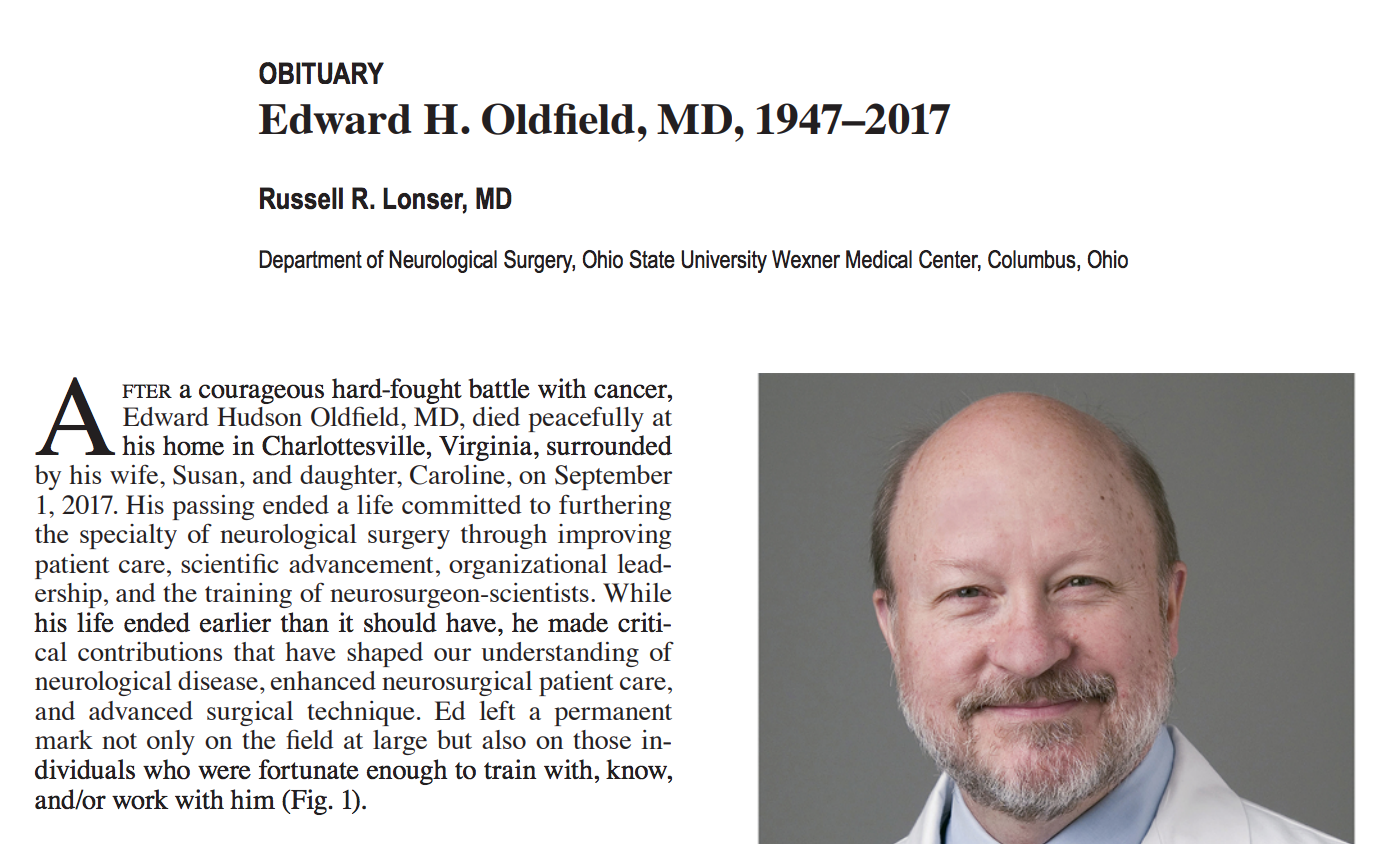
In Memory: Edward H. Oldfield, MD, 1947–2017

Dr. Oldfield was my pituitary surgeon at NIH back in 1987.  This was back in the olden days of transsphenoidal surgery.  I honestly expected to die but this man saved my life.


Ed started as Senior Staff Fellow in the Surgical Neurology Branch at the NIH (1981). After 5 years, Ed would become the Chief of the Surgical Neurology Branch. He would stay on as Branch Chief and lead the neurosurgical effort at the NIH for the next 21 years. During his tenure, he developed clinical, research, and training programs in epilepsy, congenital malformations, syringomyelia, nervous system neoplasia, drug delivery, and vascular malformations. The strength of these programs was his leadership and their multidisciplinary nature, which incorporated physicians and scientists across the basic, translational, and clinical arenas. Research investigation was always targeted at defined clinical problems. Under his direction, these programs shaped understanding of the studied neurological disorders, as well as improving patient care.

Read the entire obituary here: Edward H. Oldfield, MD, 1947–2017